 Protists has a more complex structure, function,
behavior and ecology than bacteria
 They have specialized organelles for feeding,
digestion, excretion, respiration, coordination, and
locomotion
 They may be classified as plantlike, funguslike, or
animal-like
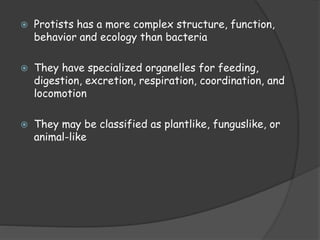
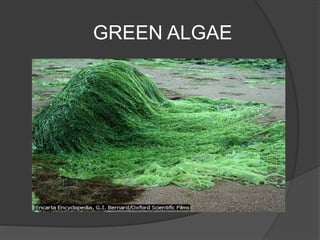
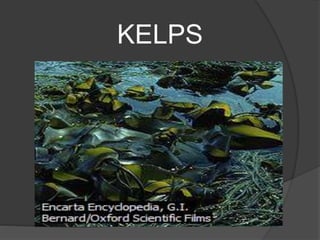
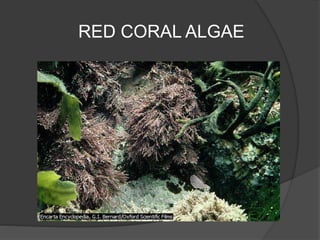
 Three groups of algae which where traditionally
classified as plants are now considered as protist
 They represent the multicellular plant-like protist
 Protist are not considered as plants because they
do not have structures that protect their
gametes and zygote
 They are not considered animals either,
because they do not undergo embryonic
development
 Neither they are not fungi because they
do not have chitin in their cell walls as
true fungi have
GREEN ALGAE
KELPS
RED CORAL ALGAE
PLANTLIKE PROTIST
 Phytoplanktons, a varied group of single-
celled photosynthetic organisms that float
near the surface of fresh and salty water
 Provide food for most aquatic animals
PLANTLIKE PROTIST
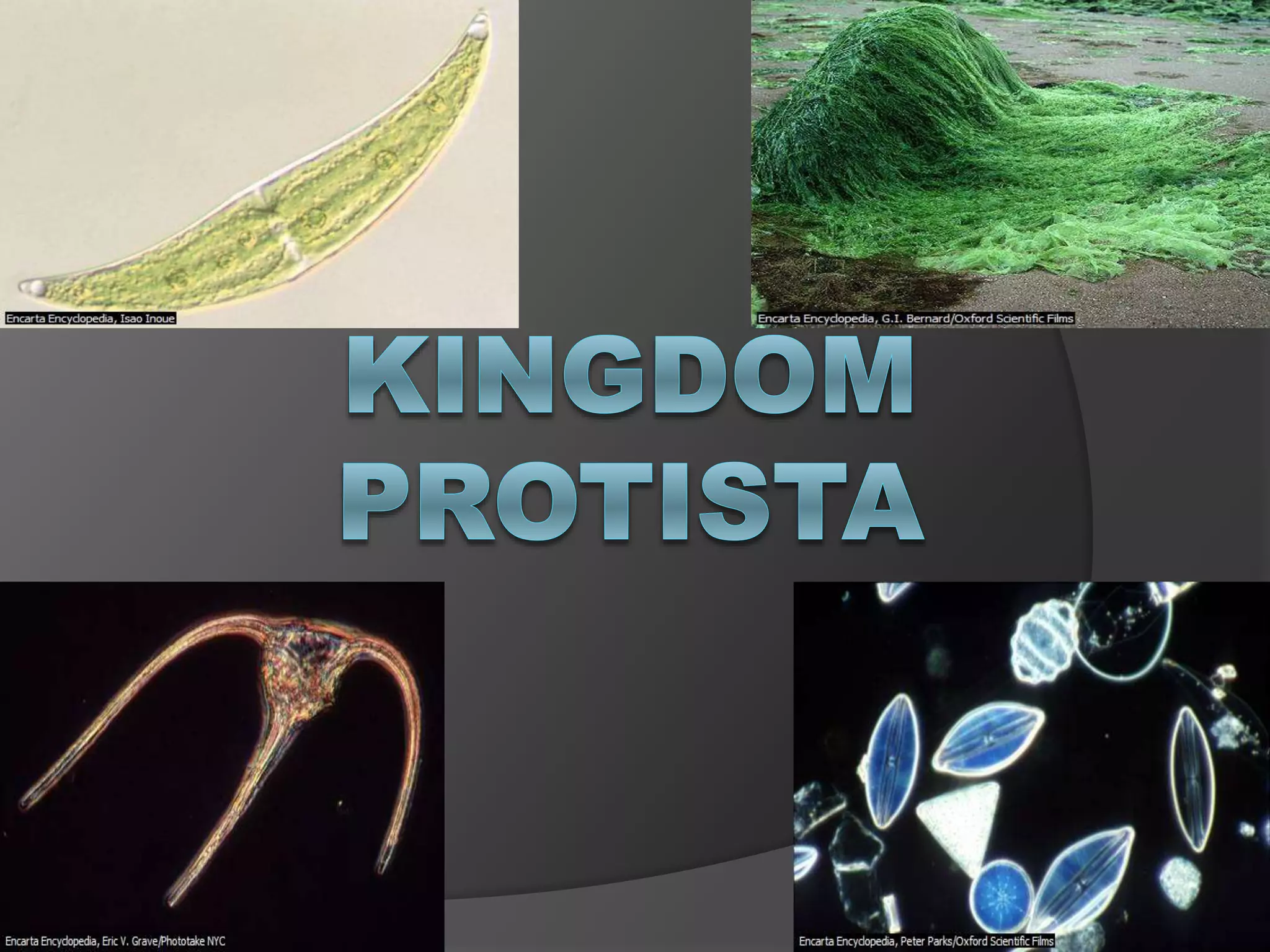
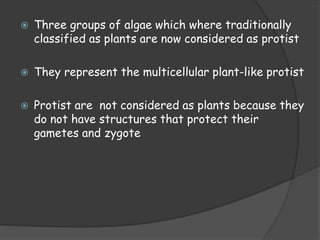
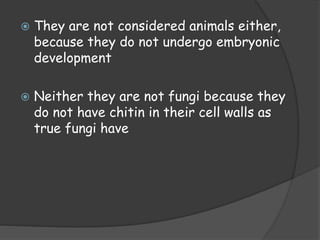
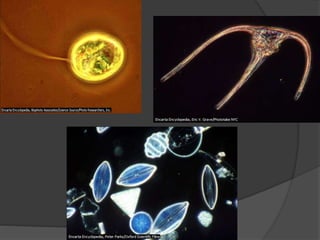
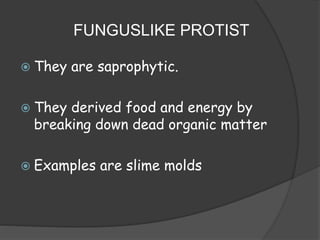
 Examples are euglena, dinoflagellates,
golden-brown algae and diatoms
FUNGUSLIKE PROTIST
 They are saprophytic.
 They derived food and energy by
breaking down dead organic matter
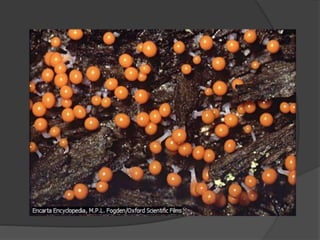
 Examples are slime molds
ANIMAL-LIKE PROTIST
 They are also called Protozoans
 They are all heterotrophic protists
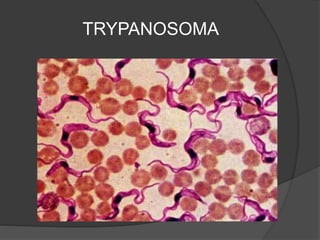
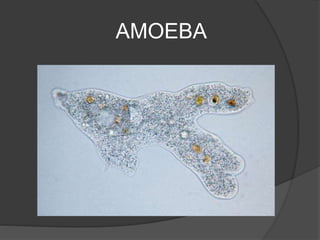
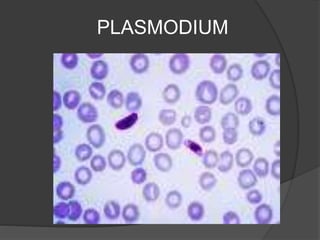
 Animal-like protists includes zooflagellates
(trypanosoma), sarcodina (amoeba), sporozoa
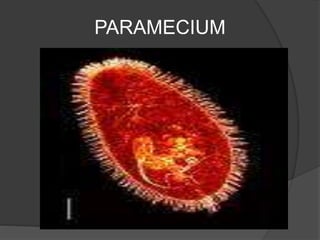
(plasmodium) and ciliates (paramecium)
TRYPANOSOMA
AMOEBA
PLASMODIUM
PARAMECIUM

Kingdom protista

  • 2.
     Protists hasa more complex structure, function, behavior and ecology than bacteria  They have specialized organelles for feeding, digestion, excretion, respiration, coordination, and locomotion  They may be classified as plantlike, funguslike, or animal-like
  • 3.
     Three groupsof algae which where traditionally classified as plants are now considered as protist  They represent the multicellular plant-like protist  Protist are not considered as plants because they do not have structures that protect their gametes and zygote
  • 4.
     They arenot considered animals either, because they do not undergo embryonic development  Neither they are not fungi because they do not have chitin in their cell walls as true fungi have
  • 5.
  • 6.
  • 7.
  • 8.
    PLANTLIKE PROTIST  Phytoplanktons,a varied group of single- celled photosynthetic organisms that float near the surface of fresh and salty water  Provide food for most aquatic animals
  • 9.
    PLANTLIKE PROTIST  Examplesare euglena, dinoflagellates, golden-brown algae and diatoms
  • 11.
    FUNGUSLIKE PROTIST  Theyare saprophytic.  They derived food and energy by breaking down dead organic matter  Examples are slime molds
  • 13.
    ANIMAL-LIKE PROTIST  Theyare also called Protozoans  They are all heterotrophic protists  Animal-like protists includes zooflagellates (trypanosoma), sarcodina (amoeba), sporozoa (plasmodium) and ciliates (paramecium)
  • 14.
  • 15.
  • 16.
  • 17.