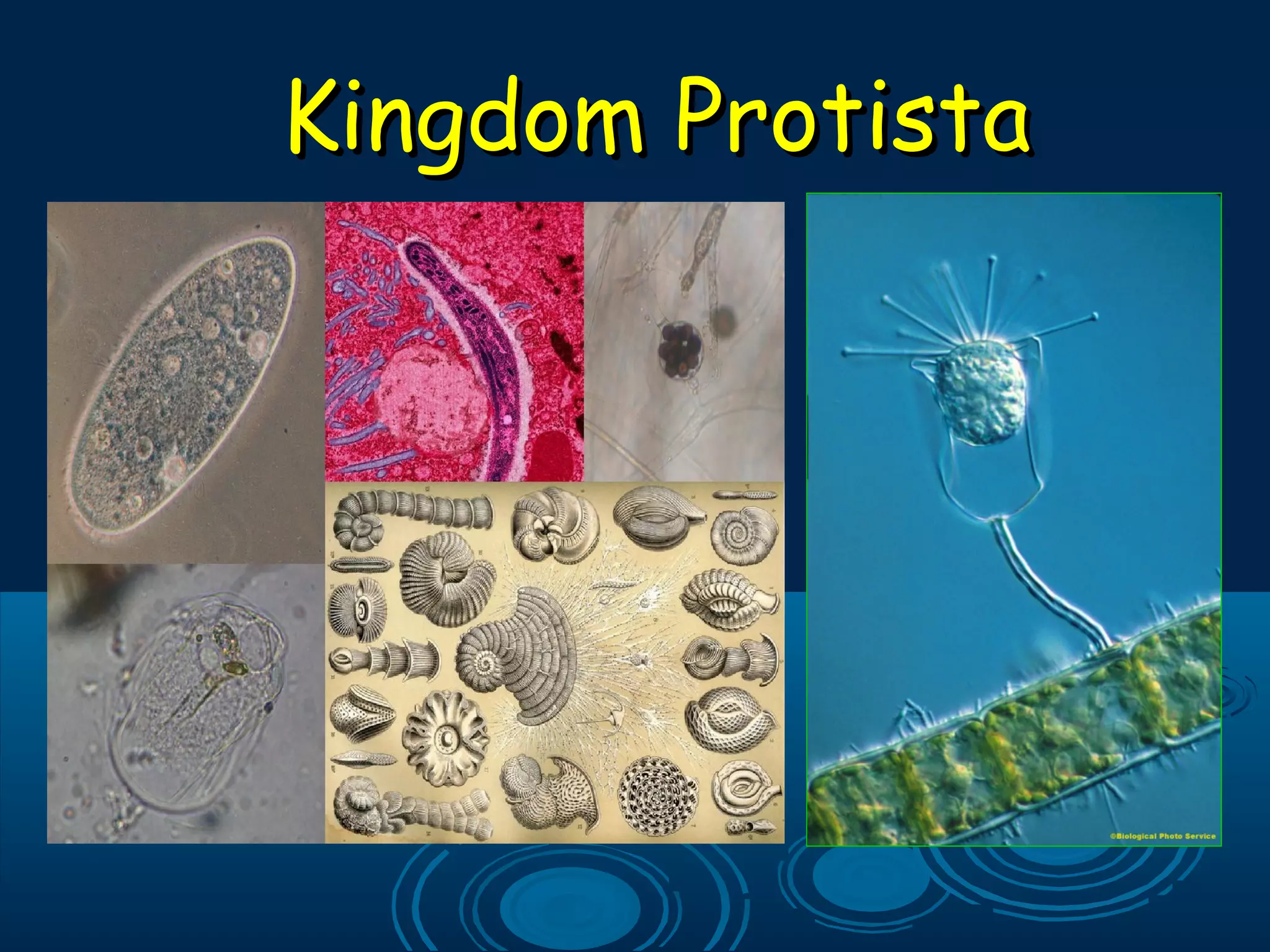
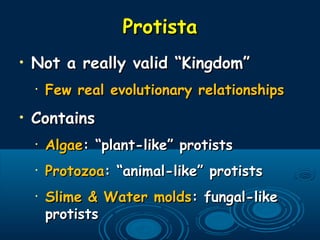
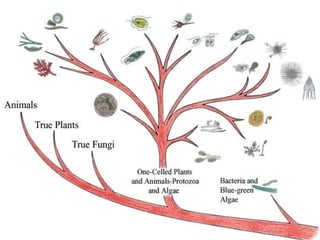
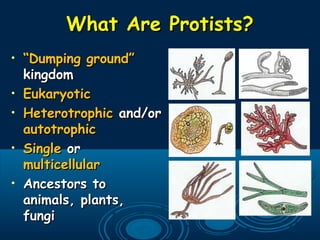
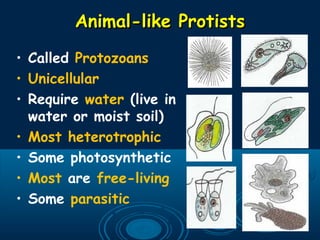
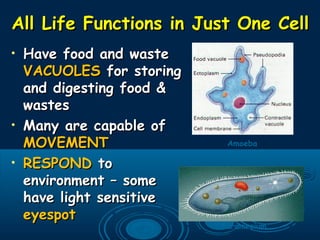
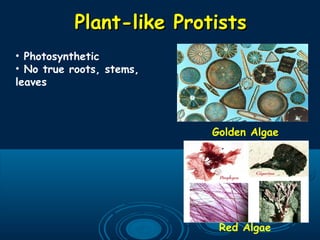
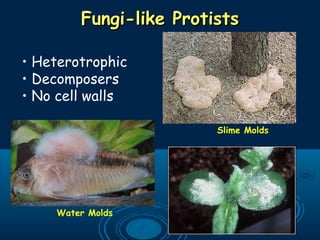
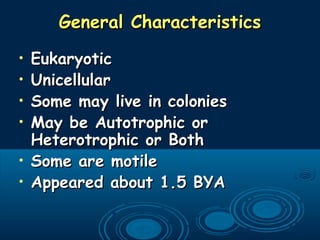
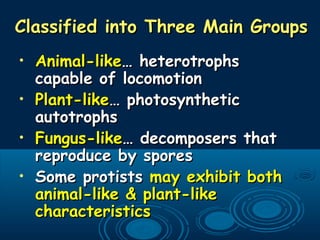
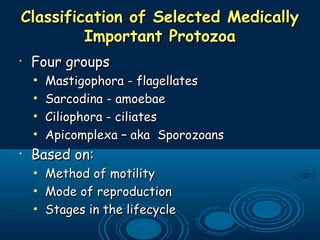
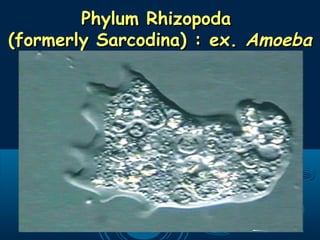
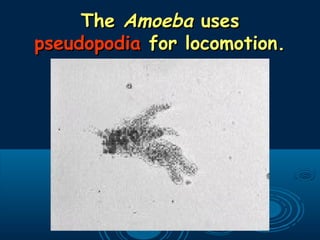
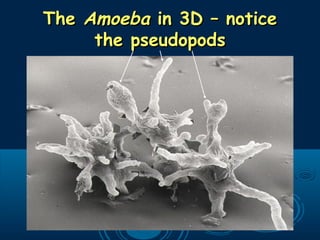
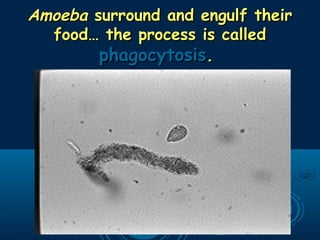
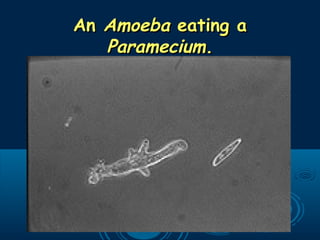
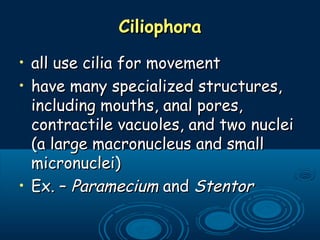
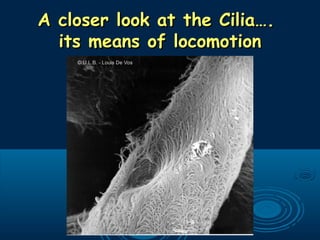
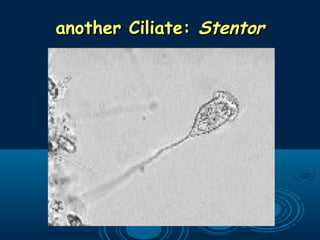
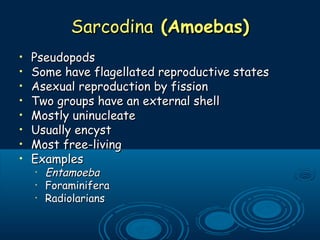
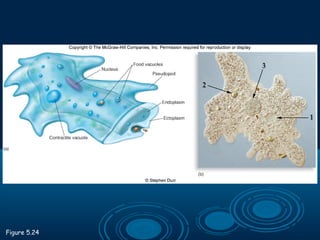
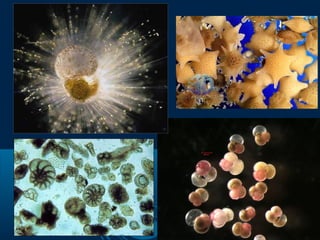
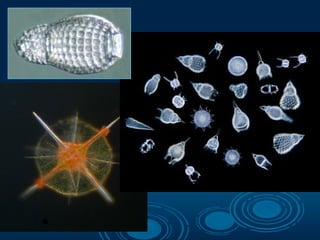
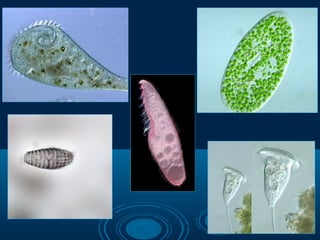
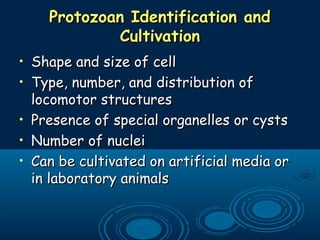
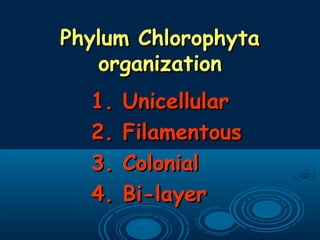
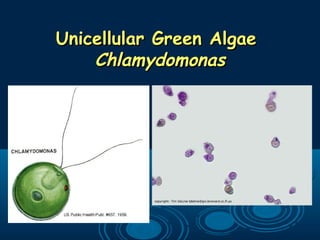
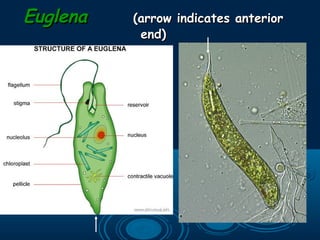
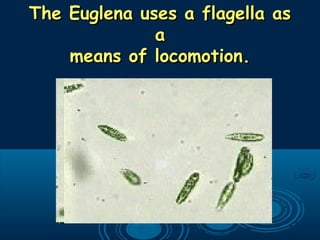
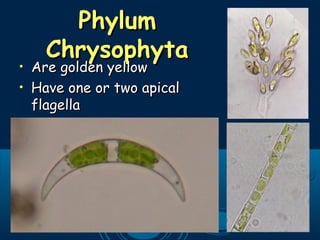
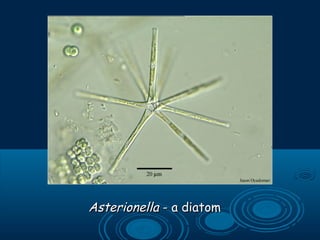
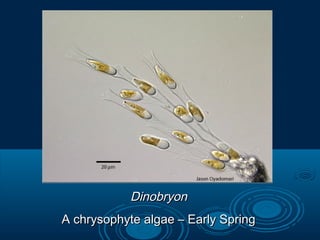
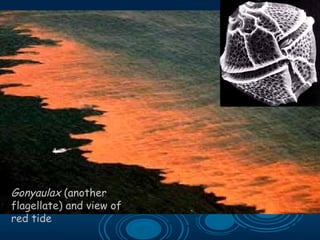
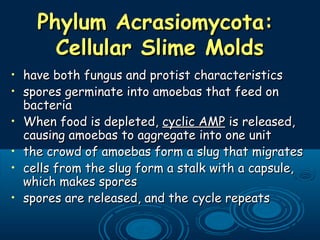
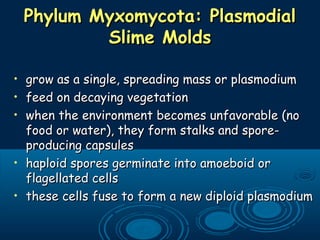
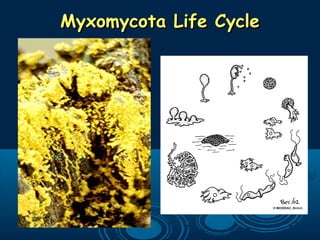
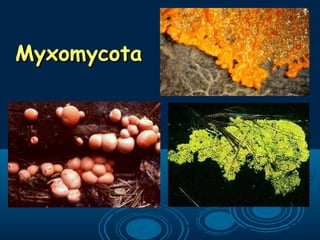
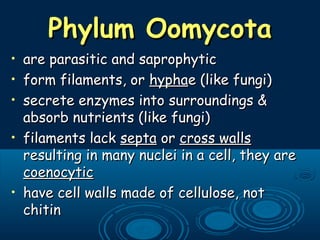
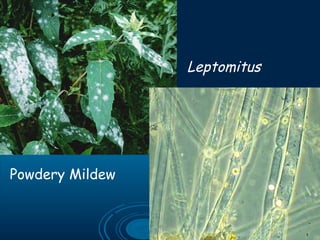
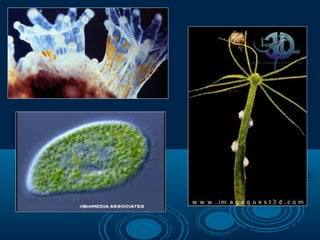
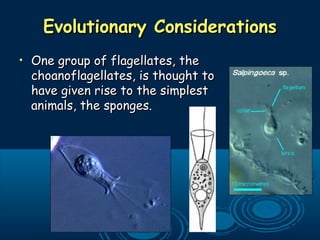
- Protists are a diverse group of eukaryotic organisms, most of which are microscopic. They are classified into three main groups: animal-like protists which are heterotrophic and motile, plant-like protists which are photosynthetic, and fungi-like protists which are decomposers.
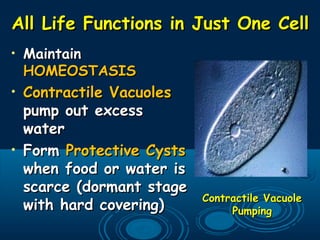
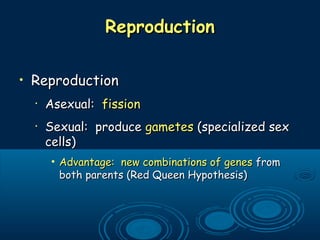
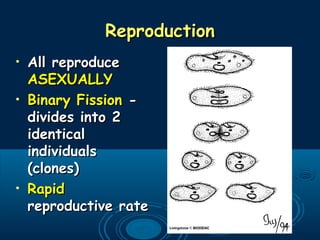
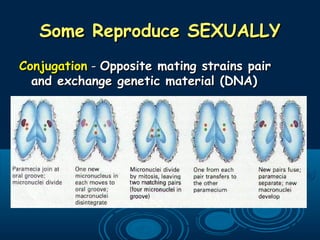
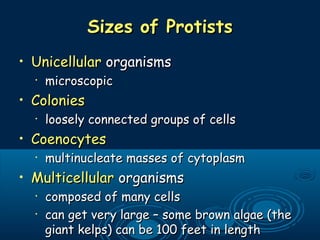
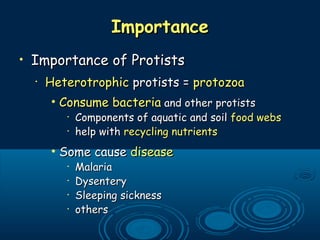
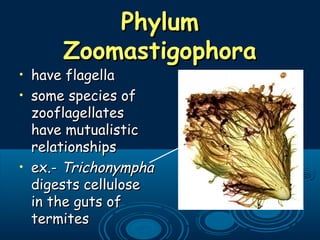
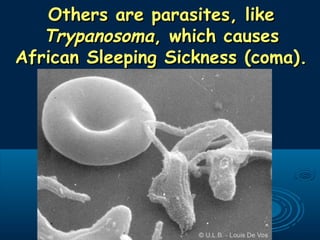
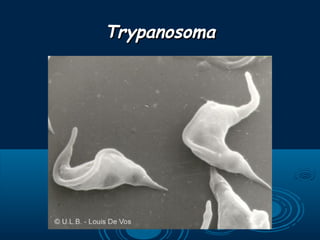
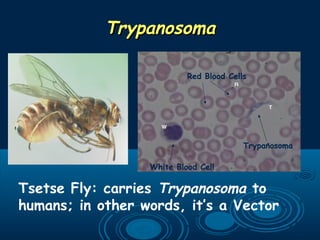
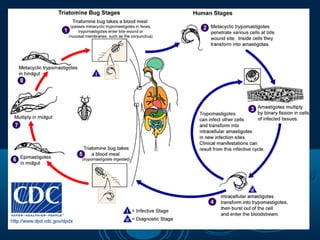
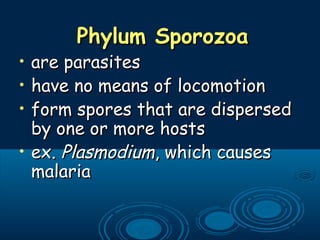
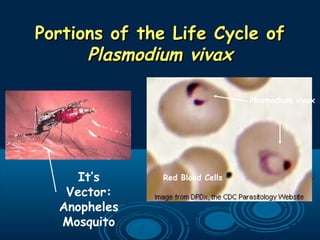
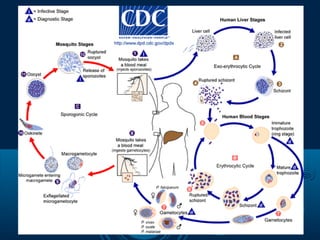
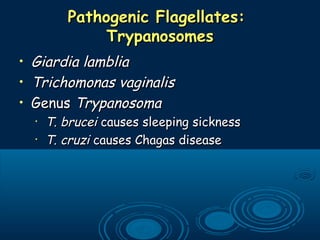
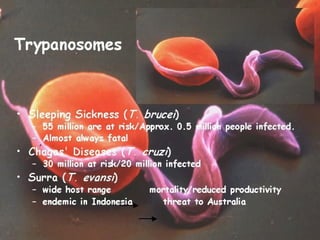
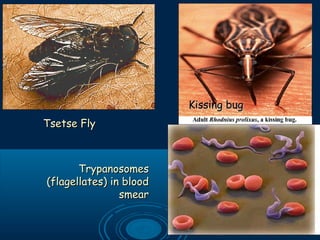
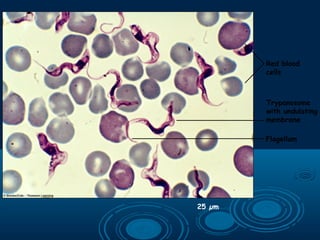
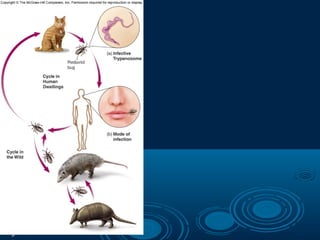
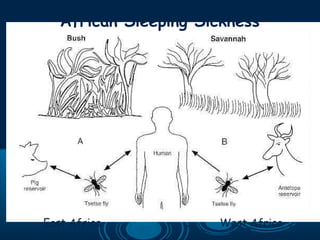
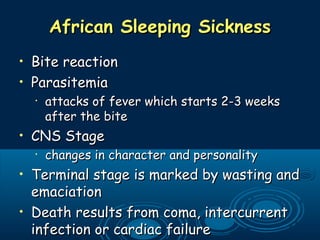
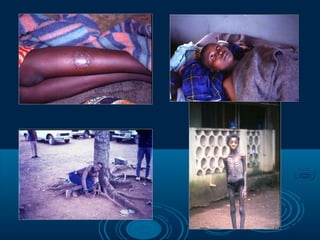
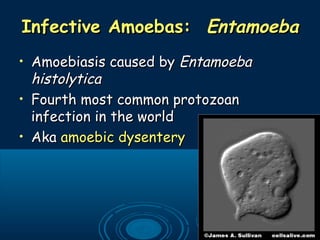
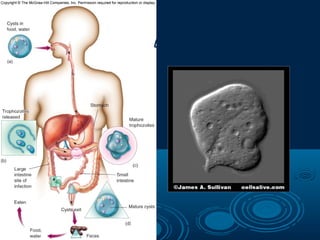
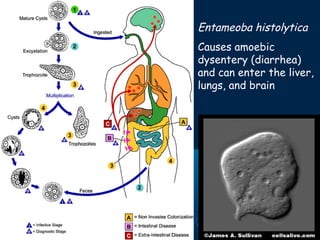
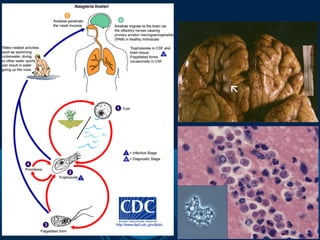
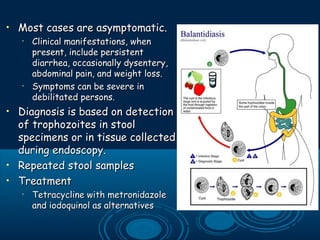
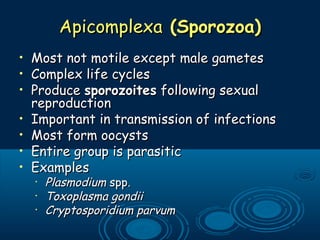
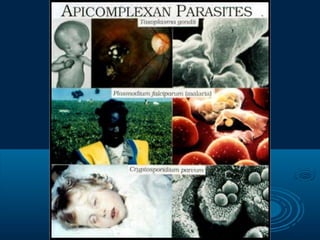
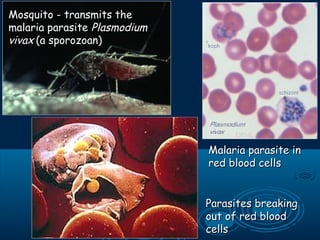
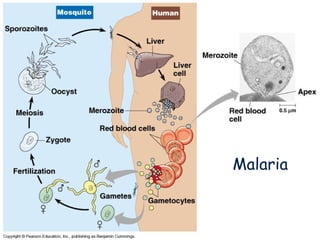
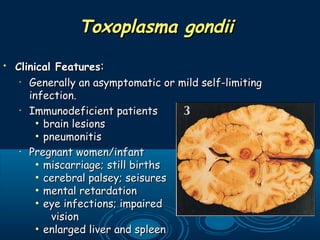
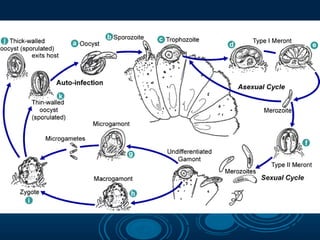
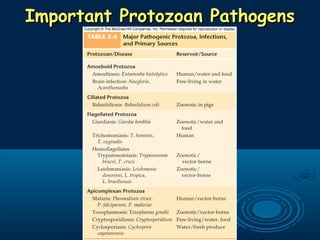
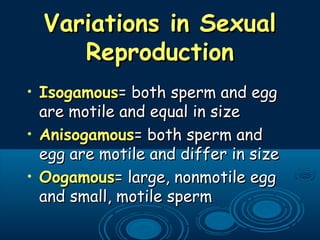
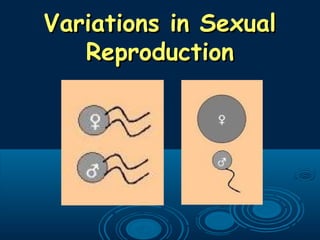
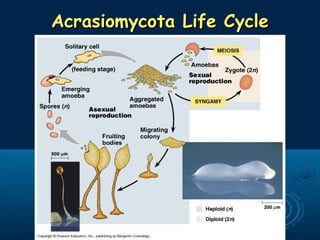
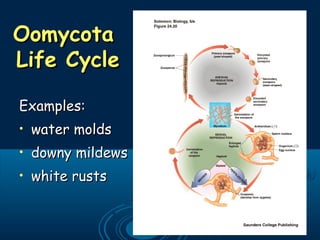
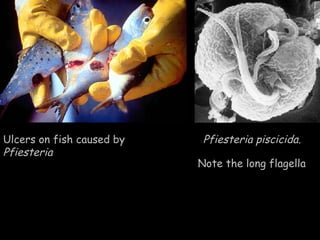
- Protists exhibit characteristics of both unicellular and multicellular organisms. They can reproduce both sexually through meiosis and gamete formation, and asexually through binary fission. Many important human diseases are caused by parasitic protists, such as malaria caused by Plasmodium and African sleeping sickness caused by Trypanosoma.

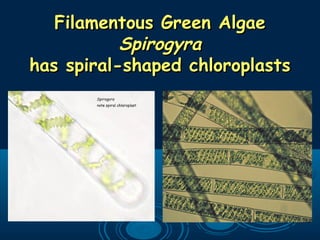
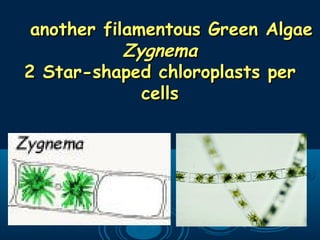
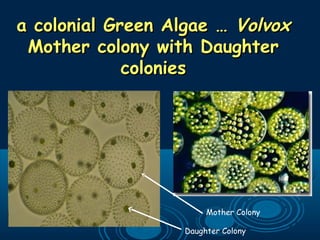
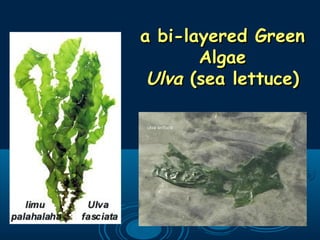
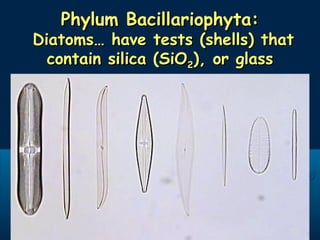
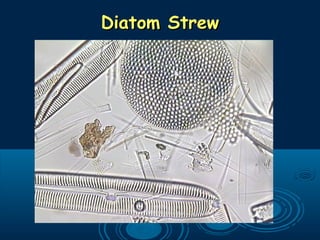
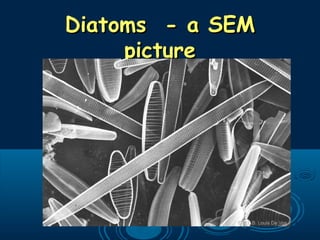
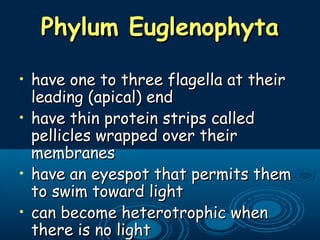



![Kingdom protista[1]](https://cdn.slidesharecdn.com/ss_thumbnails/kingdomprotista1-121031071438-phpapp02-thumbnail.jpg?width=640&height=640&fit=bounds)


![25 lab algae quiz (25) [11 20-13]](https://cdn.slidesharecdn.com/ss_thumbnails/25labalgaequiz2511-20-13-131120211705-phpapp02-thumbnail.jpg?width=640&height=640&fit=bounds)


![Polymer [ बहुलक ] Chemistry Notes PDF - Irfanullah Mehar - JJ Sir Chemistry.pdf](https://cdn.slidesharecdn.com/ss_thumbnails/polymerchemistrynotespdf-irfanullahmehar-jjsirchemistry-260210172118-3f9b37f7-thumbnail.jpg?width=640&height=640&fit=bounds)


