Protein kinase cascade
Submitted by:
ShwetaKumari
M.Sc. Bioinformatics
4th semester
Roll no: 21
Session: 2014-16
Submitted to:
Dr. Durg Vijay Singh
Bioinformatics Programmme
Centre for Biological Science
Contents
• Introduction and function
• Classification
• Mechanism
• Protein kinase cascade
• Double phosphorylation
• Multi-layer perceptron
• Biological example
• References
Introduction & Function
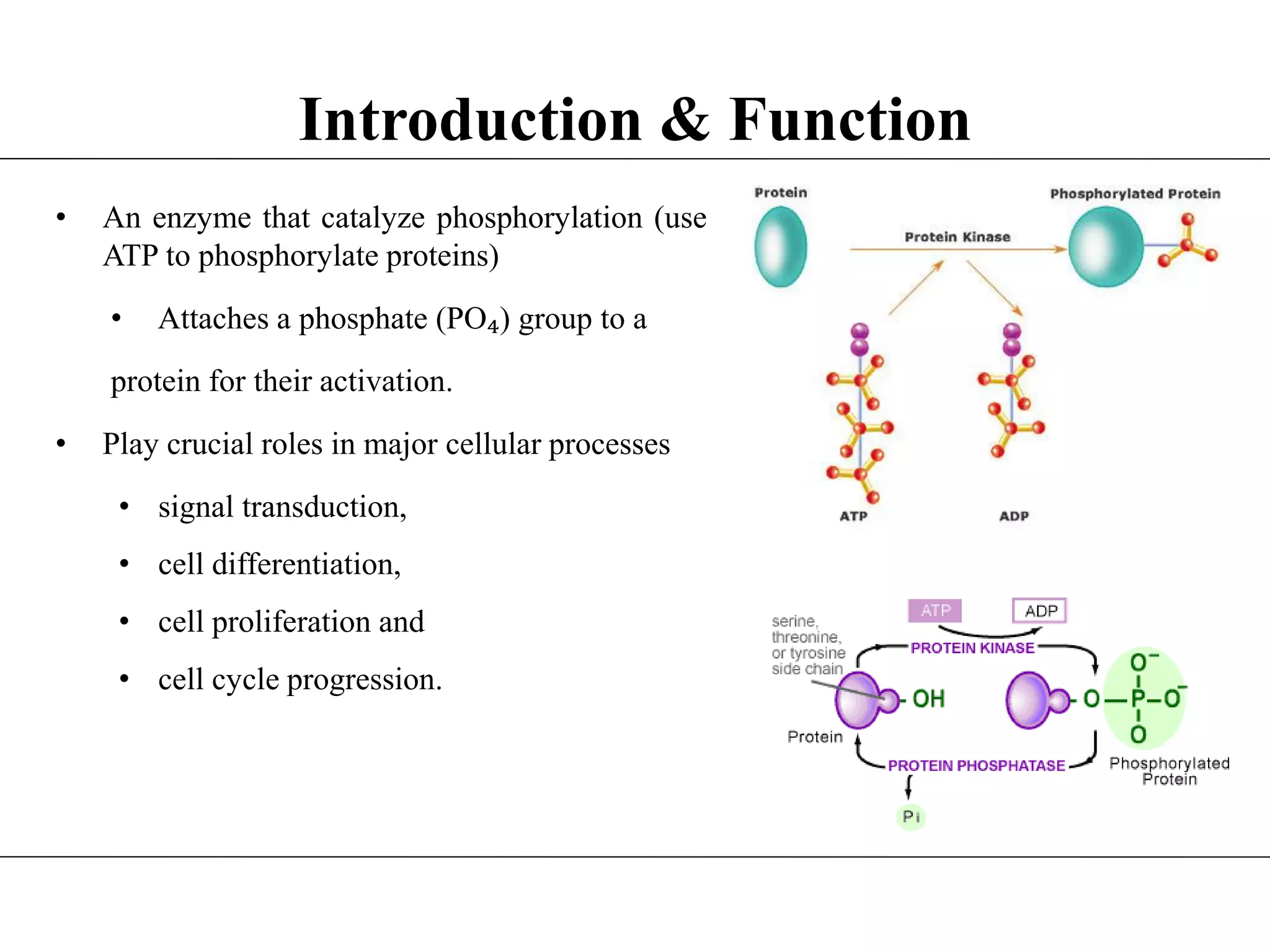
• An enzyme that catalyze phosphorylation (use
ATP to phosphorylate proteins)
• Attaches a phosphate (PO₄) group to a
protein for their activation.
• Play crucial roles in major cellular processes
• signal transduction,
• cell differentiation,
• cell proliferation and
• cell cycle progression.
Classification
On the basis of amino acid:
1. Tyrosine kinases
a. Receptor (EGFR, FGFR, PDGFR)
b. non receptor (JAK, src, Abl, MAPK)
2. Serine threonine (PKC, Plk, Rho Kinases)
Mechanism
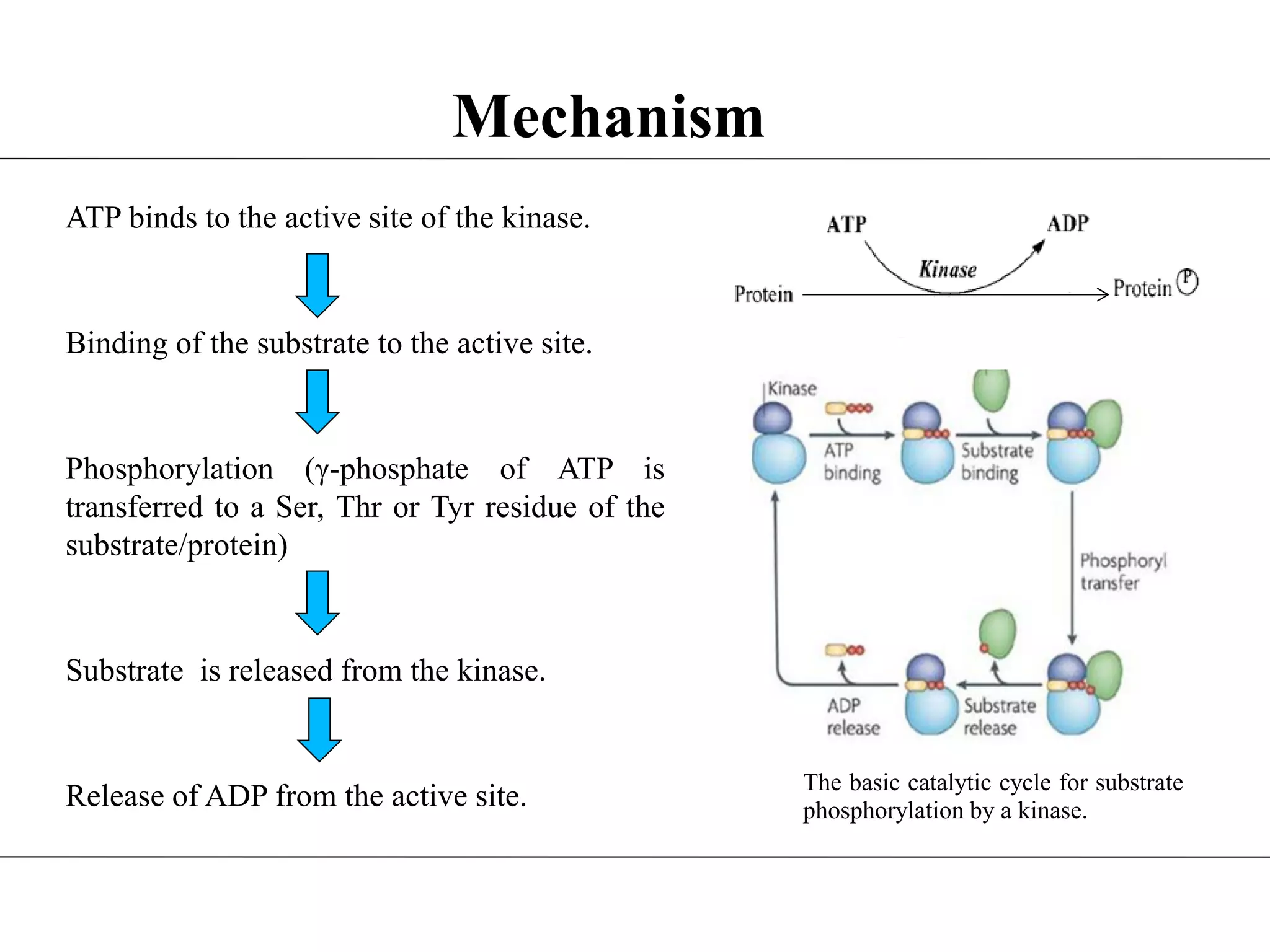
ATP binds to the active site of the kinase.
Binding of the substrate to the active site.
Phosphorylation (γ-phosphate of ATP is
transferred to a Ser, Thr or Tyr residue of the
substrate/protein)
Substrate is released from the kinase.
Release of ADP from the active site. The basic catalytic cycle for substrate
phosphorylation by a kinase.
Protein Kinase cascade
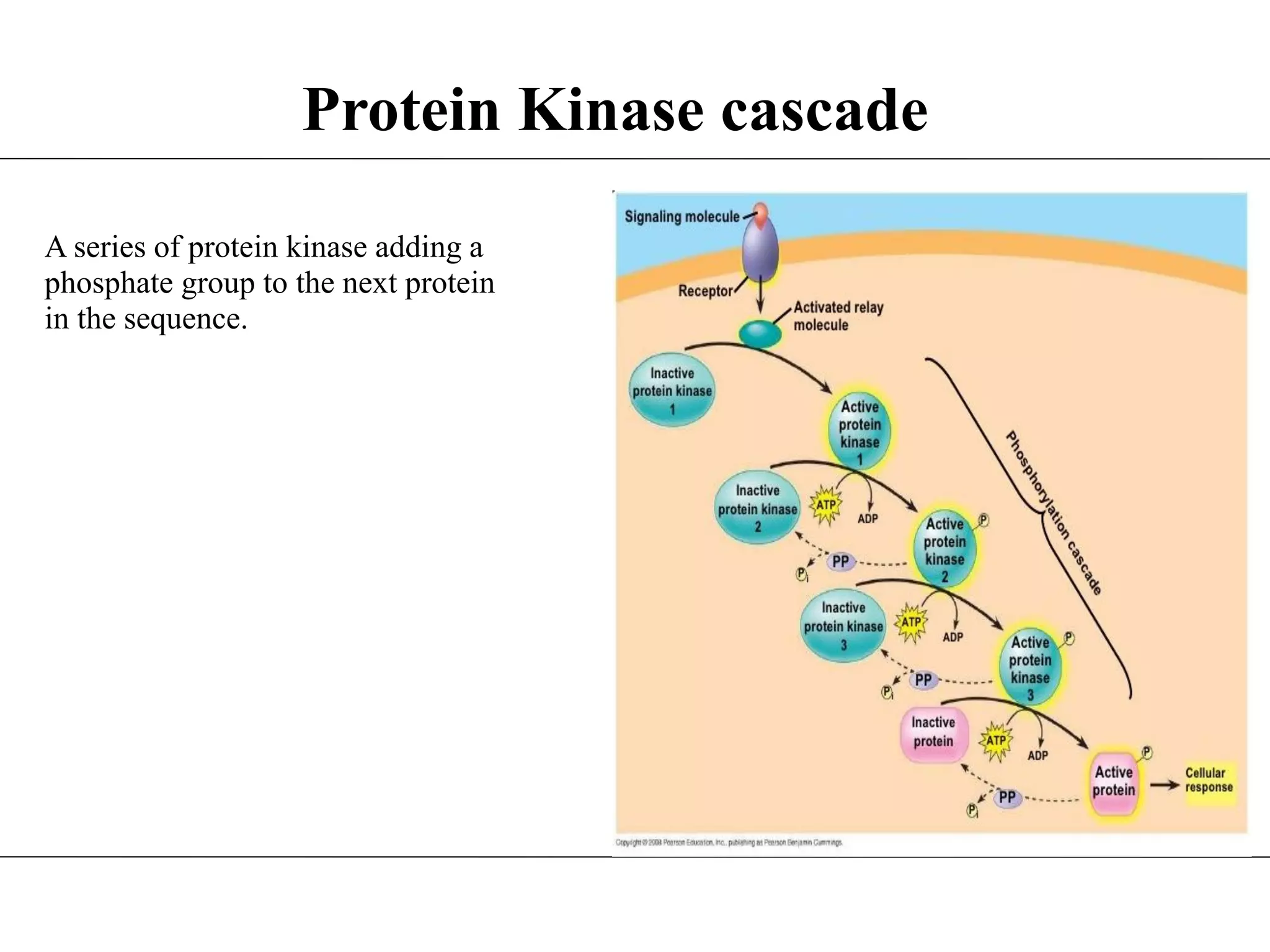
A series of protein kinase adding a
phosphate group to the next protein
in the sequence.
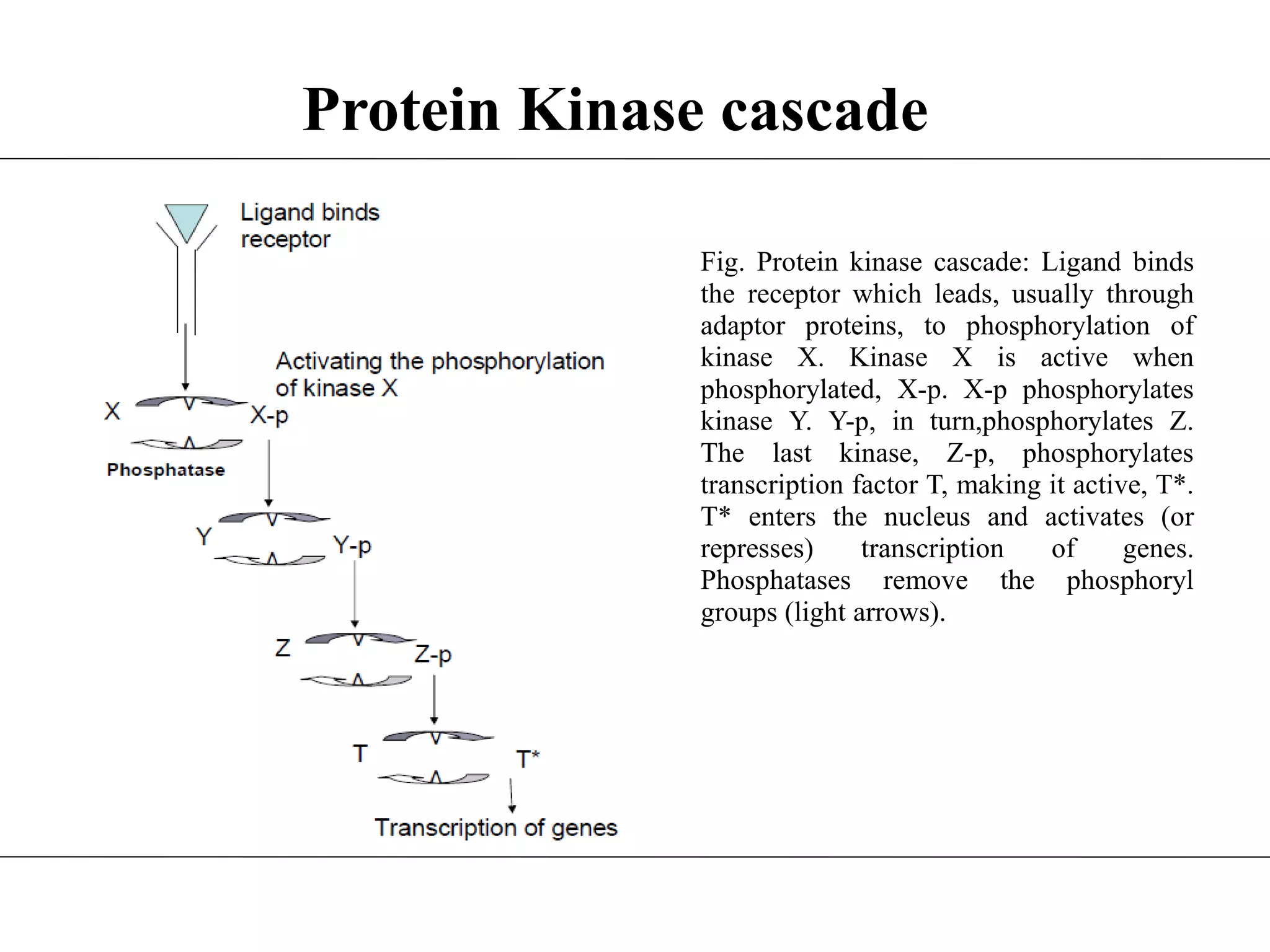
Fig. Protein kinase cascade: Ligand binds
the receptor which leads, usually through
adaptor proteins, to phosphorylation of
kinase X. Kinase X is active when
phosphorylated, X-p. X-p phosphorylates
kinase Y. Y-p, in turn,phosphorylates Z.
The last kinase, Z-p, phosphorylates
transcription factor T, making it active, T*.
T* enters the nucleus and activates (or
represses) transcription of genes.
Phosphatases remove the phosphoryl
groups (light arrows).
Protein Kinase cascade
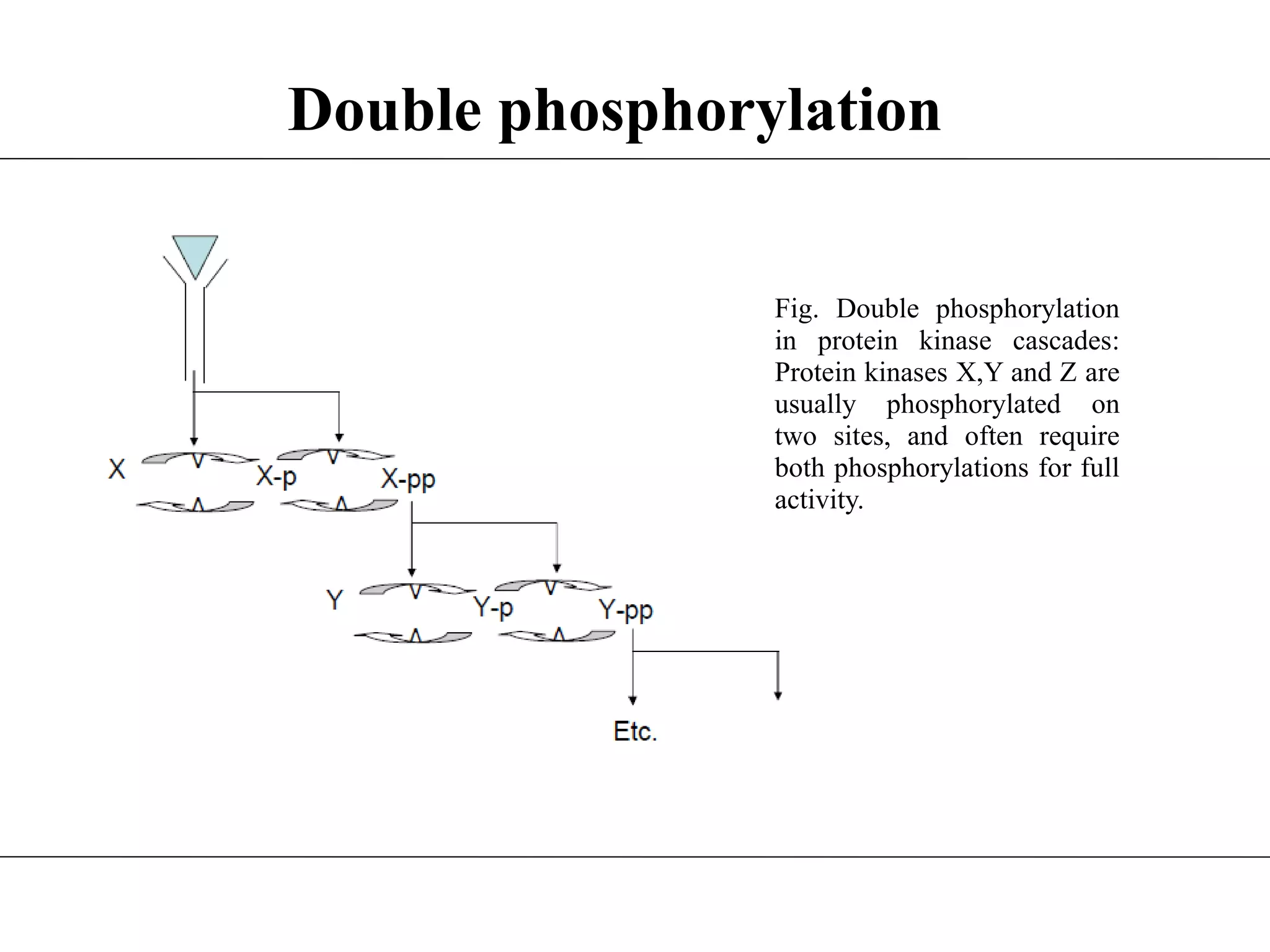
Fig. Double phosphorylation
in protein kinase cascades:
Protein kinases X,Y and Z are
usually phosphorylated on
two sites, and often require
both phosphorylations for full
activity.
Double phosphorylation
Fig. Multi-layer
perceptrons in protein
kinase cascades.
Several different
receptors in the same
cell can activate
specific top-layer
kinases in response to
their ligands. Each
layer in the cascade
often has multiple
kinases, each of which
can phosphorylate
many of the kinases in
the next layer.
Multi-layer perceptrons
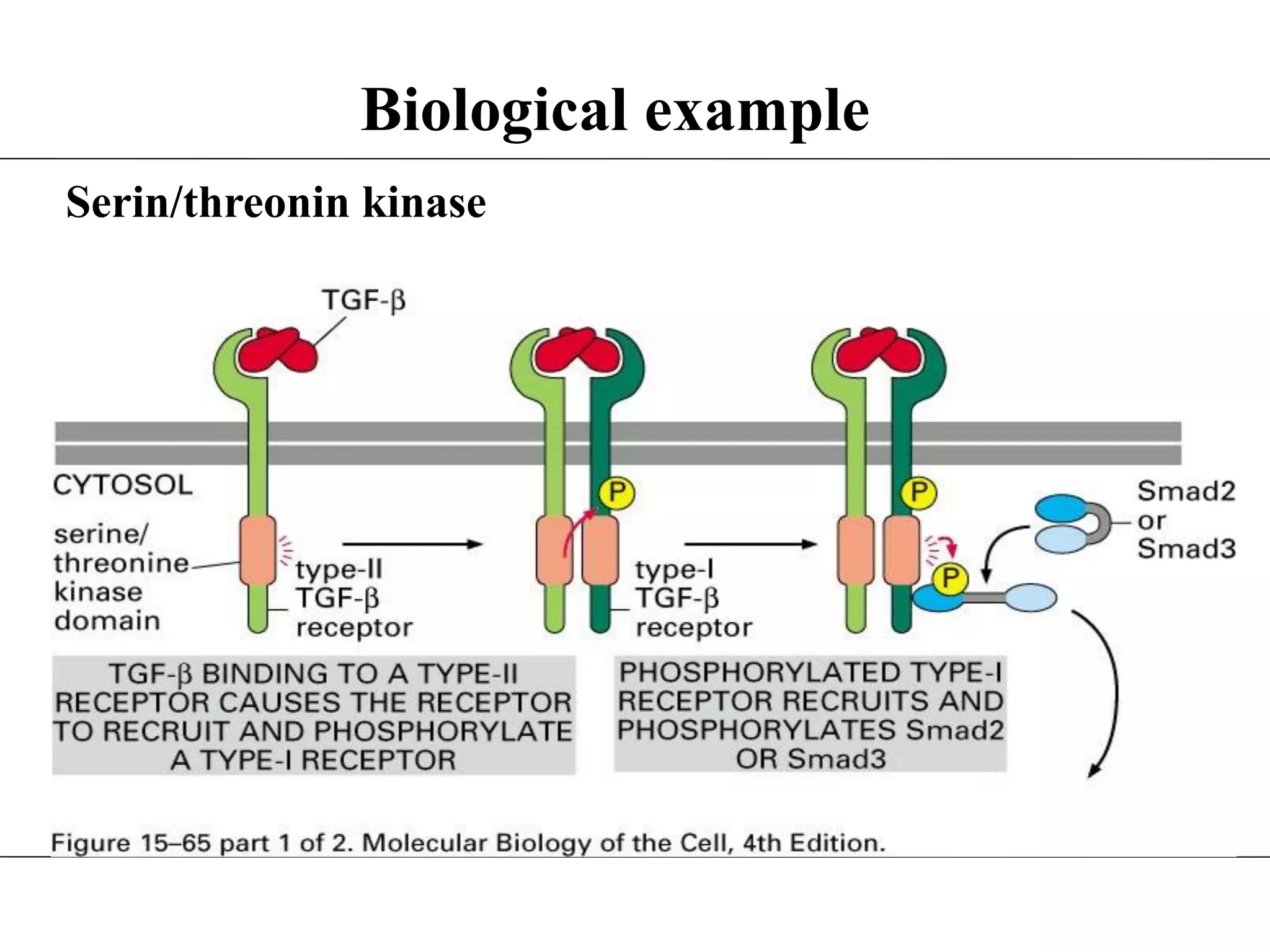
Biological example
Serin/threonin kinase
Receptor based tyrosine kinase
Biological example
Non receptor tyrosine kinase
Biological example
References
Text Book
 Uri Alon, An Introduction to Systems Biology: Design Principles of Biological
Circuits, 2/e, CRC Press, (2006).
 Literature References
 S.S. Taylor, J. Yang, J. Wu, N.M. Haste, E. Radzio-Andzelm, G. Anand. PKA:
a portrait of protein kinase dynamics. Biochimica et Biophysica Acta 1697
(2004) 259– 269.
 Jane A. Endicott, Martin E.M. Noble and Louise N. Johnson. The Structural
Basis for Control of Eukaryotic Protein Kinases.Annu. Rev. Biochem. 2012.
81:587–613
 Shchemelinin, Sefc, E. Nečas. Protein Kinases, Their Function and Implication
in Cancer and Other Diseases. Folia Biologica (Praha) 52, 81-101 (2006)
Thank you

protein kinase cascade

  • 1.
    Protein kinase cascade Submittedby: ShwetaKumari M.Sc. Bioinformatics 4th semester Roll no: 21 Session: 2014-16 Submitted to: Dr. Durg Vijay Singh Bioinformatics Programmme Centre for Biological Science
  • 2.
    Contents • Introduction andfunction • Classification • Mechanism • Protein kinase cascade • Double phosphorylation • Multi-layer perceptron • Biological example • References
  • 3.
    Introduction & Function •An enzyme that catalyze phosphorylation (use ATP to phosphorylate proteins) • Attaches a phosphate (PO₄) group to a protein for their activation. • Play crucial roles in major cellular processes • signal transduction, • cell differentiation, • cell proliferation and • cell cycle progression.
  • 4.
    Classification On the basisof amino acid: 1. Tyrosine kinases a. Receptor (EGFR, FGFR, PDGFR) b. non receptor (JAK, src, Abl, MAPK) 2. Serine threonine (PKC, Plk, Rho Kinases)
  • 5.
    Mechanism ATP binds tothe active site of the kinase. Binding of the substrate to the active site. Phosphorylation (γ-phosphate of ATP is transferred to a Ser, Thr or Tyr residue of the substrate/protein) Substrate is released from the kinase. Release of ADP from the active site. The basic catalytic cycle for substrate phosphorylation by a kinase.
  • 6.
    Protein Kinase cascade Aseries of protein kinase adding a phosphate group to the next protein in the sequence.
  • 7.
    Fig. Protein kinasecascade: Ligand binds the receptor which leads, usually through adaptor proteins, to phosphorylation of kinase X. Kinase X is active when phosphorylated, X-p. X-p phosphorylates kinase Y. Y-p, in turn,phosphorylates Z. The last kinase, Z-p, phosphorylates transcription factor T, making it active, T*. T* enters the nucleus and activates (or represses) transcription of genes. Phosphatases remove the phosphoryl groups (light arrows). Protein Kinase cascade
  • 8.
    Fig. Double phosphorylation inprotein kinase cascades: Protein kinases X,Y and Z are usually phosphorylated on two sites, and often require both phosphorylations for full activity. Double phosphorylation
  • 9.
    Fig. Multi-layer perceptrons inprotein kinase cascades. Several different receptors in the same cell can activate specific top-layer kinases in response to their ligands. Each layer in the cascade often has multiple kinases, each of which can phosphorylate many of the kinases in the next layer. Multi-layer perceptrons
  • 10.
  • 11.
    Receptor based tyrosinekinase Biological example
  • 12.
    Non receptor tyrosinekinase Biological example
  • 13.
    References Text Book  UriAlon, An Introduction to Systems Biology: Design Principles of Biological Circuits, 2/e, CRC Press, (2006).  Literature References  S.S. Taylor, J. Yang, J. Wu, N.M. Haste, E. Radzio-Andzelm, G. Anand. PKA: a portrait of protein kinase dynamics. Biochimica et Biophysica Acta 1697 (2004) 259– 269.  Jane A. Endicott, Martin E.M. Noble and Louise N. Johnson. The Structural Basis for Control of Eukaryotic Protein Kinases.Annu. Rev. Biochem. 2012. 81:587–613  Shchemelinin, Sefc, E. Nečas. Protein Kinases, Their Function and Implication in Cancer and Other Diseases. Folia Biologica (Praha) 52, 81-101 (2006)
  • 14.