

MAP Kinase Pathway
KRVS Chaitanya
•Cells respond to changes in the physical and
chemical properties of the environment.
•These changes include alterations in the amount
of nutrients, growth factors, cytokines, and
adhesion to the cell matrix.
•In addition, cells respond to physical stimulation
mediated by osmolarity, heat, pH, redox,
radiation, and mechanical stress.
•These physical and chemical cues control many
aspects of cell function including migration,
proliferation, differentiation, and death.
•The decision making process that cells employ to
mount an appropriate response to a specific stimulus
is critical for normal life.
•Many signal transduction pathways cooperateand
participate in this process.
•Recent studies have established that mitogenactivated
protein kinases (MAPK) play an important regulatory
role.
•Genetic studies have identified five MAPK pathways
in the budding yeast Saccharomyces cerevisiae.
•These MAPK are essential for mating (Fus3p),
osmoregulation (Hog1p), sporulation (Smk1p), cell
wall biosynthesis (Smk1p), and filamentation
(Kss1p), and these enzymes form a group with
related structures and biochemical properties.
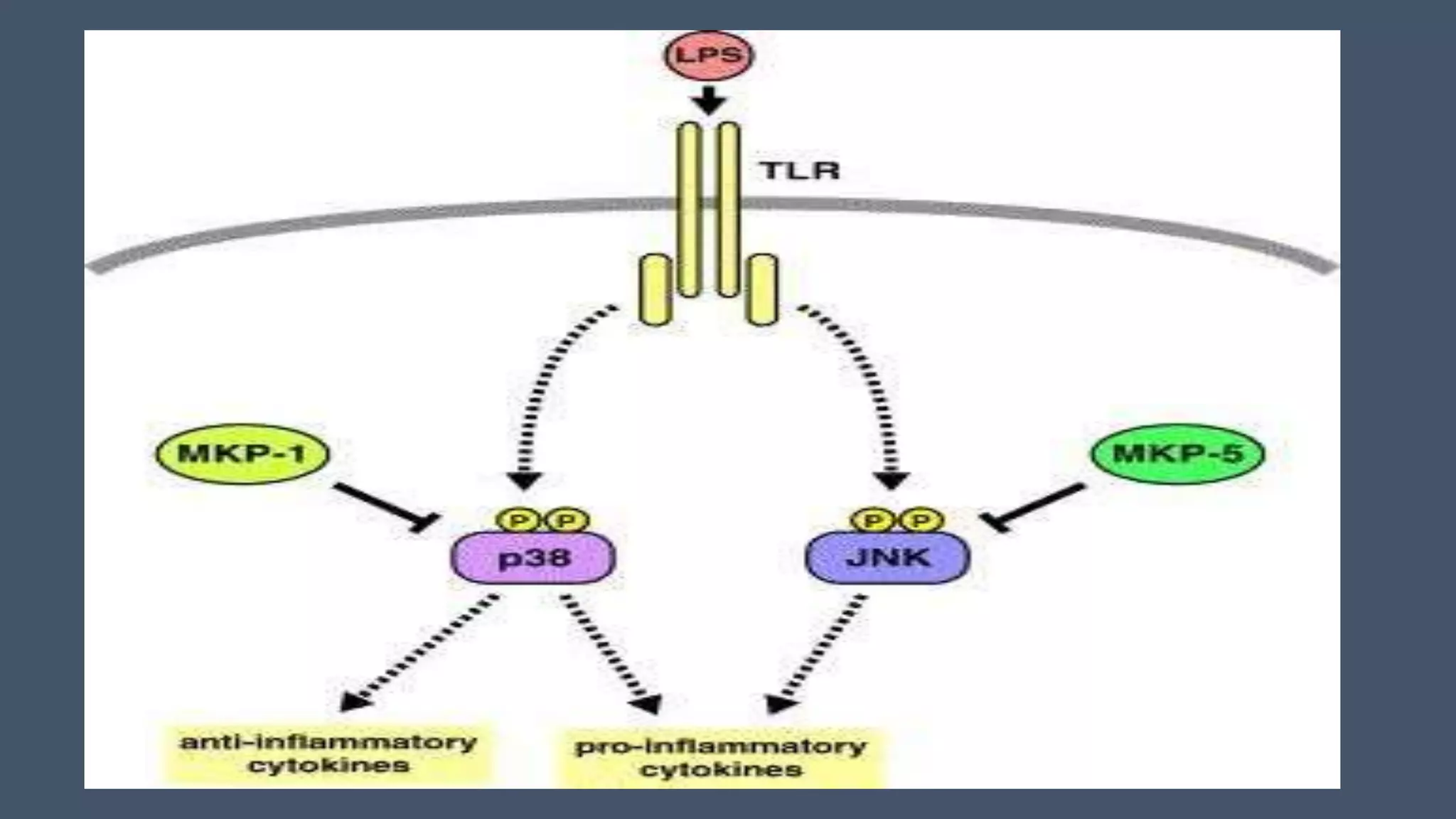
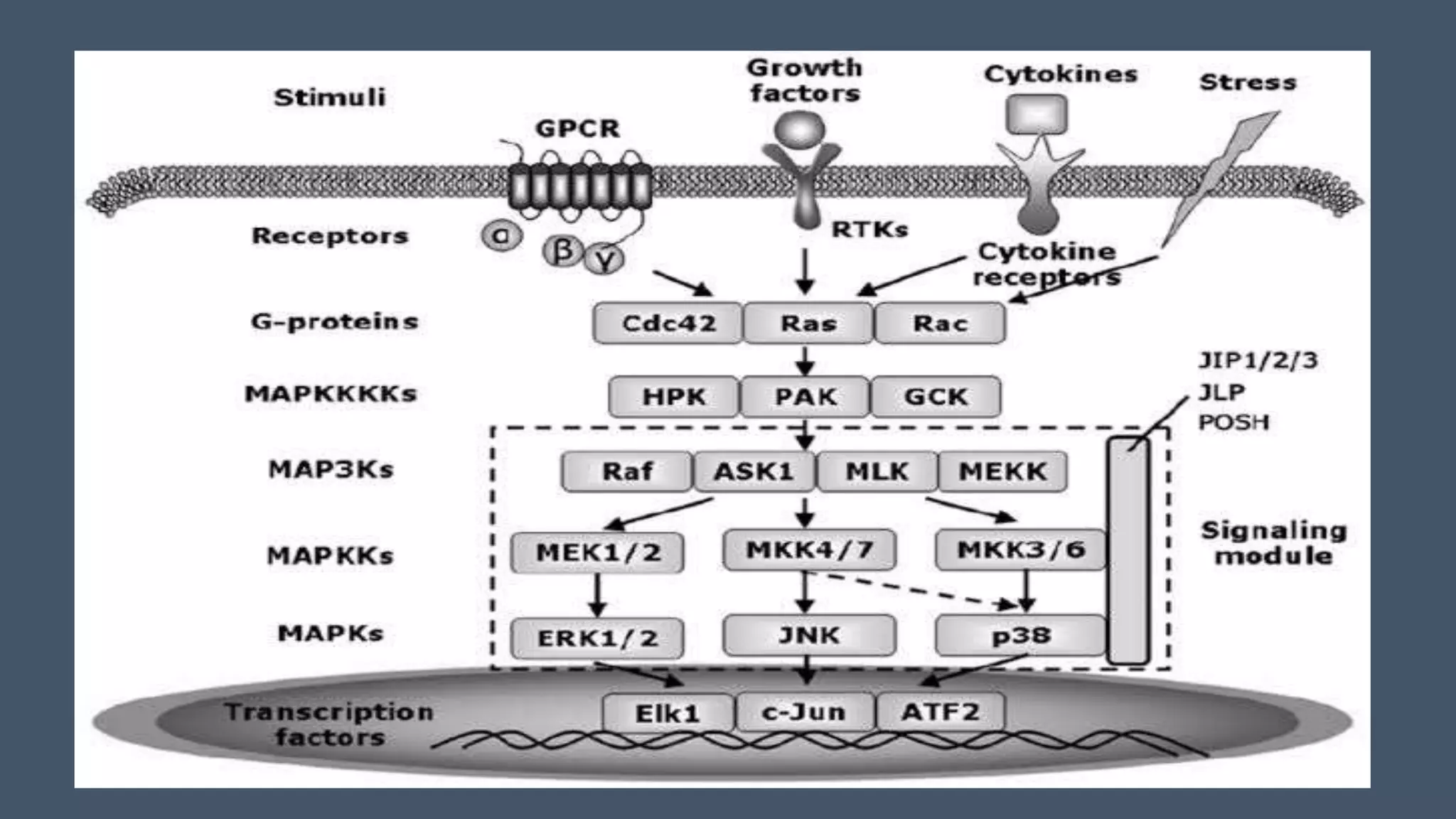
•Each MAPK is activated by dual phosphorylation
of a tripeptide motif (Thr-Xaa-Tyr) located in the
activation loop(T-loop).
•This phosphorylation is mediated by a MAPK
kinase (MAPKK) that is activated by
phosphorylation by a MAPKK kinase
(MAPKKK).
•These MAPK are therefore activated by a kinase
signaling cascade
•MAPK signaling pathways have also been identified in
higher organisms.
•In mammals, three major groups of MAPK have been
identified.
•Each of these groups of MAPK is activated by a protein
kinase cascade.
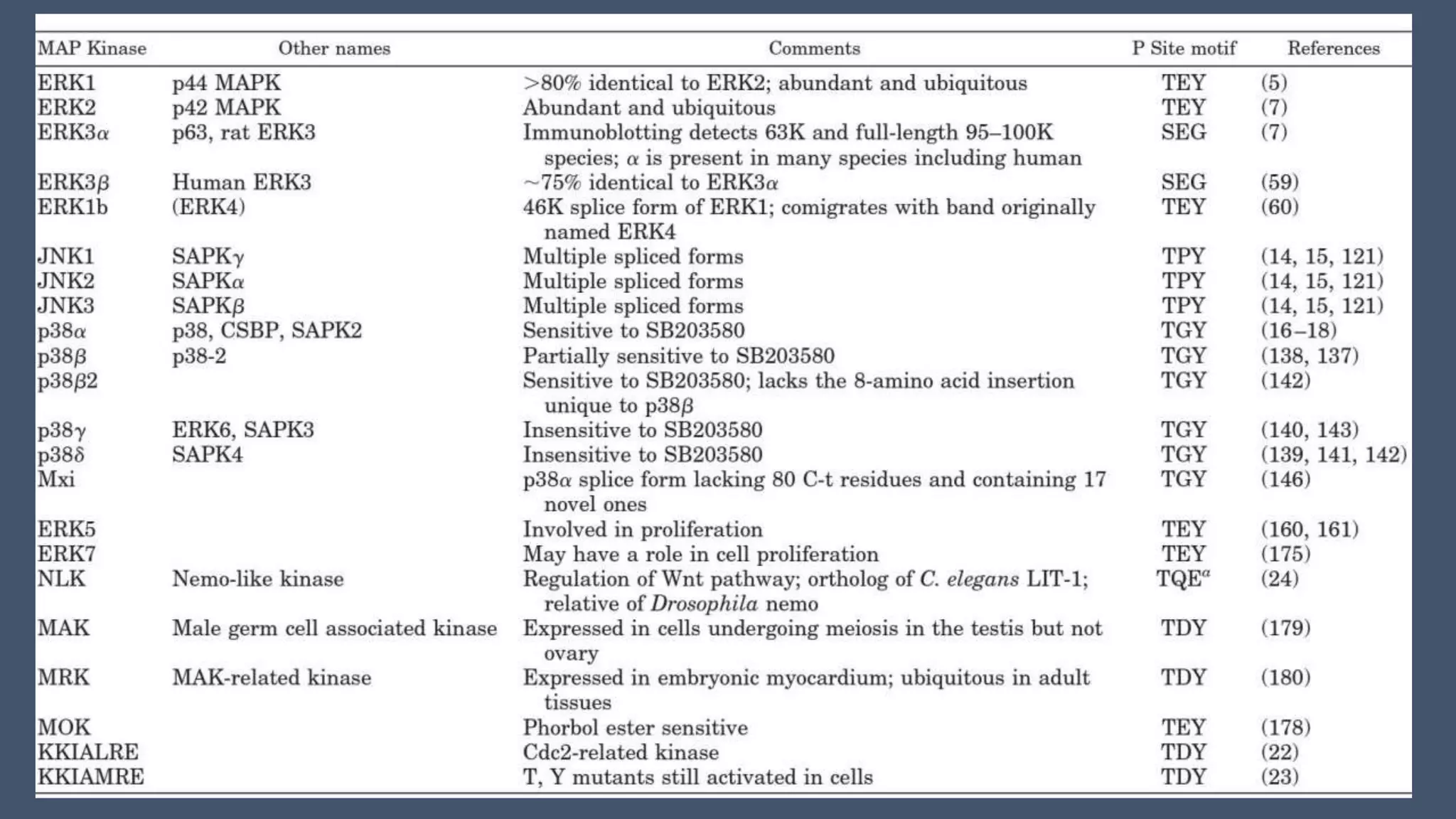
•The ERK and p38 groups of MAPK are related to enzymes
found in budding yeast and contain the dual
phosphorylation motifs Thr-Glu-Tyr and Thr-Gly-Tyr,
respectively.
•The c-Jun NH2-terminal kinases (JNK), also
known as stress-activated MAP kinases
(SAPK), represent a third group of MAPK
that has been identified in mammals.
•JNK contains the dual phosphorylation motif
Thr-Pro-Tyr
•Biochemical studies led to the identification and
purification of JNK as a “p54 microtubule-
associated protein kinase” that was activated by
cycloheximide.
•JNK was found to bind the NH2 terminal
activation domain of c-Jun and to phosphorylate
c-Jun on Ser-63 and Ser-73 .
•Subsequently, JNK was molecularly cloned.
• PROTEIN kinases and other messenger systems form
highly interactive networks to achieve the integrated
function of cells in an organism.
• To understand the signaling mechanism for any agent,
its repertoire of signal transducers and their
interactions within this network must be defined within
the cellular context.
• This includes the production of second messengers,
activation of protein kinases, and the subcellular
distribution of these transducers to bring them into
contact with appropriate targets.
• Within the repertoire of signaling molecules in the
network is a family of protein kinase cascades known
as mitogen-activated protein (MAP) kinase modules.
• These cascades contain atleast three protein kinases in
series that culminate in the activation of a
multifunctional MAP kinase (1±3).
• MAP kinases are major components of pathways
controlling embryogenesis, cell differentiation, cell
proliferation, and cell death.
• This review contains a historical overview of the
mammalian MAP kinases that have been studied to
date, their regulatory cascades, and some of their
functions.
• Current research on these pathways is described in
detail, and emphasis is on nonenzymatic mechanisms
and findings from gene disruption studies.
• Much of the review highlights work on extracellular
signal-regulated kinases 1 and 2 (ERK1 and ERK2).
• Some mechanisms in yeast MAP kinase cascades that
might offer insight into the mammalian pathways are
also included.
Overview of Regulation and
Properties of MAPKinases
•Between 1989 and 1991 the sequences of the first
MAP kinases, Kss1p and Fus3p in the
pheromone response pathway of the budding
yeast and the mammalian MAP kinases ERK1,
ERK2 and ERK3, became available, revealing
that these enzymes were members of a newly
identified protein kinase family (4±8).
•The activities of ERK1 and ERK2 had been
routinely measured with two substrates, myelin
basic protein (MBP) and microtubule-associated
protein-2 (MAP2); as a result, they had been
called MBP and MAP kinases
•The MAP acronym was retained, but with a
different meaning: the name mitogen-activated
protein kinase was assigned to these enzymes to
acknowledge the fact that they had first been
detected as mitogen-stimulated tyrosine
phosphoproteins in the early 1980s, during an
intense search for tyrosine kinase substrates.
•The concept that there were multiple MAP
kinases with distinct regulation and functions
arose from the description of additional
pathways found initially in yeast, the high
osmolarity glycerol (HOG) pathway containing
the MAP kinase HOG1 and the cell wall pathway
containing the kinase MPK1.
•Then in metazoans with the discovery of c-Jun N-
terminal kinases/stress-activated protein kinases
(JNK/ SAPKs), p38 enzymes, and others
discussed below (12±18).
•Extensive analyses of sequence relationships
among these kinases have been published
recently
•MAP kinases have some features in common with
the cyclin-dependent kinases (cdks).
•These include an insert of unknown function
between subdomains X and XI of the catalytic
core and a preference for serine or threonine
residues followed by proline in their substrates.
•Among the distinguishing features of the MAP
kinases are activation directly by
phosphorylation in the absence of a regulatory
subunit, and usually two activating
phosphorylation sites in the kinase activation
loop,one a tyrosine and one a threonine,
separated by a single, variable residue .
•Kinases such as KKIALRE, for which cDNAs
were first cloned as homologs of the cdk cdc2,
KKIAMRE, and the nemo-like kinase NLK,
identified by its similarity to Drosophila nemo,
appear intermediate between the MAP kinase
and cdk families and may function in a manner
distinct from the majority of MAPkinases.
MAP Kinases Are Activated by
Phosphorylation Cascades
• MAPkinases are regulated by phosphorylation
cascades.
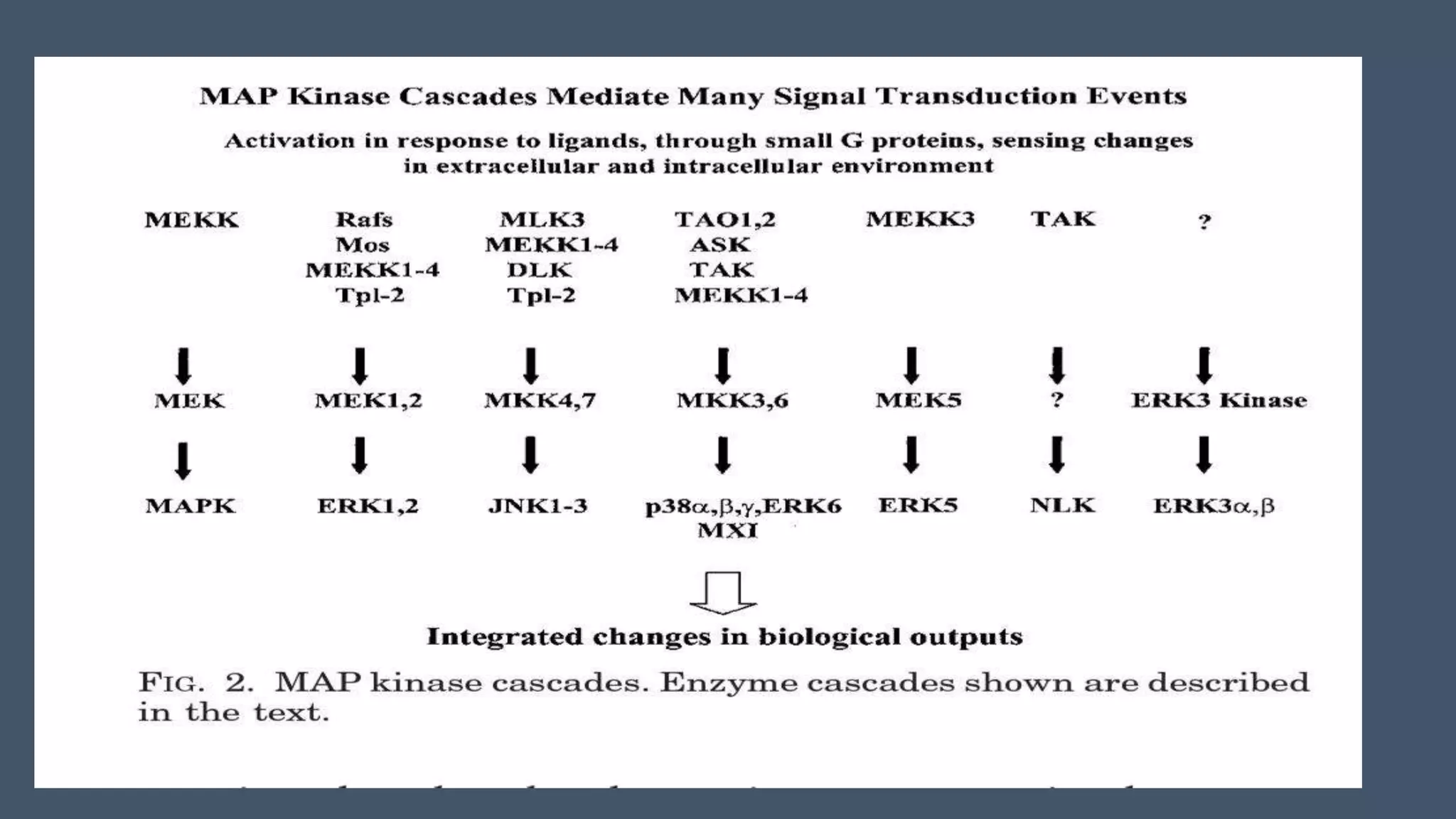
• Two upstream protein kinases activated in series lead
to activation of a MAP kinase, and additional kinases
may also be required upstream of this three-kinase
module.
• In all currently known MAP kinase cascades, the
kinase immediately upstream of the MAP kinase is a
member of the MAP/ERK kinase (MEK or MKK)
family.
• These are dual specificity enzymes that can
phosphorylate hydroxyl side chains of serine/threonine
and tyrosine residues in their MAP kinase substrates
(27±31).
• In spite of their ability to phosphorylate proteins on
both aliphatic and aromatic side chains in the
appropriate context, the substrate specificity of the
known MEKsis very narrow: each MEK
phosphorylates only one or a few of the MAP kinases.
•There are several characteristics of MAPkinases
that result from their activation by kinase
cascades.
•Important among these is that the intermediates
provide distinct mechanisms for detecting inputs
from other signaling pathways to enhance or
suppress the signal to the MAP kinase (32±34).
• Another is signal amplification.
• Amplification can occur if eachsuccessive protein in
the cascade is moreabundantthan its regulator.
• This may be true at one or both steps within MAP
kinase modules.
• Studies combining overexpression and immunoblotting
might be interpreted to indicate that each step in the
MAP kinase module of the pheromone response
pathway in yeast is represented by a successively more
abundant protein (2, 35), so that the signal may be
amplified at both steps within the module.
•In the case of the ERK1/2pathway, amplification
occurs at the Raf-MEK step, because MEK1 is
much more abundant (perhaps as high as 1mm)
than Raf, but is not the major function of the
MEK-ERK step because the relevant MEKs
(MEK1/2) and ERK1/2 are present at
approximately the same concentrations.
• Another feature of MAP kinase cascades derives in
part from the dual phosphorylation of the MAP kinase
by the MEK.
• In the case of ERK1/2,the kinases are phosphorylated
on tyrosine before threonine is phosphorylated both in
vitro and in cells.
• The result of this nonprocessive phosphorylation is the
establishment of a threshold.
•tyrosine-phosphorylated proteins are not active
but must accumulate before phosphorylation of
threonine.
•Once this accumulation threshold has been
reached, the kinases are rapidly converted to the
active state,as threonine is phosphorylated.
•It may be generally true that the MEK
MAPkinases tep exists to enhance the
cooperativity of activation of the MAPkinase and
to allow modulation by other signaling events, in
addition to or rather than amplifying the MEK
signal
•MEKs are also activated by phosphorylation of
two residues, either serine or threonine, in their
activation loops.
•Atleast in the case of MEK1, either
phosphorylation alone significantly increases
activity, in contrast to the effects of the
phosphorylations on the MAPkinase.
Nevertheless,activation of MEK also displays
cooperativity atleast in the Xenopusoocyte
system.
Signal Integration and Specificity
•Interactions among the cascades occur in
numerous ways to integrate responses and
moderate outputs.
•Abundant evidence demonstrates that MAPkinases
have overlapping substrate specificities.
•The resulting activities of the substrates reflect the
cumulative extent of phosphorylation on all
regulatory sites, Which may be shared among
multiple protein kinases.
•MAPkinase cascades form complexes that
facilitate their activation and impact their
localization, spec-ificity, and targets .
•Potential scaffold proteins and adaptor or linker
molecules have been found for some of the
pathways.
•Regulation of complex formation provides yet
another site for cross-talk between signaling
pathways.
• MEK family members contain sites that are
phosphorylated by kinases in other pathways;
• These events may influence the ability of MEKs to
interact in complexes, for instance.
• Integration may also occur early in the signaling
pathway and at the top of the kinase module.
• Some MEKKs may regulate more than one MAP
kinase cascade, and some cascades may be controlled
by several, unrelated MEKKs.
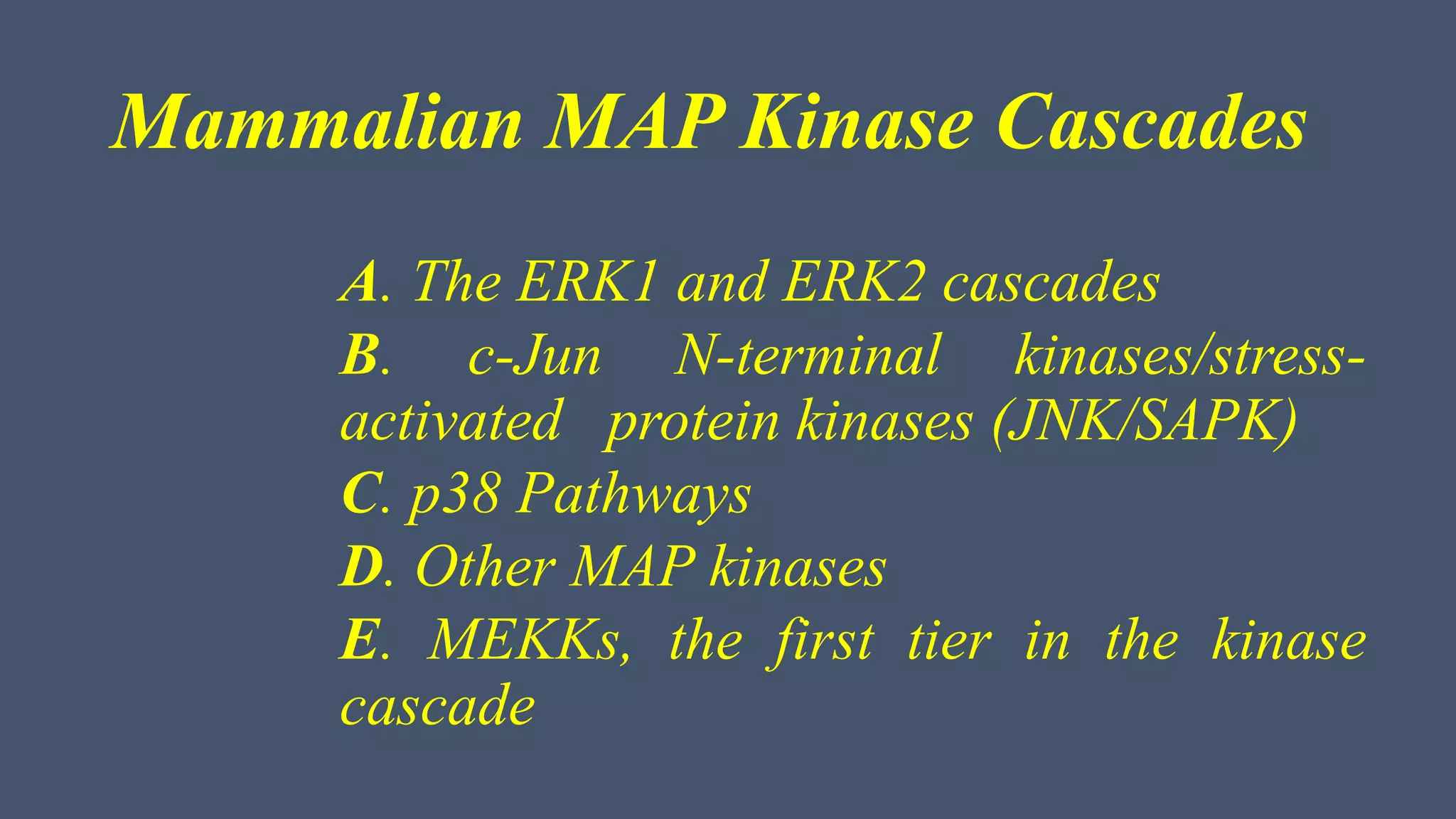
Mammalian MAP Kinase Cascades
A. The ERK1 and ERK2 cascades
B. c-Jun N-terminal kinases/stress-
activated protein kinases (JNK/SAPK)
C. p38 Pathways
D. Other MAP kinases
E. MEKKs, the first tier in the kinase
cascade
Protein associations in mammalian
MAP kinase pathways
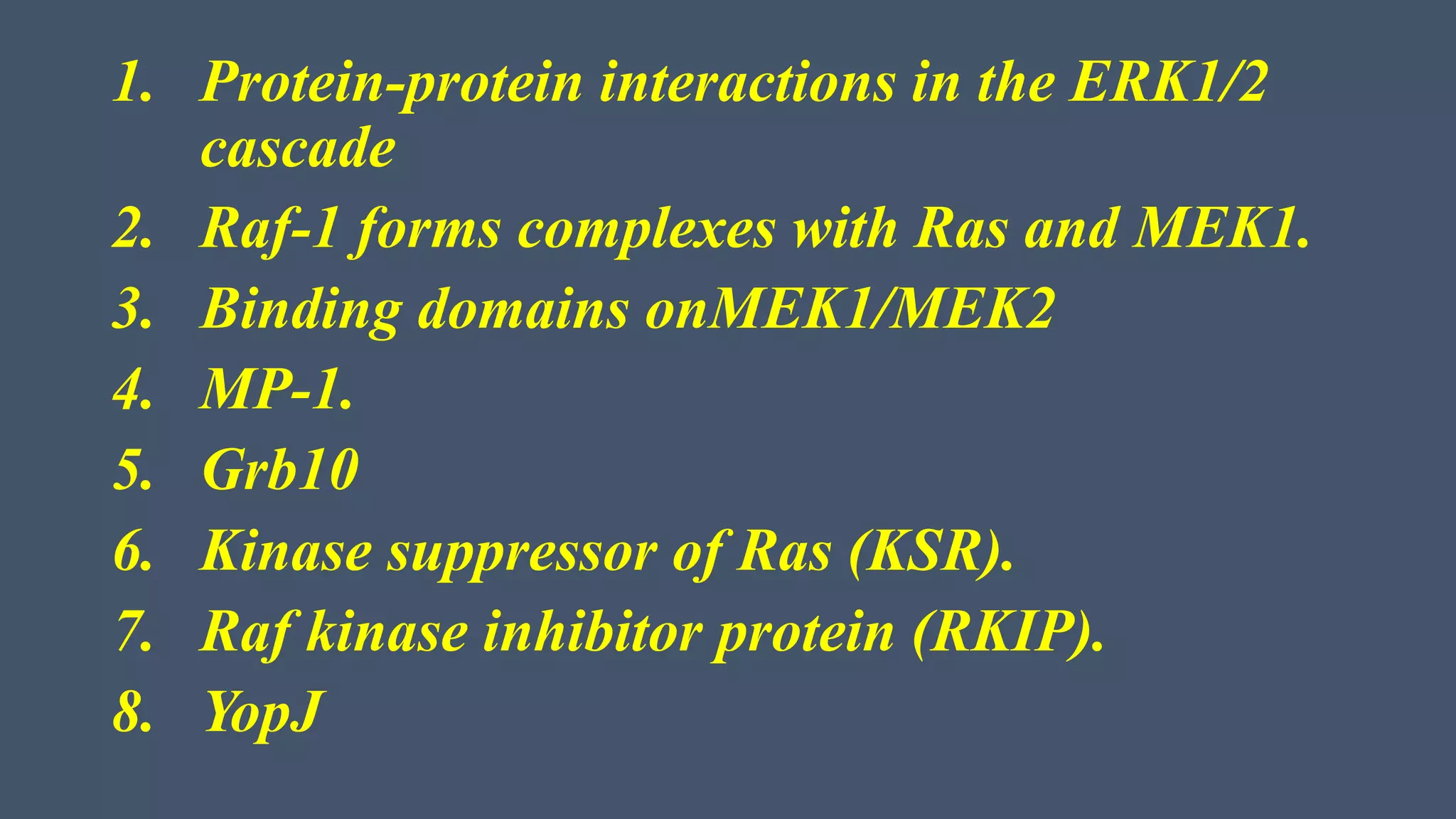
1. Protein-protein interactions in the ERK1/2
cascade
2. Raf-1 forms complexes with Ras and MEK1.
3. Binding domains onMEK1/MEK2
4. MP-1.
5. Grb10
6. Kinase suppressor of Ras (KSR).
7. Raf kinase inhibitor protein (RKIP).
8. YopJ
1. STYX
2. Sur-8.
3. Connector enhancer of KSR (CNK)
4. The c-Jun N-terminal kinase/stress-activated
protein kinase (JNK/SAPK)module and the JIP
family of scaffolding proteins
5. MEKK1
6. TAOs
7. Generality of stable association of MEKs with
their MAPkinase targets.
Substrates of MAP Kinases
1. Protein kinases
2. Membrane and cytoplasmic substrates
3. Nuclear substrates
Thank You

Mapk pathways

  • 1.
  • 2.
    •Cells respond tochanges in the physical and chemical properties of the environment. •These changes include alterations in the amount of nutrients, growth factors, cytokines, and adhesion to the cell matrix. •In addition, cells respond to physical stimulation mediated by osmolarity, heat, pH, redox, radiation, and mechanical stress.
  • 3.
    •These physical andchemical cues control many aspects of cell function including migration, proliferation, differentiation, and death. •The decision making process that cells employ to mount an appropriate response to a specific stimulus is critical for normal life. •Many signal transduction pathways cooperateand participate in this process. •Recent studies have established that mitogenactivated protein kinases (MAPK) play an important regulatory role.
  • 4.
    •Genetic studies haveidentified five MAPK pathways in the budding yeast Saccharomyces cerevisiae. •These MAPK are essential for mating (Fus3p), osmoregulation (Hog1p), sporulation (Smk1p), cell wall biosynthesis (Smk1p), and filamentation (Kss1p), and these enzymes form a group with related structures and biochemical properties.
  • 5.
    •Each MAPK isactivated by dual phosphorylation of a tripeptide motif (Thr-Xaa-Tyr) located in the activation loop(T-loop). •This phosphorylation is mediated by a MAPK kinase (MAPKK) that is activated by phosphorylation by a MAPKK kinase (MAPKKK). •These MAPK are therefore activated by a kinase signaling cascade
  • 7.
    •MAPK signaling pathwayshave also been identified in higher organisms. •In mammals, three major groups of MAPK have been identified. •Each of these groups of MAPK is activated by a protein kinase cascade. •The ERK and p38 groups of MAPK are related to enzymes found in budding yeast and contain the dual phosphorylation motifs Thr-Glu-Tyr and Thr-Gly-Tyr, respectively.
  • 8.
    •The c-Jun NH2-terminalkinases (JNK), also known as stress-activated MAP kinases (SAPK), represent a third group of MAPK that has been identified in mammals. •JNK contains the dual phosphorylation motif Thr-Pro-Tyr
  • 9.
    •Biochemical studies ledto the identification and purification of JNK as a “p54 microtubule- associated protein kinase” that was activated by cycloheximide. •JNK was found to bind the NH2 terminal activation domain of c-Jun and to phosphorylate c-Jun on Ser-63 and Ser-73 . •Subsequently, JNK was molecularly cloned.
  • 12.
    • PROTEIN kinasesand other messenger systems form highly interactive networks to achieve the integrated function of cells in an organism. • To understand the signaling mechanism for any agent, its repertoire of signal transducers and their interactions within this network must be defined within the cellular context.
  • 13.
    • This includesthe production of second messengers, activation of protein kinases, and the subcellular distribution of these transducers to bring them into contact with appropriate targets. • Within the repertoire of signaling molecules in the network is a family of protein kinase cascades known as mitogen-activated protein (MAP) kinase modules.
  • 14.
    • These cascadescontain atleast three protein kinases in series that culminate in the activation of a multifunctional MAP kinase (1±3). • MAP kinases are major components of pathways controlling embryogenesis, cell differentiation, cell proliferation, and cell death. • This review contains a historical overview of the mammalian MAP kinases that have been studied to date, their regulatory cascades, and some of their functions.
  • 16.
    • Current researchon these pathways is described in detail, and emphasis is on nonenzymatic mechanisms and findings from gene disruption studies. • Much of the review highlights work on extracellular signal-regulated kinases 1 and 2 (ERK1 and ERK2). • Some mechanisms in yeast MAP kinase cascades that might offer insight into the mammalian pathways are also included.
  • 17.
    Overview of Regulationand Properties of MAPKinases
  • 18.
    •Between 1989 and1991 the sequences of the first MAP kinases, Kss1p and Fus3p in the pheromone response pathway of the budding yeast and the mammalian MAP kinases ERK1, ERK2 and ERK3, became available, revealing that these enzymes were members of a newly identified protein kinase family (4±8).
  • 19.
    •The activities ofERK1 and ERK2 had been routinely measured with two substrates, myelin basic protein (MBP) and microtubule-associated protein-2 (MAP2); as a result, they had been called MBP and MAP kinases
  • 21.
    •The MAP acronymwas retained, but with a different meaning: the name mitogen-activated protein kinase was assigned to these enzymes to acknowledge the fact that they had first been detected as mitogen-stimulated tyrosine phosphoproteins in the early 1980s, during an intense search for tyrosine kinase substrates.
  • 22.
    •The concept thatthere were multiple MAP kinases with distinct regulation and functions arose from the description of additional pathways found initially in yeast, the high osmolarity glycerol (HOG) pathway containing the MAP kinase HOG1 and the cell wall pathway containing the kinase MPK1.
  • 23.
    •Then in metazoanswith the discovery of c-Jun N- terminal kinases/stress-activated protein kinases (JNK/ SAPKs), p38 enzymes, and others discussed below (12±18). •Extensive analyses of sequence relationships among these kinases have been published recently
  • 24.
    •MAP kinases havesome features in common with the cyclin-dependent kinases (cdks). •These include an insert of unknown function between subdomains X and XI of the catalytic core and a preference for serine or threonine residues followed by proline in their substrates.
  • 25.
    •Among the distinguishingfeatures of the MAP kinases are activation directly by phosphorylation in the absence of a regulatory subunit, and usually two activating phosphorylation sites in the kinase activation loop,one a tyrosine and one a threonine, separated by a single, variable residue .
  • 26.
    •Kinases such asKKIALRE, for which cDNAs were first cloned as homologs of the cdk cdc2, KKIAMRE, and the nemo-like kinase NLK, identified by its similarity to Drosophila nemo, appear intermediate between the MAP kinase and cdk families and may function in a manner distinct from the majority of MAPkinases.
  • 27.
    MAP Kinases AreActivated by Phosphorylation Cascades
  • 28.
    • MAPkinases areregulated by phosphorylation cascades. • Two upstream protein kinases activated in series lead to activation of a MAP kinase, and additional kinases may also be required upstream of this three-kinase module. • In all currently known MAP kinase cascades, the kinase immediately upstream of the MAP kinase is a member of the MAP/ERK kinase (MEK or MKK) family.
  • 29.
    • These aredual specificity enzymes that can phosphorylate hydroxyl side chains of serine/threonine and tyrosine residues in their MAP kinase substrates (27±31). • In spite of their ability to phosphorylate proteins on both aliphatic and aromatic side chains in the appropriate context, the substrate specificity of the known MEKsis very narrow: each MEK phosphorylates only one or a few of the MAP kinases.
  • 31.
    •There are severalcharacteristics of MAPkinases that result from their activation by kinase cascades. •Important among these is that the intermediates provide distinct mechanisms for detecting inputs from other signaling pathways to enhance or suppress the signal to the MAP kinase (32±34).
  • 32.
    • Another issignal amplification. • Amplification can occur if eachsuccessive protein in the cascade is moreabundantthan its regulator. • This may be true at one or both steps within MAP kinase modules. • Studies combining overexpression and immunoblotting might be interpreted to indicate that each step in the MAP kinase module of the pheromone response pathway in yeast is represented by a successively more abundant protein (2, 35), so that the signal may be amplified at both steps within the module.
  • 33.
    •In the caseof the ERK1/2pathway, amplification occurs at the Raf-MEK step, because MEK1 is much more abundant (perhaps as high as 1mm) than Raf, but is not the major function of the MEK-ERK step because the relevant MEKs (MEK1/2) and ERK1/2 are present at approximately the same concentrations.
  • 34.
    • Another featureof MAP kinase cascades derives in part from the dual phosphorylation of the MAP kinase by the MEK. • In the case of ERK1/2,the kinases are phosphorylated on tyrosine before threonine is phosphorylated both in vitro and in cells. • The result of this nonprocessive phosphorylation is the establishment of a threshold.
  • 36.
    •tyrosine-phosphorylated proteins arenot active but must accumulate before phosphorylation of threonine. •Once this accumulation threshold has been reached, the kinases are rapidly converted to the active state,as threonine is phosphorylated.
  • 37.
    •It may begenerally true that the MEK MAPkinases tep exists to enhance the cooperativity of activation of the MAPkinase and to allow modulation by other signaling events, in addition to or rather than amplifying the MEK signal
  • 38.
    •MEKs are alsoactivated by phosphorylation of two residues, either serine or threonine, in their activation loops. •Atleast in the case of MEK1, either phosphorylation alone significantly increases activity, in contrast to the effects of the phosphorylations on the MAPkinase. Nevertheless,activation of MEK also displays cooperativity atleast in the Xenopusoocyte system.
  • 39.
  • 40.
    •Interactions among thecascades occur in numerous ways to integrate responses and moderate outputs. •Abundant evidence demonstrates that MAPkinases have overlapping substrate specificities. •The resulting activities of the substrates reflect the cumulative extent of phosphorylation on all regulatory sites, Which may be shared among multiple protein kinases.
  • 41.
    •MAPkinase cascades formcomplexes that facilitate their activation and impact their localization, spec-ificity, and targets . •Potential scaffold proteins and adaptor or linker molecules have been found for some of the pathways. •Regulation of complex formation provides yet another site for cross-talk between signaling pathways.
  • 42.
    • MEK familymembers contain sites that are phosphorylated by kinases in other pathways; • These events may influence the ability of MEKs to interact in complexes, for instance. • Integration may also occur early in the signaling pathway and at the top of the kinase module. • Some MEKKs may regulate more than one MAP kinase cascade, and some cascades may be controlled by several, unrelated MEKKs.
  • 43.
    Mammalian MAP KinaseCascades A. The ERK1 and ERK2 cascades B. c-Jun N-terminal kinases/stress- activated protein kinases (JNK/SAPK) C. p38 Pathways D. Other MAP kinases E. MEKKs, the first tier in the kinase cascade
  • 46.
    Protein associations inmammalian MAP kinase pathways
  • 47.
    1. Protein-protein interactionsin the ERK1/2 cascade 2. Raf-1 forms complexes with Ras and MEK1. 3. Binding domains onMEK1/MEK2 4. MP-1. 5. Grb10 6. Kinase suppressor of Ras (KSR). 7. Raf kinase inhibitor protein (RKIP). 8. YopJ
  • 48.
    1. STYX 2. Sur-8. 3.Connector enhancer of KSR (CNK) 4. The c-Jun N-terminal kinase/stress-activated protein kinase (JNK/SAPK)module and the JIP family of scaffolding proteins 5. MEKK1 6. TAOs 7. Generality of stable association of MEKs with their MAPkinase targets.
  • 50.
  • 51.
    1. Protein kinases 2.Membrane and cytoplasmic substrates 3. Nuclear substrates
  • 54.