
PROJECT PLANNING1
2
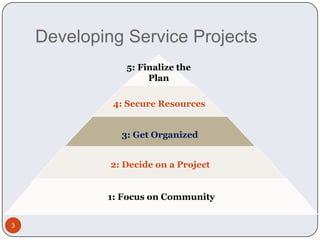
5: Finalize the Plan4: Secure Resources3: Get Organized2: Decide on a Project1: Focus on CommunityDeveloping Service Projects3
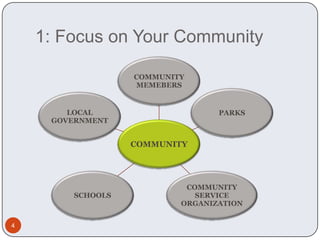
1: Focus on Your Community4
5
Conducting a Needs AssessmentWhat types of questions could you ask?If money were not an issue, what would you be doing that you are not doing now? What is on your wish list?What is on your to-do list that never gets accomplished because you don’t have the time or resources?Is there a population that needs to be served that you have not been able to serve? Is there a program that you have been wanting to start but don’t have the resources? Are there marketing, technology, financial, training or other types of skills needed to support any of your projects?Others6
2: Narrow Your Focus7
Research the IssueStatistics BackgroundUnderlying causesProject ideasCommunity experts8
Develop PartnershipsReview potential project partnersMissionResources they offer partnersServices they offer to the communityApproach potential partnerDefine roles, outcomes and resources9
Conduct a Site VisitSearch for potential projectsInvolve key decision-makers and stakeholdersAnswer important questions about agency needs and how the project will impact the community and the agencyGather details about needs for potential projects, including special skills and materials10
Elements of a Successful ProjectConsider . . .Does the project support our organization’s mission?Does the project build upon positive relationships within the community?Will the project make a difference to the organization, clients, and/or community? If so how?Is the project volunteer-friendly?Are volunteer leadership opportunities available?Will volunteers feel they have completed something worthwhile?11
DISCUSSION12Project Ideas ActivityWhat are the needs in your community?How might various organizations collaborate to maximize PR and community resources?What grants and/or state and national resources are available?
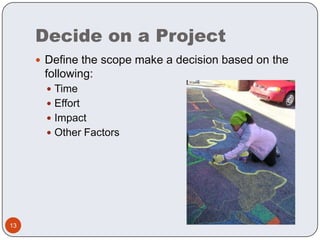
Decide on a ProjectDefine the scope make a decision based on the following:Time EffortImpact Other Factors13
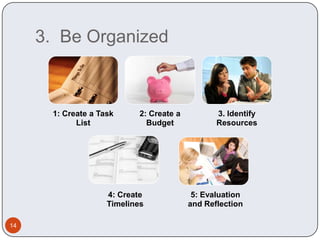
3.  Be Organized 14
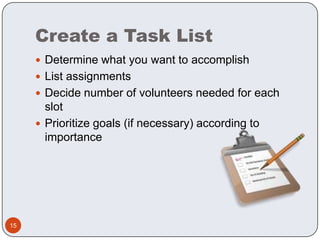
Create a Task ListDetermine what you want to accomplishList assignments Decide number of volunteers needed for each slotPrioritize goals (if necessary) according to importance15
Create a BudgetOutline costs associated with all tasksKeep track of all donations:MonetaryIn-kind servicesDonations16
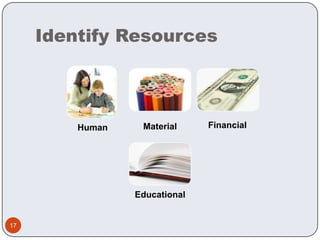
Identify Resources17
VolunteersEstablish volunteer needsConsider variables:Volunteer skill levelVolunteer ageDuration of projectAvailability of suppliesPhysical space available to perform the work18
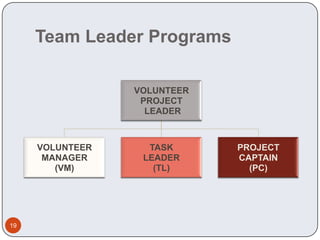
Team Leader Programs19
Other Volunteer PositionsPerform tasks—raking, painting, sorting, supervising children’s groups, etc.GreetersDistribute & manage suppliesPass out water, snacks, etc.Plan a kick off receptionServe as guides and runners Video or take picturesCapture volunteer quotesSafety Ambassador20
SuppliesDetermine what supplies, materials, goods and services you needStrategize about types and amountsThink about partners and local groups/ businesses that can provide resources at no costNote supplies that will need to be purchased21
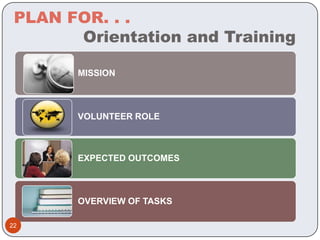
PLAN FOR. . .             Orientation and Training22
Create TimelinesProject planningDay of project After project23
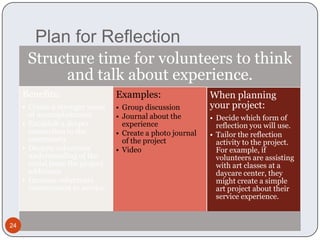
Plan for Reflection24
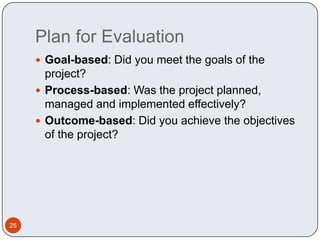
Plan for Evaluation Goal-based: Did you meet the goals of the project?Process-based: Was the project planned, managed and implemented effectively?Outcome-based: Did you achieve the objectives of the project?25
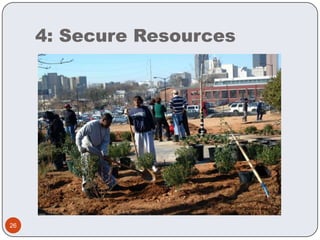
4: Secure Resources26
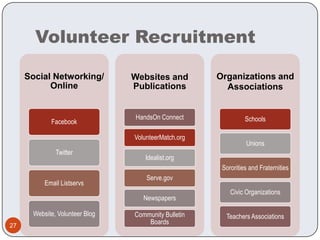
Volunteer Recruitment27
Funding, Products and ServicesFaith groupsFoundationsNeighborhood associations and civic groupsNonprofitsBusinessesColleges and universitiesSororities & FraternitiesProfessional organizations28
The “Ask” StrategyIdentify the correct people to contactAppeal to their needs and wantsMap out a case for supportWhy the project is importantThe impact it will createYour ability to complete the projectHow they can be a part of the effortBe specific!29
Connections that CountStart with people you knowAsk people you know to engage their friendsTalk personally with people to “sell” your projectKnow what you need and ask people how they can contributeDon’t be afraid to tap people’s emotionsTry creative outreach30
5: Finalize the Project PlanAddress questionsFinalize plansMeet with leadersReview the scheduleDiscuss documentationConfirm all suppliesProvide food and drinksMake any final callsPack a project kitCheck on trash containersCreate a fun atmosphereCheck, double-check and triple-check!31
Communicating with VolunteersPre-register volunteersProvide important project detailsLogistics such as date, time, address, public transportation and/or parking informationWhat to wear or not wearWhat to bring and what will be providedWhere to check-in at the projectPoint of contact32
SafetyReview project for possible hazardsConsider parking, access to water and restroomsProvide for accessibility issues.Know where emergency exits, first aid kits and automated external defibrillators (AED’s) are locatedHave a phone to call first responders if necessary 33
Contingency PlanningThink through the worst-case scenarios of what could go wrongCreate contingency plans for weather and other potential problemsPrepare ways to expand or reduce project goals due to number of volunteersKnow whom to contact in case of problems34
DISCUSSION35Form small groupsDiscuss past projects in which something went wrong
Did you have a contingency plan and, if so, how did it work?

Project Planning for Volunteer Managers/Leaders

  • 1.
  • 2.
  • 3.
    5: Finalize thePlan4: Secure Resources3: Get Organized2: Decide on a Project1: Focus on CommunityDeveloping Service Projects3
  • 4.
    1: Focus onYour Community4
  • 5.
  • 6.
    Conducting a NeedsAssessmentWhat types of questions could you ask?If money were not an issue, what would you be doing that you are not doing now? What is on your wish list?What is on your to-do list that never gets accomplished because you don’t have the time or resources?Is there a population that needs to be served that you have not been able to serve? Is there a program that you have been wanting to start but don’t have the resources? Are there marketing, technology, financial, training or other types of skills needed to support any of your projects?Others6
  • 7.
  • 8.
    Research the IssueStatisticsBackgroundUnderlying causesProject ideasCommunity experts8
  • 9.
    Develop PartnershipsReview potentialproject partnersMissionResources they offer partnersServices they offer to the communityApproach potential partnerDefine roles, outcomes and resources9
  • 10.
    Conduct a SiteVisitSearch for potential projectsInvolve key decision-makers and stakeholdersAnswer important questions about agency needs and how the project will impact the community and the agencyGather details about needs for potential projects, including special skills and materials10
  • 11.
    Elements of aSuccessful ProjectConsider . . .Does the project support our organization’s mission?Does the project build upon positive relationships within the community?Will the project make a difference to the organization, clients, and/or community? If so how?Is the project volunteer-friendly?Are volunteer leadership opportunities available?Will volunteers feel they have completed something worthwhile?11
  • 12.
    DISCUSSION12Project Ideas ActivityWhatare the needs in your community?How might various organizations collaborate to maximize PR and community resources?What grants and/or state and national resources are available?
  • 13.
    Decide on aProjectDefine the scope make a decision based on the following:Time EffortImpact Other Factors13
  • 14.
    3. BeOrganized 14
  • 15.
    Create a TaskListDetermine what you want to accomplishList assignments Decide number of volunteers needed for each slotPrioritize goals (if necessary) according to importance15
  • 16.
    Create a BudgetOutlinecosts associated with all tasksKeep track of all donations:MonetaryIn-kind servicesDonations16
  • 17.
  • 18.
    VolunteersEstablish volunteer needsConsidervariables:Volunteer skill levelVolunteer ageDuration of projectAvailability of suppliesPhysical space available to perform the work18
  • 19.
  • 20.
    Other Volunteer PositionsPerformtasks—raking, painting, sorting, supervising children’s groups, etc.GreetersDistribute & manage suppliesPass out water, snacks, etc.Plan a kick off receptionServe as guides and runners Video or take picturesCapture volunteer quotesSafety Ambassador20
  • 21.
    SuppliesDetermine what supplies,materials, goods and services you needStrategize about types and amountsThink about partners and local groups/ businesses that can provide resources at no costNote supplies that will need to be purchased21
  • 22.
    PLAN FOR. .. Orientation and Training22
  • 23.
    Create TimelinesProject planningDayof project After project23
  • 24.
  • 25.
    Plan for EvaluationGoal-based: Did you meet the goals of the project?Process-based: Was the project planned, managed and implemented effectively?Outcome-based: Did you achieve the objectives of the project?25
  • 26.
  • 27.
  • 28.
    Funding, Products andServicesFaith groupsFoundationsNeighborhood associations and civic groupsNonprofitsBusinessesColleges and universitiesSororities & FraternitiesProfessional organizations28
  • 29.
    The “Ask” StrategyIdentifythe correct people to contactAppeal to their needs and wantsMap out a case for supportWhy the project is importantThe impact it will createYour ability to complete the projectHow they can be a part of the effortBe specific!29
  • 30.
    Connections that CountStartwith people you knowAsk people you know to engage their friendsTalk personally with people to “sell” your projectKnow what you need and ask people how they can contributeDon’t be afraid to tap people’s emotionsTry creative outreach30
  • 31.
    5: Finalize theProject PlanAddress questionsFinalize plansMeet with leadersReview the scheduleDiscuss documentationConfirm all suppliesProvide food and drinksMake any final callsPack a project kitCheck on trash containersCreate a fun atmosphereCheck, double-check and triple-check!31
  • 32.
    Communicating with VolunteersPre-registervolunteersProvide important project detailsLogistics such as date, time, address, public transportation and/or parking informationWhat to wear or not wearWhat to bring and what will be providedWhere to check-in at the projectPoint of contact32
  • 33.
    SafetyReview project forpossible hazardsConsider parking, access to water and restroomsProvide for accessibility issues.Know where emergency exits, first aid kits and automated external defibrillators (AED’s) are locatedHave a phone to call first responders if necessary 33
  • 34.
    Contingency PlanningThink throughthe worst-case scenarios of what could go wrongCreate contingency plans for weather and other potential problemsPrepare ways to expand or reduce project goals due to number of volunteersKnow whom to contact in case of problems34
  • 35.
    DISCUSSION35Form small groupsDiscusspast projects in which something went wrong
  • 36.
    Did you havea contingency plan and, if so, how did it work?

Editor's Notes

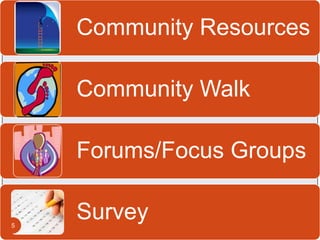
  • #6 Here are just a few examples of how to assess you community: Tap community resources—Utilize results from surveys, needs assessments, and studies conducted by other groups within your community. Frequently schools sytems and ISD’s, health departments, hospitals, and chambers have studies and information regarding community needs.Community Walk - Take a walk through your community and be on the look out for potential projects. Example: walking in the park and can’t find a recycle bin to throw your water bottle away. The playground needs some attention. Others?Community Forum/focus groups –Ask others for input. Staff, agency partners, clients, corporate partners, current volunteers, members of a neighborhood, business owners all have valuable ideas and contributions. Hold a forum and engage folks in a dialogue about issues the community is facing and potential projects to address that issue. (Remember to tap these involved individuals for volunteer leader positions)Survey - Lastly, you can conduct a formal or an informal survey. Surveys might include the following questions: What problems do you see in the community? What are the most pressing issues in the community currently? What types of service projects would be most beneficial to the community? Others?
  • #7 Sometimes as a volunteer leader, you will be serving inside an organization that benefits the community. Instead of or in addition to assessing the community, you as a volunteer leader can assess the organization to help identify volunteer projects. Here are a few questions you can ask when you begin discussions with an organization.
  • #13 Discuss national days of service and resources such as toolkits available on websites. Also identify potential sources of information regarding community needs—which organizations have done studies or needs assessments? See the resources listed on the Project Planning Fact Sheet.
  • #15 As you narrow the scope of your project and determine what you are going to do, you will need to formulate ideas for how you can achieve your goals. In order to have a successful service project, you have to plan well. You need to prepare for every detail from the number of volunteers to the method of reflection. This chapter will help you map out your project so that you work effectively, meet your goals, and make an impact on the community.When mapping service projects you must create a task list, identify resources and create a budget, conduct a site visit, create timelines, and plan for evaluation and reflection. Show the University of Phoenix video titled “Poor Planning” to demonstrate what could happen if volunteer leaders do not plan effectively.
  • #17 As you make the task list, outline the costs associated with all items on the list. This will help you create a working budget, which will help you secure needed resources. Even if you receive in-kind services or donations, you must accurately document them. You must be able to provide donors with information for tax deductions, and you must maintain accurate records for internal and external reporting purposes.  See the Budget Worksheet and the Project Supply List Worksheet in handouts for information on tracking financial information.
  • #18 An important part of the project-development process is determining the resources you need to complete the project, including human, material, financial, and educational resources.
  • #23 Expect to provide an orientation for your volunteers in order for them to be successful in carrying out their tasks or activities. Consider the most effective method(s) for presenting orientation training to volunteers. For volunteers to be effective they must understand the issue the project addresses and the project’s intended effect on the community. You can conduct volunteer orientation before the project or on the actual day of the project. Orientation should include: A brief overview of the issue or cause; A brief overview of the location site; and If you are carrying out a project in a community based organization then you should review the organization’s mission, core services provided to the community, how volunteer support is contributing to that mission, and any specific policies and procedures related to volunteersTo incorporate learning into the project, discuss the community issue being addressed by the community service organization and the project. Provide a brief history of the issue; statistics related to the issue; applicable current events, such as legislation activity; and other civic-engagement opportunities linked to this issue, such as advocacy training or future service projects. These details are extremely helpful in educating volunteers. Orientation should also outline the project and detail what volunteers will do so that everyone knows what to expect and what is expected of them.In addition to holding an orientation, you may need to train volunteers for the work they will be doing. You may recruit volunteers who already have the necessary skills; however, many volunteers will need some instruction. If volunteers are prepared for the project, they will feel more comfortable with the work, the project will run more smoothly, and your team will be more likely to achieve its goals.As a Volunteer Leader, you should think about the following:TimeWhen will you conduct the orientation and training? How much time will you need? LocationWill the orientation and training be held at the service site or at another location? Do you need chairs, tables, electricity, or a large space?Can you use technology to make it easier for your volunteers to be trained? FacilitatorsCan service leaders lead orientation and training, or will you need the support of another trainer with project-specific skills? Is on-site training required, and if so, who will lead it? Will you need someone from the partner agency to speak?Instructional MaterialsWill you need printed materials, such as a Microsoft® PowerPoint® presentation, or access to an online training?
  • #24 Now that you have placed all your project needs (ex. supplies, educational resources, and planning reflection activities and evaluation) on a task list, you can begin to create a project timeline and document when all tasks should begin and end. Your project timeline should have three sections. Project planning timeline;Day of project timeline; and After project timeline.  Refer participants to the Sample Timeline Worksheet to help develop the timelines.
  • #25 Reflection is a process in which volunteers think about their personal experiences. Review the benefits, examples and planning points listed on the slide. You may want to show the “Reflecting on Your Service” video in your toolkit or view it @ http://www.monkeysee.com/play/18141-volunteering-reflecting-on-your-service just be prepared to view it ahead of time and have it on your computer so that you can pause it after the commercial.
  • #26 You should always take time to think about how evaluation fits into your project. Do you want to evaluate your project so that you can report success to volunteers, partners, and the community? Do you want to get feedback from your project constituents to help you develop your volunteer leadership? As you are aware, there are many options for how evaluation can fit into your project. You can choose to use any of the following types of evaluation: Goal-based, process-based or outcome-based evaluation. Read definitions of each type of evaluation. Once you decide which type of evaluation you will use. You can follow the Steps for Planning Evaluation located in your handouts.
  • #28 To successfully complete your project, you will need volunteers. If you have too few participants, the project will likely go unfinished. If you have too many volunteers, some will have little to do and might feel that their time was ill spent. You have already created a task matrix and determined the number of volunteers you need to fill specific positions. Now it’s time to recruit them!When recruiting volunteers, remember that the personal ask is always the most compelling! Consider using volunteers from a partner agency or approach other groups such as unions, sororities/fraternities, civic organizations, teacher’s associations, or independent living homes. You can also display recruitment information through the internet, newspapers, local fairs, schools, community bulletin boards, restaurants, and other interesting places.Volunteers come in all shapes and sizes: male or female, child or adult, disabled or able bodied, various races, religions, sexual orientations, income brackets. Not all volunteers look the same! Not all types of volunteering will appeal to all groups, so have diverse volunteering opportunities available and target recruitment in ways that will appeal to different groups. It is always a good rule of thumb to recruit at least 20% more volunteers then what is required to fulfill the project. Things come up in life. Not everyone who says they will come to your project will actually show up.
  • #36 Ask groups to choose 4-5 factors they feel more important to consider when planning a project and report out to the group as whole. If there’s time; also discuss those projects that were successful; what major factors contributed to the success?