1-1 Meetings:
What they are, why they matter, and how
to implement them.
ORIGINALLY PUBLISHED ON WAVELENGTH BY ASANA
"You spend so much time finding great
people, it’s worth it to help them grow
to be the best they can be."
— JUSTIN ROSENSTEIN, (Co-Founder, Asana)
What is a 1-1 meeting?
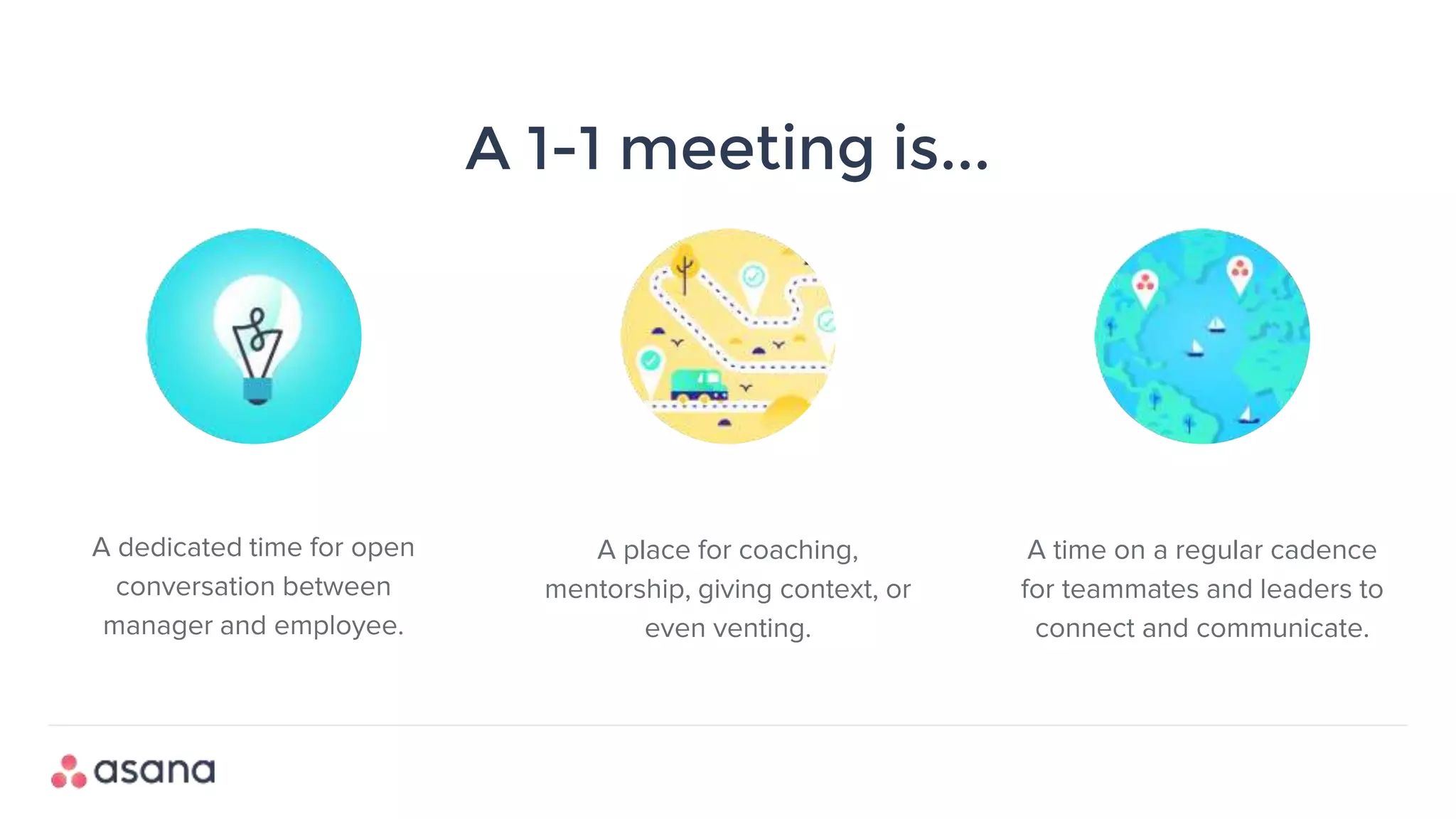
A 1-1 meeting is...
A dedicated time for open
conversation between
manager and employee.
A place for coaching,
mentorship, giving context, or
even venting.
A time on a regular cadence
for teammates and leaders to
connect and communicate.
1-1 meetings are not status reports.
What are the benefits of 1-1
meetings?
Benefit #1
You can make sure you and
your team are aligned.
Benefit #2
1-1s can stop larger issues
from festering.
Benefit #3
They allow for immediate
and regular feedback.
Benefit #4
1-1s can promote open
communication.
Benefit #5
They help managers and
employees develop a
strong relationship.
How to make time in your
calendar for 1-1 meetings
Tip #1
Set aside 30 to 60 minutes on a
weekly or bi-weekly basis with
each of your team members.
Don’t feel confined to a
conference room: Suggest
getting out of the office for a
walk or grabbing a coffee.Tip #2
Some managers prefer to have a
day dedicated to 1-1s while others
sprinkle their meetings
throughout the week.Tip #3
Tips for organizing your 1-1
There’s no one way to organize a 1-1
Many factors dictate the best way to structure your
meetings for success, including:
● the emotional needs of those you manage
● your relationship
● the team member’s experience level
The most important element in a
successful 1-1 is creating a space where
individuals feel comfortable to discuss the
issues and concerns on their mind. These
meetings are primarily for the employee,
and their participation is vital.
Make a private project in Asana dedicated
to your 1-1. Contribute tasks and topics to
discuss. Add sections titled: Goals, Discuss
this week, Revisit later.
See full tutorial here
ASANA TIP
Learn how to set up a 1:1 project like this in Asana.
Organizing & preparing for your 1-1
● Pre-populating the agenda ensures you cover priority topics.
● Make a shared agenda to provide context prior to the meeting and allow both parties to
take ownership of the meeting.
● Time box the topics you know you need to cover.
● Preparing for the meeting ahead of time allows you to eliminate spending time on
background information and immediately get to the things that really matter.
Begin your 1-1 with an open-ended question. This allows the most important and top of mind
topics to surface. Here are some questions you might try:
● How are you feeling?
● What is on your mind?
● What are you most excited about?
● What are you most worried about?
The manager’s game plan
FOR MANAGERS
Most importantly, listen to what’s being said. Once you’ve fully heard your team member, be
a facilitator of solutions. Uncover what they’re excited about, how you can mentor them to be
successful, and unblock them to do their best work. Here are some tactics:
● Affirm their perspective first
● Disclose your weaknesses or places where you’ve stumbled
● Be unconditionally on their side, even (and especially) when giving them blunt feedback
about opportunities for growth
● Respect them as a person, not just a performer of tasks; treat them as a peer
The manager’s game plan
FOR MANAGERS
The key challenge of the coach is to listen
without a filter. A filter is a certain attitude
or bias the listener takes on that inhibits
his or her ability to be present with the
authentic experience of the speaker.
— CONSCIOUS LEADERSHIP GROUP
1-1s are your time to express to your manager what’s on your mind, brainstorm ideas, and
communicate your future goals. Use your time wisely:
● Prior to your meeting, organize which topics you’d like to discuss and add those to the
agenda.
● Feeling frustrated, overwhelmed, blocked, or excited? Think about why you feel this way
and outline any specific potential solutions you’d like to work through with your
manager.
(cont…)
How to leverage 1-1s to get what you want
FOR EMPLOYEES
● Remain open to discussing what’s really going well and where you need your manager’s
support.
● Ask for what you want in layman’s terms. Remember, no one can read your mind. Is it
more responsibility? An opportunity to manage a junior team member? Discuss these
things in specifics.
How to leverage 1-1s to get what you want
FOR EMPLOYEES
Example questions for
discussing long-term goals
Role
Questions 1. What’s your pie chart of what you are working
on? What do you want it to be?
2. How do you view yourself in your role?
Career
Reflection
1. If you were having the best work day ever in
your ideal role, what would your schedule look
like?
2. Where do you get your job satisfaction from?
3. Where have you been most successful in the
past?
Long-term
Goals
1. What are your long-term goals? What skills do
you need to achieve them?
2. What obstacles will you need to overcome to
achieve these goals?
This was originally published as an article in the Managing
and Leading Teams issue of Wavelength by Asana.
Read the original piece or get started managing your 1-1s
in Asana.
Thanks for reading
How to have a 1-1 meeting

How to have a 1-1 meeting

  • 1.
    1-1 Meetings: What theyare, why they matter, and how to implement them. ORIGINALLY PUBLISHED ON WAVELENGTH BY ASANA
  • 2.
    "You spend somuch time finding great people, it’s worth it to help them grow to be the best they can be." — JUSTIN ROSENSTEIN, (Co-Founder, Asana)
  • 3.
    What is a1-1 meeting?
  • 4.
    A 1-1 meetingis... A dedicated time for open conversation between manager and employee. A place for coaching, mentorship, giving context, or even venting. A time on a regular cadence for teammates and leaders to connect and communicate.
  • 5.
    1-1 meetings arenot status reports.
  • 6.
    What are thebenefits of 1-1 meetings?
  • 7.
    Benefit #1 You canmake sure you and your team are aligned.
  • 8.
    Benefit #2 1-1s canstop larger issues from festering.
  • 9.
    Benefit #3 They allowfor immediate and regular feedback.
  • 10.
    Benefit #4 1-1s canpromote open communication.
  • 11.
    Benefit #5 They helpmanagers and employees develop a strong relationship.
  • 12.
    How to maketime in your calendar for 1-1 meetings
  • 13.
    Tip #1 Set aside30 to 60 minutes on a weekly or bi-weekly basis with each of your team members.
  • 14.
    Don’t feel confinedto a conference room: Suggest getting out of the office for a walk or grabbing a coffee.Tip #2
  • 15.
    Some managers preferto have a day dedicated to 1-1s while others sprinkle their meetings throughout the week.Tip #3
  • 16.
  • 17.
    There’s no oneway to organize a 1-1 Many factors dictate the best way to structure your meetings for success, including: ● the emotional needs of those you manage ● your relationship ● the team member’s experience level
  • 18.
    The most importantelement in a successful 1-1 is creating a space where individuals feel comfortable to discuss the issues and concerns on their mind. These meetings are primarily for the employee, and their participation is vital.
  • 19.
    Make a privateproject in Asana dedicated to your 1-1. Contribute tasks and topics to discuss. Add sections titled: Goals, Discuss this week, Revisit later. See full tutorial here ASANA TIP
  • 20.
    Learn how toset up a 1:1 project like this in Asana.
  • 21.
    Organizing & preparingfor your 1-1 ● Pre-populating the agenda ensures you cover priority topics. ● Make a shared agenda to provide context prior to the meeting and allow both parties to take ownership of the meeting. ● Time box the topics you know you need to cover. ● Preparing for the meeting ahead of time allows you to eliminate spending time on background information and immediately get to the things that really matter.
  • 22.
    Begin your 1-1with an open-ended question. This allows the most important and top of mind topics to surface. Here are some questions you might try: ● How are you feeling? ● What is on your mind? ● What are you most excited about? ● What are you most worried about? The manager’s game plan FOR MANAGERS
  • 23.
    Most importantly, listento what’s being said. Once you’ve fully heard your team member, be a facilitator of solutions. Uncover what they’re excited about, how you can mentor them to be successful, and unblock them to do their best work. Here are some tactics: ● Affirm their perspective first ● Disclose your weaknesses or places where you’ve stumbled ● Be unconditionally on their side, even (and especially) when giving them blunt feedback about opportunities for growth ● Respect them as a person, not just a performer of tasks; treat them as a peer The manager’s game plan FOR MANAGERS
  • 24.
    The key challengeof the coach is to listen without a filter. A filter is a certain attitude or bias the listener takes on that inhibits his or her ability to be present with the authentic experience of the speaker. — CONSCIOUS LEADERSHIP GROUP
  • 25.
    1-1s are yourtime to express to your manager what’s on your mind, brainstorm ideas, and communicate your future goals. Use your time wisely: ● Prior to your meeting, organize which topics you’d like to discuss and add those to the agenda. ● Feeling frustrated, overwhelmed, blocked, or excited? Think about why you feel this way and outline any specific potential solutions you’d like to work through with your manager. (cont…) How to leverage 1-1s to get what you want FOR EMPLOYEES
  • 26.
    ● Remain opento discussing what’s really going well and where you need your manager’s support. ● Ask for what you want in layman’s terms. Remember, no one can read your mind. Is it more responsibility? An opportunity to manage a junior team member? Discuss these things in specifics. How to leverage 1-1s to get what you want FOR EMPLOYEES
  • 27.
  • 28.
    Role Questions 1. What’syour pie chart of what you are working on? What do you want it to be? 2. How do you view yourself in your role?
  • 29.
    Career Reflection 1. If youwere having the best work day ever in your ideal role, what would your schedule look like? 2. Where do you get your job satisfaction from? 3. Where have you been most successful in the past?
  • 30.
    Long-term Goals 1. What areyour long-term goals? What skills do you need to achieve them? 2. What obstacles will you need to overcome to achieve these goals?
  • 31.
    This was originallypublished as an article in the Managing and Leading Teams issue of Wavelength by Asana. Read the original piece or get started managing your 1-1s in Asana. Thanks for reading