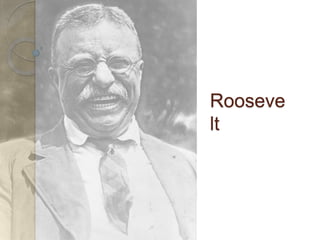
Rooseve 
lt
Square deal 
 He vowed not to favor any group of 
Americans but to be fair to all 
 Square is fair 
 Three demands (3 C’s): 
◦ Control of corporations 
◦ Consumer protection 
◦ Conservation of natural resources
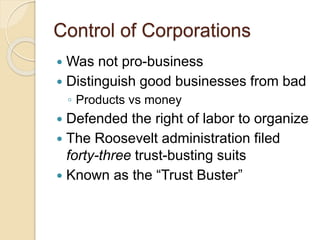
Control of Corporations 
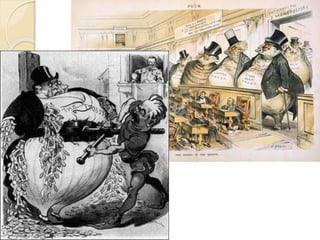
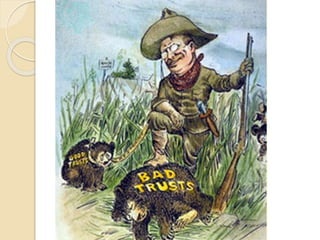
 Was not pro-business 
 Distinguish good businesses from bad 
◦ Products vs money 
 Defended the right of labor to organize 
 The Roosevelt administration filed 
forty-three trust-busting suits 
 Known as the “Trust Buster”
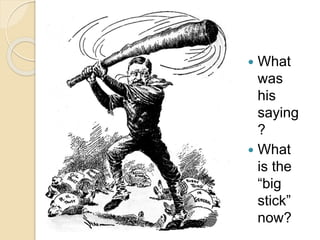
 What 
was 
his 
saying 
? 
 What 
is the 
“big 
stick” 
now?
Hepburn Act 
 Interstate Commerce Commission 
(ICC) 
◦ Was created to ensure railroads were 
regulated 
◦ weak agency, didn’t have much authority 
 Empowered the ICC 
 Set maximum railroad rates and 
allowed inspection on railroad 
companies’ financial records
Consumer Protection 
 The Jungle 
 Pure Food and Drug Act 
 Meat Inspection Act 
 Federal inspection of meat products 
and prohibited the manufacture, sale, 
or transportation of adulterated food 
products.
Conservation of natural 
resources  As president, Roosevelt provided federal 
protection for almost 230 million acres of 
land 
◦ an area equivalent to the entire Eastern 
Seaboard from Maine to Florida. 
 He sat aside 150 national forests, the first 
51 federal bird reservations, five national 
parks, the first 18 national monuments, the 
first four national game preserves and the 
first 24 reclamation, or federal irrigation, 
and projects. 
 Roosevelt also appointed as the first Chief 
of the U.S. Forest Service the visionary 
Gifford Pinchot 
 He convened four study commissions on 
conservation for policymakers and leading 
authorities to shape thought about the 
then-new field of conservation.
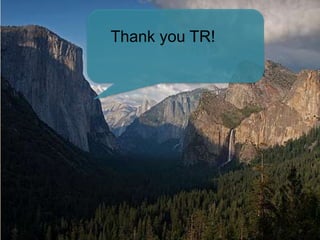
Thank you TR!
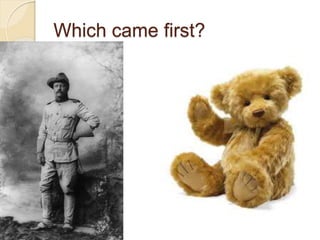
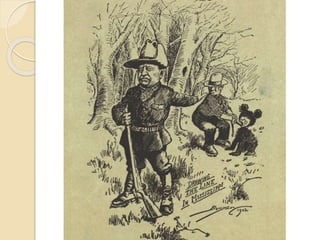
Which came first?
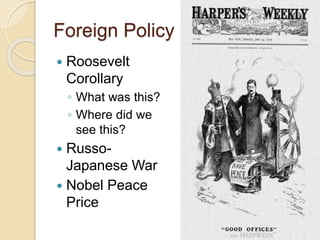
Foreign Policy 
 Roosevelt 
Corollary 
◦ What was this? 
◦ Where did we 
see this? 
 Russo- 
Japanese War 
 Nobel Peace 
Price
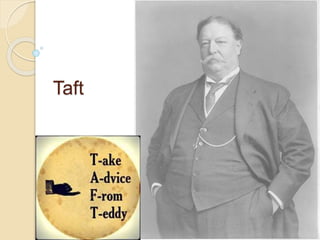
Taft
 Governor of the Philippines under 
McKinley 
 Was handpicked by TR to be the next 
president 
 Initiated at many as 80 trust-busting 
suits 
◦ Almost twice as many as TR
16th Amendment 
 The 16th Amendment allows 
Congress to tax income without 
basing it on population. 
◦ It is based on how much you make 
 The amendment is the constitutional 
law empowering the government 
enforce income taxes on Americans.
17th Amendment 
 Direct election of 
senators 
 Instead of state 
legislatures providing 
jobs and voting for 
their friends, the 
people could elect 
someone who they 
felt would do the 
best job
Trust-Buster 
 Started off strong 
 Twice as many trust-busting suits as TR 
◦ Standard Oil Company 
◦ The American Tobacco Company 
 U.S. Steel 
◦ TR accused him of being unable to tell the 
difference between “good” trusts and “bad” 
trusts 
 Found himself surrounded by 
conservative business men, and soon 
backed off his trust-busting efforts
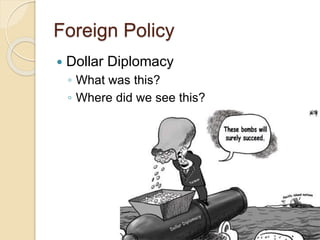
Foreign Policy 
 Dollar Diplomacy 
◦ What was this? 
◦ Where did we see this?
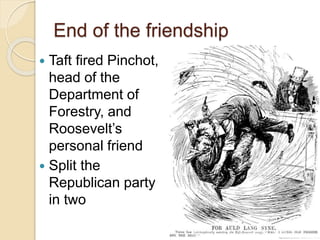
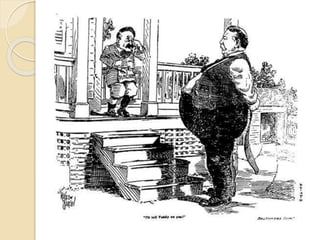
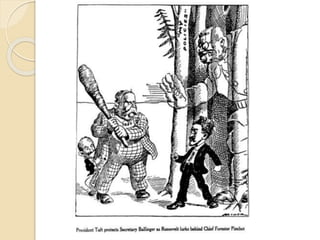
End of the friendship 
 Taft fired Pinchot, 
head of the 
Department of 
Forestry, and 
Roosevelt’s 
personal friend 
 Split the 
Republican party 
in two
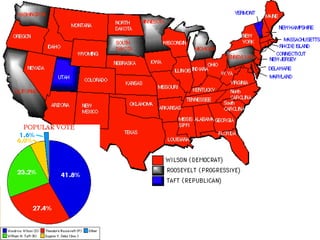
Election of 1912 
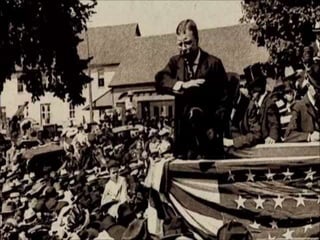
 TR returned and announced he was 
running for President 
 Roosevelt lost Republican seat 
 Knowing what we know about TR, 
how do you think he handled the loss?
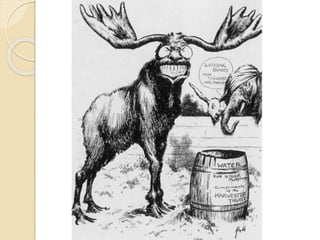
HE CREATED HIS OWN 
PARTY
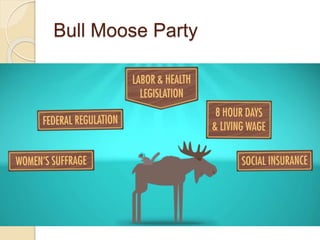
Bull Moose Party
New Nationalism vs. New 
Freedom
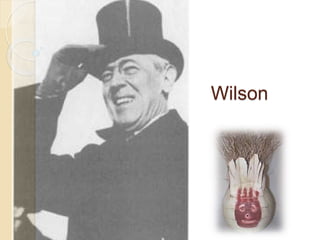
Wilson
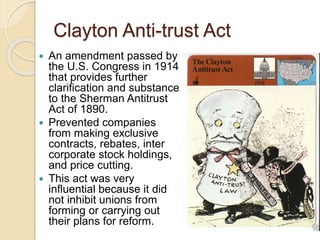
Clayton Anti-trust Act 
 An amendment passed by 
the U.S. Congress in 1914 
that provides further 
clarification and substance 
to the Sherman Antitrust 
Act of 1890. 
 Prevented companies 
from making exclusive 
contracts, rebates, inter 
corporate stock holdings, 
and price cutting. 
 This act was very 
influential because it did 
not inhibit unions from 
forming or carrying out 
their plans for reform.
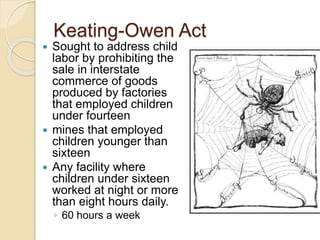
Keating-Owen Act 
 Sought to address child 
labor by prohibiting the 
sale in interstate 
commerce of goods 
produced by factories 
that employed children 
under fourteen 
 mines that employed 
children younger than 
sixteen 
 Any facility where 
children under sixteen 
worked at night or more 
than eight hours daily. 
◦ 60 hours a week
Sadly, 
 The Keating-Owen Act was 
considered unconstitutional 
 Hammer v. Dagenhart 
 State vs. Federal powers (10th 
Amendment) 
◦ Can Congress regulate commerce? 
 Decision reversed in 1941
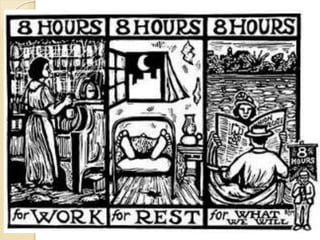
Adamson Act 
 Established an eight-hour workday, 
with additional pay for overtime work, 
for interstate railroad workers.
Foreign Policy 
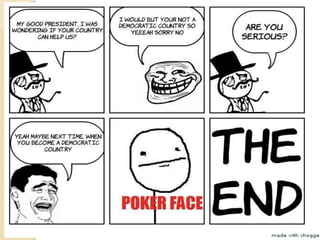
 Moral Diplomacy 
◦ the system in which support is given only 
to countries whose moral beliefs are 
similar to that of the nation supplying help. 
 Help democratic countries 
◦ Possible allies 
 Injure non-democratic countries 
◦ Possible enemies
Latin America 
 He also hoped to increase the number of 
democratic nations, particularly in Latin 
America 
 Anti-Imperialist 
 Monroe Doctrine 
 Panama Canal Act 
 Apologized for Roosevelt’s actions during 
Panamanian Revolution 
 Nicaragua 
◦ Haiti 
◦ Dominican Republic
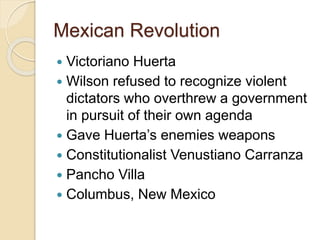
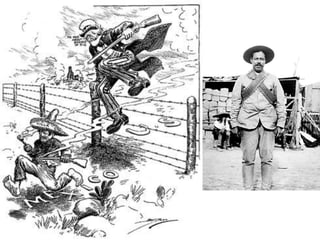
Mexican Revolution 
 Victoriano Huerta 
 Wilson refused to recognize violent 
dictators who overthrew a government 
in pursuit of their own agenda 
 Gave Huerta’s enemies weapons 
 Constitutionalist Venustiano Carranza 
 Pancho Villa 
 Columbus, New Mexico
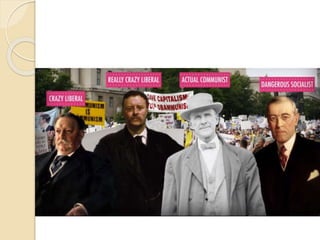
End of the Progressives (?)

Progressive Presidents

  • 1.
  • 4.
    Square deal He vowed not to favor any group of Americans but to be fair to all  Square is fair  Three demands (3 C’s): ◦ Control of corporations ◦ Consumer protection ◦ Conservation of natural resources
  • 5.
    Control of Corporations  Was not pro-business  Distinguish good businesses from bad ◦ Products vs money  Defended the right of labor to organize  The Roosevelt administration filed forty-three trust-busting suits  Known as the “Trust Buster”
  • 6.
     What was his saying ?  What is the “big stick” now?
  • 9.
    Hepburn Act Interstate Commerce Commission (ICC) ◦ Was created to ensure railroads were regulated ◦ weak agency, didn’t have much authority  Empowered the ICC  Set maximum railroad rates and allowed inspection on railroad companies’ financial records
  • 10.
    Consumer Protection The Jungle  Pure Food and Drug Act  Meat Inspection Act  Federal inspection of meat products and prohibited the manufacture, sale, or transportation of adulterated food products.
  • 11.
    Conservation of natural resources  As president, Roosevelt provided federal protection for almost 230 million acres of land ◦ an area equivalent to the entire Eastern Seaboard from Maine to Florida.  He sat aside 150 national forests, the first 51 federal bird reservations, five national parks, the first 18 national monuments, the first four national game preserves and the first 24 reclamation, or federal irrigation, and projects.  Roosevelt also appointed as the first Chief of the U.S. Forest Service the visionary Gifford Pinchot  He convened four study commissions on conservation for policymakers and leading authorities to shape thought about the then-new field of conservation.
  • 12.
  • 13.
  • 15.
    Foreign Policy Roosevelt Corollary ◦ What was this? ◦ Where did we see this?  Russo- Japanese War  Nobel Peace Price
  • 16.
  • 17.
     Governor ofthe Philippines under McKinley  Was handpicked by TR to be the next president  Initiated at many as 80 trust-busting suits ◦ Almost twice as many as TR
  • 20.
    16th Amendment The 16th Amendment allows Congress to tax income without basing it on population. ◦ It is based on how much you make  The amendment is the constitutional law empowering the government enforce income taxes on Americans.
  • 22.
    17th Amendment Direct election of senators  Instead of state legislatures providing jobs and voting for their friends, the people could elect someone who they felt would do the best job
  • 23.
    Trust-Buster  Startedoff strong  Twice as many trust-busting suits as TR ◦ Standard Oil Company ◦ The American Tobacco Company  U.S. Steel ◦ TR accused him of being unable to tell the difference between “good” trusts and “bad” trusts  Found himself surrounded by conservative business men, and soon backed off his trust-busting efforts
  • 24.
    Foreign Policy Dollar Diplomacy ◦ What was this? ◦ Where did we see this?
  • 25.
    End of thefriendship  Taft fired Pinchot, head of the Department of Forestry, and Roosevelt’s personal friend  Split the Republican party in two
  • 28.
    Election of 1912  TR returned and announced he was running for President  Roosevelt lost Republican seat  Knowing what we know about TR, how do you think he handled the loss?
  • 29.
    HE CREATED HISOWN PARTY
  • 31.
  • 34.
  • 36.
  • 37.
    Clayton Anti-trust Act  An amendment passed by the U.S. Congress in 1914 that provides further clarification and substance to the Sherman Antitrust Act of 1890.  Prevented companies from making exclusive contracts, rebates, inter corporate stock holdings, and price cutting.  This act was very influential because it did not inhibit unions from forming or carrying out their plans for reform.
  • 38.
    Keating-Owen Act Sought to address child labor by prohibiting the sale in interstate commerce of goods produced by factories that employed children under fourteen  mines that employed children younger than sixteen  Any facility where children under sixteen worked at night or more than eight hours daily. ◦ 60 hours a week
  • 39.
    Sadly,  TheKeating-Owen Act was considered unconstitutional  Hammer v. Dagenhart  State vs. Federal powers (10th Amendment) ◦ Can Congress regulate commerce?  Decision reversed in 1941
  • 40.
    Adamson Act Established an eight-hour workday, with additional pay for overtime work, for interstate railroad workers.
  • 42.
    Foreign Policy Moral Diplomacy ◦ the system in which support is given only to countries whose moral beliefs are similar to that of the nation supplying help.  Help democratic countries ◦ Possible allies  Injure non-democratic countries ◦ Possible enemies
  • 44.
    Latin America He also hoped to increase the number of democratic nations, particularly in Latin America  Anti-Imperialist  Monroe Doctrine  Panama Canal Act  Apologized for Roosevelt’s actions during Panamanian Revolution  Nicaragua ◦ Haiti ◦ Dominican Republic
  • 45.
    Mexican Revolution Victoriano Huerta  Wilson refused to recognize violent dictators who overthrew a government in pursuit of their own agenda  Gave Huerta’s enemies weapons  Constitutionalist Venustiano Carranza  Pancho Villa  Columbus, New Mexico
  • 47.
    End of theProgressives (?)