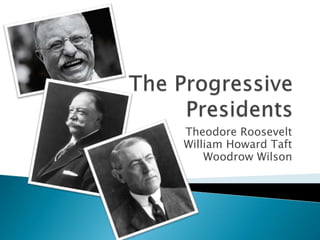
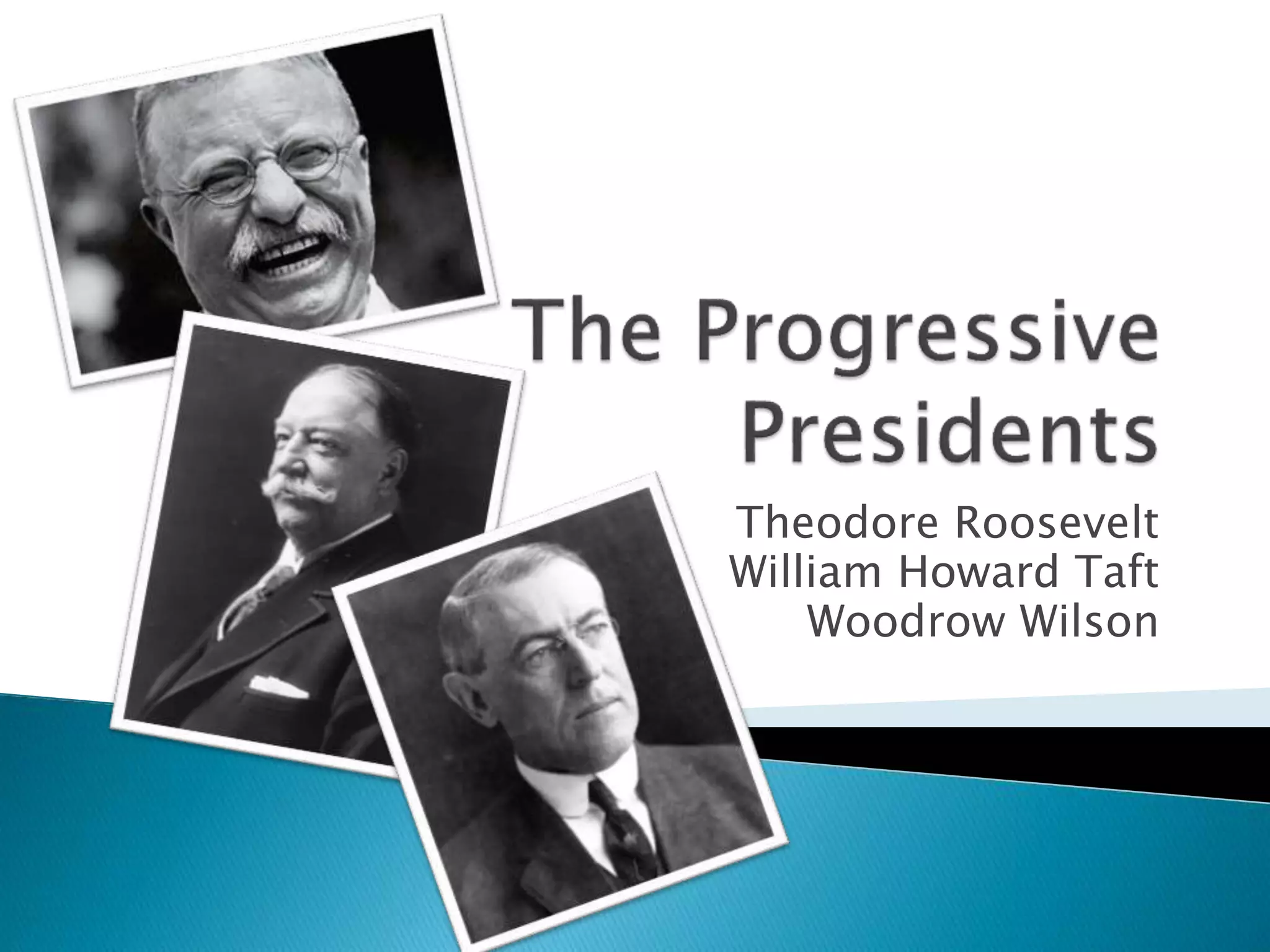
Theodore Roosevelt 
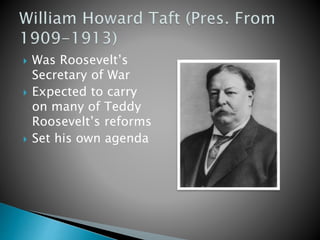
William Howard Taft 
Woodrow Wilson
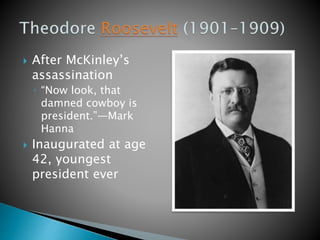
 After McKinley’s 
assassination 
◦ “Now look, that 
damned cowboy is 
president.”—Mark 
Hanna 
 Inaugurated at age 
42, youngest 
president ever
 NYC Police Commissioner, 1895-1897 
◦ Friend of Jacob Riis 
 Assistant Secretary of the Navy, 1897-1898 
 Spanish-American War, 1898 
◦ Roosevelt’s Rough Riders 
 Governor of New York, 1899-1900 
◦ Too progressive for many Republicans 
 Vice President, 1901 
 26th President, 1901-1909
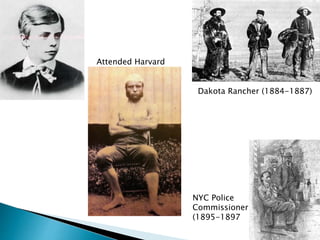
Attended Harvard 
Dakota Rancher (1884-1887) 
NYC Police 
Commissioner 
(1895-1897
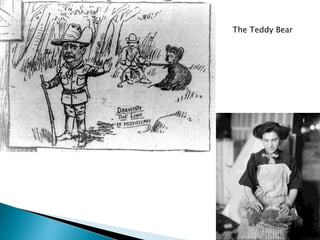
The Teddy Bear
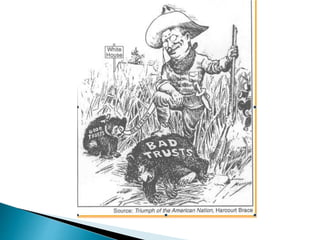
 Delivered a 20K word 
address to Congress 
asking it to curb the 
power of big 
corporations 
◦ Known as a “trust-buster” 
◦ Brought 40+ anti-trust 
suits to court 
 Included biggest RR at 
the time & Standard Oil 
Co. 
 Standard Oil had to pay a 
$29 million fine 
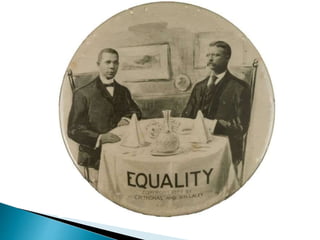
 One month in to 
office he invited 
Booker T. 
Washington to dinner 
at the White House 
◦ 1st time an African 
American had been 
invited to the WH 
◦ Outraged some white 
southerners
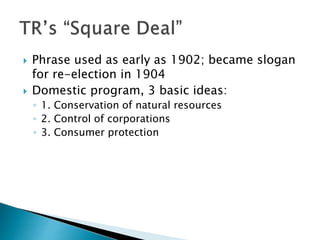
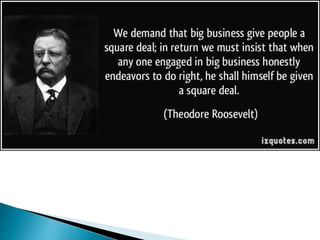
 Phrase used as early as 1902; became slogan 
for re-election in 1904 
 Domestic program, 3 basic ideas: 
◦ 1. Conservation of natural resources 
◦ 2. Control of corporations 
◦ 3. Consumer protection
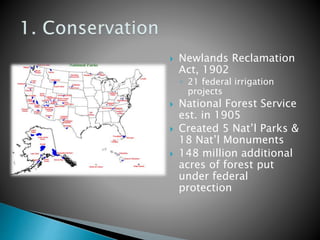
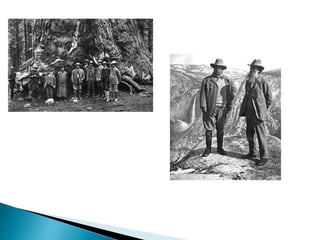
 Newlands Reclamation 
Act, 1902 
◦ 21 federal irrigation 
projects 
 National Forest Service 
est. in 1905 
 Created 5 Nat’l Parks & 
18 Nat’l Monuments 
 148 million additional 
acres of forest put 
under federal 
protection
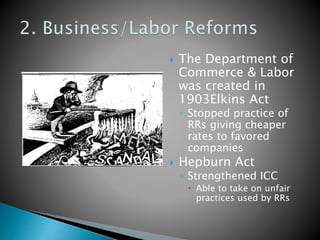
 The Department of 
Commerce & Labor 
was created in 
1903Elkins Act 
◦ Stopped practice of 
RRs giving cheaper 
rates to favored 
companies 
 Hepburn Act 
◦ Strengthened ICC 
 Able to take on unfair 
practices used by RRs
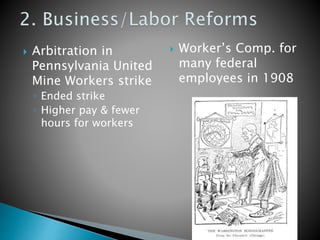
 Arbitration in 
Pennsylvania United 
Mine Workers strike 
◦ Ended strike 
◦ Higher pay & fewer 
hours for workers 
 Worker’s Comp. for 
many federal 
employees in 1908
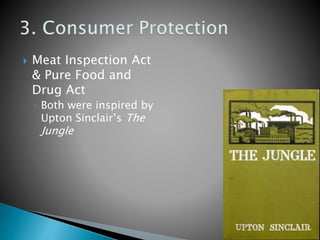
 Meat Inspection Act 
& Pure Food and 
Drug Act 
◦ Both were inspired by 
Upton Sinclair’s The 
Jungle
 Was Roosevelt’s 
Secretary of War 
 Expected to carry 
on many of Teddy 
Roosevelt’s reforms 
 Set his own agenda
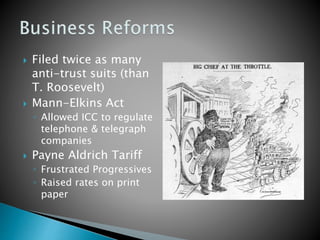
 Filed twice as many 
anti-trust suits (than 
T. Roosevelt) 
 Mann-Elkins Act 
◦ Allowed ICC to regulate 
telephone & telegraph 
companies 
 Payne Aldrich Tariff 
◦ Frustrated Progressives 
◦ Raised rates on print 
paper
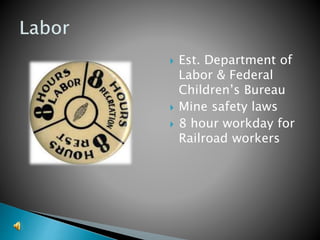
 Est. Department of 
Labor & Federal 
Children’s Bureau 
 Mine safety laws 
 8 hour workday for 
Railroad workers
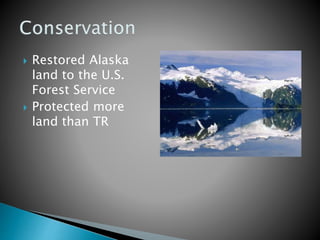
 Restored Alaska 
land to the U.S. 
Forest Service 
 Protected more 
land than TR
 More progressive 
than TR????? 
 But some missteps 
◦ Esp. firing of Gifford 
Pinchot from Forestry 
Service 
 Close friend of TR 
◦ Reversal on tariff 
reform split the GOP 
 Gets less 
recognition though? 
 Only one term 
 Election of 1912 
 Later Chief Justice 
of SC
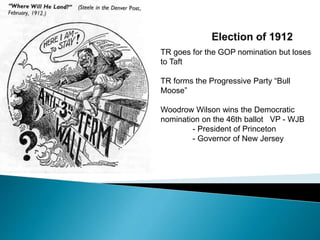
TR goes for the GOP nomination but loses 
to Taft 
TR forms the Progressive Party “Bull 
Moose” 
Woodrow Wilson wins the Democratic 
nomination on the 46th ballot VP - WJB 
- President of Princeton 
- Governor of New Jersey
 
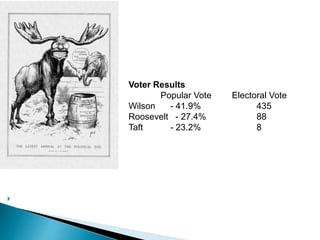
Voter Results 
Popular Vote Electoral Vote 
Wilson - 41.9% 435 
Roosevelt - 27.4% 88 
Taft - 23.2% 8
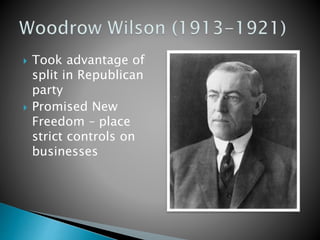
 Took advantage of 
split in Republican 
party 
 Promised New 
Freedom – place 
strict controls on 
businesses
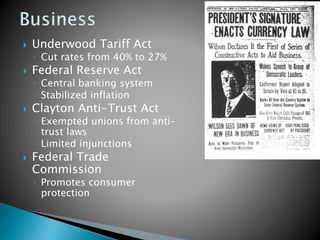
 Underwood Tariff Act 
◦ Cut rates from 40% to 27% 
 Federal Reserve Act 
◦ Central banking system 
◦ Stabilized inflation 
 Clayton Anti-Trust Act 
◦ Exempted unions from anti-trust 
laws 
◦ Limited injunctions 
 Federal Trade 
Commission 
◦ Promotes consumer 
protection
 Federal Farm Loan Act 
 Adamson Act 
◦ 8 hour work day for interstate RR workers 
 Federal Workmen’s Compensation Act 
◦ Compensation for wages missed due to work-related 
injuries 
 Keating-Owen Child Labor Act 
◦ Short-lived, but prohibited sale of goods produced 
by factories that employed children under the age 
of 14
 16th—1913 
◦ Graduated Income 
Tax 
◦ Led to reduced tariffs 
 17th—1913 
◦ Direct election of U.S. 
Senators 
 18th Amendment— 
1920 
◦ Prohibition of 
alcoholic beverages 
 19th Amendment— 
1920 
◦ Women’s suffrage

Progressive Presidents

  • 1.
    Theodore Roosevelt WilliamHoward Taft Woodrow Wilson
  • 2.
     After McKinley’s assassination ◦ “Now look, that damned cowboy is president.”—Mark Hanna  Inaugurated at age 42, youngest president ever
  • 3.
     NYC PoliceCommissioner, 1895-1897 ◦ Friend of Jacob Riis  Assistant Secretary of the Navy, 1897-1898  Spanish-American War, 1898 ◦ Roosevelt’s Rough Riders  Governor of New York, 1899-1900 ◦ Too progressive for many Republicans  Vice President, 1901  26th President, 1901-1909
  • 4.
    Attended Harvard DakotaRancher (1884-1887) NYC Police Commissioner (1895-1897
  • 6.
  • 7.
     Delivered a20K word address to Congress asking it to curb the power of big corporations ◦ Known as a “trust-buster” ◦ Brought 40+ anti-trust suits to court  Included biggest RR at the time & Standard Oil Co.  Standard Oil had to pay a $29 million fine  One month in to office he invited Booker T. Washington to dinner at the White House ◦ 1st time an African American had been invited to the WH ◦ Outraged some white southerners
  • 10.
     Phrase usedas early as 1902; became slogan for re-election in 1904  Domestic program, 3 basic ideas: ◦ 1. Conservation of natural resources ◦ 2. Control of corporations ◦ 3. Consumer protection
  • 12.
     Newlands Reclamation Act, 1902 ◦ 21 federal irrigation projects  National Forest Service est. in 1905  Created 5 Nat’l Parks & 18 Nat’l Monuments  148 million additional acres of forest put under federal protection
  • 14.
     The Departmentof Commerce & Labor was created in 1903Elkins Act ◦ Stopped practice of RRs giving cheaper rates to favored companies  Hepburn Act ◦ Strengthened ICC  Able to take on unfair practices used by RRs
  • 15.
     Arbitration in Pennsylvania United Mine Workers strike ◦ Ended strike ◦ Higher pay & fewer hours for workers  Worker’s Comp. for many federal employees in 1908
  • 16.
     Meat InspectionAct & Pure Food and Drug Act ◦ Both were inspired by Upton Sinclair’s The Jungle
  • 17.
     Was Roosevelt’s Secretary of War  Expected to carry on many of Teddy Roosevelt’s reforms  Set his own agenda
  • 18.
     Filed twiceas many anti-trust suits (than T. Roosevelt)  Mann-Elkins Act ◦ Allowed ICC to regulate telephone & telegraph companies  Payne Aldrich Tariff ◦ Frustrated Progressives ◦ Raised rates on print paper
  • 19.
     Est. Departmentof Labor & Federal Children’s Bureau  Mine safety laws  8 hour workday for Railroad workers
  • 20.
     Restored Alaska land to the U.S. Forest Service  Protected more land than TR
  • 21.
     More progressive than TR?????  But some missteps ◦ Esp. firing of Gifford Pinchot from Forestry Service  Close friend of TR ◦ Reversal on tariff reform split the GOP  Gets less recognition though?  Only one term  Election of 1912  Later Chief Justice of SC
  • 22.
    TR goes forthe GOP nomination but loses to Taft TR forms the Progressive Party “Bull Moose” Woodrow Wilson wins the Democratic nomination on the 46th ballot VP - WJB - President of Princeton - Governor of New Jersey
  • 23.
     Voter Results Popular Vote Electoral Vote Wilson - 41.9% 435 Roosevelt - 27.4% 88 Taft - 23.2% 8
  • 24.
     Took advantageof split in Republican party  Promised New Freedom – place strict controls on businesses
  • 25.
     Underwood TariffAct ◦ Cut rates from 40% to 27%  Federal Reserve Act ◦ Central banking system ◦ Stabilized inflation  Clayton Anti-Trust Act ◦ Exempted unions from anti-trust laws ◦ Limited injunctions  Federal Trade Commission ◦ Promotes consumer protection
  • 26.
     Federal FarmLoan Act  Adamson Act ◦ 8 hour work day for interstate RR workers  Federal Workmen’s Compensation Act ◦ Compensation for wages missed due to work-related injuries  Keating-Owen Child Labor Act ◦ Short-lived, but prohibited sale of goods produced by factories that employed children under the age of 14
  • 27.
     16th—1913 ◦Graduated Income Tax ◦ Led to reduced tariffs  17th—1913 ◦ Direct election of U.S. Senators  18th Amendment— 1920 ◦ Prohibition of alcoholic beverages  19th Amendment— 1920 ◦ Women’s suffrage