PRIONS
Neurodegenerative Diseases in
Human and Animals

Muslima P. Liwalug
MIB 1
ABSTRACT
PrPSc are infectious proteins that cause
neurodegenerative diseases in humans and
animals. Checking the signs of the disease is the
best preliminary diagnosis and brain scan or blood
test will determine the abnormal proteins that are
present in the patient’s body. The result of the study
determine the different kinds of neurodegenerative
diseases that caused by PrPSc and how it affect the
human and animals.
OBJECTIVES
o To determine Prions
o To differentiate PrPC from PrPSc
o To determine how it affects human and

animal brains and the formation of holes
o To determine the list of human and animal

neurodegenerative diseases caused by
PrPSc
PRIONS
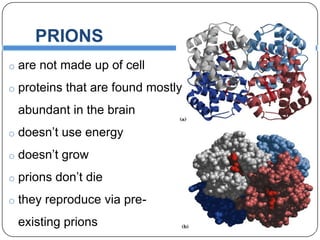
o are not made up of cell

o proteins that are found mostly

abundant in the brain
o doesn’t use energy
o doesn’t grow
o prions don’t die

o they reproduce via pre-

existing prions
ORIGIN OF PRIONS
All mammals appear to have
prion protein genes and the gene
sequences are similar, but not
identical, in related species.
FUNCTION OF PRIONS
o binds with Cu (Copper)
o Anti-oxidant activity
o Resistant to oxidative stress
o Prevent neuronal dysfunction
o Abnormality of prion proteins can induce

apoptosis of neurons.
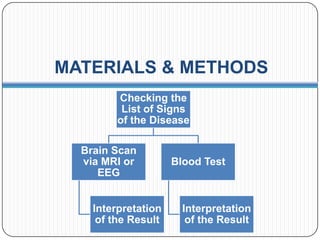
MATERIALS & METHODS
Checking the
List of Signs
of the Disease
Brain Scan
via MRI or
EEG

Interpretation
of the Result

Blood Test

Interpretation
of the Result
SIGNS
Early Signs
• Depression / anxiety
• Insomnia
• Dizziness
• Altered mood
• Unusual behavior
• Tingling part of the body

Later signs
• Develops dementia
• Loss of coordination
• Visual disturbance

PS: Typical signs may not be present but
problems with thinking skills or balance will
certainly be noted.
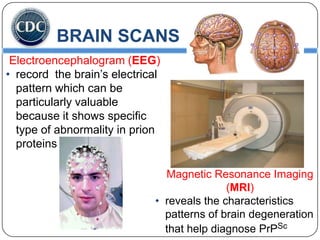
BRAIN SCANS
Electroencephalogram (EEG)
• record the brain’s electrical
pattern which can be
particularly valuable
because it shows specific
type of abnormality in prion
proteins
Magnetic Resonance Imaging
(MRI)
• reveals the characteristics
patterns of brain degeneration
that help diagnose PrPSc
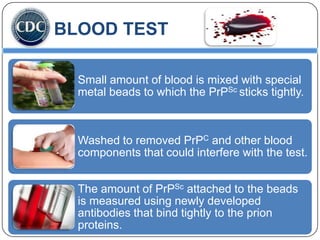
BLOOD TEST
Small amount of blood is mixed with special
metal beads to which the PrPSc sticks tightly.

Washed to removed PrPC and other blood
components that could interfere with the test.
The amount of PrPSc attached to the beads
is measured using newly developed
antibodies that bind tightly to the prion
proteins.
Objectives:

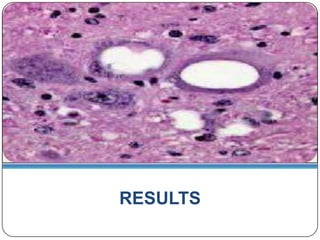
RESULTS
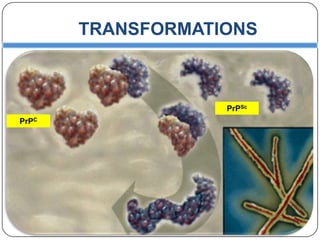
TRANSFORMATIONS

PrPSc
PrPC
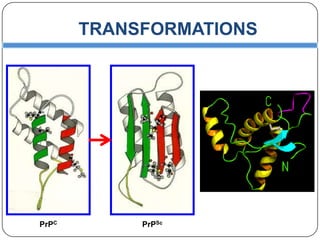
TRANSFORMATIONS

PrPC

PrPSc
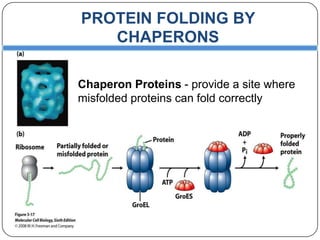
PROTEIN FOLDING BY
CHAPERONS
Chaperon Proteins - provide a site where
misfolded proteins can fold correctly
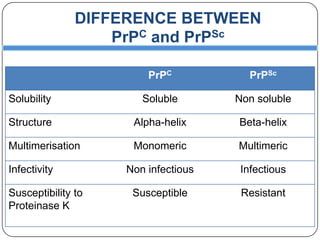
DIFFERENCE BETWEEN
PrPC and PrPSc
PrPC

PrPSc

Solubility

Soluble

Non soluble

Structure

Alpha-helix

Beta-helix

Multimerisation

Monomeric

Multimeric

Non infectious

Infectious

Susceptible

Resistant

Infectivity
Susceptibility to
Proteinase K
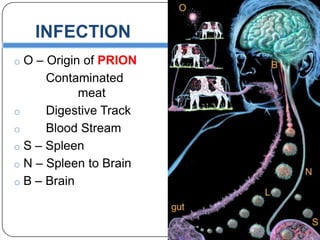
INFECTION
o O – Origin of PRION

Contaminated
meat
o
Digestive Track
o
Blood Stream
o S – Spleen
o N – Spleen to Brain
o B – Brain
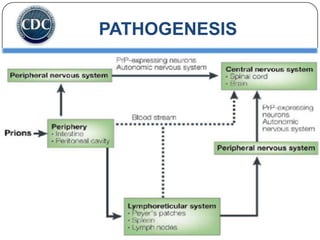
PATHOGENESIS
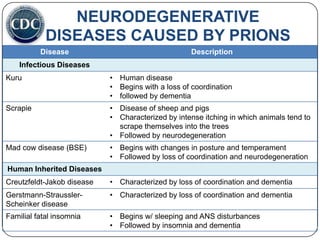
NEURODEGENERATIVE
DISEASES CAUSED BY PRIONS
Disease

Description

Infectious Diseases
Kuru

• Human disease
• Begins with a loss of coordination
• followed by dementia

Scrapie

• Disease of sheep and pigs
• Characterized by intense itching in which animals tend to
scrape themselves into the trees
• Followed by neurodegeneration

Mad cow disease (BSE)

• Begins with changes in posture and temperament
• Followed by loss of coordination and neurodegeneration

Human Inherited Diseases
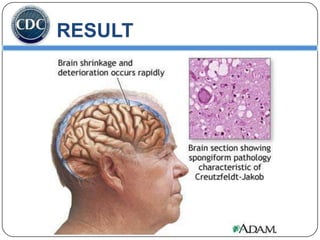
Creutzfeldt-Jakob disease

• Characterized by loss of coordination and dementia

Gerstmann-StrausslerScheinker disease

• Characterized by loss of coordination and dementia

Familial fatal insomnia

• Begins w/ sleeping and ANS disturbances
• Followed by insomnia and dementia
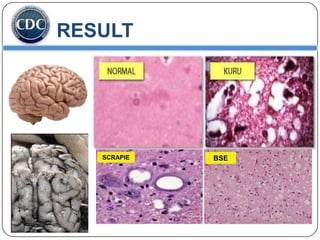
RESULT

SCRAPIE

BSE
RESULT
CONCLUSION
o Cook the meat thoroughly.
o If you are a raiser of cow, pig, sheep or a

goat, check the list of the signs of prion diseases.
o If you think you have the early signs of the

disease, immediately consult to a doctor.
References:
1.

McKintosh, E. et.al, 2003. Prion Diseases

2.

Collinge, J., 2001. Prion Diseases of Humans and Animals: Their
Causes and Molecular Basis

3.

Belay, E.D., 1999. Transmissible Spongiform Encephalopathies in
Humans

4.

Belay, E.D. and Schonberger, L.B., 2005. The Public Health Impact of
Prion Diseases

5.

George-Hyslop P., McLaurin, J., and Westaway, D., 2006. Human Prion
Diseases and Protein Misfolding Disorders

6.

Veith, N.M., 2008. Cellular Trafficking of the Pathogenic Prion Protein
PrPSc and Phenotypic Characterization of Deletion Mutants in the
Hydrophobic Domain of the Normal Prion ProteinC

7.

Marsh, D., 2002. Mad Cow Disease: The Risks to Humans

8.

Weissmann, C. et.al, 2002. Molecular Biology of Prions

9.

Mahmoud, M.K.H., 2009. Studies on Pathogenic Mechanisms of Prion
Diseases and Evaluation of Prion Strains Properties

10.

Aguzzi, A., et.al, 2007. Molecular Mechanisms of Prion Pathogenesis
Thank You! 

Prions (Infectious Protein)

  • 2.
    PRIONS Neurodegenerative Diseases in Humanand Animals Muslima P. Liwalug MIB 1
  • 3.
    ABSTRACT PrPSc are infectiousproteins that cause neurodegenerative diseases in humans and animals. Checking the signs of the disease is the best preliminary diagnosis and brain scan or blood test will determine the abnormal proteins that are present in the patient’s body. The result of the study determine the different kinds of neurodegenerative diseases that caused by PrPSc and how it affect the human and animals.
  • 4.
    OBJECTIVES o To determinePrions o To differentiate PrPC from PrPSc o To determine how it affects human and animal brains and the formation of holes o To determine the list of human and animal neurodegenerative diseases caused by PrPSc
  • 5.
    PRIONS o are notmade up of cell o proteins that are found mostly abundant in the brain o doesn’t use energy o doesn’t grow o prions don’t die o they reproduce via pre- existing prions
  • 6.
    ORIGIN OF PRIONS Allmammals appear to have prion protein genes and the gene sequences are similar, but not identical, in related species.
  • 7.
    FUNCTION OF PRIONS obinds with Cu (Copper) o Anti-oxidant activity o Resistant to oxidative stress o Prevent neuronal dysfunction o Abnormality of prion proteins can induce apoptosis of neurons.
  • 8.
    MATERIALS & METHODS Checkingthe List of Signs of the Disease Brain Scan via MRI or EEG Interpretation of the Result Blood Test Interpretation of the Result
  • 9.
    SIGNS Early Signs • Depression/ anxiety • Insomnia • Dizziness • Altered mood • Unusual behavior • Tingling part of the body Later signs • Develops dementia • Loss of coordination • Visual disturbance PS: Typical signs may not be present but problems with thinking skills or balance will certainly be noted.
  • 10.
    BRAIN SCANS Electroencephalogram (EEG) •record the brain’s electrical pattern which can be particularly valuable because it shows specific type of abnormality in prion proteins Magnetic Resonance Imaging (MRI) • reveals the characteristics patterns of brain degeneration that help diagnose PrPSc
  • 11.
    BLOOD TEST Small amountof blood is mixed with special metal beads to which the PrPSc sticks tightly. Washed to removed PrPC and other blood components that could interfere with the test. The amount of PrPSc attached to the beads is measured using newly developed antibodies that bind tightly to the prion proteins.
  • 12.
  • 13.
  • 14.
  • 15.
    PROTEIN FOLDING BY CHAPERONS ChaperonProteins - provide a site where misfolded proteins can fold correctly
  • 16.
    DIFFERENCE BETWEEN PrPC andPrPSc PrPC PrPSc Solubility Soluble Non soluble Structure Alpha-helix Beta-helix Multimerisation Monomeric Multimeric Non infectious Infectious Susceptible Resistant Infectivity Susceptibility to Proteinase K
  • 17.
    INFECTION o O –Origin of PRION Contaminated meat o Digestive Track o Blood Stream o S – Spleen o N – Spleen to Brain o B – Brain
  • 18.
  • 19.
    NEURODEGENERATIVE DISEASES CAUSED BYPRIONS Disease Description Infectious Diseases Kuru • Human disease • Begins with a loss of coordination • followed by dementia Scrapie • Disease of sheep and pigs • Characterized by intense itching in which animals tend to scrape themselves into the trees • Followed by neurodegeneration Mad cow disease (BSE) • Begins with changes in posture and temperament • Followed by loss of coordination and neurodegeneration Human Inherited Diseases Creutzfeldt-Jakob disease • Characterized by loss of coordination and dementia Gerstmann-StrausslerScheinker disease • Characterized by loss of coordination and dementia Familial fatal insomnia • Begins w/ sleeping and ANS disturbances • Followed by insomnia and dementia
  • 20.
  • 21.
  • 22.
    CONCLUSION o Cook themeat thoroughly. o If you are a raiser of cow, pig, sheep or a goat, check the list of the signs of prion diseases. o If you think you have the early signs of the disease, immediately consult to a doctor.
  • 23.
    References: 1. McKintosh, E. et.al,2003. Prion Diseases 2. Collinge, J., 2001. Prion Diseases of Humans and Animals: Their Causes and Molecular Basis 3. Belay, E.D., 1999. Transmissible Spongiform Encephalopathies in Humans 4. Belay, E.D. and Schonberger, L.B., 2005. The Public Health Impact of Prion Diseases 5. George-Hyslop P., McLaurin, J., and Westaway, D., 2006. Human Prion Diseases and Protein Misfolding Disorders 6. Veith, N.M., 2008. Cellular Trafficking of the Pathogenic Prion Protein PrPSc and Phenotypic Characterization of Deletion Mutants in the Hydrophobic Domain of the Normal Prion ProteinC 7. Marsh, D., 2002. Mad Cow Disease: The Risks to Humans 8. Weissmann, C. et.al, 2002. Molecular Biology of Prions 9. Mahmoud, M.K.H., 2009. Studies on Pathogenic Mechanisms of Prion Diseases and Evaluation of Prion Strains Properties 10. Aguzzi, A., et.al, 2007. Molecular Mechanisms of Prion Pathogenesis
  • 24.

Editor's Notes

  • #6 Social institutions are groups of persons banded together for common purposes.  The common purposes includes having rights, privilages, liabilities, goals, or objectives distinct and independant from those of individual members.  Examples of social institutions are communities and educational institutions. A social institution is any institution that deals with government, religion, education, economics and family. A social institute must have the ability to form a kinship, use legitimate power, perform a service and be able to pass information down from one generation to the next. Social institutions do not include places of employment.Reference: plato.stanford.edu is a complex, integrated set of social norms organized around the preservation of a basic societal value
  • #9 Social institutions are groups of persons banded together for common purposes.  The common purposes includes having rights, privilages, liabilities, goals, or objectives distinct and independant from those of individual members.  Examples of social institutions are communities and educational institutions. A social institution is any institution that deals with government, religion, education, economics and family. A social institute must have the ability to form a kinship, use legitimate power, perform a service and be able to pass information down from one generation to the next. Social institutions do not include places of employment.Reference: plato.stanford.edu is a complex, integrated set of social norms organized around the preservation of a basic societal value