Communication in teaching
   learning process

 Prepared by :
   Raveen Ismail
  Hayman Ahmed
   Viyan Hasso
Outlines
1.   Introduction
2.   Defining communication
3.   Importance of communication
4.   Communication rights and responsibilities
5.   Style of communication
6.   Type of communication
7.   Elements of communication ,communication process
8.   Characteristics of effective communication
9.   Characteristics of effective communicator
10. Identifying different Barriers to communication
History of communication
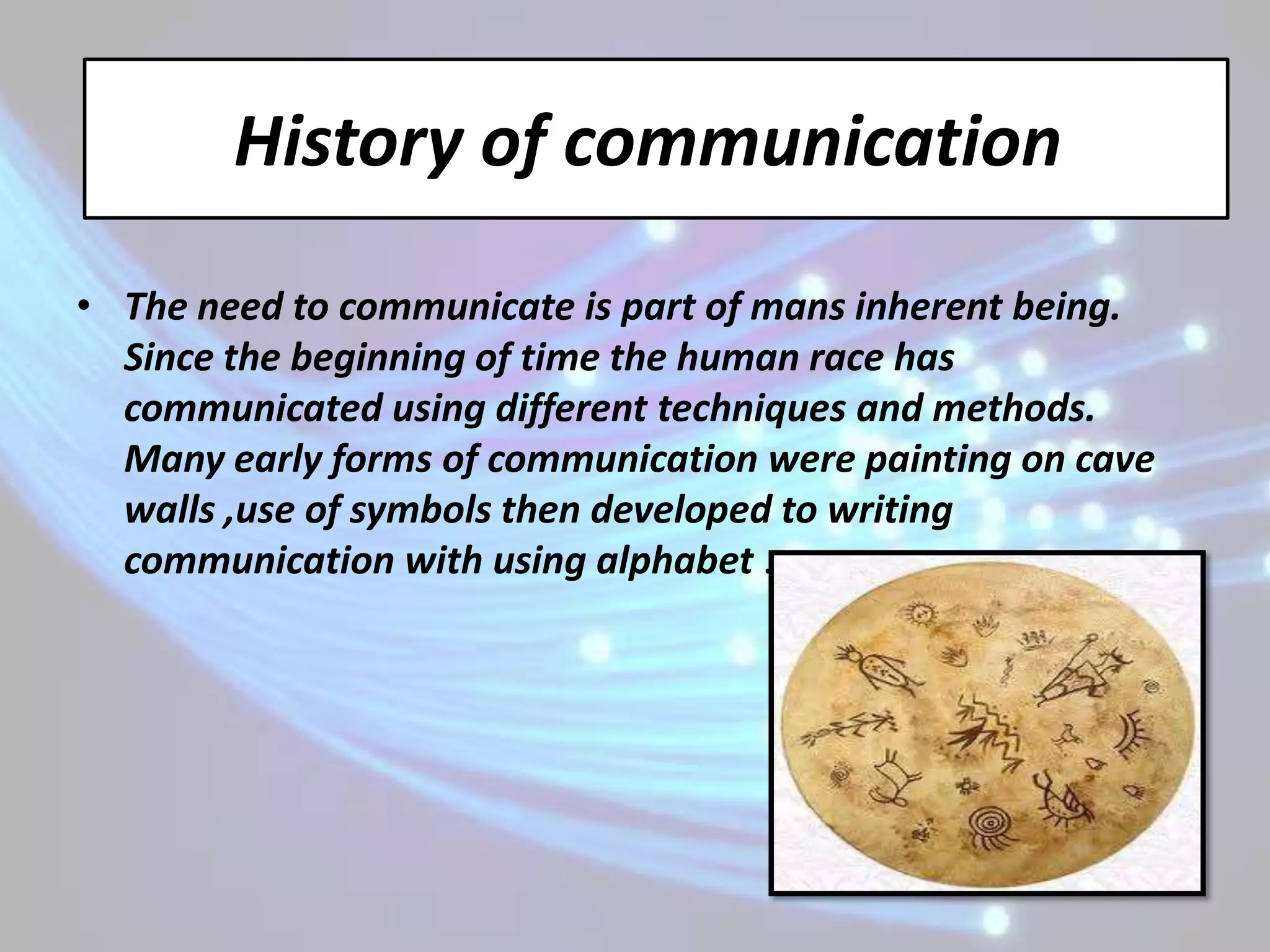
• The need to communicate is part of mans inherent being.
  Since the beginning of time the human race has
  communicated using different techniques and methods.
  Many early forms of communication were painting on cave
  walls ,use of symbols then developed to writing
  communication with using alphabet .
History of communication


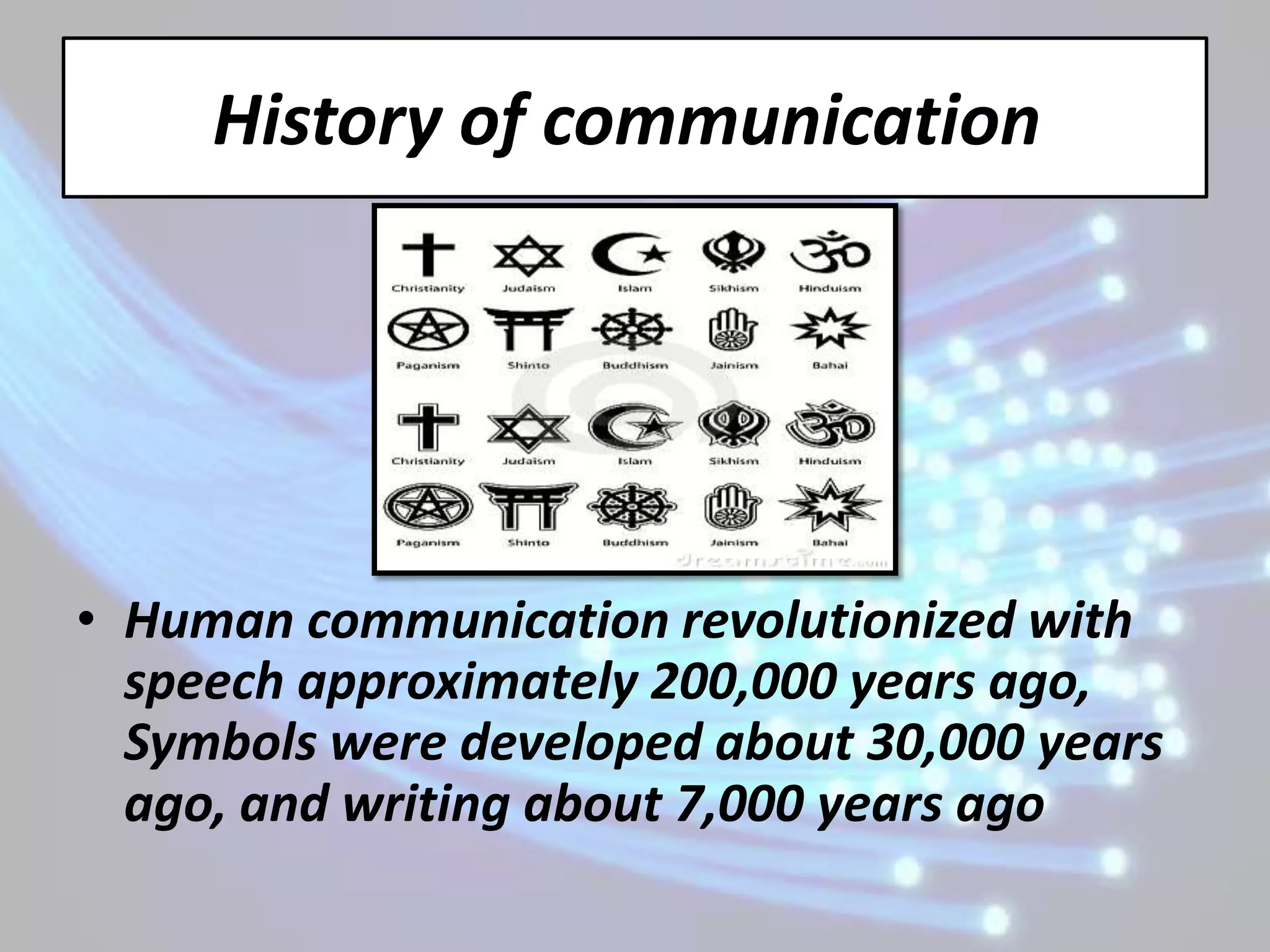
• Human communication revolutionized with
  speech approximately 200,000 years ago,
  Symbols were developed about 30,000 years
  ago, and writing about 7,000 years ago
Introduction to communication

The means of communication are usually spoken or
 written words, pictures or symbols. But we also give
 information through body language, gestures, and
 looks, facial expressions can show how we feel and
 what we think about an issue or another person.
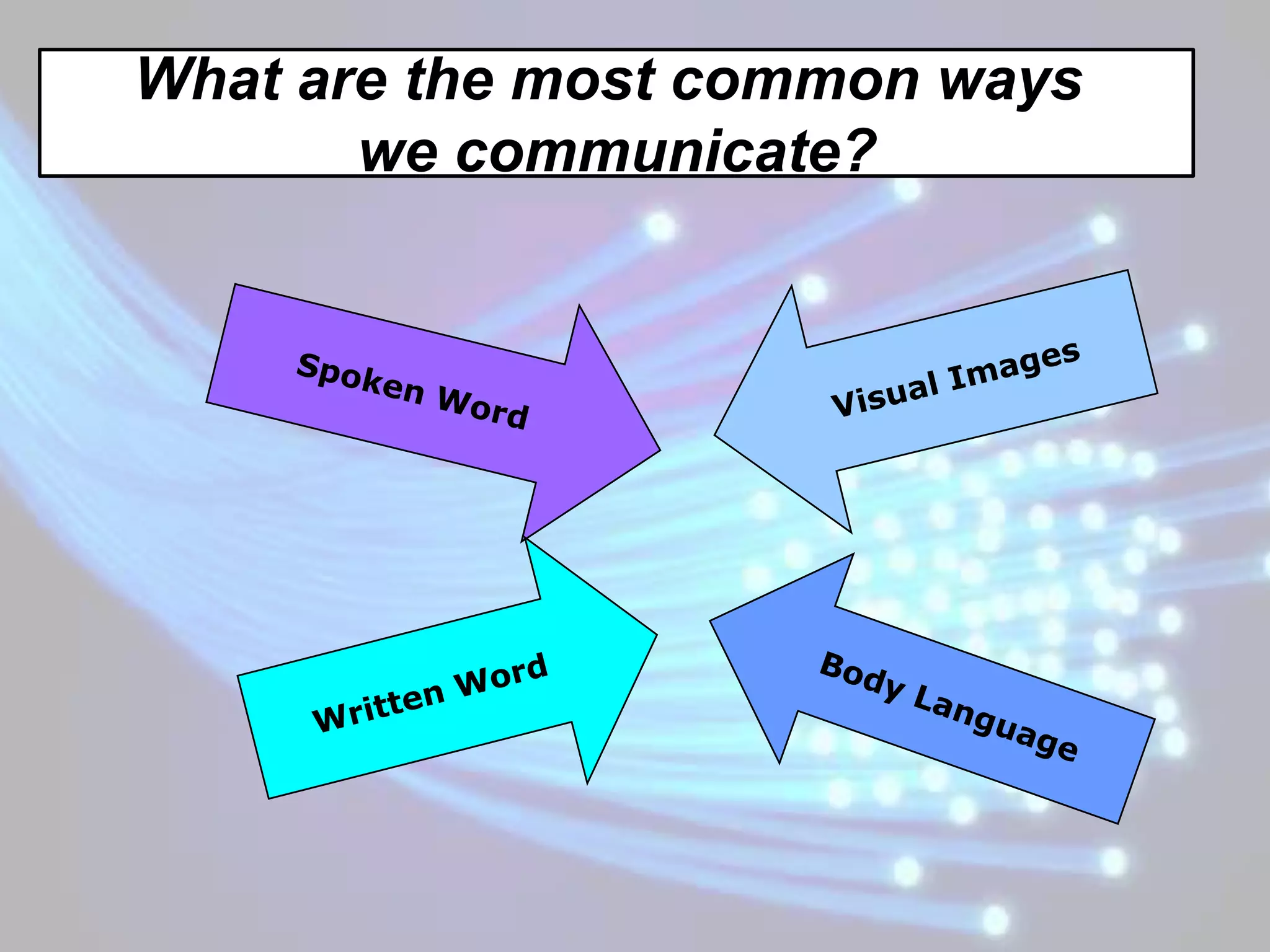
What are the most common ways
       we communicate?
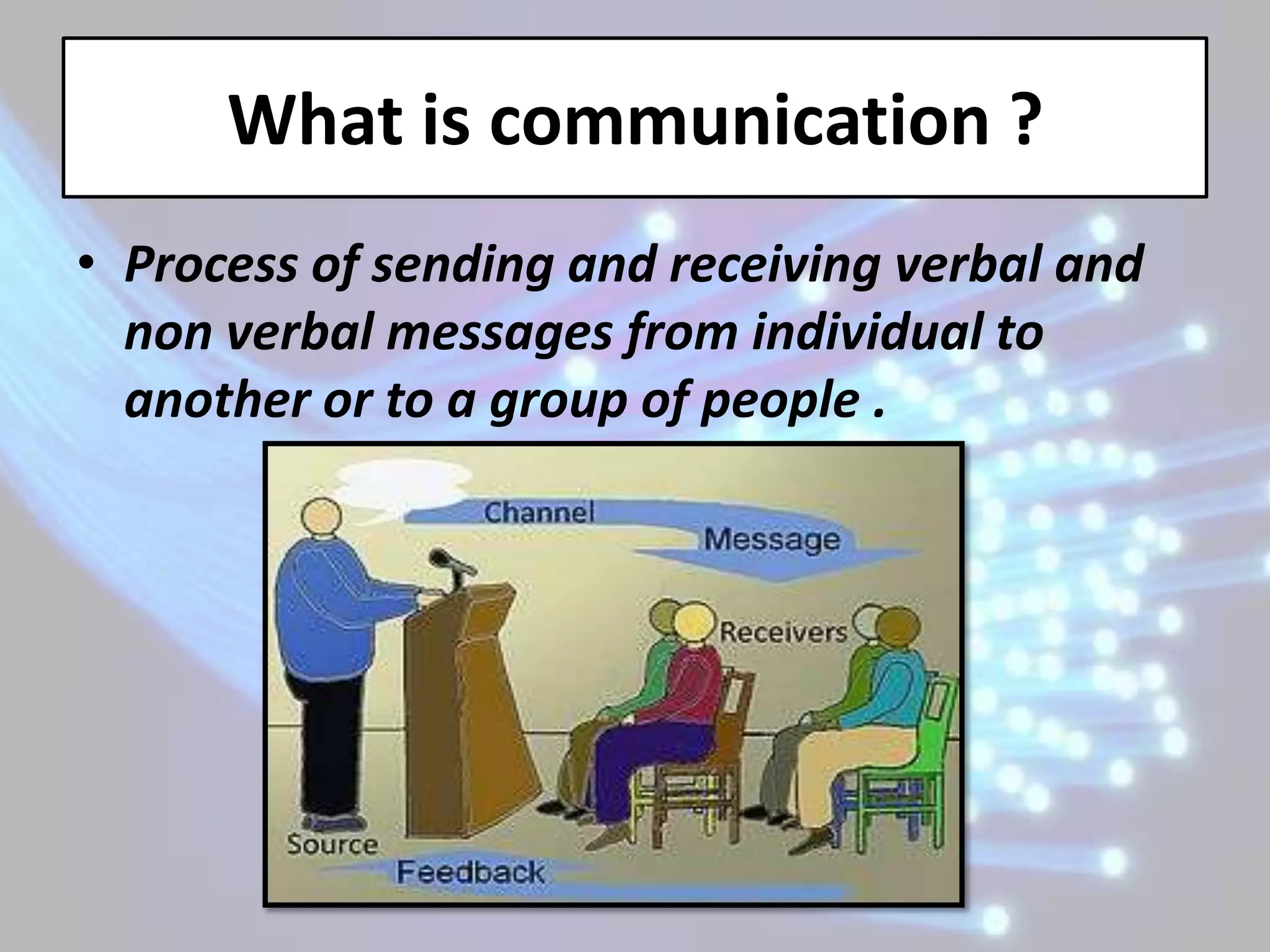
What is communication ?
• Process of sending and receiving verbal and
  non verbal messages from individual to
  another or to a group of people .
Importance of communication
• To establish nurse -patient (teacher & learner
  relationship.
• To be effective in expressing interest /concern
  for patient /family .
• To provide health care information.
• defines human personality
Type of communication
• Verbal communication
The encoding of messages into words, either written or spoken,
It Includes: sounds ,words, languages ,speaking

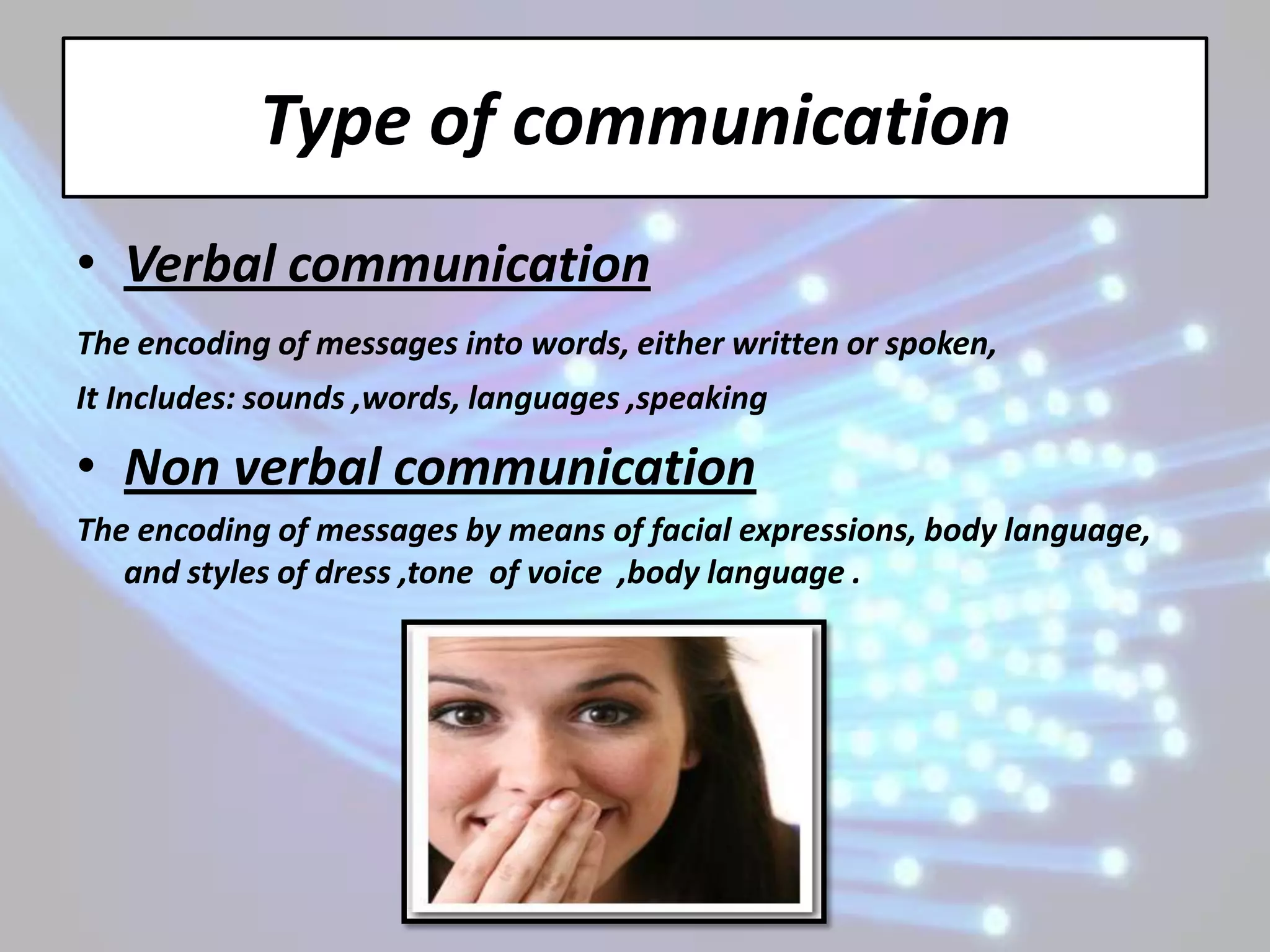
• Non verbal communication
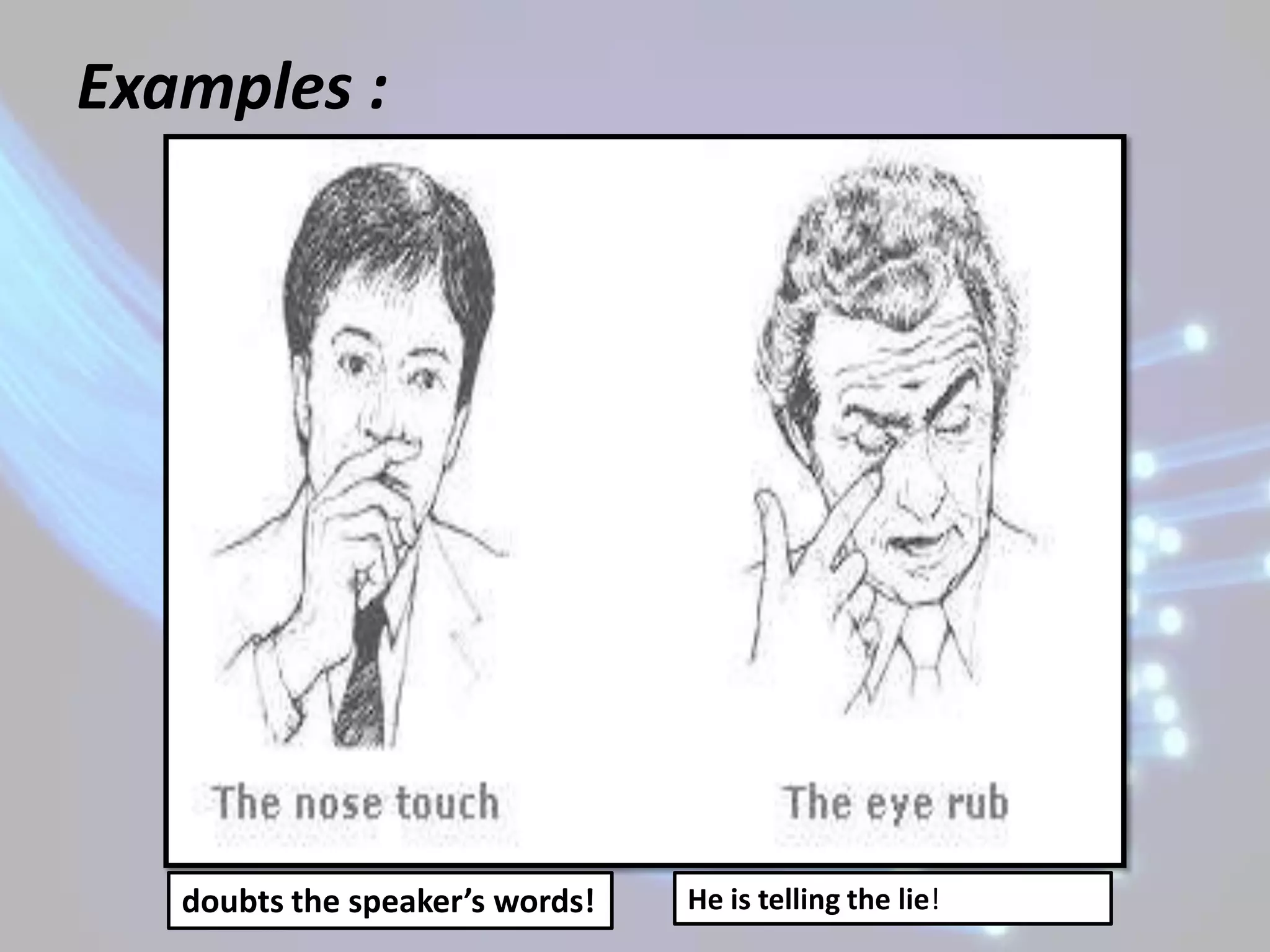
The encoding of messages by means of facial expressions, body language,
   and styles of dress ,tone of voice ,body language .
Examples :


   doubts the speaker’s words!   He is telling the lie!
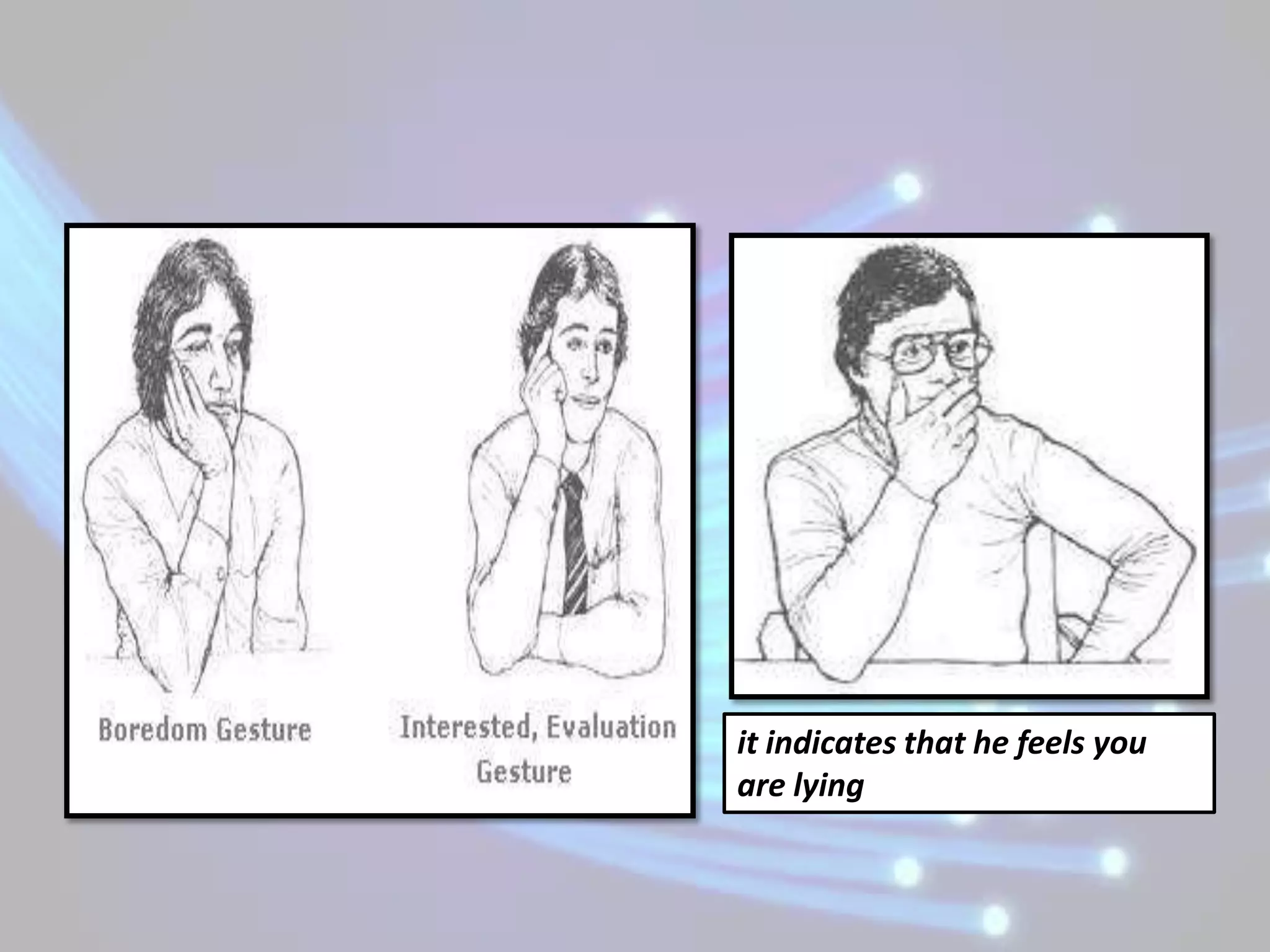
it indicates that he feels you
are lying
Style of communication

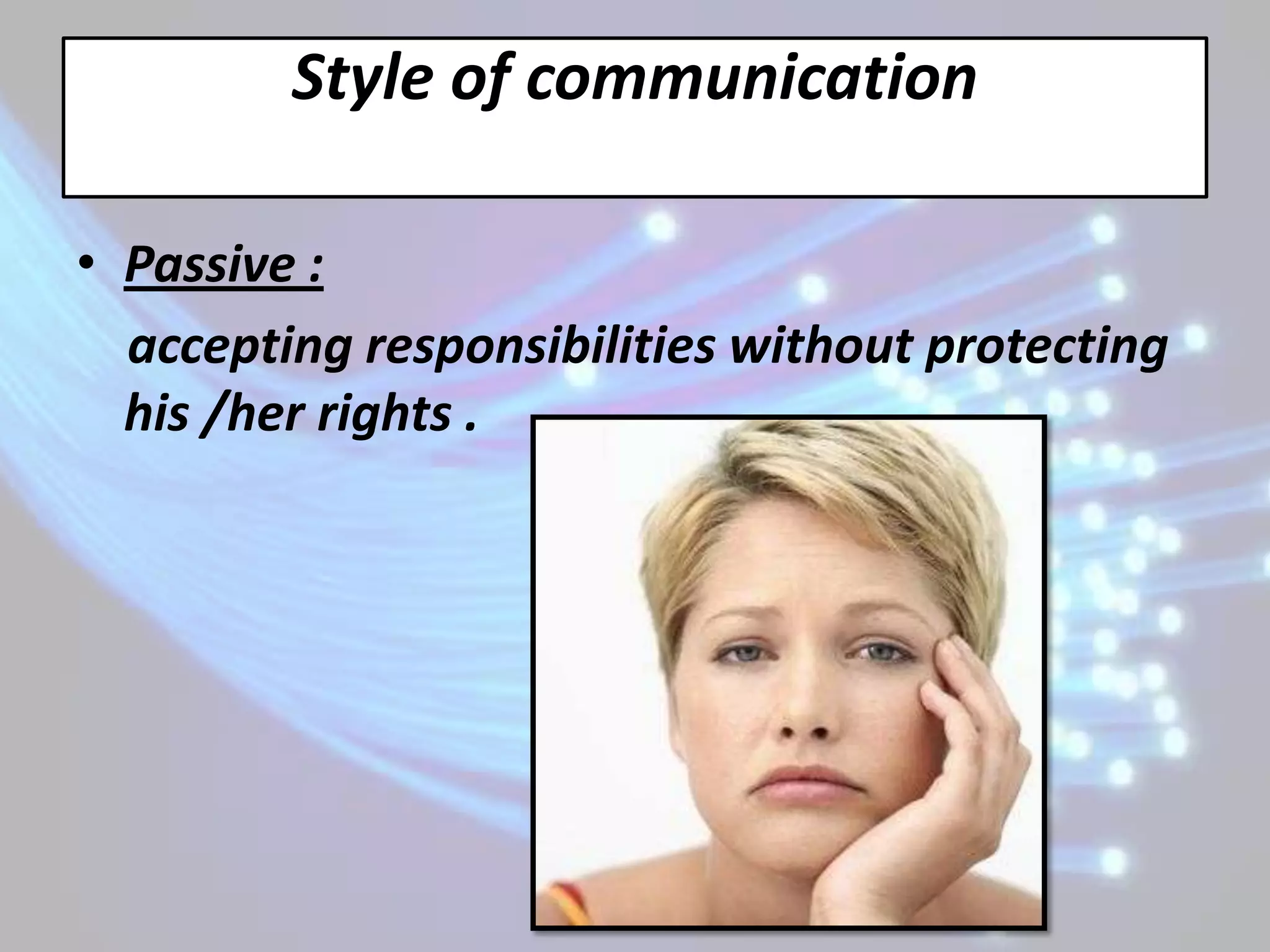
• Passive :
  accepting responsibilities without protecting
  his /her rights .
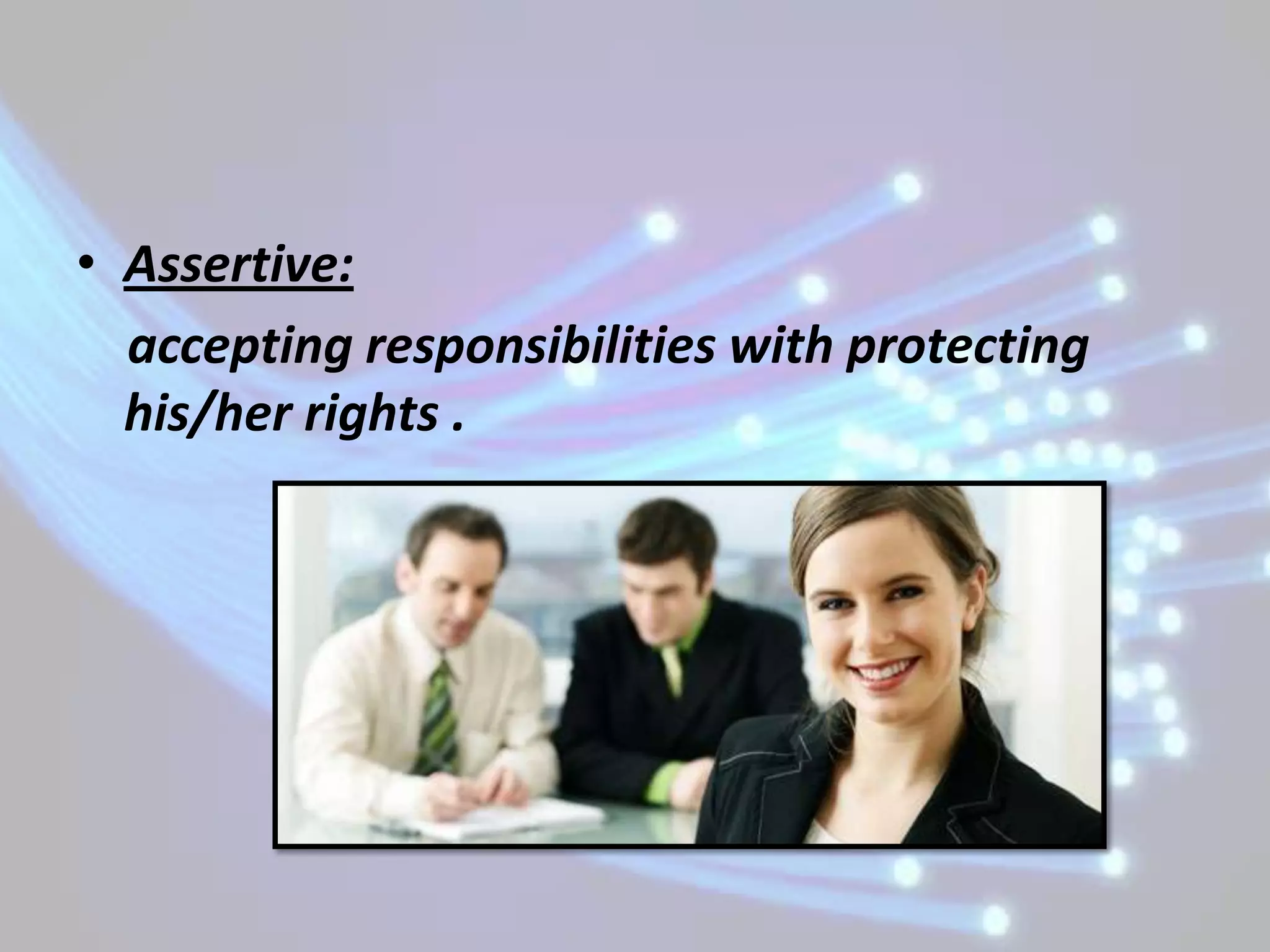
• Assertive:
  accepting responsibilities with protecting
  his/her rights .
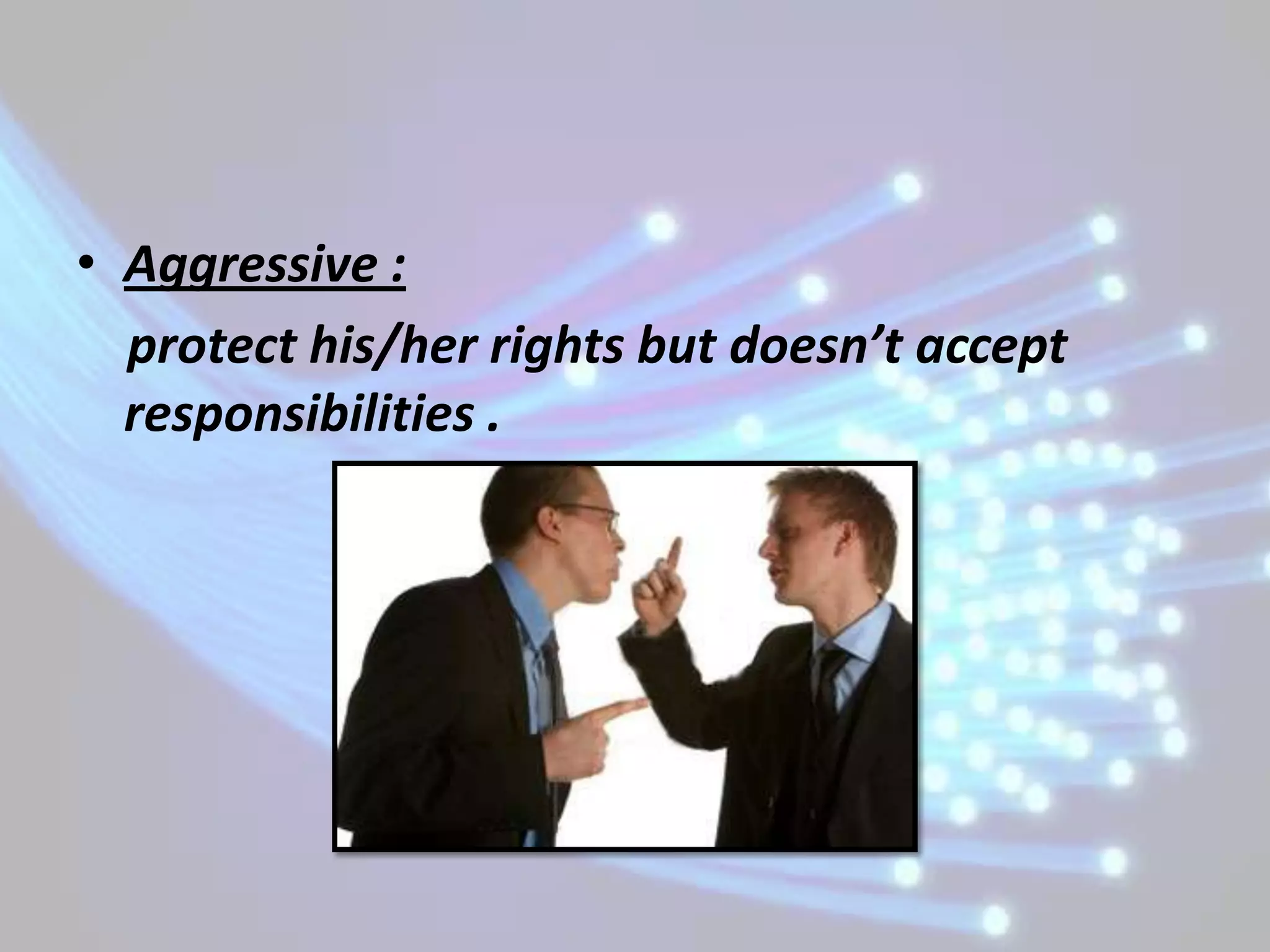
• Aggressive :
  protect his/her rights but doesn’t accept
  responsibilities .
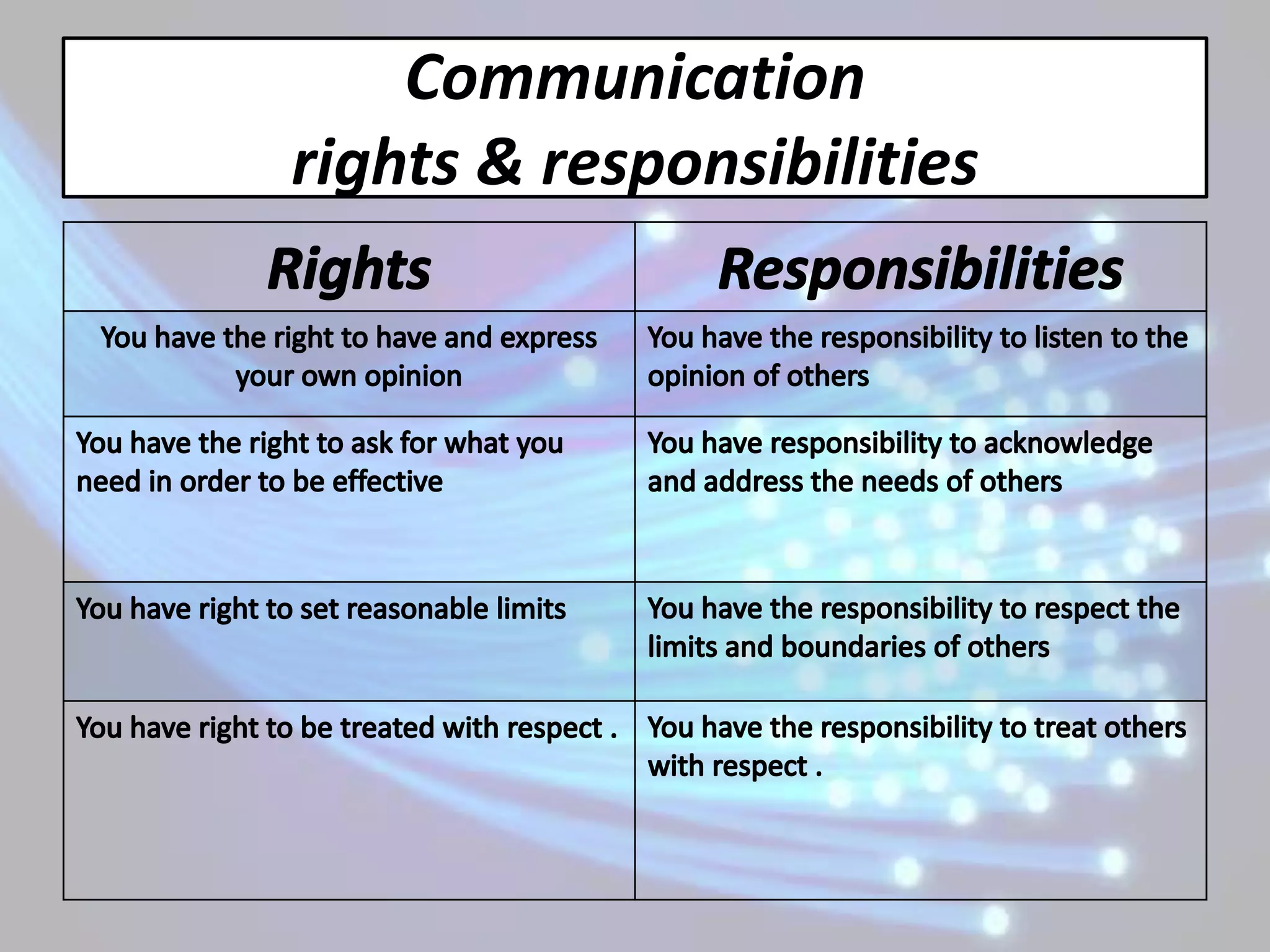
Communication
rights & responsibilities
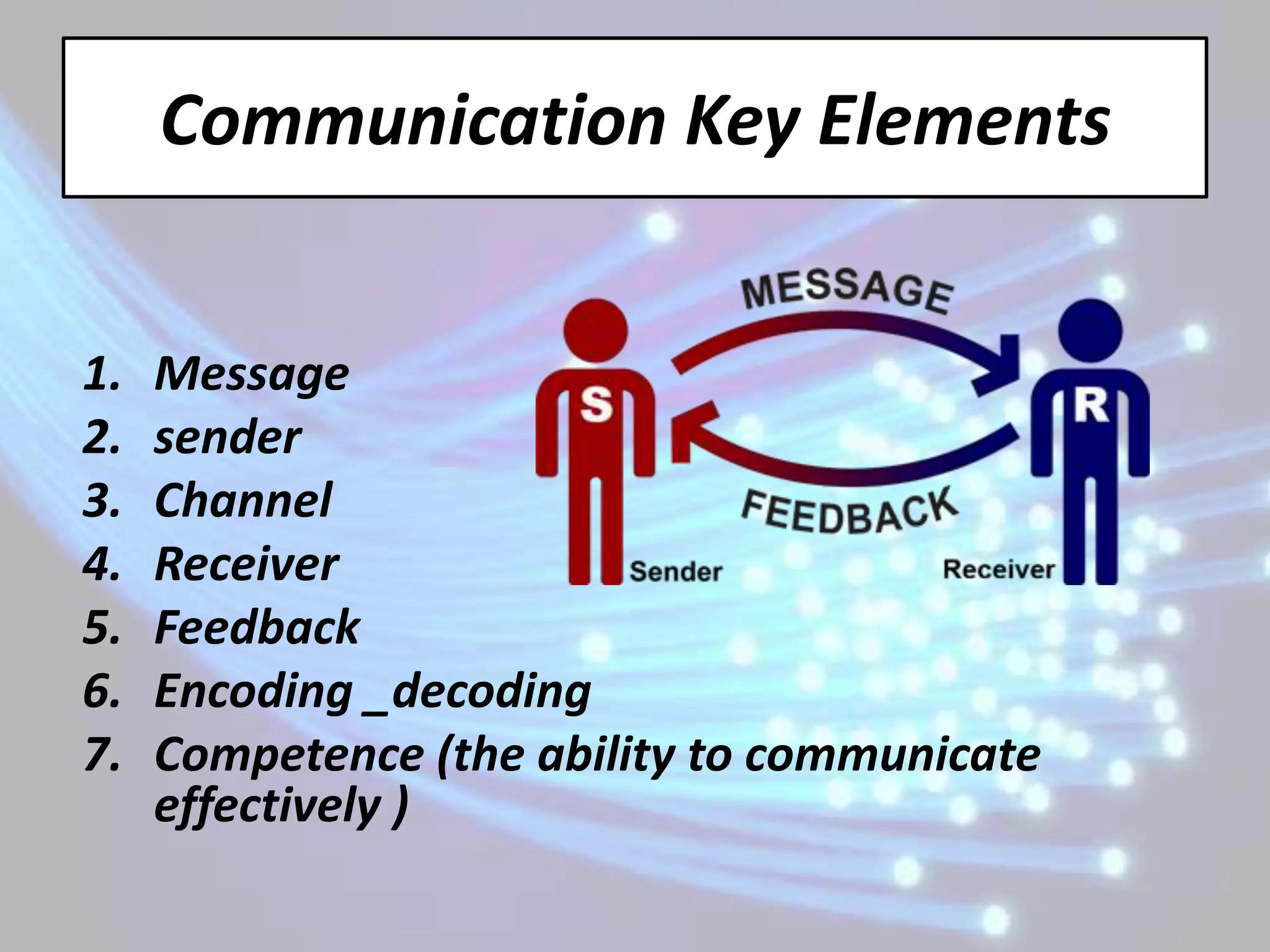
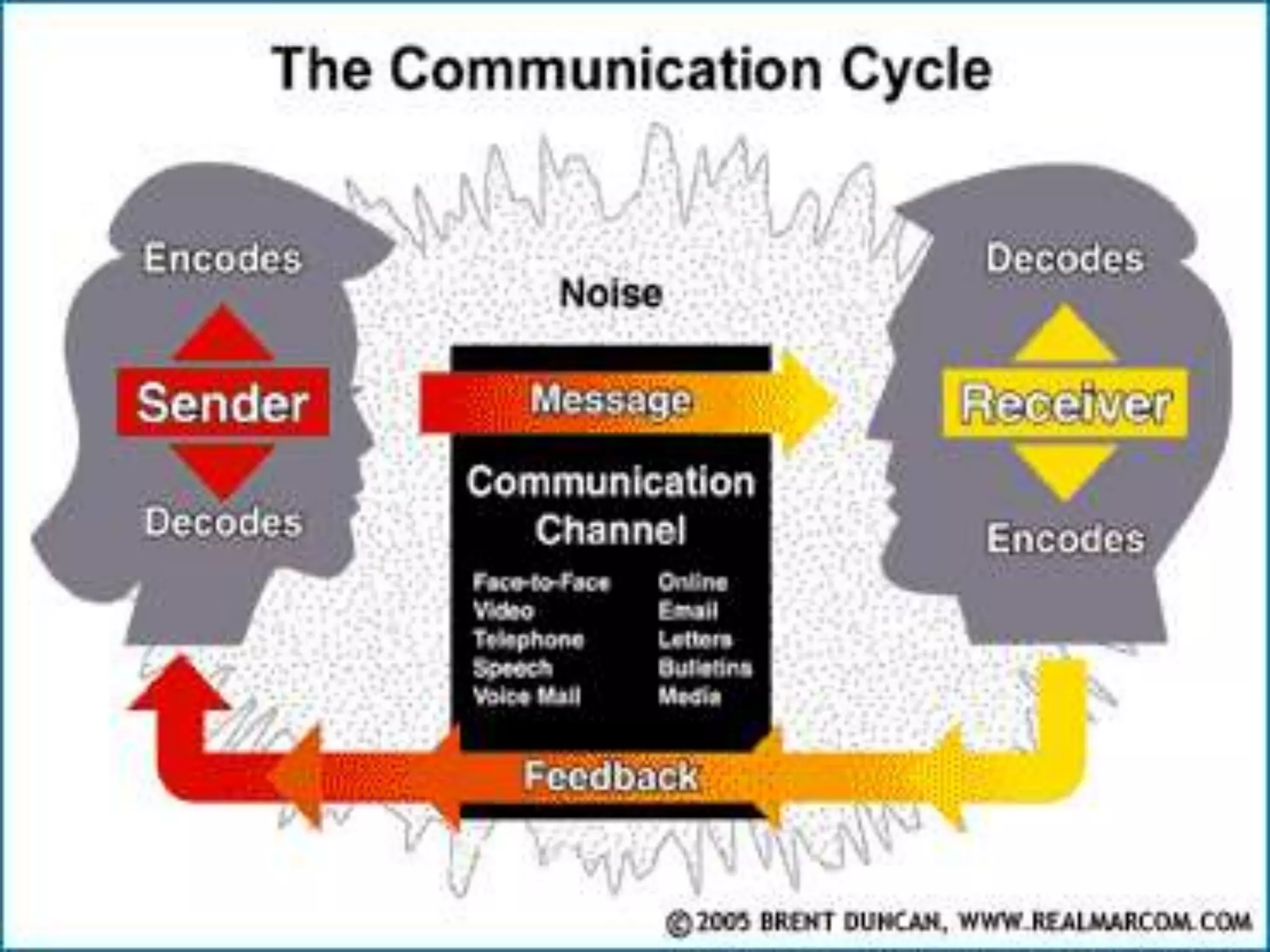
Communication Key Elements


1.   Message
2.   sender
3.   Channel
4.   Receiver
5.   Feedback
6.   Encoding _decoding
7.   Competence (the ability to communicate
     effectively )
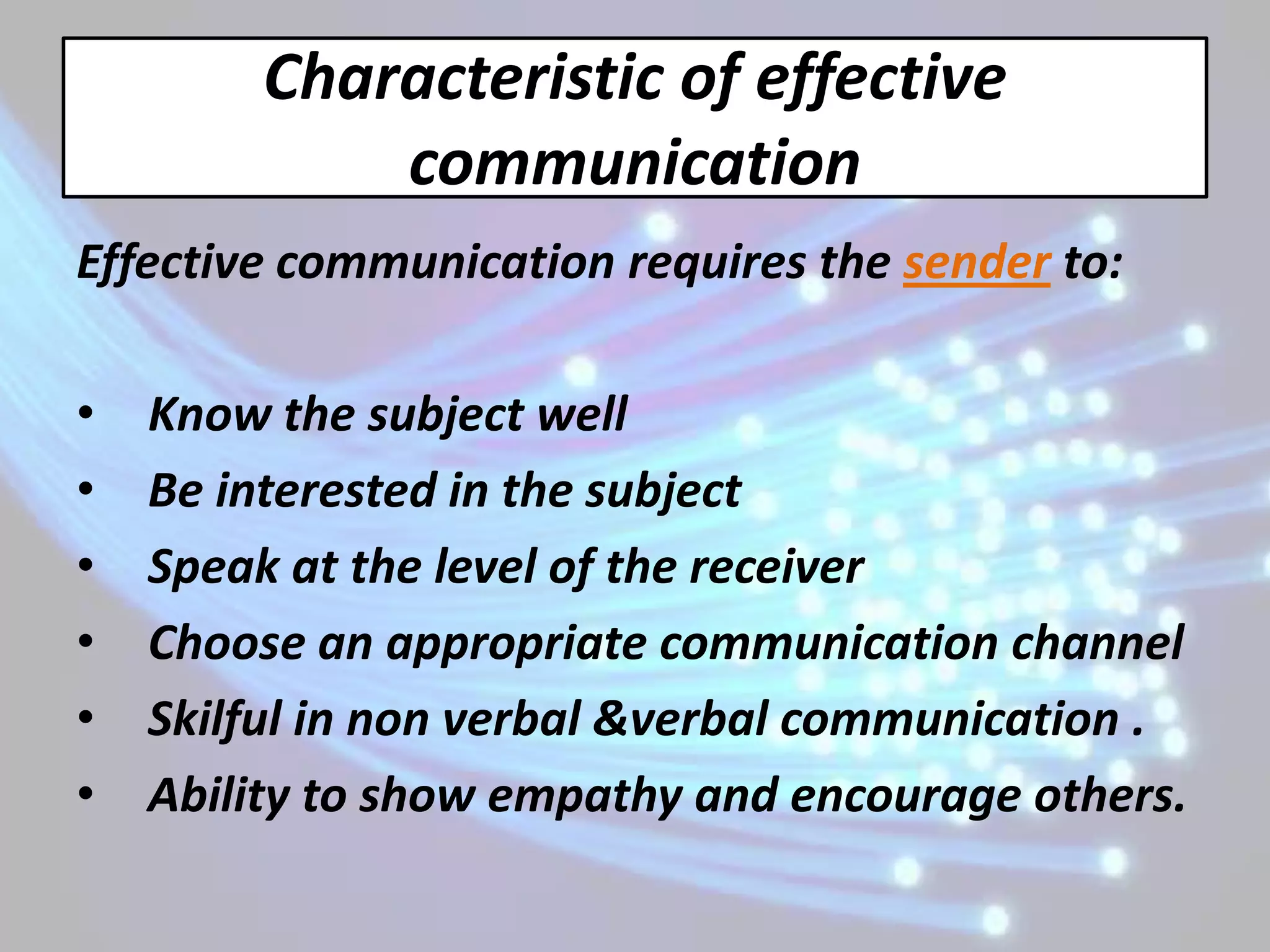
Characteristic of effective
            communication
Effective communication requires the sender to:

•   Know the subject well
•   Be interested in the subject
•   Speak at the level of the receiver
•   Choose an appropriate communication channel
•   Skilful in non verbal &verbal communication .
•   Ability to show empathy and encourage others.
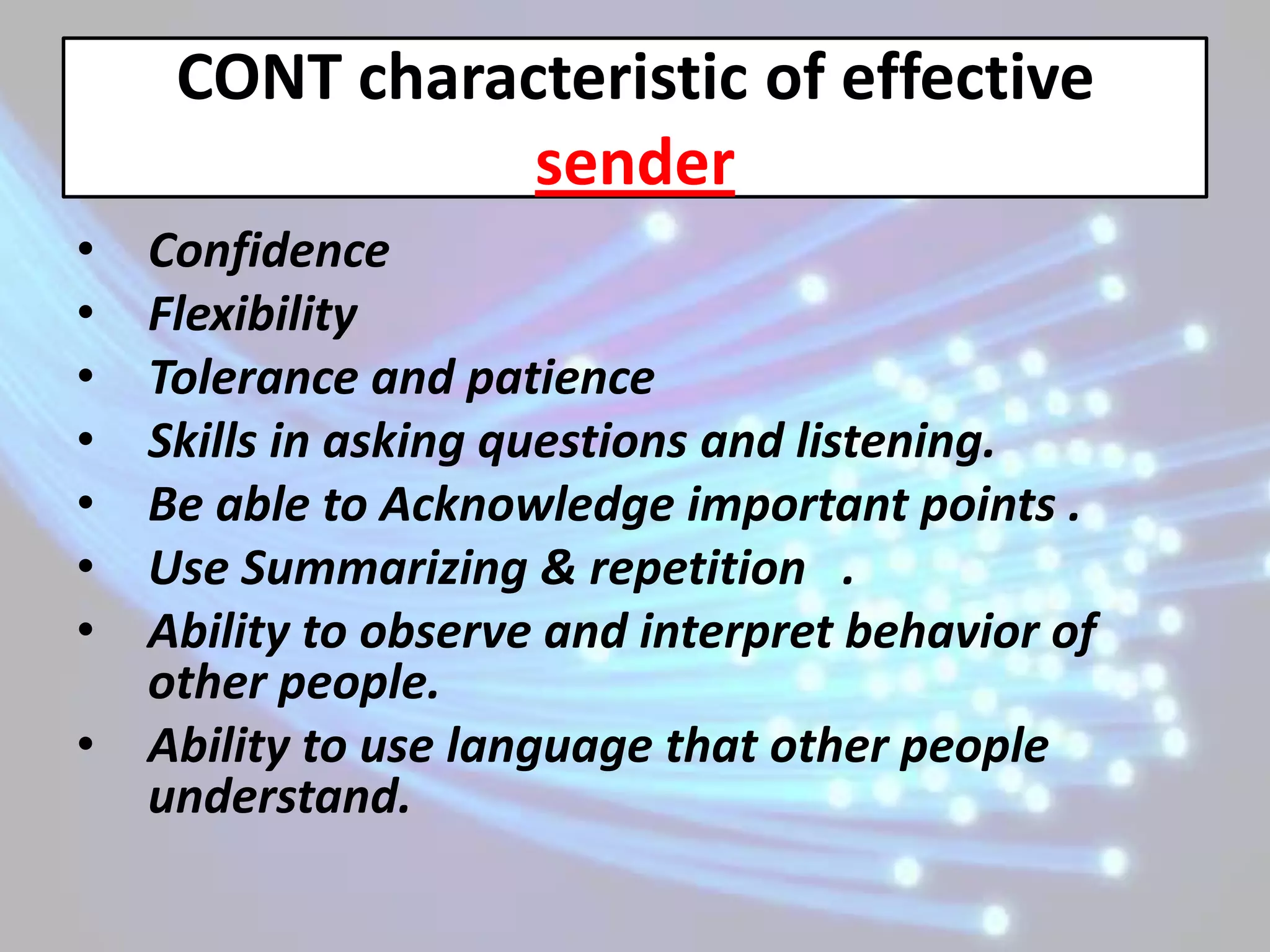
CONT characteristic of effective
                sender
•   Confidence
•   Flexibility
•   Tolerance and patience
•   Skills in asking questions and listening.
•   Be able to Acknowledge important points .
•   Use Summarizing & repetition .
•   Ability to observe and interpret behavior of
    other people.
•   Ability to use language that other people
    understand.
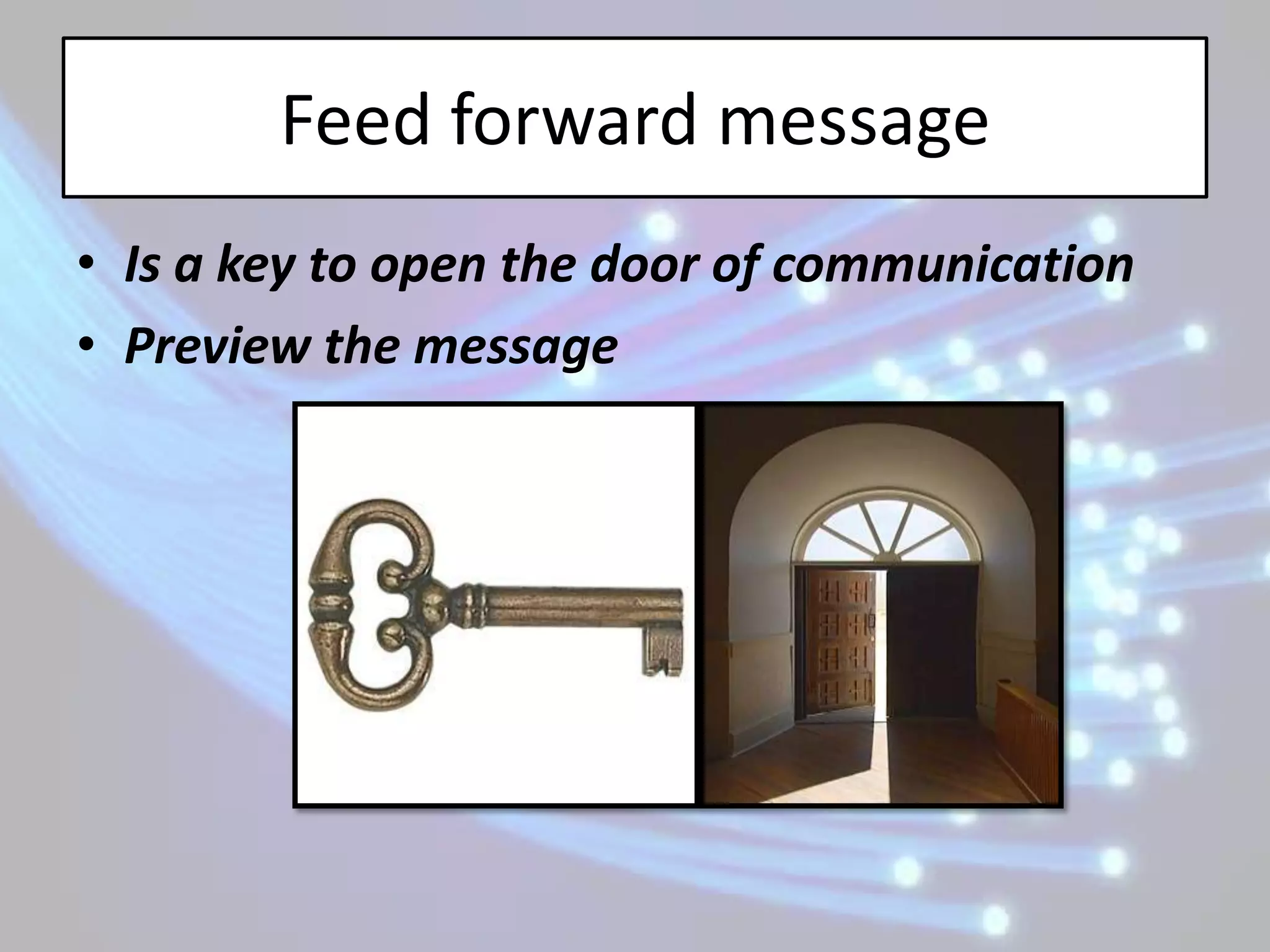
Feed forward message
• Is a key to open the door of communication
• Preview the message
Characteristic of effective
           communication
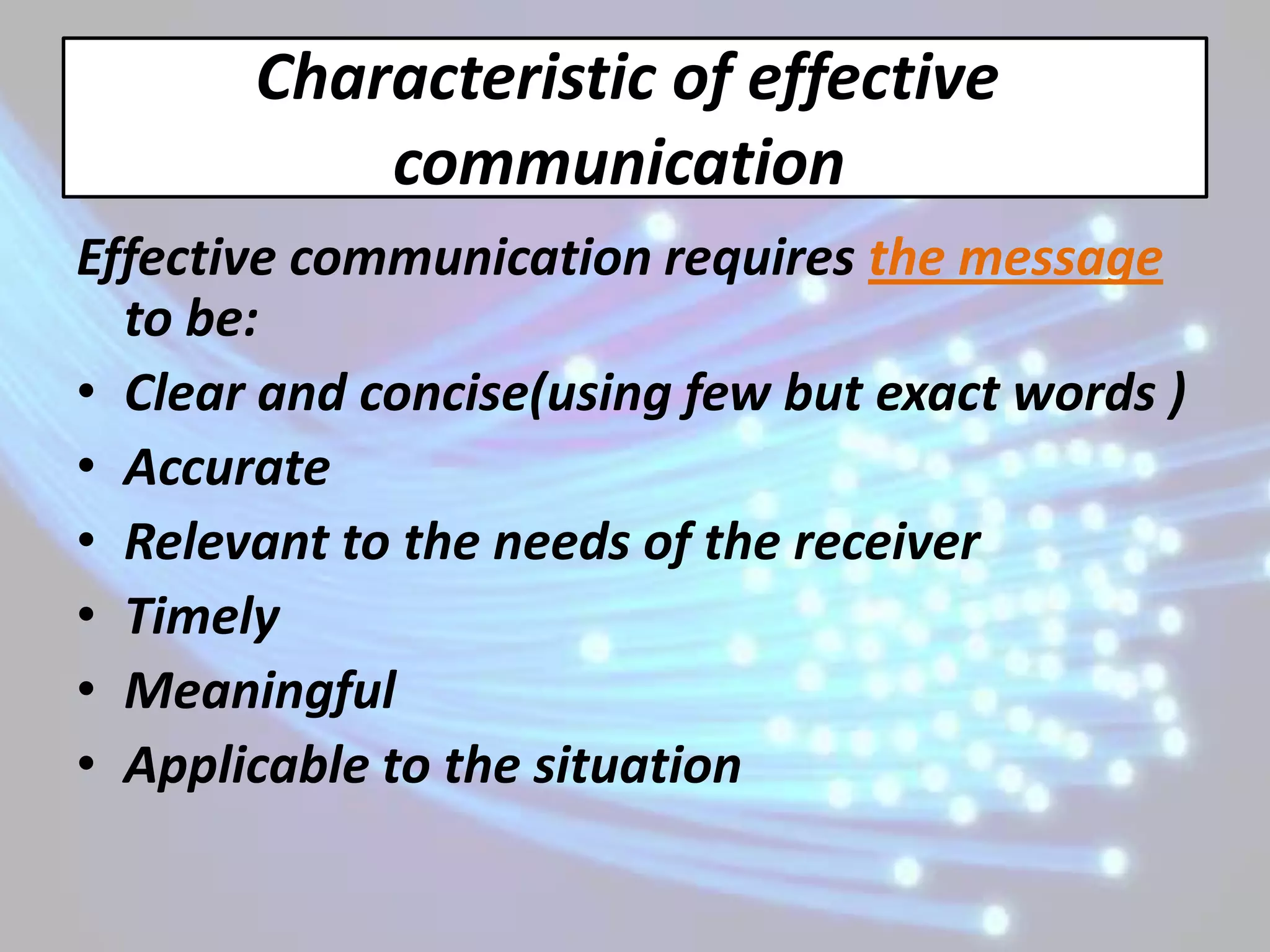
Effective communication requires the message
  to be:
• Clear and concise(using few but exact words )
• Accurate
• Relevant to the needs of the receiver
• Timely
• Meaningful
• Applicable to the situation
Characteristic of effective
           communication
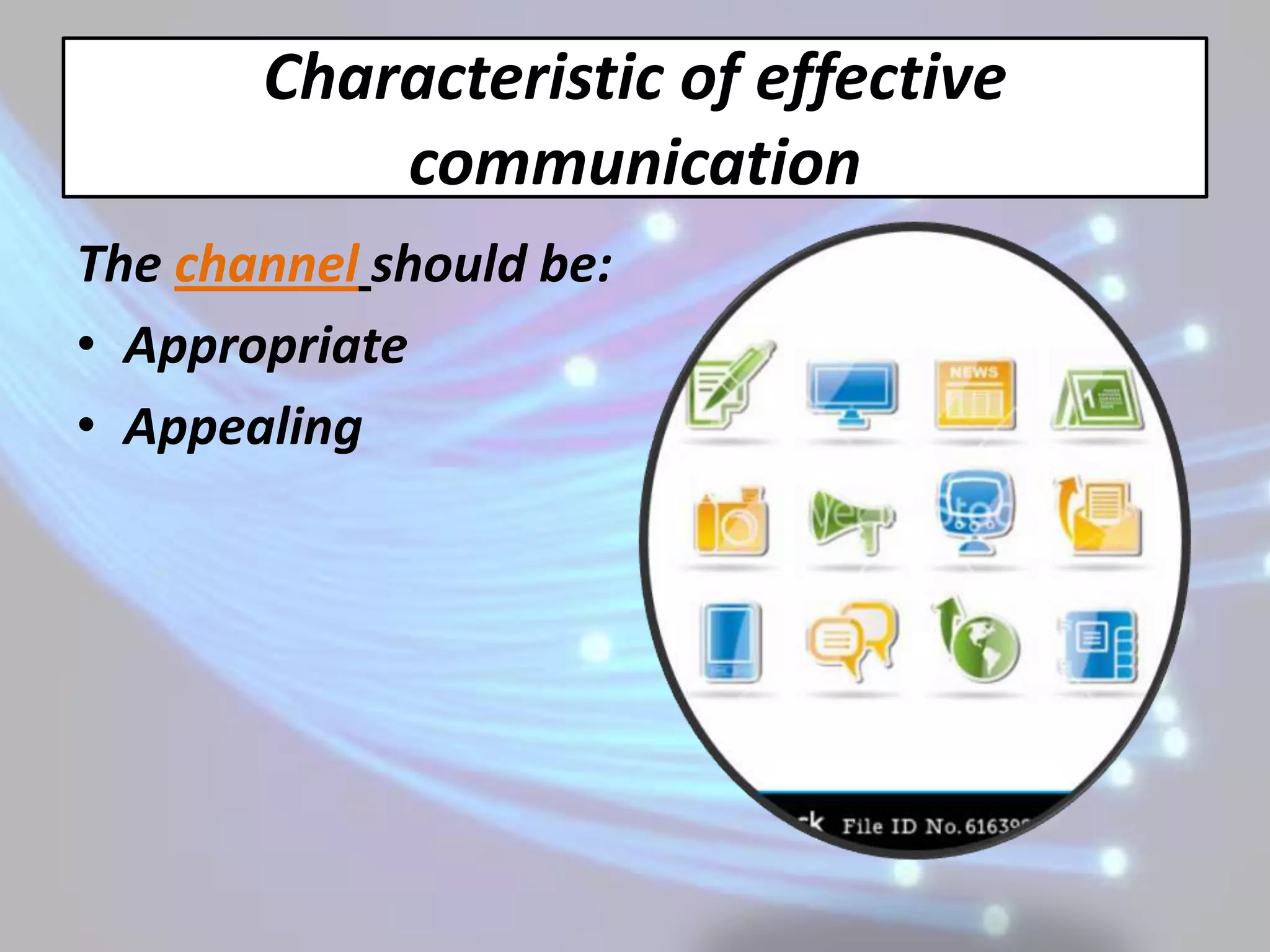
The channel should be:
• Appropriate
• Appealing
Characteristic of effective
            communication
The receiver should:
• Be aware, interested, and willing to accept
  the message
• Listen attentively
• Understand the value of the message
• Provide feedback
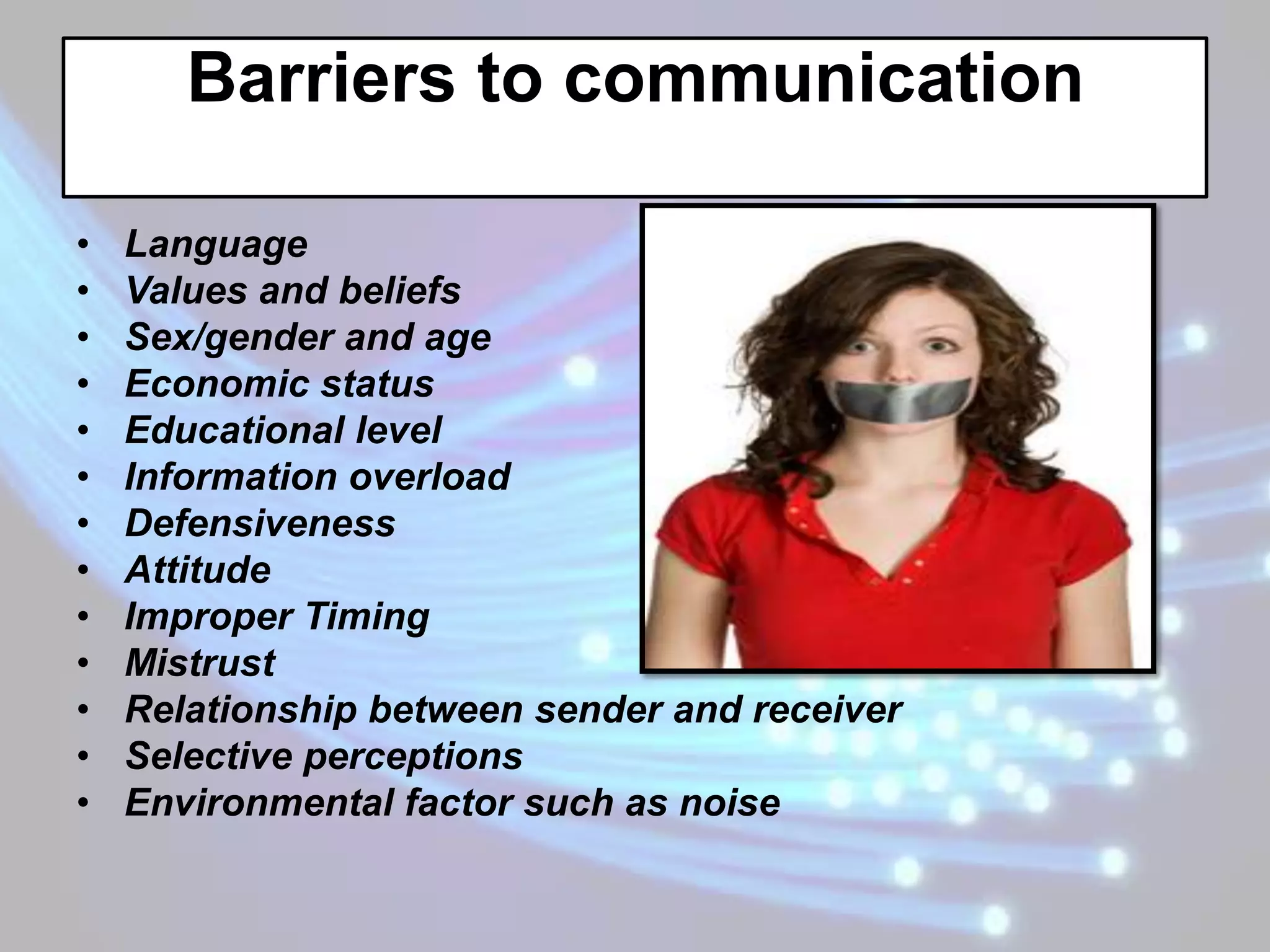
Barriers to communication

•   Language
•   Values and beliefs
•   Sex/gender and age
•   Economic status
•   Educational level
•   Information overload
•   Defensiveness
•   Attitude
•   Improper Timing
•   Mistrust
•   Relationship between sender and receiver
•   Selective perceptions
•   Environmental factor such as noise
Characteristics of effective
           communicator
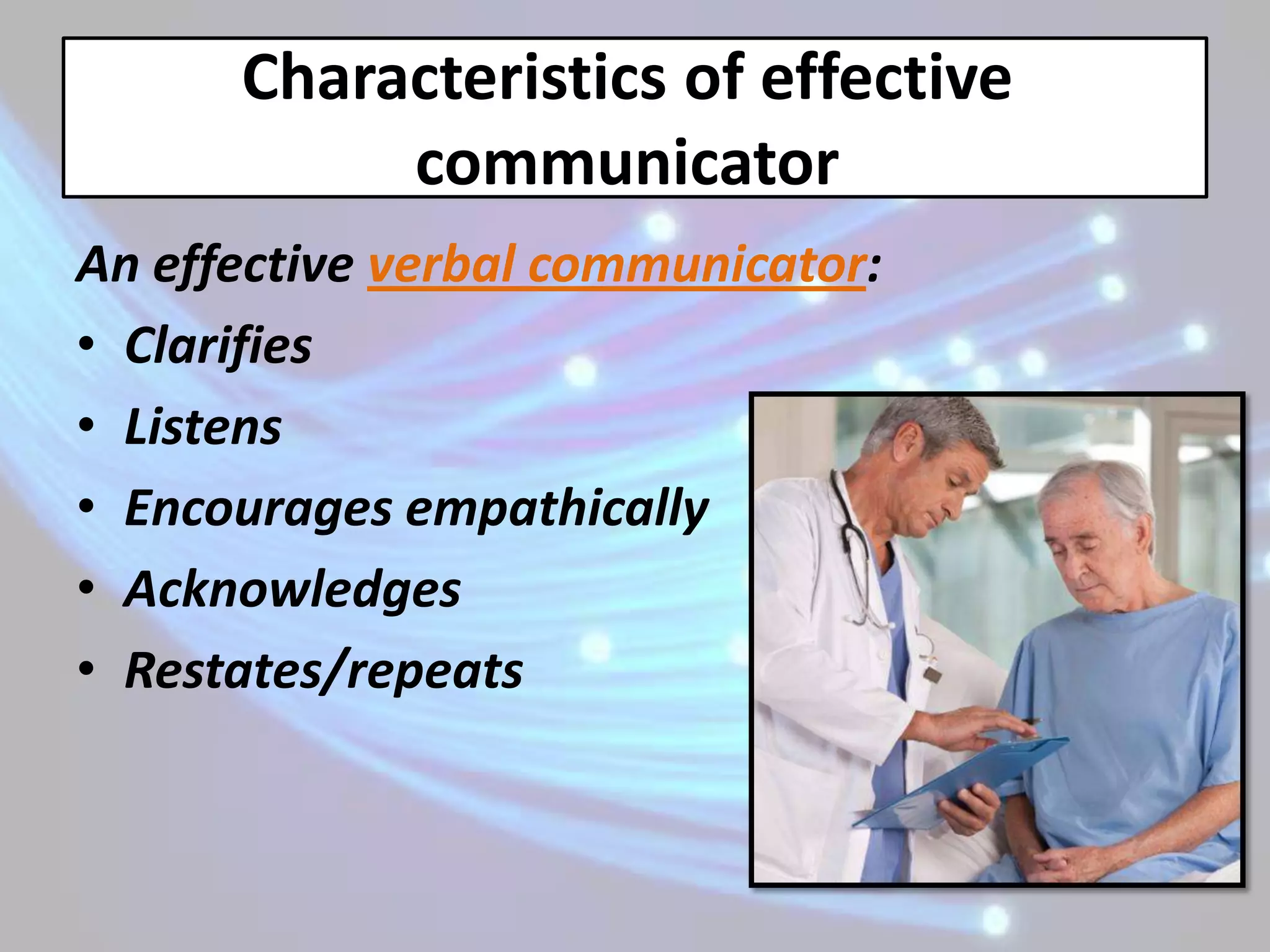
An effective verbal communicator:
• Clarifies
• Listens
• Encourages empathically
• Acknowledges
• Restates/repeats
Characteristics of effective
              communicator
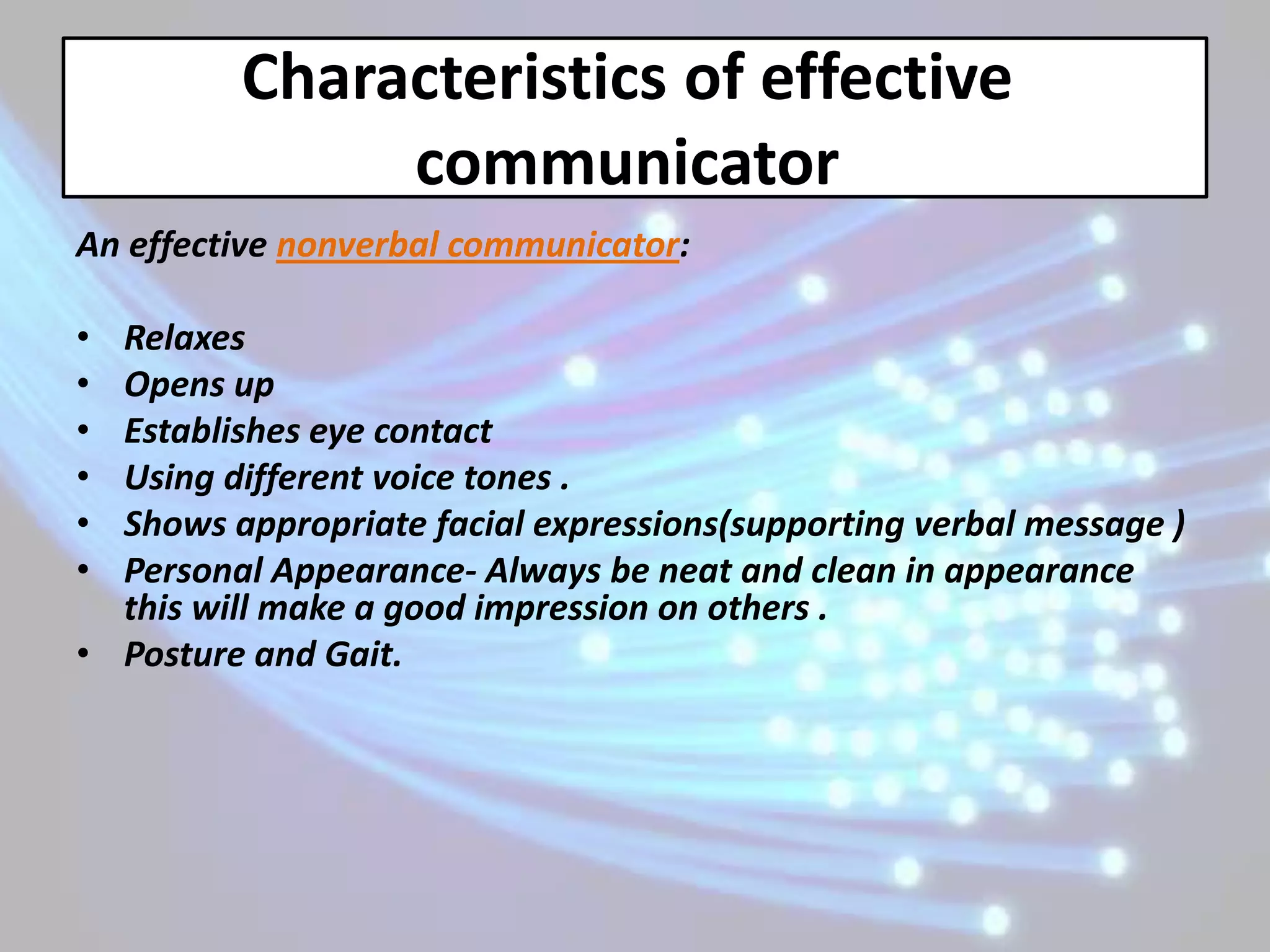
An effective nonverbal communicator:

• Relaxes
• Opens up
• Establishes eye contact
• Using different voice tones .
• Shows appropriate facial expressions(supporting verbal message )
• Personal Appearance- Always be neat and clean in appearance
  this will make a good impression on others .
• Posture and Gait.
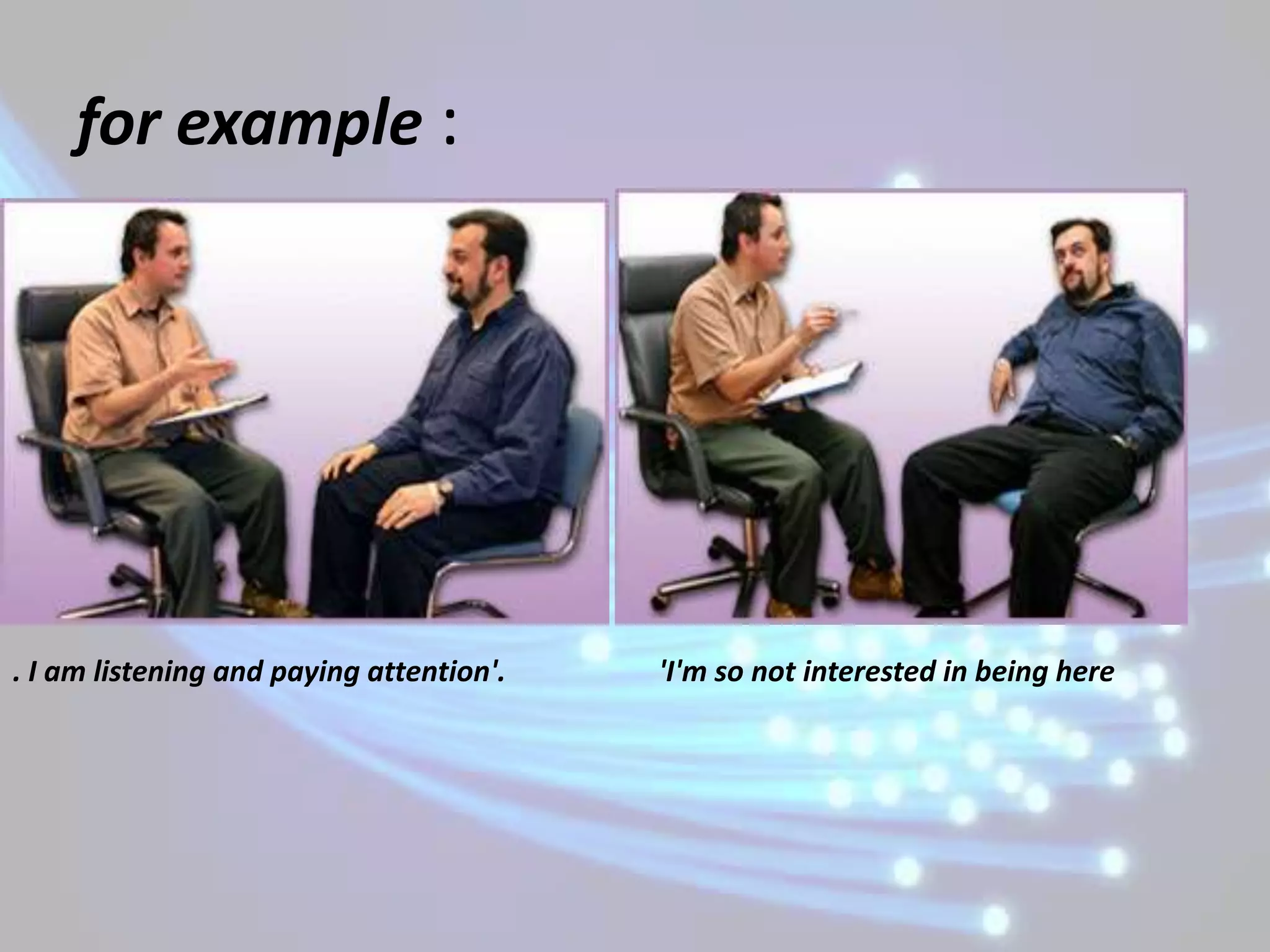
for example :


. I am listening and paying attention'.   'I'm so not interested in being here
Summary
• Effective communicator must be effective in
  verbal and non verbal communications .

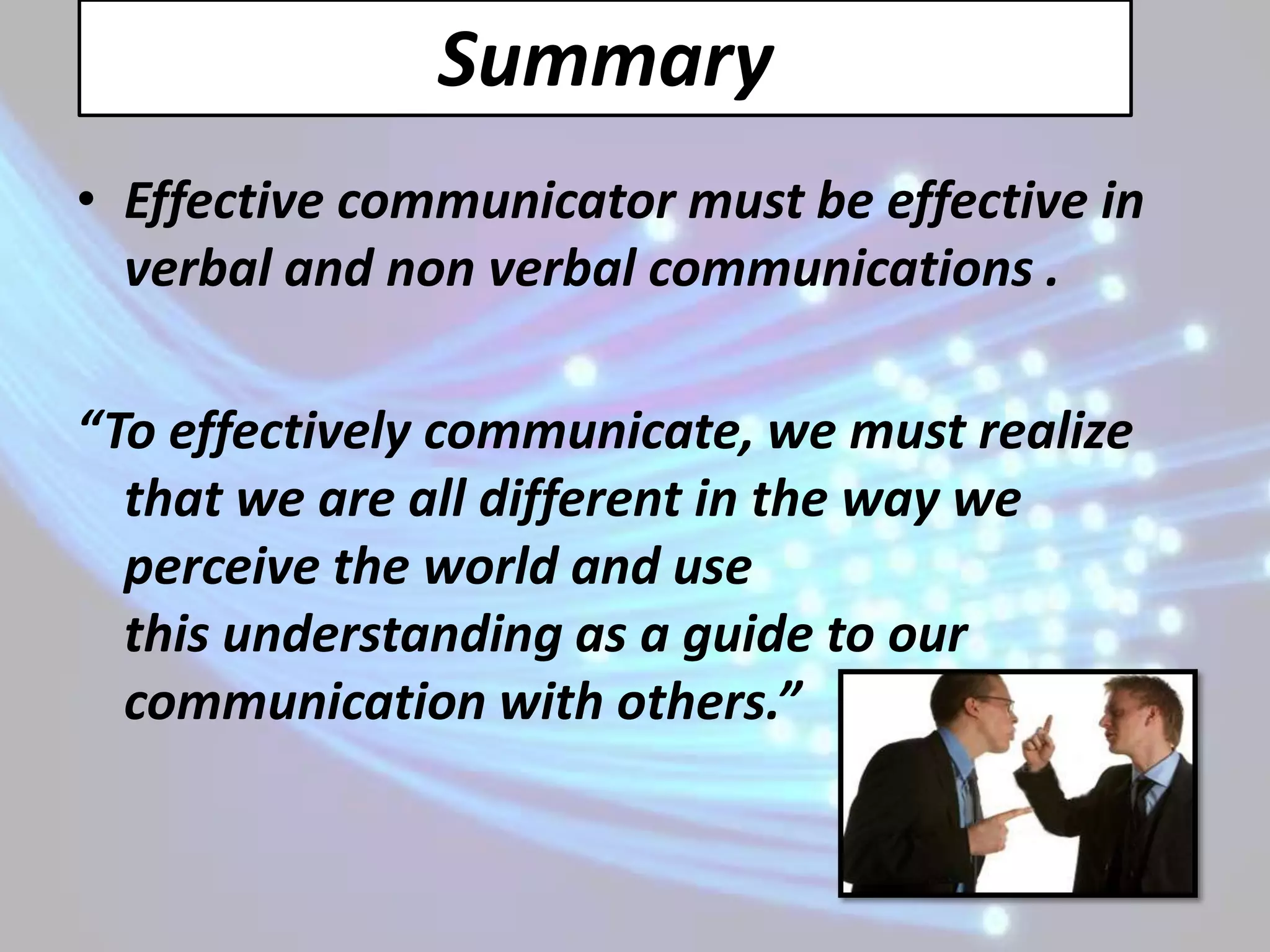
“To effectively communicate, we must realize
  that we are all different in the way we
  perceive the world and use
  this understanding as a guide to our
  communication with others.”
References
• http://en.wikipedia.org/wiki/Communication
• http://www.ncbi.nlm.nih.gov/pmc/articles/PMC1
  705977/h
• http://www.hsc.csu.edu.au/ipt/comms.../commu
  nication .ptt
• www.bized.co.uk/sites/bized/.../communication.
  ppt
• http://www.authorstream.com/Presentation/Siro
  -46139-communication-skills-101-Ways-Improve-
  Objectives-Speaking-Writing-General-Tips-
  Questions-s-Education-ppt-powerpoint/
“The art of communication is the
    language of leadership.”


    ANY QUESTION ?

Communication

  • 1.
    Communication in teaching learning process Prepared by : Raveen Ismail Hayman Ahmed Viyan Hasso
  • 2.
    Outlines 1. Introduction 2. Defining communication 3. Importance of communication 4. Communication rights and responsibilities 5. Style of communication 6. Type of communication 7. Elements of communication ,communication process 8. Characteristics of effective communication 9. Characteristics of effective communicator 10. Identifying different Barriers to communication
  • 3.
    History of communication •The need to communicate is part of mans inherent being. Since the beginning of time the human race has communicated using different techniques and methods. Many early forms of communication were painting on cave walls ,use of symbols then developed to writing communication with using alphabet .
  • 4.
    History of communication •Human communication revolutionized with speech approximately 200,000 years ago, Symbols were developed about 30,000 years ago, and writing about 7,000 years ago
  • 5.
    Introduction to communication Themeans of communication are usually spoken or written words, pictures or symbols. But we also give information through body language, gestures, and looks, facial expressions can show how we feel and what we think about an issue or another person.
  • 6.
    What are themost common ways we communicate?
  • 7.
    What is communication? • Process of sending and receiving verbal and non verbal messages from individual to another or to a group of people .
  • 8.
    Importance of communication •To establish nurse -patient (teacher & learner relationship. • To be effective in expressing interest /concern for patient /family . • To provide health care information. • defines human personality
  • 9.
    Type of communication •Verbal communication The encoding of messages into words, either written or spoken, It Includes: sounds ,words, languages ,speaking • Non verbal communication The encoding of messages by means of facial expressions, body language, and styles of dress ,tone of voice ,body language .
  • 10.
    Examples : doubts the speaker’s words! He is telling the lie!
  • 11.
    it indicates thathe feels you are lying
  • 12.
    Style of communication •Passive : accepting responsibilities without protecting his /her rights .
  • 13.
    • Assertive: accepting responsibilities with protecting his/her rights .
  • 14.
    • Aggressive : protect his/her rights but doesn’t accept responsibilities .
  • 15.
  • 16.
    Communication Key Elements 1. Message 2. sender 3. Channel 4. Receiver 5. Feedback 6. Encoding _decoding 7. Competence (the ability to communicate effectively )
  • 18.
    Characteristic of effective communication Effective communication requires the sender to: • Know the subject well • Be interested in the subject • Speak at the level of the receiver • Choose an appropriate communication channel • Skilful in non verbal &verbal communication . • Ability to show empathy and encourage others.
  • 19.
    CONT characteristic ofeffective sender • Confidence • Flexibility • Tolerance and patience • Skills in asking questions and listening. • Be able to Acknowledge important points . • Use Summarizing & repetition . • Ability to observe and interpret behavior of other people. • Ability to use language that other people understand.
  • 20.
    Feed forward message •Is a key to open the door of communication • Preview the message
  • 21.
    Characteristic of effective communication Effective communication requires the message to be: • Clear and concise(using few but exact words ) • Accurate • Relevant to the needs of the receiver • Timely • Meaningful • Applicable to the situation
  • 22.
    Characteristic of effective communication The channel should be: • Appropriate • Appealing
  • 23.
    Characteristic of effective communication The receiver should: • Be aware, interested, and willing to accept the message • Listen attentively • Understand the value of the message • Provide feedback
  • 24.
    Barriers to communication • Language • Values and beliefs • Sex/gender and age • Economic status • Educational level • Information overload • Defensiveness • Attitude • Improper Timing • Mistrust • Relationship between sender and receiver • Selective perceptions • Environmental factor such as noise
  • 25.
    Characteristics of effective communicator An effective verbal communicator: • Clarifies • Listens • Encourages empathically • Acknowledges • Restates/repeats
  • 26.
    Characteristics of effective communicator An effective nonverbal communicator: • Relaxes • Opens up • Establishes eye contact • Using different voice tones . • Shows appropriate facial expressions(supporting verbal message ) • Personal Appearance- Always be neat and clean in appearance this will make a good impression on others . • Posture and Gait.
  • 27.
    for example : .I am listening and paying attention'. 'I'm so not interested in being here
  • 28.
    Summary • Effective communicatormust be effective in verbal and non verbal communications . “To effectively communicate, we must realize that we are all different in the way we perceive the world and use this understanding as a guide to our communication with others.”
  • 29.
    References • http://en.wikipedia.org/wiki/Communication • http://www.ncbi.nlm.nih.gov/pmc/articles/PMC1 705977/h • http://www.hsc.csu.edu.au/ipt/comms.../commu nication .ptt • www.bized.co.uk/sites/bized/.../communication. ppt • http://www.authorstream.com/Presentation/Siro -46139-communication-skills-101-Ways-Improve- Objectives-Speaking-Writing-General-Tips- Questions-s-Education-ppt-powerpoint/
  • 30.
    “The art ofcommunication is the language of leadership.” ANY QUESTION ?