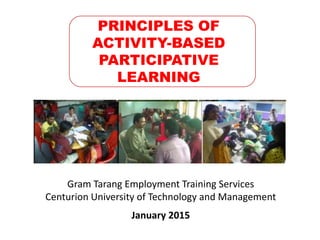
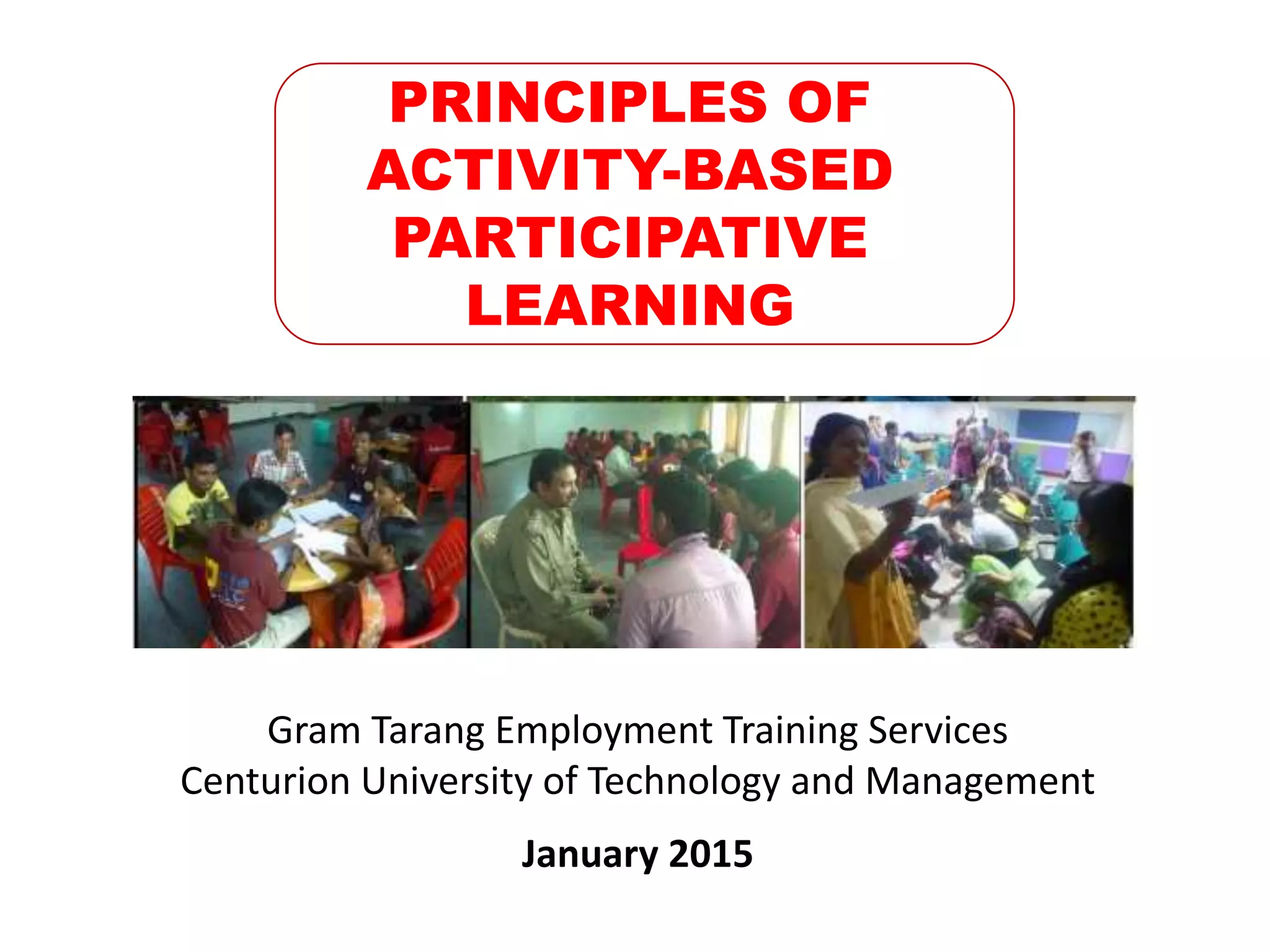


Gram Tarang Employment Training Services
Centurion University of Technology and Management
January 2015
PRINCIPLES OF
ACTIVITY-BASED
PARTICIPATIVE
LEARNING
Introductions
Tom Bulman Stephen
Carrick-Davies
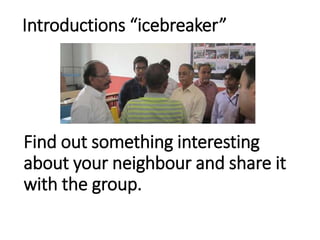
Introductions “icebreaker”
Find out something interesting
about your neighbour and share it
with the group.
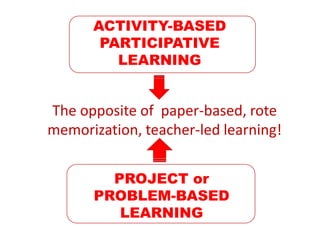
ACTIVITY-BASED
PARTICIPATIVE
LEARNING
PROJECT or
PROBLEM-BASED
LEARNING
The opposite of paper-based, rote
memorization, teacher-led learning!
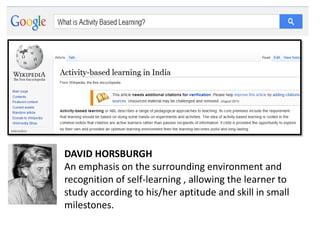
DAVID HORSBURGH
An emphasis on the surrounding environment and
recognition of self-learning , allowing the learner to
study according to his/her aptitude and skill in small
milestones.
If you can find the
answer online it’s
not project-based !
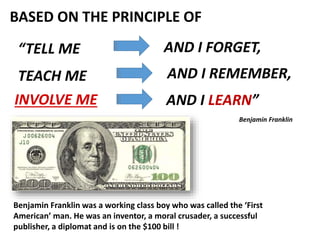
BASED ON THE PRINCIPLE OF
“TELL ME
Benjamin Franklin was a working class boy who was called the ‘First
American’ man. He was an inventor, a moral crusader, a successful
publisher, a diplomat and is on the $100 bill !
AND I FORGET,
TEACH ME
AND I LEARN”
Benjamin Franklin
INVOLVE ME
AND I REMEMBER,
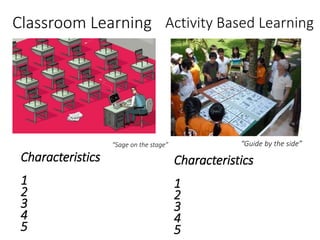
Classroom Learning
“Sage on the stage”
Characteristics
1
2
3
4
5
Activity Based Learning
“Guide by the side”
Characteristics
1
2
3
4
5
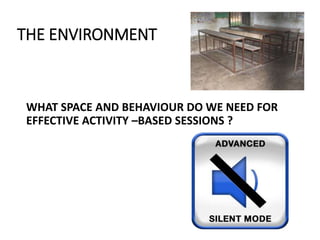
THE ENVIRONMENT
WHAT SPACE AND BEHAVIOUR DO WE NEED FOR
EFFECTIVE ACTIVITY –BASED SESSIONS ?
FINDING THE ANSWERS BY DOING !
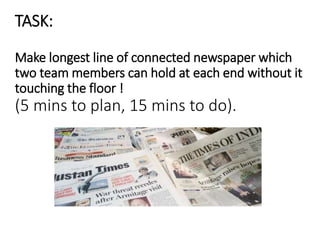
TASK:
Make longest line of connected newspaper which
two team members can hold at each end without it
touching the floor !
(5 mins to plan, 15 mins to do).
FEEDBACK TO GROUP
What have we learnt ?
WAS THE ACTIVITY S.M.A.R.T ?
WHAT DID THE LEARNER DO ?
WAS THE ACTIVITY TEAM DEPENDENT ?
WHAT ROLE DID THE TRAINER HAVE ?
SPECIFIC, MEASURABLE, ATTAINABLE, RELEVANT, TIME-BOUND
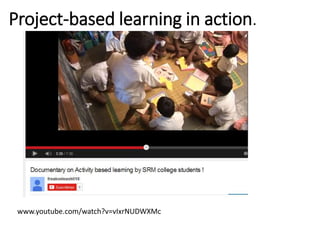
Project-based learning in action.
www.youtube.com/watch?v=vIxrNUDWXMc
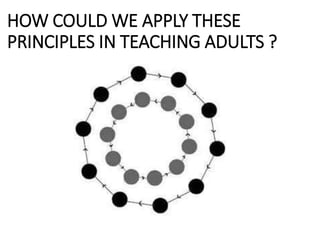
HOW COULD WE APPLY THESE
PRINCIPLES IN TEACHING ADULTS ?
Benefits of project and activity
based learning
 Student centred with more engagement and ‘choice’
 Develops problem solving skills and promotes self-directed learning
 Strengthens structured collaboration and co-operative peer-learning
 The motivation to solve a problem becomes the motivation to learn
 Real world relevancy and students inspired to find real-world solutions
(Community can get involved)
 Enhances retention of learning
 Promotes ongoing, life-long learning
 Develops communication skills and confidence in speaking and
presenting to groups.
 Provides ‘deep’ learning and deep answers with teachers learning
from student ‘teachers’
 Provides multi-faceted assessment and students assess
each other
 Transfer the learning and method of inquiry and
problem solving to other areas
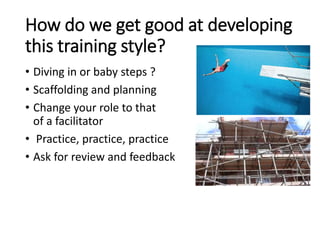
How do we get good at developing
this training style?
• Diving in or baby steps ?
• Scaffolding and planning
• Change your role to that
of a facilitator
• Practice, practice, practice
• Ask for review and feedback
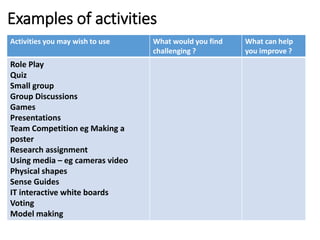
Examples of activities
Activities you may wish to use What would you find
challenging ?
What can help
you improve ?
Role Play
Quiz
Small group
Group Discussions
Games
Presentations
Team Competition eg Making a
poster
Research assignment
Using media – eg cameras video
Physical shapes
Sense Guides
IT interactive white boards
Voting
Model making
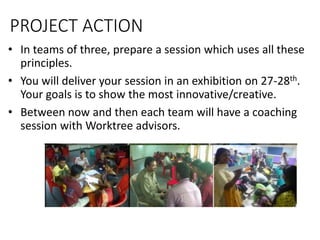
PROJECT ACTION
• In teams of three, prepare a session which uses all these
principles.
• You will deliver your session in an exhibition on 27-28th.
Your goals is to show the most innovative/creative.
• Between now and then each team will have a coaching
session with Worktree advisors.
Further resources
• www.youtube.com/watch?v=hnzCGNnU_WM
• Interactive Techniques by Kevin Yee,
http://www.fctl.ucf.edu/TeachingAndLearningReso
urces/CourseDesign/Assessment/content/101_Tips.
pdf
• Key Considerations in Building Interactive Learning
Environments by Educause,
http://net.educause.edu/ir/library/pdf/ELI0525.pdf

Principles of effective activity based participative learning. - updated. pptx

  • 1.
    Gram Tarang EmploymentTraining Services Centurion University of Technology and Management January 2015 PRINCIPLES OF ACTIVITY-BASED PARTICIPATIVE LEARNING
  • 2.
  • 3.
    Introductions “icebreaker” Find outsomething interesting about your neighbour and share it with the group.
  • 4.
    ACTIVITY-BASED PARTICIPATIVE LEARNING PROJECT or PROBLEM-BASED LEARNING The oppositeof paper-based, rote memorization, teacher-led learning!
  • 5.
    DAVID HORSBURGH An emphasison the surrounding environment and recognition of self-learning , allowing the learner to study according to his/her aptitude and skill in small milestones.
  • 6.
    If you canfind the answer online it’s not project-based !
  • 7.
    BASED ON THEPRINCIPLE OF “TELL ME Benjamin Franklin was a working class boy who was called the ‘First American’ man. He was an inventor, a moral crusader, a successful publisher, a diplomat and is on the $100 bill ! AND I FORGET, TEACH ME AND I LEARN” Benjamin Franklin INVOLVE ME AND I REMEMBER,
  • 8.
    Classroom Learning “Sage onthe stage” Characteristics 1 2 3 4 5 Activity Based Learning “Guide by the side” Characteristics 1 2 3 4 5
  • 9.
    THE ENVIRONMENT WHAT SPACEAND BEHAVIOUR DO WE NEED FOR EFFECTIVE ACTIVITY –BASED SESSIONS ?
  • 10.
  • 12.
    TASK: Make longest lineof connected newspaper which two team members can hold at each end without it touching the floor ! (5 mins to plan, 15 mins to do).
  • 13.
    FEEDBACK TO GROUP Whathave we learnt ? WAS THE ACTIVITY S.M.A.R.T ? WHAT DID THE LEARNER DO ? WAS THE ACTIVITY TEAM DEPENDENT ? WHAT ROLE DID THE TRAINER HAVE ? SPECIFIC, MEASURABLE, ATTAINABLE, RELEVANT, TIME-BOUND
  • 14.
    Project-based learning inaction. www.youtube.com/watch?v=vIxrNUDWXMc
  • 15.
    HOW COULD WEAPPLY THESE PRINCIPLES IN TEACHING ADULTS ?
  • 16.
    Benefits of projectand activity based learning  Student centred with more engagement and ‘choice’  Develops problem solving skills and promotes self-directed learning  Strengthens structured collaboration and co-operative peer-learning  The motivation to solve a problem becomes the motivation to learn  Real world relevancy and students inspired to find real-world solutions (Community can get involved)  Enhances retention of learning  Promotes ongoing, life-long learning  Develops communication skills and confidence in speaking and presenting to groups.  Provides ‘deep’ learning and deep answers with teachers learning from student ‘teachers’  Provides multi-faceted assessment and students assess each other  Transfer the learning and method of inquiry and problem solving to other areas
  • 17.
    How do weget good at developing this training style? • Diving in or baby steps ? • Scaffolding and planning • Change your role to that of a facilitator • Practice, practice, practice • Ask for review and feedback
  • 18.
    Examples of activities Activitiesyou may wish to use What would you find challenging ? What can help you improve ? Role Play Quiz Small group Group Discussions Games Presentations Team Competition eg Making a poster Research assignment Using media – eg cameras video Physical shapes Sense Guides IT interactive white boards Voting Model making
  • 19.
    PROJECT ACTION • Inteams of three, prepare a session which uses all these principles. • You will deliver your session in an exhibition on 27-28th. Your goals is to show the most innovative/creative. • Between now and then each team will have a coaching session with Worktree advisors.
  • 20.
    Further resources • www.youtube.com/watch?v=hnzCGNnU_WM •Interactive Techniques by Kevin Yee, http://www.fctl.ucf.edu/TeachingAndLearningReso urces/CourseDesign/Assessment/content/101_Tips. pdf • Key Considerations in Building Interactive Learning Environments by Educause, http://net.educause.edu/ir/library/pdf/ELI0525.pdf