Created By:
Nishat Anjum
MJPRU, Bareilly
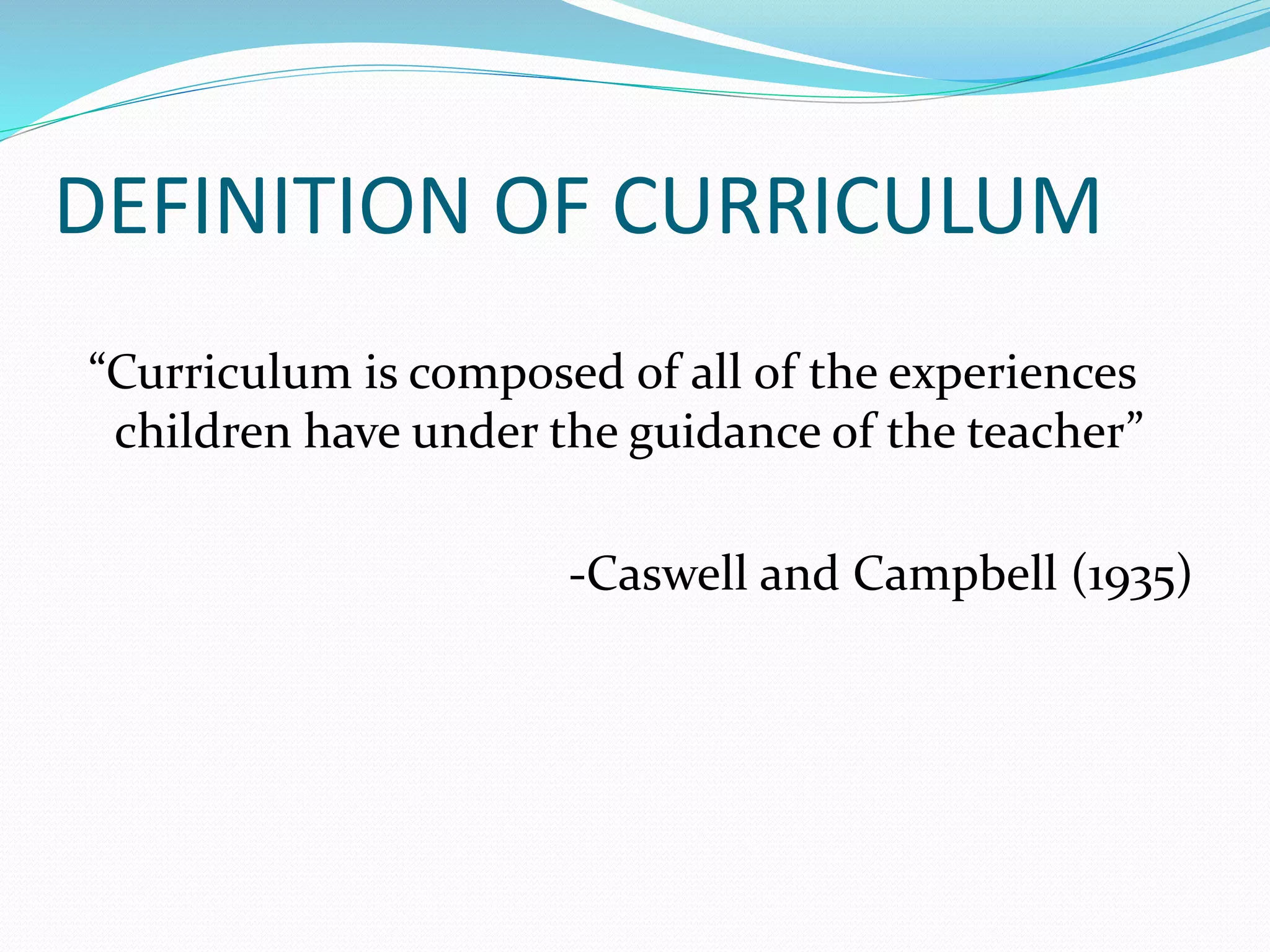
DEFINITION OF CURRICULUM
“Curriculum is composed of all of the experiences
children have under the guidance of the teacher”
-Caswell and Campbell (1935)
THE PRINCIPLE OF CHILD
CENTEREDNESS
Child learn from experience and activities.
Needs of the child are satisfied and interest motivation
is maintained.
Educational activity should be meaningfully
appropriate for the child for his all round
development.
Curriculum should be according to the needs, interest,
capability, capacity, aptitudes, attitudes and abilities of
the pupils of the particular age.
THE PRINCIPLE OF COMMUNITY
CENTEREDNESS
Social needs and local needs of the learner should be
taken into account.
Reflect the values of democracy, ethos and main
concerns of the country.
He should understand member of the community and
try to solve them in a systematic way.
Child should be in a position to face challenges.
THE PRINCIPLE OF INTEGRATION
Should integrate child’s activities and needs, on the
other hand, the needs of 21st century should be there.
Cognitive, affective and psychomotor objectives and
abilities.
Knowledge and experience.
Objectives and content.
Child activity and needs of the society.
ACTIVITY PRINCIPLES
Curriculum must be full of activities.
Child learn from activities. It should be connected
with the child’s desires and needs.
Activity range from play activities at the primary level
to creative and constructive.
THE PRINCIPLE OF BALANCE
Curriculum should maintain proper balance
between the direct and indirect experiences.
THE PRINCIPLE OF UTILITY
Curriculum should be of practical use to the pupil
and hence should maintain vocational and
technical base. Emphasis should be given to work
experiences.
THE PRESENCE OF ELASTICITY,
FLEXIBILITY AND VARIETY
Should not be rigid but should be flexible to suit the
changing needs of the people and the society.
These should be precious to meet the needs of pupil
with different taste, skills and intelligence.
Broad based.
MOTIVATION PRINCIPLE
Intrinsic motivation is needed for a child to learn
effectively.
Interest and motivation will be developed of the child
finds that the subjects in the curriculum will satisfy it.
Therefore curriculum should be goal directed.
CONSERVATIVE PRINCIPLE
Cultivate a sense of respect for his traditions and
culture.
To know his past culture and traditions.
Preserve the culture and traditions of the past should
be these to that it is transmitted to next generation.
RENEWAL PRINCIPLE
Renew the culture to suit the requirement of the
changing world.
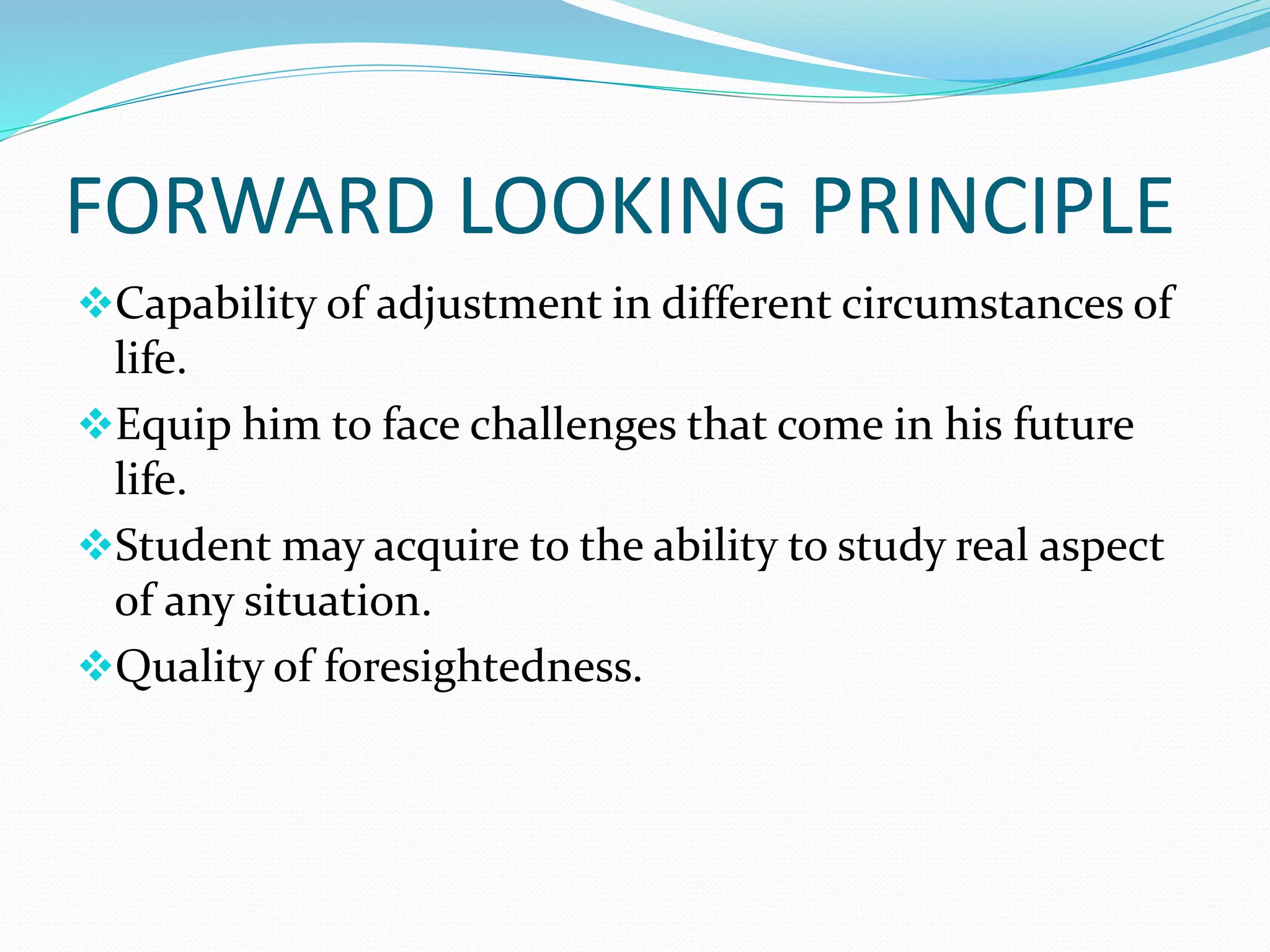
FORWARD LOOKING PRINCIPLE
Capability of adjustment in different circumstances of
life.
Equip him to face challenges that come in his future
life.
Student may acquire to the ability to study real aspect
of any situation.
Quality of foresightedness.
THANK YOU!
ANY QUERY?

Principles of curriculum construction

  • 1.
  • 2.
    DEFINITION OF CURRICULUM “Curriculumis composed of all of the experiences children have under the guidance of the teacher” -Caswell and Campbell (1935)
  • 3.
    THE PRINCIPLE OFCHILD CENTEREDNESS Child learn from experience and activities. Needs of the child are satisfied and interest motivation is maintained. Educational activity should be meaningfully appropriate for the child for his all round development. Curriculum should be according to the needs, interest, capability, capacity, aptitudes, attitudes and abilities of the pupils of the particular age.
  • 4.
    THE PRINCIPLE OFCOMMUNITY CENTEREDNESS Social needs and local needs of the learner should be taken into account. Reflect the values of democracy, ethos and main concerns of the country. He should understand member of the community and try to solve them in a systematic way. Child should be in a position to face challenges.
  • 5.
    THE PRINCIPLE OFINTEGRATION Should integrate child’s activities and needs, on the other hand, the needs of 21st century should be there. Cognitive, affective and psychomotor objectives and abilities. Knowledge and experience. Objectives and content. Child activity and needs of the society.
  • 6.
    ACTIVITY PRINCIPLES Curriculum mustbe full of activities. Child learn from activities. It should be connected with the child’s desires and needs. Activity range from play activities at the primary level to creative and constructive.
  • 7.
    THE PRINCIPLE OFBALANCE Curriculum should maintain proper balance between the direct and indirect experiences. THE PRINCIPLE OF UTILITY Curriculum should be of practical use to the pupil and hence should maintain vocational and technical base. Emphasis should be given to work experiences.
  • 8.
    THE PRESENCE OFELASTICITY, FLEXIBILITY AND VARIETY Should not be rigid but should be flexible to suit the changing needs of the people and the society. These should be precious to meet the needs of pupil with different taste, skills and intelligence. Broad based.
  • 9.
    MOTIVATION PRINCIPLE Intrinsic motivationis needed for a child to learn effectively. Interest and motivation will be developed of the child finds that the subjects in the curriculum will satisfy it. Therefore curriculum should be goal directed.
  • 10.
    CONSERVATIVE PRINCIPLE Cultivate asense of respect for his traditions and culture. To know his past culture and traditions. Preserve the culture and traditions of the past should be these to that it is transmitted to next generation. RENEWAL PRINCIPLE Renew the culture to suit the requirement of the changing world.
  • 11.
    FORWARD LOOKING PRINCIPLE Capabilityof adjustment in different circumstances of life. Equip him to face challenges that come in his future life. Student may acquire to the ability to study real aspect of any situation. Quality of foresightedness.
  • 12.