PRINCIPLES OF CURRICULAM
DEVELOPMENT
SUBMITTED BY
ATHIRA.M
PHYSICAL SCIENCE
The word "curriculum" began as a Latin
word currere which means "a race" or
"the course of a race”.
It is broadly defined as the totality of
student experiences that occur in the
educational process.
The curriculum in a literal sense ,a
pathway towards a goal.
CURRICULUM
Curriculum is actually what happens
during a course i.e., lecture ,
demonstrations, field visits, the work with
the client and so on.
Curriculum also means a written
description of what happens.
Curriculum is an important element of
education. Aims of education are reflected
in the curriculum. In other words, the
curriculum is determined by the aims of
life and society.
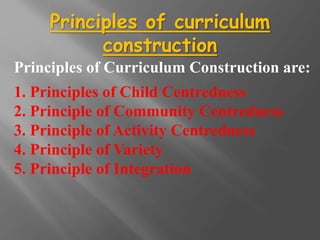
Principles of curriculum
construction
Principles of Curriculum Construction are:
1. Principles of Child Centredness
2. Principle of Community Centredness
3. Principle of Activity Centredness
4. Principle of Variety
5. Principle of Integration
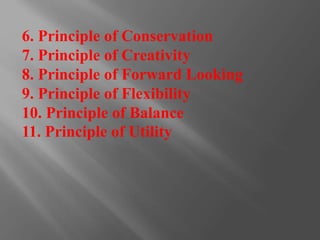
6. Principle of Conservation
7. Principle of Creativity
8. Principle of Forward Looking
9. Principle of Flexibility
10. Principle of Balance
11. Principle of Utility
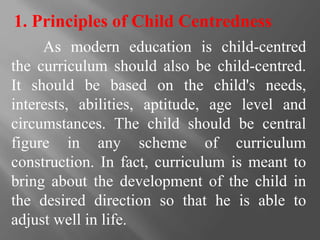
As modern education is child-centred
the curriculum should also be child-centred.
It should be based on the child's needs,
interests, abilities, aptitude, age level and
circumstances. The child should be central
figure in any scheme of curriculum
construction. In fact, curriculum is meant to
bring about the development of the child in
the desired direction so that he is able to
adjust well in life.
1. Principles of Child Centredness
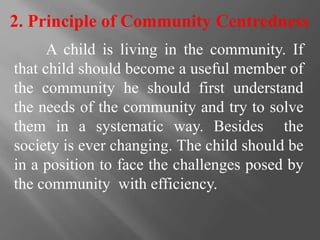
2. Principle of Community Centredness
A child is living in the community. If
that child should become a useful member of
the community he should first understand
the needs of the community and try to solve
them in a systematic way. Besides the
society is ever changing. The child should be
in a position to face the challenges posed by
the community with efficiency.
3. Principle of Activity Centredness
The curriculum should centre round the multi
various activities of pupils. It should provide well
selected activities according to the general
interests and developmental stages of children. It
should provide constructive, creative and project
activities.
The purposeful activities both in the class-
room and outside the class-room should be
provided. It is through a network of activities that
the desired experiences can be provided and
consequently desirable behavioural changes can be
brought about in children.
The curriculum should be broad-based so as
to accommodate the needs of varied categories of
pupils, so that they are able to take up subjects and
participate in activities according their capacities
and interests.
The needs of pupils also change from place to
place. For example, the pupils in rural areas, urban
areas, and hilly areas will have different needs. The
needs of boys and girls are also different. So these
considerations should be reflected in the
curriculum.
4. Principle of Variety
5. Principle of Integration
The pupils are to be provided with
selected experiences through various subjects
and activities but these must be well
integrated. Various subjects and activities have
to serve the same ultimate purpose, the
achievement of the aims of education. The
activities and subjects should not be put in
after-tight compartments but these should be
inter-related and well integrated so as to
develop the whole child.
6. Principle of Conservation
One of the main functions of education
is to preserve and transmit our cultural
heritage. This is essential for human
progress. Culture consists of traditions,
customs, attitudes, skills, conduct, values
and knowledge. However, the curriculum
framers must make a suitable selection of
the elements of culture, keeping n view their
educational value and the developmental
stage of pupils.
7. Principle of Creativity
Curriculum should have provisions to
develop the creativity of children. Once this
is developed, they can utilize this creativity
which enables them to modify the
environment according to their needs.
8. Principle of Forward Looking
Education is to enable the child to lead a
successful social life. So the curriculum
should not cater to the present needs of the
child alone. The needs of his future life
should also be considered. The curriculum
should also include knowledge, skills,
experiences, influences etc. which will
develop in the child abilities and power to
make effective adjustments in the later life.
9. Principle of Flexibility
In our age, rapid developments are
taking place in various fields. Consequently
the needs of society are hanging. The
content of curriculum cannot be same for all
times to come. It should not be static. It
must be dynamic and change with the
changing times. It should reflect the latest
trends in the field of education and
psychology.
10. Principle of Balance
The curriculum must maintain a
balance between subjects and activities,
between direct and indirect experiences,
between academic and vocational education,
between compulsory and optional subjects,
between formal and informal education,
between individual and social aims of
education etc.
11. Principle of Utility
Curriculum should be useful rather
than ornamental. It should not only include
subjects which owe their place in it to
tradition. The curriculum must have
practical utility for students. So there should
be some provision for technical and
vocational education in the curriculum.
Curriculam

Curriculam

  • 1.
  • 2.
    The word "curriculum"began as a Latin word currere which means "a race" or "the course of a race”. It is broadly defined as the totality of student experiences that occur in the educational process. The curriculum in a literal sense ,a pathway towards a goal. CURRICULUM
  • 3.
    Curriculum is actuallywhat happens during a course i.e., lecture , demonstrations, field visits, the work with the client and so on. Curriculum also means a written description of what happens. Curriculum is an important element of education. Aims of education are reflected in the curriculum. In other words, the curriculum is determined by the aims of life and society.
  • 4.
    Principles of curriculum construction Principlesof Curriculum Construction are: 1. Principles of Child Centredness 2. Principle of Community Centredness 3. Principle of Activity Centredness 4. Principle of Variety 5. Principle of Integration
  • 5.
    6. Principle ofConservation 7. Principle of Creativity 8. Principle of Forward Looking 9. Principle of Flexibility 10. Principle of Balance 11. Principle of Utility
  • 6.
    As modern educationis child-centred the curriculum should also be child-centred. It should be based on the child's needs, interests, abilities, aptitude, age level and circumstances. The child should be central figure in any scheme of curriculum construction. In fact, curriculum is meant to bring about the development of the child in the desired direction so that he is able to adjust well in life. 1. Principles of Child Centredness
  • 7.
    2. Principle ofCommunity Centredness A child is living in the community. If that child should become a useful member of the community he should first understand the needs of the community and try to solve them in a systematic way. Besides the society is ever changing. The child should be in a position to face the challenges posed by the community with efficiency.
  • 8.
    3. Principle ofActivity Centredness The curriculum should centre round the multi various activities of pupils. It should provide well selected activities according to the general interests and developmental stages of children. It should provide constructive, creative and project activities. The purposeful activities both in the class- room and outside the class-room should be provided. It is through a network of activities that the desired experiences can be provided and consequently desirable behavioural changes can be brought about in children.
  • 9.
    The curriculum shouldbe broad-based so as to accommodate the needs of varied categories of pupils, so that they are able to take up subjects and participate in activities according their capacities and interests. The needs of pupils also change from place to place. For example, the pupils in rural areas, urban areas, and hilly areas will have different needs. The needs of boys and girls are also different. So these considerations should be reflected in the curriculum. 4. Principle of Variety
  • 10.
    5. Principle ofIntegration The pupils are to be provided with selected experiences through various subjects and activities but these must be well integrated. Various subjects and activities have to serve the same ultimate purpose, the achievement of the aims of education. The activities and subjects should not be put in after-tight compartments but these should be inter-related and well integrated so as to develop the whole child.
  • 11.
    6. Principle ofConservation One of the main functions of education is to preserve and transmit our cultural heritage. This is essential for human progress. Culture consists of traditions, customs, attitudes, skills, conduct, values and knowledge. However, the curriculum framers must make a suitable selection of the elements of culture, keeping n view their educational value and the developmental stage of pupils.
  • 12.
    7. Principle ofCreativity Curriculum should have provisions to develop the creativity of children. Once this is developed, they can utilize this creativity which enables them to modify the environment according to their needs.
  • 13.
    8. Principle ofForward Looking Education is to enable the child to lead a successful social life. So the curriculum should not cater to the present needs of the child alone. The needs of his future life should also be considered. The curriculum should also include knowledge, skills, experiences, influences etc. which will develop in the child abilities and power to make effective adjustments in the later life.
  • 14.
    9. Principle ofFlexibility In our age, rapid developments are taking place in various fields. Consequently the needs of society are hanging. The content of curriculum cannot be same for all times to come. It should not be static. It must be dynamic and change with the changing times. It should reflect the latest trends in the field of education and psychology.
  • 15.
    10. Principle ofBalance The curriculum must maintain a balance between subjects and activities, between direct and indirect experiences, between academic and vocational education, between compulsory and optional subjects, between formal and informal education, between individual and social aims of education etc.
  • 16.
    11. Principle ofUtility Curriculum should be useful rather than ornamental. It should not only include subjects which owe their place in it to tradition. The curriculum must have practical utility for students. So there should be some provision for technical and vocational education in the curriculum.