PRINCIPLE OF TISSUE
PROCESSING
Surgical Specimen
 Clinical Details
 Adequate specimen
 Proper Fixative
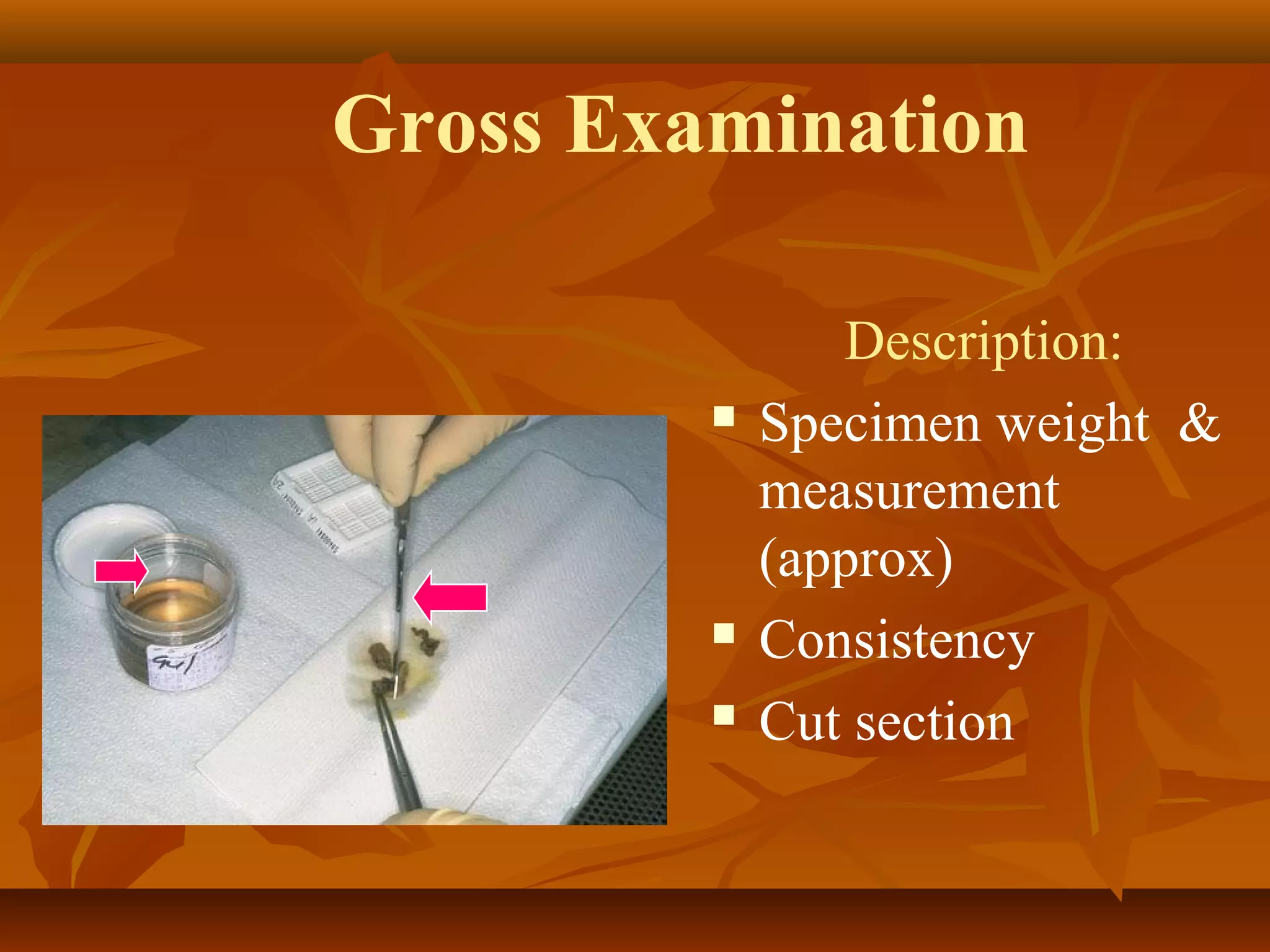
Gross Examination
Description:
 Specimen weight &
measurement
(approx)
 Consistency
 Cut section
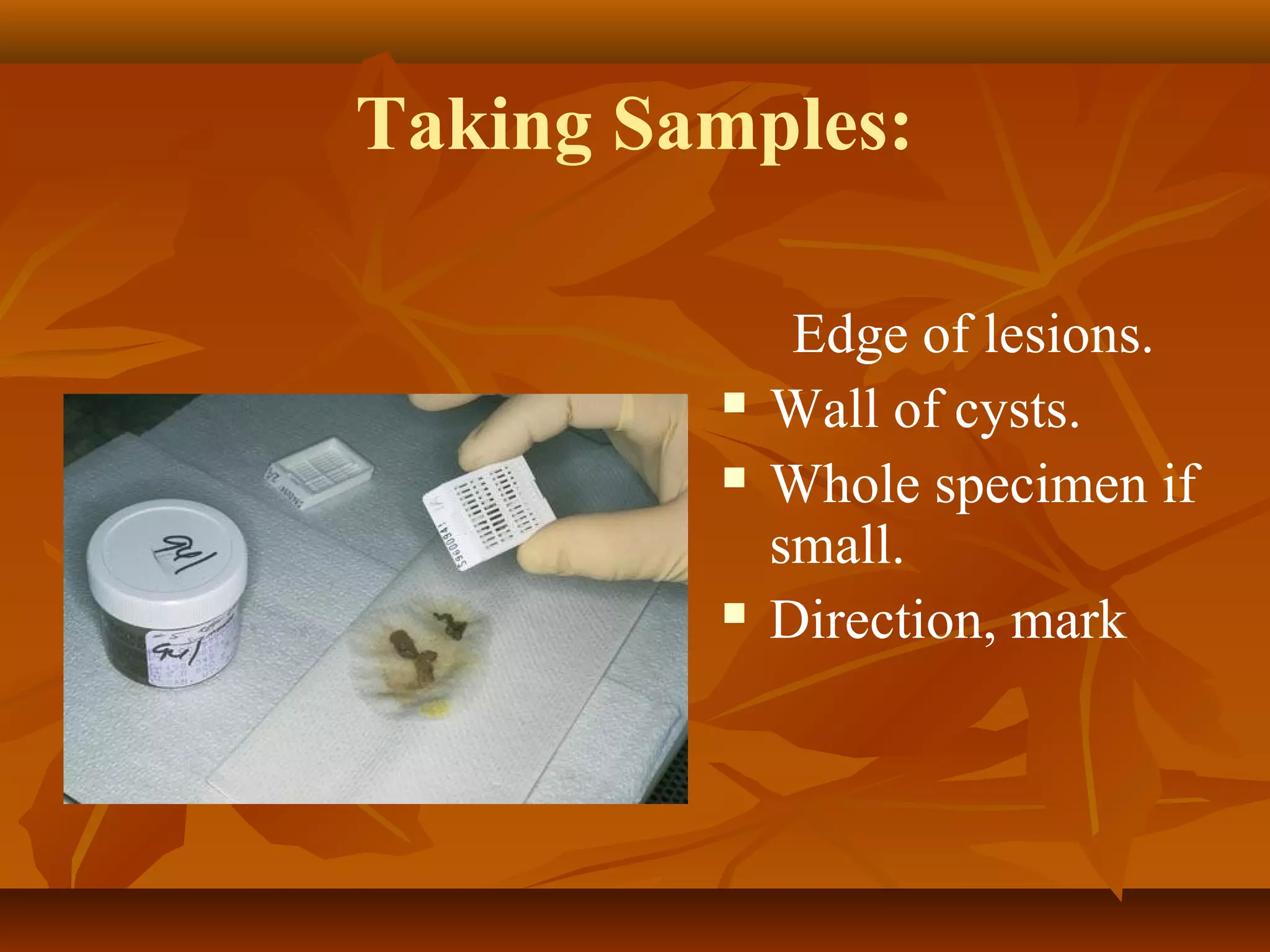
Taking Samples:
Edge of lesions.
 Wall of cysts.
 Whole specimen if
small.
 Direction, mark
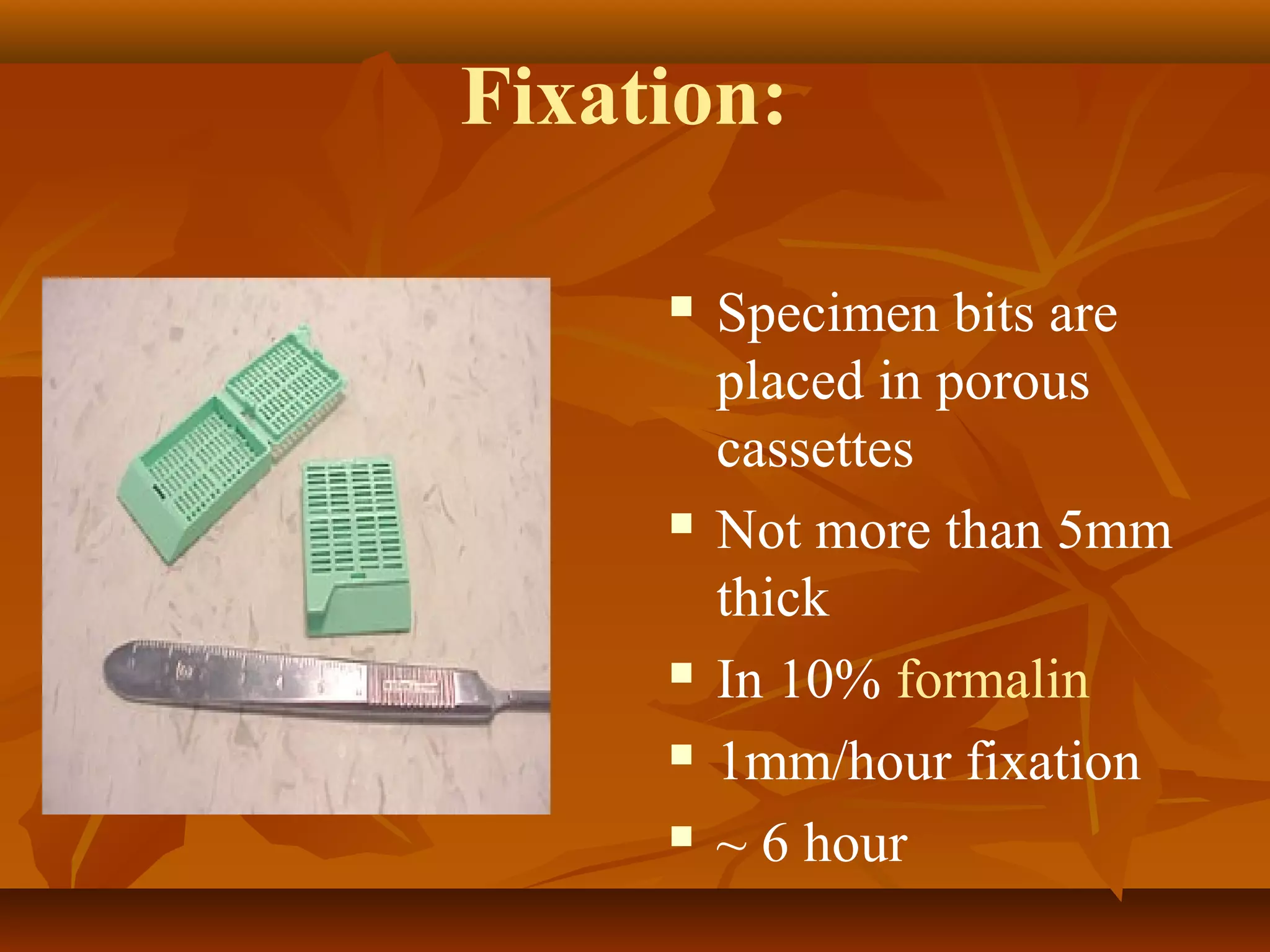
Inking the Margins
 To mark surgical
margin.
 Spread of lesion
 Malignancy
 Adequacy of
removal
 Different colors to
identify margins
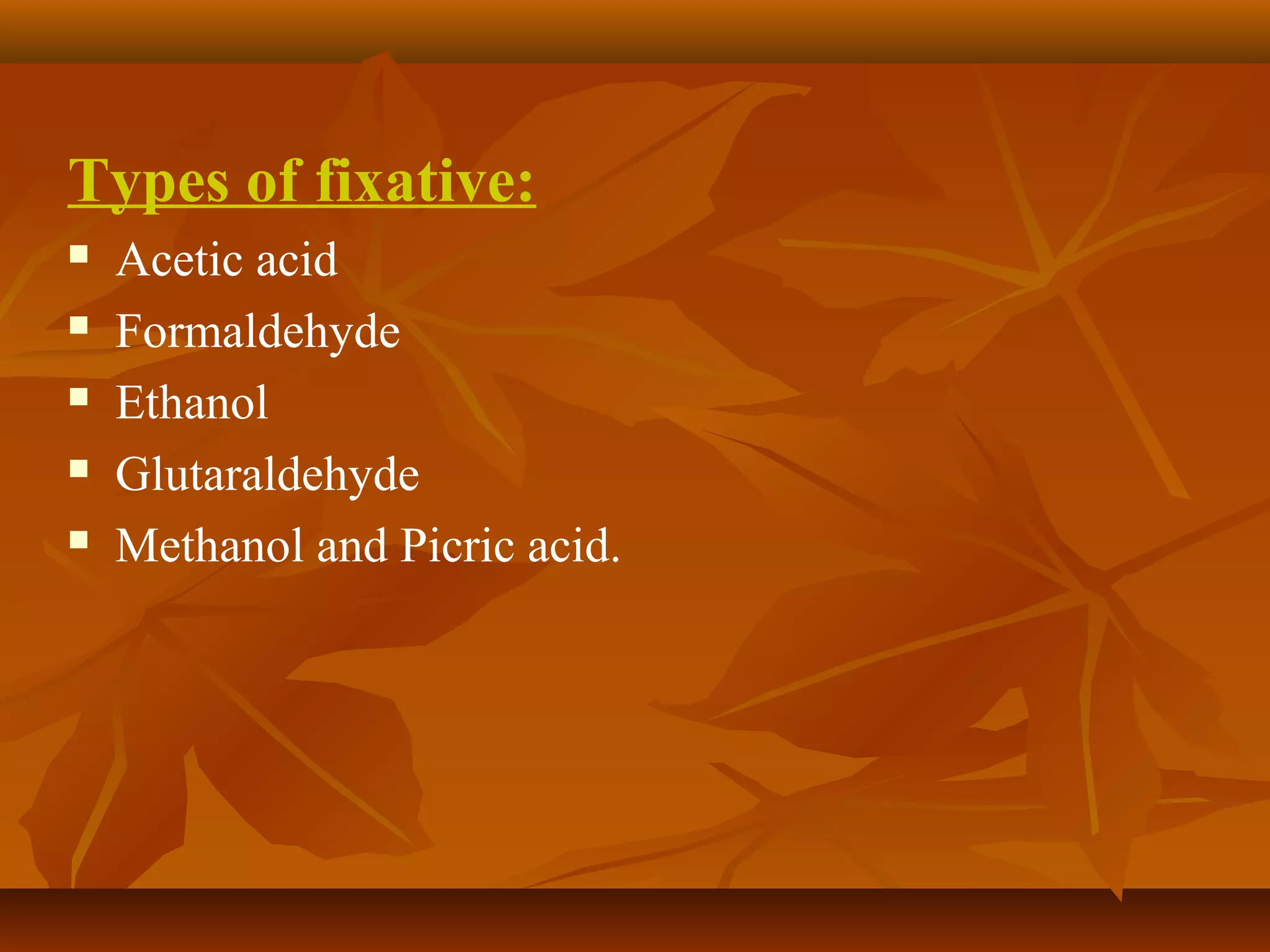
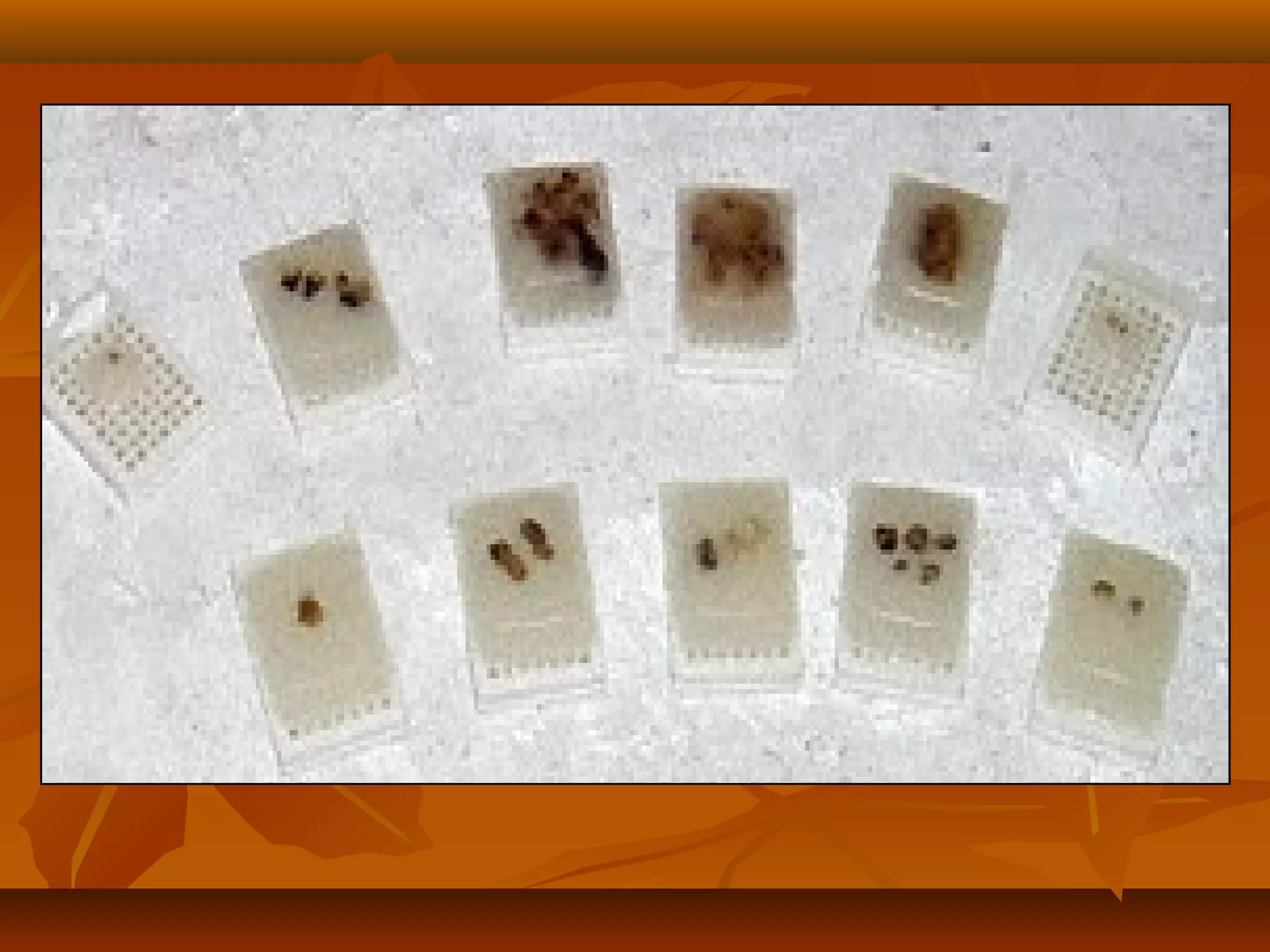
Fixation:
 Specimen bits are
placed in porous
cassettes
 Not more than 5mm
thick
 In 10% formalin
 1mm/hour fixation
 ~ 6 hour
Types of fixative:
 Acetic acid
 Formaldehyde
 Ethanol
 Glutaraldehyde
 Methanol and Picric acid.
Dehydration
A. Definition: removal of water
B. Rationale: for paraffin embedding/sectioning
C. Steps
1. wash out fixative
2. graded series of alcohol
 70%, 95%, 100%, 100%
3. replace water by diffusion
4. not too long, not too short
Dehydration
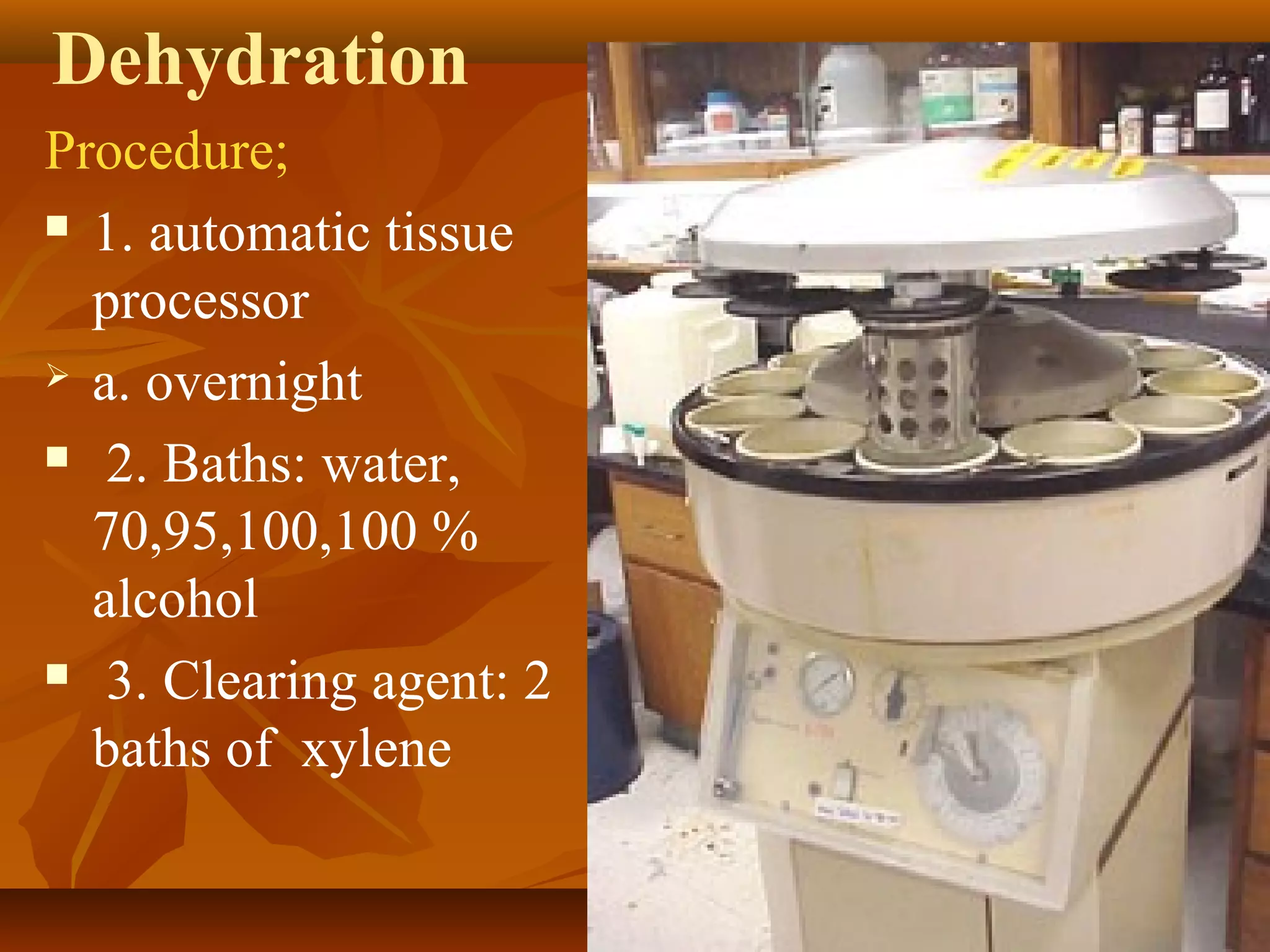
Procedure;
 1. automatic tissue
processor
 a. overnight
 2. Baths: water,
70,95,100,100 %
alcohol
 3. Clearing agent: 2
baths of xylene
Clearing:
• replacing the dehydrating fluid with a fluid that is totally
miscible with both the dehydrating fluid and the embedding
medium.
Choice of a clearing agent depends upon the
following
- Intended processing conditions such as temperature,
vacuum and pressure.
- Safety factors.
- Cost and convenience.
- Speedy removal of dehydrating agent .
- Ease of removal by molten paraffin wax .
- Minimal tissue damage .
is the process by which tissues are
surrounded by a medium such as agar,
gelatin, or wax which when solidified will
provide sufficient external support during
sectioning.
Embedding
Embedding
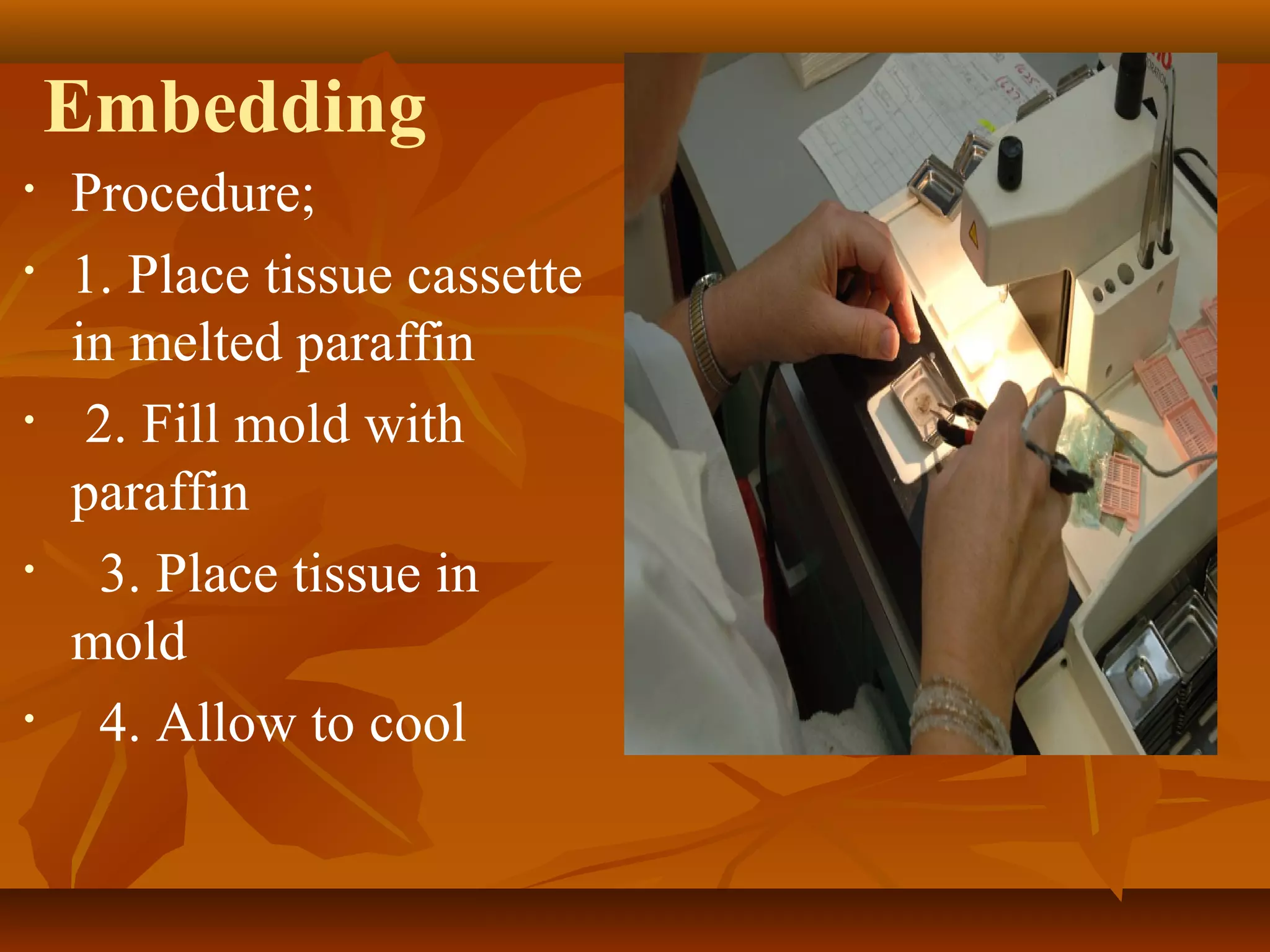
• Procedure;
• 1. Place tissue cassette
in melted paraffin
• 2. Fill mold with
paraffin
• 3. Place tissue in
mold
• 4. Allow to cool
Embedding
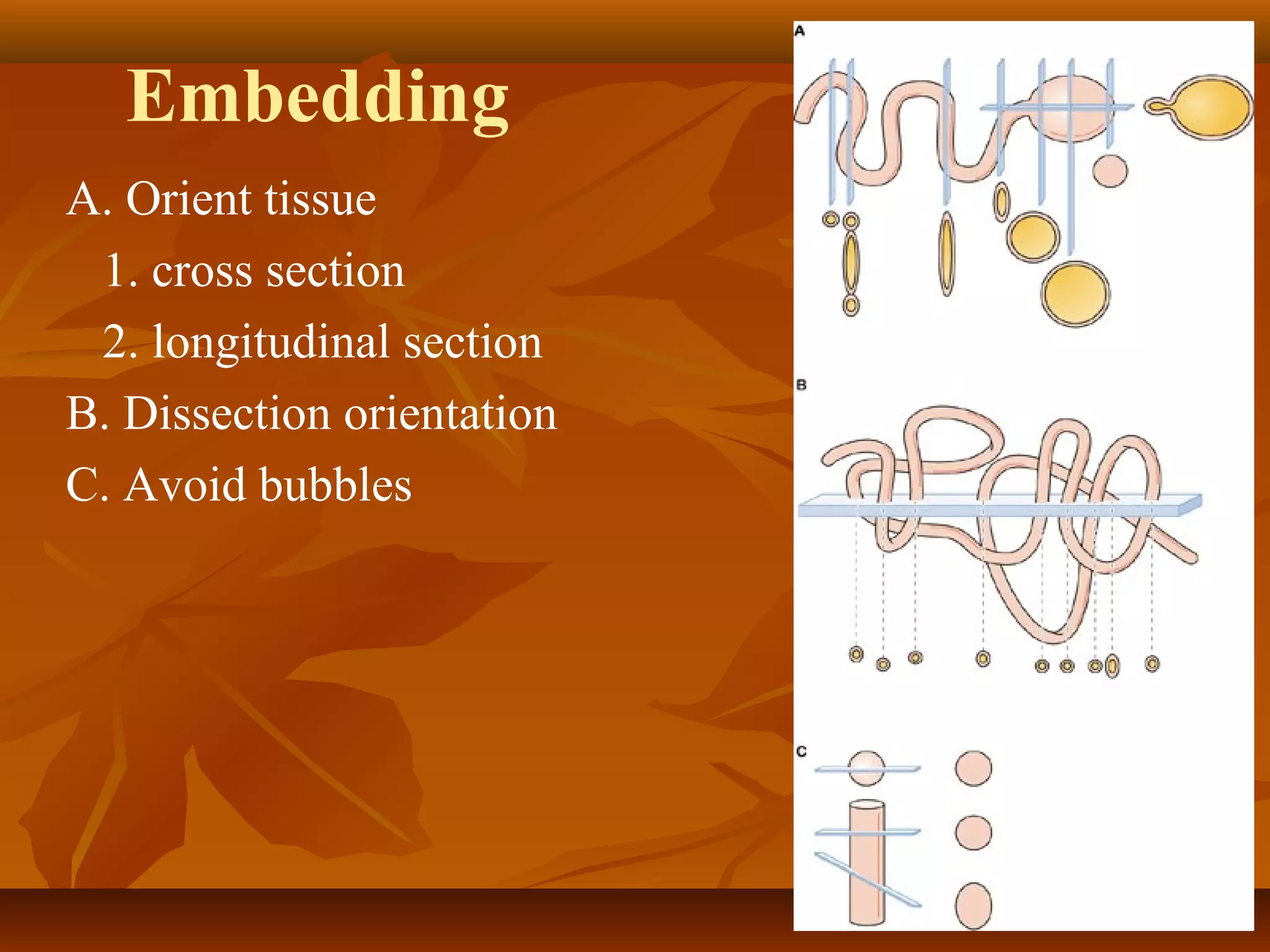
A. Orient tissue
1. cross section
2. longitudinal section
B. Dissection orientation
C. Avoid bubbles
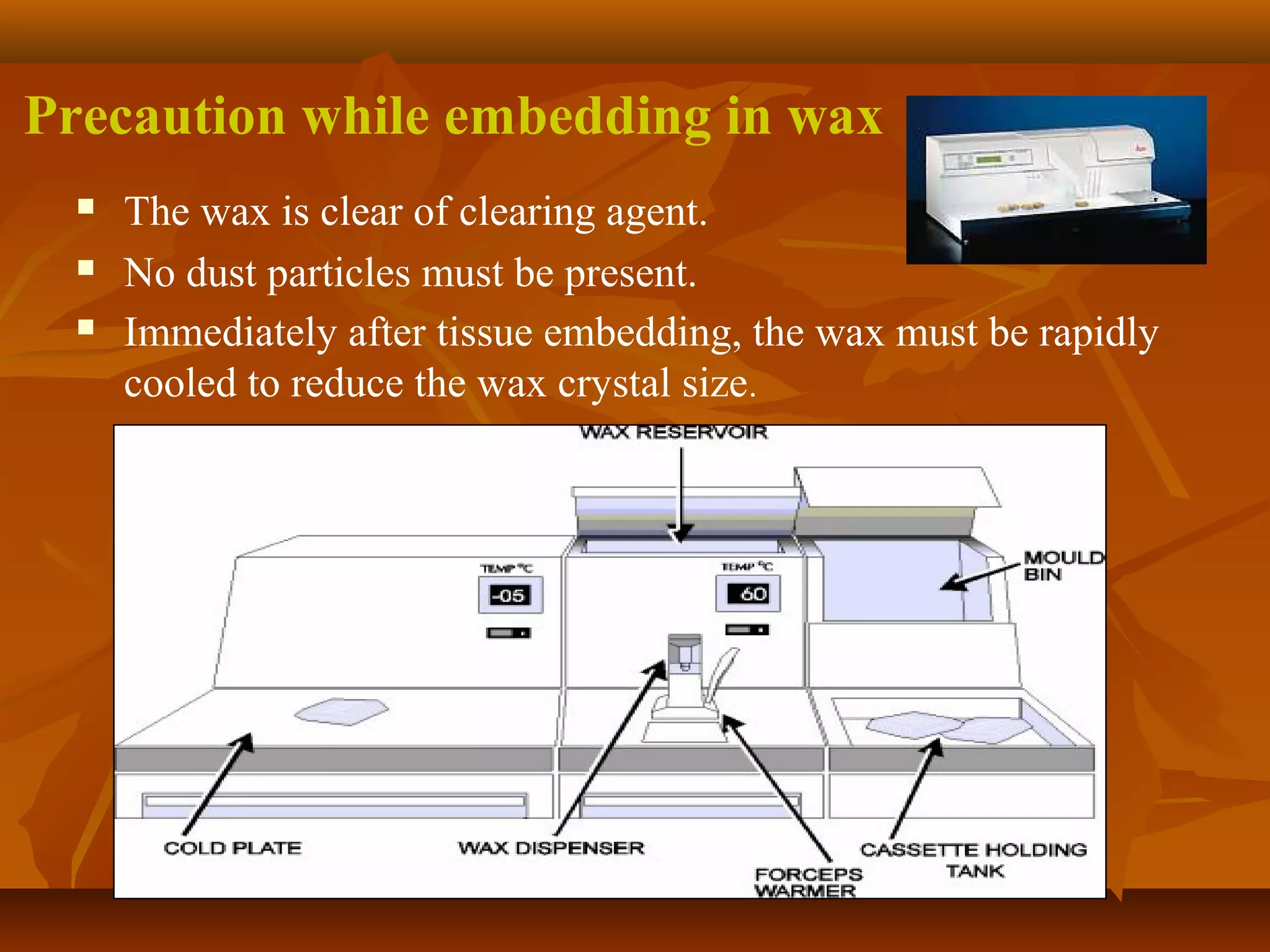
Precaution while embedding in wax
 The wax is clear of clearing agent.
 No dust particles must be present.
 Immediately after tissue embedding, the wax must be rapidly
cooled to reduce the wax crystal size.
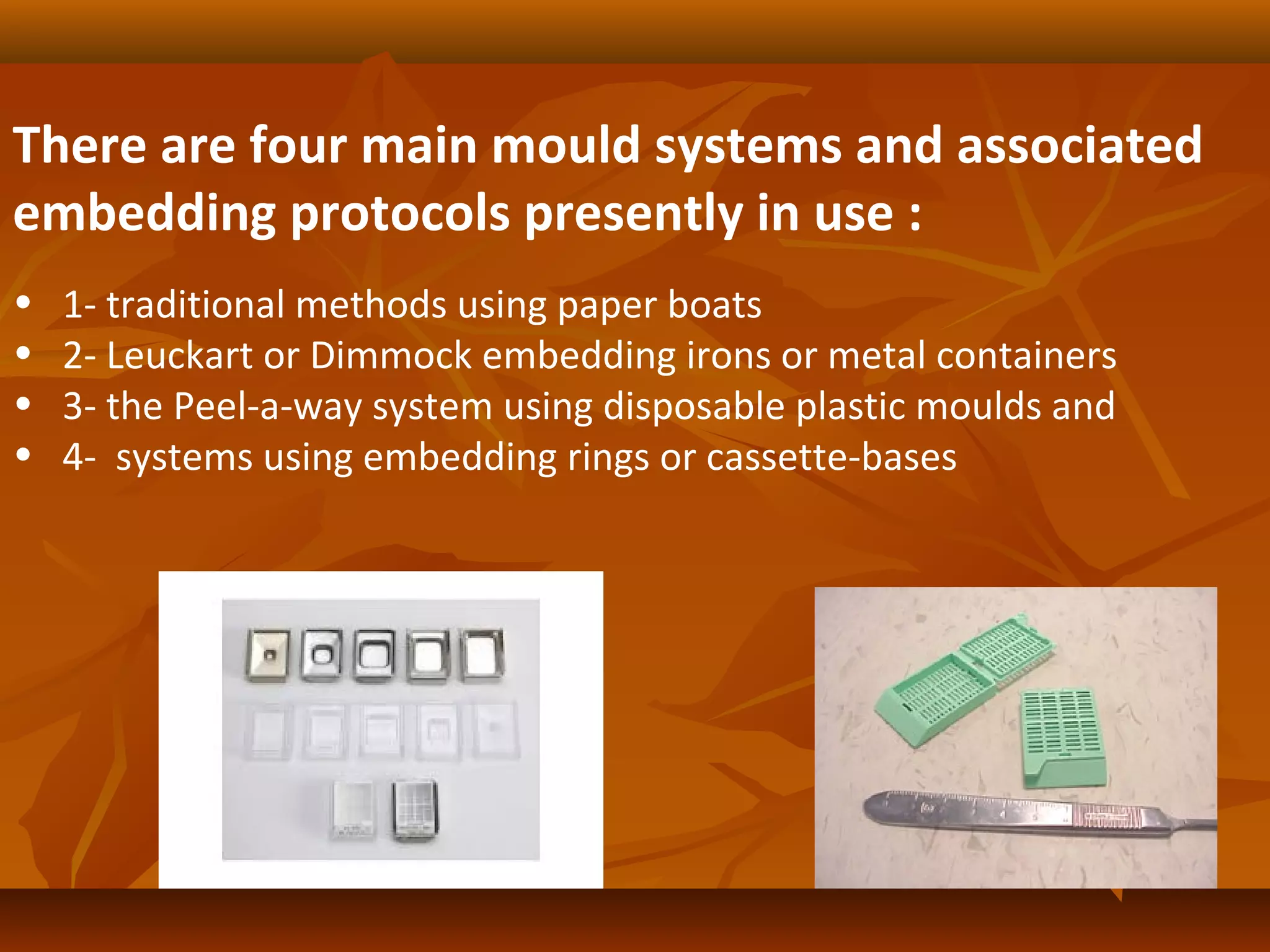
There are four main mould systems and associated
embedding protocols presently in use :
• 1- traditional methods using paper boats
• 2- Leuckart or Dimmock embedding irons or metal containers
• 3- the Peel-a-way system using disposable plastic moulds and
• 4- systems using embedding rings or cassette-bases
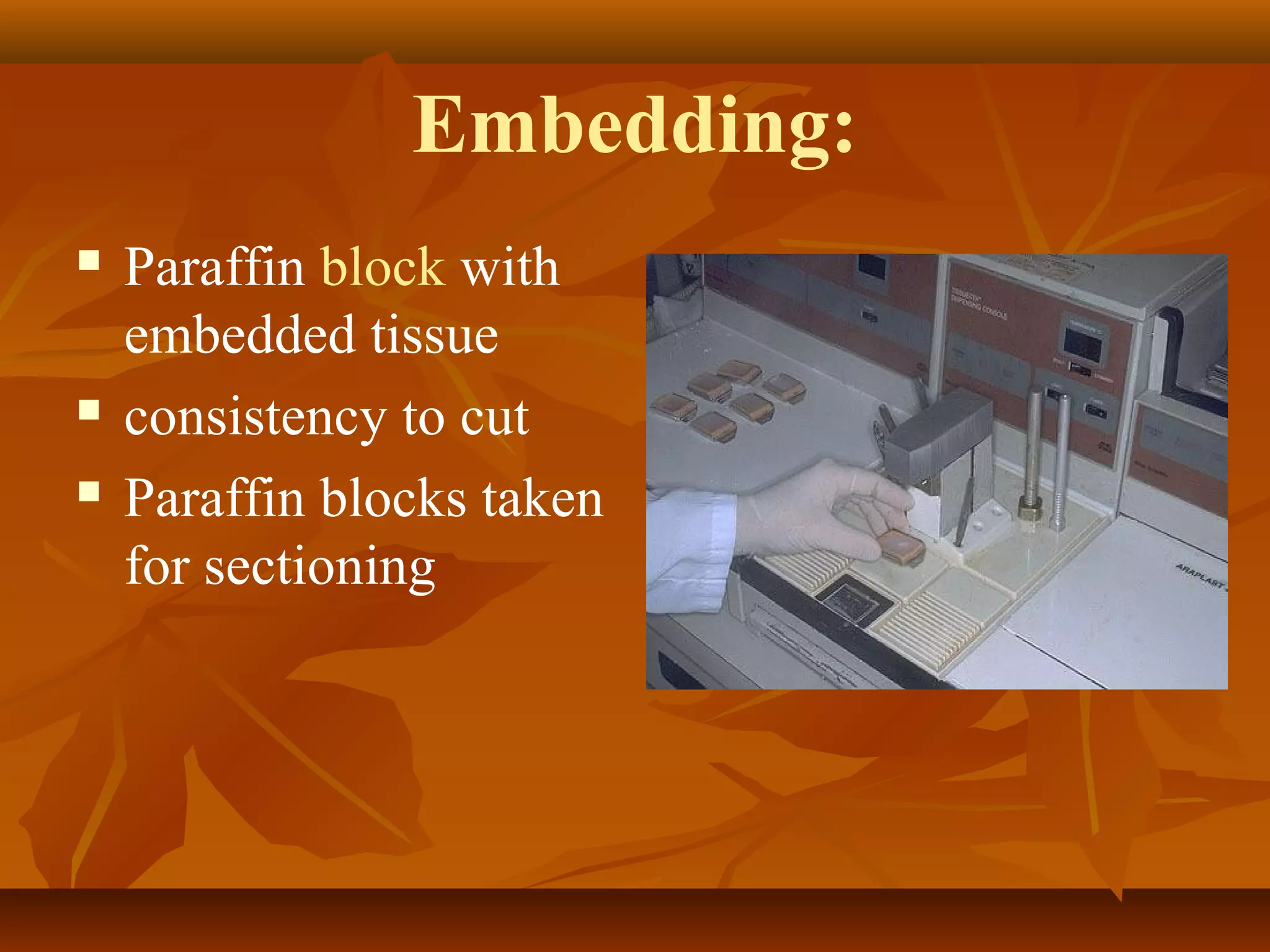
Embedding:
 Paraffin block with
embedded tissue
 consistency to cut
 Paraffin blocks taken
for sectioning
Principle of tissue processing

Principle of tissue processing

  • 1.
  • 2.
    Surgical Specimen  ClinicalDetails  Adequate specimen  Proper Fixative
  • 3.
    Gross Examination Description:  Specimenweight & measurement (approx)  Consistency  Cut section
  • 4.
    Taking Samples: Edge oflesions.  Wall of cysts.  Whole specimen if small.  Direction, mark
  • 5.
    Inking the Margins To mark surgical margin.  Spread of lesion  Malignancy  Adequacy of removal  Different colors to identify margins
  • 6.
    Fixation:  Specimen bitsare placed in porous cassettes  Not more than 5mm thick  In 10% formalin  1mm/hour fixation  ~ 6 hour
  • 7.
    Types of fixative: Acetic acid  Formaldehyde  Ethanol  Glutaraldehyde  Methanol and Picric acid.
  • 8.
    Dehydration A. Definition: removalof water B. Rationale: for paraffin embedding/sectioning C. Steps 1. wash out fixative 2. graded series of alcohol  70%, 95%, 100%, 100% 3. replace water by diffusion 4. not too long, not too short
  • 9.
    Dehydration Procedure;  1. automatictissue processor  a. overnight  2. Baths: water, 70,95,100,100 % alcohol  3. Clearing agent: 2 baths of xylene
  • 10.
    Clearing: • replacing thedehydrating fluid with a fluid that is totally miscible with both the dehydrating fluid and the embedding medium. Choice of a clearing agent depends upon the following - Intended processing conditions such as temperature, vacuum and pressure. - Safety factors. - Cost and convenience. - Speedy removal of dehydrating agent . - Ease of removal by molten paraffin wax . - Minimal tissue damage .
  • 11.
    is the processby which tissues are surrounded by a medium such as agar, gelatin, or wax which when solidified will provide sufficient external support during sectioning. Embedding
  • 12.
    Embedding • Procedure; • 1.Place tissue cassette in melted paraffin • 2. Fill mold with paraffin • 3. Place tissue in mold • 4. Allow to cool
  • 13.
    Embedding A. Orient tissue 1.cross section 2. longitudinal section B. Dissection orientation C. Avoid bubbles
  • 14.
    Precaution while embeddingin wax  The wax is clear of clearing agent.  No dust particles must be present.  Immediately after tissue embedding, the wax must be rapidly cooled to reduce the wax crystal size.
  • 15.
    There are fourmain mould systems and associated embedding protocols presently in use : • 1- traditional methods using paper boats • 2- Leuckart or Dimmock embedding irons or metal containers • 3- the Peel-a-way system using disposable plastic moulds and • 4- systems using embedding rings or cassette-bases
  • 16.
    Embedding:  Paraffin blockwith embedded tissue  consistency to cut  Paraffin blocks taken for sectioning