• Introduction
• Components
• Protective Devices
• Types of Protection
• Coordination
• Performance Measures
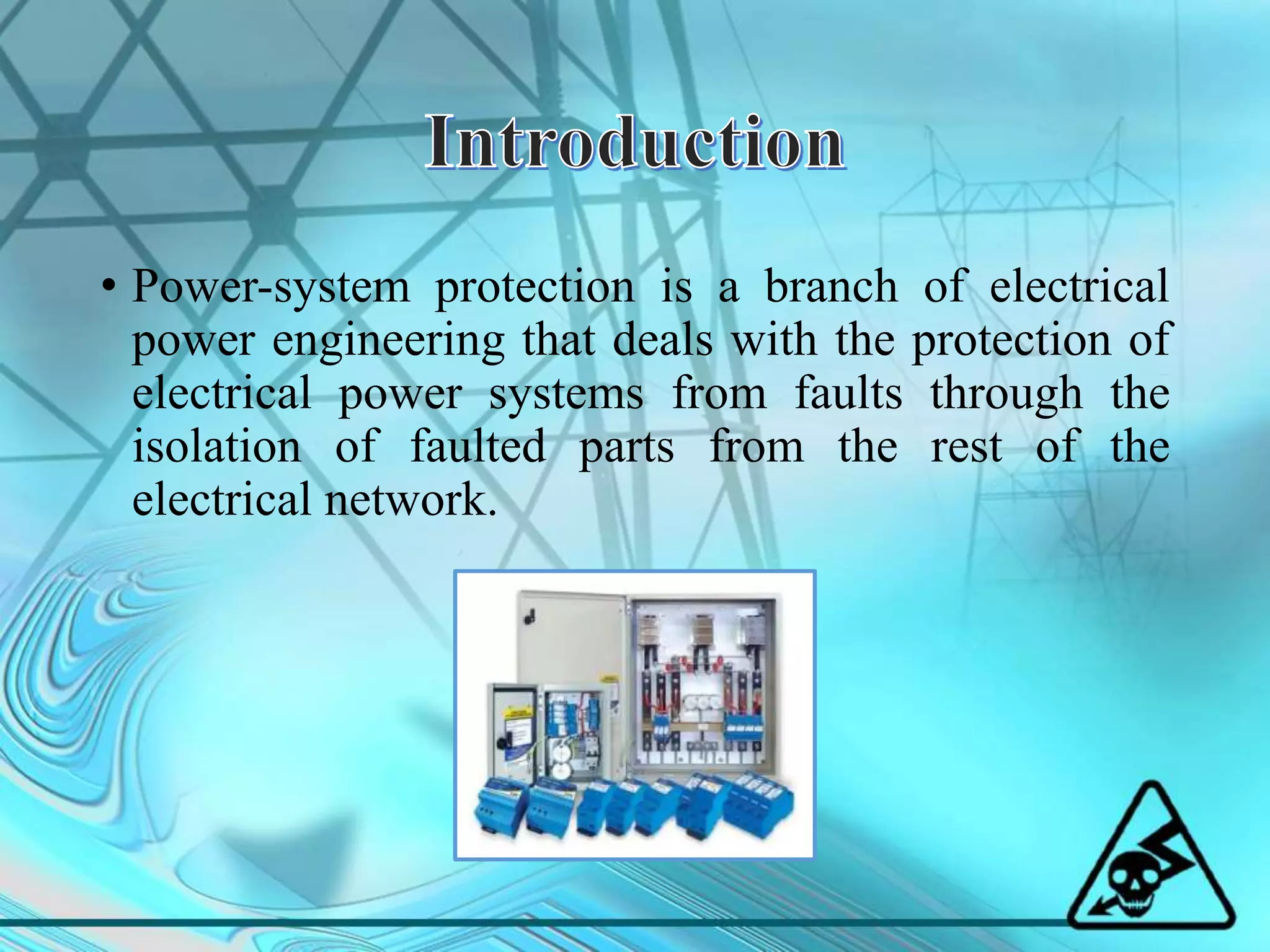
• Power-system protection is a branch of electrical
power engineering that deals with the protection of
electrical power systems from faults through the
isolation of faulted parts from the rest of the
electrical network.
Protection systems usually comprise five
components:
• Current and voltage transformers
• Protective relays
• Circuit breakers
• Batteries
• Fuses
• Current & Voltage Transformer: Current &
Voltage Transformer to step down the high voltages
and currents of the electrical power system to
convenient levels for the relay.
Current Transformer Voltage Transformer
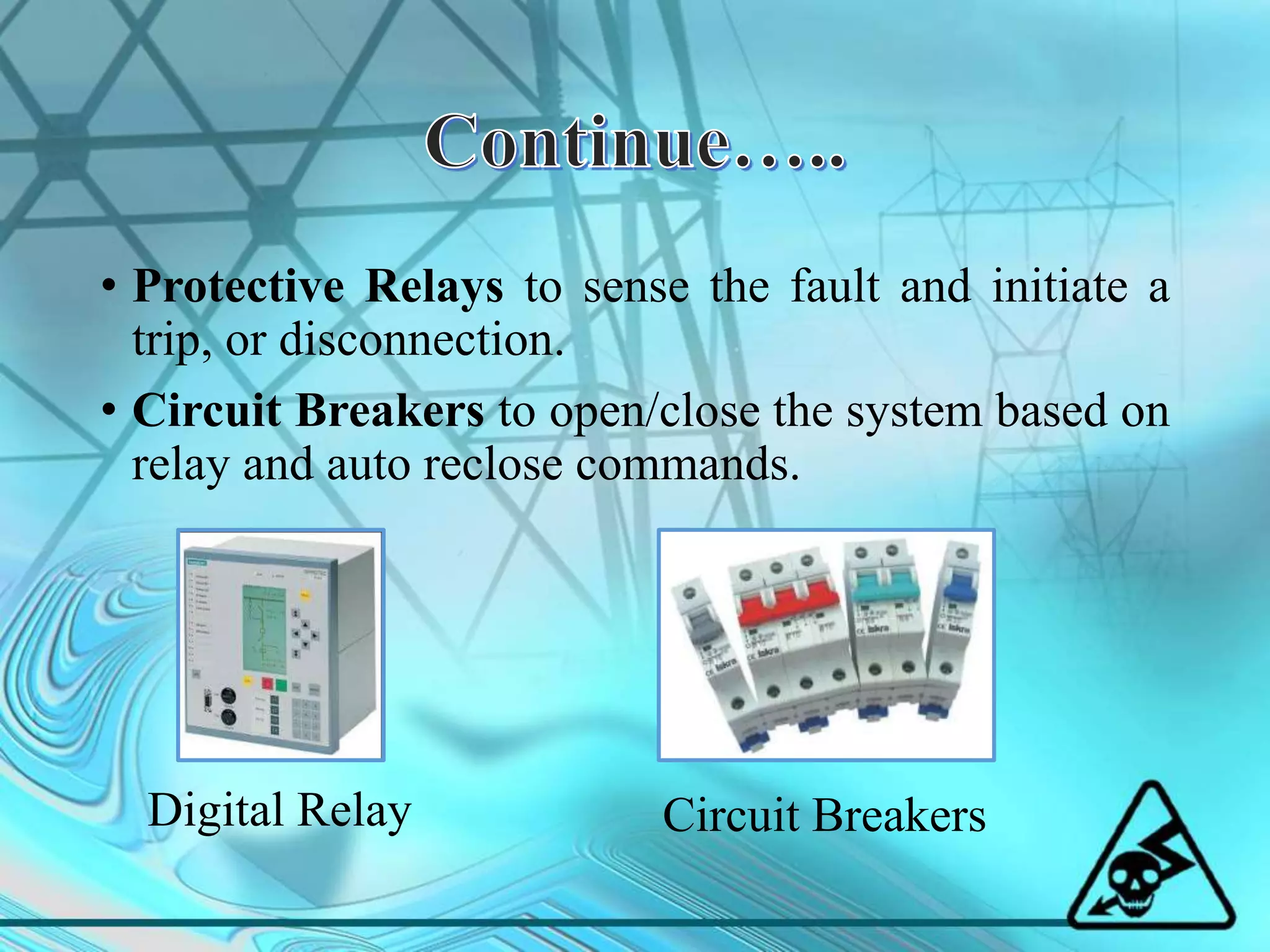
• Protective Relays to sense the fault and initiate a
trip, or disconnection.
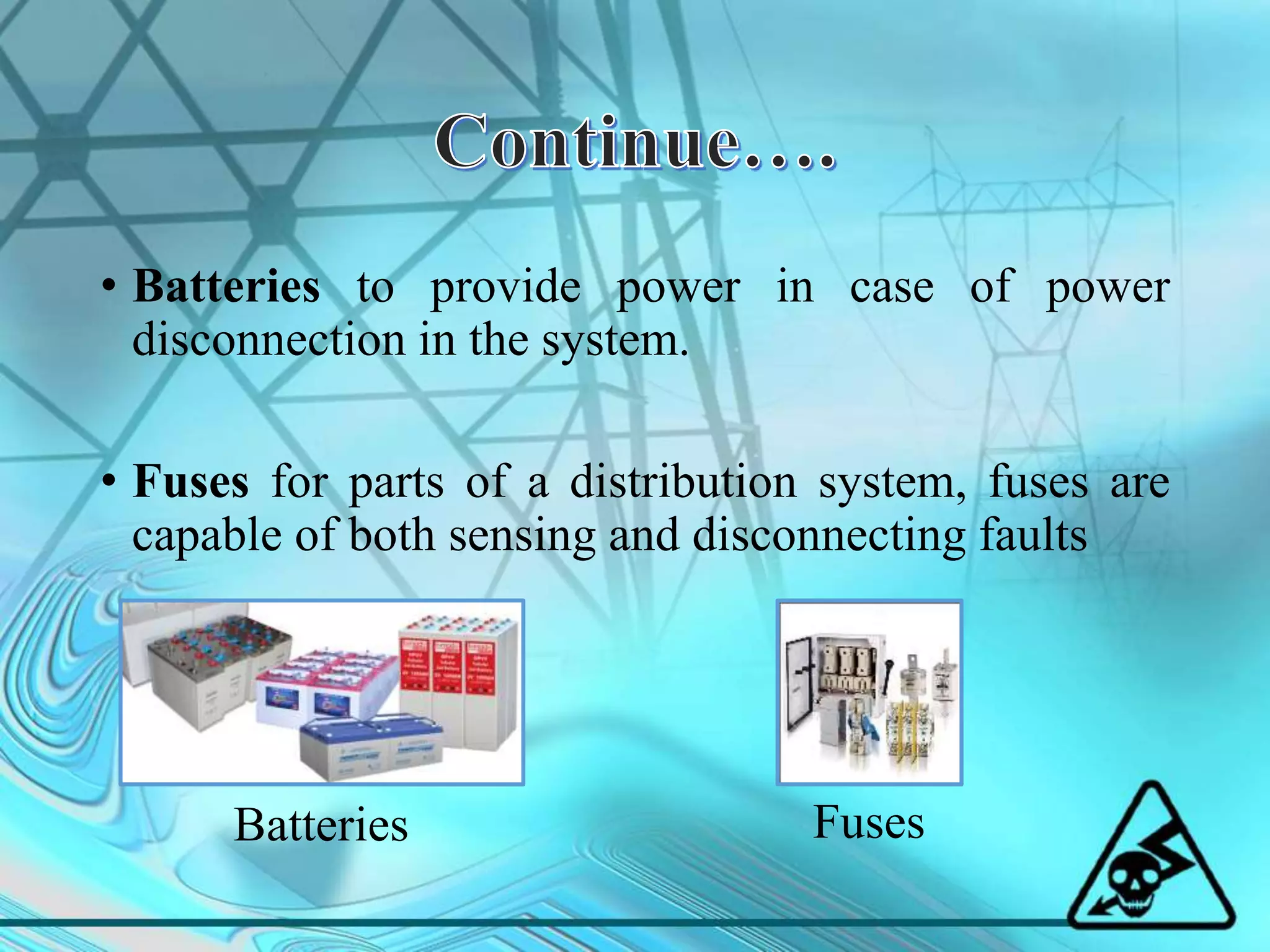
• Circuit Breakers to open/close the system based on
relay and auto reclose commands.
Digital Relay Circuit Breakers
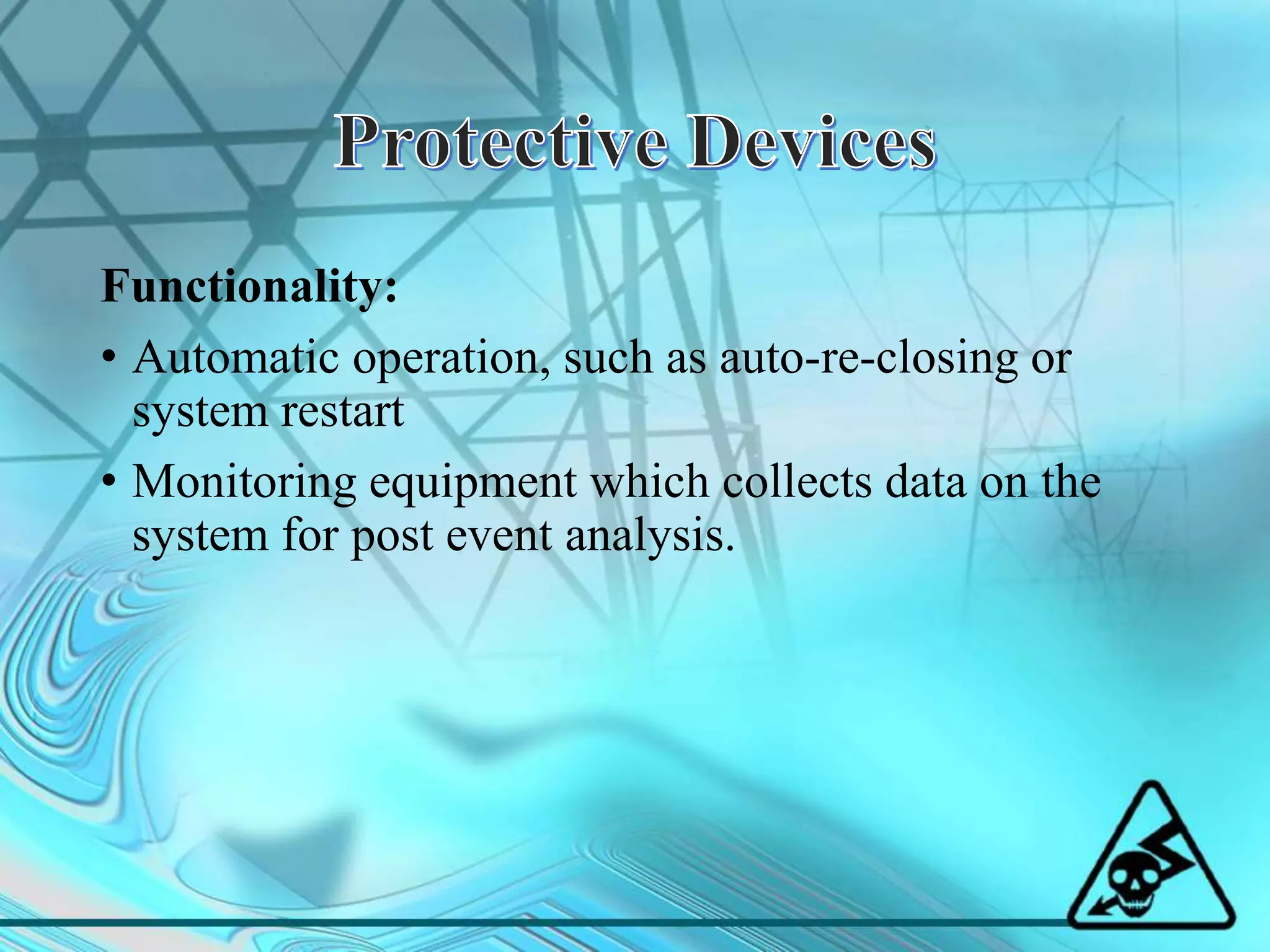
• Batteries to provide power in case of power
disconnection in the system.
• Fuses for parts of a distribution system, fuses are
capable of both sensing and disconnecting faults
Batteries Fuses
Functionality:
• Automatic operation, such as auto-re-closing or
system restart
• Monitoring equipment which collects data on the
system for post event analysis.
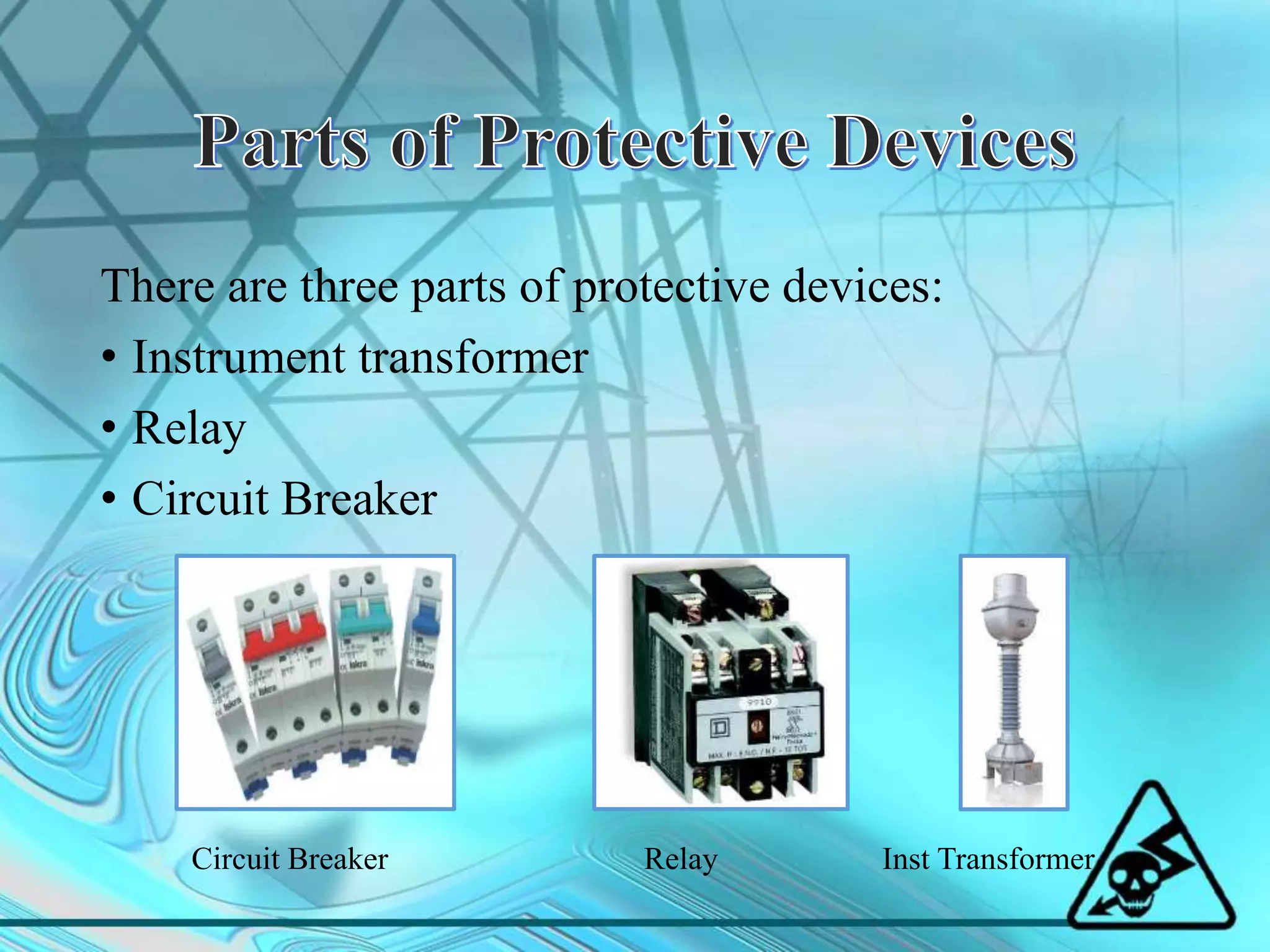
There are three parts of protective devices:
• Instrument transformer
• Relay
• Circuit Breaker
Circuit Breaker Relay Inst Transformer
Major advantages of protective devices are:
• Safety
• Economy
• Accuracy
1. Primary protection
2. Backup protection
Primary Protection
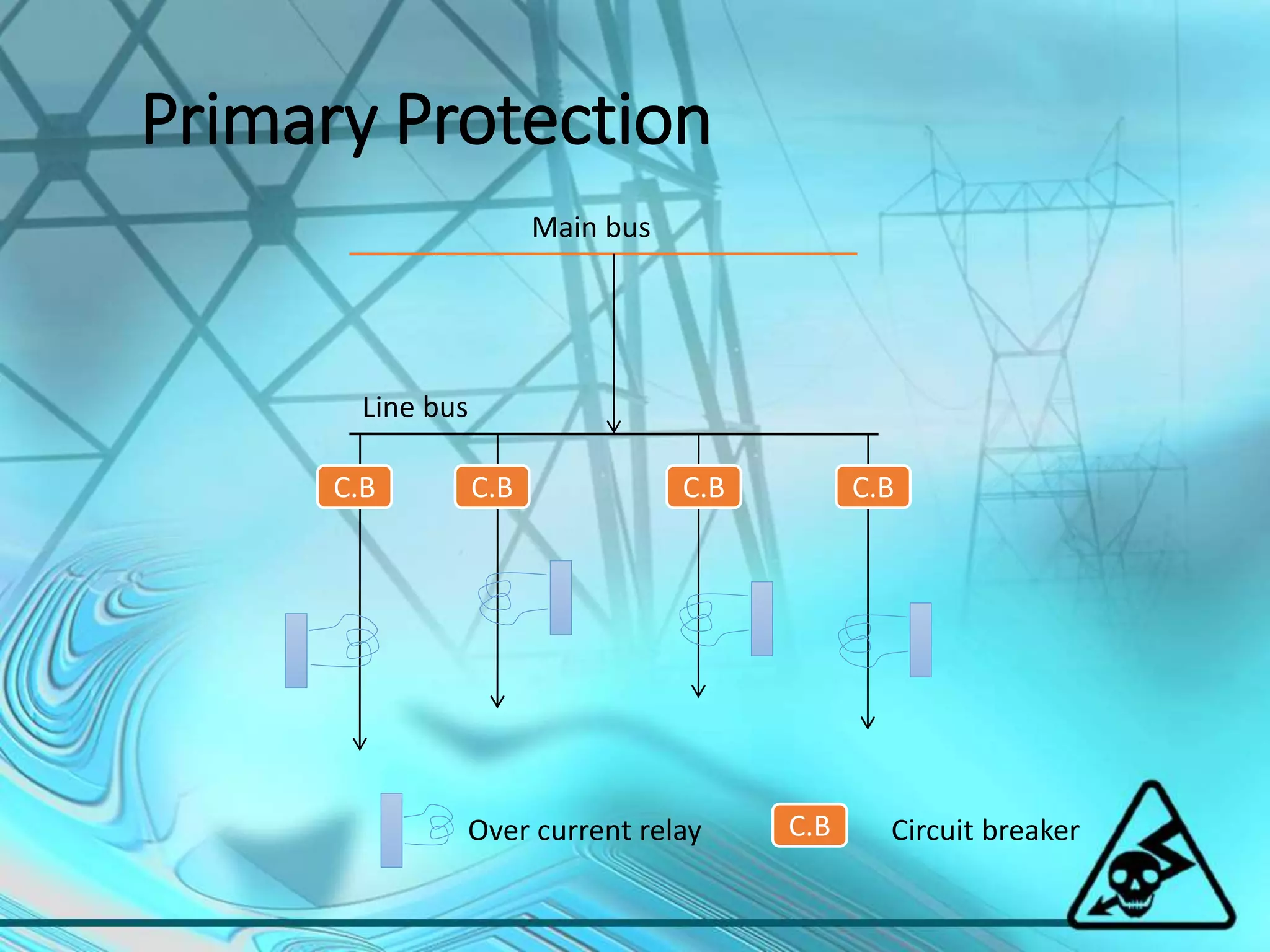
The primary protection is the first line of
defence and is responsible to protect all the
power system elements from all the types of
faults.
Primary Protection
C.BC.BC.BC.B
Main bus
Line bus
Over current relay C.B Circuit breaker
Primary protection may fail due to
the following reasons
• Failure of DC supply to the tripping Circuit
• Failure in relay operating current or voltage
• Failure in circuit breaker tripping mechanism
• Failure of main protective relay operation
• Failure in the wiring of relaying system
• Failure of CTs or PTs operation
back-up Protection
• The backup protection comes into play only when the
primary protection fails.
• when we disconnect primary protection for testing or
maintenance purpose, then secondary or back-up
protection will act as primary protection.
Backup protection
C.BC.BC.BC.B
Main bus
Line bus
Over current relay C.B Circuit breaker
C.B
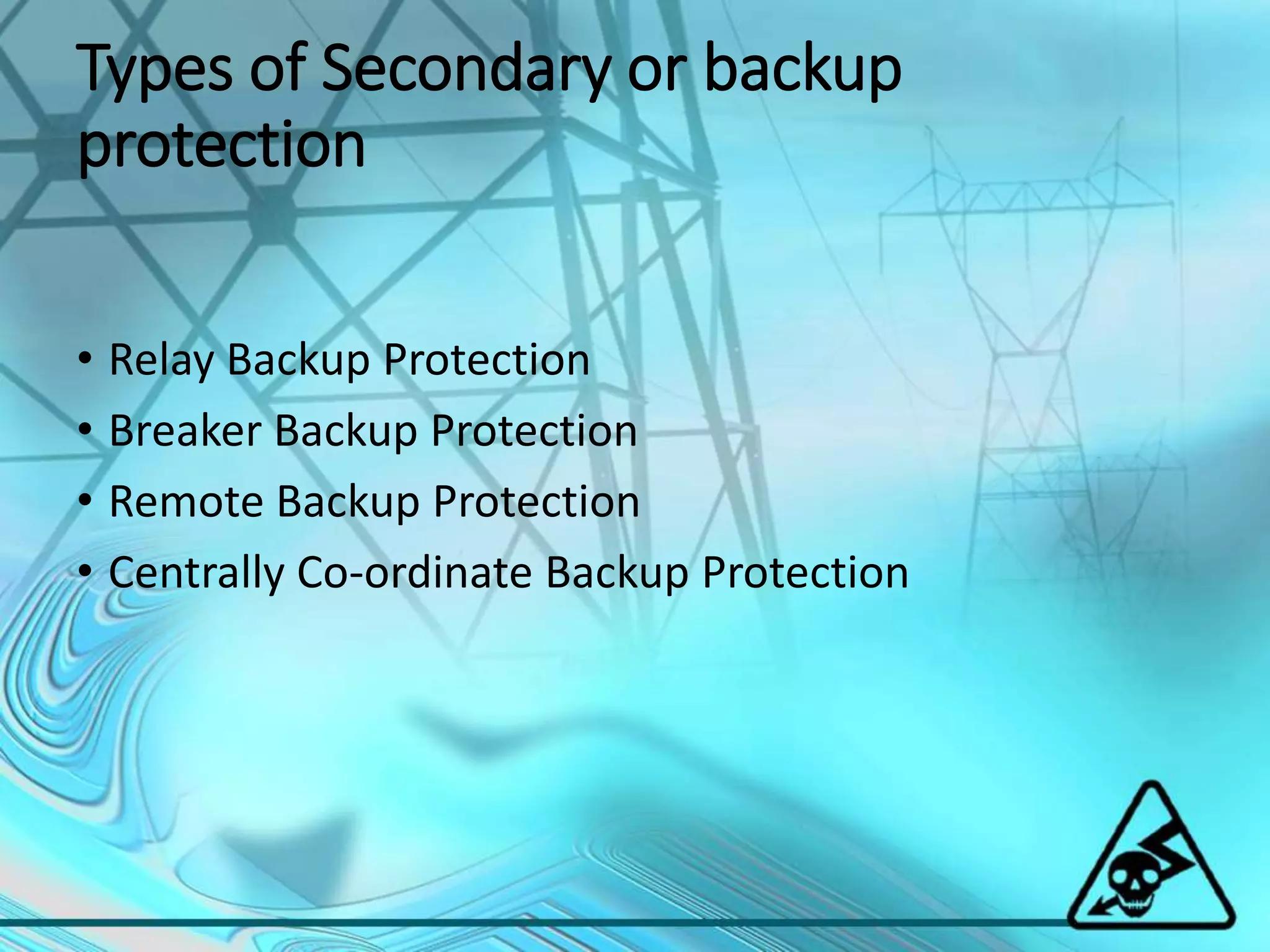
Types of Secondary or backup
protection
• Relay Backup Protection
• Breaker Backup Protection
• Remote Backup Protection
• Centrally Co-ordinate Backup Protection
Relay Backup Protection
• In this scheme, a single breaker is used by both
primary as well as backup protection but the two
protective systems are different.
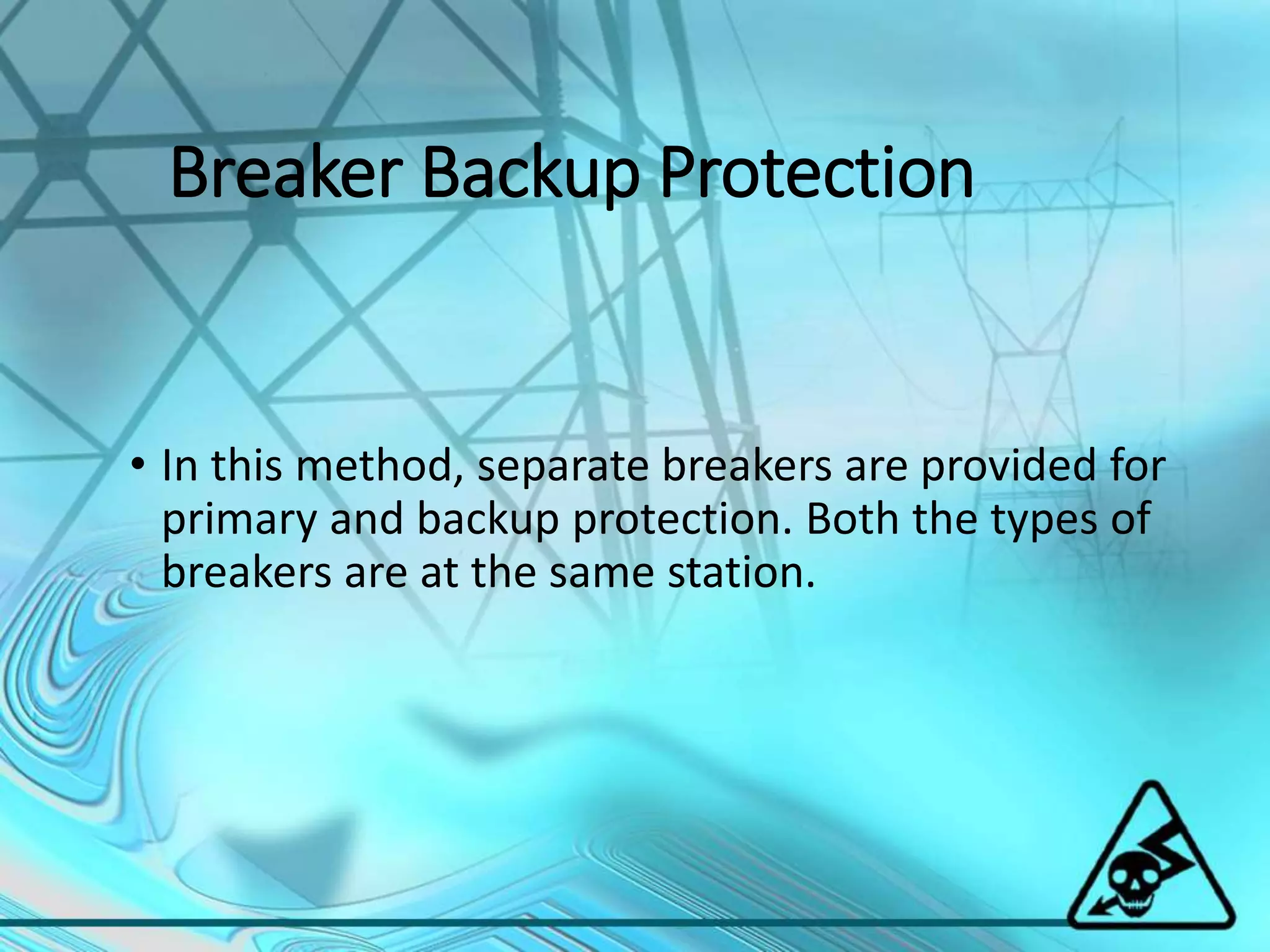
Breaker Backup Protection
• In this method, separate breakers are provided for
primary and backup protection. Both the types of
breakers are at the same station.
Remote Backup Protection
• In this method, separate breakers are provided for
primary and backup protection. The two types of
breakers are at the different stations and are
completely isolated and independent of each other.
Centrally Co-ordinated Backup
Protection
• In this method, primary protection is at various
stations. There is a central control room and backup
protection for all the stations is at central control
room. Central control continuously inspects the load
flow and frequency in the system. If any element of
any part of the system fails, load flow gets affected
which is sensed by the control room. The control
source consists of a digital computers which decides
the proper switching action. The method is also called
centrally controlled backup protection
• Protective device coordination is the process of
determining the "best fit" timing of current
interruption when abnormal electrical conditions
occur. The goal is to minimize an outage to the
greatest extent possible.
We can measure a protection systems performance
with following:
• Reliability
• Selectivity
• Speed
• Economy
• Simplicity
Primry & backup protection

Primry & backup protection

  • 3.
    • Introduction • Components •Protective Devices • Types of Protection • Coordination • Performance Measures
  • 4.
    • Power-system protectionis a branch of electrical power engineering that deals with the protection of electrical power systems from faults through the isolation of faulted parts from the rest of the electrical network.
  • 5.
    Protection systems usuallycomprise five components: • Current and voltage transformers • Protective relays • Circuit breakers • Batteries • Fuses
  • 6.
    • Current &Voltage Transformer: Current & Voltage Transformer to step down the high voltages and currents of the electrical power system to convenient levels for the relay. Current Transformer Voltage Transformer
  • 7.
    • Protective Relaysto sense the fault and initiate a trip, or disconnection. • Circuit Breakers to open/close the system based on relay and auto reclose commands. Digital Relay Circuit Breakers
  • 8.
    • Batteries toprovide power in case of power disconnection in the system. • Fuses for parts of a distribution system, fuses are capable of both sensing and disconnecting faults Batteries Fuses
  • 9.
    Functionality: • Automatic operation,such as auto-re-closing or system restart • Monitoring equipment which collects data on the system for post event analysis.
  • 10.
    There are threeparts of protective devices: • Instrument transformer • Relay • Circuit Breaker Circuit Breaker Relay Inst Transformer
  • 11.
    Major advantages ofprotective devices are: • Safety • Economy • Accuracy
  • 12.
    1. Primary protection 2.Backup protection
  • 13.
    Primary Protection The primaryprotection is the first line of defence and is responsible to protect all the power system elements from all the types of faults.
  • 14.
    Primary Protection C.BC.BC.BC.B Main bus Linebus Over current relay C.B Circuit breaker
  • 15.
    Primary protection mayfail due to the following reasons • Failure of DC supply to the tripping Circuit • Failure in relay operating current or voltage • Failure in circuit breaker tripping mechanism • Failure of main protective relay operation • Failure in the wiring of relaying system • Failure of CTs or PTs operation
  • 16.
    back-up Protection • Thebackup protection comes into play only when the primary protection fails. • when we disconnect primary protection for testing or maintenance purpose, then secondary or back-up protection will act as primary protection.
  • 17.
    Backup protection C.BC.BC.BC.B Main bus Linebus Over current relay C.B Circuit breaker C.B
  • 18.
    Types of Secondaryor backup protection • Relay Backup Protection • Breaker Backup Protection • Remote Backup Protection • Centrally Co-ordinate Backup Protection
  • 19.
    Relay Backup Protection •In this scheme, a single breaker is used by both primary as well as backup protection but the two protective systems are different.
  • 20.
    Breaker Backup Protection •In this method, separate breakers are provided for primary and backup protection. Both the types of breakers are at the same station.
  • 21.
    Remote Backup Protection •In this method, separate breakers are provided for primary and backup protection. The two types of breakers are at the different stations and are completely isolated and independent of each other.
  • 22.
    Centrally Co-ordinated Backup Protection •In this method, primary protection is at various stations. There is a central control room and backup protection for all the stations is at central control room. Central control continuously inspects the load flow and frequency in the system. If any element of any part of the system fails, load flow gets affected which is sensed by the control room. The control source consists of a digital computers which decides the proper switching action. The method is also called centrally controlled backup protection
  • 23.
    • Protective devicecoordination is the process of determining the "best fit" timing of current interruption when abnormal electrical conditions occur. The goal is to minimize an outage to the greatest extent possible.
  • 24.
    We can measurea protection systems performance with following: • Reliability • Selectivity • Speed • Economy • Simplicity