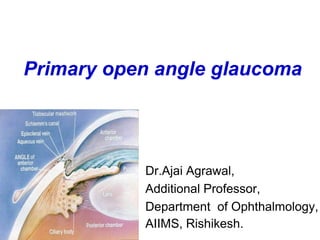
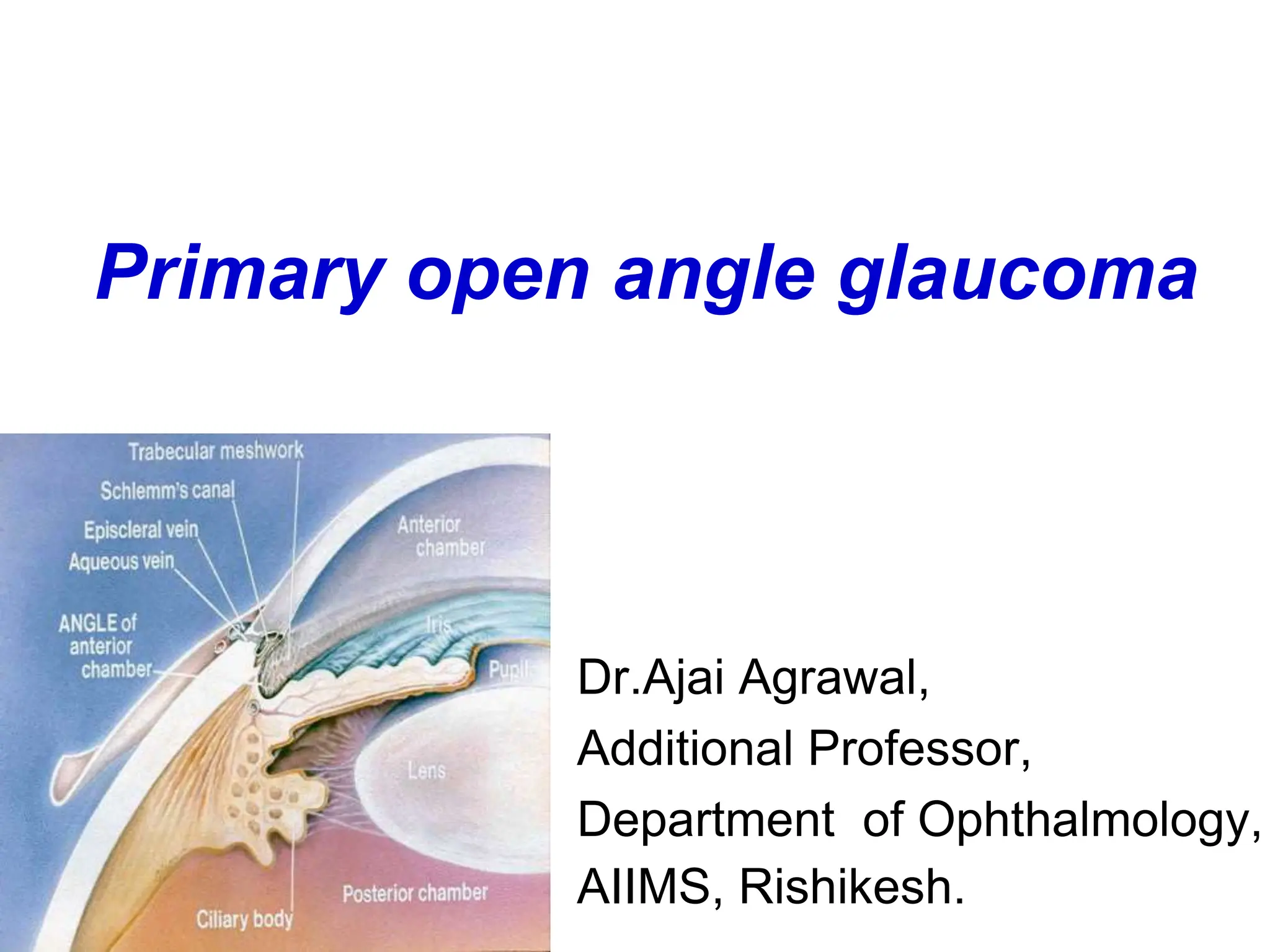
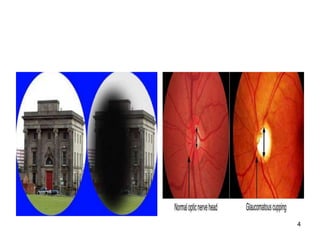
Primary open angle glaucoma
Dr.Ajai Agrawal,
Additional Professor,
Department of Ophthalmology,
AIIMS, Rishikesh.
Acknowledgement
• Kanski’s Clinical Ophthalmology (8th Edition).
• Becker- Schaffer’s Diagnosis and therapy of The
Glaucomas (8th Edition).
• Comprehensive Ophthalmology (A.K.Khurana)
(7th Edition).
2
Learning Objectives
• At the end of this class the students shall be able to :
• Define primary open angle glaucoma(POAG).
• Comprehend the pathophysiology and
risk factors of POAG.
• Understand the clinical features of POAG.
• Understand the fundamentals of managing
primary open angle glaucoma 3
4
Question
Glaucoma is defined as:
• a. a group of diseases that have in common a
characteristic optic neuropathy associated with
increased intraocular pressure.
• b. a group of diseases that have in common a
characteristic optic neuropathy with associated visual
function loss.
• c. a group of diseases that have in common high
intraocular pressure with or without optic neuropathy.
• d. a group of diseases that have in common a
characteristic optic neuropathy with poor visual acuity.
5
Definition of POAG
• Chronic, progressive optic neuropathy
characterised by morphological changes at the
optic disc and retinal nerve fibre layer leading to
characteristic visual field changes, in the absence
of other ocular diseases or congenital anomalies
(with or without a raised IOP).
6
Etiopathogenesis
• Multifactorial aetiology
• Risk factors include:
 Elevated Intra Ocular Pressure(IOP)
(More than 21 mm Hg)
 Optic disc cupping
 Increasing Age : More common in 5th to 7th decades
 Race: More common and severe in Black population
7
Etiopathogenesis
 Heredity/ Family History: Risk of about 10% in
siblings; 4% in off springs
 Diabetes
 Systemic Hypertension
 Myopia
 Thin central corneas
 Steroid usage
 ??Migraine, Cigarette smoking 8
Pathophysiology of POAG
• Decrease in aqueous outflow facility due to
increased resistance to outflow leads to rise in IOP
• Two theories of axonal loss in optic disc
• 1. Mechanical: Distortion of lamina cribrosa
leading to impaired axoplasmic flow
2. Vascular: Optic disc ischaemia with
defective autoregulation of blood vessels 9
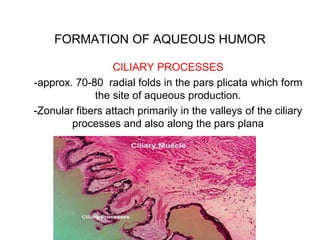
FORMATION OF AQUEOUS HUMOR
CILIARY PROCESSES
-approx. 70-80 radial folds in the pars plicata which form
the site of aqueous production.
-Zonular fibers attach primarily in the valleys of the ciliary
processes and also along the pars plana
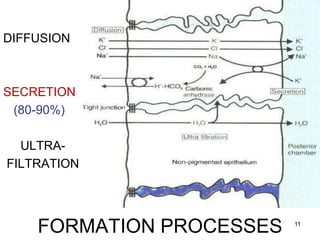
FORMATION PROCESSES
DIFFUSION
SECRETION
(80-90%)
ULTRA-
FILTRATION
11
Formation of aqueous humor
• Diffusion and ultrafiltration are both
passive mechanisms so no active cellular
participation occurs.
• Active secretion is an active process.
• Rate of formation of aqueous humor in a
healthy human eye is-
2 - 3 microlitres/minute
12
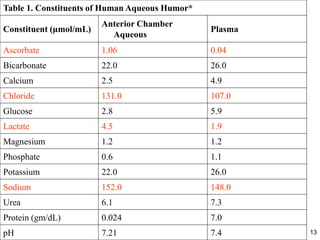
Table 1. Constituents of Human Aqueous Humor*
Constituent (µmol/mL)
Anterior Chamber
Aqueous
Plasma
Ascorbate 1.06 0.04
Bicarbonate 22.0 26.0
Calcium 2.5 4.9
Chloride 131.0 107.0
Glucose 2.8 5.9
Lactate 4.5 1.9
Magnesium 1.2 1.2
Phosphate 0.6 1.1
Potassium 22.0 26.0
Sodium 152.0 148.0
Urea 6.1 7.3
Protein (gm/dL) 0.024 7.0
pH 7.21 7.4 13
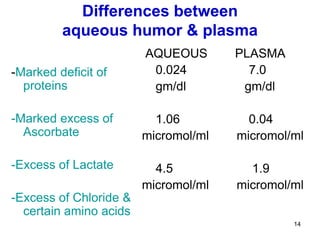
Differences between
aqueous humor & plasma
-Marked deficit of
proteins
-Marked excess of
Ascorbate
-Excess of Lactate
-Excess of Chloride &
certain amino acids
AQUEOUS PLASMA
0.024 7.0
gm/dl gm/dl
1.06 0.04
micromol/ml micromol/ml
4.5 1.9
micromol/ml micromol/ml
14
Functions of aqueous humor
*Maintaining IOP :
-important for early ocular development &
maintaining global integrity throughout life.
*Serves as a vascular system for the avascular
structures of the eye: cornea, lens & TM.
- by providing substrates & nutrients & removing
metabolites.
15
Functions of aqueous humor
*Delivering high concentration of Ascorbate:
- scavenges free radicals & protects against UV
rays & other radiations.
*Local paracrine signaling & immune responses.
*Colourless & transparent medium as part of eye’s
optical system.
16
Aqueous humor outflow
17
Video of aqueous humor outflow
18
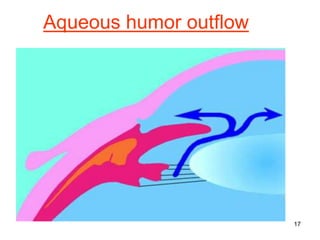
Major amount of aqueous humor leaves the
eye by
BULK FLUID FLOW
i.e. fluid flows along normal pressure
gradient through non-energy dependent
process
19
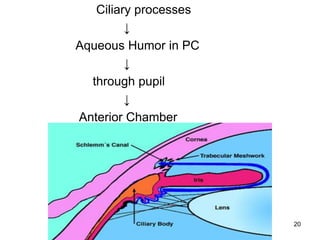
Ciliary processes
↓
Aqueous Humor in PC
↓
through pupil
↓
Anterior Chamber
20
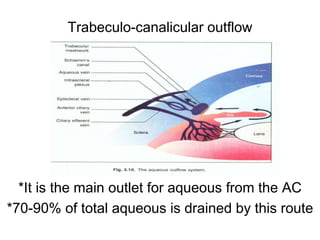
Trabeculo-canalicular outflow
*It is the main outlet for aqueous from the AC
*70-90% of total aqueous is drained by this route
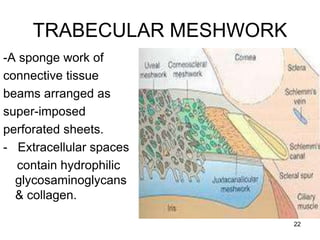
TRABECULAR MESHWORK
-A sponge work of
connective tissue
beams arranged as
super-imposed
perforated sheets.
- Extracellular spaces
contain hydrophilic
glycosaminoglycans
& collagen.
22
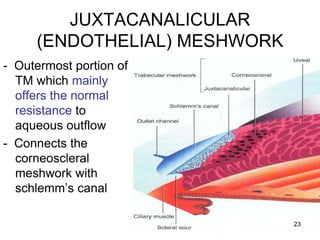
JUXTACANALICULAR
(ENDOTHELIAL) MESHWORK
- Outermost portion of
TM which mainly
offers the normal
resistance to
aqueous outflow
- Connects the
corneoscleral
meshwork with
schlemm’s canal
23
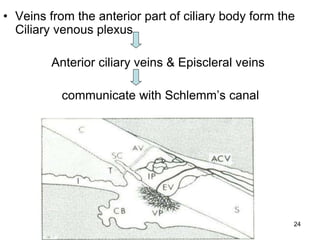
• Veins from the anterior part of ciliary body form the
Ciliary venous plexus
Anterior ciliary veins & Episcleral veins
communicate with Schlemm’s canal
24
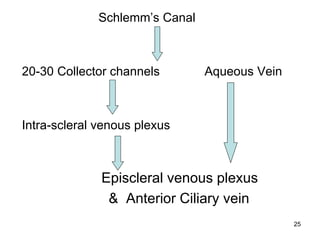
Schlemm’s Canal
20-30 Collector channels Aqueous Vein
Intra-scleral venous plexus
Episcleral venous plexus
& Anterior Ciliary vein
25
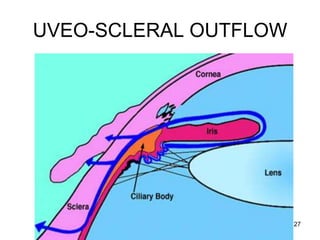
UNCONVENTIONAL
OUTFLOW
*responsible for 10-25% of total aqueous outflow
UVEO-SCLERAL OUTFLOW
27
Trans-corneal outflow
- Aqueous humor from anterior chamber
goes into tear film through cornea.
- Very little aqueous passes through this
pathway.
- Total volume of fluid transferred is limited
by high hydraulic resistance of the cornea.
28
Clinical features of POAG
Symptoms
• Usually asymptomatic in early cases
• Mild headache and eye ache
• Frequent changes in presbyopic glasses
• Delayed dark adaptation
• Loss of peripheral vision
• Loss of central vision(late cases)
29
Signs of POAG
• Normal anterior segment
• Pupil reaction to light may be sluggish(in
advanced cases only)
• Elevated IOP(More than 21 mm Hg) with
diurnal variation more than 5-8 mmHg
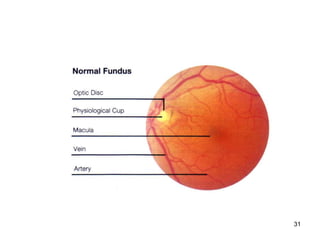
• Optic disc changes (Progressive,
asymmetric)
• Visual field defects
30
31
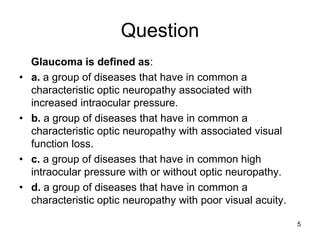
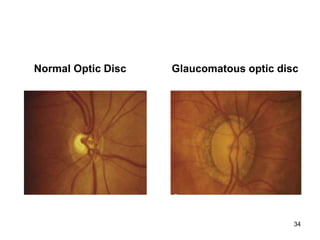
Optic disc changes in glaucoma
• Early changes
o Retinal nerve fibre layer atrophy
o Vertically oval cup
o Asymmetry of the cups(More than 0.2
difference)
o Large cup(CD more than 0.6)
o Splinter haemorrhages
32
Advanced glaucomatous disc changes
• Marked cupping (More than 0.7)
• Thinning of NRR (Neuroretinal rim)
• Lamellar dot sign
• Vascular alterations
o Nasal shifting of retinal vessels
o Bayonetting sign(convoluted path due to NRR
loss)
o Baring of circumlinear vessels and overpass
vessels
• Glaucomatous optic atrophy
33
Normal Optic Disc Glaucomatous optic disc
34
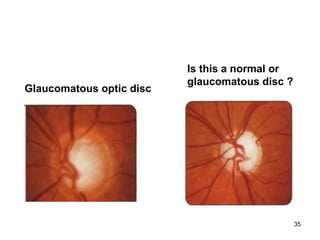
Glaucomatous optic disc
Is this a normal or
glaucomatous disc ?
35
Recording and documenting disc changes
• Serial drawings (10 square grid) after
seeing fundus by ophthalmoscopy/slit
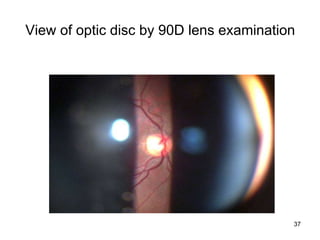
lamp with +90D/+78D lens
• Disc photography
• HRT(Heidelberg retinal tomography)
• OCT (Optical coherence tomography)
• NFA(Nerve fibre analyser)
36
View of optic disc by 90D lens examination
37
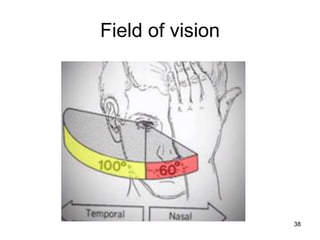
Field of vision
38
Visual field defects in glaucoma
• Arcuate nerve fibres in the superior and
inferior temporal portions of the optic disc:
Most sensitive to damage
• Macular fibres : Most resistant to damage
CENTRAL VISION IS PRESERVED TILL
THE LAST IN GLAUCOMA
39
Progression of field defects
• Isopter contraction: Generalised field
constriction
• Baring of blind spot : Non specific
(Exclusion of blind spot from central field)
• Paracentral scotoma: Wing shaped and
occurs above or below the blind spot in the
Bjerrum’s area(10-25 degrees from
fixation)
Is the earliest clinically significant defect
40
Progression of field defects
• Seidel’s scotoma: sickle shaped
Due to joining of blind spot and
paracentral scotoma
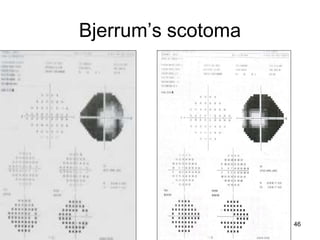
• Bjerrum’s/Arcuate scotoma:
Extension of Seidel’s scotoma to reach the
horizontal line.
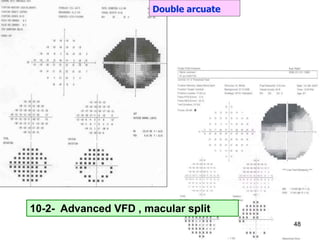
• Double arcuate/ring scotoma
41
Progression of field defects
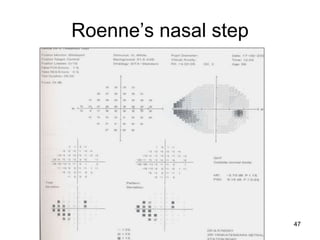
• Roenne’s central nasal step:
Sharp right angled defect at the horizontal
meridian when arcuate scotomas run in
different arcs
• Peripheral field defects
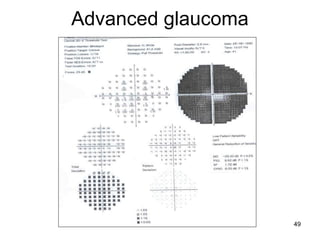
• Advanced defects
Residual Tubular vision
Temporal island of vision
42
Quantification of visual field defects
• Visual field analyzer
Kinetic perimeter
Static perimeter (automated)
Testing more than once is required before
final interpretation
43
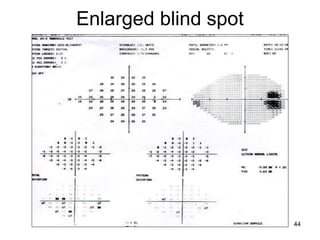
Enlarged blind spot
44
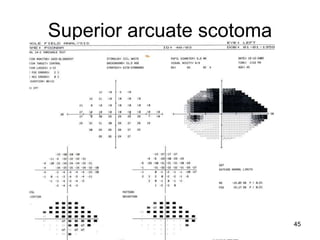
Superior arcuate scotoma
45
Bjerrum’s scotoma
46
Roenne’s nasal step
47
Double arcuate
10-2- Advanced VFD , macular split
48
Advanced glaucoma
49
Diagnostic work up/Investigations
• Tonometry
• Goniscopy: Open angles
• Perimetry: To detect visual field defects
• Slit lamp examination: To rule out causes
of secondary open angle glaucoma
• Fundus examination to document optic
disc changes
• Diurnal variation testing
• Provocative testing: Water drinking test
50
Diagnosis
• POAG: Raised IOP(More than 21 mm Hg),
glaucomatous optic disc cupping, visual
field changes.
• Ocular hypertension/glaucoma suspect:
Raised IOP
• NTG(Normal tension glaucoma):
Glaucomatous optic disc cupping with or
without visual field changes with normal IOP
51
Management of POAG
• Therapeutic choices
 Medical therapy
 Argon/Diode Laser Trabeculoplasty
 Filtration surgery
52
Basic principles of therapy
• Make a correct diagnosis
• Set a target IOP
• Start with a single drug to lower IOP
• Switch to another group of drugs if needed
• Control IOP on minimal medications
• Monitor therapy and reset target IOP
whenever needed
53
Topical drugs used for POAG therapy
• Prostaglandin/Prostamides
Latanoprost, Bimatoprost, Travoprost
• Beta blockers
Timolol maleate, Betaxolol
• Carbonic anhydrase inhibitors
Dorzolamide, Brinzolamide
• Sympathomimetics
Brimonidine, Apraclonidine
• Parasympathomimetics
Pilocarpine
54
Systemic drugs used for POAG therapy
• Used rarely, for short term control of IOP
• Oral carbonic anhydrase inhibitors
Acetazolamide, Methazolamide
55
Laser treatment
• Indications
Target IOP not achieved with medical
therapy
Non compliance of medical therapy
Argon/ Diode Laser Trabeculoplasty (ALT)
Selective Laser Trabeculoplasty (SLT)
56
Surgical therapy
• Indications
 Target IOP not achieved with maximal
tolerated medical therapy and laser
trabeculoplasty
 Non compliance of medical therapy
 Non availability of laser therapy
 Advanced glaucoma
57
Surgical therapy
• Filtration surgery : Trabeculectomy
• Modified trabeculectomy :
Use of antifibrotic agents
Mitomycin/5FU
• Aqueous drainage devices:
Ahmed glaucoma valve
In cases with no/poor visual potential:
Cycloablative therapy with laser/cryotherapy
58
Conclusion
• Primary open angle glaucoma is a
progressive optic neuropathy with
characteristic optic disc and visual field
changes.
• Increased resistance to aqueous outflow
leads to rise in IOP.
• Aim of management is to reduce IOP to
minimize damage to optic disc and
resultant visual field defects.
59
Question
Which of the following is not a risk factor
for the development of primary open
angle glaucoma?
a. positive family history.
b. advanced age.
c. increased IOP.
d. increased corneal thickness.
60
Question
You have been referred a case of open
angle glaucoma. Which of the following
would be an important point in
diagnosing the case?
a. Shallow anterior chamber
b. Optic disc cupping
c. Narrow angle
d. Visual acuity and refractive error
61
62

Primary open angle glaucoma presentation

  • 1.
    Primary open angleglaucoma Dr.Ajai Agrawal, Additional Professor, Department of Ophthalmology, AIIMS, Rishikesh.
  • 2.
    Acknowledgement • Kanski’s ClinicalOphthalmology (8th Edition). • Becker- Schaffer’s Diagnosis and therapy of The Glaucomas (8th Edition). • Comprehensive Ophthalmology (A.K.Khurana) (7th Edition). 2
  • 3.
    Learning Objectives • Atthe end of this class the students shall be able to : • Define primary open angle glaucoma(POAG). • Comprehend the pathophysiology and risk factors of POAG. • Understand the clinical features of POAG. • Understand the fundamentals of managing primary open angle glaucoma 3
  • 4.
  • 5.
    Question Glaucoma is definedas: • a. a group of diseases that have in common a characteristic optic neuropathy associated with increased intraocular pressure. • b. a group of diseases that have in common a characteristic optic neuropathy with associated visual function loss. • c. a group of diseases that have in common high intraocular pressure with or without optic neuropathy. • d. a group of diseases that have in common a characteristic optic neuropathy with poor visual acuity. 5
  • 6.
    Definition of POAG •Chronic, progressive optic neuropathy characterised by morphological changes at the optic disc and retinal nerve fibre layer leading to characteristic visual field changes, in the absence of other ocular diseases or congenital anomalies (with or without a raised IOP). 6
  • 7.
    Etiopathogenesis • Multifactorial aetiology •Risk factors include:  Elevated Intra Ocular Pressure(IOP) (More than 21 mm Hg)  Optic disc cupping  Increasing Age : More common in 5th to 7th decades  Race: More common and severe in Black population 7
  • 8.
    Etiopathogenesis  Heredity/ FamilyHistory: Risk of about 10% in siblings; 4% in off springs  Diabetes  Systemic Hypertension  Myopia  Thin central corneas  Steroid usage  ??Migraine, Cigarette smoking 8
  • 9.
    Pathophysiology of POAG •Decrease in aqueous outflow facility due to increased resistance to outflow leads to rise in IOP • Two theories of axonal loss in optic disc • 1. Mechanical: Distortion of lamina cribrosa leading to impaired axoplasmic flow 2. Vascular: Optic disc ischaemia with defective autoregulation of blood vessels 9
  • 10.
    FORMATION OF AQUEOUSHUMOR CILIARY PROCESSES -approx. 70-80 radial folds in the pars plicata which form the site of aqueous production. -Zonular fibers attach primarily in the valleys of the ciliary processes and also along the pars plana
  • 11.
  • 12.
    Formation of aqueoushumor • Diffusion and ultrafiltration are both passive mechanisms so no active cellular participation occurs. • Active secretion is an active process. • Rate of formation of aqueous humor in a healthy human eye is- 2 - 3 microlitres/minute 12
  • 13.
    Table 1. Constituentsof Human Aqueous Humor* Constituent (µmol/mL) Anterior Chamber Aqueous Plasma Ascorbate 1.06 0.04 Bicarbonate 22.0 26.0 Calcium 2.5 4.9 Chloride 131.0 107.0 Glucose 2.8 5.9 Lactate 4.5 1.9 Magnesium 1.2 1.2 Phosphate 0.6 1.1 Potassium 22.0 26.0 Sodium 152.0 148.0 Urea 6.1 7.3 Protein (gm/dL) 0.024 7.0 pH 7.21 7.4 13
  • 14.
    Differences between aqueous humor& plasma -Marked deficit of proteins -Marked excess of Ascorbate -Excess of Lactate -Excess of Chloride & certain amino acids AQUEOUS PLASMA 0.024 7.0 gm/dl gm/dl 1.06 0.04 micromol/ml micromol/ml 4.5 1.9 micromol/ml micromol/ml 14
  • 15.
    Functions of aqueoushumor *Maintaining IOP : -important for early ocular development & maintaining global integrity throughout life. *Serves as a vascular system for the avascular structures of the eye: cornea, lens & TM. - by providing substrates & nutrients & removing metabolites. 15
  • 16.
    Functions of aqueoushumor *Delivering high concentration of Ascorbate: - scavenges free radicals & protects against UV rays & other radiations. *Local paracrine signaling & immune responses. *Colourless & transparent medium as part of eye’s optical system. 16
  • 17.
  • 18.
    Video of aqueoushumor outflow 18
  • 19.
    Major amount ofaqueous humor leaves the eye by BULK FLUID FLOW i.e. fluid flows along normal pressure gradient through non-energy dependent process 19
  • 20.
    Ciliary processes ↓ Aqueous Humorin PC ↓ through pupil ↓ Anterior Chamber 20
  • 21.
    Trabeculo-canalicular outflow *It isthe main outlet for aqueous from the AC *70-90% of total aqueous is drained by this route
  • 22.
    TRABECULAR MESHWORK -A spongework of connective tissue beams arranged as super-imposed perforated sheets. - Extracellular spaces contain hydrophilic glycosaminoglycans & collagen. 22
  • 23.
    JUXTACANALICULAR (ENDOTHELIAL) MESHWORK - Outermostportion of TM which mainly offers the normal resistance to aqueous outflow - Connects the corneoscleral meshwork with schlemm’s canal 23
  • 24.
    • Veins fromthe anterior part of ciliary body form the Ciliary venous plexus Anterior ciliary veins & Episcleral veins communicate with Schlemm’s canal 24
  • 25.
    Schlemm’s Canal 20-30 Collectorchannels Aqueous Vein Intra-scleral venous plexus Episcleral venous plexus & Anterior Ciliary vein 25
  • 26.
  • 27.
  • 28.
    Trans-corneal outflow - Aqueoushumor from anterior chamber goes into tear film through cornea. - Very little aqueous passes through this pathway. - Total volume of fluid transferred is limited by high hydraulic resistance of the cornea. 28
  • 29.
    Clinical features ofPOAG Symptoms • Usually asymptomatic in early cases • Mild headache and eye ache • Frequent changes in presbyopic glasses • Delayed dark adaptation • Loss of peripheral vision • Loss of central vision(late cases) 29
  • 30.
    Signs of POAG •Normal anterior segment • Pupil reaction to light may be sluggish(in advanced cases only) • Elevated IOP(More than 21 mm Hg) with diurnal variation more than 5-8 mmHg • Optic disc changes (Progressive, asymmetric) • Visual field defects 30
  • 31.
  • 32.
    Optic disc changesin glaucoma • Early changes o Retinal nerve fibre layer atrophy o Vertically oval cup o Asymmetry of the cups(More than 0.2 difference) o Large cup(CD more than 0.6) o Splinter haemorrhages 32
  • 33.
    Advanced glaucomatous discchanges • Marked cupping (More than 0.7) • Thinning of NRR (Neuroretinal rim) • Lamellar dot sign • Vascular alterations o Nasal shifting of retinal vessels o Bayonetting sign(convoluted path due to NRR loss) o Baring of circumlinear vessels and overpass vessels • Glaucomatous optic atrophy 33
  • 34.
    Normal Optic DiscGlaucomatous optic disc 34
  • 35.
    Glaucomatous optic disc Isthis a normal or glaucomatous disc ? 35
  • 36.
    Recording and documentingdisc changes • Serial drawings (10 square grid) after seeing fundus by ophthalmoscopy/slit lamp with +90D/+78D lens • Disc photography • HRT(Heidelberg retinal tomography) • OCT (Optical coherence tomography) • NFA(Nerve fibre analyser) 36
  • 37.
    View of opticdisc by 90D lens examination 37
  • 38.
  • 39.
    Visual field defectsin glaucoma • Arcuate nerve fibres in the superior and inferior temporal portions of the optic disc: Most sensitive to damage • Macular fibres : Most resistant to damage CENTRAL VISION IS PRESERVED TILL THE LAST IN GLAUCOMA 39
  • 40.
    Progression of fielddefects • Isopter contraction: Generalised field constriction • Baring of blind spot : Non specific (Exclusion of blind spot from central field) • Paracentral scotoma: Wing shaped and occurs above or below the blind spot in the Bjerrum’s area(10-25 degrees from fixation) Is the earliest clinically significant defect 40
  • 41.
    Progression of fielddefects • Seidel’s scotoma: sickle shaped Due to joining of blind spot and paracentral scotoma • Bjerrum’s/Arcuate scotoma: Extension of Seidel’s scotoma to reach the horizontal line. • Double arcuate/ring scotoma 41
  • 42.
    Progression of fielddefects • Roenne’s central nasal step: Sharp right angled defect at the horizontal meridian when arcuate scotomas run in different arcs • Peripheral field defects • Advanced defects Residual Tubular vision Temporal island of vision 42
  • 43.
    Quantification of visualfield defects • Visual field analyzer Kinetic perimeter Static perimeter (automated) Testing more than once is required before final interpretation 43
  • 44.
  • 45.
  • 46.
  • 47.
  • 48.
    Double arcuate 10-2- AdvancedVFD , macular split 48
  • 49.
  • 50.
    Diagnostic work up/Investigations •Tonometry • Goniscopy: Open angles • Perimetry: To detect visual field defects • Slit lamp examination: To rule out causes of secondary open angle glaucoma • Fundus examination to document optic disc changes • Diurnal variation testing • Provocative testing: Water drinking test 50
  • 51.
    Diagnosis • POAG: RaisedIOP(More than 21 mm Hg), glaucomatous optic disc cupping, visual field changes. • Ocular hypertension/glaucoma suspect: Raised IOP • NTG(Normal tension glaucoma): Glaucomatous optic disc cupping with or without visual field changes with normal IOP 51
  • 52.
    Management of POAG •Therapeutic choices  Medical therapy  Argon/Diode Laser Trabeculoplasty  Filtration surgery 52
  • 53.
    Basic principles oftherapy • Make a correct diagnosis • Set a target IOP • Start with a single drug to lower IOP • Switch to another group of drugs if needed • Control IOP on minimal medications • Monitor therapy and reset target IOP whenever needed 53
  • 54.
    Topical drugs usedfor POAG therapy • Prostaglandin/Prostamides Latanoprost, Bimatoprost, Travoprost • Beta blockers Timolol maleate, Betaxolol • Carbonic anhydrase inhibitors Dorzolamide, Brinzolamide • Sympathomimetics Brimonidine, Apraclonidine • Parasympathomimetics Pilocarpine 54
  • 55.
    Systemic drugs usedfor POAG therapy • Used rarely, for short term control of IOP • Oral carbonic anhydrase inhibitors Acetazolamide, Methazolamide 55
  • 56.
    Laser treatment • Indications TargetIOP not achieved with medical therapy Non compliance of medical therapy Argon/ Diode Laser Trabeculoplasty (ALT) Selective Laser Trabeculoplasty (SLT) 56
  • 57.
    Surgical therapy • Indications Target IOP not achieved with maximal tolerated medical therapy and laser trabeculoplasty  Non compliance of medical therapy  Non availability of laser therapy  Advanced glaucoma 57
  • 58.
    Surgical therapy • Filtrationsurgery : Trabeculectomy • Modified trabeculectomy : Use of antifibrotic agents Mitomycin/5FU • Aqueous drainage devices: Ahmed glaucoma valve In cases with no/poor visual potential: Cycloablative therapy with laser/cryotherapy 58
  • 59.
    Conclusion • Primary openangle glaucoma is a progressive optic neuropathy with characteristic optic disc and visual field changes. • Increased resistance to aqueous outflow leads to rise in IOP. • Aim of management is to reduce IOP to minimize damage to optic disc and resultant visual field defects. 59
  • 60.
    Question Which of thefollowing is not a risk factor for the development of primary open angle glaucoma? a. positive family history. b. advanced age. c. increased IOP. d. increased corneal thickness. 60
  • 61.
    Question You have beenreferred a case of open angle glaucoma. Which of the following would be an important point in diagnosing the case? a. Shallow anterior chamber b. Optic disc cupping c. Narrow angle d. Visual acuity and refractive error 61
  • 62.