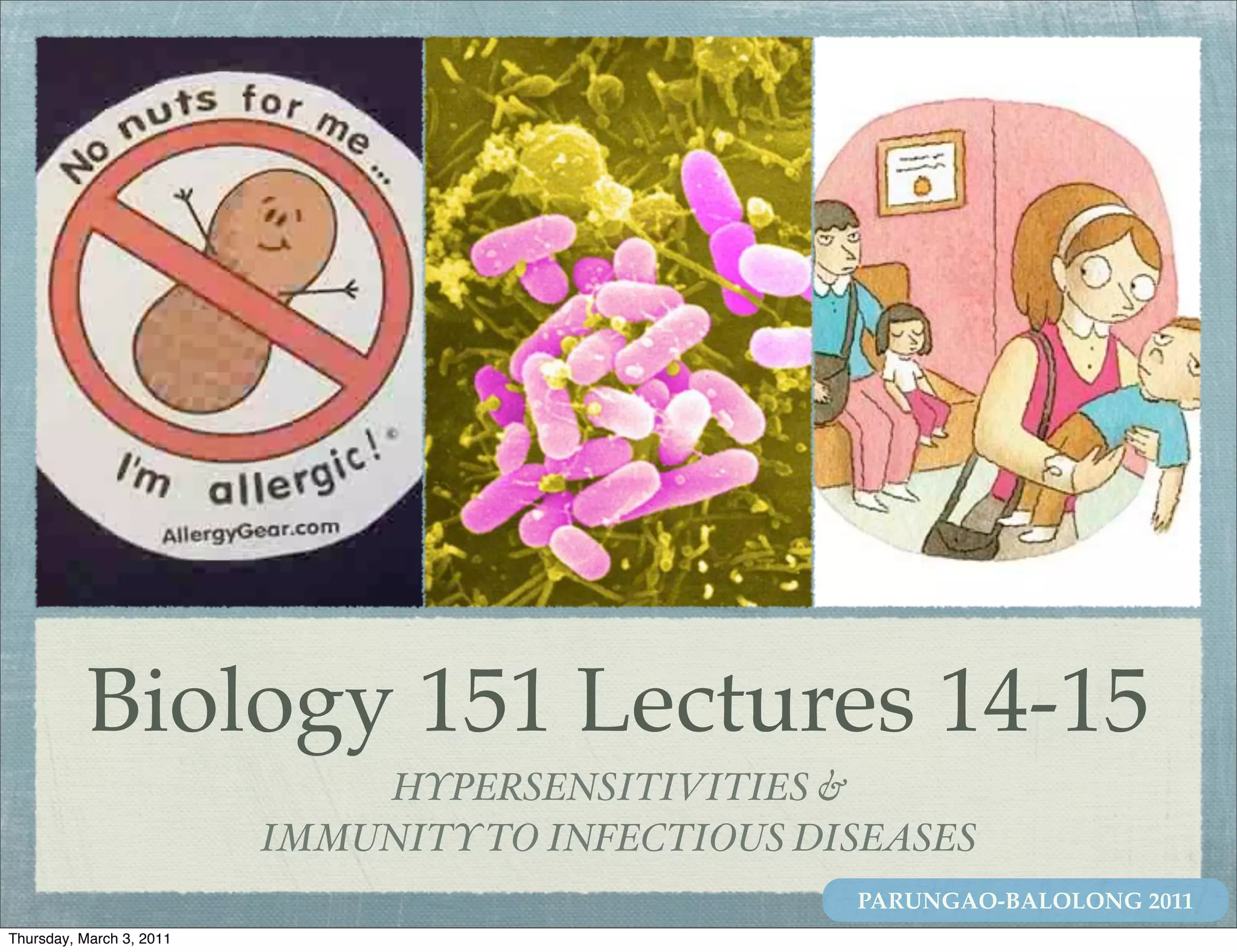
Biology 151 Lectures 14-15
                              HYPERSENSITIVITIES &
                          IMMUNITY TO INFECTIOUS DISEASES
                                                   PARUNGAO-BALOLONG 2011
Thursday, March 3, 2011
WHAT YOU NEED TO
        KNOW...

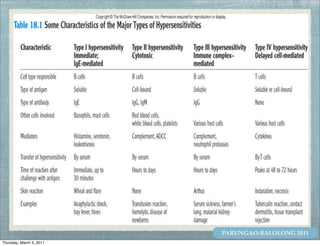
              4 TYPES OF HYPERSENSITIVITIES

              VIRAL INFECTIONS

              BACTERIAL INFECTIONS

              PROTOZOANS AND HELMINTHS (PARASITIC)

              EMERGING AND RE-EMERGING INFECTIONS


                                              PARUNGAO-BALOLONG 2011
Thursday, March 3, 2011
HYPERSENSITIVITIES
              RECALL!

                    Inflammatory response - local,
                    eliminates antigen without
                    extensively damaging the host’s
                    tissue

              Hypersensitivity - immune &
              inflammatory responses that are
              harmful to the host (von Pirquet,
              1906)
                                                      PARUNGAO-BALOLONG 2011
Thursday, March 3, 2011
PARUNGAO-BALOLONG 2011
Thursday, March 3, 2011
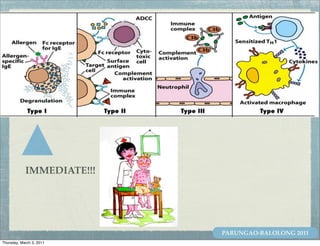
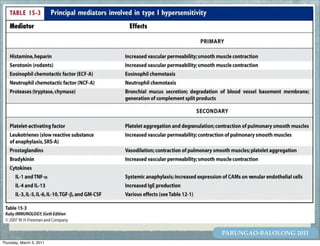
IMMEDIATE!!!


                           PARUNGAO-BALOLONG 2011
Thursday, March 3, 2011
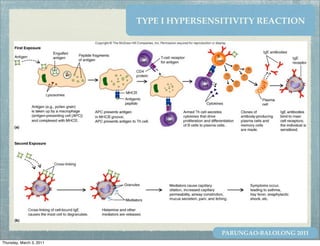
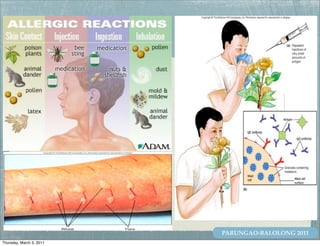
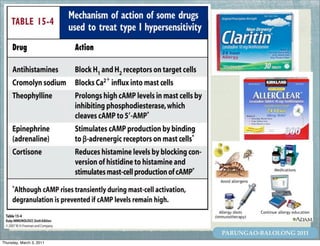
TYPE I HYPERSENSITIVITY REACTION


                                          PARUNGAO-BALOLONG 2011
Thursday, March 3, 2011
PARUNGAO-BALOLONG 2011
Thursday, March 3, 2011
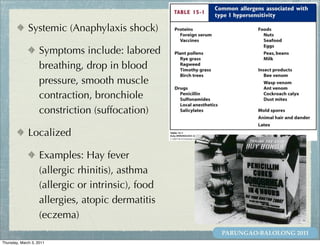
Systemic (Anaphylaxis shock)

                    Symptoms include: labored
                    breathing, drop in blood
                    pressure, smooth muscle
                    contraction, bronchiole
                    constriction (suffocation)

              Localized

                    Examples: Hay fever
                    (allergic rhinitis), asthma
                    (allergic or intrinsic), food
                    allergies, atopic dermatitis
                    (eczema)
                                                    PARUNGAO-BALOLONG 2011
Thursday, March 3, 2011
PARUNGAO-BALOLONG 2011
Thursday, March 3, 2011
PARUNGAO-BALOLONG 2011
Thursday, March 3, 2011
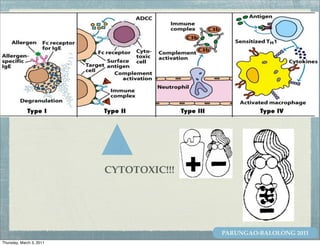
CYTOTOXIC!!!


                                         PARUNGAO-BALOLONG 2011
Thursday, March 3, 2011
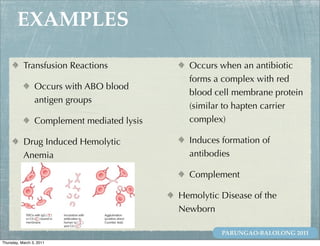
EXAMPLES

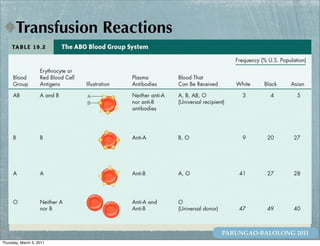
           Transfusion Reactions               Occurs when an antibiotic
                                               forms a complex with red
                 Occurs with ABO blood
                                               blood cell membrane protein
                 antigen groups
                                               (similar to hapten carrier
                 Complement mediated lysis     complex)

           Drug Induced Hemolytic              Induces formation of
           Anemia                              antibodies

                                               Complement

                                             Hemolytic Disease of the
                                             Newborn

                                                       PARUNGAO-BALOLONG 2011
Thursday, March 3, 2011
Transfusion Reactions


                               PARUNGAO-BALOLONG 2011
Thursday, March 3, 2011
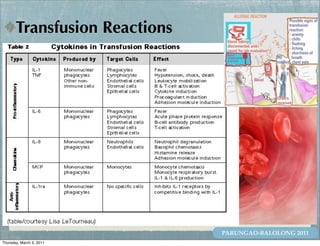
Transfusion Reactions


                               PARUNGAO-BALOLONG 2011
Thursday, March 3, 2011
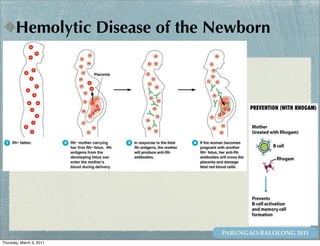
Hemolytic Disease of the Newborn


                                PARUNGAO-BALOLONG 2011
Thursday, March 3, 2011
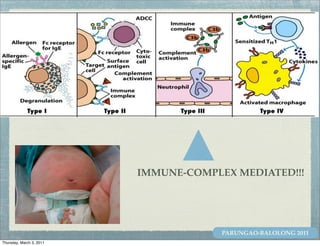
IMMUNE-COMPLEX MEDIATED!!!


                                       PARUNGAO-BALOLONG 2011
Thursday, March 3, 2011
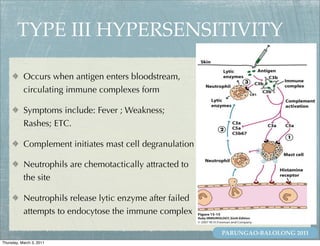
TYPE III HYPERSENSITIVITY

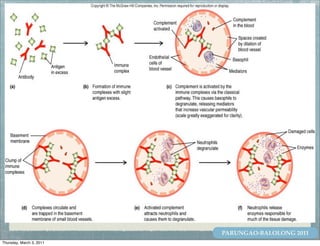
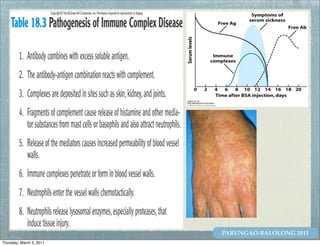
           Occurs when antigen enters bloodstream,
           circulating immune complexes form

           Symptoms include: Fever ; Weakness;
           Rashes; ETC.

           Complement initiates mast cell degranulation

           Neutrophils are chemotactically attracted to
           the site

           Neutrophils release lytic enzyme after failed
           attempts to endocytose the immune complex

                                                           PARUNGAO-BALOLONG 2011
Thursday, March 3, 2011
PARUNGAO-BALOLONG 2011
Thursday, March 3, 2011
PARUNGAO-BALOLONG 2011
Thursday, March 3, 2011
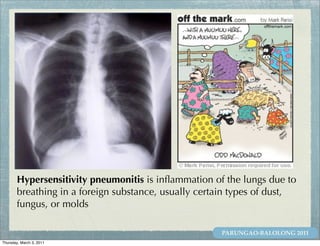
Hypersensitivity pneumonitis is inflammation of the lungs due to
       breathing in a foreign substance, usually certain types of dust,
       fungus, or molds

                                                     PARUNGAO-BALOLONG 2011
Thursday, March 3, 2011
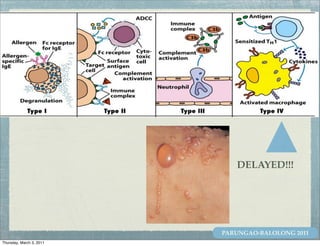
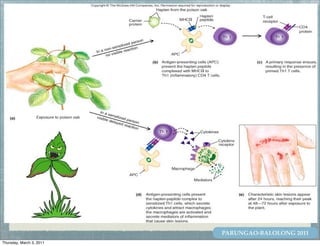
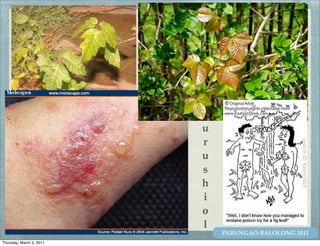
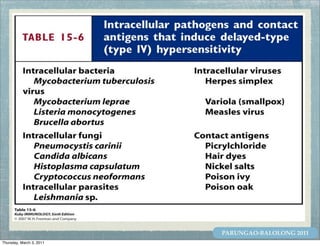
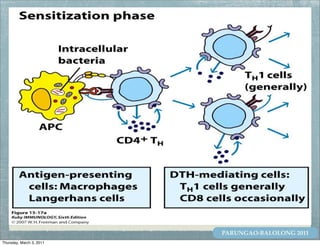
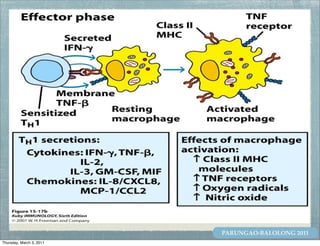
DELAYED!!!


                          PARUNGAO-BALOLONG 2011
Thursday, March 3, 2011
PARUNGAO-BALOLONG 2011
Thursday, March 3, 2011
u
                          r
                          u
                          s
                          h
                          i
                          o
                          l
                              PARUNGAO-BALOLONG 2011
Thursday, March 3, 2011
PARUNGAO-BALOLONG 2011
Thursday, March 3, 2011
PARUNGAO-BALOLONG 2011
Thursday, March 3, 2011
PARUNGAO-BALOLONG 2011
Thursday, March 3, 2011
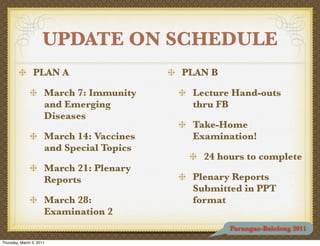
UPDATE ON SCHEDULE
                PLAN A                     PLAN B

                      March 7: Immunity     Lecture Hand-outs
                      and Emerging          thru FB
                      Diseases
                                            Take-Home
                      March 14: Vaccines    Examination!
                      and Special Topics
                                              24 hours to complete
                      March 21: Plenary
                      Reports               Plenary Reports
                                            Submitted in PPT
                      March 28:             format
                      Examination 2
                                                    Parungao-Balolong 2011
Thursday, March 3, 2011
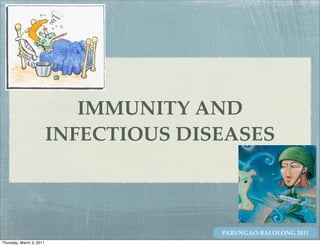
IMMUNITY AND
                          INFECTIOUS DISEASES


                                        PARUNGAO-BALOLONG 2011
Thursday, March 3, 2011
OUR FOCUS...


              Overview: Innate and Adaptive Immunity as
              Response to Infectious Diseases

              Viral, Bacterial, Fungal, Parasitic/
              Helminths/Protozoa

              Emerging & Re-emerging Infections


Thursday, March 3, 2011
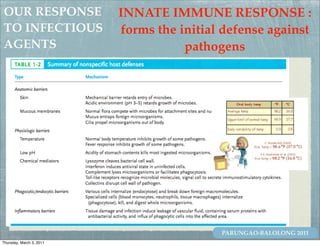
OUR RESPONSE              INNATE IMMUNE RESPONSE :
TO INFECTIOUS             forms the initial defense against
AGENTS                               pathogens


                                           PARUNGAO-BALOLONG 2011
Thursday, March 3, 2011
OUR RESPONSE
TO INFECTIOUS
AGENTS

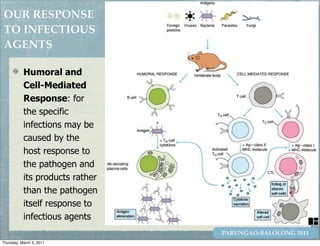
           Humoral and
           Cell-Mediated
           Response: for
           the specific
           infections may be
           caused by the
           host response to
           the pathogen and
           its products rather
           than the pathogen
           itself response to
           infectious agents
                                 PARUNGAO-BALOLONG 2011
Thursday, March 3, 2011
OUR RESPONSE TO
INFECTIOUS AGENTS


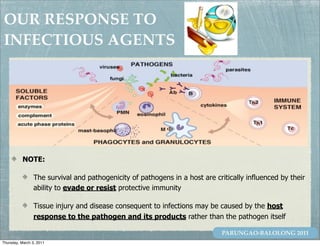
           NOTE:

                 The survival and pathogenicity of pathogens in a host are critically influenced by their
                 ability to evade or resist protective immunity

                 Tissue injury and disease consequent to infections may be caused by the host
                 response to the pathogen and its products rather than the pathogen itself

                                                                              PARUNGAO-BALOLONG 2011
Thursday, March 3, 2011
IMMUNITY AND VIRAL
                         INFECTIONS


                                   PARUNGAO-BALOLONG 2011
Thursday, March 3, 2011
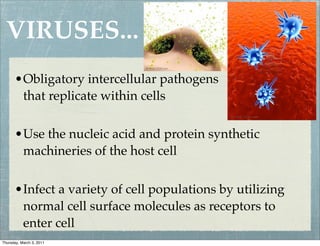
VIRUSES...
      •Obligatory intercellular pathogens
       that replicate within cells

      •Use the nucleic acid and protein synthetic
       machineries of the host cell


      •Infect a variety of cell populations by utilizing
       normal cell surface molecules as receptors to
       enter cell
Thursday, March 3, 2011
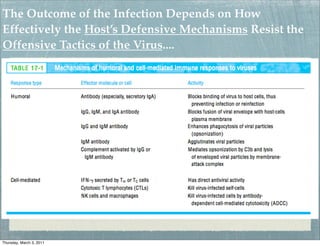
The Outcome of the Infection Depends on How
Effectively the Host’s Defensive Mechanisms Resist the
Offensive Tactics of the Virus....


Thursday, March 3, 2011
VIRUS NEUTRALIZATION :
ANTIBODIES
           Antibodies: effective in protecting against localized infection (site of viral entry)

           SURFACE RECEPTOR MOLECULES: enable them to initiate infection = binding to
           specific host-cell membrane molecules

           EXAMPLES:

                 Influenza: binds to sialic acid residues in cell membrane glycoproteins and
                 glycolipids

                 Rhinovirus: binds to intercellular adhesion molecules (ICAMs)

                 Epstein-Barr virus: binds to type 2 complement receptors on B cells

           NOTE: If antibody to the viral receptor is produced, it can block infection altogether
           by preventing the binding of viral particles to host cells

                                                                           PARUNGAO-BALOLONG 2011
Thursday, March 3, 2011
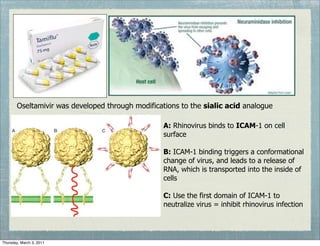
Oseltamivir was developed through modifications to the sialic acid analogue

                                                  A: Rhinovirus binds to ICAM-1 on cell
                                                  surface

                                                  B: ICAM-1 binding triggers a conformational
                                                  change of virus, and leads to a release of
                                                  RNA, which is transported into the inside of
                                                  cells

                                                  C: Use the first domain of ICAM-1 to
                                                  neutralize virus = inhibit rhinovirus infection


Thursday, March 3, 2011
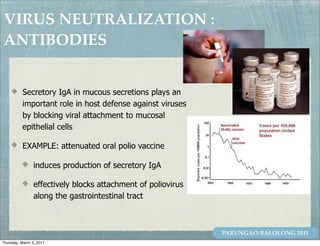
VIRUS NEUTRALIZATION :
ANTIBODIES


           Secretory IgA in mucous secretions plays an
           important role in host defense against viruses
           by blocking viral attachment to mucosal
           epithelial cells

           EXAMPLE: attenuated oral polio vaccine

                 induces production of secretory IgA

                 effectively blocks attachment of poliovirus
                 along the gastrointestinal tract


                                                               PARUNGAO-BALOLONG 2011
Thursday, March 3, 2011
CELL-MEDIATED
  IMMUNITY: VIRAL
  CONTROL & CLEARANCE
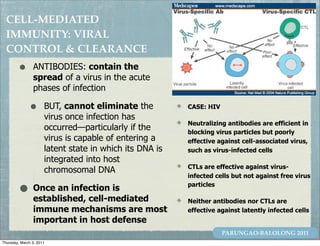
         •      ANTIBODIES: contain the
                spread of a virus in the acute
                phases of infection

               •      BUT, cannot eliminate the          CASE: HIV
                      virus once infection has
                                                         Neutralizing antibodies are efficient in
                      occurred—particularly if the       blocking virus particles but poorly
                      virus is capable of entering a     effective against cell-associated virus,
                      latent state in which its DNA is   such as virus-infected cells
                      integrated into host
                                                         CTLs are effective against virus-
                      chromosomal DNA
                                                         infected cells but not against free virus

         •      Once an infection is                     particles

                established, cell-mediated               Neither antibodies nor CTLs are
                immune mechanisms are most               effective against latently infected cells
                important in host defense
                                                                     PARUNGAO-BALOLONG 2011
Thursday, March 3, 2011
CELL-MEDIATED IMMUNITY: VIRAL
  CONTROL & CLEARANCE
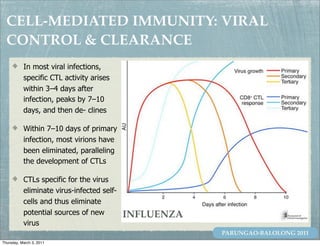
           In most viral infections,
           specific CTL activity arises
           within 3–4 days after
           infection, peaks by 7–10
           days, and then de- clines

           Within 7–10 days of primary
           infection, most virions have
           been eliminated, paralleling
           the development of CTLs

           CTLs specific for the virus
           eliminate virus-infected self-
           cells and thus eliminate
           potential sources of new         INFLUENZA
           virus
                                                        PARUNGAO-BALOLONG 2011
Thursday, March 3, 2011
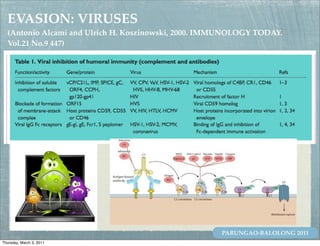
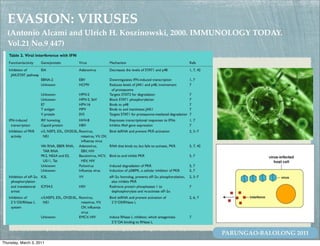
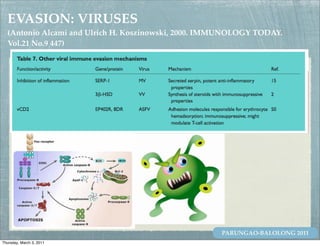
EVASION: VIRUSES
  (Antonio Alcami and Ulrich H. Koszinowski, 2000. IMMUNOLOGY TODAY.
  Vol.21 No.9 447)


                                                     PARUNGAO-BALOLONG 2011
Thursday, March 3, 2011
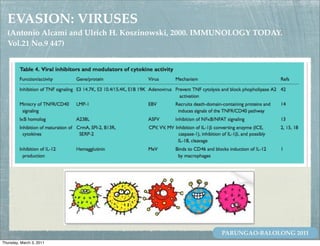
EVASION: VIRUSES
  (Antonio Alcami and Ulrich H. Koszinowski, 2000. IMMUNOLOGY TODAY.
  Vol.21 No.9 447)


                                                     PARUNGAO-BALOLONG 2011
Thursday, March 3, 2011
EVASION: VIRUSES
  (Antonio Alcami and Ulrich H. Koszinowski, 2000. IMMUNOLOGY TODAY.
  Vol.21 No.9 447)


                                                     PARUNGAO-BALOLONG 2011
Thursday, March 3, 2011
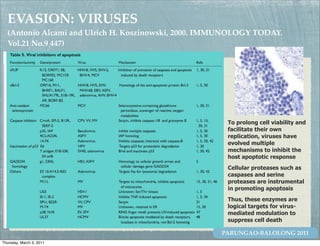
EVASION: VIRUSES
  (Antonio Alcami and Ulrich H. Koszinowski, 2000. IMMUNOLOGY TODAY.
  Vol.21 No.9 447)


                                                      To prolong cell viability and
                                                      facilitate their own
                                                      replication, viruses have
                                                      evolved multiple
                                                      mechanisms to inhibit the
                                                      host apoptotic response
                                                      Cellular proteases such as
                                                      caspases and serine
                                                      proteases are instrumental
                                                      in promoting apoptosis
                                                      Thus, these enzymes are
                                                      logical targets for virus-
                                                      mediated modulation to
                                                      suppress cell death

                                                     PARUNGAO-BALOLONG 2011
Thursday, March 3, 2011
EVASION: VIRUSES
  (Antonio Alcami and Ulrich H. Koszinowski, 2000. IMMUNOLOGY TODAY.
  Vol.21 No.9 447)


                                                     PARUNGAO-BALOLONG 2011
Thursday, March 3, 2011
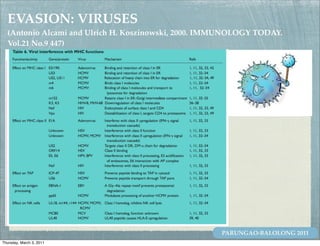
EVASION: VIRUSES
  (Antonio Alcami and Ulrich H. Koszinowski, 2000. IMMUNOLOGY TODAY.
  Vol.21 No.9 447)


                                                     PARUNGAO-BALOLONG 2011
Thursday, March 3, 2011
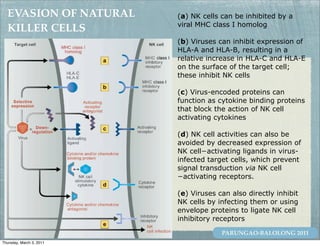
EVASION OF NATURAL      (a) NK cells can be inhibited by a
                          viral MHC class I homolog
  KILLER CELLS
                          (b) Viruses can inhibit expression of
                          HLA-A and HLA-B, resulting in a
                          relative increase in HLA-C and HLA-E
                          on the surface of the target cell;
                          these inhibit NK cells

                          (c) Virus-encoded proteins can
                          function as cytokine binding proteins
                          that block the action of NK cell
                          activating cytokines

                          (d) NK cell activities can also be
                          avoided by decreased expression of
                          NK cell−activating ligands in virus-
                          infected target cells, which prevent
                          signal transduction via NK cell
                          −activating receptors.

                          (e) Viruses can also directly inhibit
                          NK cells by infecting them or using
                          envelope proteins to ligate NK cell
                          inhibitory receptors

                                       PARUNGAO-BALOLONG 2011
Thursday, March 3, 2011
NEXT MEETING:
                  SPECIAL IMMUNOLOGY CASES
                     INFLUENZA & HIV etc......


                                      PARUNGAO-BALOLONG 2011
Thursday, March 3, 2011
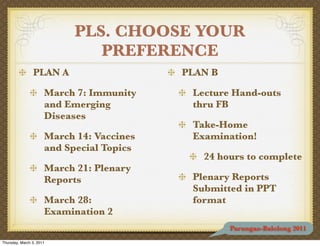
PLS. CHOOSE YOUR
                               PREFERENCE
                PLAN A                     PLAN B

                      March 7: Immunity     Lecture Hand-outs
                      and Emerging          thru FB
                      Diseases
                                            Take-Home
                      March 14: Vaccines    Examination!
                      and Special Topics
                                              24 hours to complete
                      March 21: Plenary
                      Reports               Plenary Reports
                                            Submitted in PPT
                      March 28:             format
                      Examination 2
                                                    Parungao-Balolong 2011
Thursday, March 3, 2011

Bio 151 lec 14 15 h & iid

  • 1.
    Biology 151 Lectures14-15 HYPERSENSITIVITIES & IMMUNITY TO INFECTIOUS DISEASES PARUNGAO-BALOLONG 2011 Thursday, March 3, 2011
  • 2.
    WHAT YOU NEEDTO KNOW... 4 TYPES OF HYPERSENSITIVITIES VIRAL INFECTIONS BACTERIAL INFECTIONS PROTOZOANS AND HELMINTHS (PARASITIC) EMERGING AND RE-EMERGING INFECTIONS PARUNGAO-BALOLONG 2011 Thursday, March 3, 2011
  • 3.
    HYPERSENSITIVITIES RECALL! Inflammatory response - local, eliminates antigen without extensively damaging the host’s tissue Hypersensitivity - immune & inflammatory responses that are harmful to the host (von Pirquet, 1906) PARUNGAO-BALOLONG 2011 Thursday, March 3, 2011
  • 4.
  • 5.
    IMMEDIATE!!! PARUNGAO-BALOLONG 2011 Thursday, March 3, 2011
  • 6.
    TYPE I HYPERSENSITIVITYREACTION PARUNGAO-BALOLONG 2011 Thursday, March 3, 2011
  • 7.
  • 8.
    Systemic (Anaphylaxis shock) Symptoms include: labored breathing, drop in blood pressure, smooth muscle contraction, bronchiole constriction (suffocation) Localized Examples: Hay fever (allergic rhinitis), asthma (allergic or intrinsic), food allergies, atopic dermatitis (eczema) PARUNGAO-BALOLONG 2011 Thursday, March 3, 2011
  • 9.
  • 10.
  • 11.
    CYTOTOXIC!!! PARUNGAO-BALOLONG 2011 Thursday, March 3, 2011
  • 12.
    EXAMPLES Transfusion Reactions Occurs when an antibiotic forms a complex with red Occurs with ABO blood blood cell membrane protein antigen groups (similar to hapten carrier Complement mediated lysis complex) Drug Induced Hemolytic Induces formation of Anemia antibodies Complement Hemolytic Disease of the Newborn PARUNGAO-BALOLONG 2011 Thursday, March 3, 2011
  • 13.
    Transfusion Reactions PARUNGAO-BALOLONG 2011 Thursday, March 3, 2011
  • 14.
    Transfusion Reactions PARUNGAO-BALOLONG 2011 Thursday, March 3, 2011
  • 15.
    Hemolytic Disease ofthe Newborn PARUNGAO-BALOLONG 2011 Thursday, March 3, 2011
  • 16.
    IMMUNE-COMPLEX MEDIATED!!! PARUNGAO-BALOLONG 2011 Thursday, March 3, 2011
  • 17.
    TYPE III HYPERSENSITIVITY Occurs when antigen enters bloodstream, circulating immune complexes form Symptoms include: Fever ; Weakness; Rashes; ETC. Complement initiates mast cell degranulation Neutrophils are chemotactically attracted to the site Neutrophils release lytic enzyme after failed attempts to endocytose the immune complex PARUNGAO-BALOLONG 2011 Thursday, March 3, 2011
  • 18.
  • 19.
  • 20.
    Hypersensitivity pneumonitis isinflammation of the lungs due to breathing in a foreign substance, usually certain types of dust, fungus, or molds PARUNGAO-BALOLONG 2011 Thursday, March 3, 2011
  • 21.
    DELAYED!!! PARUNGAO-BALOLONG 2011 Thursday, March 3, 2011
  • 22.
  • 23.
    u r u s h i o l PARUNGAO-BALOLONG 2011 Thursday, March 3, 2011
  • 24.
  • 25.
  • 26.
  • 27.
    UPDATE ON SCHEDULE PLAN A PLAN B March 7: Immunity Lecture Hand-outs and Emerging thru FB Diseases Take-Home March 14: Vaccines Examination! and Special Topics 24 hours to complete March 21: Plenary Reports Plenary Reports Submitted in PPT March 28: format Examination 2 Parungao-Balolong 2011 Thursday, March 3, 2011
  • 28.
    IMMUNITY AND INFECTIOUS DISEASES PARUNGAO-BALOLONG 2011 Thursday, March 3, 2011
  • 29.
    OUR FOCUS... Overview: Innate and Adaptive Immunity as Response to Infectious Diseases Viral, Bacterial, Fungal, Parasitic/ Helminths/Protozoa Emerging & Re-emerging Infections Thursday, March 3, 2011
  • 30.
    OUR RESPONSE INNATE IMMUNE RESPONSE : TO INFECTIOUS forms the initial defense against AGENTS pathogens PARUNGAO-BALOLONG 2011 Thursday, March 3, 2011
  • 31.
    OUR RESPONSE TO INFECTIOUS AGENTS Humoral and Cell-Mediated Response: for the specific infections may be caused by the host response to the pathogen and its products rather than the pathogen itself response to infectious agents PARUNGAO-BALOLONG 2011 Thursday, March 3, 2011
  • 32.
    OUR RESPONSE TO INFECTIOUSAGENTS NOTE: The survival and pathogenicity of pathogens in a host are critically influenced by their ability to evade or resist protective immunity Tissue injury and disease consequent to infections may be caused by the host response to the pathogen and its products rather than the pathogen itself PARUNGAO-BALOLONG 2011 Thursday, March 3, 2011
  • 33.
    IMMUNITY AND VIRAL INFECTIONS PARUNGAO-BALOLONG 2011 Thursday, March 3, 2011
  • 34.
    VIRUSES... •Obligatory intercellular pathogens that replicate within cells •Use the nucleic acid and protein synthetic machineries of the host cell •Infect a variety of cell populations by utilizing normal cell surface molecules as receptors to enter cell Thursday, March 3, 2011
  • 35.
    The Outcome ofthe Infection Depends on How Effectively the Host’s Defensive Mechanisms Resist the Offensive Tactics of the Virus.... Thursday, March 3, 2011
  • 36.
    VIRUS NEUTRALIZATION : ANTIBODIES Antibodies: effective in protecting against localized infection (site of viral entry) SURFACE RECEPTOR MOLECULES: enable them to initiate infection = binding to specific host-cell membrane molecules EXAMPLES: Influenza: binds to sialic acid residues in cell membrane glycoproteins and glycolipids Rhinovirus: binds to intercellular adhesion molecules (ICAMs) Epstein-Barr virus: binds to type 2 complement receptors on B cells NOTE: If antibody to the viral receptor is produced, it can block infection altogether by preventing the binding of viral particles to host cells PARUNGAO-BALOLONG 2011 Thursday, March 3, 2011
  • 37.
    Oseltamivir was developedthrough modifications to the sialic acid analogue A: Rhinovirus binds to ICAM-1 on cell surface B: ICAM-1 binding triggers a conformational change of virus, and leads to a release of RNA, which is transported into the inside of cells C: Use the first domain of ICAM-1 to neutralize virus = inhibit rhinovirus infection Thursday, March 3, 2011
  • 38.
    VIRUS NEUTRALIZATION : ANTIBODIES Secretory IgA in mucous secretions plays an important role in host defense against viruses by blocking viral attachment to mucosal epithelial cells EXAMPLE: attenuated oral polio vaccine induces production of secretory IgA effectively blocks attachment of poliovirus along the gastrointestinal tract PARUNGAO-BALOLONG 2011 Thursday, March 3, 2011
  • 39.
    CELL-MEDIATED IMMUNITY:VIRAL CONTROL & CLEARANCE • ANTIBODIES: contain the spread of a virus in the acute phases of infection • BUT, cannot eliminate the CASE: HIV virus once infection has Neutralizing antibodies are efficient in occurred—particularly if the blocking virus particles but poorly virus is capable of entering a effective against cell-associated virus, latent state in which its DNA is such as virus-infected cells integrated into host CTLs are effective against virus- chromosomal DNA infected cells but not against free virus • Once an infection is particles established, cell-mediated Neither antibodies nor CTLs are immune mechanisms are most effective against latently infected cells important in host defense PARUNGAO-BALOLONG 2011 Thursday, March 3, 2011
  • 40.
    CELL-MEDIATED IMMUNITY: VIRAL CONTROL & CLEARANCE In most viral infections, specific CTL activity arises within 3–4 days after infection, peaks by 7–10 days, and then de- clines Within 7–10 days of primary infection, most virions have been eliminated, paralleling the development of CTLs CTLs specific for the virus eliminate virus-infected self- cells and thus eliminate potential sources of new INFLUENZA virus PARUNGAO-BALOLONG 2011 Thursday, March 3, 2011
  • 41.
    EVASION: VIRUSES (Antonio Alcami and Ulrich H. Koszinowski, 2000. IMMUNOLOGY TODAY. Vol.21 No.9 447) PARUNGAO-BALOLONG 2011 Thursday, March 3, 2011
  • 42.
    EVASION: VIRUSES (Antonio Alcami and Ulrich H. Koszinowski, 2000. IMMUNOLOGY TODAY. Vol.21 No.9 447) PARUNGAO-BALOLONG 2011 Thursday, March 3, 2011
  • 43.
    EVASION: VIRUSES (Antonio Alcami and Ulrich H. Koszinowski, 2000. IMMUNOLOGY TODAY. Vol.21 No.9 447) PARUNGAO-BALOLONG 2011 Thursday, March 3, 2011
  • 44.
    EVASION: VIRUSES (Antonio Alcami and Ulrich H. Koszinowski, 2000. IMMUNOLOGY TODAY. Vol.21 No.9 447) To prolong cell viability and facilitate their own replication, viruses have evolved multiple mechanisms to inhibit the host apoptotic response Cellular proteases such as caspases and serine proteases are instrumental in promoting apoptosis Thus, these enzymes are logical targets for virus- mediated modulation to suppress cell death PARUNGAO-BALOLONG 2011 Thursday, March 3, 2011
  • 45.
    EVASION: VIRUSES (Antonio Alcami and Ulrich H. Koszinowski, 2000. IMMUNOLOGY TODAY. Vol.21 No.9 447) PARUNGAO-BALOLONG 2011 Thursday, March 3, 2011
  • 46.
    EVASION: VIRUSES (Antonio Alcami and Ulrich H. Koszinowski, 2000. IMMUNOLOGY TODAY. Vol.21 No.9 447) PARUNGAO-BALOLONG 2011 Thursday, March 3, 2011
  • 47.
    EVASION OF NATURAL (a) NK cells can be inhibited by a viral MHC class I homolog KILLER CELLS (b) Viruses can inhibit expression of HLA-A and HLA-B, resulting in a relative increase in HLA-C and HLA-E on the surface of the target cell; these inhibit NK cells (c) Virus-encoded proteins can function as cytokine binding proteins that block the action of NK cell activating cytokines (d) NK cell activities can also be avoided by decreased expression of NK cell−activating ligands in virus- infected target cells, which prevent signal transduction via NK cell −activating receptors. (e) Viruses can also directly inhibit NK cells by infecting them or using envelope proteins to ligate NK cell inhibitory receptors PARUNGAO-BALOLONG 2011 Thursday, March 3, 2011
  • 48.
    NEXT MEETING: SPECIAL IMMUNOLOGY CASES INFLUENZA & HIV etc...... PARUNGAO-BALOLONG 2011 Thursday, March 3, 2011
  • 49.
    PLS. CHOOSE YOUR PREFERENCE PLAN A PLAN B March 7: Immunity Lecture Hand-outs and Emerging thru FB Diseases Take-Home March 14: Vaccines Examination! and Special Topics 24 hours to complete March 21: Plenary Reports Plenary Reports Submitted in PPT March 28: format Examination 2 Parungao-Balolong 2011 Thursday, March 3, 2011