Reflections on: Why School? How Education must 
change when learning and information are 
everywhere by: Will Richardson 
Ruth Ann Dapkus 
Professor: Dennis Jablonski 
ED 534 
Summer 2014 
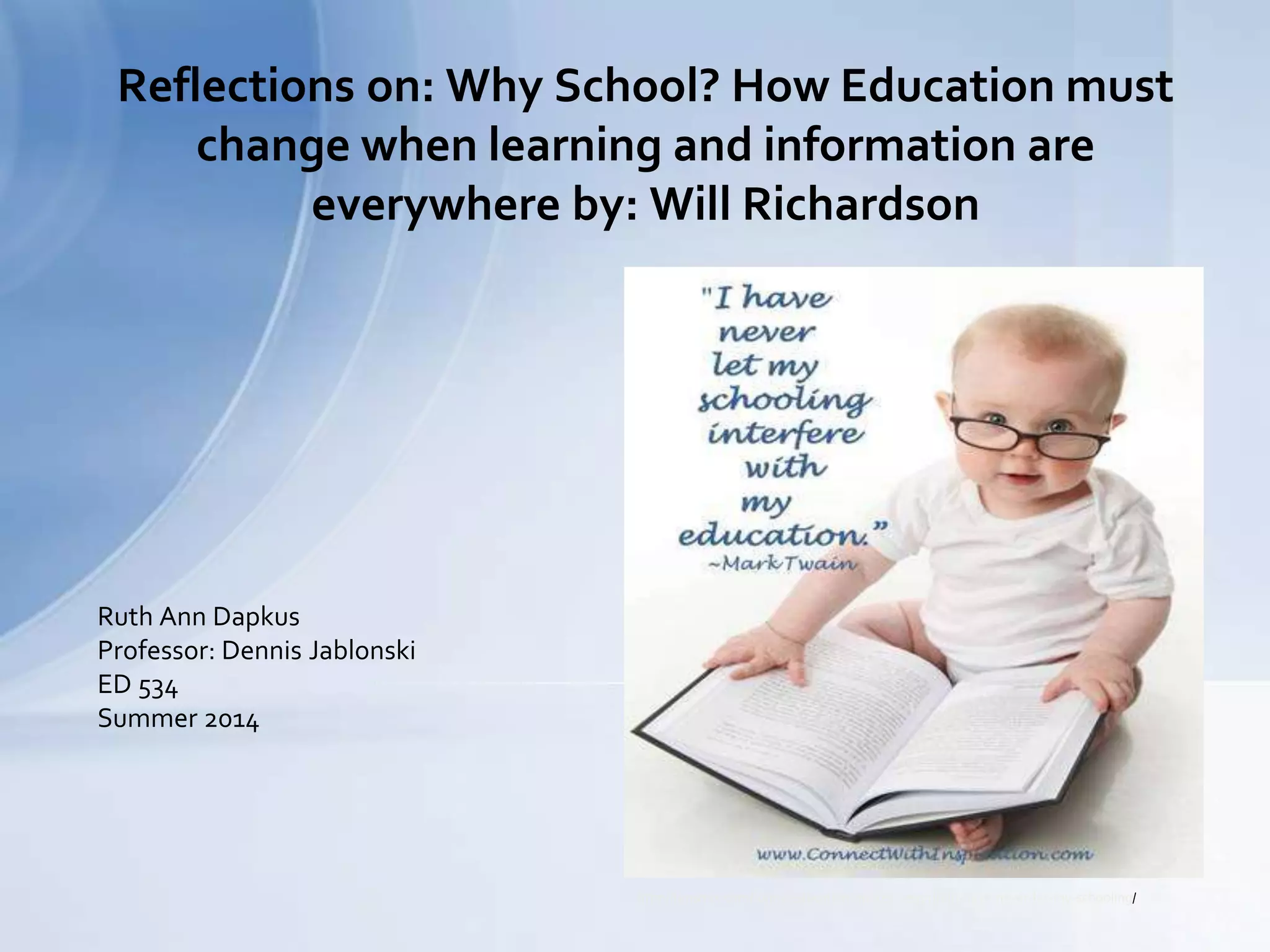
http://funsmix.com/funny-education-quotes-beautiful-i-have-never-let-my-schooling/
Why School? 
• Because schools need to change! 
• In the modern world we need more education NOT 
less… 
• The teaching community “IS” global. Teachers from all 
around the world interact and come together virtually. 
It’s no longer just at the local level. 
• Students also share ideas, perceptions and interact 
online in a global setting. Students need interaction and 
‘critical thinking’ not to just sit by and regurgitate 
information from the “old school” classroom.
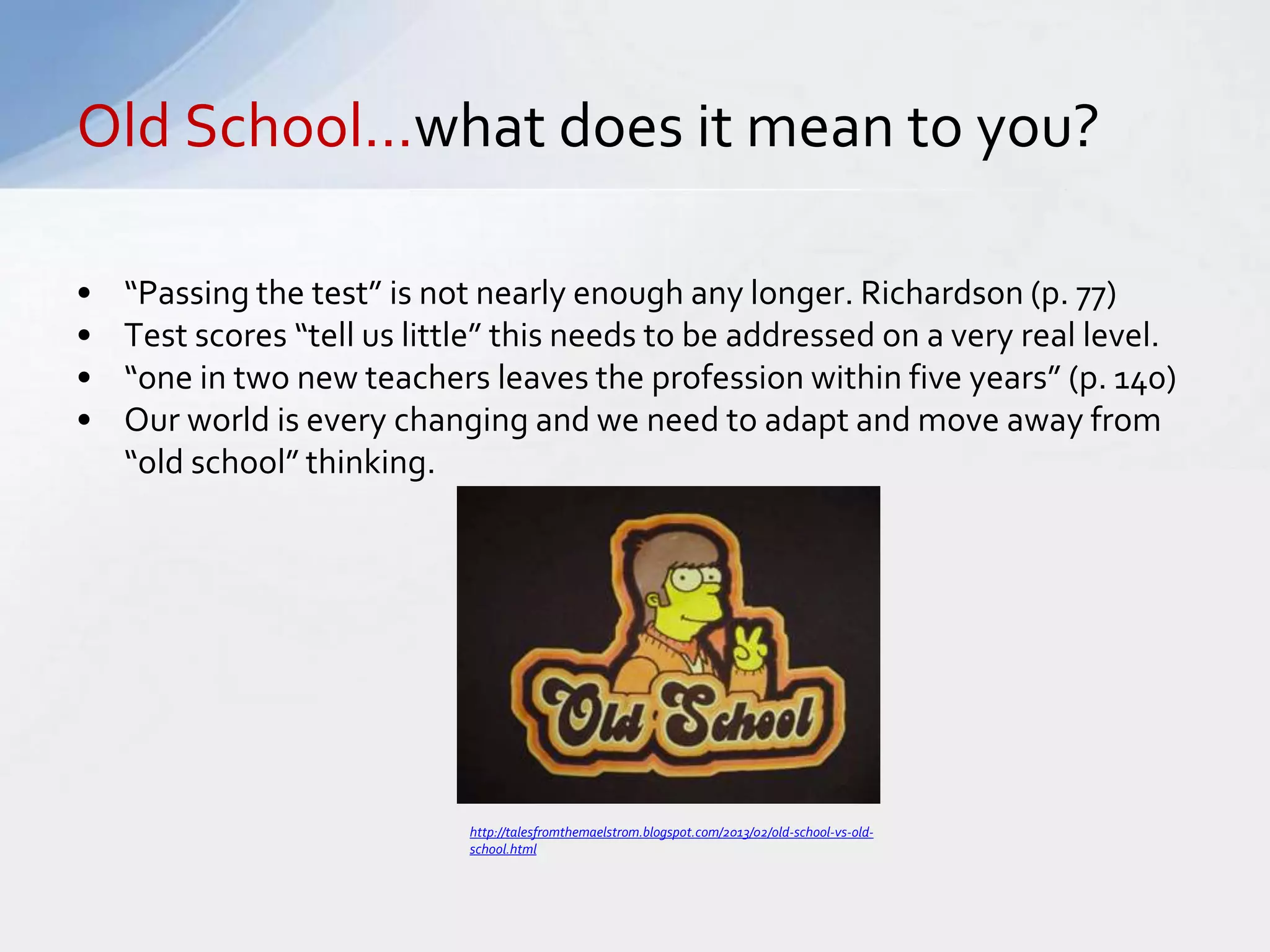
Old School…what does it mean to you? 
• “Passing the test” is not nearly enough any longer. Richardson (p. 77) 
• Test scores “tell us little” this needs to be addressed on a very real level. 
• “one in two new teachers leaves the profession within five years” (p. 140) 
• Our world is every changing and we need to adapt and move away from 
“old school” thinking. 
http://talesfromthemaelstrom.blogspot.com/2013/02/old-school-vs-old-school. 
html
Progressive Learning 
• Learning through project-based lesson plans 
• Interdisciplinary theme based learning 
• What students are interested in helps determine 
what they will study 
• “we live in an age of abundant electronic 
information.” -Richardson
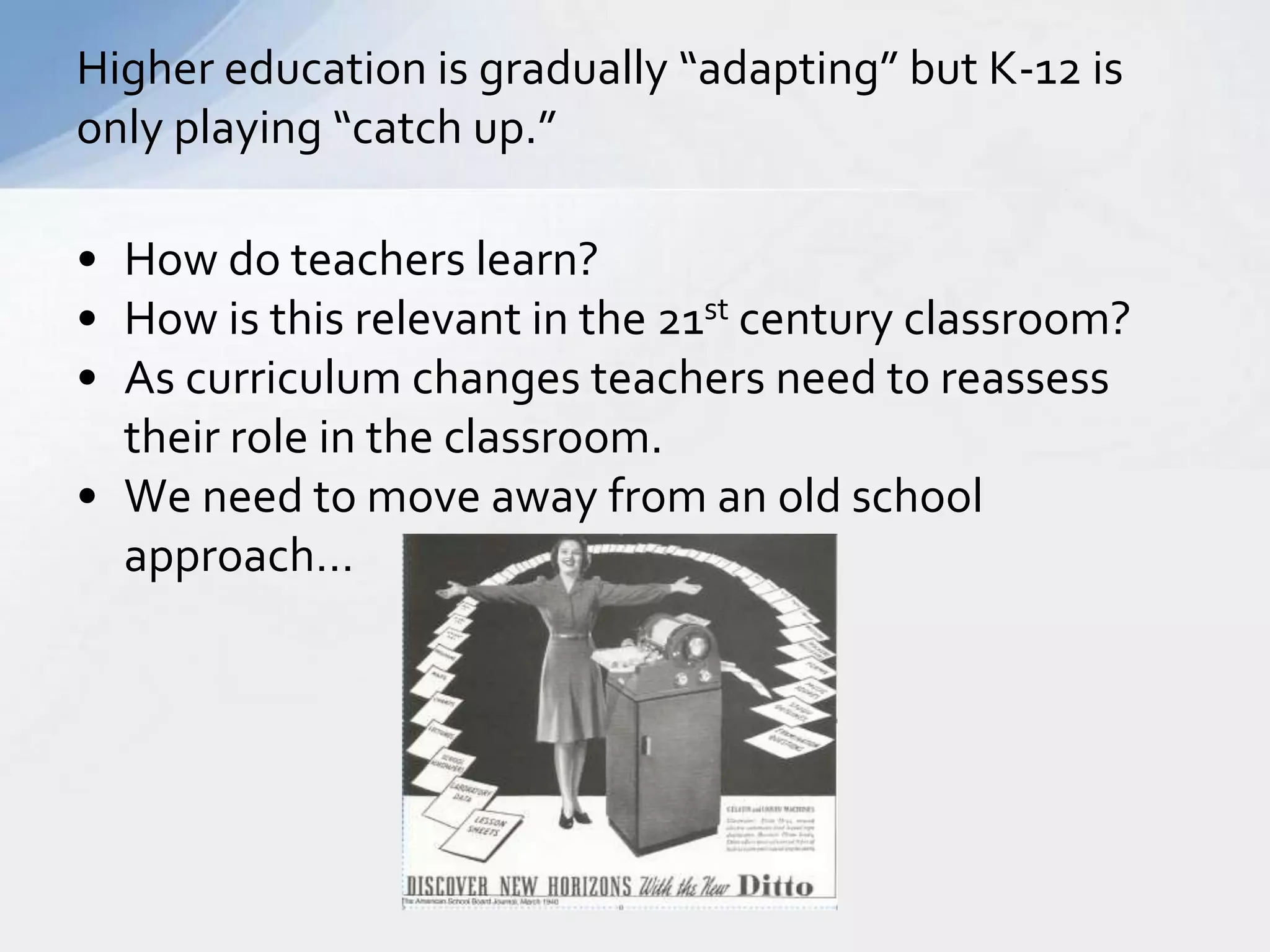
Higher education is gradually “adapting” but K-12 is 
only playing “catch up.” 
• How do teachers learn? 
• How is this relevant in the 21st century classroom? 
• As curriculum changes teachers need to reassess 
their role in the classroom. 
• We need to move away from an old school 
approach…
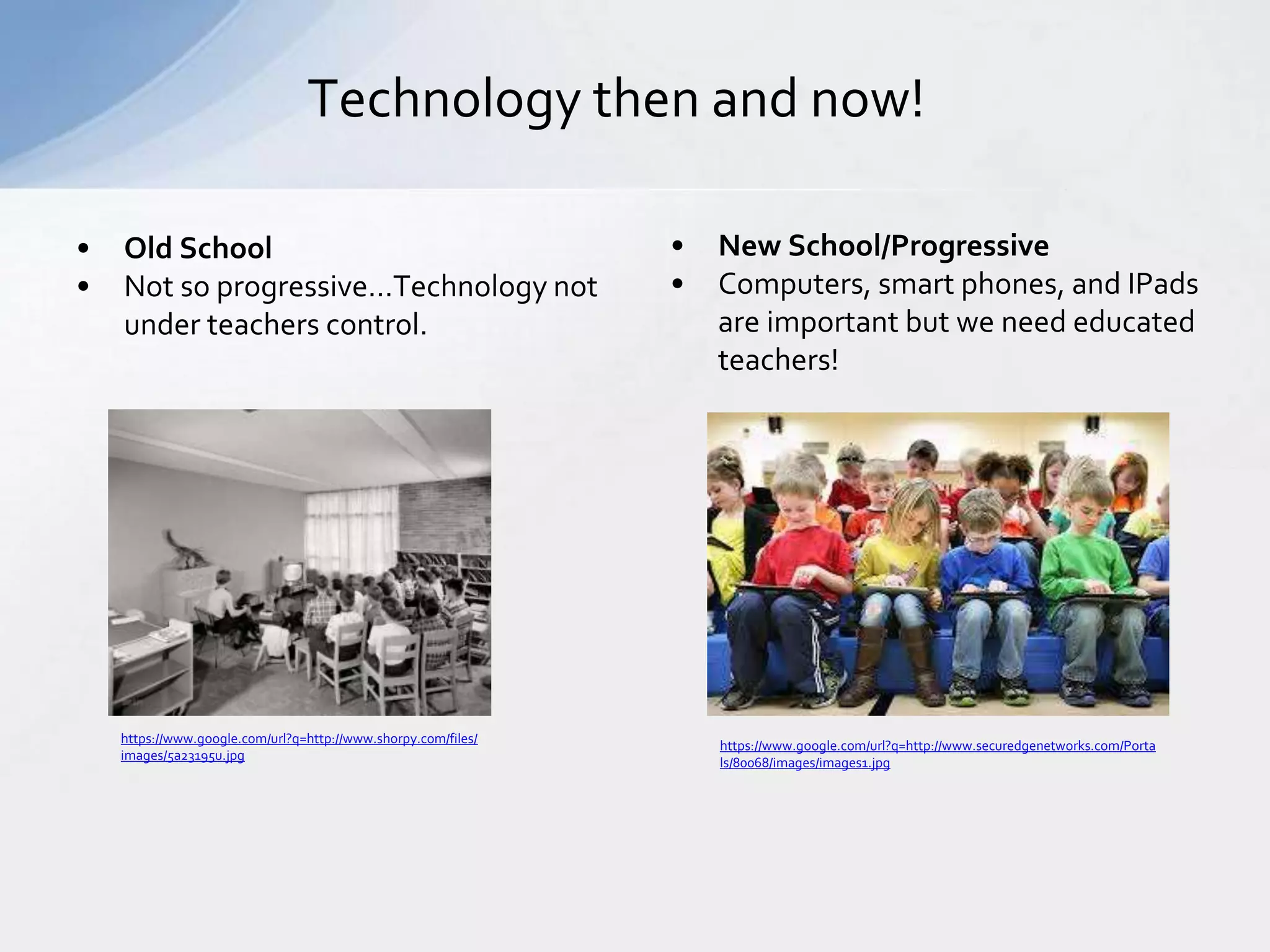
Technology then and now! 
• Old School 
• Not so progressive…Technology not 
under teachers control. 
• New School/Progressive 
• Computers, smart phones, and IPads 
are important but we need educated 
teachers! 
https://www.google.com/url?q=http://www.securedgenetworks.com/Porta 
ls/80068/images/images1.jpg 
https://www.google.com/url?q=http://www.shorpy.com/files/ 
images/5a23195u.jpg
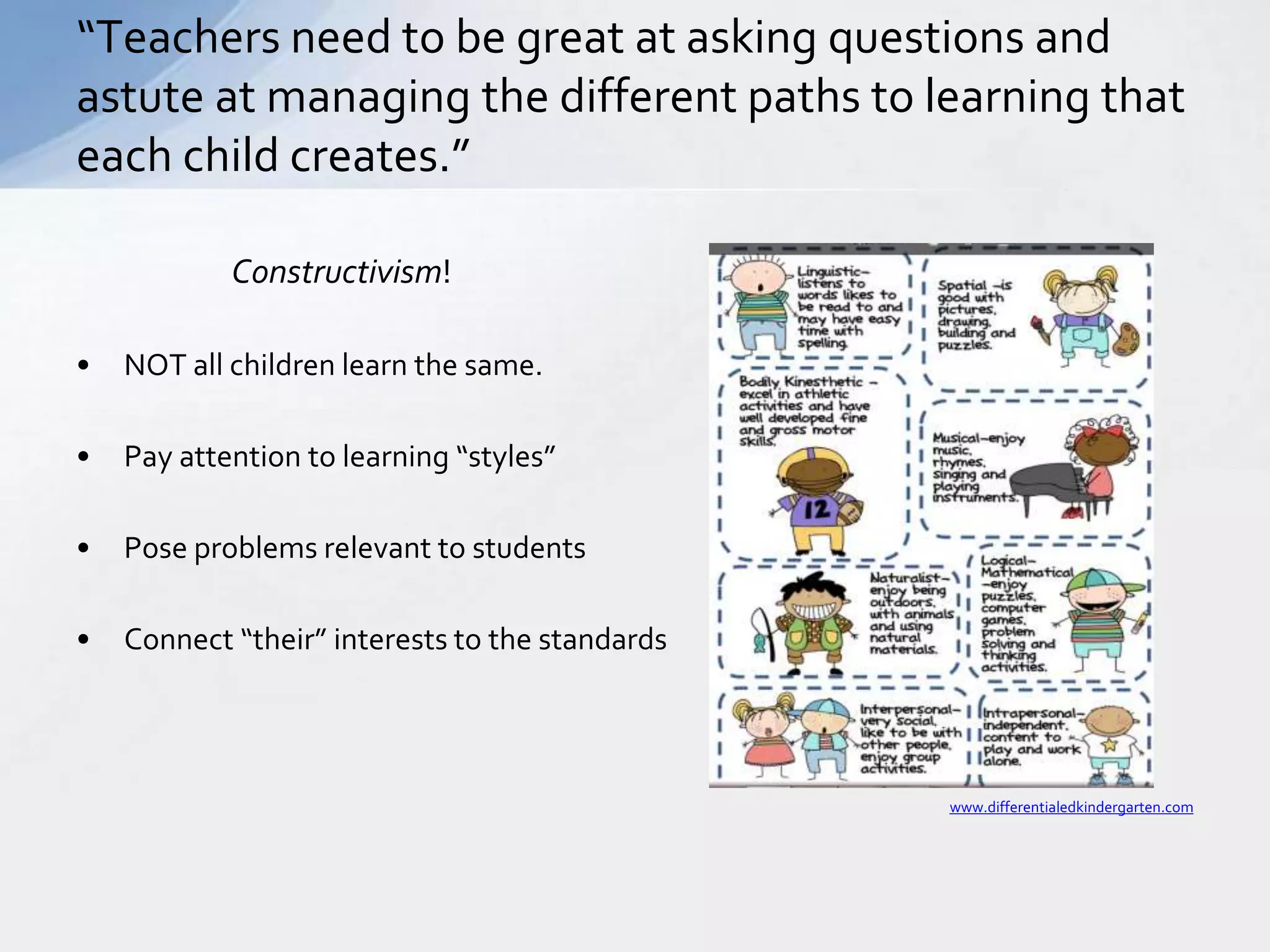
“Teachers need to be great at asking questions and 
astute at managing the different paths to learning that 
each child creates.” 
Constructivism! 
• NOT all children learn the same. 
• Pay attention to learning “styles” 
• Pose problems relevant to students 
• Connect “their” interests to the standards 
www.differentialedkindergarten.com
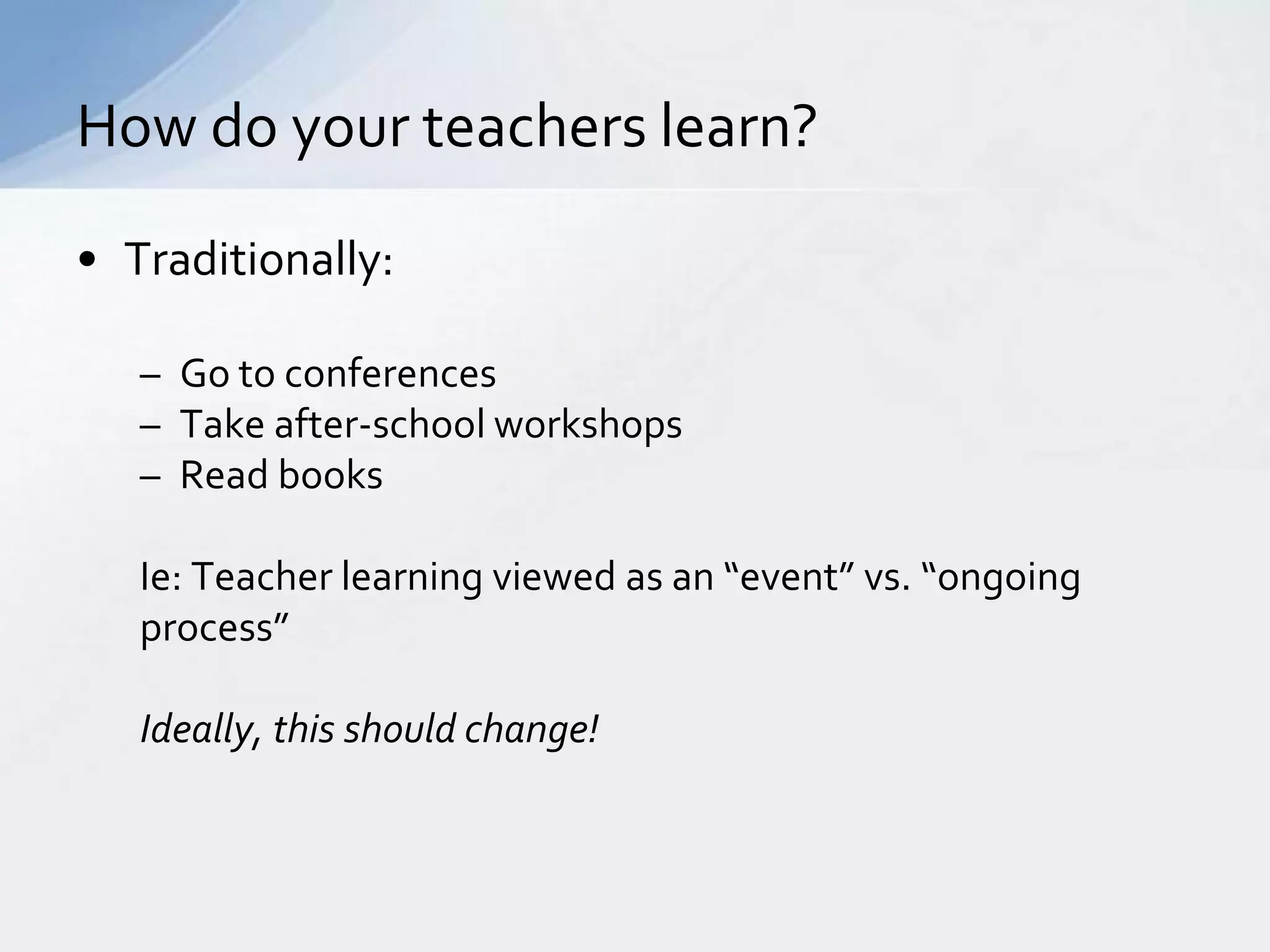
How do your teachers learn? 
• Traditionally: 
– Go to conferences 
– Take after-school workshops 
– Read books 
Ie: Teacher learning viewed as an “event” vs. “ongoing 
process” 
Ideally, this should change!
Smart, dedicated teachers will “personalize” 
curriculum for their students. 
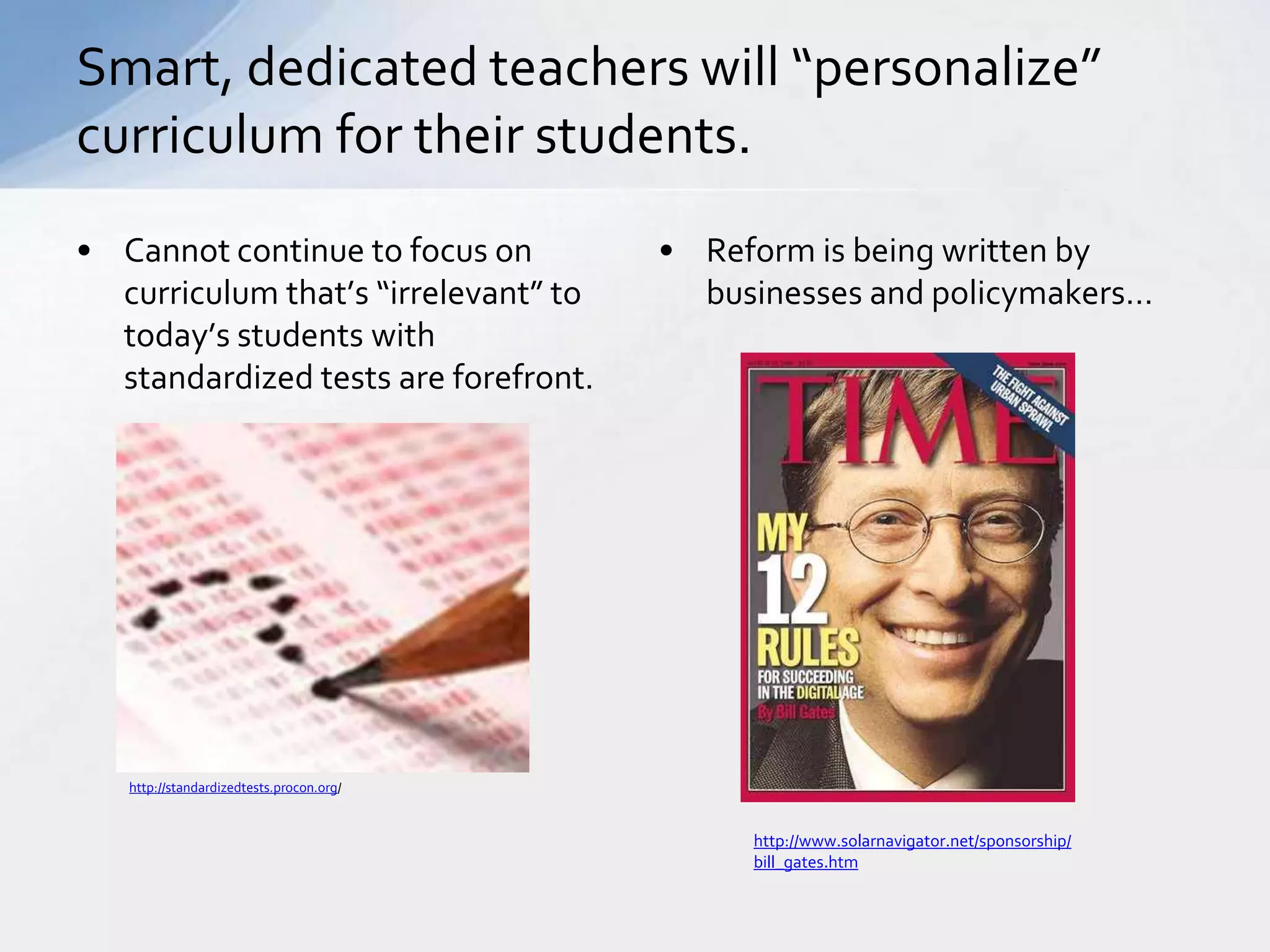
• Cannot continue to focus on 
curriculum that’s “irrelevant” to 
today’s students with 
standardized tests are forefront. 
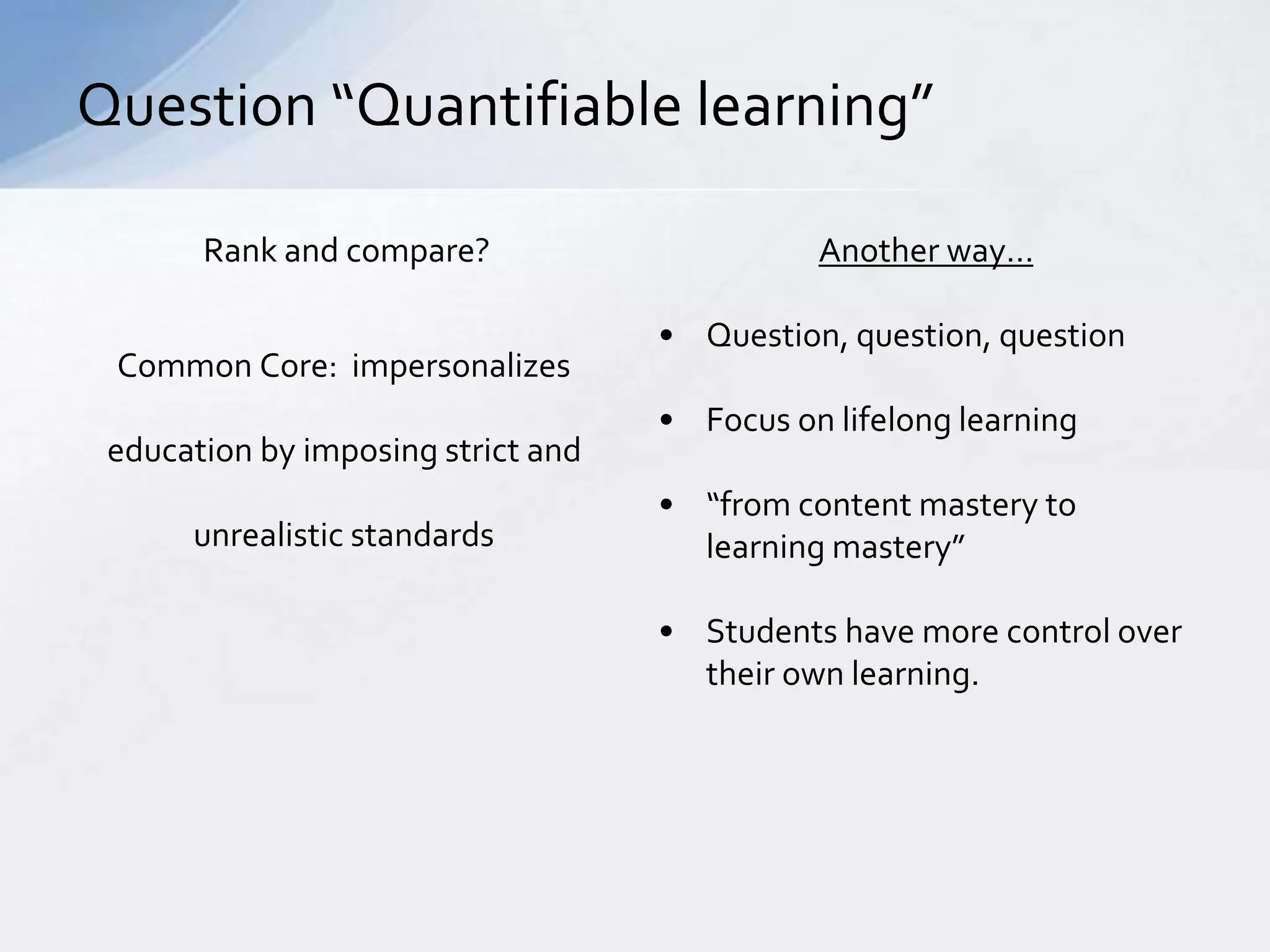
• Reform is being written by 
businesses and policymakers… 
http://standardizedtests.procon.org/ 
http://www.solarnavigator.net/sponsorship/ 
bill_gates.htm
Question “Quantifiable learning” 
Rank and compare? 
Common Core: impersonalizes 
education by imposing strict and 
unrealistic standards 
Another way… 
• Question, question, question 
• Focus on lifelong learning 
• “from content mastery to 
learning mastery” 
• Students have more control over 
their own learning.
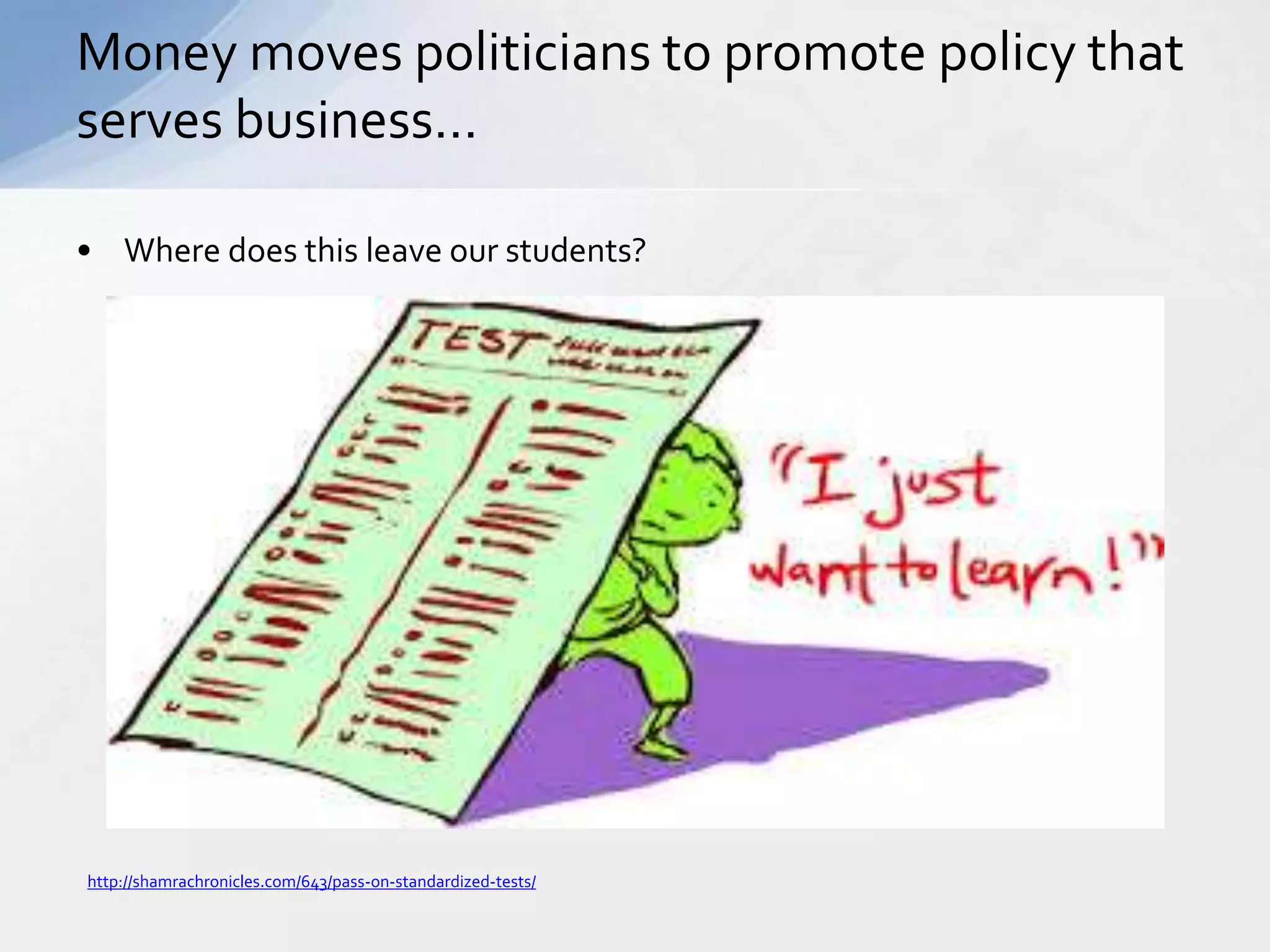
Money moves politicians to promote policy that 
serves business… 
• Where does this leave our students? 
http://shamrachronicles.com/643/pass-on-standardized-tests/
Richardson backs ‘constructivism’ 
• Constructivism is the idea that “people construct their own understanding and 
knowledge of the world, through experiencing things and reflecting on those 
experiences.” 2004 (Educational Broadcasting Corp.) 
– Developing imagination and activation of all the senses help students 
become actively “engaged” in learning. 
• Through “experiments, real-world problem solving” students enjoy learning. 
2004 (Educational Broadcasting Corporation.) 
– Not just regurgitating facts anymore!
"I'd articulate the shift to teachers 
like this: Don't teach my child 
science; instead, teach my child how 
to learn science -- or history or math 
or music. With as many resources as 
they have available to them today 
(not to mention what they'll have 
tomorrow), kids had better know 
how. 
Collaborative approach 
New school approach: 
http://dayspringacademyk12.org/?p=121
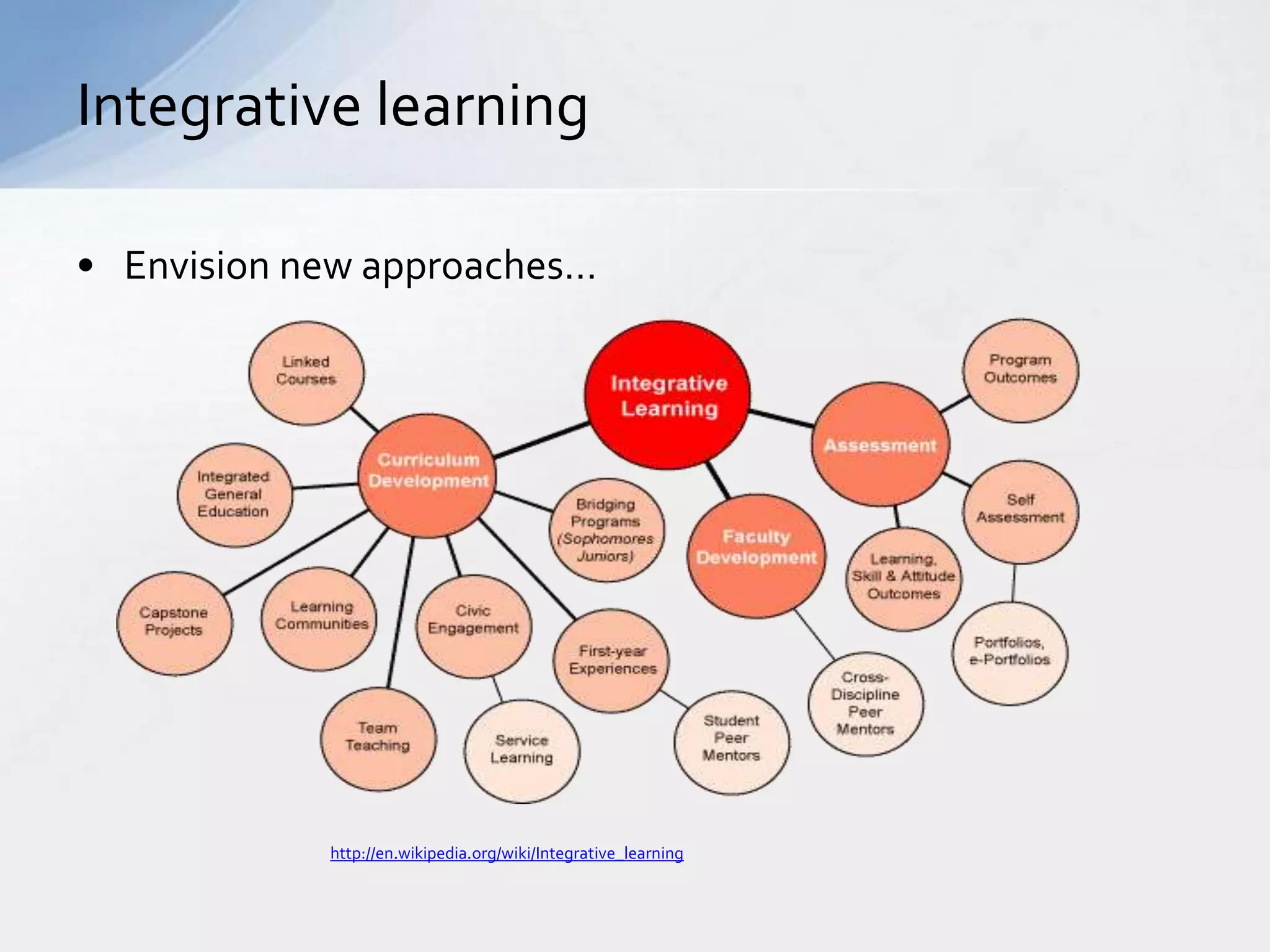
Integrative learning 
• Envision new approaches… 
http://en.wikipedia.org/wiki/Integrative_learning
Attn: Teachers… Use resources! 
• “rethink” our learning 
practices 
• Change attitudes around 
learning 
• “rethink” classrooms and 
advocate change 
• A pay it forward approach 
that works 
http://www.dreamstime.com/royalty-free-stock-photography-social-media- 
logos-image23478617 
http://www.fresnostate.edu/csm/ees/
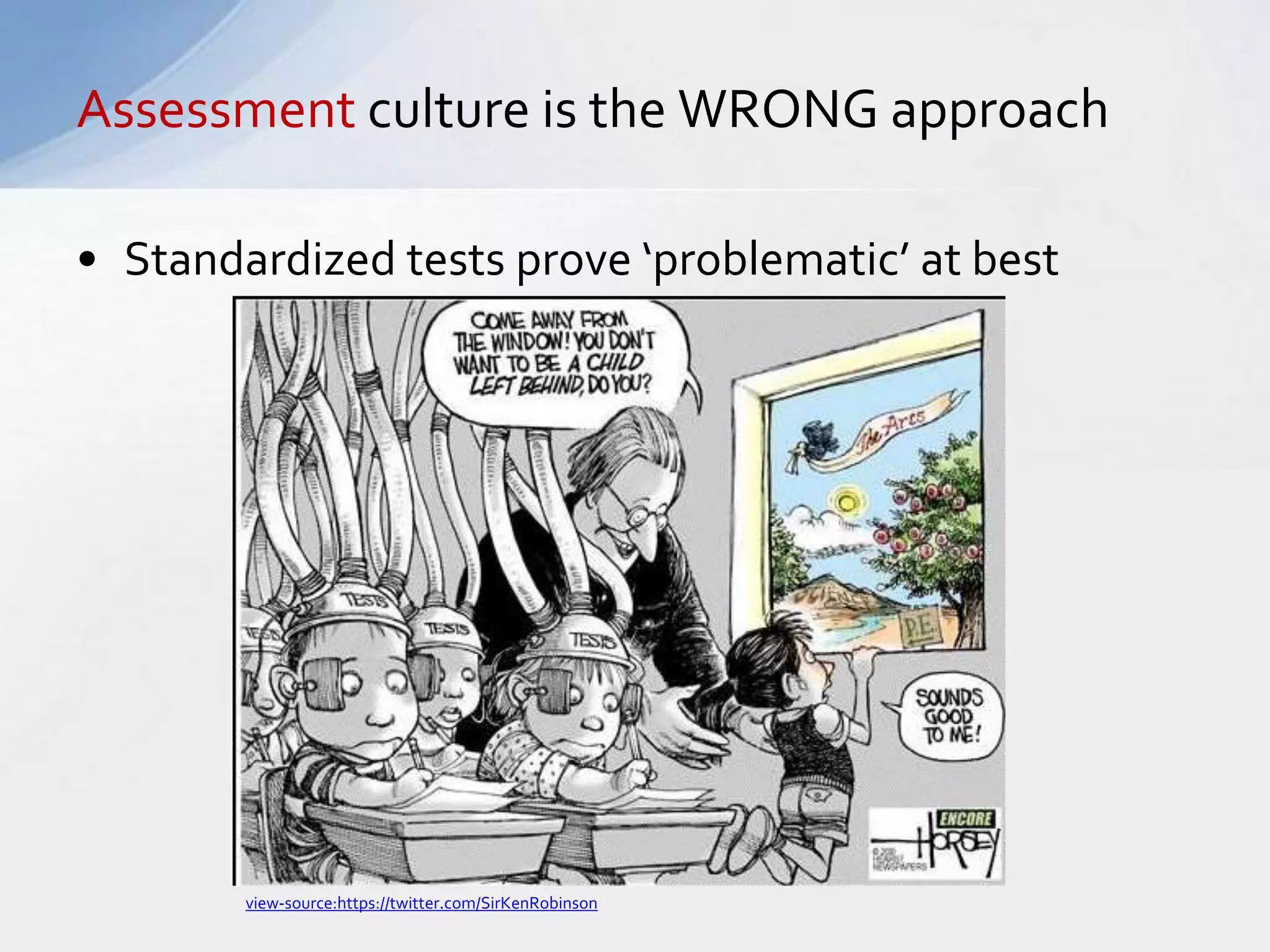
Assessment culture is the WRONG approach 
• Standardized tests prove ‘problematic’ at best 
view-source:https://twitter.com/SirKenRobinson
Performance-based assessments 
• Tell us more about 
students know and 
their “readiness” for life 
• Traditional tests have 
no room for real life 
information 
• Performance based 
assessments are “worth 
it in the long run. 
Problems: 
– Time consuming 
– Harder to correct 
– Inefficient 
– Subjective
Know Thyself… 
To prepare effective learners, educators need to be 
prepared themselves. 
You can even: RateMyTeachers.com 
(An online tool to find out what your students think of 
you!)
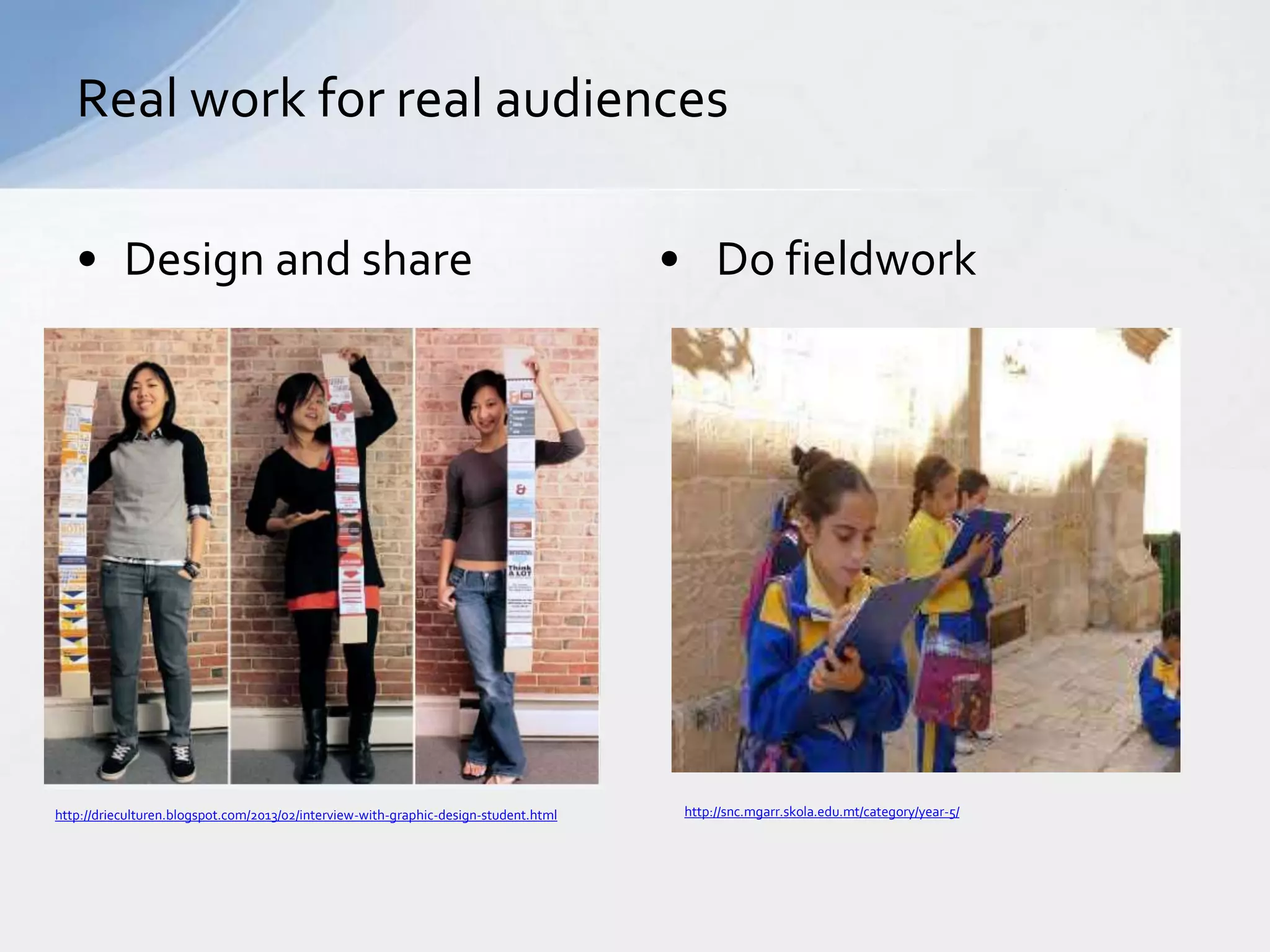
Real work for real audiences 
• Design and share • Do fieldwork 
http://drieculturen.blogspot.com/2013/02/interview-with-graphic-design-student.html http://snc.mgarr.skola.edu.mt/category/year-5/
A ‘Paradigm shift’ is needed 
The biggest challenge, Yong Zhao states, “is our 
mindset about what makes good education and the 
seductive power of the traditional paradigm.” 
-Yong Zhao 
University of Oregon
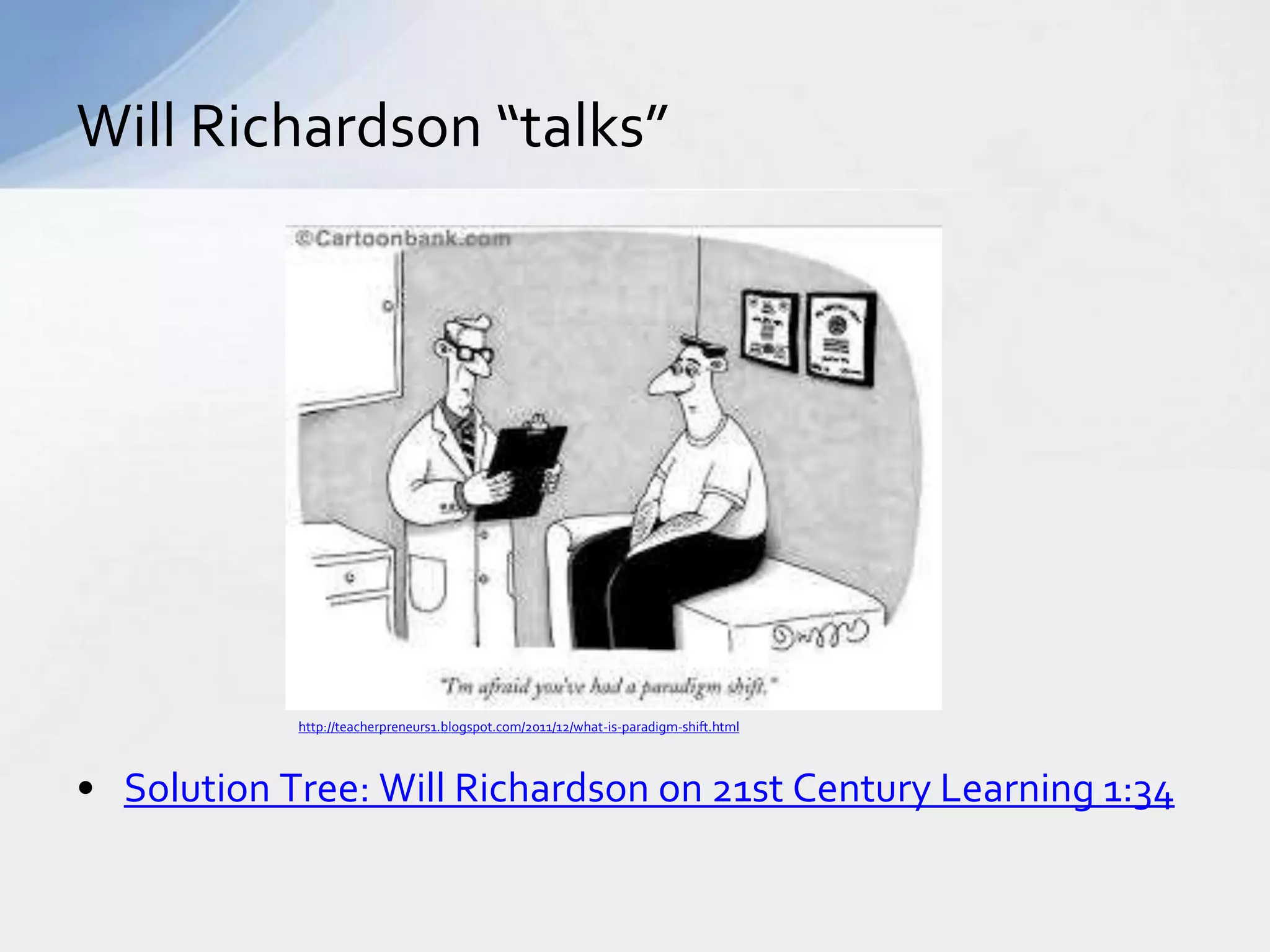
Will Richardson “talks” 
http://teacherpreneurs1.blogspot.com/2011/12/what-is-paradigm-shift.html 
• Solution Tree: Will Richardson on 21st Century Learning 1:34

Presentation1 richarson

  • 1.
    Reflections on: WhySchool? How Education must change when learning and information are everywhere by: Will Richardson Ruth Ann Dapkus Professor: Dennis Jablonski ED 534 Summer 2014 http://funsmix.com/funny-education-quotes-beautiful-i-have-never-let-my-schooling/
  • 2.
    Why School? •Because schools need to change! • In the modern world we need more education NOT less… • The teaching community “IS” global. Teachers from all around the world interact and come together virtually. It’s no longer just at the local level. • Students also share ideas, perceptions and interact online in a global setting. Students need interaction and ‘critical thinking’ not to just sit by and regurgitate information from the “old school” classroom.
  • 3.
    Old School…what doesit mean to you? • “Passing the test” is not nearly enough any longer. Richardson (p. 77) • Test scores “tell us little” this needs to be addressed on a very real level. • “one in two new teachers leaves the profession within five years” (p. 140) • Our world is every changing and we need to adapt and move away from “old school” thinking. http://talesfromthemaelstrom.blogspot.com/2013/02/old-school-vs-old-school. html
  • 4.
    Progressive Learning •Learning through project-based lesson plans • Interdisciplinary theme based learning • What students are interested in helps determine what they will study • “we live in an age of abundant electronic information.” -Richardson
  • 5.
    Higher education isgradually “adapting” but K-12 is only playing “catch up.” • How do teachers learn? • How is this relevant in the 21st century classroom? • As curriculum changes teachers need to reassess their role in the classroom. • We need to move away from an old school approach…
  • 6.
    Technology then andnow! • Old School • Not so progressive…Technology not under teachers control. • New School/Progressive • Computers, smart phones, and IPads are important but we need educated teachers! https://www.google.com/url?q=http://www.securedgenetworks.com/Porta ls/80068/images/images1.jpg https://www.google.com/url?q=http://www.shorpy.com/files/ images/5a23195u.jpg
  • 7.
    “Teachers need tobe great at asking questions and astute at managing the different paths to learning that each child creates.” Constructivism! • NOT all children learn the same. • Pay attention to learning “styles” • Pose problems relevant to students • Connect “their” interests to the standards www.differentialedkindergarten.com
  • 8.
    How do yourteachers learn? • Traditionally: – Go to conferences – Take after-school workshops – Read books Ie: Teacher learning viewed as an “event” vs. “ongoing process” Ideally, this should change!
  • 9.
    Smart, dedicated teacherswill “personalize” curriculum for their students. • Cannot continue to focus on curriculum that’s “irrelevant” to today’s students with standardized tests are forefront. • Reform is being written by businesses and policymakers… http://standardizedtests.procon.org/ http://www.solarnavigator.net/sponsorship/ bill_gates.htm
  • 10.
    Question “Quantifiable learning” Rank and compare? Common Core: impersonalizes education by imposing strict and unrealistic standards Another way… • Question, question, question • Focus on lifelong learning • “from content mastery to learning mastery” • Students have more control over their own learning.
  • 11.
    Money moves politiciansto promote policy that serves business… • Where does this leave our students? http://shamrachronicles.com/643/pass-on-standardized-tests/
  • 12.
    Richardson backs ‘constructivism’ • Constructivism is the idea that “people construct their own understanding and knowledge of the world, through experiencing things and reflecting on those experiences.” 2004 (Educational Broadcasting Corp.) – Developing imagination and activation of all the senses help students become actively “engaged” in learning. • Through “experiments, real-world problem solving” students enjoy learning. 2004 (Educational Broadcasting Corporation.) – Not just regurgitating facts anymore!
  • 13.
    "I'd articulate theshift to teachers like this: Don't teach my child science; instead, teach my child how to learn science -- or history or math or music. With as many resources as they have available to them today (not to mention what they'll have tomorrow), kids had better know how. Collaborative approach New school approach: http://dayspringacademyk12.org/?p=121
  • 14.
    Integrative learning •Envision new approaches… http://en.wikipedia.org/wiki/Integrative_learning
  • 15.
    Attn: Teachers… Useresources! • “rethink” our learning practices • Change attitudes around learning • “rethink” classrooms and advocate change • A pay it forward approach that works http://www.dreamstime.com/royalty-free-stock-photography-social-media- logos-image23478617 http://www.fresnostate.edu/csm/ees/
  • 16.
    Assessment culture isthe WRONG approach • Standardized tests prove ‘problematic’ at best view-source:https://twitter.com/SirKenRobinson
  • 17.
    Performance-based assessments •Tell us more about students know and their “readiness” for life • Traditional tests have no room for real life information • Performance based assessments are “worth it in the long run. Problems: – Time consuming – Harder to correct – Inefficient – Subjective
  • 18.
    Know Thyself… Toprepare effective learners, educators need to be prepared themselves. You can even: RateMyTeachers.com (An online tool to find out what your students think of you!)
  • 19.
    Real work forreal audiences • Design and share • Do fieldwork http://drieculturen.blogspot.com/2013/02/interview-with-graphic-design-student.html http://snc.mgarr.skola.edu.mt/category/year-5/
  • 20.
    A ‘Paradigm shift’is needed The biggest challenge, Yong Zhao states, “is our mindset about what makes good education and the seductive power of the traditional paradigm.” -Yong Zhao University of Oregon
  • 21.
    Will Richardson “talks” http://teacherpreneurs1.blogspot.com/2011/12/what-is-paradigm-shift.html • Solution Tree: Will Richardson on 21st Century Learning 1:34

Editor's Notes

  • #2 Principle 1: Connect with the audience. I used a funny yet inspirational quote / picture to ‘connect’ with my witty collegiate audience.
  • #3 Principle 3: Salience – I made the topic that will covered in the next slide red. This color contrasts with the rest of the text to let the audience know where I am going.
  • #4 Principle 1: Connect with the audience. Principle 8: Capacity Limitations (limited number of bullet points to 4 per page.)
  • #5 Principle 8: Capacity Limitations (limited number of bullet points to 4 per page.) Principle 5: Perceptional Organization. I let the audience know what information I will be covering and the order in which it will be presented.
  • #6 Principle 8: I’ve limited bullet points to 4 per page.
  • #8 Principle 8: Capacity Limitations . I have limited the bullet points to four per slide. i
  • #9 Principle 8: Capacity Limitations . I have limited the bullet points so I do not confuse the audience.
  • #15 Principle 7: Principle of Informative Changes – diagram helps define and clarify what is meant by ‘integrative learning’
  • #16 ciple 8: Capacity Limitations . I have limited the bullet points to four per slide, in order to promote clear understanding by not overloading my audience.
  • #17 Principle 1: Connect with the audience. I used a funny yet inspirational quote / picture to ‘connect’ with my witty collegiate audience. Principle 3: Salience – I made the topic that will covered in the next slide red. This color contrasts with the rest of the text to let the audience know where I am going.
  • #18 Principle 8: Capacity Limitations . I have limited the bullet points to four per slide in order to promote clear understanding by not overloading my audience.