Future 
Focused 
Learning 
Ellesmere community presentation, 27 November
HOPES FOR OUR KIDS 
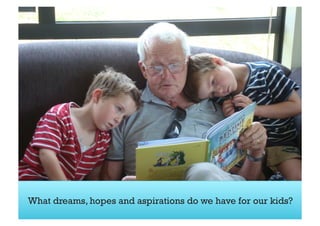
What dreams, hopes and aspirations do we have for our kids?
OUR CHANGING WORLD 
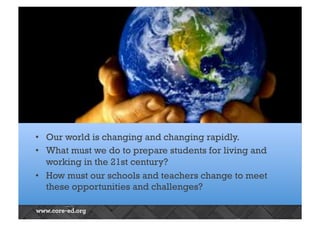
• Our world is changing and changing rapidly. 
• What must we do to prepare students for living and 
working in the 21st century? 
• How must our schools and teachers change to meet 
these opportunities and challenges?
EDUCATION IS THE POWERHOUSE 
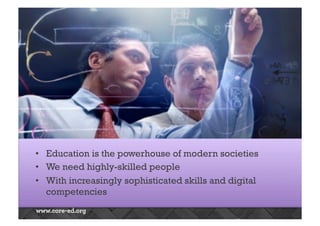
• Education is the powerhouse of modern societies 
• We need highly-skilled people 
• With increasingly sophisticated skills and digital 
competencies
THE DIGITAL CHALLENGE 
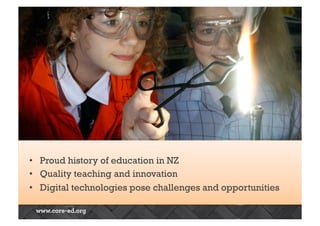
• Proud history of education in NZ 
• Quality teaching and innovation 
• Digital technologies pose challenges and opportunities
NEED FOR DIGITAL LITERACY 
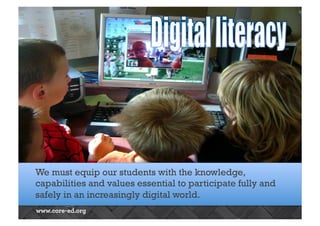
We must equip our students with the knowledge, 
capabilities and values essential to participate fully and 
safely in an increasingly digital world.
NEW SKILLSETS REQUIRED 
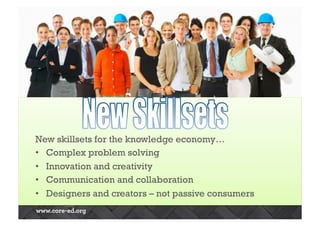
New skillsets for the knowledge economy… 
• Complex problem solving 
• Innovation and creativity 
• Communication and collaboration 
• Designers and creators – not passive consumers
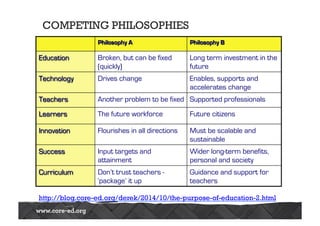
COMPETING PHILOSOPHIES 
Philosophy A Philosophy B 
Education Broken, but can be fixed 
(quickly) 
Long term investment in the 
future 
Technology Drives change Enables, supports and 
accelerates change 
Teachers Another problem to be fixed Supported professionals 
Learners The future workforce Future citizens 
Innovation Flourishes in all directions Must be scalable and 
sustainable 
Success Input targets and 
attainment 
Wider long-term benefits, 
personal and society 
Curriculum Don’t trust teachers - 
‘package’ it up 
Guidance and support for 
teachers 
http://blog.core-ed.org/derek/2014/10/the-purpose-of-education-2.html
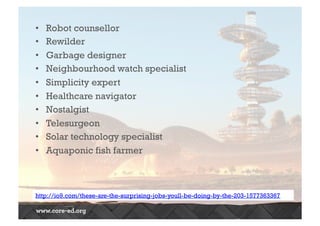
• Robot counsellor 
• Rewilder 
• Garbage designer 
• Neighbourhood watch specialist 
• Simplicity expert 
• Healthcare navigator 
• Nostalgist 
• Telesurgeon 
• Solar technology specialist 
• Aquaponic fish farmer 
http://io9.com/these-are-the-surprising-jobs-youll-be-doing-by-the-203-1577363367
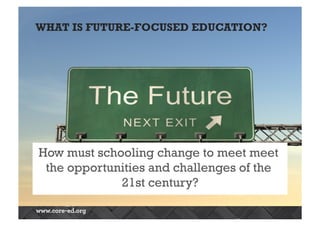
WHAT IS FUTURE-FOCUSED EDUCATION? 
How must schooling change to meet meet 
the opportunities and challenges of the 
21st century?
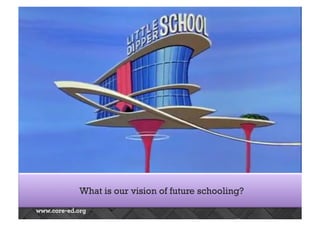
What is our vision of future schooling?
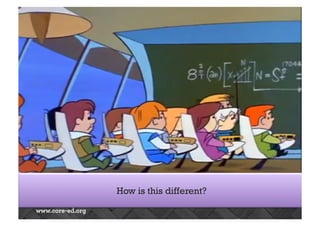
How is this different?
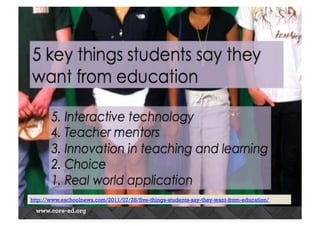
http://www.eschoolnews.com/2011/07/28/five-things-students-say-they-want-from-education/
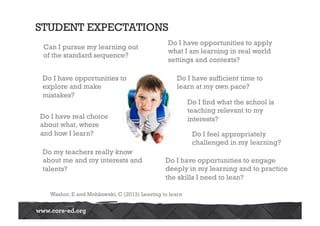
STUDENT EXPECTATIONS 
Do I have opportunities to 
explore and make 
mistakes? 
Do my teachers really know 
about me and my interests and 
talents? 
Do I have opportunities to apply 
what I am learning in real world 
settings and contexts? 
Washor, E and Mohkowski, C (2013) Leaving to learn 
Do I find what the school is 
teaching relevant to my 
interests? 
Do I feel appropriately 
challenged in my learning? 
Can I pursue my learning out 
of the standard sequence? 
Do I have sufficient time to 
learn at my own pace? 
Do I have real choice 
about what, where 
and how I learn? 
Do I have opportunities to engage 
deeply in my learning and to practice 
the skills I need to lean?
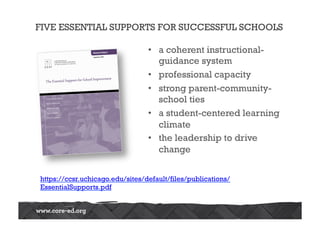
FIVE ESSENTIAL SUPPORTS FOR SUCCESSFUL SCHOOLS 
• a coherent instructional-guidance 
system 
• professional capacity 
• strong parent-community-school 
ties 
• a student-centered learning 
climate 
• the leadership to drive 
change 
https://ccsr.uchicago.edu/sites/default/files/publications/ 
EssentialSupports.pdf
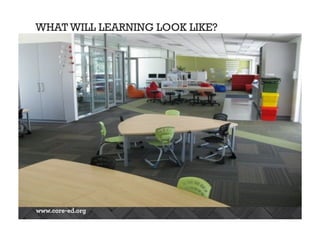
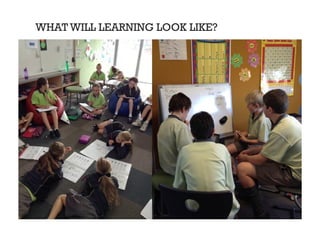
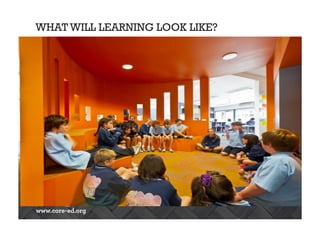
WHAT WILL LEARNING LOOK LIKE?
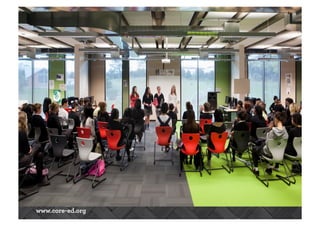
Learning Hubs – 130 Students & 5 Teachers
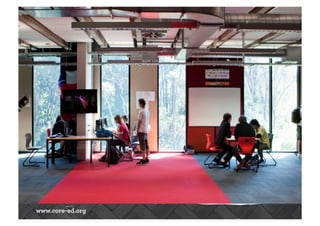
Small Group Individual Learning
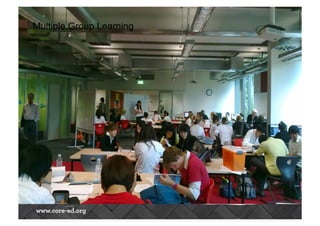
Multiple Group Learning
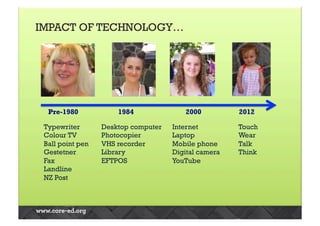
IMPACT OF TECHNOLOGY… 
Pre-1980 1984 2000 2012 
Typewriter 
Desktop computer 
Internet 
Colour TV 
Photocopier 
Laptop 
Ball point pen 
VHS recorder 
Mobile phone 
Gestetner 
Library 
Digital camera 
Fax 
EFTPOS 
YouTube 
Landline 
NZ Post 
Touch 
Wear 
Talk 
Think
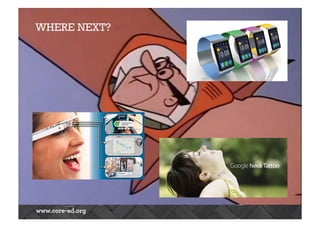
WHERE NEXT?
CHALLENGE 
Have we grasped how 
significantly student access to 
technology is changing their 
expectations as learners?
MythBusters #1 
Technology is a distraction – students 
depend too much on technology and 
will miss out on important learning!
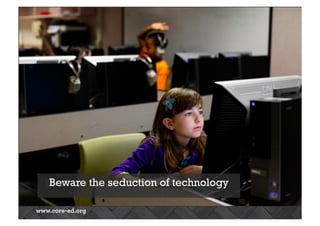
Beware the seduction of technology
Modern technologies 
provide students with 
the potential for 
experiences of 
unprecedented 
breadth, depth 
and relevance. 
 
.
We now have the 
conditions for 
modern learners to 
tackle projects of 
a complexity 
previously 
unimaginable.
..as a result we must 
rethink what we expect 
of our students. 
We must stop 
underestimating what 
they are now capable of; 
and above all…set much 
higher expectations 
.
MythBusters #2 
Modern learning is just a fad - there’s 
no research supporting any of this 
stuff!
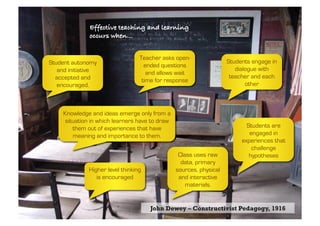
EFFECTIVEEf TfecEtiAve CteaHchIinNgG an dA leNarDnin LgE ARNING… 
occurs when… 
Student autonomy 
and initiative 
accepted and 
encouraged. 
Students engage in 
dialogue with 
teacher and each 
other 
Teacher asks open-ended 
Higher level thinking 
is encouraged 
questions 
and allows wait 
time for response 
Class uses raw 
data, primary 
sources, physical 
and interactive 
materials. 
Knowledge and ideas emerge only from a 
situation in which learners have to draw 
them out of experiences that have 
meaning and importance to them. 
Students are 
engaged in 
experiences that 
challenge 
hypotheses 
John Dewey – Constructivist Pedagogy, 1916
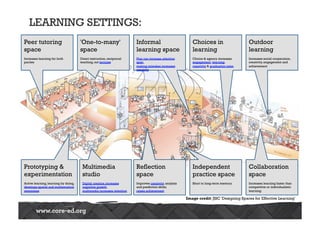
Outdoor 
learning 
Increases social cooperation, 
creativity, engagement and 
achievement 
Image credit: JISC 'Designing Spaces for Effective Learning' 
LEARNING SETTINGS: 
Prototyping  
experimentation 
Active learning, learning by doing, 
develops spatial and mathematical 
awareness 
Collaboration 
space 
Increases learning faster than 
competitive or individualistic 
learning. 
'One-to-many' 
space 
Direct instruction, reciprocal 
teaching, not lectures 
Multimedia 
studio 
Digital creation increases 
cognitive growth, 
multimedia increases retention 
Peer tutoring 
space 
Increases learning for both 
parties 
Independent 
practice space 
Short to long-term memory 
Reflection 
space 
Improves creativity, analysis 
and prediction skills; 
raises achievement 
Choices in 
learning 
Choice  agency increases 
engagement, learning, 
creativity  graduation rates. 
Informal 
learning space 
Play can increase attention 
span, 
making mistakes increases 
creativty
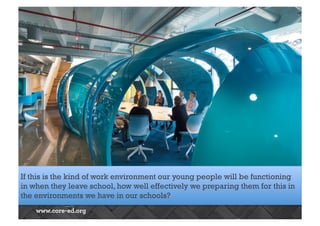
ASB BUILDING 
If this is the kind of work environment our young people will be functioning 
in when they leave school, how well effectively we preparing them for this in 
the environments we have in our schools?
MythBusters #3 
This only suits some types of learners!
21ST CENTURY CHALLENGES 
• kjh 
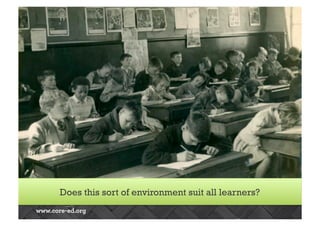
Does this sort of environment suit all learners?
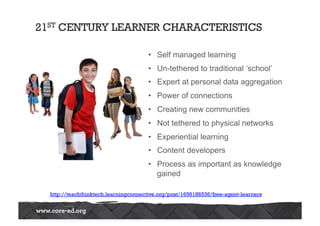
21ST CENTURY LEARNER CHARACTERISTICS 
• Self managed learning 
• Un-tethered to traditional ‘school’ 
• Expert at personal data aggregation 
• Power of connections 
• Creating new communities 
• Not tethered to physical networks 
• Experiential learning 
• Content developers 
• Process as important as knowledge 
gained 
http://teachthinktech.learningconnective.org/post/1656186536/free-agent-learners
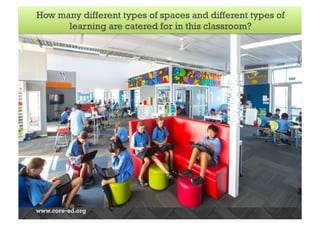
How many different types of spaces and different types of 
WHAT WILL LEARNING LOOK LIKE? 
 
learning are catered for in this classroom?
MythBusters #4 
How do we know our kids will still 
pass their tests and exams?
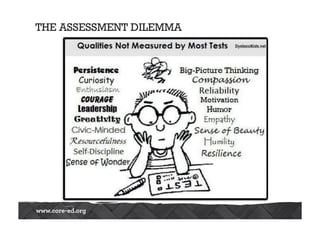
THE ASSESSMENT DILEMMA
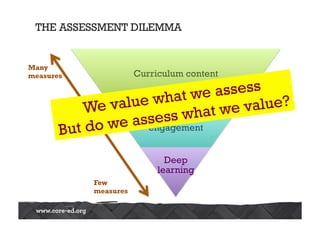
THE ASSESSMENT DILEMMA 
Curriculum content 
We value what we assess 
But do we assess what we value? 
Student 
engagement 
Deep 
learning 
Many 
measures 
Few 
measures
Derek Wenmoth 
Email: derek@core-ed.org 
Blog: http://blog.core-ed.org/derek 
Skype: dwenmoth

Future Focused Learning

  • 1.
    Future Focused Learning Ellesmere community presentation, 27 November
  • 2.
    HOPES FOR OURKIDS What dreams, hopes and aspirations do we have for our kids?
  • 3.
    OUR CHANGING WORLD • Our world is changing and changing rapidly. • What must we do to prepare students for living and working in the 21st century? • How must our schools and teachers change to meet these opportunities and challenges?
  • 4.
    EDUCATION IS THEPOWERHOUSE • Education is the powerhouse of modern societies • We need highly-skilled people • With increasingly sophisticated skills and digital competencies
  • 5.
    THE DIGITAL CHALLENGE • Proud history of education in NZ • Quality teaching and innovation • Digital technologies pose challenges and opportunities
  • 6.
    NEED FOR DIGITALLITERACY We must equip our students with the knowledge, capabilities and values essential to participate fully and safely in an increasingly digital world.
  • 7.
    NEW SKILLSETS REQUIRED New skillsets for the knowledge economy… • Complex problem solving • Innovation and creativity • Communication and collaboration • Designers and creators – not passive consumers
  • 8.
    COMPETING PHILOSOPHIES PhilosophyA Philosophy B Education Broken, but can be fixed (quickly) Long term investment in the future Technology Drives change Enables, supports and accelerates change Teachers Another problem to be fixed Supported professionals Learners The future workforce Future citizens Innovation Flourishes in all directions Must be scalable and sustainable Success Input targets and attainment Wider long-term benefits, personal and society Curriculum Don’t trust teachers - ‘package’ it up Guidance and support for teachers http://blog.core-ed.org/derek/2014/10/the-purpose-of-education-2.html
  • 9.
    • Robot counsellor • Rewilder • Garbage designer • Neighbourhood watch specialist • Simplicity expert • Healthcare navigator • Nostalgist • Telesurgeon • Solar technology specialist • Aquaponic fish farmer http://io9.com/these-are-the-surprising-jobs-youll-be-doing-by-the-203-1577363367
  • 10.
    WHAT IS FUTURE-FOCUSEDEDUCATION? How must schooling change to meet meet the opportunities and challenges of the 21st century?
  • 11.
    What is ourvision of future schooling?
  • 12.
    How is thisdifferent?
  • 13.
  • 14.
    STUDENT EXPECTATIONS DoI have opportunities to explore and make mistakes? Do my teachers really know about me and my interests and talents? Do I have opportunities to apply what I am learning in real world settings and contexts? Washor, E and Mohkowski, C (2013) Leaving to learn Do I find what the school is teaching relevant to my interests? Do I feel appropriately challenged in my learning? Can I pursue my learning out of the standard sequence? Do I have sufficient time to learn at my own pace? Do I have real choice about what, where and how I learn? Do I have opportunities to engage deeply in my learning and to practice the skills I need to lean?
  • 15.
    FIVE ESSENTIAL SUPPORTSFOR SUCCESSFUL SCHOOLS • a coherent instructional-guidance system • professional capacity • strong parent-community-school ties • a student-centered learning climate • the leadership to drive change https://ccsr.uchicago.edu/sites/default/files/publications/ EssentialSupports.pdf
  • 17.
  • 18.
  • 19.
  • 20.
    Learning Hubs –130 Students & 5 Teachers
  • 21.
  • 22.
  • 23.
    IMPACT OF TECHNOLOGY… Pre-1980 1984 2000 2012 Typewriter Desktop computer Internet Colour TV Photocopier Laptop Ball point pen VHS recorder Mobile phone Gestetner Library Digital camera Fax EFTPOS YouTube Landline NZ Post Touch Wear Talk Think
  • 24.
  • 25.
    CHALLENGE Have wegrasped how significantly student access to technology is changing their expectations as learners?
  • 26.
    MythBusters #1 Technologyis a distraction – students depend too much on technology and will miss out on important learning!
  • 27.
    Beware the seductionof technology
  • 28.
    Modern technologies providestudents with the potential for experiences of unprecedented breadth, depth and relevance. .
  • 29.
    We now havethe conditions for modern learners to tackle projects of a complexity previously unimaginable.
  • 30.
    ..as a resultwe must rethink what we expect of our students. We must stop underestimating what they are now capable of; and above all…set much higher expectations .
  • 31.
    MythBusters #2 Modernlearning is just a fad - there’s no research supporting any of this stuff!
  • 32.
    EFFECTIVEEf TfecEtiAve CteaHchIinNgGan dA leNarDnin LgE ARNING… occurs when… Student autonomy and initiative accepted and encouraged. Students engage in dialogue with teacher and each other Teacher asks open-ended Higher level thinking is encouraged questions and allows wait time for response Class uses raw data, primary sources, physical and interactive materials. Knowledge and ideas emerge only from a situation in which learners have to draw them out of experiences that have meaning and importance to them. Students are engaged in experiences that challenge hypotheses John Dewey – Constructivist Pedagogy, 1916
  • 33.
    Outdoor learning Increasessocial cooperation, creativity, engagement and achievement Image credit: JISC 'Designing Spaces for Effective Learning' LEARNING SETTINGS: Prototyping experimentation Active learning, learning by doing, develops spatial and mathematical awareness Collaboration space Increases learning faster than competitive or individualistic learning. 'One-to-many' space Direct instruction, reciprocal teaching, not lectures Multimedia studio Digital creation increases cognitive growth, multimedia increases retention Peer tutoring space Increases learning for both parties Independent practice space Short to long-term memory Reflection space Improves creativity, analysis and prediction skills; raises achievement Choices in learning Choice agency increases engagement, learning, creativity graduation rates. Informal learning space Play can increase attention span, making mistakes increases creativty
  • 34.
    ASB BUILDING Ifthis is the kind of work environment our young people will be functioning in when they leave school, how well effectively we preparing them for this in the environments we have in our schools?
  • 35.
    MythBusters #3 Thisonly suits some types of learners!
  • 36.
    21ST CENTURY CHALLENGES • kjh Does this sort of environment suit all learners?
  • 37.
    21ST CENTURY LEARNERCHARACTERISTICS • Self managed learning • Un-tethered to traditional ‘school’ • Expert at personal data aggregation • Power of connections • Creating new communities • Not tethered to physical networks • Experiential learning • Content developers • Process as important as knowledge gained http://teachthinktech.learningconnective.org/post/1656186536/free-agent-learners
  • 38.
    How many differenttypes of spaces and different types of WHAT WILL LEARNING LOOK LIKE? learning are catered for in this classroom?
  • 39.
    MythBusters #4 Howdo we know our kids will still pass their tests and exams?
  • 40.
  • 41.
    THE ASSESSMENT DILEMMA Curriculum content We value what we assess But do we assess what we value? Student engagement Deep learning Many measures Few measures
  • 43.
    Derek Wenmoth Email:derek@core-ed.org Blog: http://blog.core-ed.org/derek Skype: dwenmoth