What is Remote Sensing ?
Remote sensing is the art of science of recording , measuring and
analyzing information about a phenomenon from a distance.
OR
Remote Sensing is the science and art of acquiring information
(spectral, spatial, and temporal) about material, objects, area, or
phenomenon, without coming into physical contact with the objects,
or area, or phenomenon under investigation.
History of Remote Sensing-
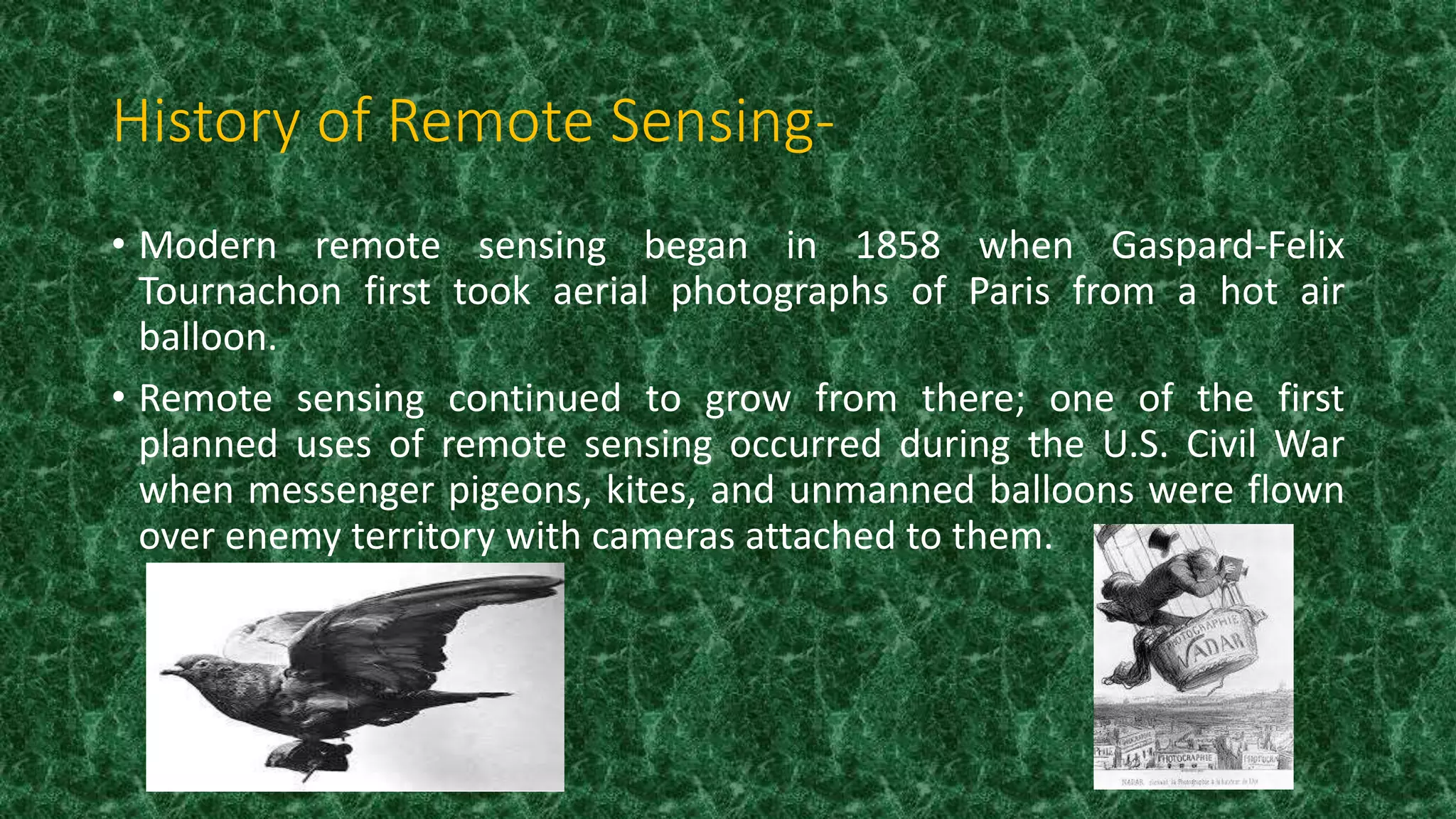
• Modern remote sensing began in 1858 when Gaspard-Felix
Tournachon first took aerial photographs of Paris from a hot air
balloon.
• Remote sensing continued to grow from there; one of the first
planned uses of remote sensing occurred during the U.S. Civil War
when messenger pigeons, kites, and unmanned balloons were flown
over enemy territory with cameras attached to them.
Types of Remote Sensing -
There are two types of Remote Sensing-
1. Passive Sensors
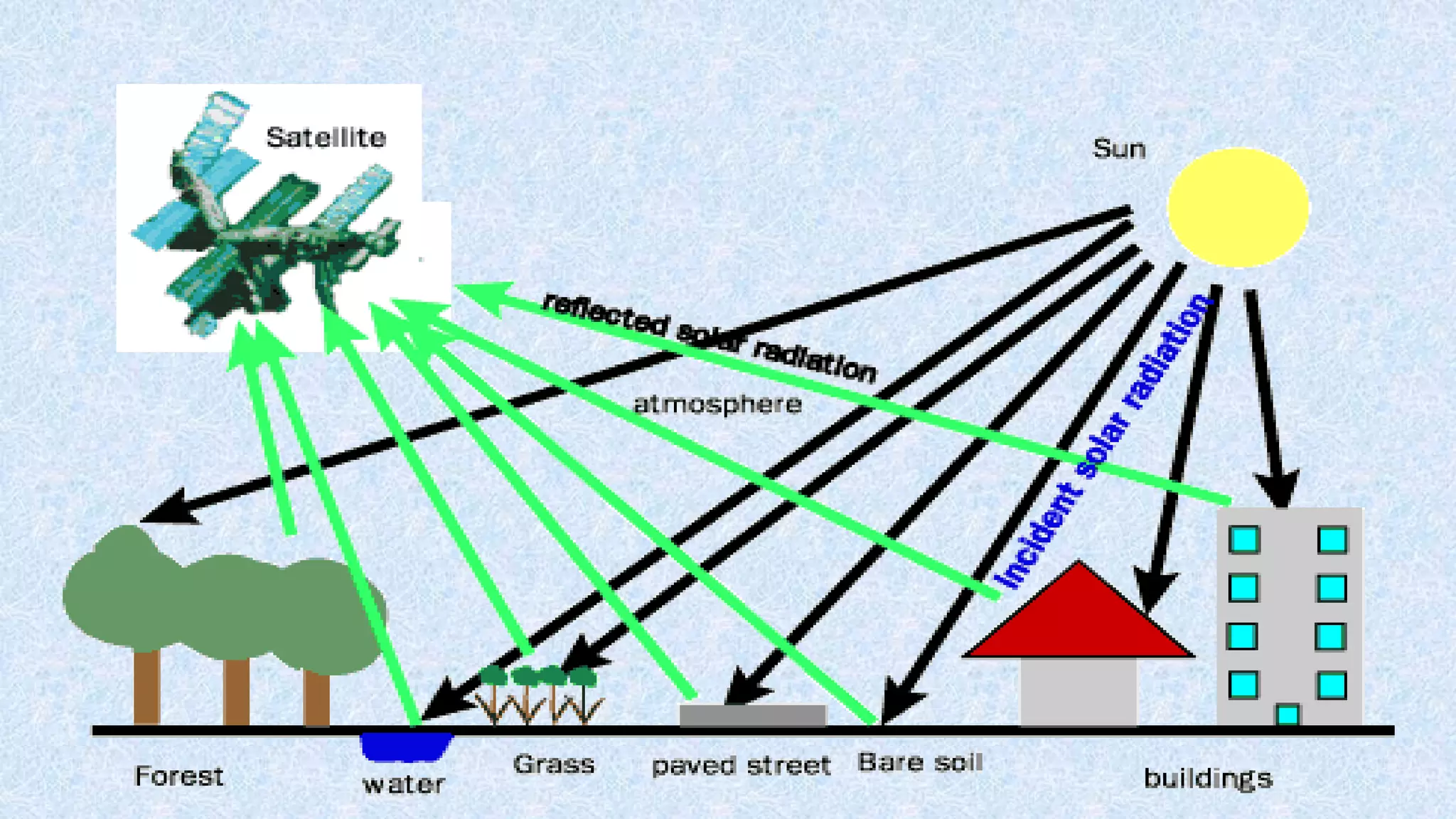
A passive sensor system needs an external energy source. In most cases
this source is the sun.
2. Active System
An active sensor system provides its own energy source.
Ex- A Radar sensor sends out sound waves and records the reflection
waves coming back from the surface.
Satellites on which remote sensing works-
Satellite may be of two types:-
1. Natural ex- Moon
2. Artificial ex- IRSECT
Artificial satellite may be classified into two
types-
 Geostationary Satellite-
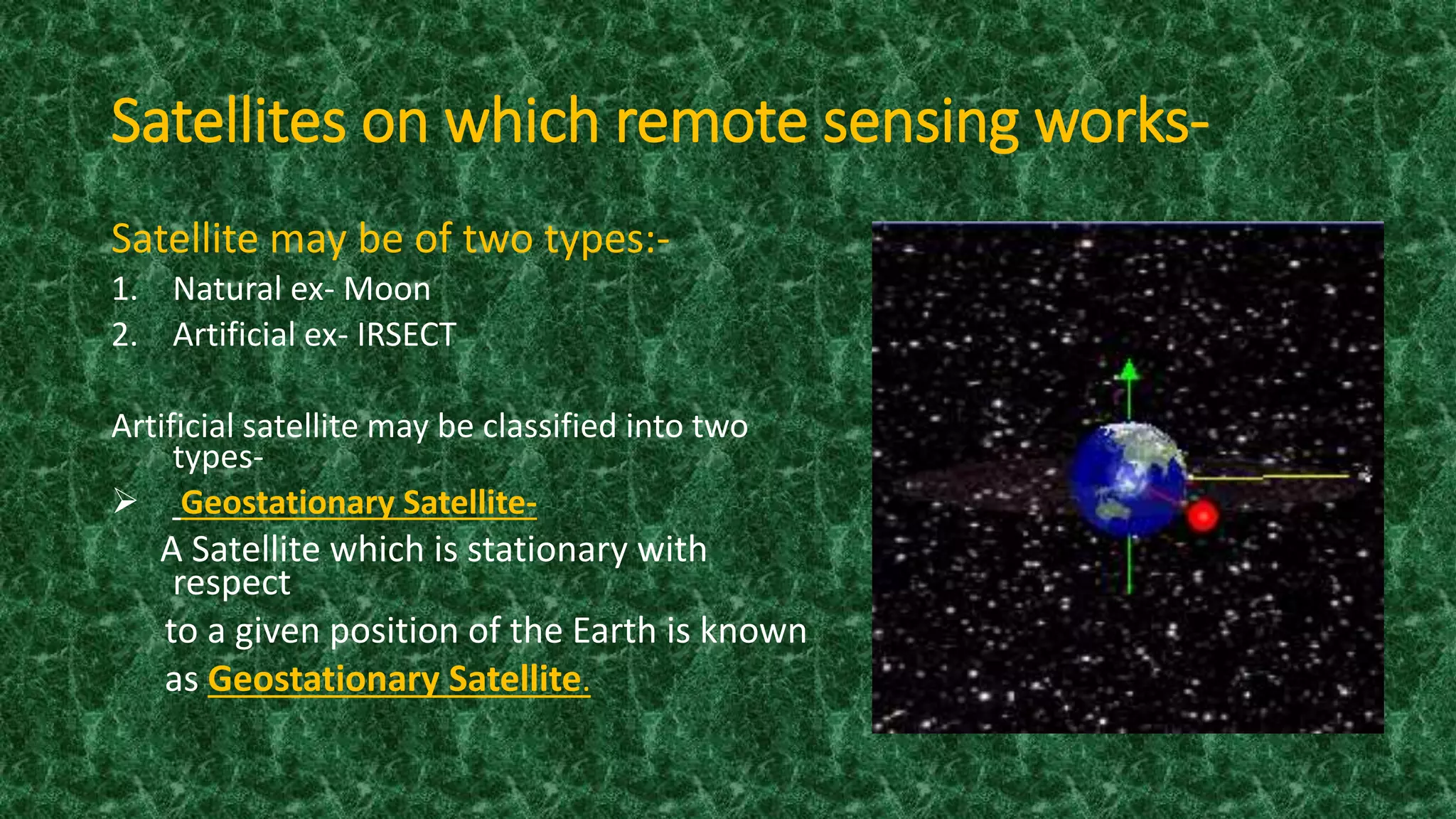
A Satellite which is stationary with
respect
to a given position of the Earth is known
as Geostationary Satellite.
Sun Synchronous
Satellite
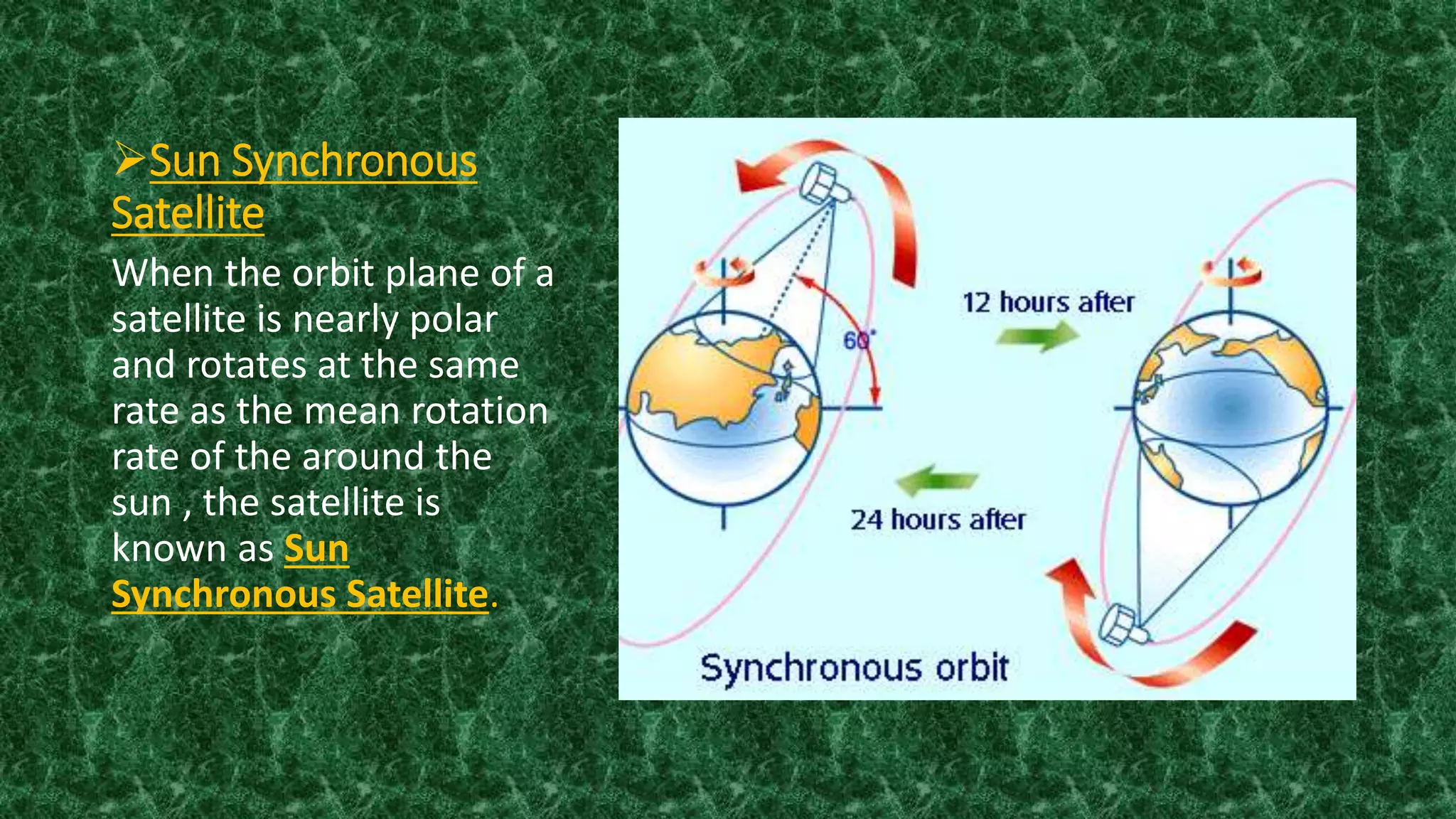
When the orbit plane of a
satellite is nearly polar
and rotates at the same
rate as the mean rotation
rate of the around the
sun , the satellite is
known as Sun
Synchronous Satellite.
Applications of Remote Sensing -
1. Urban –
Determining the status of growing crop.
2. Rock-
Recognizing rock type.
3. Military-
Developing precise maps for planning and monitoring ships.
4. Geology
Identification of rock type and structure .
Applications of Remote Sensing in Civil Engg.:-
1. Regional Planning and Site Investigations
 Site investigations in general require topographic and geologic
considerations. Remote sensing data permits such an assessment.
In case of dam site investigation, information on topography is
essential.
 In selecting river-crossing sites for bridges and pipelines, an
important consideration is the stability of slopes leading down to
and up from the water crossing.
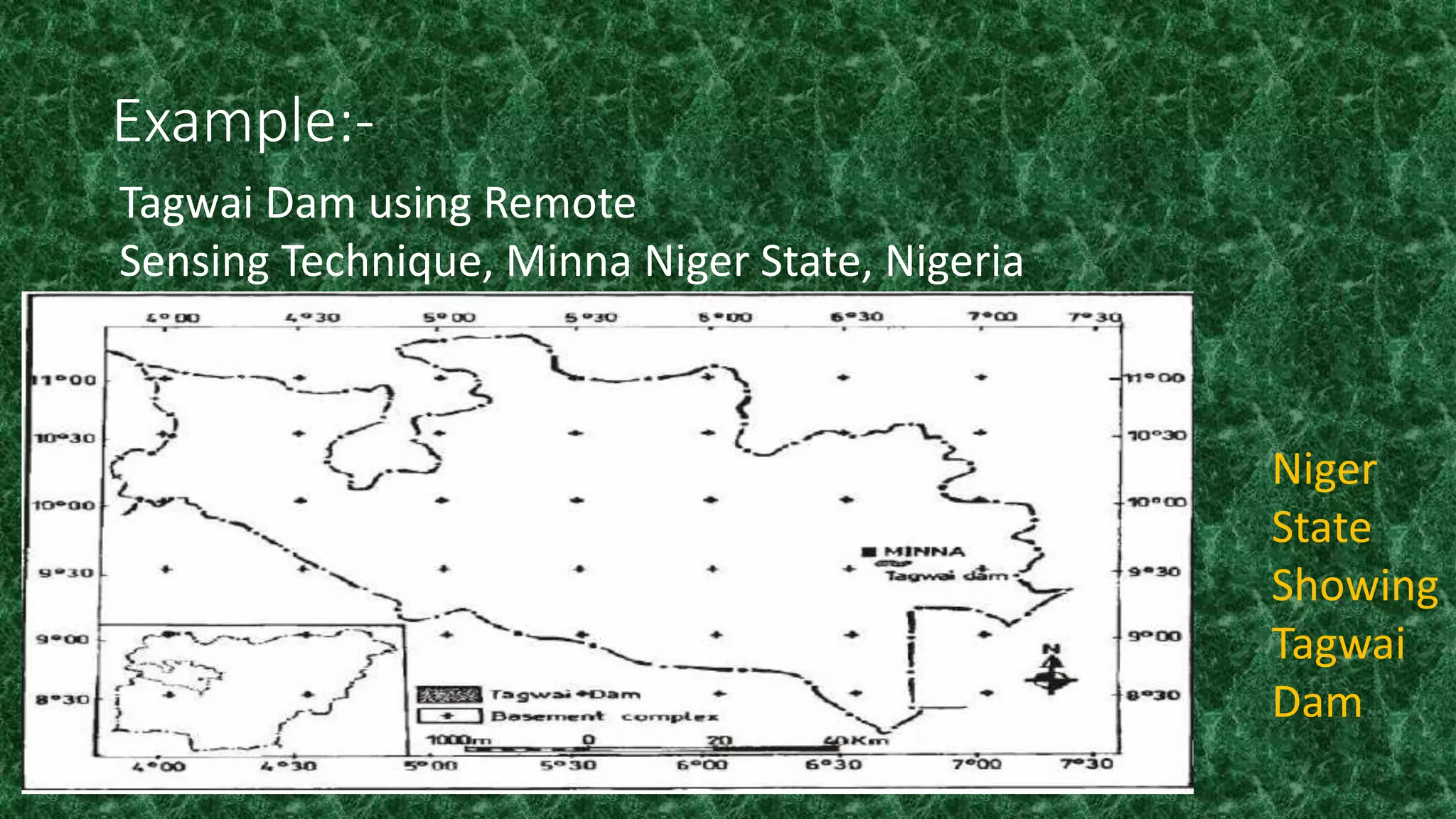
Example:-
Tagwai Dam using Remote
Sensing Technique, Minna Niger State, Nigeria
Niger
State
Showing
Tagwai
Dam
Part of Shrinking Areas of the Dam-
2. Water Resources Engineering
By analyzing multi-date RS data, it would be possible to monitor the
effects of dam construction. Remotely sensed data of pre and post
dam construction can reveal the forest and other land at different
water levels.
To study the feasibility of inter basin transfer of surplus flood flows,
RS data can be cost effective.
Remote sensing in India-
A. The satellite for Earth observations(SEO) now called BHASKARA was
1st Indian Remote Sensing Satellite.
B. In 1973, ISRO started construction of Satellite.
C. The 1st two IRS spacecrafts are-
1. IRS 1A in March 1988.
2. IRS 1B in August 1991.
Software used For Remote Sensing are-
 Google Earth
 Grass GIS
 Open EV
 Opticks
 Remote View
Presentation on Remote sensing

Presentation on Remote sensing

  • 2.
    What is RemoteSensing ? Remote sensing is the art of science of recording , measuring and analyzing information about a phenomenon from a distance. OR Remote Sensing is the science and art of acquiring information (spectral, spatial, and temporal) about material, objects, area, or phenomenon, without coming into physical contact with the objects, or area, or phenomenon under investigation.
  • 4.
    History of RemoteSensing- • Modern remote sensing began in 1858 when Gaspard-Felix Tournachon first took aerial photographs of Paris from a hot air balloon. • Remote sensing continued to grow from there; one of the first planned uses of remote sensing occurred during the U.S. Civil War when messenger pigeons, kites, and unmanned balloons were flown over enemy territory with cameras attached to them.
  • 5.
    Types of RemoteSensing - There are two types of Remote Sensing- 1. Passive Sensors A passive sensor system needs an external energy source. In most cases this source is the sun. 2. Active System An active sensor system provides its own energy source. Ex- A Radar sensor sends out sound waves and records the reflection waves coming back from the surface.
  • 7.
    Satellites on whichremote sensing works- Satellite may be of two types:- 1. Natural ex- Moon 2. Artificial ex- IRSECT Artificial satellite may be classified into two types-  Geostationary Satellite- A Satellite which is stationary with respect to a given position of the Earth is known as Geostationary Satellite.
  • 8.
    Sun Synchronous Satellite When theorbit plane of a satellite is nearly polar and rotates at the same rate as the mean rotation rate of the around the sun , the satellite is known as Sun Synchronous Satellite.
  • 9.
    Applications of RemoteSensing - 1. Urban – Determining the status of growing crop. 2. Rock- Recognizing rock type. 3. Military- Developing precise maps for planning and monitoring ships. 4. Geology Identification of rock type and structure .
  • 10.
    Applications of RemoteSensing in Civil Engg.:- 1. Regional Planning and Site Investigations  Site investigations in general require topographic and geologic considerations. Remote sensing data permits such an assessment. In case of dam site investigation, information on topography is essential.  In selecting river-crossing sites for bridges and pipelines, an important consideration is the stability of slopes leading down to and up from the water crossing.
  • 11.
    Example:- Tagwai Dam usingRemote Sensing Technique, Minna Niger State, Nigeria Niger State Showing Tagwai Dam
  • 12.
    Part of ShrinkingAreas of the Dam-
  • 13.
    2. Water ResourcesEngineering By analyzing multi-date RS data, it would be possible to monitor the effects of dam construction. Remotely sensed data of pre and post dam construction can reveal the forest and other land at different water levels. To study the feasibility of inter basin transfer of surplus flood flows, RS data can be cost effective.
  • 14.
    Remote sensing inIndia- A. The satellite for Earth observations(SEO) now called BHASKARA was 1st Indian Remote Sensing Satellite. B. In 1973, ISRO started construction of Satellite. C. The 1st two IRS spacecrafts are- 1. IRS 1A in March 1988. 2. IRS 1B in August 1991.
  • 15.
    Software used ForRemote Sensing are-  Google Earth  Grass GIS  Open EV  Opticks  Remote View