BY:
RABI’ATUL ADAWIYAH BINTI SULAIMAN
3067141004
BACHELOR OF SCIENCE IN NURSING (HONS)
KPJ HEALTHCARE UNIVERSITY COLLEGE, NILAI
LECTURER :
MISS VILMA A. JANA
BScN 2032
TEACHING IN NURSING PRACTICE:
HAND WASHING
Learning outcomes
In the end of this session, students should be able to:
o Define hand washing
o State the purposes and the important of hand washing
o Explain the five (5) moments of hand washing
o Prepare the equipment needed for hand washing
o Discuss the tips for effective hand washing
o Demonstrate the proper hand washing technique skillfully
and confidently
“ Hand washing is the single
most important means of
preventing the spread of
infection”
[Centers for Disease Control]
What is hand washing?
Hand washing (hand hygiene) includes cleaning hands
with soap and water or alcohol-based hand rub in
order to remove germs, also known as
microorganisms.
Who should practice hand
washing?
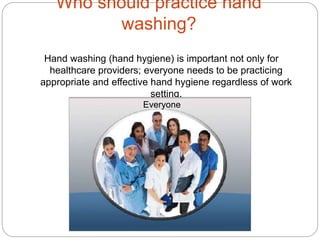
Hand washing (hand hygiene) is important not only for
healthcare providers; everyone needs to be practicing
appropriate and effective hand hygiene regardless of work
setting.
Everyone
Why do we wash our hands?
o It is the way to prevent the spread of germs.
o Keep us healthy by reducing the number of germs on our
hands and helps reduce the spread of germs to our family,
friends, coworkers, patients, residents or clients.
o Using appropriate hand hygiene prevents contamination of
the patient’s, client’s, or resident’s environment.
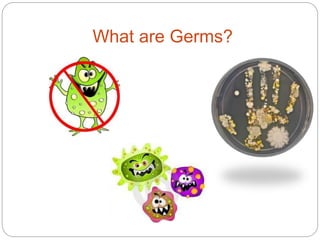
What are Germs?
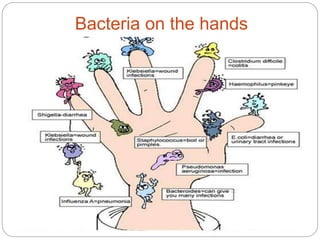
Bacteria on the hands
Which one will you choose?
Five moments of hand washing
When should you wash your
hands?
 Before, during, and after preparing food
 Before eating food
 Before and after caring for someone who is sick
 Before and after treating a cut or wound
 After using the toilet
 After changing diapers or cleaning up a child who
has used the toilet
 After blowing your nose, coughing, or sneezing
 After touching an animal, animal feed, or animal
waste
 After handling pet food or pet treats
 After touching garbage
Equipments for hand washing
 Warm water
 Soap
 Paper towel, hand dryer or
separate towel
 Alcohol-based hand rub
Soap and Water
o The recommended method when hands are visibly
soiled
o Plain soap is used for routine hand hygiene
o Anti-microbial soap is used in acute care high-risk
areas
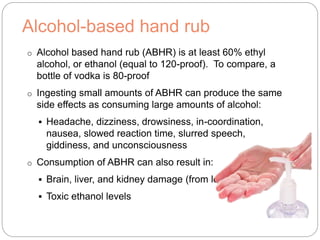
Alcohol-based hand rub
o Alcohol based hand rub (ABHR) is at least 60% ethyl
alcohol, or ethanol (equal to 120-proof). To compare, a
bottle of vodka is 80-proof
o Ingesting small amounts of ABHR can produce the same
side effects as consuming large amounts of alcohol:
 Headache, dizziness, drowsiness, in-coordination,
nausea, slowed reaction time, slurred speech,
giddiness, and unconsciousness
o Consumption of ABHR can also result in:
 Brain, liver, and kidney damage (from long-term use)
 Toxic ethanol levels
Tips for effective hand washing
Artificial nails
Kept fingernails short - no longer than
¼” or 0.635cm long
Avoid touching face
[eyes and nose]
Do not wear hand and wrist
jewelry
Use lotions that compatible with
hand hygiene products and gloves to
minimize skin irritation that can
occur with frequent hand hygiene
 Wet your hands with clean, running water (warm
or cold), turn off the tap, and apply soap.
 Lather your hands by rubbing them together with
the soap. Be sure to lather the backs of your
hands, between your fingers, and under your
nails.
 Scrub your hands for at least 20 seconds. Need
a timer? Hum the "Happy Birthday" song from
beginning to end twice.
 Rinse your hands well under clean, running
water.
 Dry your hands using a clean towel or air dry
How to wash your hands properly?
What happen when we neglect
hand washing?
Symptoms of food poisoning
 Abdominal cramps
 Diarrhea
 Nausea
 Vomiting
 Loss of appetite
 Weakness
 Headaches
Questions ?
Presentation Handwashing

Presentation Handwashing

  • 1.
    BY: RABI’ATUL ADAWIYAH BINTISULAIMAN 3067141004 BACHELOR OF SCIENCE IN NURSING (HONS) KPJ HEALTHCARE UNIVERSITY COLLEGE, NILAI LECTURER : MISS VILMA A. JANA BScN 2032 TEACHING IN NURSING PRACTICE: HAND WASHING
  • 2.
    Learning outcomes In theend of this session, students should be able to: o Define hand washing o State the purposes and the important of hand washing o Explain the five (5) moments of hand washing o Prepare the equipment needed for hand washing o Discuss the tips for effective hand washing o Demonstrate the proper hand washing technique skillfully and confidently
  • 4.
    “ Hand washingis the single most important means of preventing the spread of infection” [Centers for Disease Control]
  • 5.
    What is handwashing? Hand washing (hand hygiene) includes cleaning hands with soap and water or alcohol-based hand rub in order to remove germs, also known as microorganisms.
  • 6.
    Who should practicehand washing? Hand washing (hand hygiene) is important not only for healthcare providers; everyone needs to be practicing appropriate and effective hand hygiene regardless of work setting. Everyone
  • 7.
    Why do wewash our hands?
  • 8.
    o It isthe way to prevent the spread of germs. o Keep us healthy by reducing the number of germs on our hands and helps reduce the spread of germs to our family, friends, coworkers, patients, residents or clients. o Using appropriate hand hygiene prevents contamination of the patient’s, client’s, or resident’s environment.
  • 9.
  • 10.
  • 11.
    Which one willyou choose?
  • 12.
    Five moments ofhand washing
  • 13.
    When should youwash your hands?  Before, during, and after preparing food  Before eating food  Before and after caring for someone who is sick  Before and after treating a cut or wound  After using the toilet  After changing diapers or cleaning up a child who has used the toilet  After blowing your nose, coughing, or sneezing  After touching an animal, animal feed, or animal waste  After handling pet food or pet treats  After touching garbage
  • 14.
    Equipments for handwashing  Warm water  Soap  Paper towel, hand dryer or separate towel  Alcohol-based hand rub
  • 15.
    Soap and Water oThe recommended method when hands are visibly soiled o Plain soap is used for routine hand hygiene o Anti-microbial soap is used in acute care high-risk areas
  • 16.
    Alcohol-based hand rub oAlcohol based hand rub (ABHR) is at least 60% ethyl alcohol, or ethanol (equal to 120-proof). To compare, a bottle of vodka is 80-proof o Ingesting small amounts of ABHR can produce the same side effects as consuming large amounts of alcohol:  Headache, dizziness, drowsiness, in-coordination, nausea, slowed reaction time, slurred speech, giddiness, and unconsciousness o Consumption of ABHR can also result in:  Brain, liver, and kidney damage (from long-term use)  Toxic ethanol levels
  • 18.
    Tips for effectivehand washing Artificial nails Kept fingernails short - no longer than ¼” or 0.635cm long Avoid touching face [eyes and nose] Do not wear hand and wrist jewelry Use lotions that compatible with hand hygiene products and gloves to minimize skin irritation that can occur with frequent hand hygiene
  • 19.
     Wet yourhands with clean, running water (warm or cold), turn off the tap, and apply soap.  Lather your hands by rubbing them together with the soap. Be sure to lather the backs of your hands, between your fingers, and under your nails.  Scrub your hands for at least 20 seconds. Need a timer? Hum the "Happy Birthday" song from beginning to end twice.  Rinse your hands well under clean, running water.  Dry your hands using a clean towel or air dry How to wash your hands properly?
  • 20.
    How to washyour hands properly?
  • 21.
    What happen whenwe neglect hand washing?
  • 22.
    Symptoms of foodpoisoning  Abdominal cramps  Diarrhea  Nausea  Vomiting  Loss of appetite  Weakness  Headaches
  • 23.