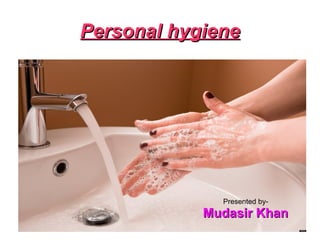
Personal hygienePersonal hygiene
Presented by-
Mudasir KhanMudasir Khan

Personal hygiene may be described as the
principle of maintaining cleanliness and
grooming of the body.

Personal hygiene includes washing and
grooming of-

Hair

Face and skin

Teeth

Ears

Hands and nails

Feet
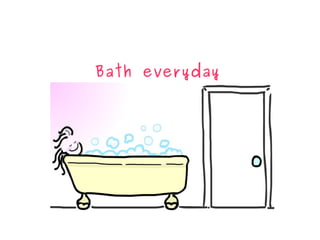
Bath everyday
Hand hygiene

Washing hands properly is the most effective
way of preventing transmission of
communicable diseases.

Washing your hands with soap and water can
avoid illnesses likes-

Common cold

Influenza

Hepatitis A

Acute gastroenteritis

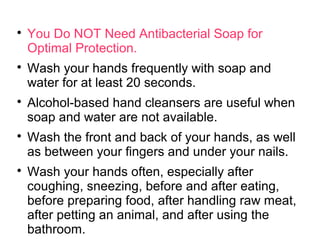
You Do NOT Need Antibacterial Soap for
Optimal Protection.

Wash your hands frequently with soap and
water for at least 20 seconds.

Alcohol-based hand cleansers are useful when
soap and water are not available.

Wash the front and back of your hands, as well
as between your fingers and under your nails.

Wash your hands often, especially after
coughing, sneezing, before and after eating,
before preparing food, after handling raw meat,
after petting an animal, and after using the
bathroom.
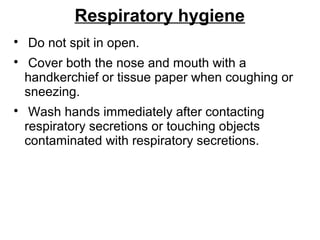
Respiratory hygiene

Do not spit in open.

Cover both the nose and mouth with a
handkerchief or tissue paper when coughing or
sneezing.

Wash hands immediately after contacting
respiratory secretions or touching objects
contaminated with respiratory secretions.
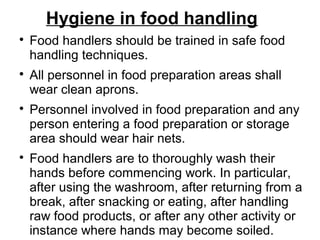
Hygiene in food handling

Food handlers should be trained in safe food
handling techniques.

All personnel in food preparation areas shall
wear clean aprons.

Personnel involved in food preparation and any
person entering a food preparation or storage
area should wear hair nets.

Food handlers are to thoroughly wash their
hands before commencing work. In particular,
after using the washroom, after returning from a
break, after snacking or eating, after handling
raw food products, or after any other activity or
instance where hands may become soiled.

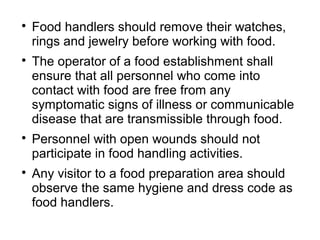
Food handlers should remove their watches,
rings and jewelry before working with food.

The operator of a food establishment shall
ensure that all personnel who come into
contact with food are free from any
symptomatic signs of illness or communicable
disease that are transmissible through food.

Personnel with open wounds should not
participate in food handling activities.

Any visitor to a food preparation area should
observe the same hygiene and dress code as
food handlers.

Hair-

Scalp secretes oil, which attracts dirt. So it is
imperative to wash your hair regularly.

Do not share combs, brushes, hats, etc.

Teeth-

Brush atleast twice a day.

If possible brush after every meal or rinse your
mouth with warm water.

Do regular flossing.

Ears-

Do not use ear buds too deep as it push the
wax deep into the ear canal.

Nail-

Keeping nails trimmed and in good shape is
important in maintaining good health.

Clip nails short along their shape but do not cut
them so close that it damages the skin.

Feet-

Wash your feet atleast once a day.

Dry them carefully, especially between the toes.

Change socks daily.

Avoid walking barefoot in public areas.
References

http://articles.mercola.com/sites/articles/archive/2010/09/30/

http://www.hc-sc.gc.ca/hl-vs/iyh-vsv/diseases-maladies/hands-mains-eng.php

Guidelines on Prevention of Communicable Diseases in Schools /
Kindergartens
Personal hygiene

Personal hygiene

  • 1.
    Personal hygienePersonal hygiene Presentedby- Mudasir KhanMudasir Khan
  • 2.
     Personal hygiene maybe described as the principle of maintaining cleanliness and grooming of the body.  Personal hygiene includes washing and grooming of-  Hair  Face and skin  Teeth  Ears  Hands and nails  Feet
  • 3.
  • 4.
    Hand hygiene  Washing handsproperly is the most effective way of preventing transmission of communicable diseases.  Washing your hands with soap and water can avoid illnesses likes-  Common cold  Influenza  Hepatitis A  Acute gastroenteritis
  • 5.
     You Do NOTNeed Antibacterial Soap for Optimal Protection.  Wash your hands frequently with soap and water for at least 20 seconds.  Alcohol-based hand cleansers are useful when soap and water are not available.  Wash the front and back of your hands, as well as between your fingers and under your nails.  Wash your hands often, especially after coughing, sneezing, before and after eating, before preparing food, after handling raw meat, after petting an animal, and after using the bathroom.
  • 6.
    Respiratory hygiene  Do notspit in open.  Cover both the nose and mouth with a handkerchief or tissue paper when coughing or sneezing.  Wash hands immediately after contacting respiratory secretions or touching objects contaminated with respiratory secretions.
  • 7.
    Hygiene in foodhandling  Food handlers should be trained in safe food handling techniques.  All personnel in food preparation areas shall wear clean aprons.  Personnel involved in food preparation and any person entering a food preparation or storage area should wear hair nets.  Food handlers are to thoroughly wash their hands before commencing work. In particular, after using the washroom, after returning from a break, after snacking or eating, after handling raw food products, or after any other activity or instance where hands may become soiled.
  • 8.
     Food handlers shouldremove their watches, rings and jewelry before working with food.  The operator of a food establishment shall ensure that all personnel who come into contact with food are free from any symptomatic signs of illness or communicable disease that are transmissible through food.  Personnel with open wounds should not participate in food handling activities.  Any visitor to a food preparation area should observe the same hygiene and dress code as food handlers.
  • 9.
     Hair-  Scalp secretes oil,which attracts dirt. So it is imperative to wash your hair regularly.  Do not share combs, brushes, hats, etc.  Teeth-  Brush atleast twice a day.  If possible brush after every meal or rinse your mouth with warm water.  Do regular flossing.  Ears-  Do not use ear buds too deep as it push the wax deep into the ear canal.
  • 10.
     Nail-  Keeping nails trimmedand in good shape is important in maintaining good health.  Clip nails short along their shape but do not cut them so close that it damages the skin.  Feet-  Wash your feet atleast once a day.  Dry them carefully, especially between the toes.  Change socks daily.  Avoid walking barefoot in public areas.
  • 11.