Hand Washing
Lanette Dumas
Internet in Education
March 4, 2015
Audience and
Objectives
The following video is for
patients, families and visitors.
You will learn the why, when and
how of hand washing.
You will show with 100%
accuracy how to wash hands.
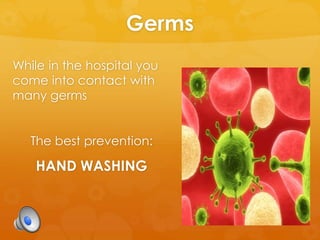
Germs
While in the hospital you
come into contact with
many germs
The best prevention:
HAND WASHING
Whens of Hand Washing
After using the bathroom
Before and after eating
After coughing or sneezing
After using tissues
Whenever you touch any
surfaces or objects that
may be dirty
Whens of hand washing
for families and visitors
When entering or leaving
the patient’s room
After touching the patient
After touching or changing
the patient’s linen
After touching any objects
in the patient’s room
How to Wash Hands
Here is brief 4 minute instructional video
by Grey Bruce Health Unit.
Important Tips
Use warm water and about a quarter-
size amount of soap
Rub hands together quickly and scrub
Pay attention to:
Your nails
Between your fingers and
Scrub up to your wrists
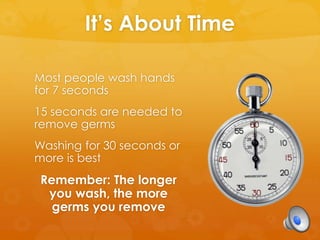
It’s About Time
Most people wash hands
for 7 seconds
15 seconds are needed to
remove germs
Washing for 30 seconds or
more is best
Remember: The longer
you wash, the more
germs you remove
Hand Sanitizers
Alcohol-based hand gels
may kill more germs than
soap and water
Use them when your hands
aren’t visibly dirty
When buying gels look for
60 percent alcohol content
anything less may not work
How to Use an
Alcohol-base Cleaner
Use about a quarter-sized amount of gel
Spread into the palm of your hand
Rub your hands together quickly
Clean the backs of your hands
Clean between your fingers and up to
your wrists
Let your hands dry
What About
Antimicrobial Soaps?
Antimicrobial soaps come in bar form
or liquid
Are no better at removing germs
than regular soap
Alcohol-base cleaners
Come in sprays or gels and
don’t need water
Are as effective as soap and
water
So when choosing between
antibacterial soaps versus
gels, it’s better to choose an
alcohol-based gel
Quick Tips
Hand washing is the first
defense against germs
Wash hands when they
are dirty and if in doubt –
WASH HANDS
Wash hands for 30
seconds or more
Alcohol-based gels/sprays
are great against germs
Any questions?
References
Landers, T., Abusalem, S., Coty, M., Bingham, J. (2012).
Patient-centered hand hygiene: The next step in
infection prevention. American Journal of Infection
Control 40, S11-S17. doi: 10.1016/j.ajic.
2012.02.006
Macintosh. (2013). [Question Mark]. Retrieved from Clip
Art browser.
Macintosh. (2013). [Stopwatch]. Retrieved from Clip Art
browser.
Macintosh. (2013). [Woman]. Retrieved from Clip Art
browser.
References
Microsoft office. (2013). [Boy sneezing]. Retrieved
from http://office.microsoft.com
Microsoft office. (2013). [Hand washing]. Retrieved
from http://office.microsoft.com
Microsoft office. (2013). [Germs]. Retrieved from
http://office.microsoft.com
Microsoft office. (2013). [Liquid Soap]. Retrieved
from http://office.microsoft.com
References
Microsoft office. (2013). [Sick woman]. Retrieved
from http://office.microsoft.com
Microsoft office. (2013). [Soap]. Retrieved from
http://office.microsoft.com
Public Health Grey Bruce Health Unit. (2009). Hand
Washing. Retrieved from http://
youtu.beLu68k72Ym6g.
References
Moody, J., Septimus, E., Hickok, J., Huang, S., Platt,
R., Gombosev, A., Terpstra, L., Avery, T.,
Lankiewicz, J., Perlin, J. (2013). Infection
prevention practices in adult intensive care
units in a large community hospital system
after implementing strategies to reduce
health care –associated methicillin-resistant
Staphylococcus aureus infections.
American Journal of Infection Control
41,126-130. doi: 10.1016/j.ajic.2012.02.017
When to clean you hands: for patients (2013).
Tampa, Fl., Patient Education. Florida
Hospital – Carrollwood

Handwashing Basics

  • 1.
    Hand Washing Lanette Dumas Internetin Education March 4, 2015
  • 2.
    Audience and Objectives The followingvideo is for patients, families and visitors. You will learn the why, when and how of hand washing. You will show with 100% accuracy how to wash hands.
  • 3.
    Germs While in thehospital you come into contact with many germs The best prevention: HAND WASHING
  • 4.
    Whens of HandWashing After using the bathroom Before and after eating After coughing or sneezing After using tissues Whenever you touch any surfaces or objects that may be dirty
  • 5.
    Whens of handwashing for families and visitors When entering or leaving the patient’s room After touching the patient After touching or changing the patient’s linen After touching any objects in the patient’s room
  • 6.
    How to WashHands Here is brief 4 minute instructional video by Grey Bruce Health Unit.
  • 7.
    Important Tips Use warmwater and about a quarter- size amount of soap Rub hands together quickly and scrub Pay attention to: Your nails Between your fingers and Scrub up to your wrists
  • 8.
    It’s About Time Mostpeople wash hands for 7 seconds 15 seconds are needed to remove germs Washing for 30 seconds or more is best Remember: The longer you wash, the more germs you remove
  • 9.
    Hand Sanitizers Alcohol-based handgels may kill more germs than soap and water Use them when your hands aren’t visibly dirty When buying gels look for 60 percent alcohol content anything less may not work
  • 10.
    How to Usean Alcohol-base Cleaner Use about a quarter-sized amount of gel Spread into the palm of your hand Rub your hands together quickly Clean the backs of your hands Clean between your fingers and up to your wrists Let your hands dry
  • 11.
    What About Antimicrobial Soaps? Antimicrobialsoaps come in bar form or liquid Are no better at removing germs than regular soap
  • 12.
    Alcohol-base cleaners Come insprays or gels and don’t need water Are as effective as soap and water So when choosing between antibacterial soaps versus gels, it’s better to choose an alcohol-based gel
  • 13.
    Quick Tips Hand washingis the first defense against germs Wash hands when they are dirty and if in doubt – WASH HANDS Wash hands for 30 seconds or more Alcohol-based gels/sprays are great against germs Any questions?
  • 14.
    References Landers, T., Abusalem,S., Coty, M., Bingham, J. (2012). Patient-centered hand hygiene: The next step in infection prevention. American Journal of Infection Control 40, S11-S17. doi: 10.1016/j.ajic. 2012.02.006 Macintosh. (2013). [Question Mark]. Retrieved from Clip Art browser. Macintosh. (2013). [Stopwatch]. Retrieved from Clip Art browser. Macintosh. (2013). [Woman]. Retrieved from Clip Art browser.
  • 15.
    References Microsoft office. (2013).[Boy sneezing]. Retrieved from http://office.microsoft.com Microsoft office. (2013). [Hand washing]. Retrieved from http://office.microsoft.com Microsoft office. (2013). [Germs]. Retrieved from http://office.microsoft.com Microsoft office. (2013). [Liquid Soap]. Retrieved from http://office.microsoft.com
  • 16.
    References Microsoft office. (2013).[Sick woman]. Retrieved from http://office.microsoft.com Microsoft office. (2013). [Soap]. Retrieved from http://office.microsoft.com Public Health Grey Bruce Health Unit. (2009). Hand Washing. Retrieved from http:// youtu.beLu68k72Ym6g.
  • 17.
    References Moody, J., Septimus,E., Hickok, J., Huang, S., Platt, R., Gombosev, A., Terpstra, L., Avery, T., Lankiewicz, J., Perlin, J. (2013). Infection prevention practices in adult intensive care units in a large community hospital system after implementing strategies to reduce health care –associated methicillin-resistant Staphylococcus aureus infections. American Journal of Infection Control 41,126-130. doi: 10.1016/j.ajic.2012.02.017 When to clean you hands: for patients (2013). Tampa, Fl., Patient Education. Florida Hospital – Carrollwood

Editor's Notes

  • #3 Lack of knowledge, perceived importance of hand washing, physical impairments and movements are barriers to patients. Healthcare workers need to be aware of these barriers and promote better hand hygiene in the hospital setting.
  • #4 Even though nurses recognize the importance of hand washing as first defense against spread of infections, many patients are not consistently provided with assistance on their own hand hygiene.
  • #5 Consistent use of basic practices such as hand washing can reduce hospital-acquired infections according to the Society of Healthcare Epidemiology of America Compendium (2013).
  • #6 Many of the hospitals have antimicrobial foam dispensers outside of patients’ rooms. This is a quick, easy and extremely effective way to keep infection from spreading when you enter and leave your loved one’s room.
  • #7 This informative video goes over techniques of hand washing. Click on the black box to view the video and hit the play button.
  • #8 Wash hands for at least 15 seconds, rinse by letting the water run down your wrists and fingers. Use a paper towel to pat hands dry. Scrubbing hands with paper towels creates friction, possibly opening up areas for infection.
  • #9 Another method for timing yourself, silently sing the ABCs. Guidelines for timing and technique in hand washing are addressed by most healthcare facilities, but there are few recommendations for patient hand washing. Implementing an effective hand hygiene program relies on best practice recommendations geared toward patient education.
  • #10 Alternative hand hygiene formats can include leave-on, rinse, foam, gel or wipes for patient use. Remember to look at the dispensing system to see what may work best for the patient and what physical limitations of the patient may exist. Hand sanitizers have been reported as a better compliance method for infection prevention.
  • #11 Do not wave hands in the air to dry and do not wipe off the sanitizer with paper towels. Remember the key component of the gel is the alcohol. If you dry your hands, you’ve defeated its purpose.
  • #12 Antimicrobial soaps show no evidence that they are better than regular soap. Individual preferences and cost are a factor in purchasing what you may use at home. The key is to choose a product you and your family like and will use.
  • #13 Antibacterial gels are great to have in your purse, glove compartment, gym bag or locker, and office. Comparison shop when looking for an antibacterial gel that works best for you and your family. Remember to get one with 60% or more alcohol content.
  • #14 In conclusion, efforts by healthcare workers regarding education patients about basic hand hygiene needs to be promoted. The Joint Commission requires hospitals to provide patients with information on hand hygiene and provides an excellent opportunity to educate patients, families and visitors. With the implementation of these tools, nurses can expand on educating patients on hand hygiene.