Open Ed for
Public Profs
Students &
Scholarship in a
Connected World
CCBYSAND tim_d https://flic.kr/p/eJFr8
What is “Public” Education?
At one NH state university, only 9% of
revenues come from the state
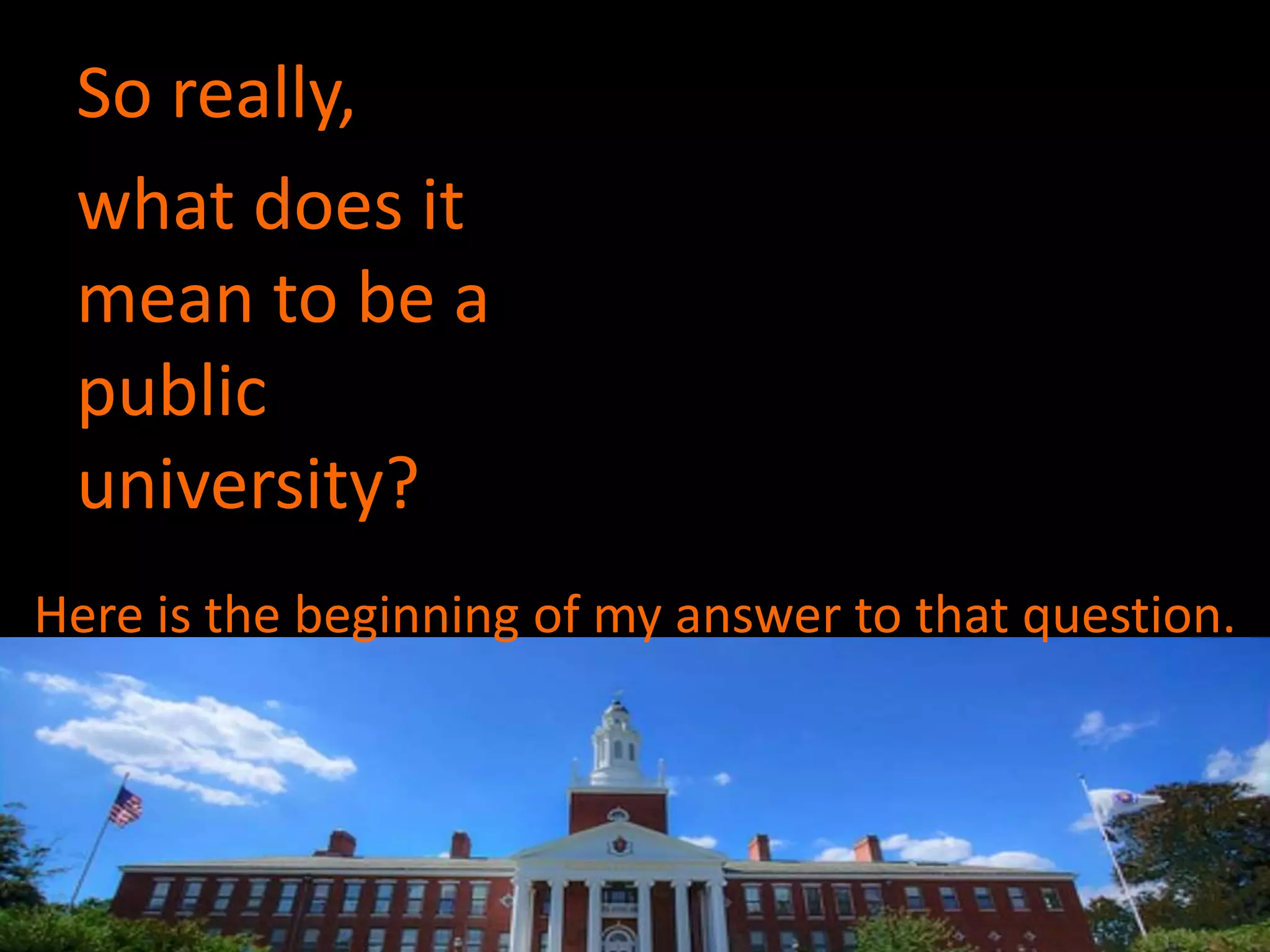
So really,
what does it
mean to be a
public
university?
Here is the beginning of my answer to that question.
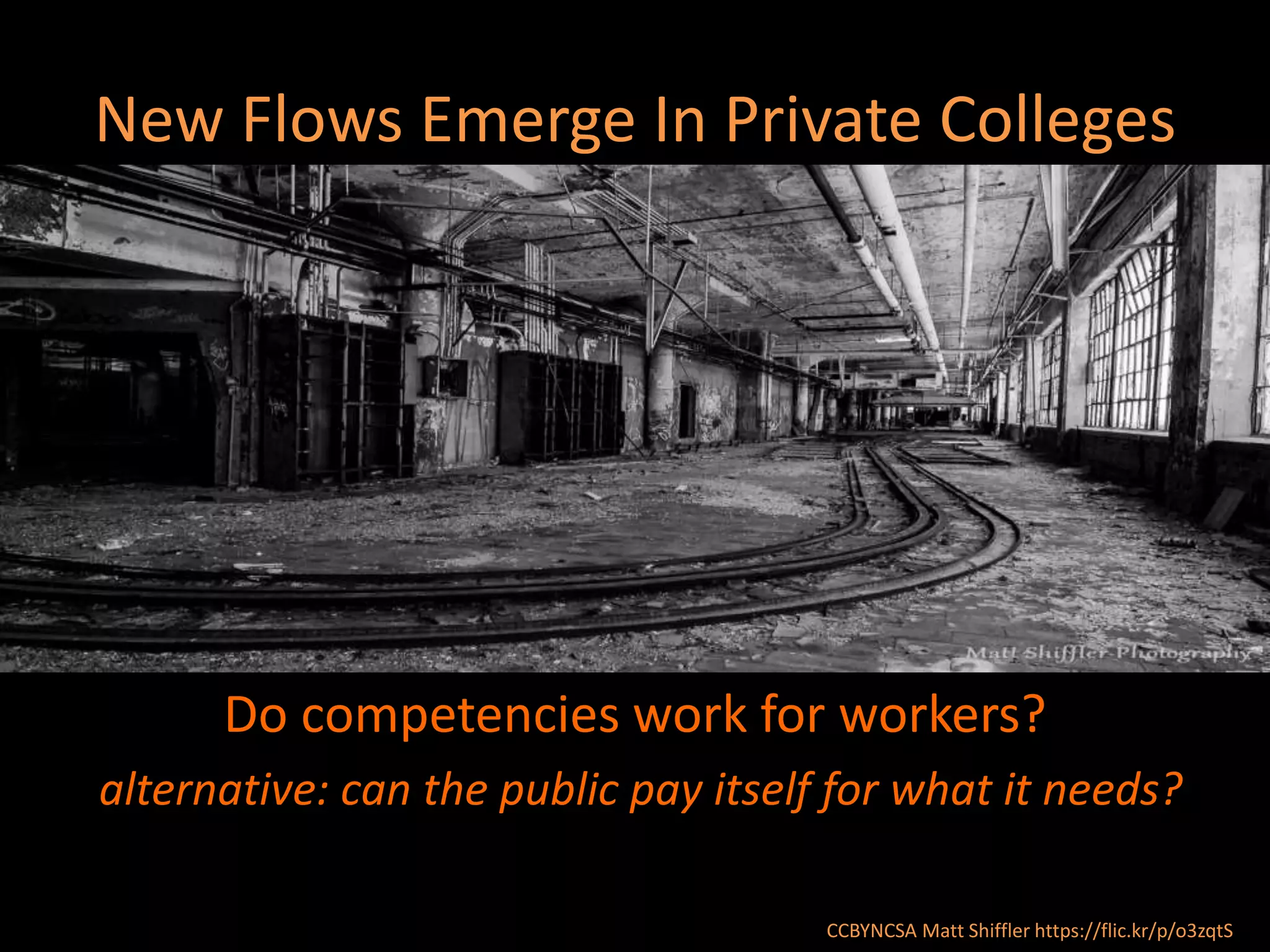
New Flows Emerge In Private Colleges
Do competencies work for workers?
alternative: can the public pay itself for what it needs?
CCBYNCSA Matt Shiffler https://flic.kr/p/o3zqtS
Public Colleges
Turn to Private
Enterprise
will these partnerships
save public universities?
(Editorial Guess: No.)
CCBYNCSA Chris https://flic.kr/p/2jJZ2
Bottom Line
I’m (just) a professor…
…so what can I contribute
to the effort to revision
and strengthen public
higher ed?
CCBYNC Bernard Horowitz https://flic.kr/p/frKz
I am a teacher and a scholar.
• I teach courses and
work with students.
• I do research and serve
my profession.
What does it mean to
do this publicly?
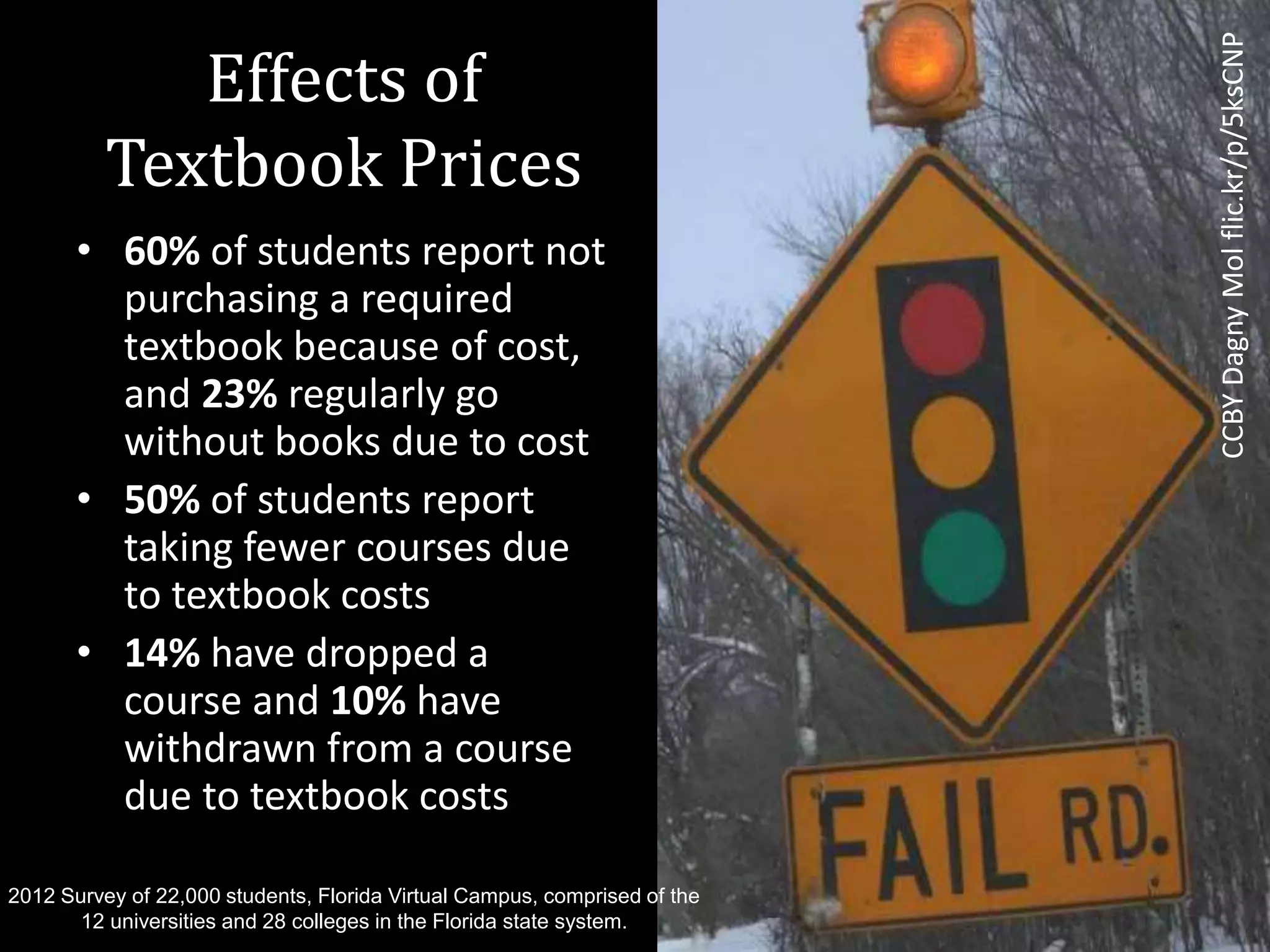
Effects of
Textbook Prices
• 60% of students report not
purchasing a required
textbook because of cost,
and 23% regularly go
without books due to cost
• 50% of students report
taking fewer courses due
to textbook costs
• 14% have dropped a
course and 10% have
withdrawn from a course
due to textbook costs
2012 Survey of 22,000 students, Florida Virtual Campus, comprised of the
12 universities and 28 colleges in the Florida state system.
CCBYDagnyMolflic.kr/p/5ksCNP
Adopt!
It’sFREEandFINE!
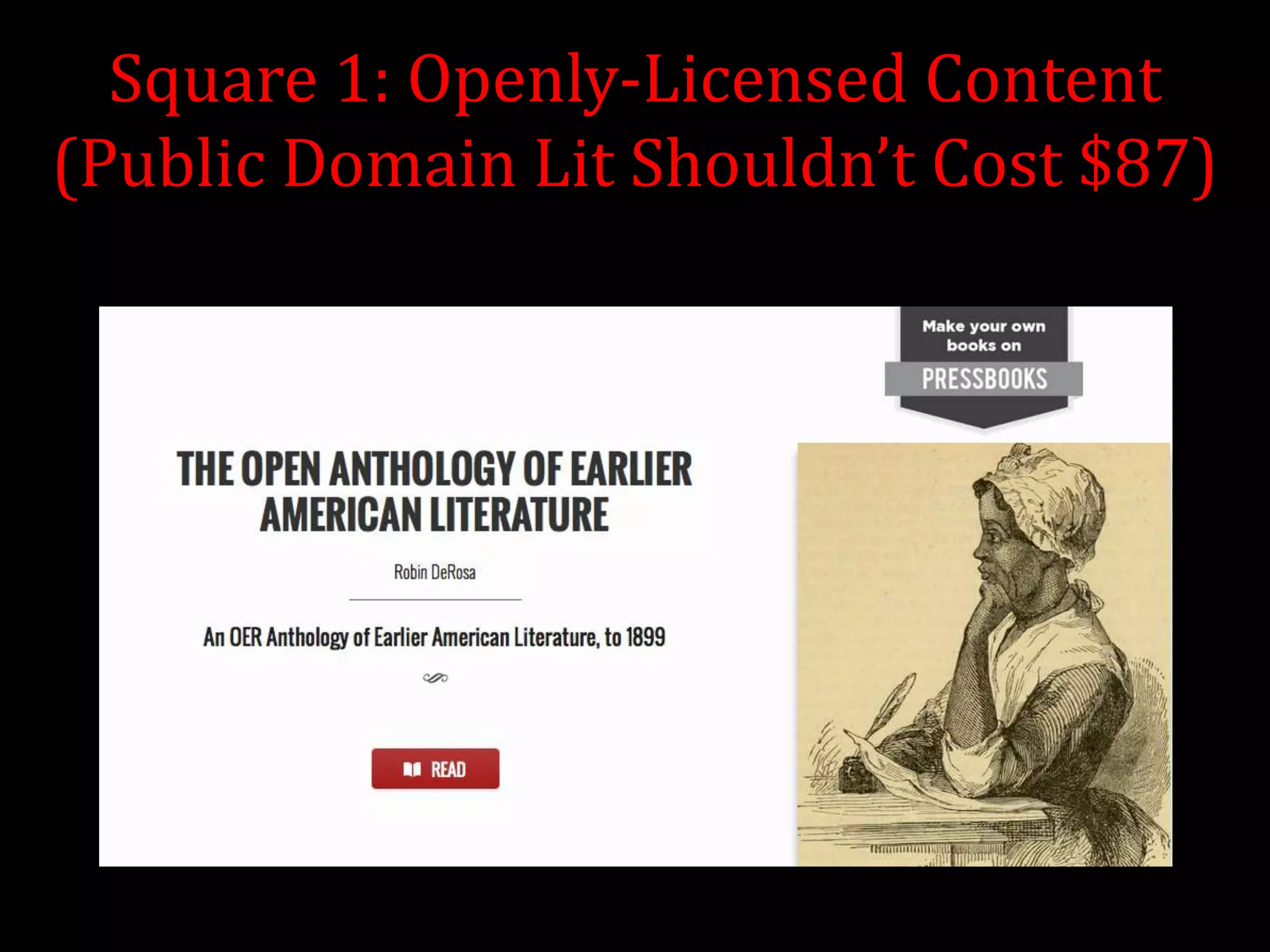
Square 1: Openly-Licensed Content
(Public Domain Lit Shouldn’t Cost $87)
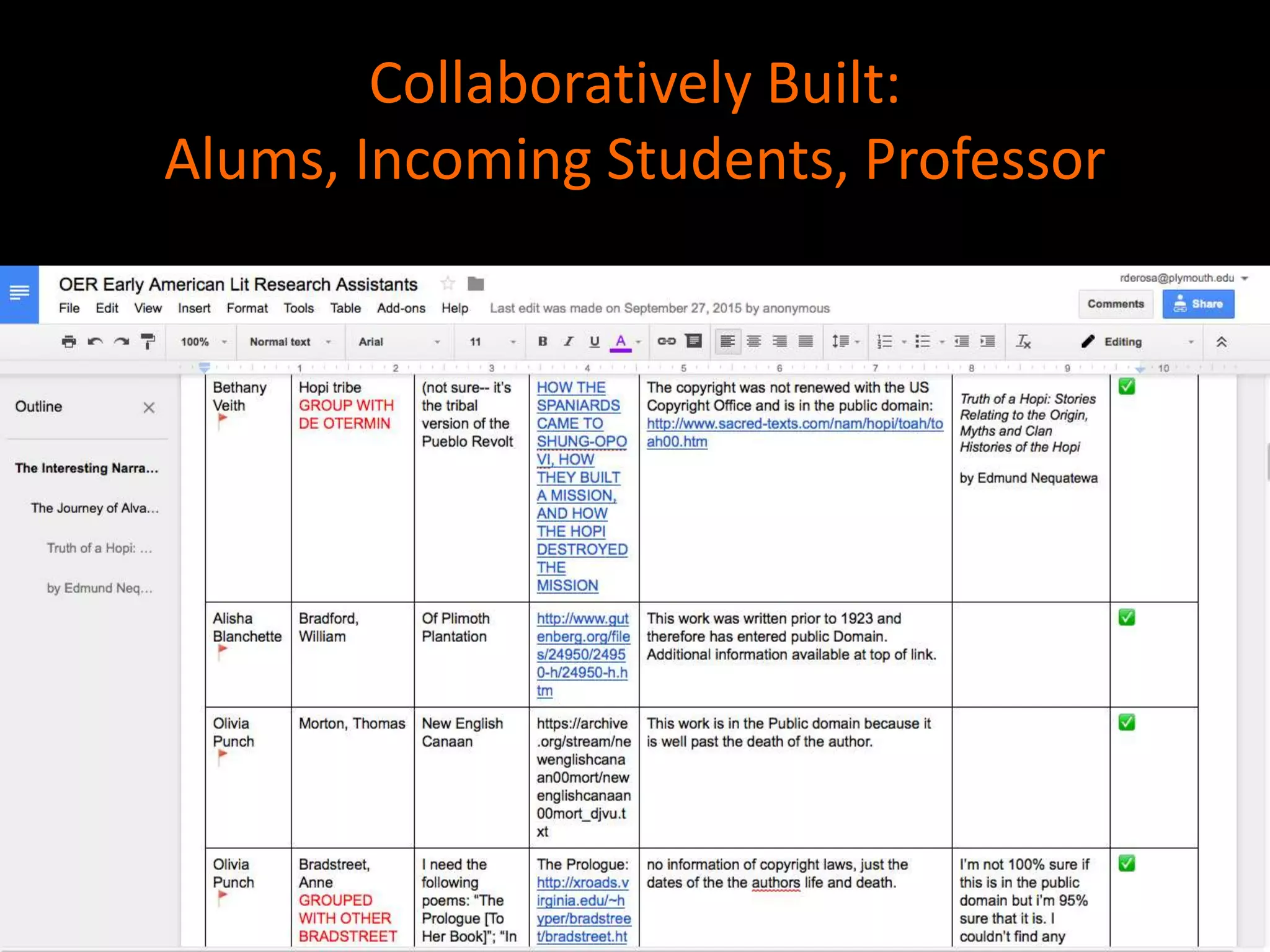
Collaboratively Built:
Alums, Incoming Students, Professor
Constantly
Evolving:
Students &
Teachers
Add,
Improve,
Share
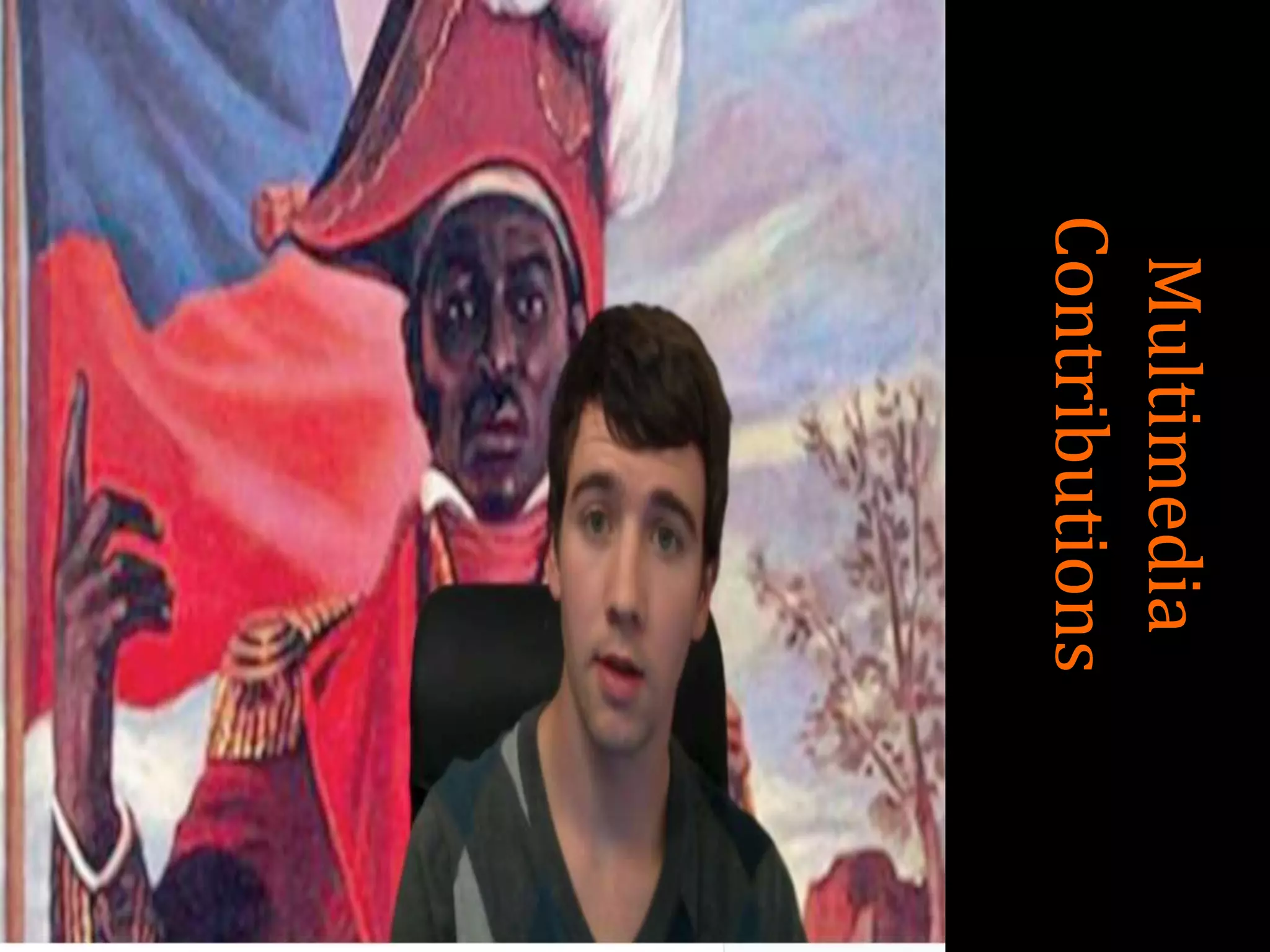
Multimedia
Contributions
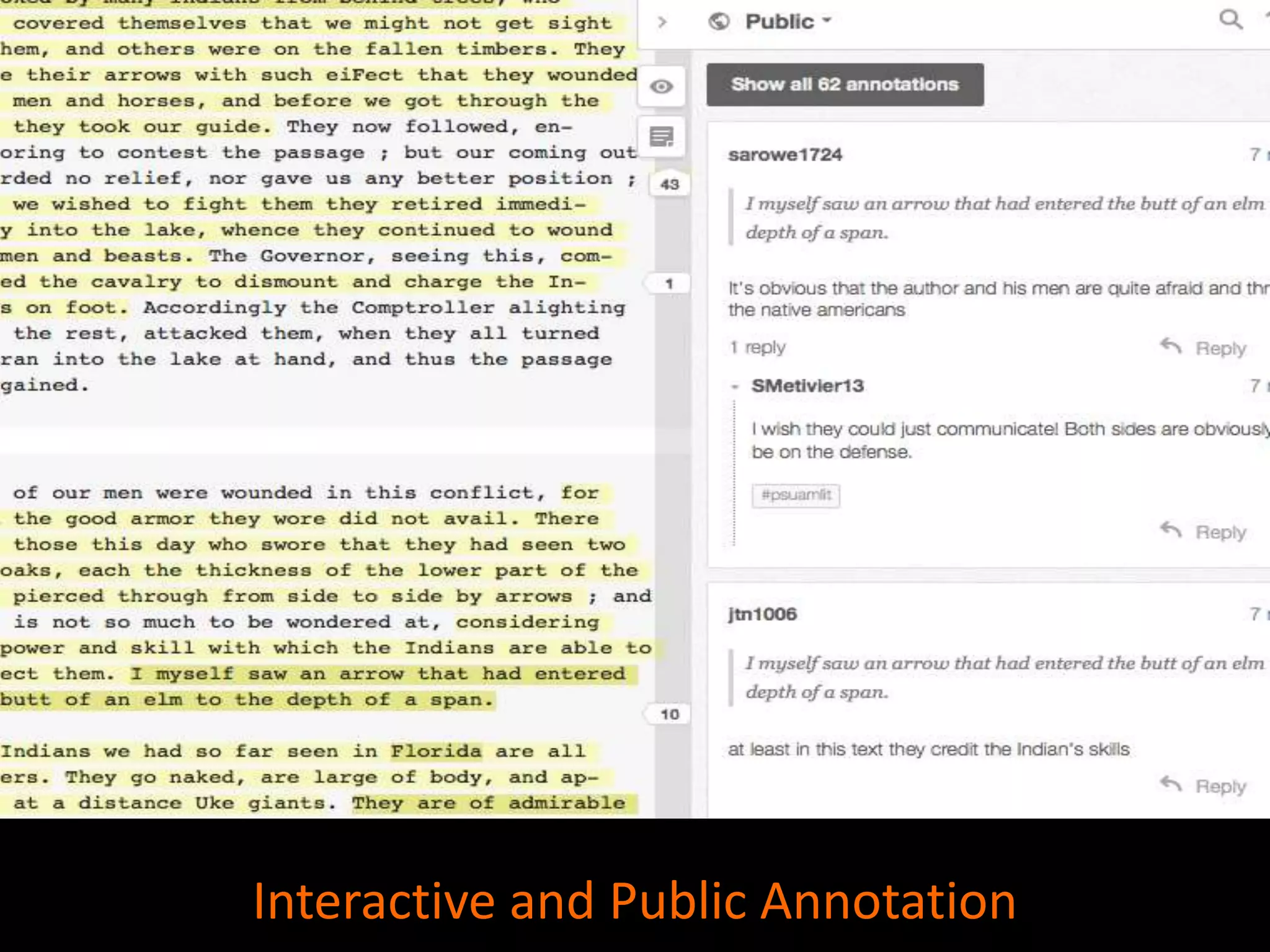
Interactive and Public Annotation
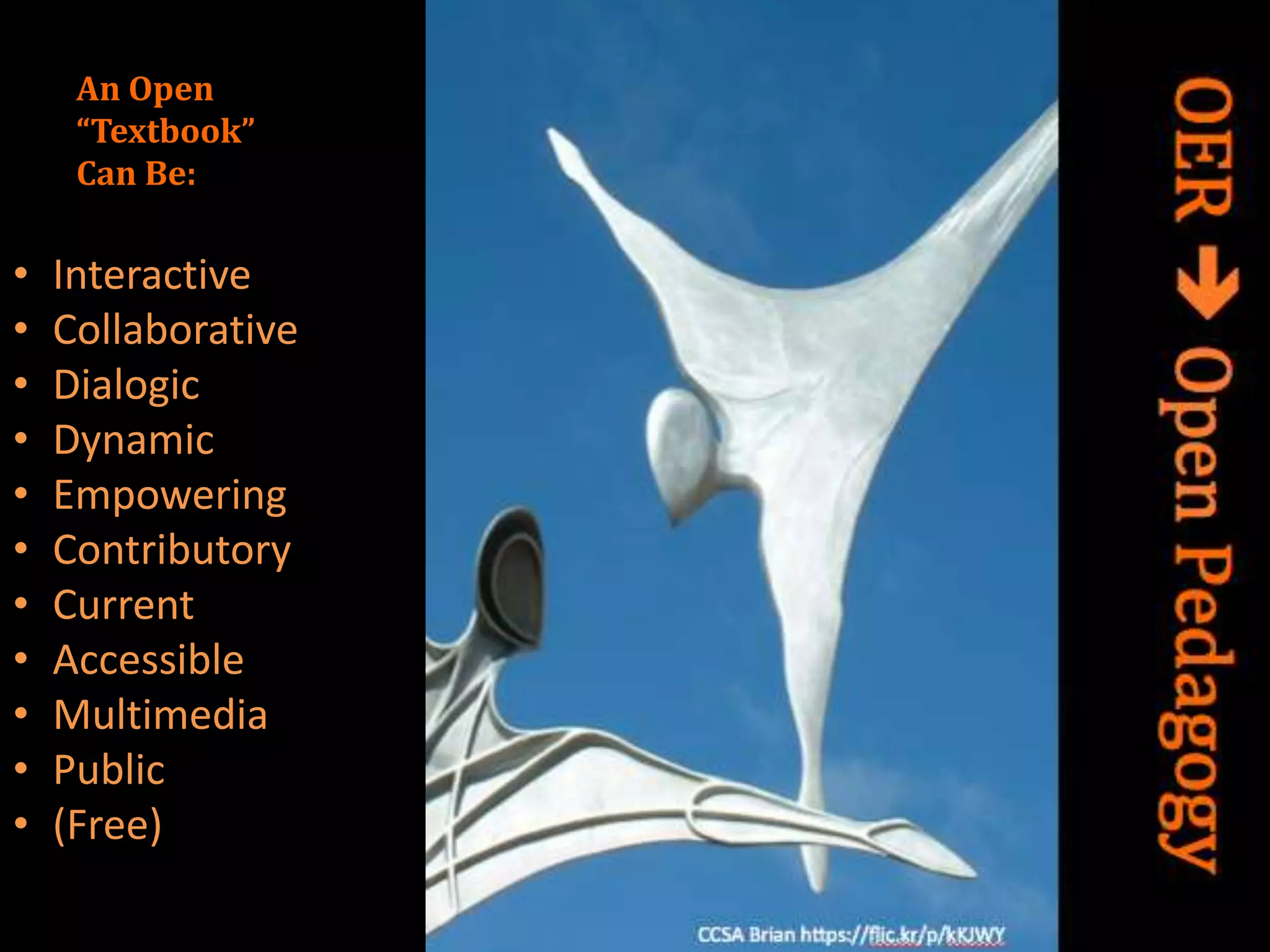
An Open
“Textbook”
Can Be:
• Interactive
• Collaborative
• Dialogic
• Dynamic
• Empowering
• Contributory
• Current
• Accessible
• Multimedia
• Public
• (Free)
Open Education
• Open
Educational
Resources (OER)
• Open Pedagogy
• Open Access to
research
Open Pedagogy
• Improves access to education.
• Treats education as a learner-driven
process.
• Stresses community and
collaboration over content.
• Connects the university to the wider
public.
Access
• Save money on
textbooks, ok
• But what other
barriers exist
to access?
• Digital divide
• Universal
design
• Trolling,
violence
CCBY Jonathan Brodsky https://flic.kr/p/37z2C2
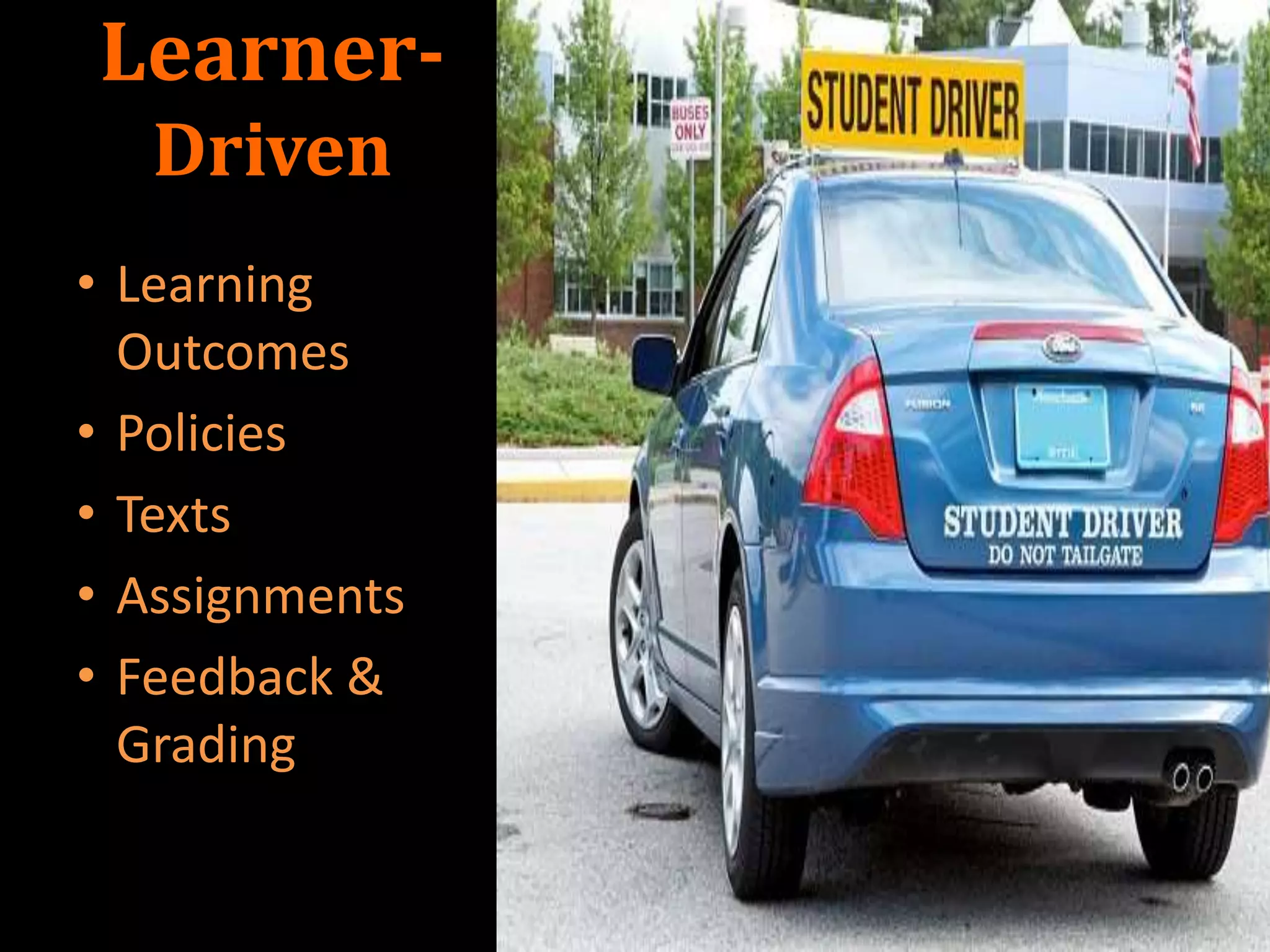
Learner-
Driven
• Learning
Outcomes
• Policies
• Texts
• Assignments
• Feedback &
Grading
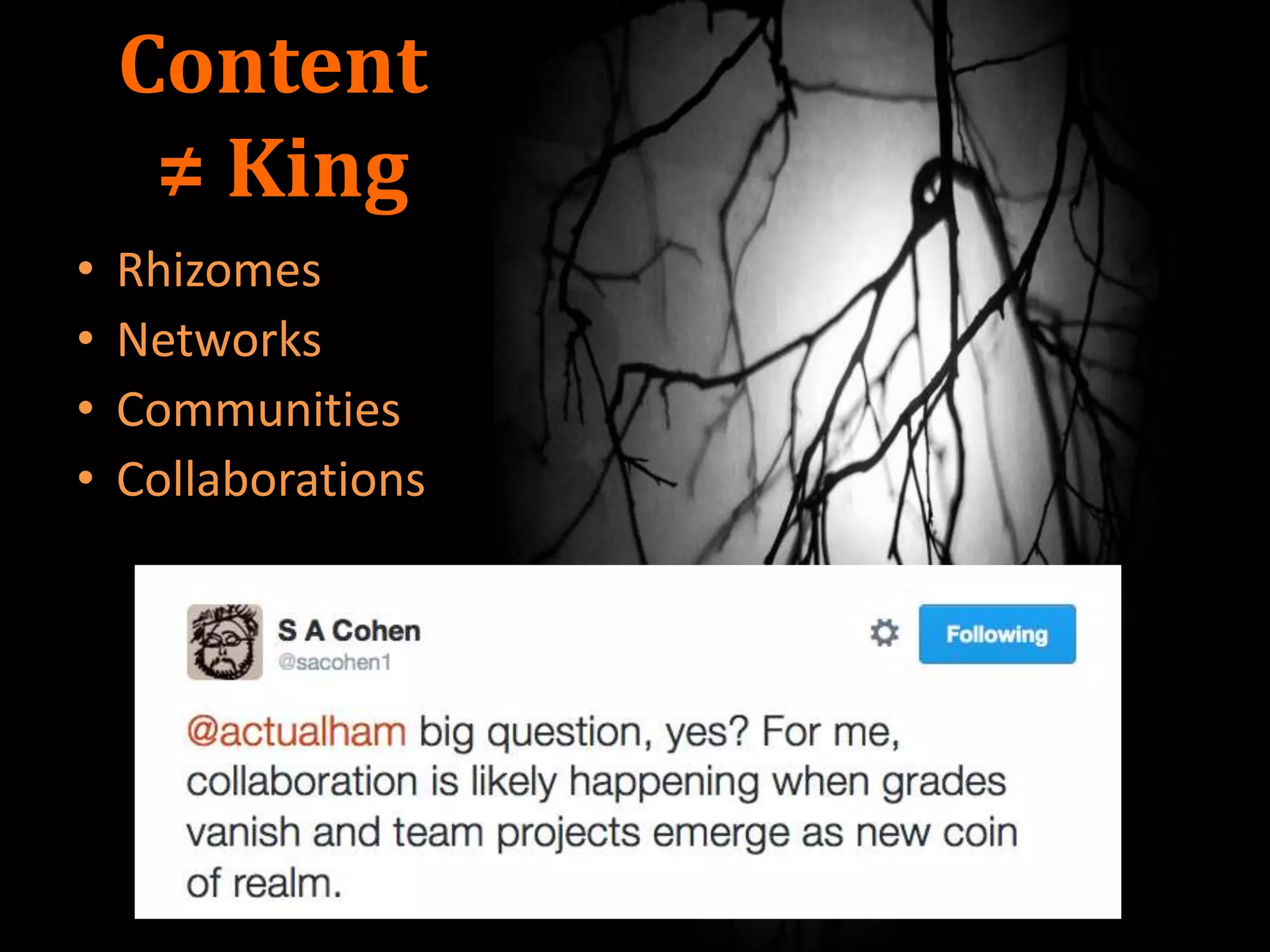
Content
≠ King
• Rhizomes
• Networks
• Communities
• Collaborations
Public
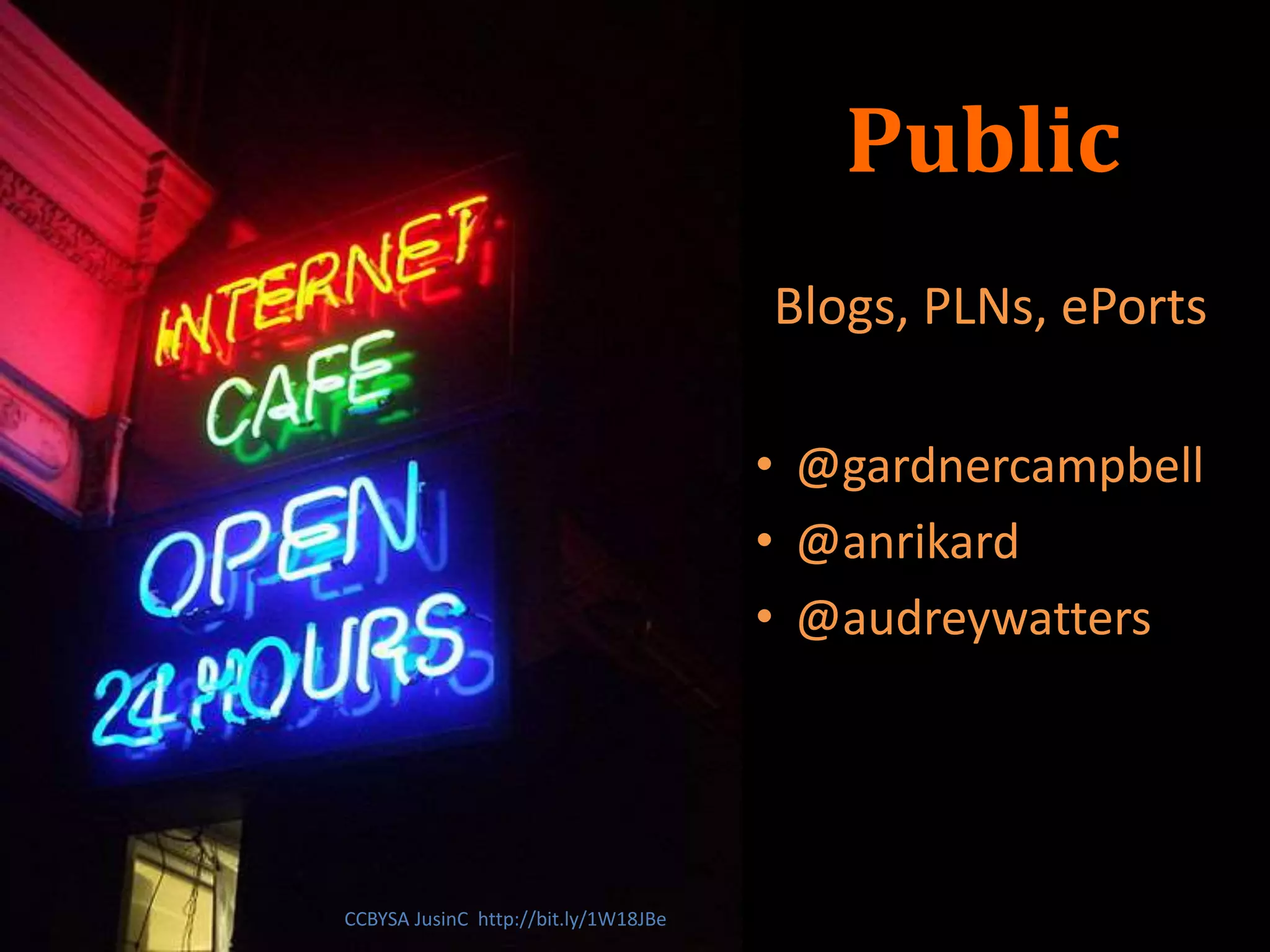
Blogs, PLNs, ePorts
• @gardnercampbell
• @anrikard
• @audreywatters
CCBYSA JusinC http://bit.ly/1W18JBe
Personal
Reflective
Portfolio
Portal for sharing
and collaborating
What is the Internet FOR, Anyway?
Pre-Med
Sport Performance
Art Therapy
Music Production
Sustainable Food Production
International Business
Weather Journalism
Data Analytics
Veterinary Medicine
Dance Entrepreneurship
Oh yeah….and English!
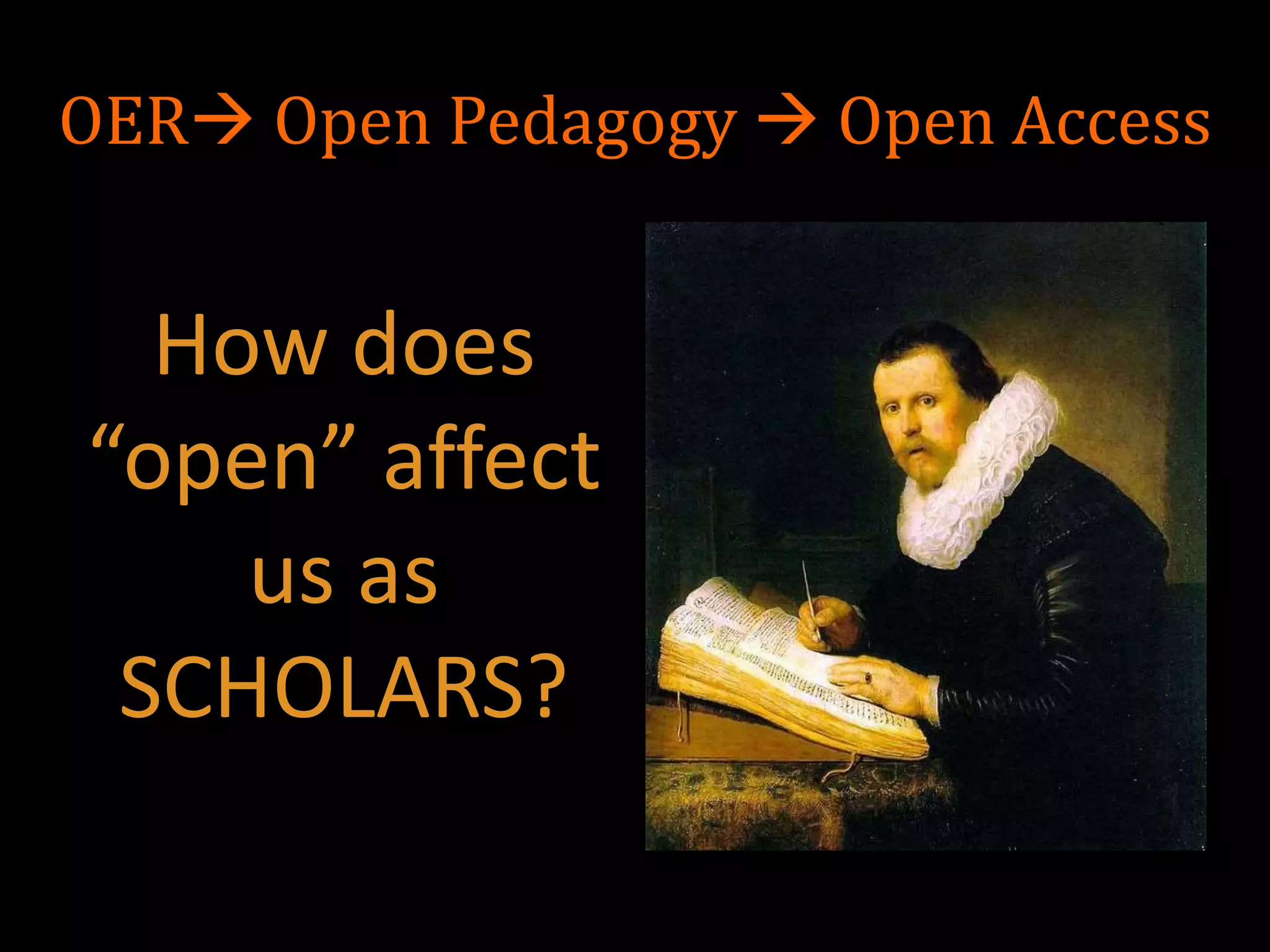
OER Open Pedagogy  Open Access
How does
“open” affect
us as
SCHOLARS?
CC BY Cable Green: http://www.slideshare.net/cgreen
What Will the
Digital Age
Enable?
Technology allows for
efficient worldwide
dissemination of research
and scholarship. But
closed distribution models
can get in the way. Open
access helps to fulfill the
promise of the digital age.
~Jennifer Jenkins,
Duke University Drawing: CC BY SA http://fav.me/d54zn82
to OPEN (vb.)
• Challenge barriers to access.
Be honest and critical.
• Center learners. Be radical
and real.
• Facilitate connection. Be a
sticky node, not a gate.
• Share research. Be generous
and just.
CCBYSAAntonlobohttp://bit.ly/24g4ZjO
Think about how we can:
• increase access to public
higher education (OER)
• engage learners with the
publics beyond the classroom
(OpenPed)
• maximize our public impact
as a scholars (OA)
This is the case for
public education.
This work is licensed under a
Creative Commons Attribution 4.0 International License.
Robin DeRosa
@actualham

Presentation for Bridgewater State University

  • 1.
    Open Ed for PublicProfs Students & Scholarship in a Connected World CCBYSAND tim_d https://flic.kr/p/eJFr8
  • 2.
  • 3.
    At one NHstate university, only 9% of revenues come from the state
  • 4.
    So really, what doesit mean to be a public university? Here is the beginning of my answer to that question.
  • 5.
    New Flows EmergeIn Private Colleges Do competencies work for workers? alternative: can the public pay itself for what it needs? CCBYNCSA Matt Shiffler https://flic.kr/p/o3zqtS
  • 6.
    Public Colleges Turn toPrivate Enterprise will these partnerships save public universities? (Editorial Guess: No.) CCBYNCSA Chris https://flic.kr/p/2jJZ2
  • 7.
    Bottom Line I’m (just)a professor… …so what can I contribute to the effort to revision and strengthen public higher ed? CCBYNC Bernard Horowitz https://flic.kr/p/frKz
  • 8.
    I am ateacher and a scholar. • I teach courses and work with students. • I do research and serve my profession. What does it mean to do this publicly?
  • 9.
    Effects of Textbook Prices •60% of students report not purchasing a required textbook because of cost, and 23% regularly go without books due to cost • 50% of students report taking fewer courses due to textbook costs • 14% have dropped a course and 10% have withdrawn from a course due to textbook costs 2012 Survey of 22,000 students, Florida Virtual Campus, comprised of the 12 universities and 28 colleges in the Florida state system. CCBYDagnyMolflic.kr/p/5ksCNP
  • 10.
  • 11.
    Square 1: Openly-LicensedContent (Public Domain Lit Shouldn’t Cost $87)
  • 12.
  • 13.
  • 14.
  • 15.
  • 16.
    An Open “Textbook” Can Be: •Interactive • Collaborative • Dialogic • Dynamic • Empowering • Contributory • Current • Accessible • Multimedia • Public • (Free)
  • 17.
    Open Education • Open Educational Resources(OER) • Open Pedagogy • Open Access to research
  • 18.
    Open Pedagogy • Improvesaccess to education. • Treats education as a learner-driven process. • Stresses community and collaboration over content. • Connects the university to the wider public.
  • 19.
    Access • Save moneyon textbooks, ok • But what other barriers exist to access? • Digital divide • Universal design • Trolling, violence CCBY Jonathan Brodsky https://flic.kr/p/37z2C2
  • 20.
    Learner- Driven • Learning Outcomes • Policies •Texts • Assignments • Feedback & Grading
  • 21.
    Content ≠ King • Rhizomes •Networks • Communities • Collaborations
  • 22.
    Public Blogs, PLNs, ePorts •@gardnercampbell • @anrikard • @audreywatters CCBYSA JusinC http://bit.ly/1W18JBe
  • 23.
  • 24.
    What is theInternet FOR, Anyway? Pre-Med Sport Performance Art Therapy Music Production Sustainable Food Production International Business Weather Journalism Data Analytics Veterinary Medicine Dance Entrepreneurship Oh yeah….and English!
  • 25.
    OER Open Pedagogy Open Access How does “open” affect us as SCHOLARS?
  • 26.
    CC BY CableGreen: http://www.slideshare.net/cgreen
  • 27.
    What Will the DigitalAge Enable? Technology allows for efficient worldwide dissemination of research and scholarship. But closed distribution models can get in the way. Open access helps to fulfill the promise of the digital age. ~Jennifer Jenkins, Duke University Drawing: CC BY SA http://fav.me/d54zn82
  • 28.
    to OPEN (vb.) •Challenge barriers to access. Be honest and critical. • Center learners. Be radical and real. • Facilitate connection. Be a sticky node, not a gate. • Share research. Be generous and just. CCBYSAAntonlobohttp://bit.ly/24g4ZjO
  • 29.
    Think about howwe can: • increase access to public higher education (OER) • engage learners with the publics beyond the classroom (OpenPed) • maximize our public impact as a scholars (OA) This is the case for public education.
  • 30.
    This work islicensed under a Creative Commons Attribution 4.0 International License. Robin DeRosa @actualham

Editor's Notes

  • #6 Competencies set by companies who need workers, works for companies, not workers What does it look like if the education dollars don’t flow through the private economy?
  • #12 Could be an OpenStax book or public docs or whatever
  • #22 Rhizome slide
  • #23 Gardner – personal cyberinfrastructure, tied to students not courses, lose the LMS Andrew- complexity of fac/student power Audrey- who is data for?
  • #24 Not the LMS, not a template, control to the student
  • #26 So we save students money while increasing access and value; So we transform our teaching using a critical, open pedagogy; Now what does this mean to us as SCHOLARS?