Technology for Open Collaboration
How to Harness the Power of the Digital
in an Interdisciplinary Studies Curriculum
Robin DeRosa
@actualham
The Story of IDS at Plymouth State
• Small, comprehensive public university in NH
• 4,100 undergraduates, 2,000 graduate students
• IDS began in 1974
• Averaged 10.1 enrolled majors from 1978-2014
• Added introductory and research methods courses in 2012
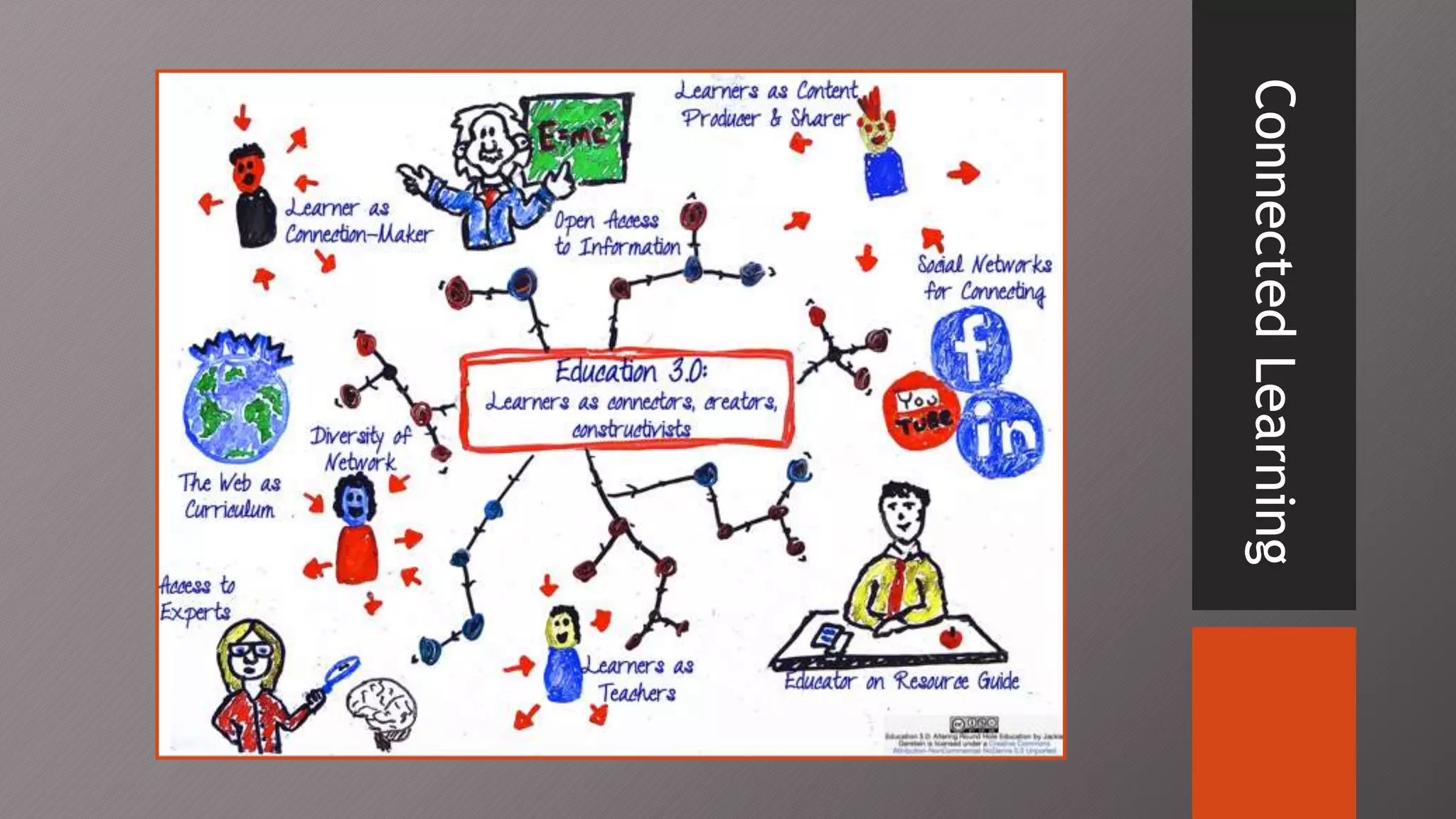
• Shifted to Connected Learning pedagogy in 2014
• Currently 90 majors (and growing by 25 per semester)
• 750% growth in enrollments
• Projected to be 3rd largest major at university within 2 years
Framing the Narrative: Connected Learning
• Students create their own majors
• Write entrance essays explaining how their coursework integrates
to move them toward their personal, intellectual, and professional
goals
• INTEGRATION is intentional
• AGENCY was incidental
• In 2014, I relaunched the courses and advising protocols around a
Connected Learning approach
ConnectedLearning
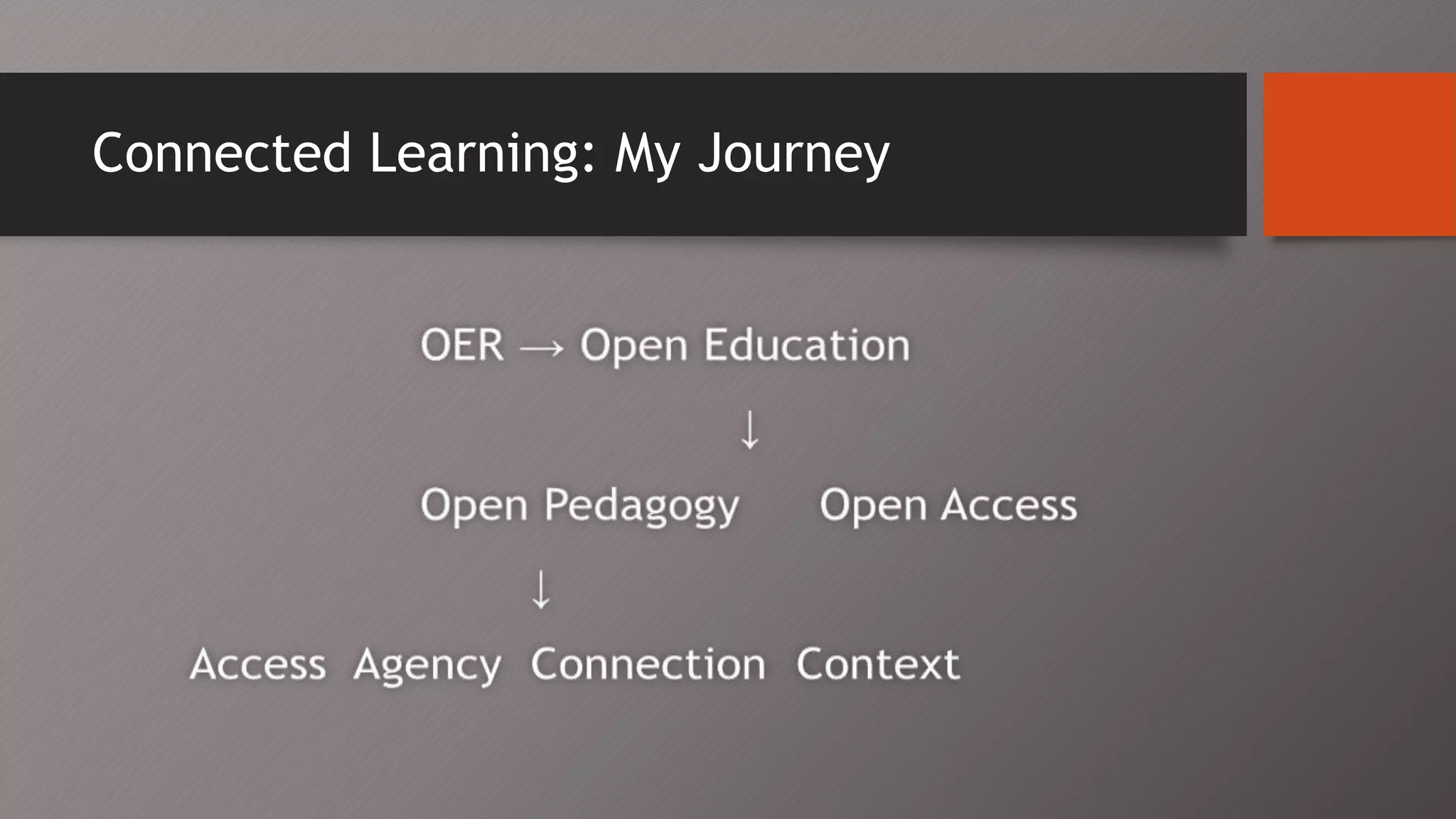
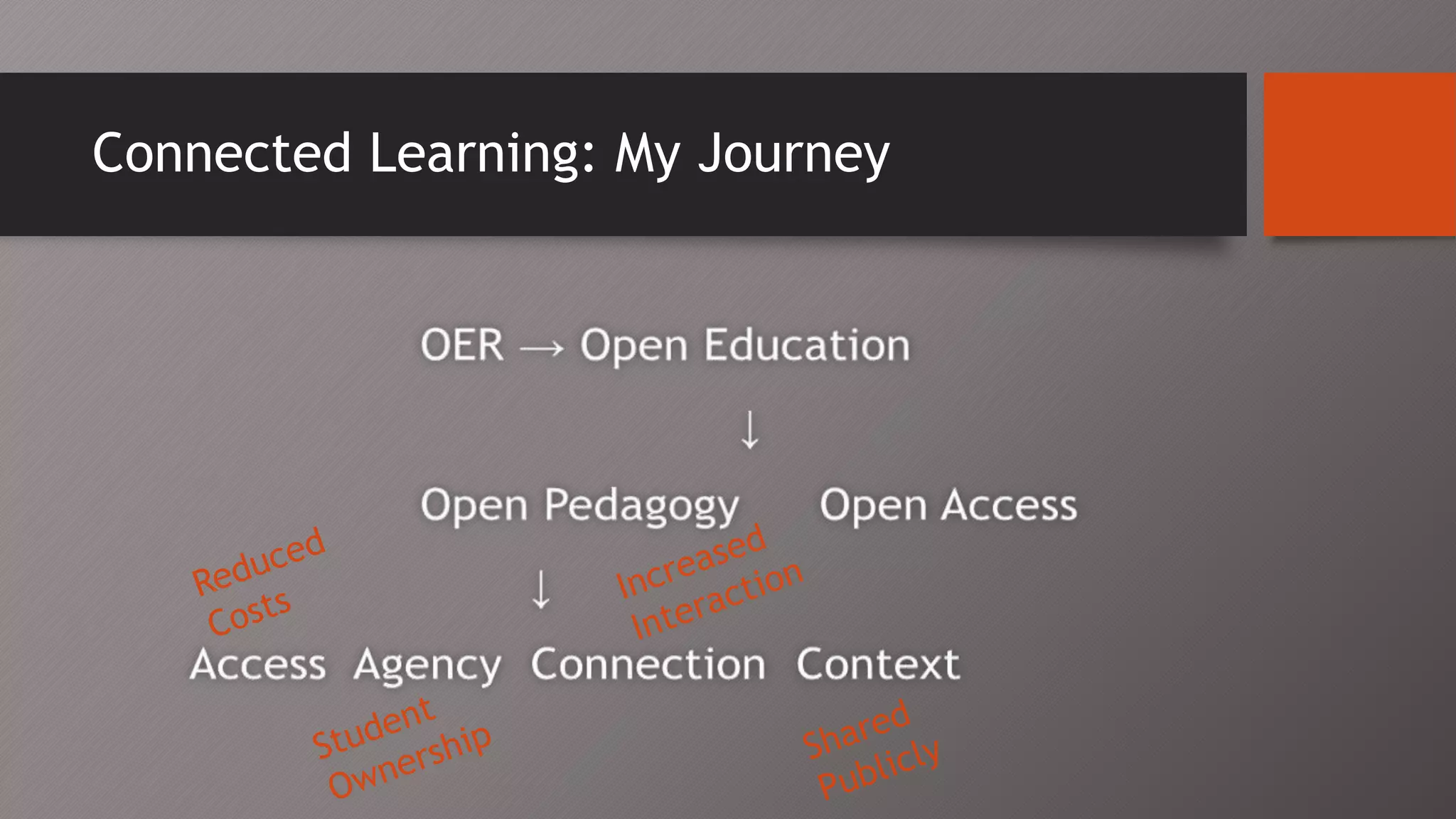
Connected Learning: My Journey
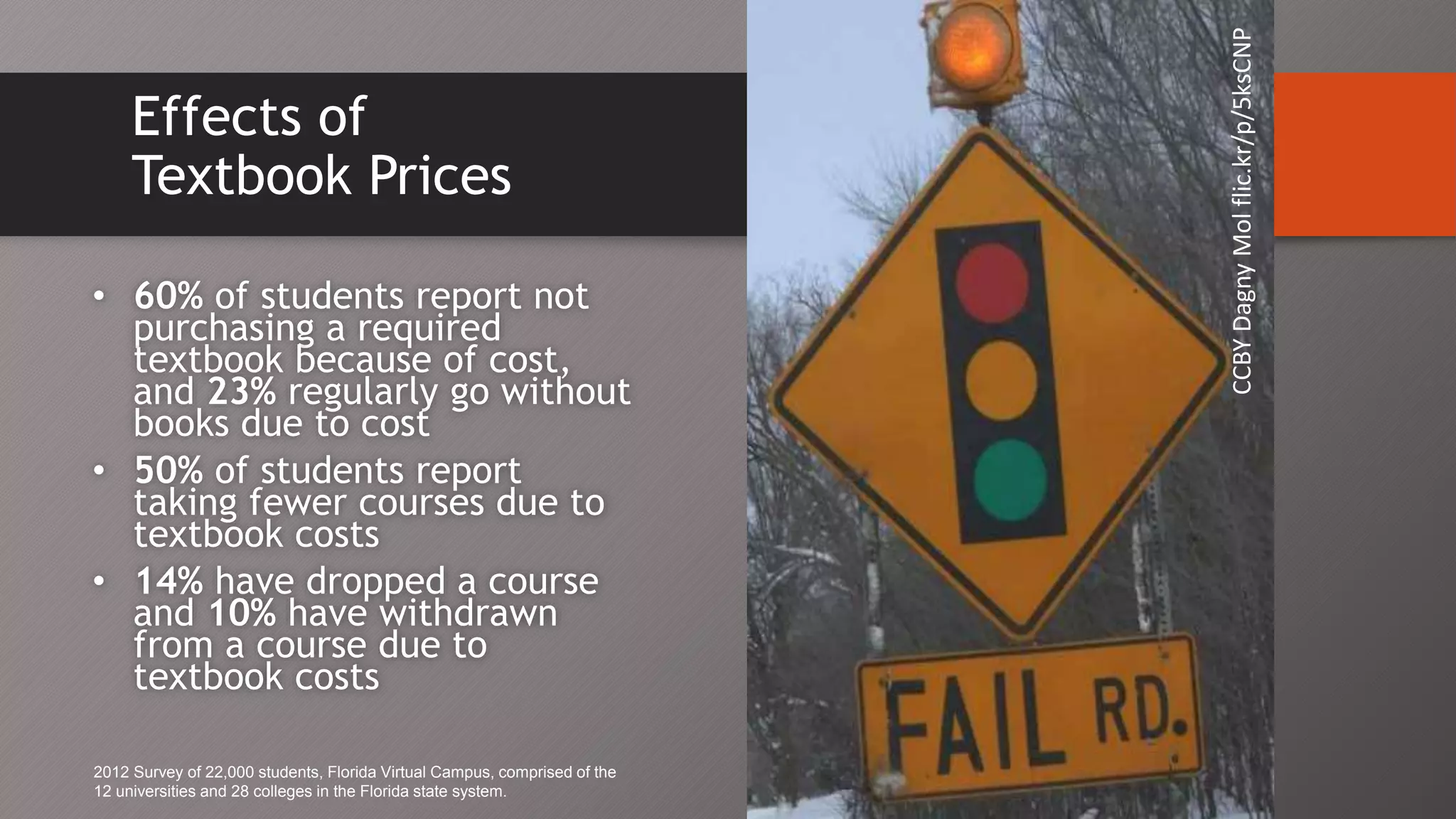
Effects of
Textbook Prices
• 60% of students report not
purchasing a required
textbook because of cost,
and 23% regularly go without
books due to cost
• 50% of students report
taking fewer courses due to
textbook costs
• 14% have dropped a course
and 10% have withdrawn
from a course due to
textbook costs
2012 Survey of 22,000 students, Florida Virtual Campus, comprised of the
12 universities and 28 colleges in the Florida state system.
CCBYDagnyMolflic.kr/p/5ksCNP
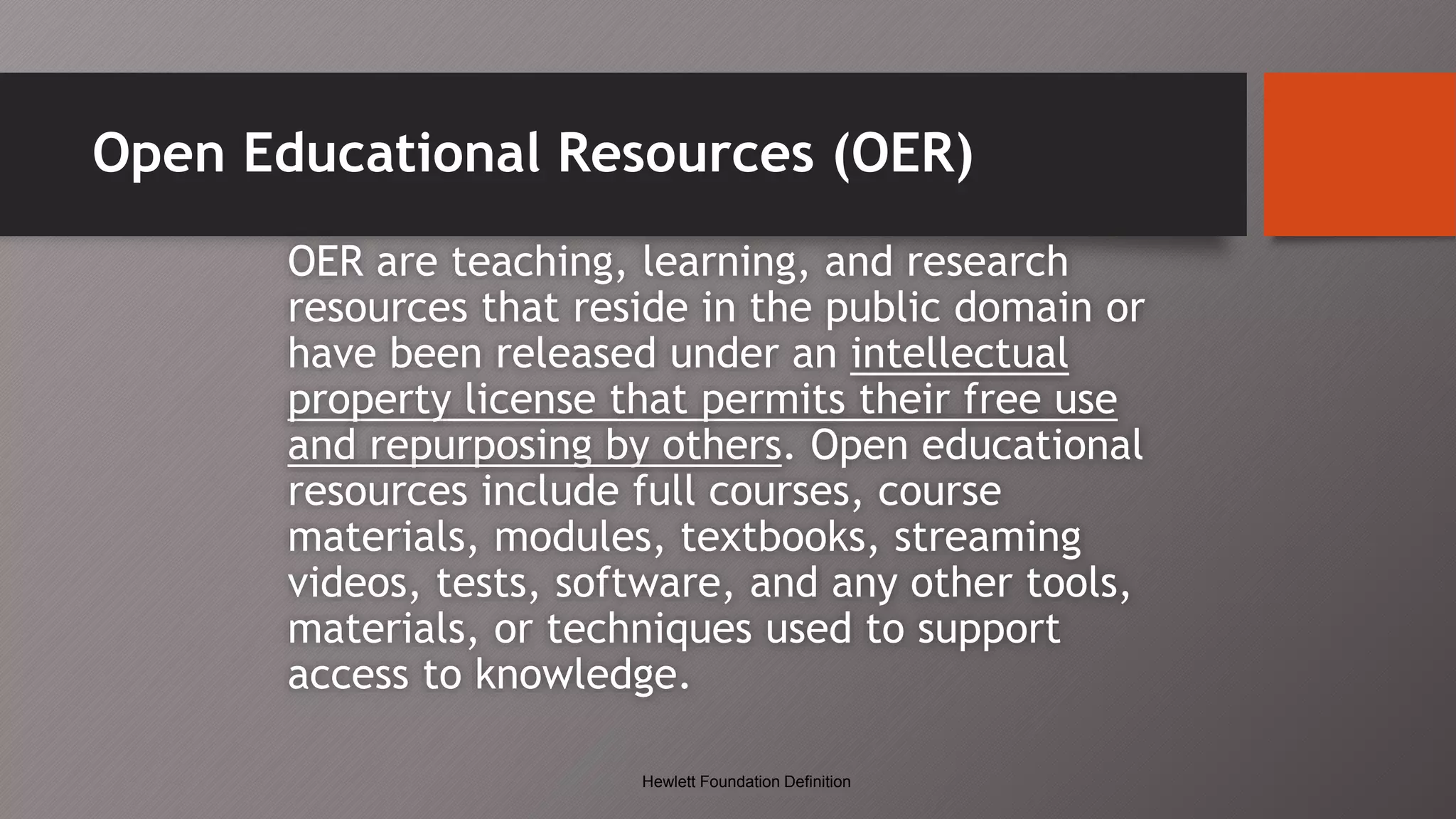
Open Educational Resources (OER)
OER are teaching, learning, and research
resources that reside in the public domain or
have been released under an intellectual
property license that permits their free use
and repurposing by others. Open educational
resources include full courses, course
materials, modules, textbooks, streaming
videos, tests, software, and any other tools,
materials, or techniques used to support
access to knowledge.
Hewlett Foundation Definition
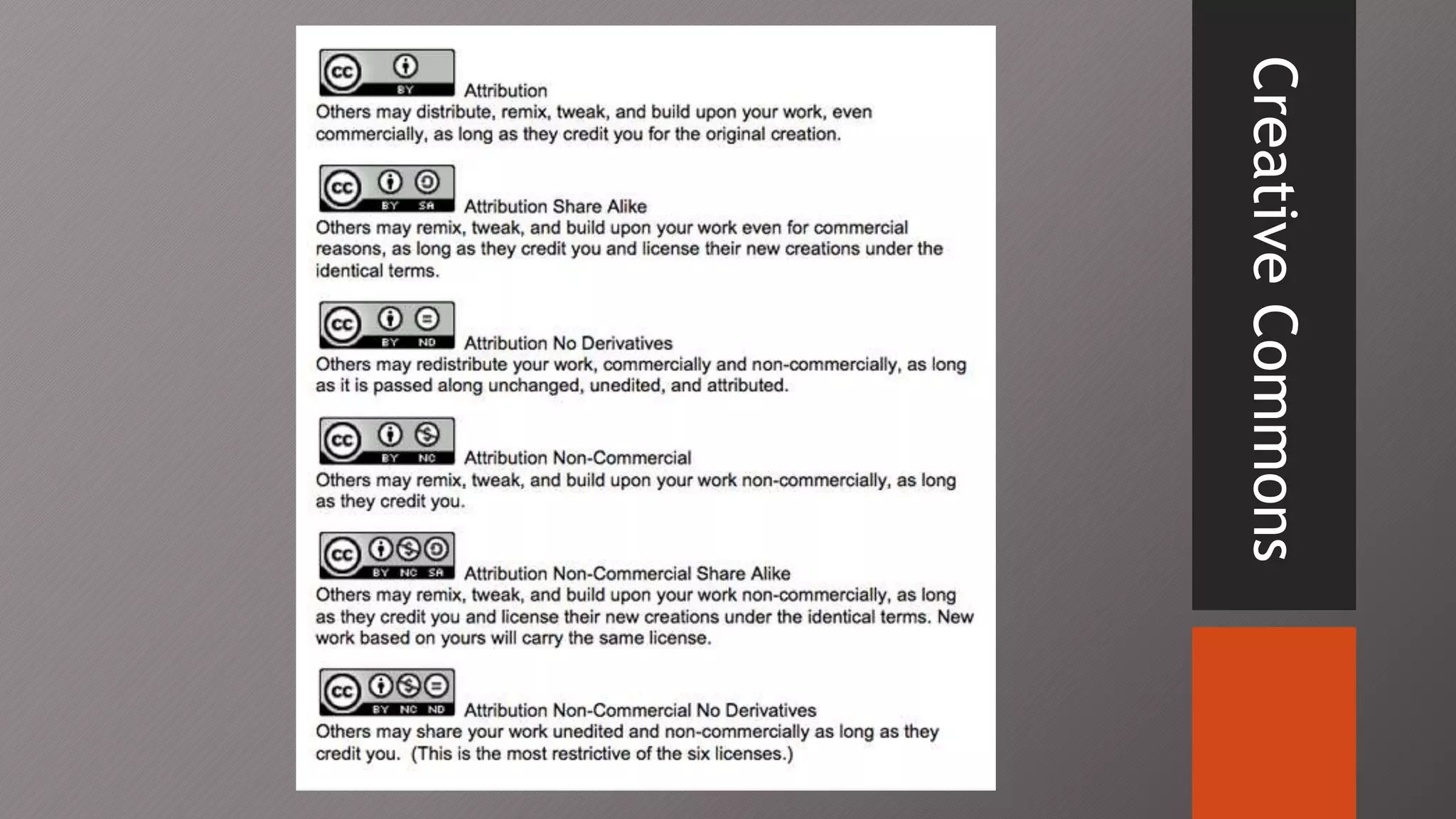
CreativeCommons
The 5 R’s of OER
•Reuse
•Remix
•Revise
•Retain
•Redistribute
This work is licensed under a Creative Commons
Attribution 4.0 International License.
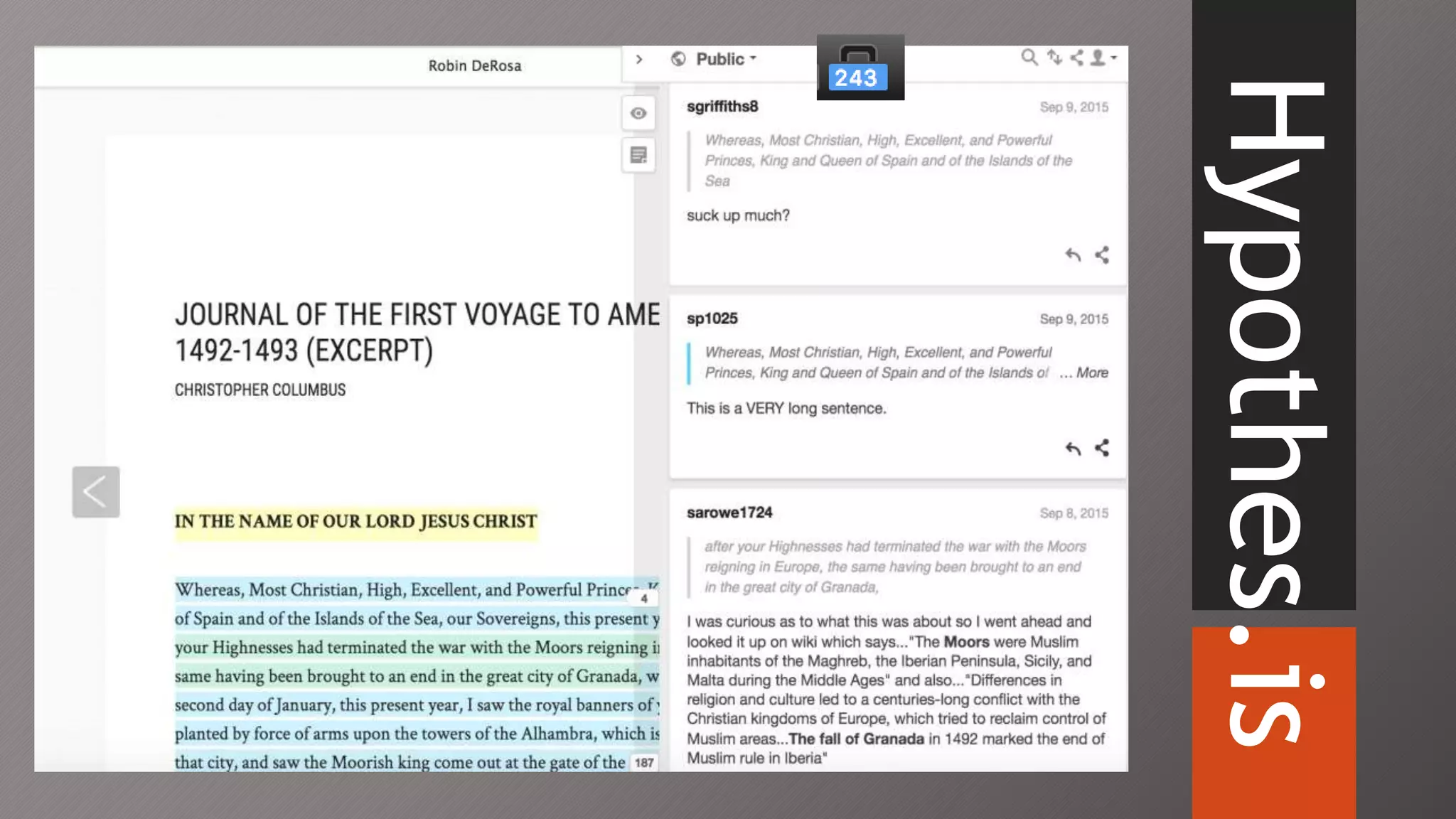
Hypothes.is
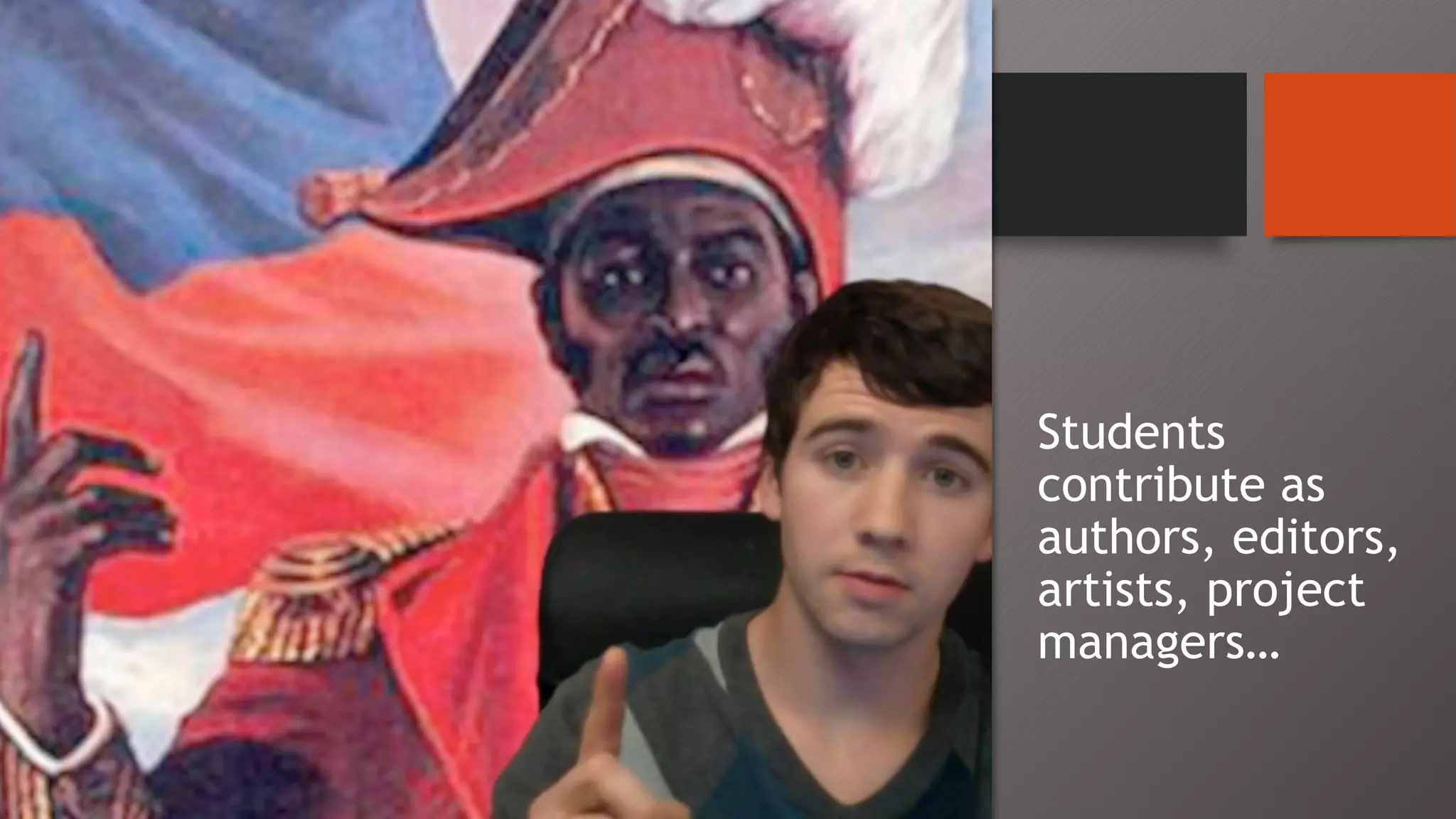
Students
contribute as
authors, editors,
artists, project
managers…
Connected Learning: My Journey
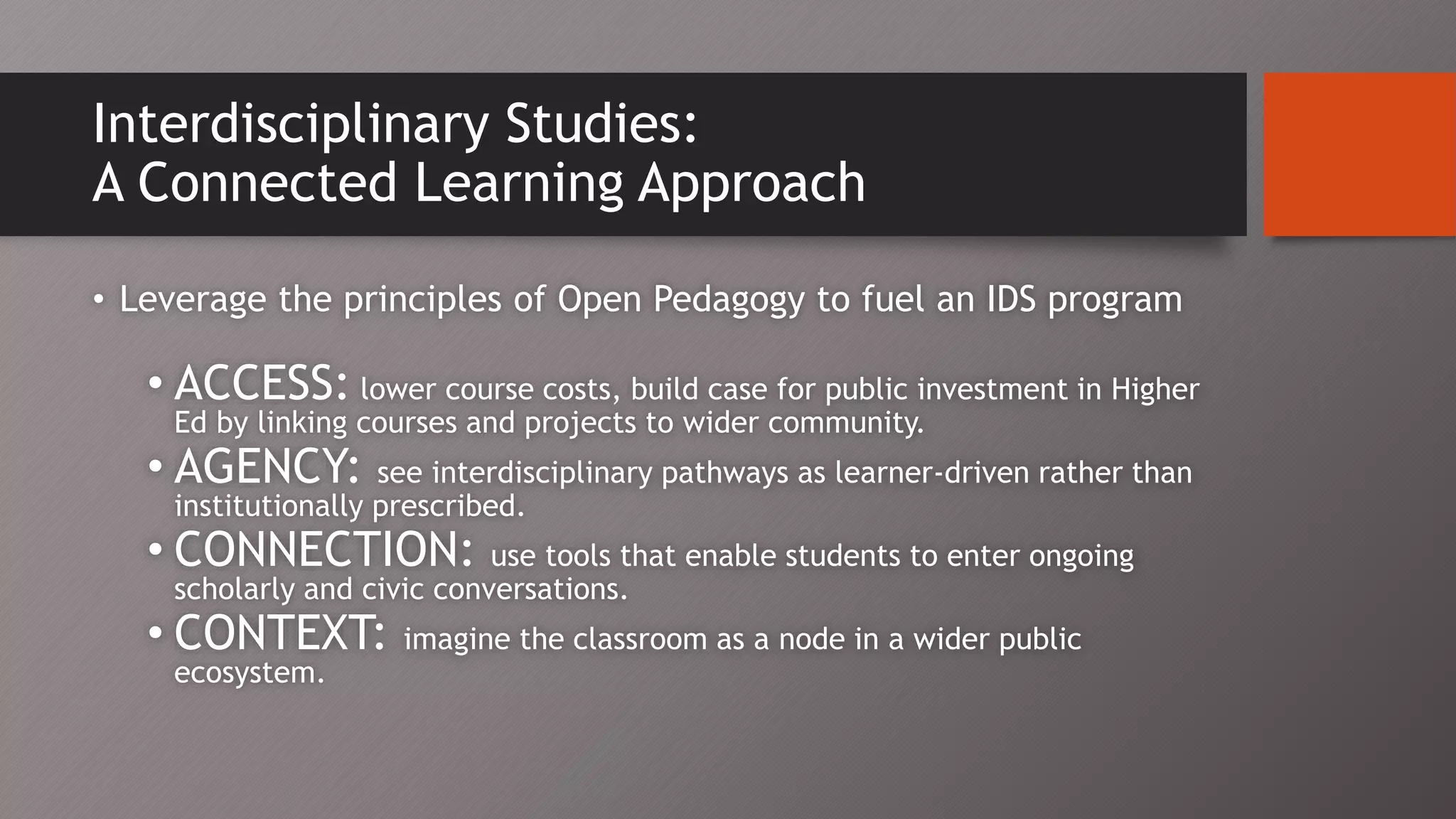
Interdisciplinary Studies:
A Connected Learning Approach
• Leverage the principles of Open Pedagogy to fuel an IDS program
• ACCESS: lower course costs, build case for public investment in Higher
Ed by linking courses and projects to wider community.
• AGENCY: see interdisciplinary pathways as learner-driven rather than
institutionally prescribed.
• CONNECTION: use tools that enable students to enter ongoing
scholarly and civic conversations.
• CONTEXT: imagine the classroom as a node in a wider public
ecosystem.
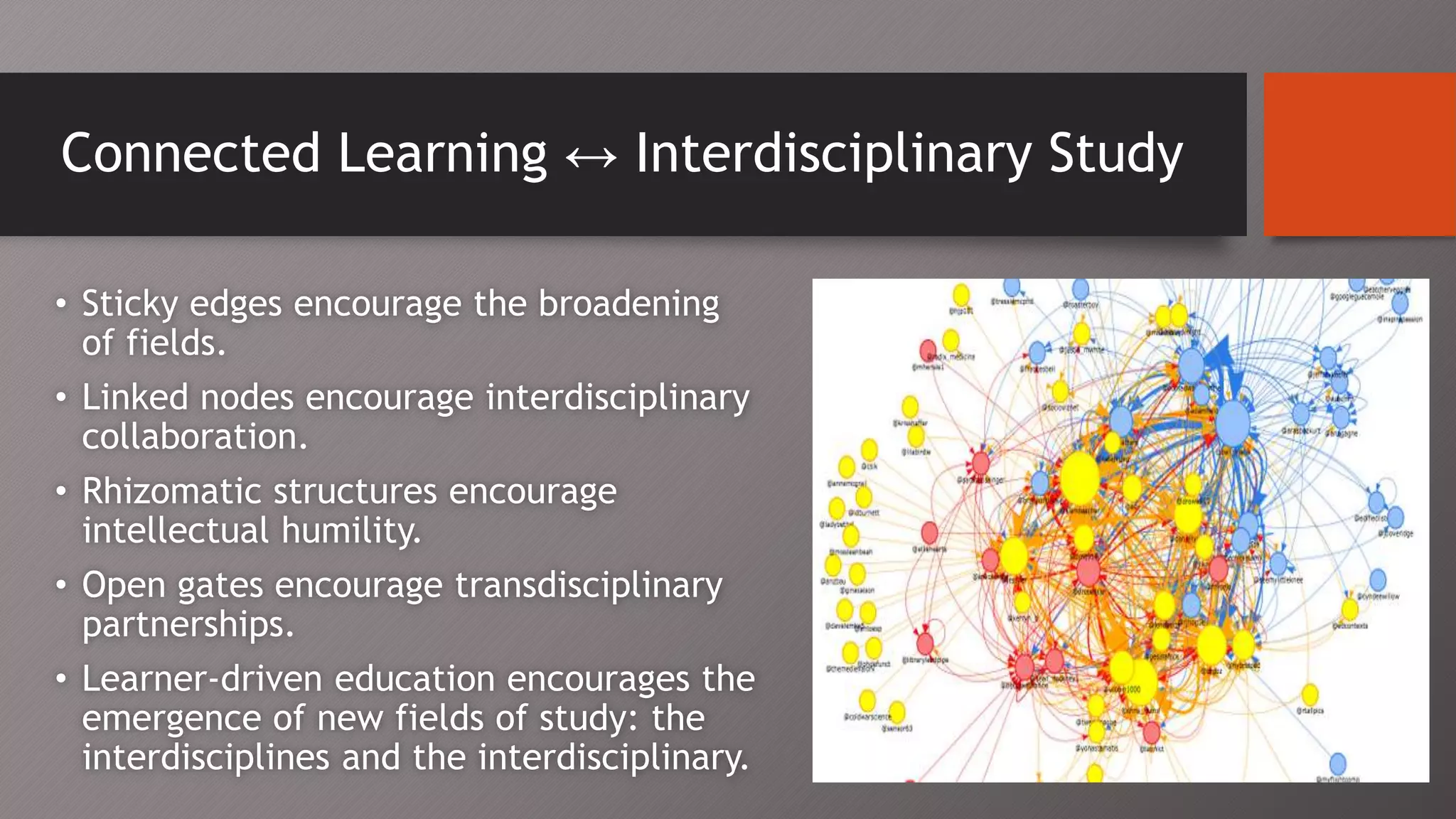
Connected Learning ↔ Interdisciplinary Study
• Sticky edges encourage the broadening
of fields.
• Linked nodes encourage interdisciplinary
collaboration.
• Rhizomatic structures encourage
intellectual humility.
• Open gates encourage transdisciplinary
partnerships.
• Learner-driven education encourages the
emergence of new fields of study: the
interdisciplines and the interdisciplinary.
Connected Learning for IDS
Social Media
Twitter
Hypthes.is
ePorts
User-designed & -controlled
websites
Nondisposable
Assignments
Blogs
Books
Social Media: Networks for Learning
Twitter: classes, programs, PLNs
Hypothes.is: dialogic, public reading
Social Media provides the
infrastructure to allow for
productive, energizing, and
supportive collaborations
across departments, fields, and
constituencies.
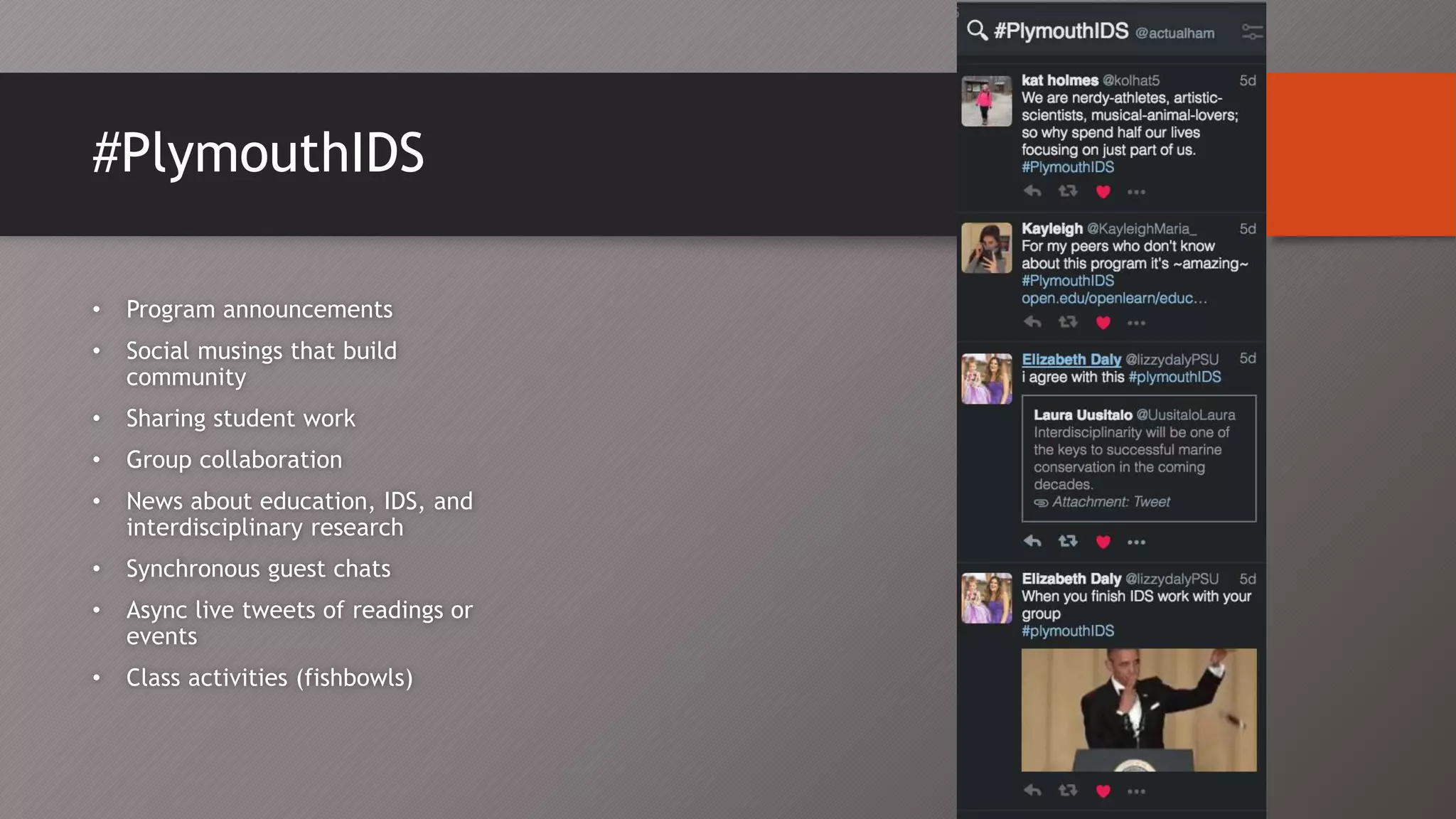
#PlymouthIDS
• Program announcements
• Social musings that build
community
• Sharing student work
• Group collaboration
• News about education, IDS, and
interdisciplinary research
• Synchronous guest chats
• Async live tweets of readings or
events
• Class activities (fishbowls)
Personal Learning Networks (PLNs)
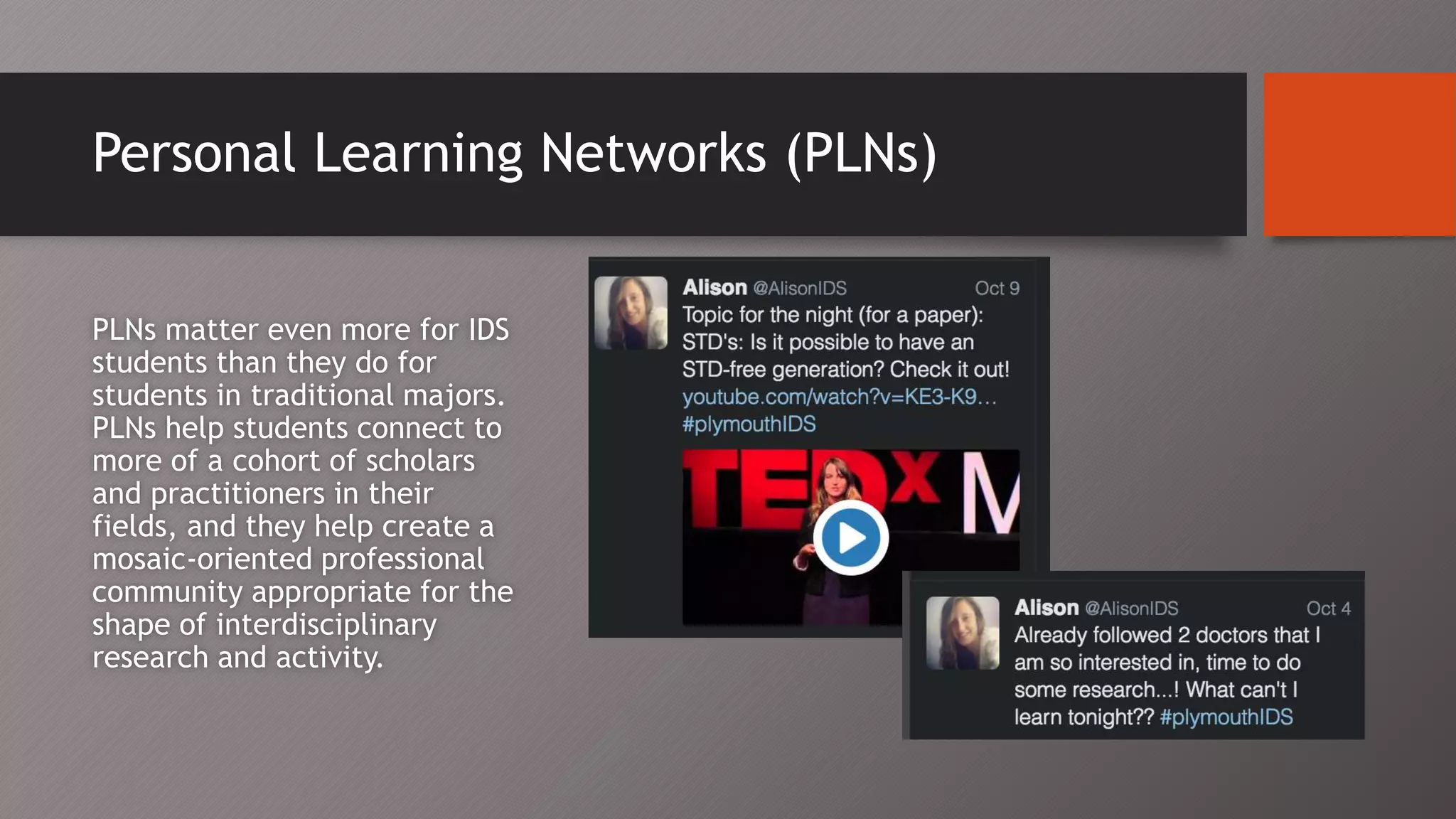
PLNs matter even more for IDS
students than they do for
students in traditional majors.
PLNs help students connect to
more of a cohort of scholars
and practitioners in their
fields, and they help create a
mosaic-oriented professional
community appropriate for the
shape of interdisciplinary
research and activity.
Hypothes.is: Annotate the Web
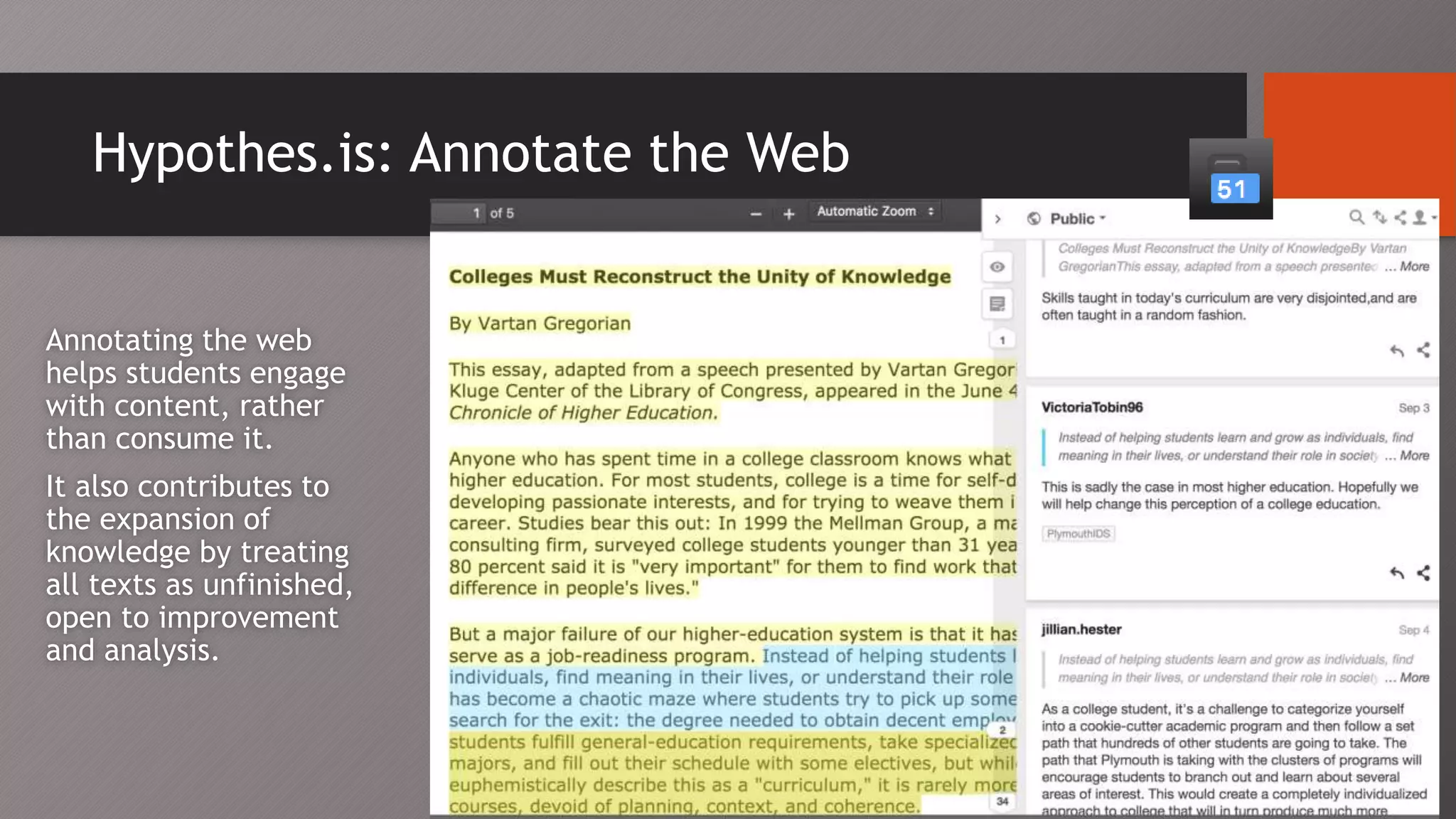
Annotating the web
helps students engage
with content, rather
than consume it.
It also contributes to
the expansion of
knowledge by treating
all texts as unfinished,
open to improvement
and analysis.
Connected Learning for IDS
Social Media
Twitter
Hypthes.is
ePorts
User-designed & -controlled
websites
Nondisposable
Assignments
Blogs
Books
the ePort: portfolio & portal
INTRO
• Nick Scola: Wildlife Management
• http://nicholasscolawm.com/
• Mickey Damon: Criminal Behavior
• http://mickeybea.com/
• Kayleigh Bennett: Marketing & Creative Services
• http://kayleighbennett.com/
CAPSTONE
• Alexander Boudreau: Innovation Through Design
• Marina Phillips: Treating Anxiety with Dance & Movement
ePorts are one part
portfolio, where students
can showcase their best work
and present their best digital
footprints, and one part
portal, where students can
invite commentary and
collaboration on the research
and ideas they are beginning to
contribute to the world.
Connected Learning for IDS
Social Media
Twitter
Hypthes.is
ePorts
User-designed & -controlled
websites
Nondisposable
Assignments
Blogs
Books
Nondisposable Assignments
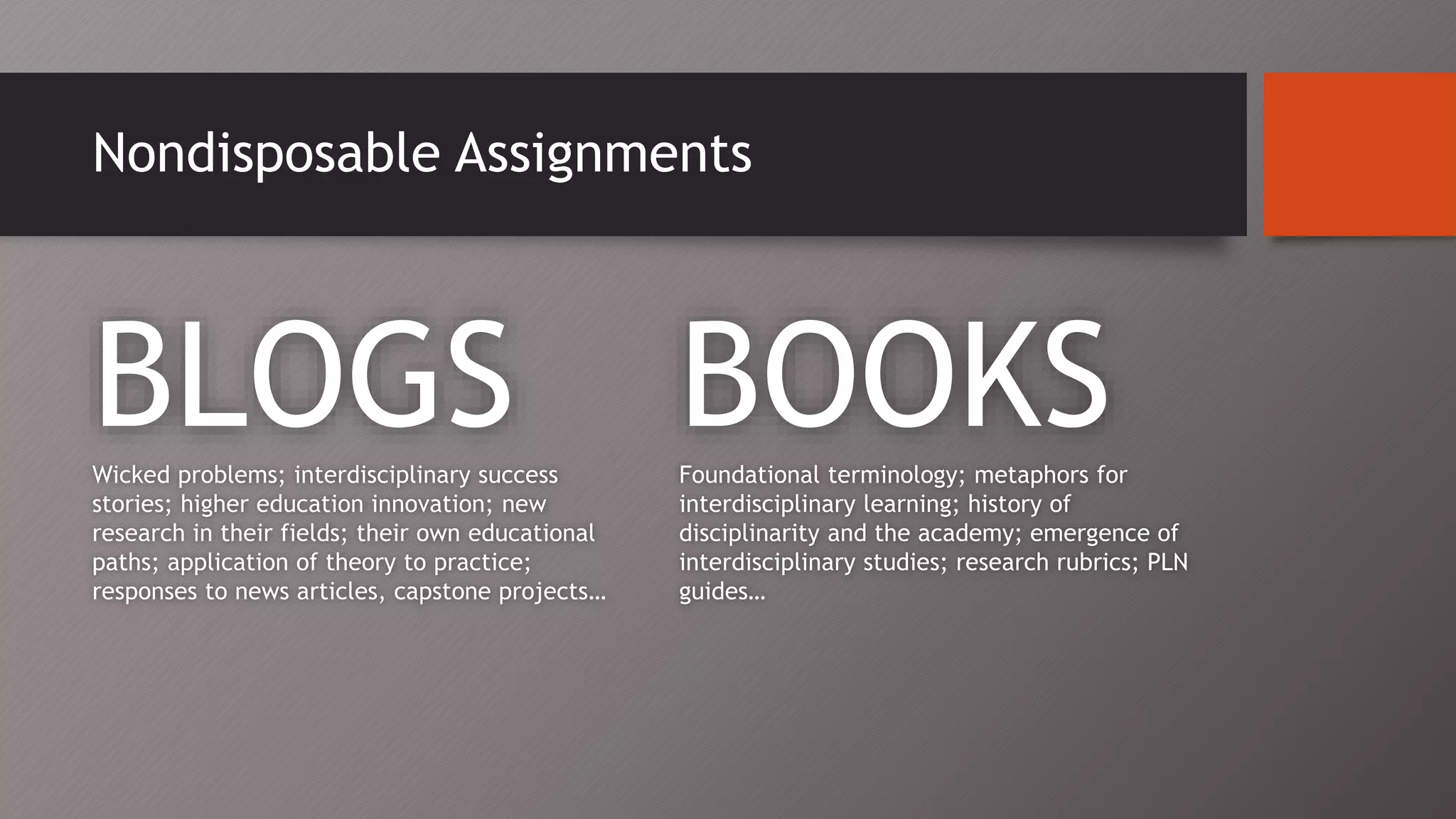
BLOGSWicked problems; interdisciplinary success
stories; higher education innovation; new
research in their fields; their own educational
paths; application of theory to practice;
responses to news articles, capstone projects…
BOOKSFoundational terminology; metaphors for
interdisciplinary learning; history of
disciplinarity and the academy; emergence of
interdisciplinary studies; research rubrics; PLN
guides…
Interdisciplinary Studies:
A Connected Learning Approach
Mission-Driven IDS Pedagogy
• Jennifer Sasser & Chantelle A.M. Richmond: interdisciplinarity as
not only integrative but also as applied, learner-driven, Freirian,
empowering.
• Let’s build programs that integrate knowledge,
interrogate/challenge/redesign learning structures, and put
learners at the center of their educational processes.
• Let’s make Interdisciplinary Studies synonymous with access-
oriented, learner-driven, and applied pedagogies.
The Digital World Enables OPEN Education
•Lowering costs to increase
access
•Empowering student drivers
•Connecting conversations
•Contextualizing the academy
• More OpenPed Examples
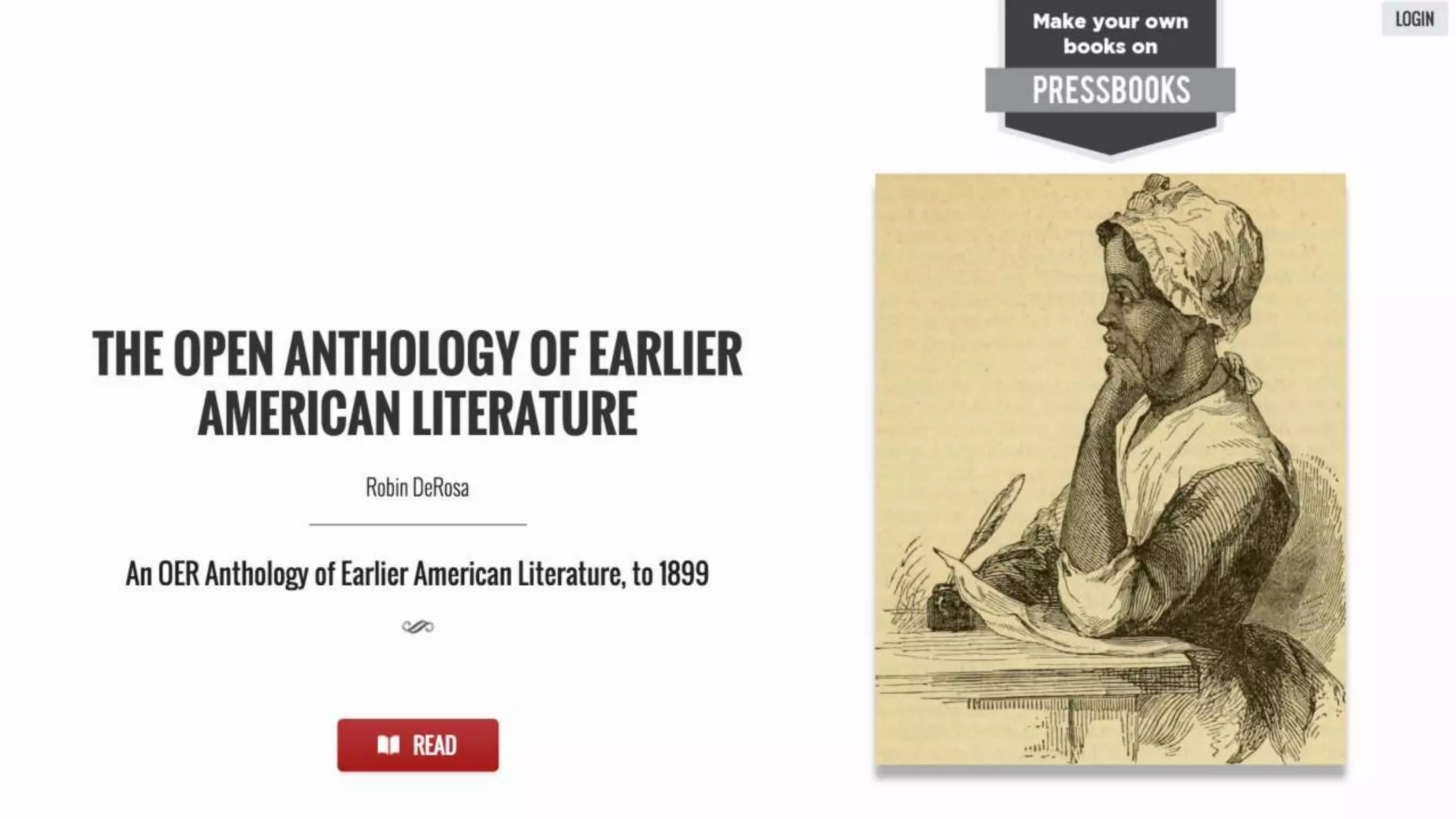
• Building an OER Textbook
with PressBooks
• ePorts, Hypothes.is, Twitter,
Creative Commons
• Challenges of Working on
the Open Web
• Obstacles to “Open”
• Why IDS Should Be “Open”
• Who to Follow to Get
Involved

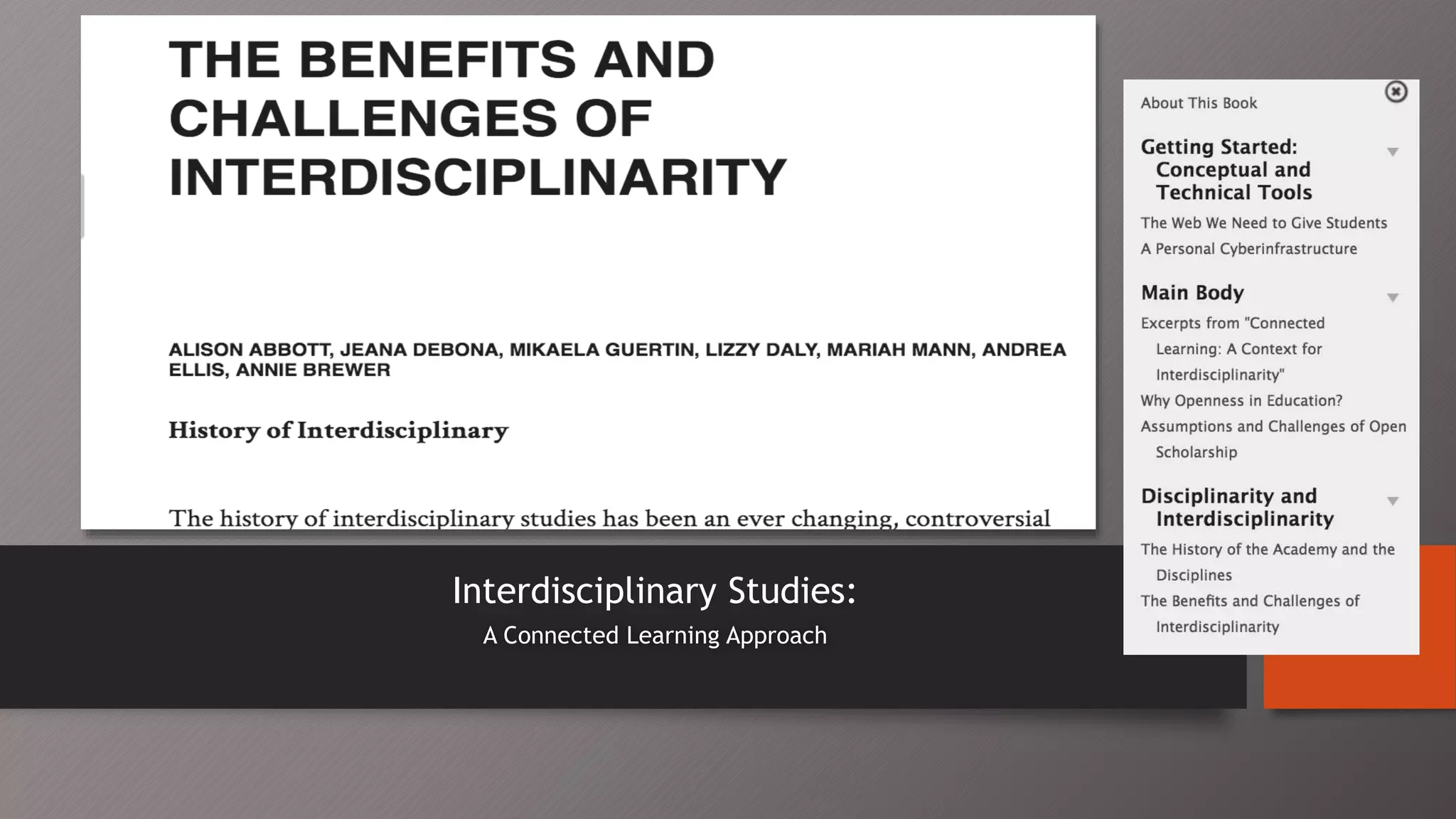
Technology for Open Collaboration

  • 1.
    Technology for OpenCollaboration How to Harness the Power of the Digital in an Interdisciplinary Studies Curriculum Robin DeRosa @actualham
  • 2.
    The Story ofIDS at Plymouth State • Small, comprehensive public university in NH • 4,100 undergraduates, 2,000 graduate students • IDS began in 1974 • Averaged 10.1 enrolled majors from 1978-2014 • Added introductory and research methods courses in 2012 • Shifted to Connected Learning pedagogy in 2014 • Currently 90 majors (and growing by 25 per semester) • 750% growth in enrollments • Projected to be 3rd largest major at university within 2 years
  • 3.
    Framing the Narrative:Connected Learning • Students create their own majors • Write entrance essays explaining how their coursework integrates to move them toward their personal, intellectual, and professional goals • INTEGRATION is intentional • AGENCY was incidental • In 2014, I relaunched the courses and advising protocols around a Connected Learning approach
  • 4.
  • 5.
  • 6.
    Effects of Textbook Prices •60% of students report not purchasing a required textbook because of cost, and 23% regularly go without books due to cost • 50% of students report taking fewer courses due to textbook costs • 14% have dropped a course and 10% have withdrawn from a course due to textbook costs 2012 Survey of 22,000 students, Florida Virtual Campus, comprised of the 12 universities and 28 colleges in the Florida state system. CCBYDagnyMolflic.kr/p/5ksCNP
  • 7.
    Open Educational Resources(OER) OER are teaching, learning, and research resources that reside in the public domain or have been released under an intellectual property license that permits their free use and repurposing by others. Open educational resources include full courses, course materials, modules, textbooks, streaming videos, tests, software, and any other tools, materials, or techniques used to support access to knowledge. Hewlett Foundation Definition
  • 8.
  • 9.
    The 5 R’sof OER •Reuse •Remix •Revise •Retain •Redistribute This work is licensed under a Creative Commons Attribution 4.0 International License.
  • 11.
  • 12.
  • 13.
  • 14.
    Interdisciplinary Studies: A ConnectedLearning Approach • Leverage the principles of Open Pedagogy to fuel an IDS program • ACCESS: lower course costs, build case for public investment in Higher Ed by linking courses and projects to wider community. • AGENCY: see interdisciplinary pathways as learner-driven rather than institutionally prescribed. • CONNECTION: use tools that enable students to enter ongoing scholarly and civic conversations. • CONTEXT: imagine the classroom as a node in a wider public ecosystem.
  • 15.
    Connected Learning ↔Interdisciplinary Study • Sticky edges encourage the broadening of fields. • Linked nodes encourage interdisciplinary collaboration. • Rhizomatic structures encourage intellectual humility. • Open gates encourage transdisciplinary partnerships. • Learner-driven education encourages the emergence of new fields of study: the interdisciplines and the interdisciplinary.
  • 16.
    Connected Learning forIDS Social Media Twitter Hypthes.is ePorts User-designed & -controlled websites Nondisposable Assignments Blogs Books
  • 17.
    Social Media: Networksfor Learning Twitter: classes, programs, PLNs Hypothes.is: dialogic, public reading Social Media provides the infrastructure to allow for productive, energizing, and supportive collaborations across departments, fields, and constituencies.
  • 18.
    #PlymouthIDS • Program announcements •Social musings that build community • Sharing student work • Group collaboration • News about education, IDS, and interdisciplinary research • Synchronous guest chats • Async live tweets of readings or events • Class activities (fishbowls)
  • 19.
    Personal Learning Networks(PLNs) PLNs matter even more for IDS students than they do for students in traditional majors. PLNs help students connect to more of a cohort of scholars and practitioners in their fields, and they help create a mosaic-oriented professional community appropriate for the shape of interdisciplinary research and activity.
  • 20.
    Hypothes.is: Annotate theWeb Annotating the web helps students engage with content, rather than consume it. It also contributes to the expansion of knowledge by treating all texts as unfinished, open to improvement and analysis.
  • 21.
    Connected Learning forIDS Social Media Twitter Hypthes.is ePorts User-designed & -controlled websites Nondisposable Assignments Blogs Books
  • 22.
    the ePort: portfolio& portal INTRO • Nick Scola: Wildlife Management • http://nicholasscolawm.com/ • Mickey Damon: Criminal Behavior • http://mickeybea.com/ • Kayleigh Bennett: Marketing & Creative Services • http://kayleighbennett.com/ CAPSTONE • Alexander Boudreau: Innovation Through Design • Marina Phillips: Treating Anxiety with Dance & Movement ePorts are one part portfolio, where students can showcase their best work and present their best digital footprints, and one part portal, where students can invite commentary and collaboration on the research and ideas they are beginning to contribute to the world.
  • 23.
    Connected Learning forIDS Social Media Twitter Hypthes.is ePorts User-designed & -controlled websites Nondisposable Assignments Blogs Books
  • 24.
    Nondisposable Assignments BLOGSWicked problems;interdisciplinary success stories; higher education innovation; new research in their fields; their own educational paths; application of theory to practice; responses to news articles, capstone projects… BOOKSFoundational terminology; metaphors for interdisciplinary learning; history of disciplinarity and the academy; emergence of interdisciplinary studies; research rubrics; PLN guides…
  • 25.
  • 26.
    Mission-Driven IDS Pedagogy •Jennifer Sasser & Chantelle A.M. Richmond: interdisciplinarity as not only integrative but also as applied, learner-driven, Freirian, empowering. • Let’s build programs that integrate knowledge, interrogate/challenge/redesign learning structures, and put learners at the center of their educational processes. • Let’s make Interdisciplinary Studies synonymous with access- oriented, learner-driven, and applied pedagogies.
  • 27.
    The Digital WorldEnables OPEN Education •Lowering costs to increase access •Empowering student drivers •Connecting conversations •Contextualizing the academy
  • 28.
    • More OpenPedExamples • Building an OER Textbook with PressBooks • ePorts, Hypothes.is, Twitter, Creative Commons • Challenges of Working on the Open Web • Obstacles to “Open” • Why IDS Should Be “Open” • Who to Follow to Get Involved

Editor's Notes

  • #8 So OER are resources that have been given an “IP license, a Creative Commons license, by the author which permits their free use and repurposing by others.” These resources could be full courses, videos, tests, assignments, or as you’ve likely heard more about, textbooks.
  • #9 I can show you how to choose a license CC ND is not OER
  • #10 What does repurposing mean? Under a Creative Commons or CC license, not only are OER “free” in the sense of Gratis meaning no cost, they are also free in the sense of Libre meaning free to repurpose, retain, redistribute.M Maybe you’ve seen what it looks like when something has a CC license? Here it is… What OER are creating the biggest buzz right now? Why?