ANTIBODIES
Sajid Khan
ROLL NO. :- BC582125
M.Sc MICROBIOLOGY
3rd Semester,
Allama iqbal open university Islamabad
DEFINITION:
An antibody or immunoglobulin
(Ig) is a glycoprotein that is
made by plasma cells in
response to an antigen and can
recognize and bind to the
antigen that caused its
production.
BASIC STRUCTURES:
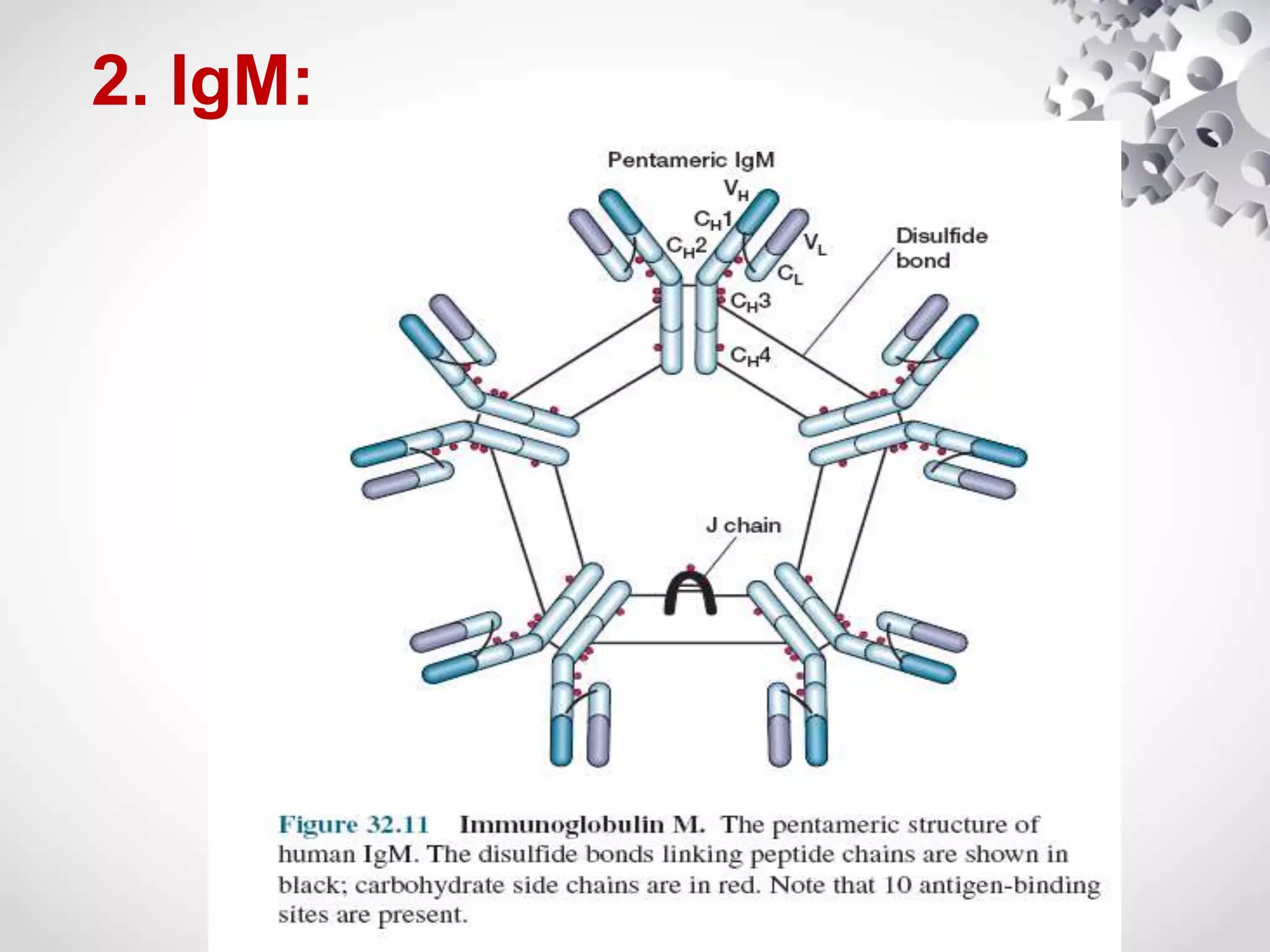
• Antibodies have more than one antigen
combining site Some bivalent Ab molecules can
combine to form multimeric Abs that have upto
10 combining sites
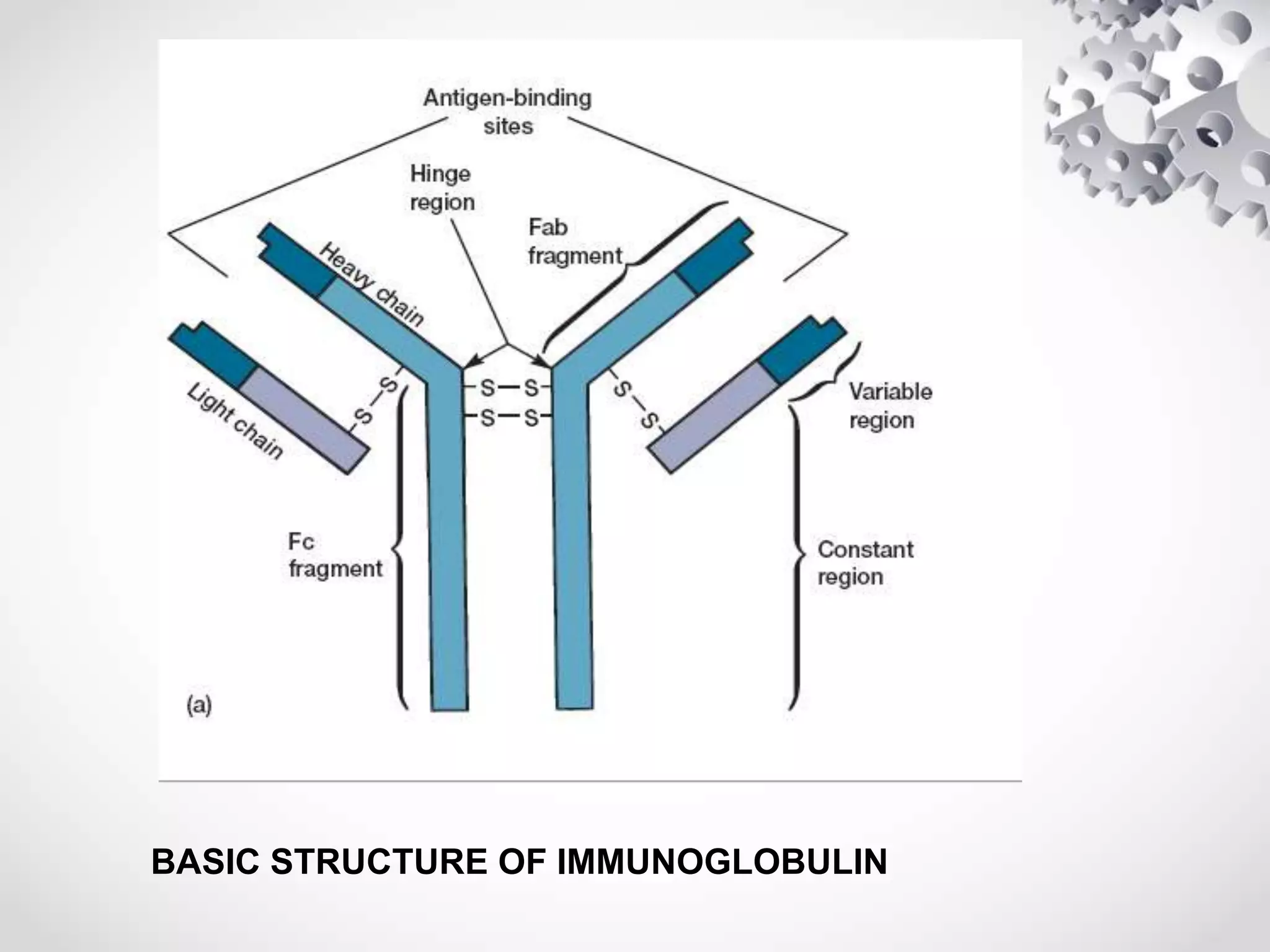
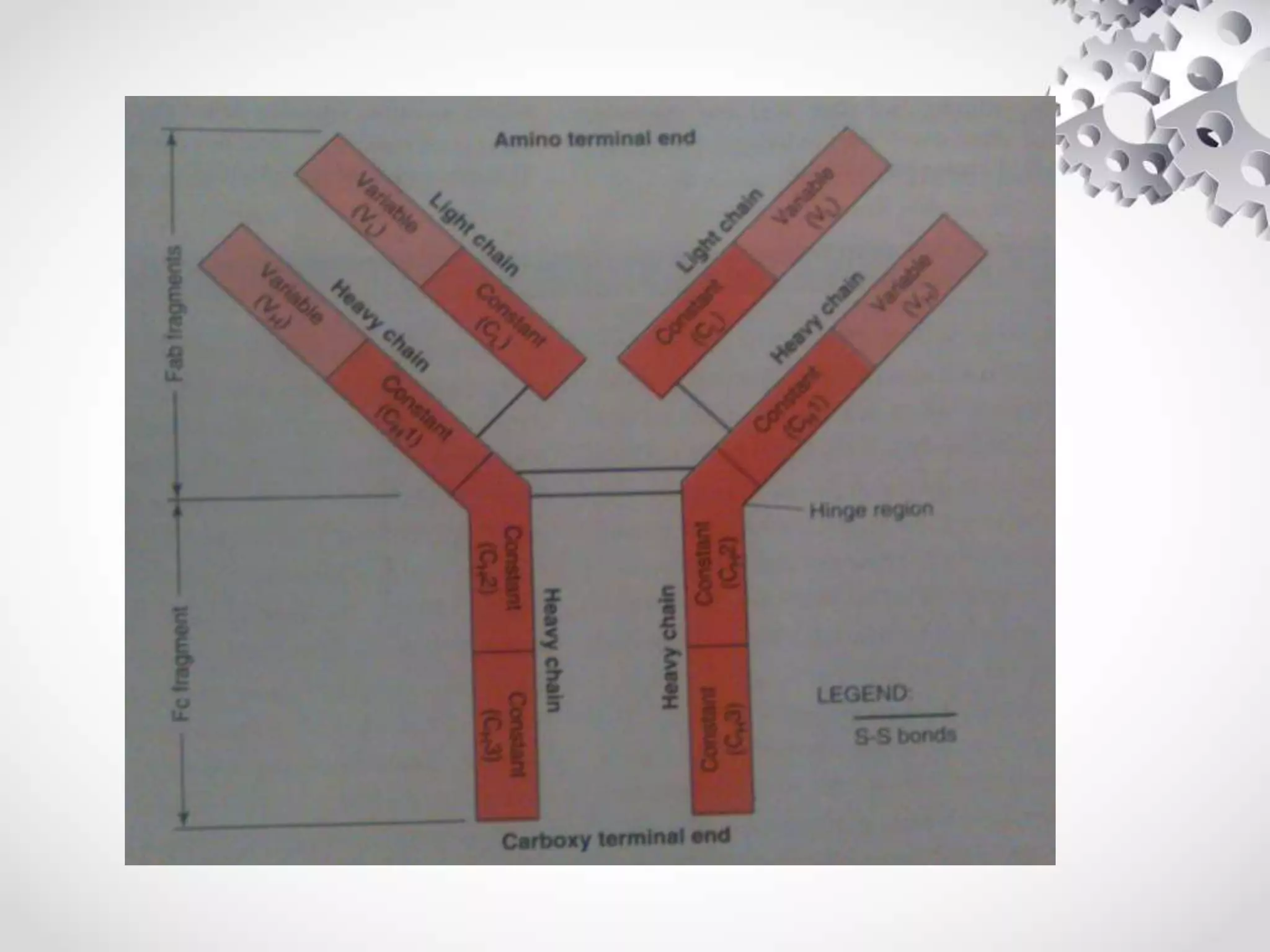
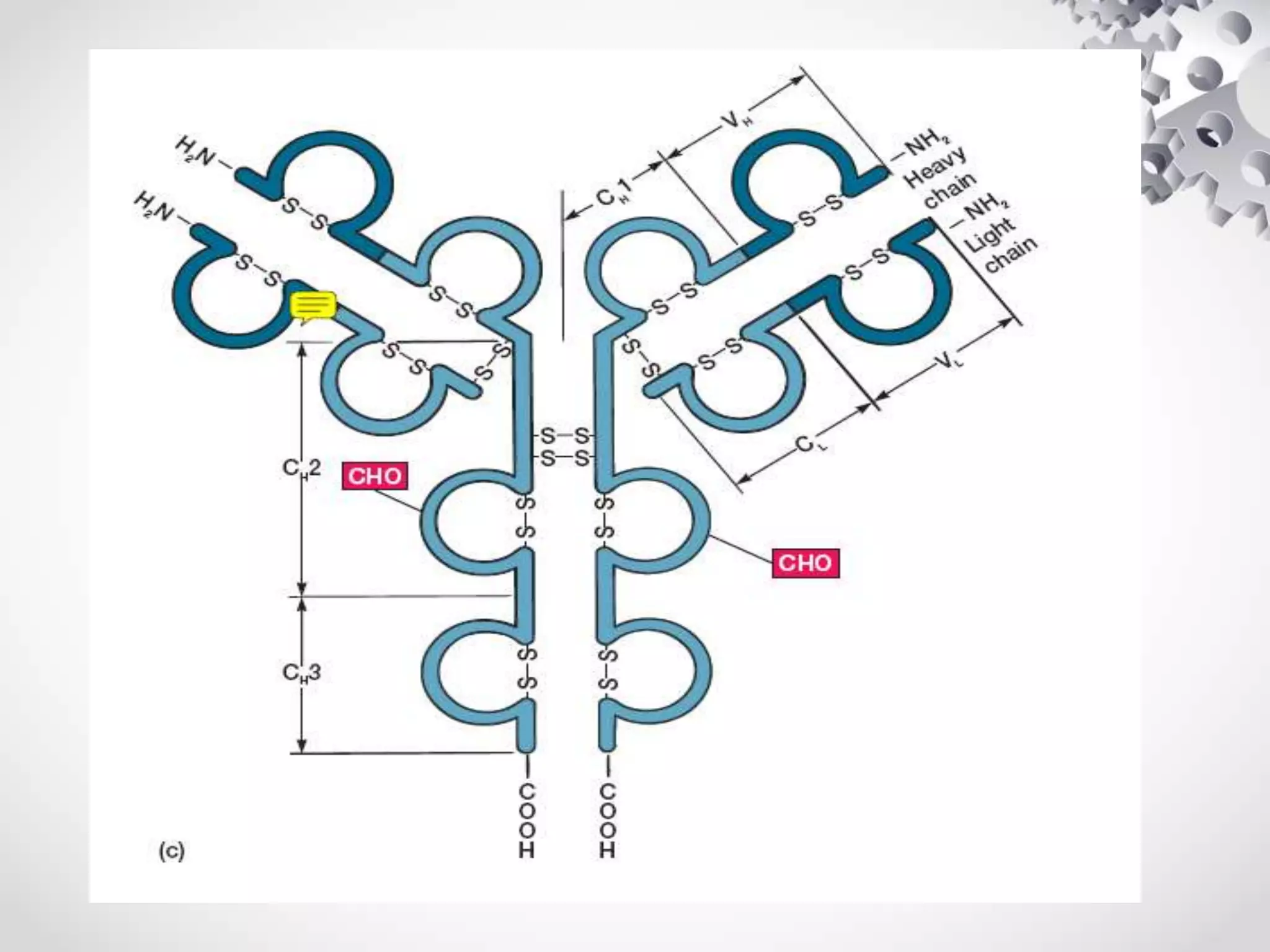
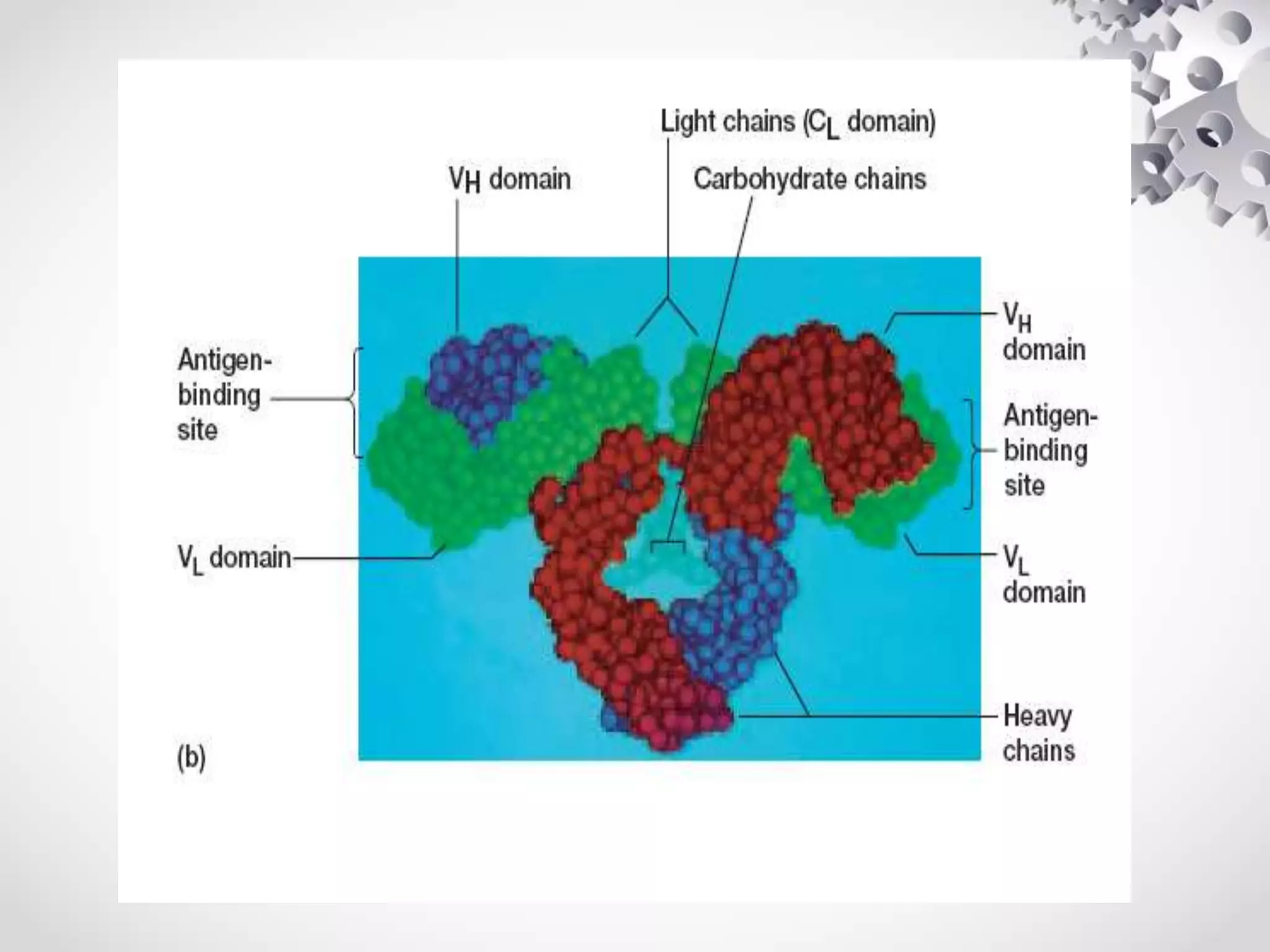
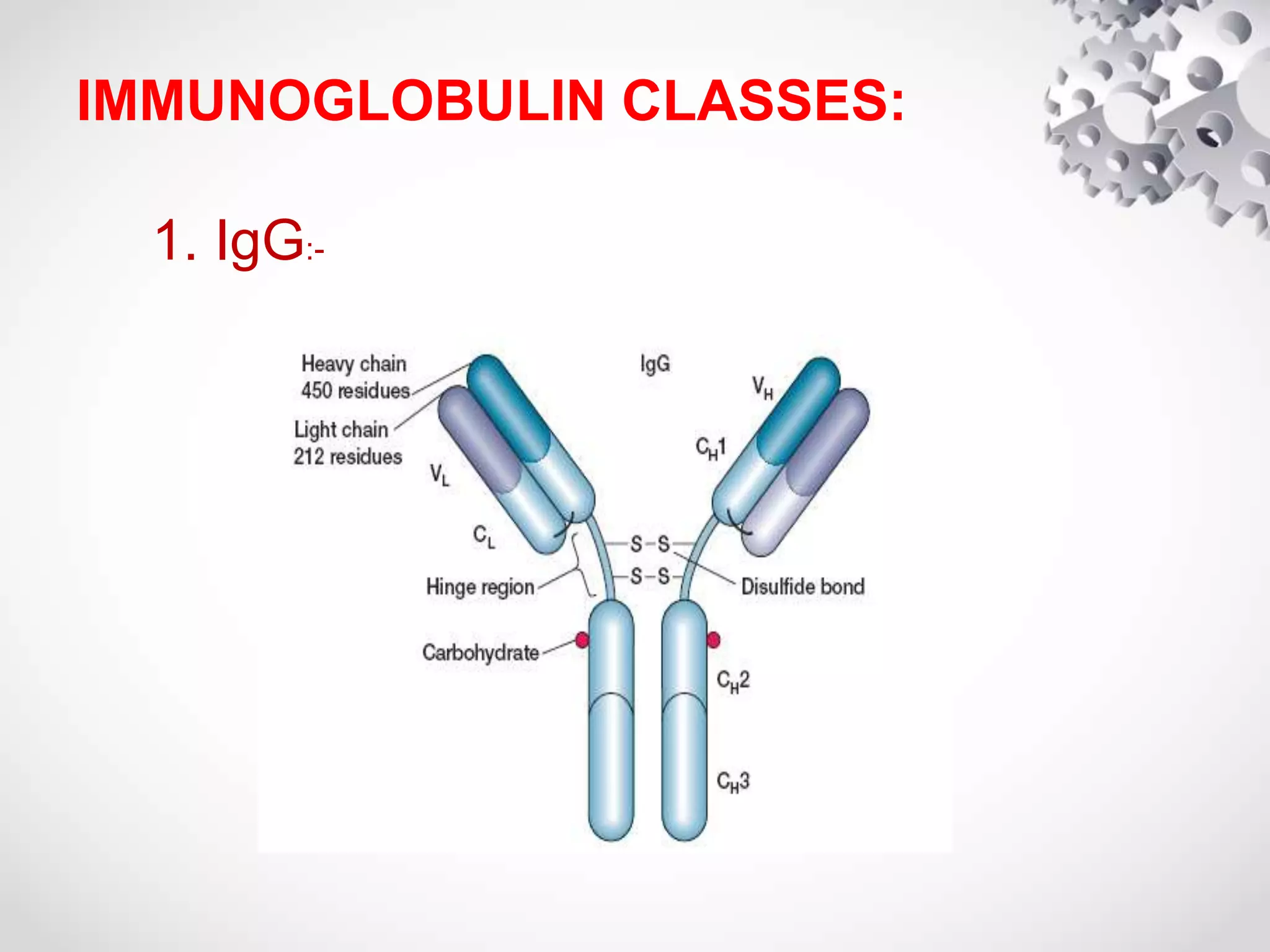
• All Ig have a basic structure composed of 4
polypeptide chains connected to each other by
disulphide bonds.
• Each light chain consist of 220 aa and has a
mass of approx. 25kDa.
• Each heavy chain consists of about 440 aa and
has a mass of 50-70kDa.
• Both light and heavy chains contain 2
different regions
 constant and
 variable region
• The four chains are arranged in the form of
a flexible “Y” with the hinge region and is
termed as crystallizable fragment (Fc) and
contains the site at which Ab binds.
• Top of the “Y” consist of two Ag binding
fragments (Fab) that bind with antigenic
determinant sites.
LIGHT CHAIN:
• The light chain may be either of two distinct
forms called “Kappa” and “Lambda” and
can be distinguished by aa sequence of
carboxyl portion of the chain.
HEAVY CHAIN:
• In the heavy chain NH2 terminal has a
pattern of variability similar to that of kappa
and lambda of the light chain.
BASIC STRUCTURE OF IMMUNOGLOBULIN
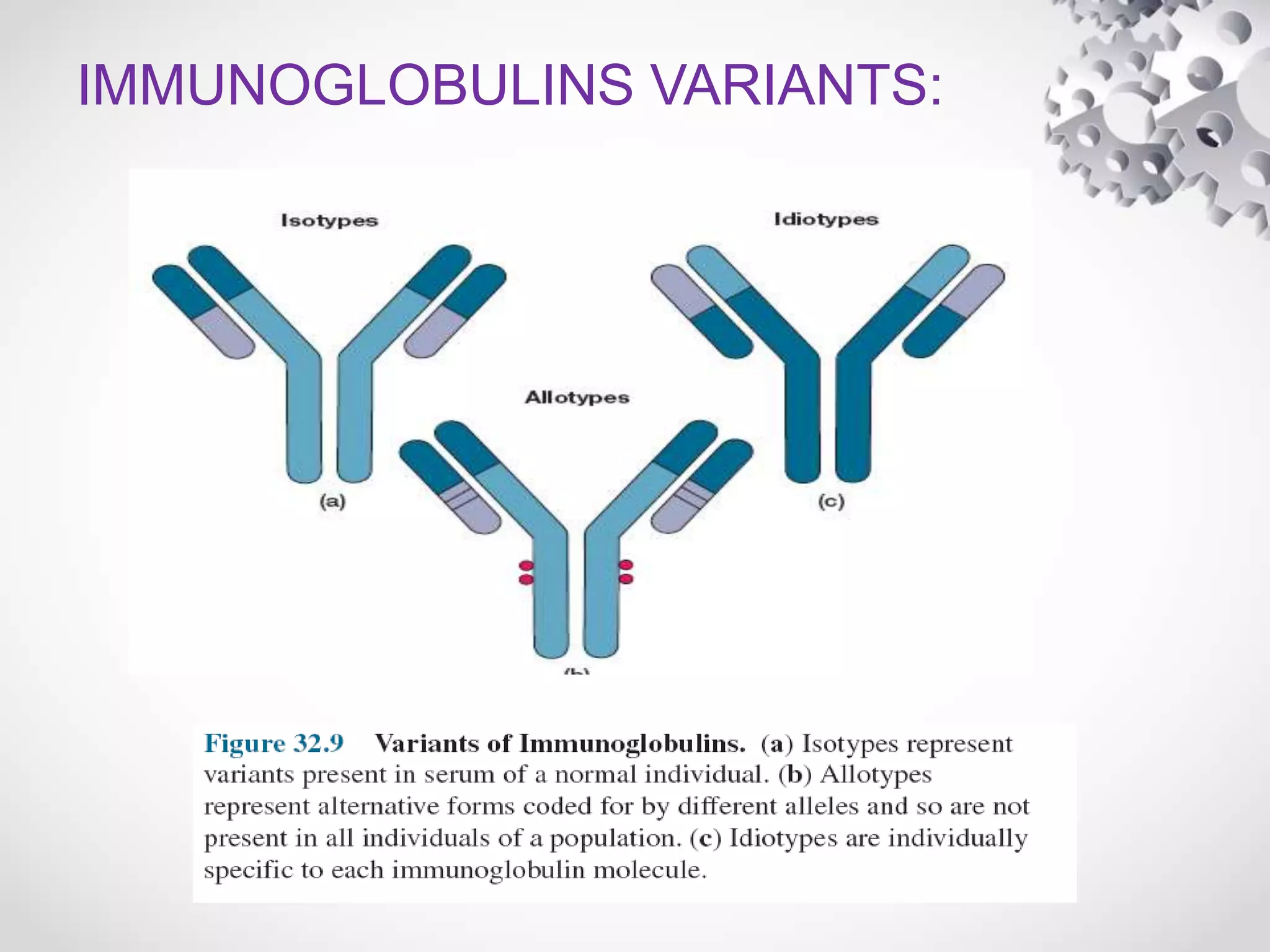
IMMUNOGLOBULINS VARIANTS:
Immunoglobulin Function
• Each end of the immunoglobulin
molecule has a different role.
• The Fab region is concerned with
binding to antigen, whereas the Fc
region mediates binding to host tissue,
various cells of the immune system,
some phagocytic cells, or the first
component of the complement
system.
• The binding of an antibody with an
antigen usually does not cause
destruction of the antigen or of the
For example:-
 Bacteria that are covered with antibodies are
better targets for phagocytosis by neutrophils
and macrophages.
• The alteration of the surface of bacteria,
viruses , and other particles so that they can
be more readily phagocytized is termed
opsonization.
• Immune destruction also is promoted by
antibody-induced activation of the classical
pathway.
IMMUNOGLOBULIN CLASSES:
1. IgG:-
Functions:
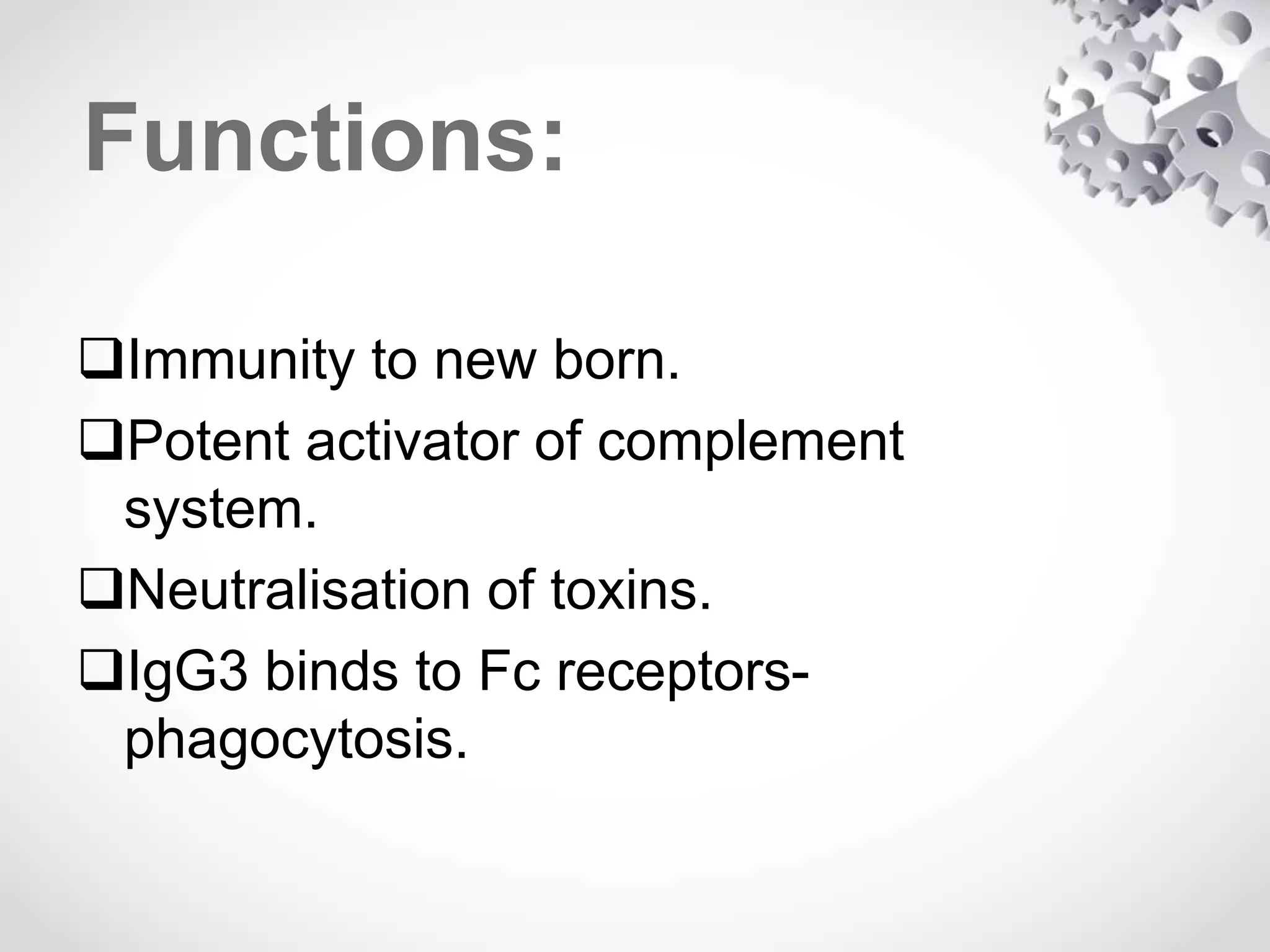
Immunity to new born.
Potent activator of complement
system.
Neutralisation of toxins.
IgG3 binds to Fc receptors-
phagocytosis.
2. IgM:
FUNCTIONS:
• Activation of classical pathway.
• Defence against multivalent bacterial
antigens.
• Acts as opsonin.
• Present on B-cell surface, acts as antigen
receptor.
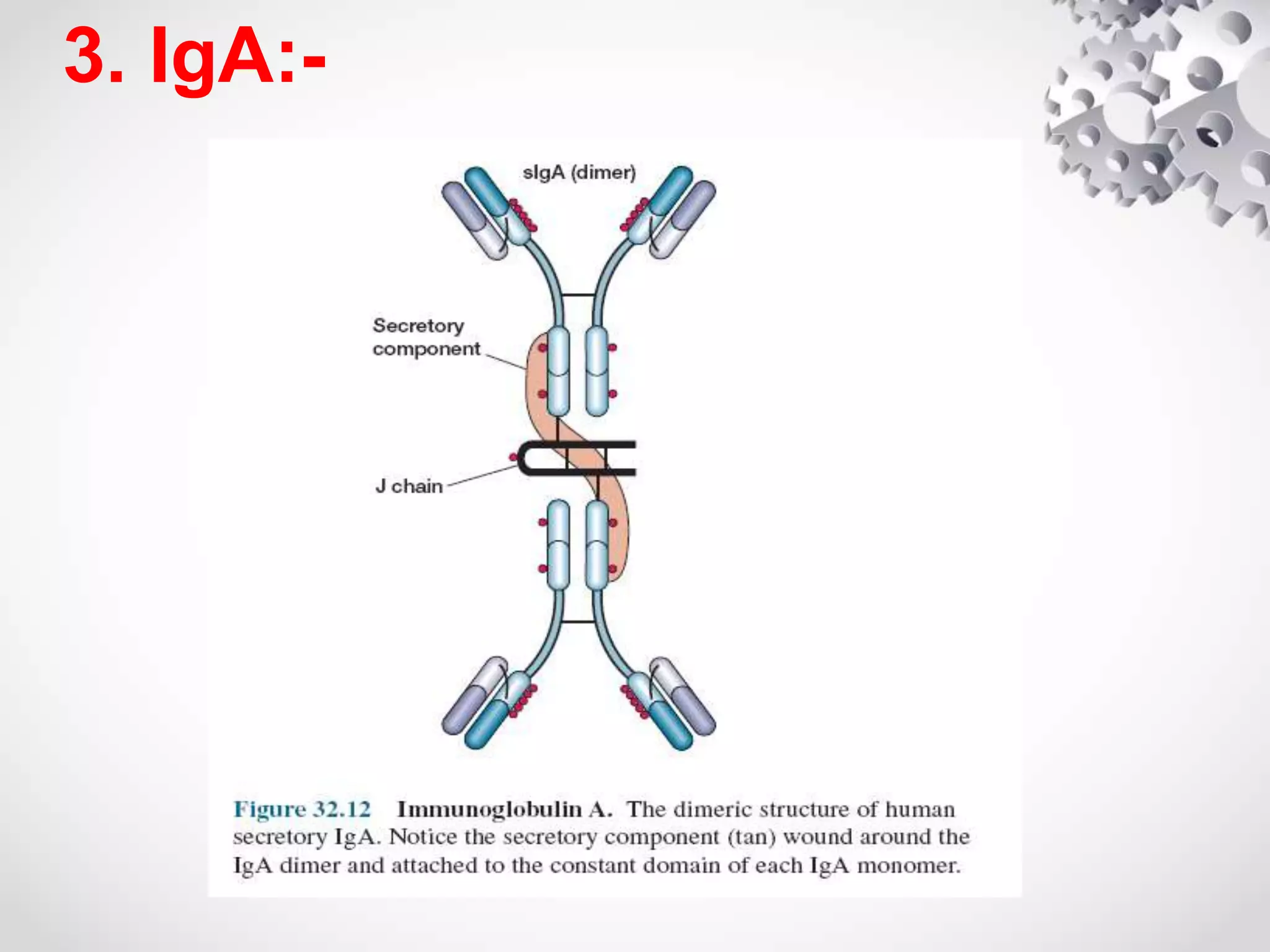
3. IgA:-
Functions:
• Secretory antibody.
• Effective against bacterial like
Salmonella,
Vibrio cholerae,
Niesseria gonorrhoea, etc.
• Effective against viruses like those
causing Poliomyelitis & Influenza.
• Protection to infant gut.
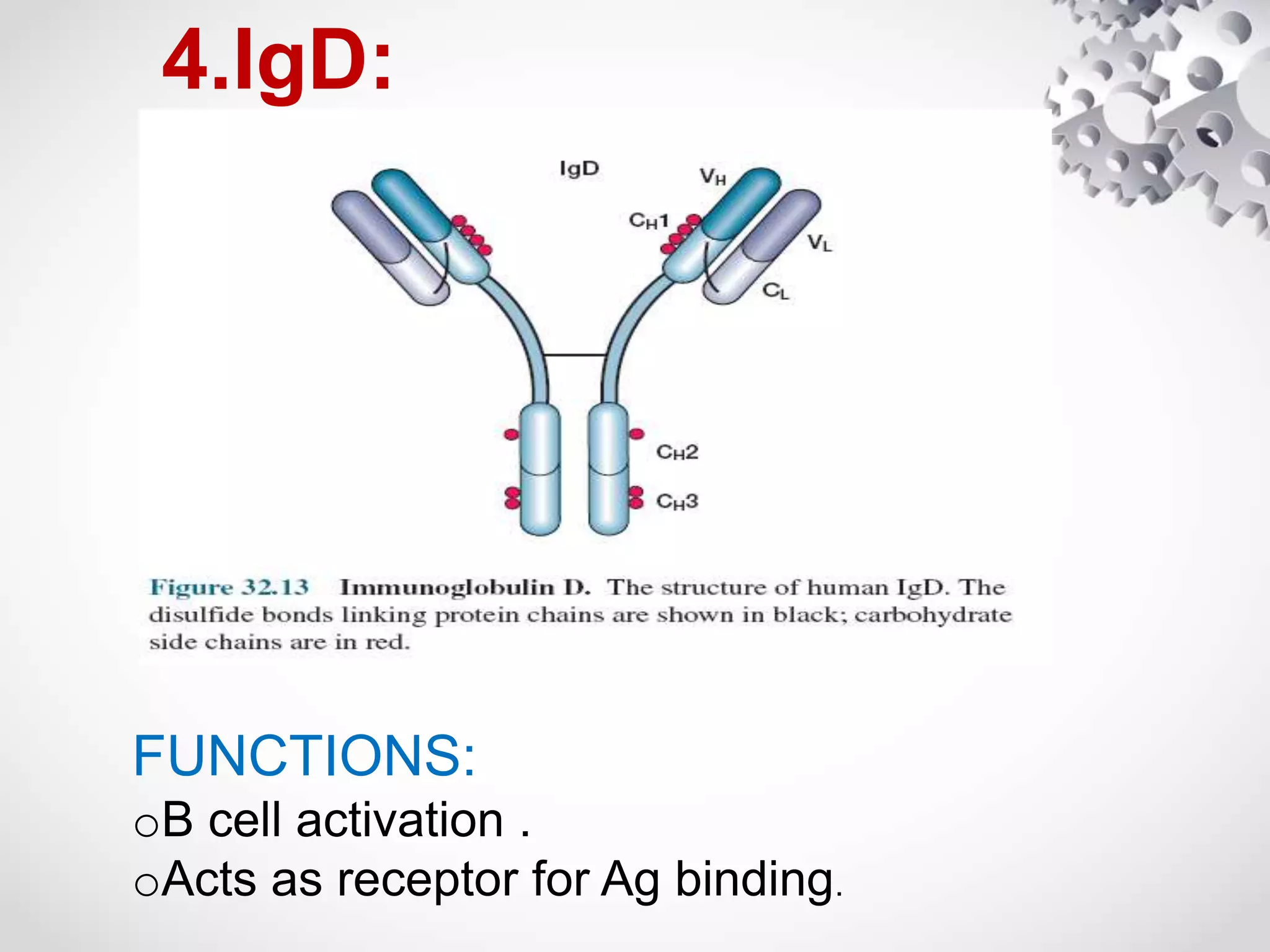
4.IgD:
FUNCTIONS:
oB cell activation .
oActs as receptor for Ag binding.
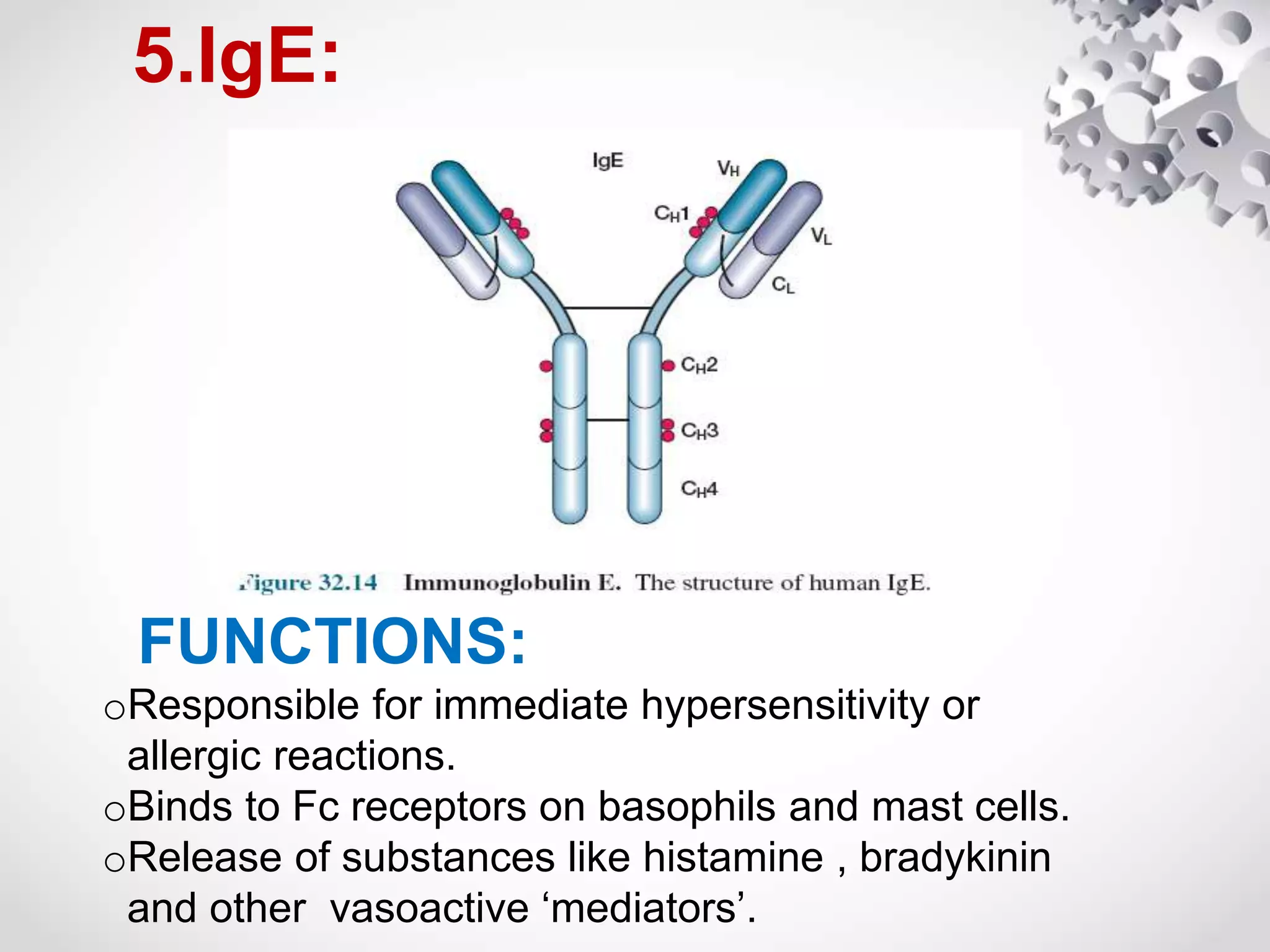
5.IgE:
FUNCTIONS:
oResponsible for immediate hypersensitivity or
allergic reactions.
oBinds to Fc receptors on basophils and mast cells.
oRelease of substances like histamine , bradykinin
and other vasoactive ‘mediators’.
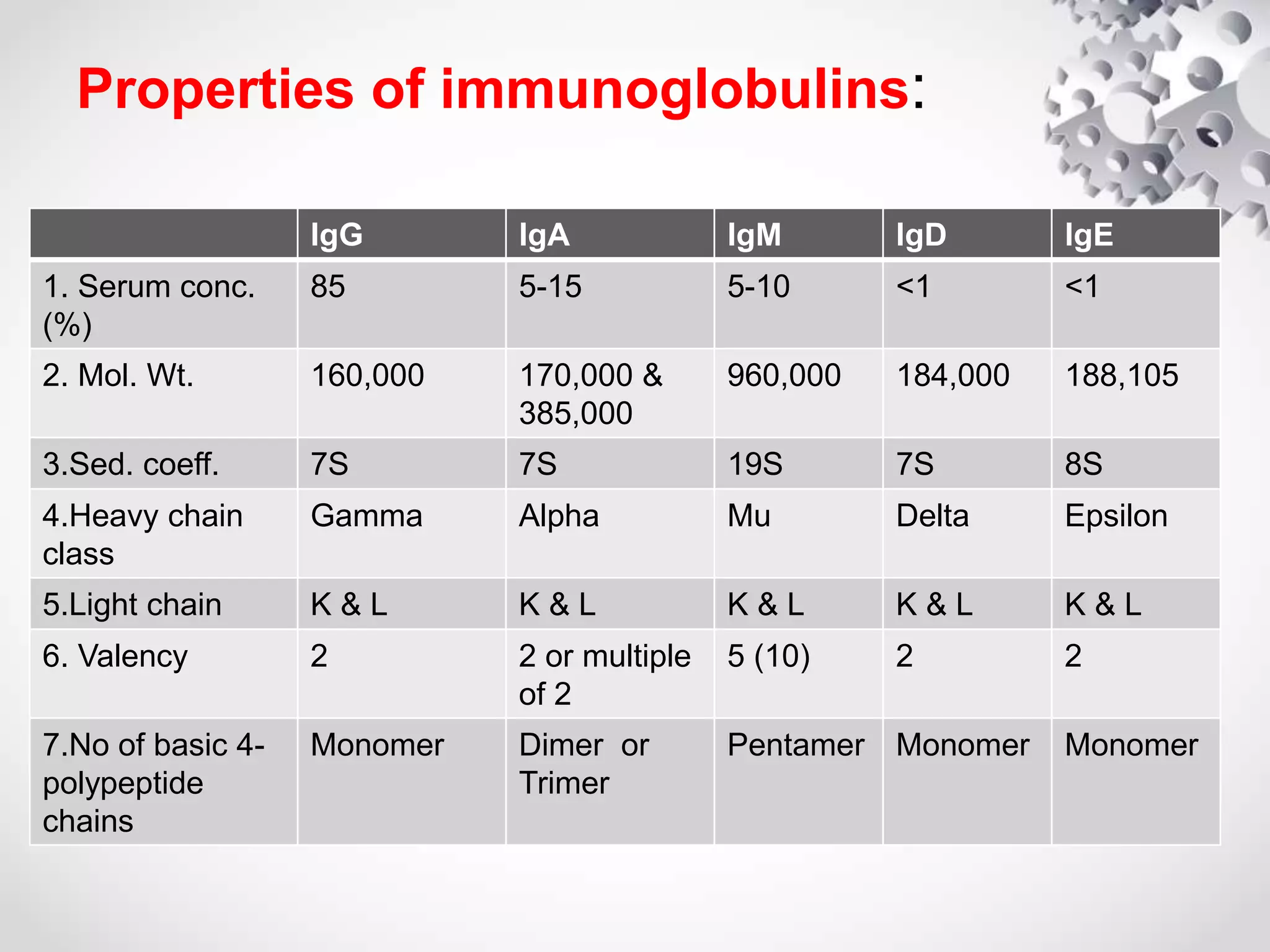
Properties of immunoglobulins:
IgG IgA IgM IgD IgE
1. Serum conc.
(%)
85 5-15 5-10 <1 <1
2. Mol. Wt. 160,000 170,000 &
385,000
960,000 184,000 188,105
3.Sed. coeff. 7S 7S 19S 7S 8S
4.Heavy chain
class
Gamma Alpha Mu Delta Epsilon
5.Light chain K & L K & L K & L K & L K & L
6. Valency 2 2 or multiple
of 2
5 (10) 2 2
7.No of basic 4-
polypeptide
chains
Monomer Dimer or
Trimer
Pentamer Monomer Monomer
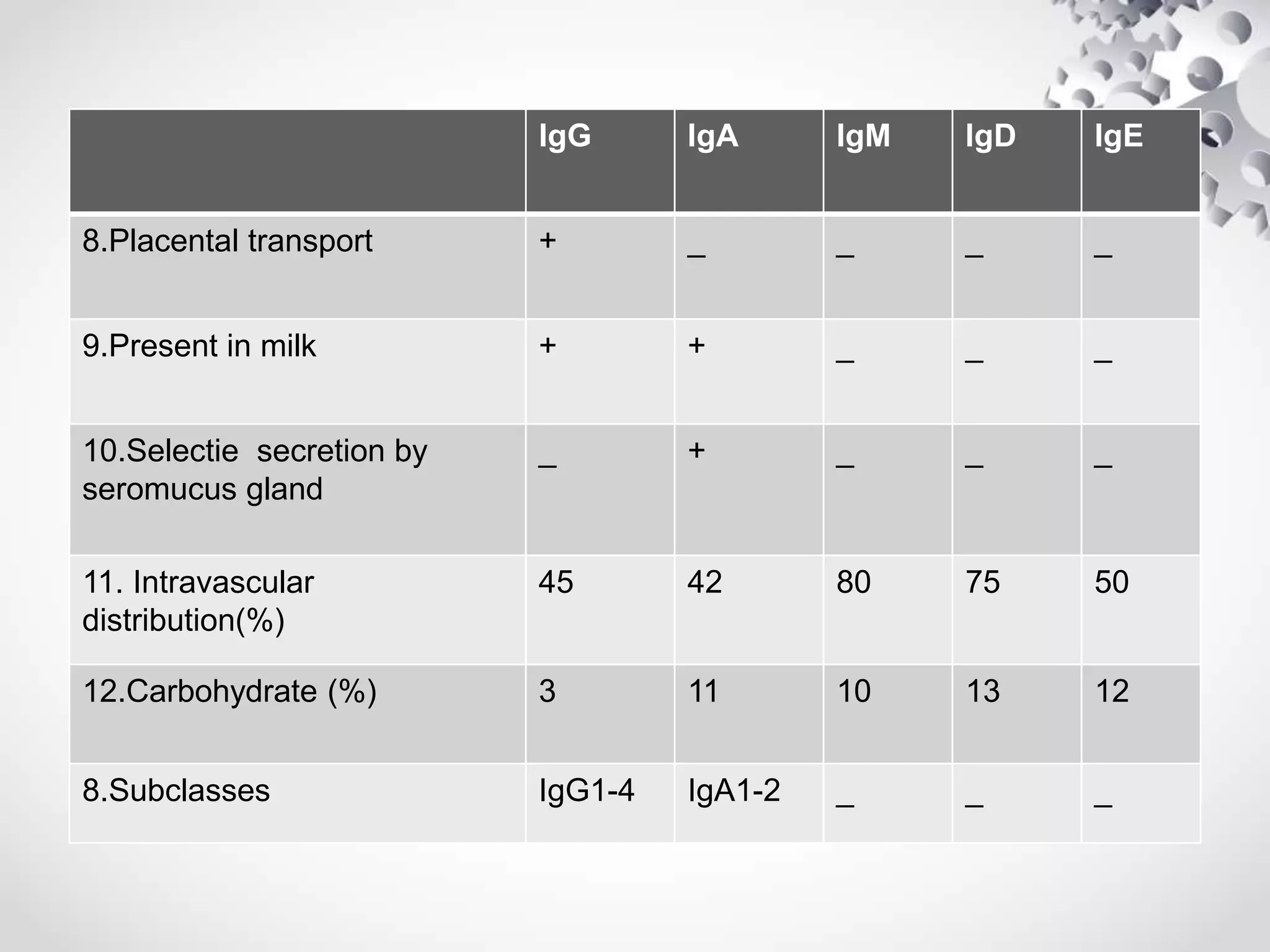
IgG IgA IgM IgD IgE
8.Placental transport + _ _ _ _
9.Present in milk + + _ _ _
10.Selectie secretion by
seromucus gland
_ + _ _ _
11. Intravascular
distribution(%)
45 42 80 75 50
12.Carbohydrate (%) 3 11 10 13 12
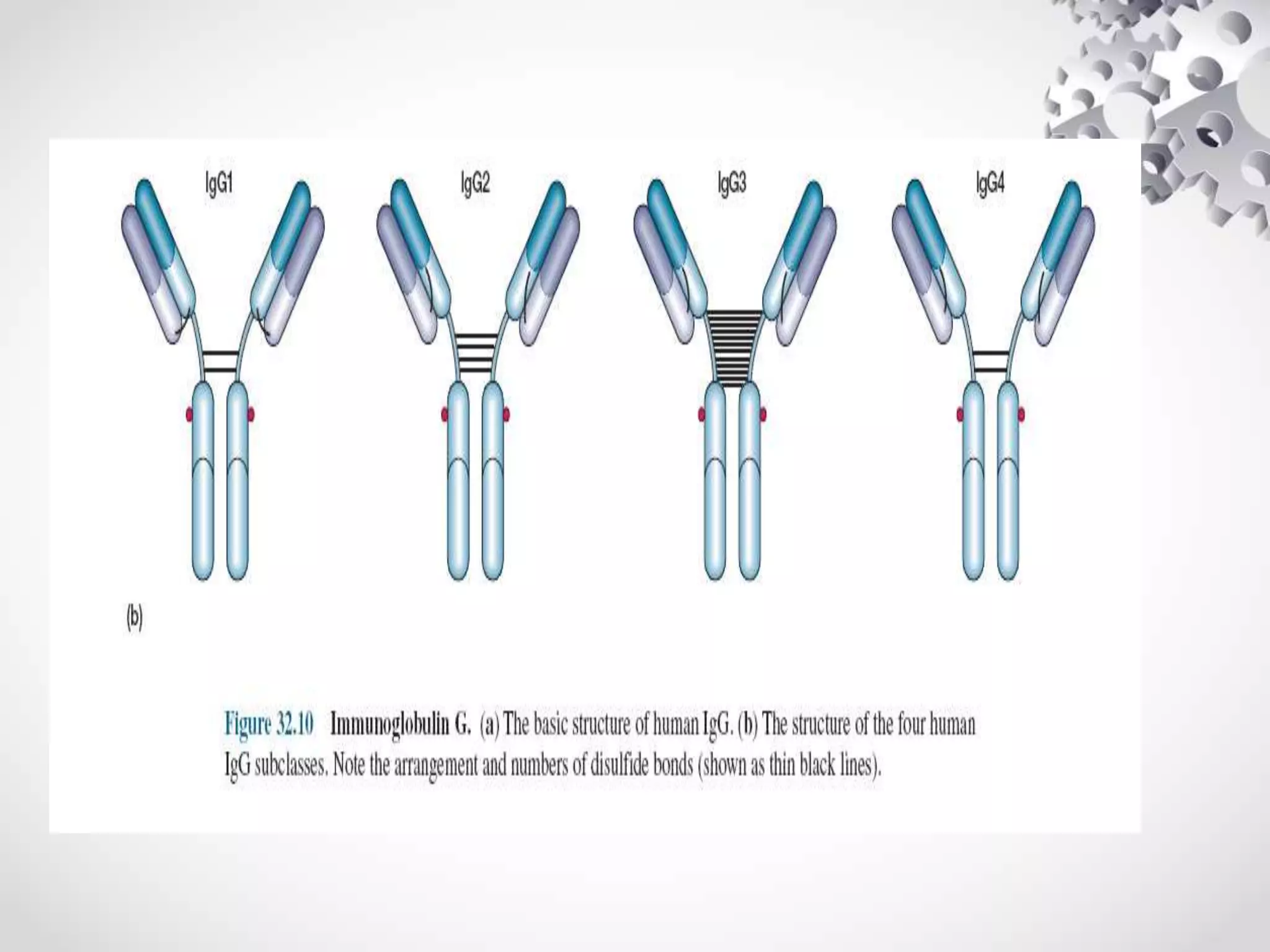
8.Subclasses IgG1-4 IgA1-2 _ _ _
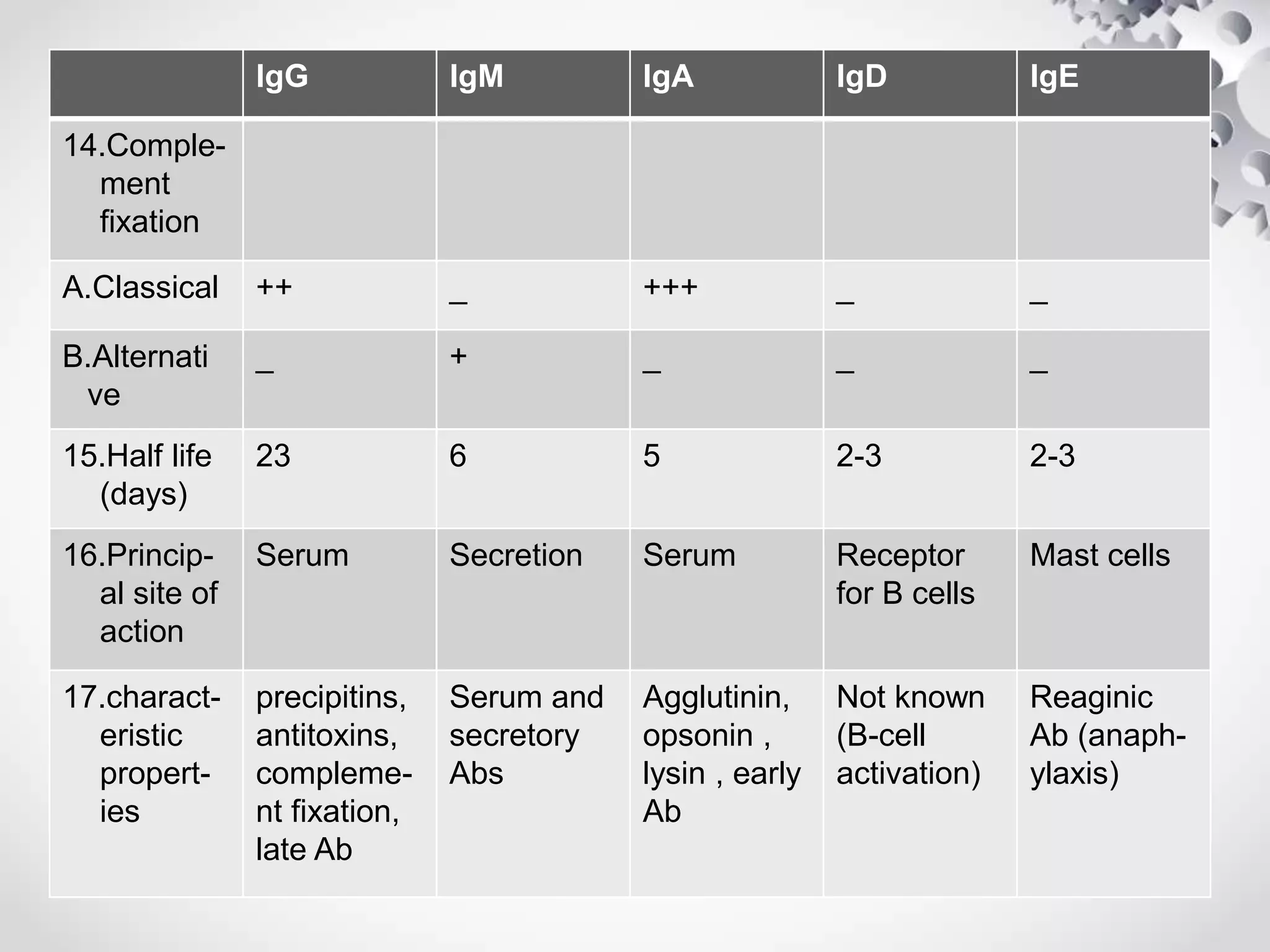
IgG IgM IgA IgD IgE
14.Comple-
ment
fixation
A.Classical ++ _ +++ _ _
B.Alternati
ve
_ + _ _ _
15.Half life
(days)
23 6 5 2-3 2-3
16.Princip-
al site of
action
Serum Secretion Serum Receptor
for B cells
Mast cells
17.charact-
eristic
propert-
ies
precipitins,
antitoxins,
compleme-
nt fixation,
late Ab
Serum and
secretory
Abs
Agglutinin,
opsonin ,
lysin , early
Ab
Not known
(B-cell
activation)
Reaginic
Ab (anaph-
ylaxis)
Presentation antibody and structure

Presentation antibody and structure

  • 1.
    ANTIBODIES Sajid Khan ROLL NO.:- BC582125 M.Sc MICROBIOLOGY 3rd Semester, Allama iqbal open university Islamabad
  • 2.
    DEFINITION: An antibody orimmunoglobulin (Ig) is a glycoprotein that is made by plasma cells in response to an antigen and can recognize and bind to the antigen that caused its production.
  • 3.
    BASIC STRUCTURES: • Antibodieshave more than one antigen combining site Some bivalent Ab molecules can combine to form multimeric Abs that have upto 10 combining sites • All Ig have a basic structure composed of 4 polypeptide chains connected to each other by disulphide bonds. • Each light chain consist of 220 aa and has a mass of approx. 25kDa. • Each heavy chain consists of about 440 aa and has a mass of 50-70kDa.
  • 4.
    • Both lightand heavy chains contain 2 different regions  constant and  variable region • The four chains are arranged in the form of a flexible “Y” with the hinge region and is termed as crystallizable fragment (Fc) and contains the site at which Ab binds. • Top of the “Y” consist of two Ag binding fragments (Fab) that bind with antigenic determinant sites.
  • 5.
    LIGHT CHAIN: • Thelight chain may be either of two distinct forms called “Kappa” and “Lambda” and can be distinguished by aa sequence of carboxyl portion of the chain. HEAVY CHAIN: • In the heavy chain NH2 terminal has a pattern of variability similar to that of kappa and lambda of the light chain.
  • 6.
    BASIC STRUCTURE OFIMMUNOGLOBULIN
  • 10.
  • 11.
    Immunoglobulin Function • Eachend of the immunoglobulin molecule has a different role. • The Fab region is concerned with binding to antigen, whereas the Fc region mediates binding to host tissue, various cells of the immune system, some phagocytic cells, or the first component of the complement system. • The binding of an antibody with an antigen usually does not cause destruction of the antigen or of the
  • 12.
    For example:-  Bacteriathat are covered with antibodies are better targets for phagocytosis by neutrophils and macrophages. • The alteration of the surface of bacteria, viruses , and other particles so that they can be more readily phagocytized is termed opsonization. • Immune destruction also is promoted by antibody-induced activation of the classical pathway.
  • 13.
  • 15.
    Functions: Immunity to newborn. Potent activator of complement system. Neutralisation of toxins. IgG3 binds to Fc receptors- phagocytosis.
  • 16.
  • 17.
    FUNCTIONS: • Activation ofclassical pathway. • Defence against multivalent bacterial antigens. • Acts as opsonin. • Present on B-cell surface, acts as antigen receptor.
  • 18.
  • 19.
    Functions: • Secretory antibody. •Effective against bacterial like Salmonella, Vibrio cholerae, Niesseria gonorrhoea, etc. • Effective against viruses like those causing Poliomyelitis & Influenza. • Protection to infant gut.
  • 20.
    4.IgD: FUNCTIONS: oB cell activation. oActs as receptor for Ag binding.
  • 21.
    5.IgE: FUNCTIONS: oResponsible for immediatehypersensitivity or allergic reactions. oBinds to Fc receptors on basophils and mast cells. oRelease of substances like histamine , bradykinin and other vasoactive ‘mediators’.
  • 22.
    Properties of immunoglobulins: IgGIgA IgM IgD IgE 1. Serum conc. (%) 85 5-15 5-10 <1 <1 2. Mol. Wt. 160,000 170,000 & 385,000 960,000 184,000 188,105 3.Sed. coeff. 7S 7S 19S 7S 8S 4.Heavy chain class Gamma Alpha Mu Delta Epsilon 5.Light chain K & L K & L K & L K & L K & L 6. Valency 2 2 or multiple of 2 5 (10) 2 2 7.No of basic 4- polypeptide chains Monomer Dimer or Trimer Pentamer Monomer Monomer
  • 23.
    IgG IgA IgMIgD IgE 8.Placental transport + _ _ _ _ 9.Present in milk + + _ _ _ 10.Selectie secretion by seromucus gland _ + _ _ _ 11. Intravascular distribution(%) 45 42 80 75 50 12.Carbohydrate (%) 3 11 10 13 12 8.Subclasses IgG1-4 IgA1-2 _ _ _
  • 24.
    IgG IgM IgAIgD IgE 14.Comple- ment fixation A.Classical ++ _ +++ _ _ B.Alternati ve _ + _ _ _ 15.Half life (days) 23 6 5 2-3 2-3 16.Princip- al site of action Serum Secretion Serum Receptor for B cells Mast cells 17.charact- eristic propert- ies precipitins, antitoxins, compleme- nt fixation, late Ab Serum and secretory Abs Agglutinin, opsonin , lysin , early Ab Not known (B-cell activation) Reaginic Ab (anaph- ylaxis)