
SOMATIC HYPERMUTATIONSOMATIC HYPERMUTATIONDeshBandhu                                                                                                                                                         10/pbt/006
Contents1-Introduction2-Molecules involve in SHM3-Model of SHM4-Future Directions
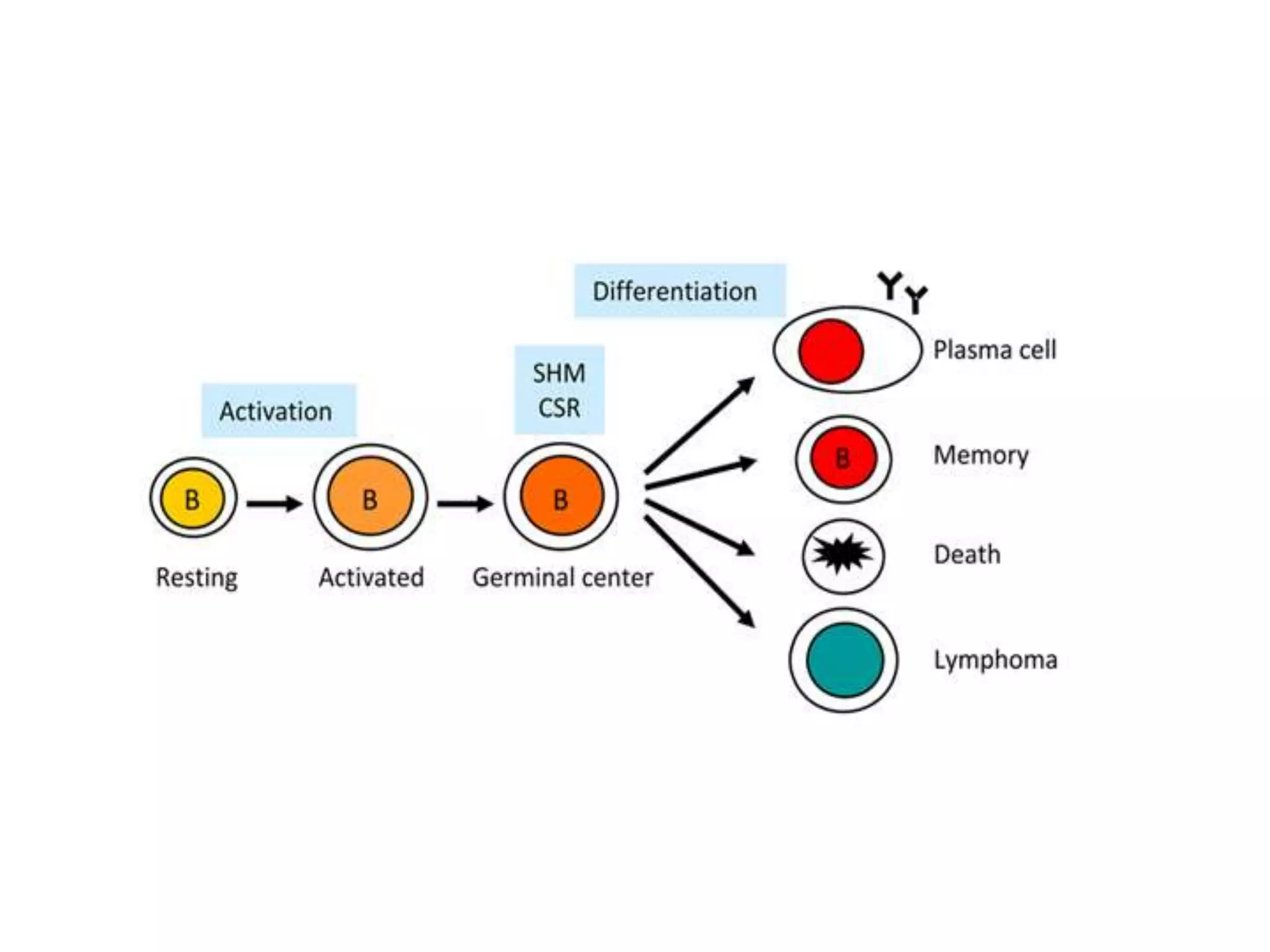
Introductionsomatic hypermutation (SHM) is a diversity generating, regulated cellular mechanism displayed by the adaptive immune response.Somatic Hypermutation adds diversity in already Rearranged Gene Segments.Somatic hypermutation occurs at a frequency of    10¯3/base pair/ generation, than the spontaneous   mutation rate about 10⁻8/bp/generation.
This Rate is  higher hence the name, hypermutation.These mutations occur mostly at “hotspots” in the DNA, known as hypervariable regions. These regions correspond to the complementarity determining regions, the sites involved in antigen recognition on the antibody.
These mutation result from nucleotide substitution rather than addition or deletion.They influence the process of affinity maturation of B cells.Affinity maturation leads to increase the affinity of antibodies for a particular antigen.
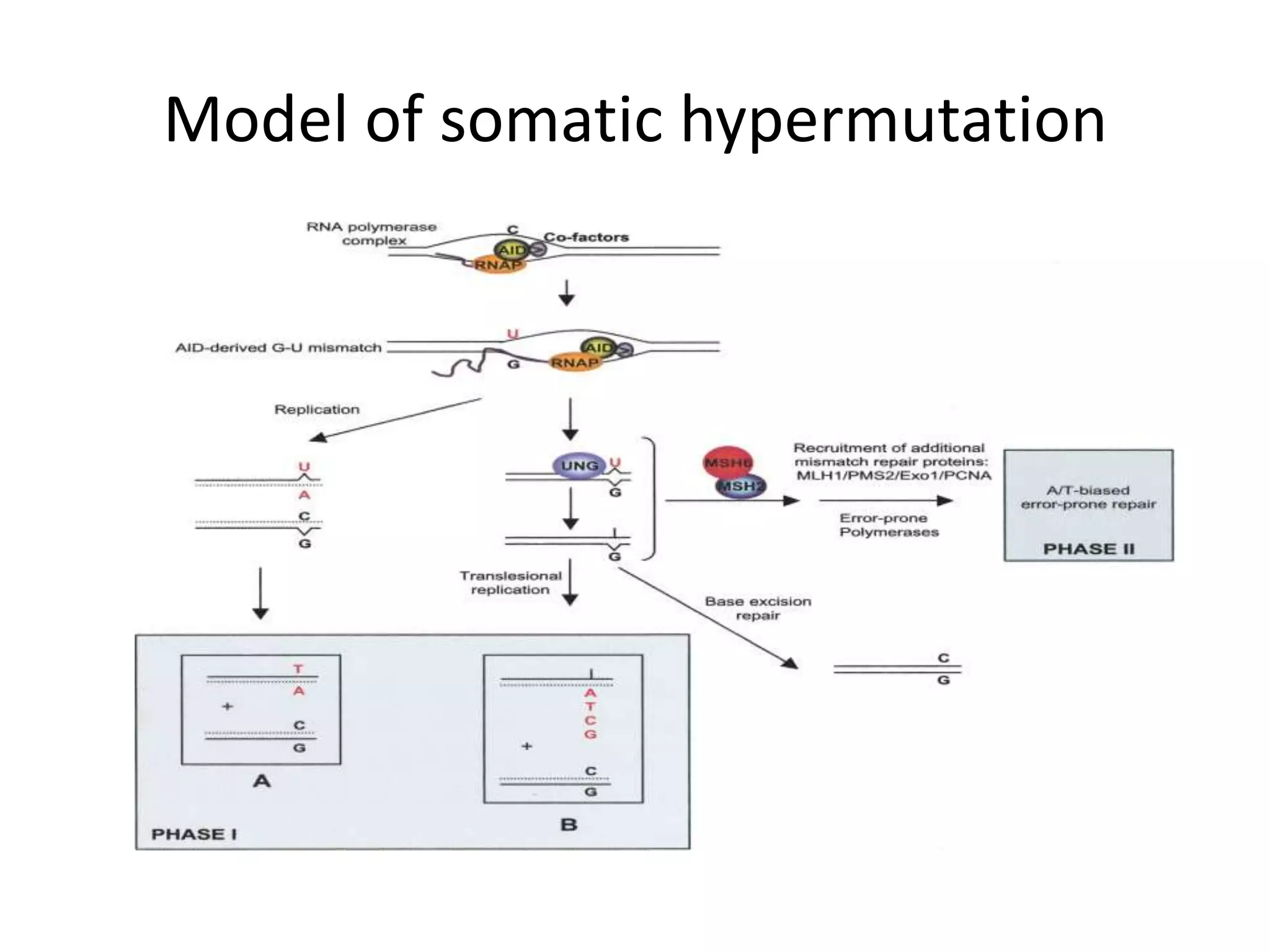
Molecules involved in SHMIgM antibodies expressing V regions that have undergone SHM, as well as IgG and IgA antibodies with no somatic mutations.Activation-induced cytidinedeaminase: A  B cell-specific protein required for SHM.Uracil N-glycosylase: Removing uracil generated by AID deamination.
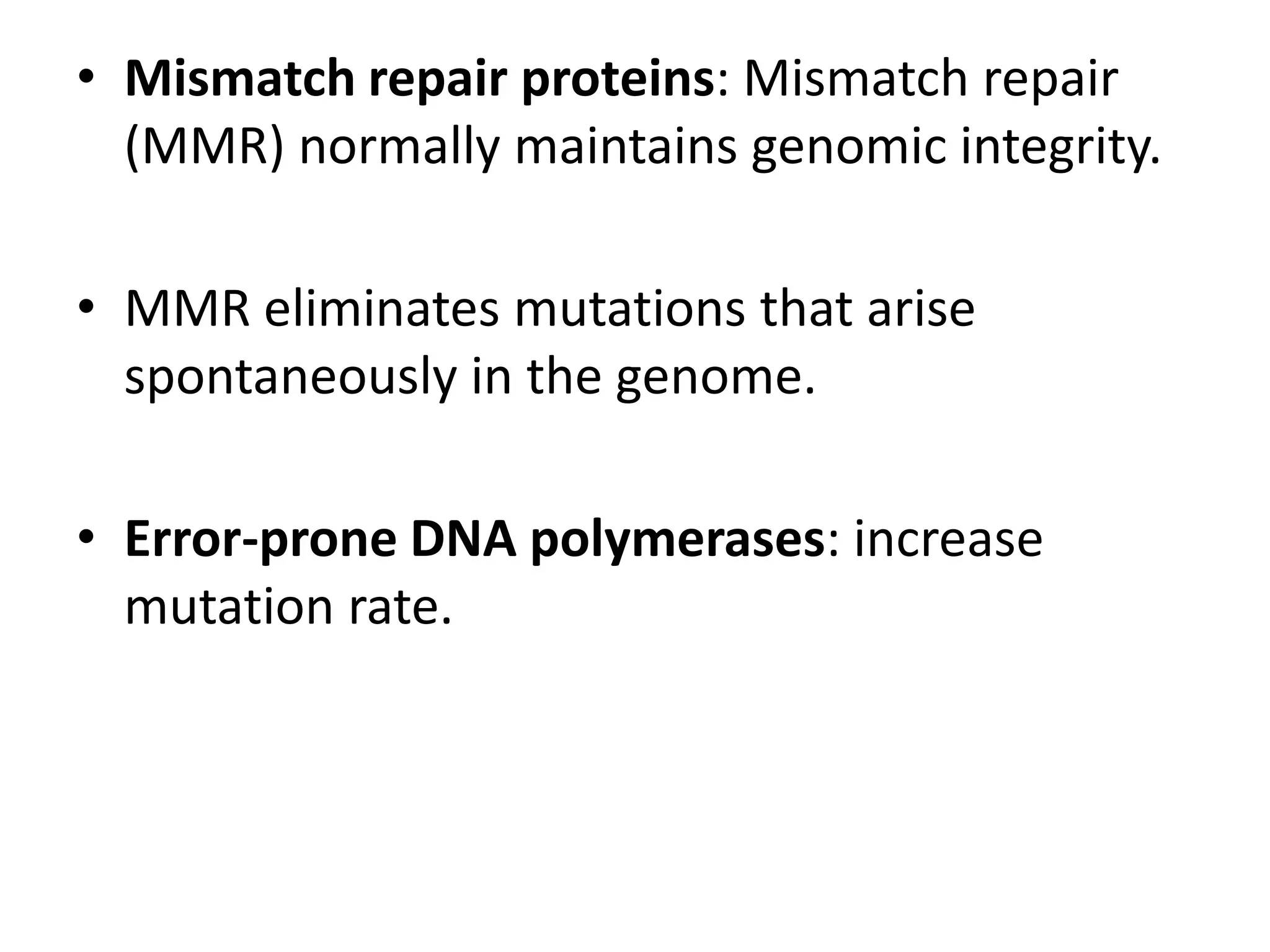
Mismatch repair proteins: Mismatch repair (MMR) normally maintains genomic integrity.MMR eliminates mutations that arise spontaneously in the genome.Error-prone DNA polymerases: increase mutation rate.
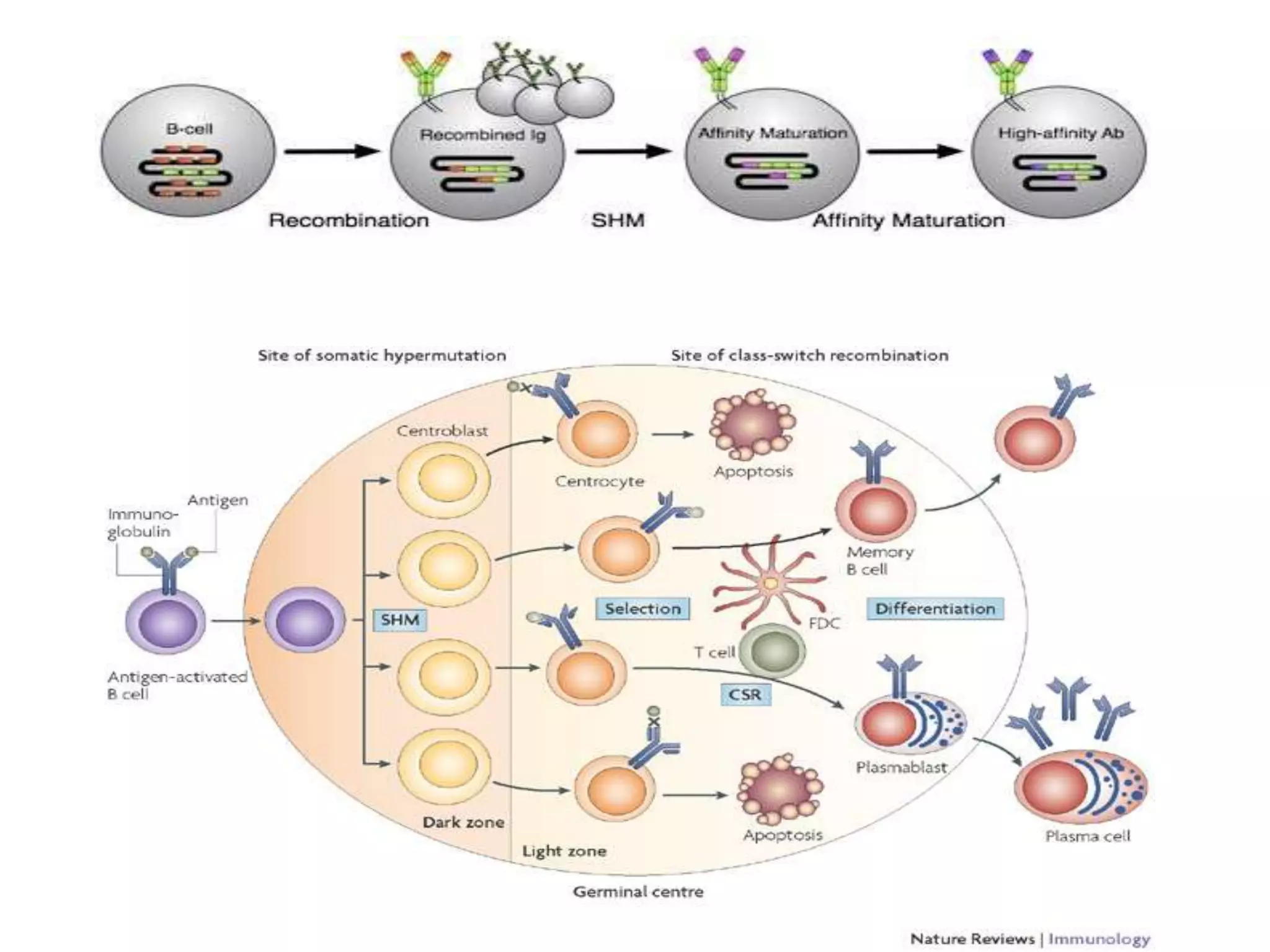
Model of somatic hypermutation
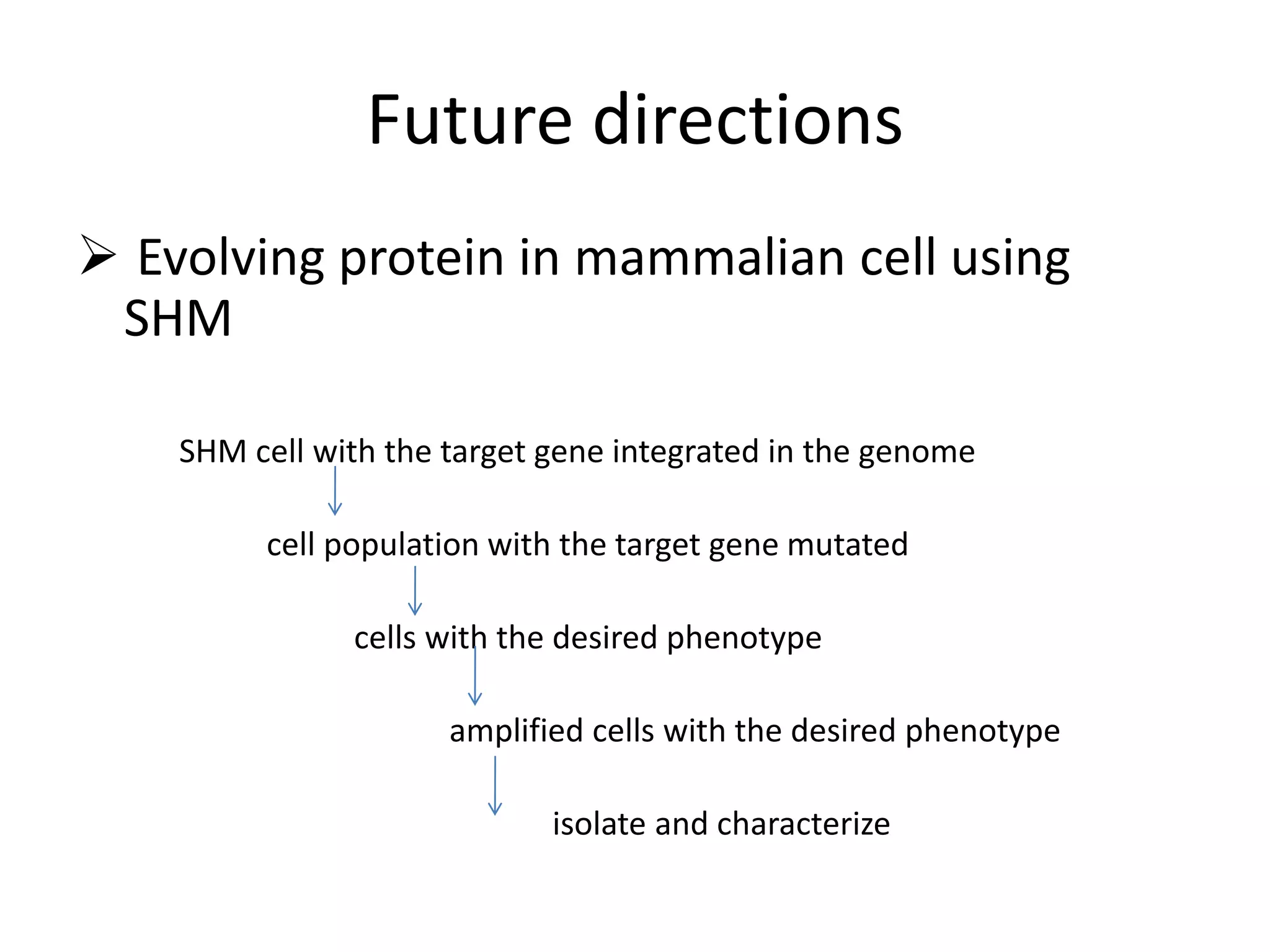
Future directions Evolving protein in mammalian cell using SHM             SHM cell with the target gene integrated in the genome                        cell population with the target gene mutated                                    cells with the desired phenotype                                               amplified cells with the desired phenotype                                                            isolate and characterize
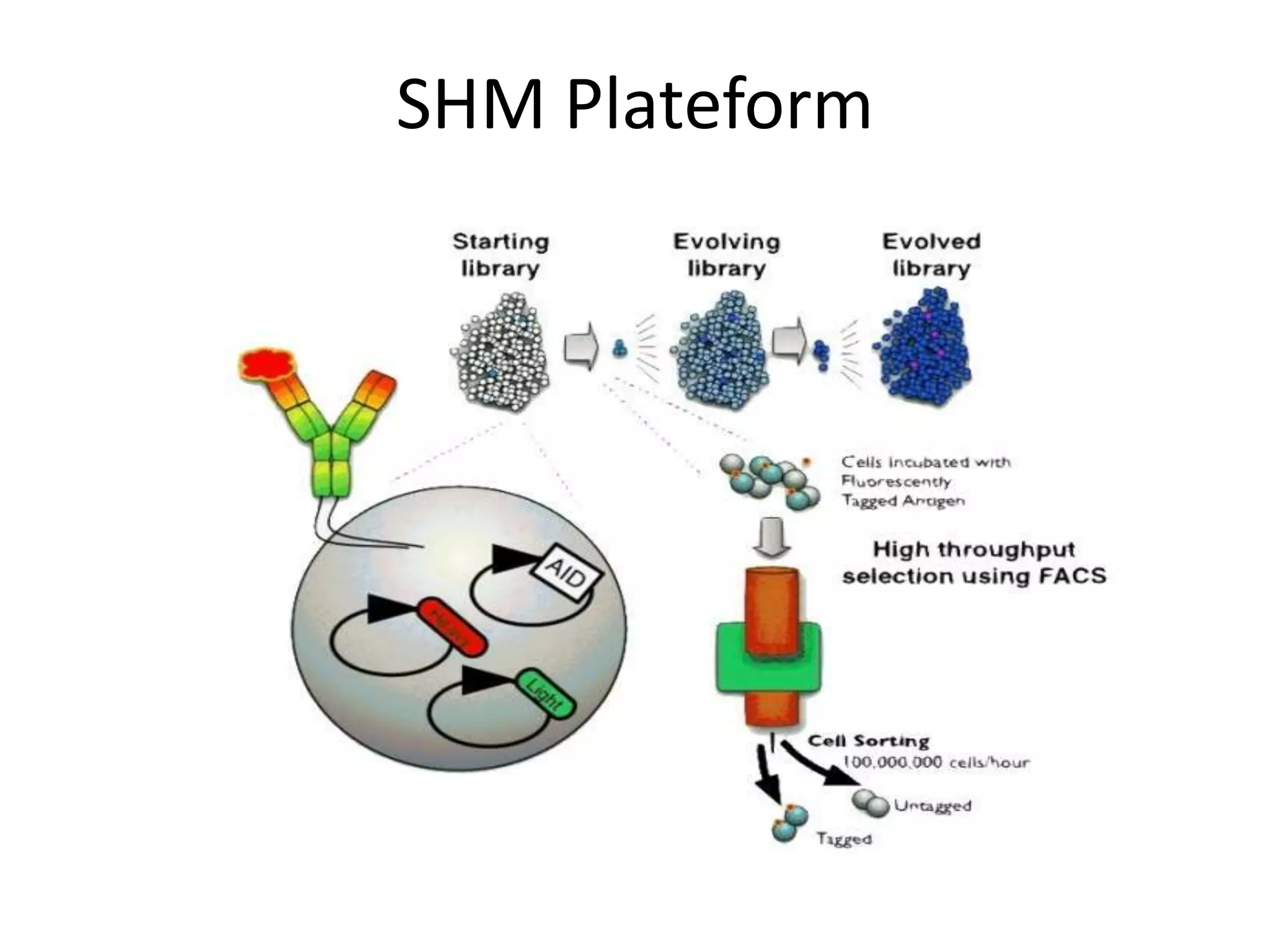
SHM Plateform
To Produce New Fluorescent ProteinsTsien’s group has cloned a red fluorescent protein (RFP) into human B-cells and allowed them to make variants that could then be isolated based on their colors by flow-cytometry.
Questions??

Somatic hypermutation

  • 1.
  • 2.
    Contents1-Introduction2-Molecules involve inSHM3-Model of SHM4-Future Directions
  • 3.
    Introductionsomatic hypermutation (SHM)is a diversity generating, regulated cellular mechanism displayed by the adaptive immune response.Somatic Hypermutation adds diversity in already Rearranged Gene Segments.Somatic hypermutation occurs at a frequency of 10¯3/base pair/ generation, than the spontaneous mutation rate about 10⁻8/bp/generation.
  • 4.
    This Rate is higher hence the name, hypermutation.These mutations occur mostly at “hotspots” in the DNA, known as hypervariable regions. These regions correspond to the complementarity determining regions, the sites involved in antigen recognition on the antibody.
  • 5.
    These mutation resultfrom nucleotide substitution rather than addition or deletion.They influence the process of affinity maturation of B cells.Affinity maturation leads to increase the affinity of antibodies for a particular antigen.
  • 8.
    Molecules involved inSHMIgM antibodies expressing V regions that have undergone SHM, as well as IgG and IgA antibodies with no somatic mutations.Activation-induced cytidinedeaminase: A B cell-specific protein required for SHM.Uracil N-glycosylase: Removing uracil generated by AID deamination.
  • 9.
    Mismatch repair proteins:Mismatch repair (MMR) normally maintains genomic integrity.MMR eliminates mutations that arise spontaneously in the genome.Error-prone DNA polymerases: increase mutation rate.
  • 10.
    Model of somatichypermutation
  • 11.
    Future directions Evolvingprotein in mammalian cell using SHM SHM cell with the target gene integrated in the genome cell population with the target gene mutated cells with the desired phenotype amplified cells with the desired phenotype isolate and characterize
  • 12.
  • 13.
    To Produce NewFluorescent ProteinsTsien’s group has cloned a red fluorescent protein (RFP) into human B-cells and allowed them to make variants that could then be isolated based on their colors by flow-cytometry.
  • 14.