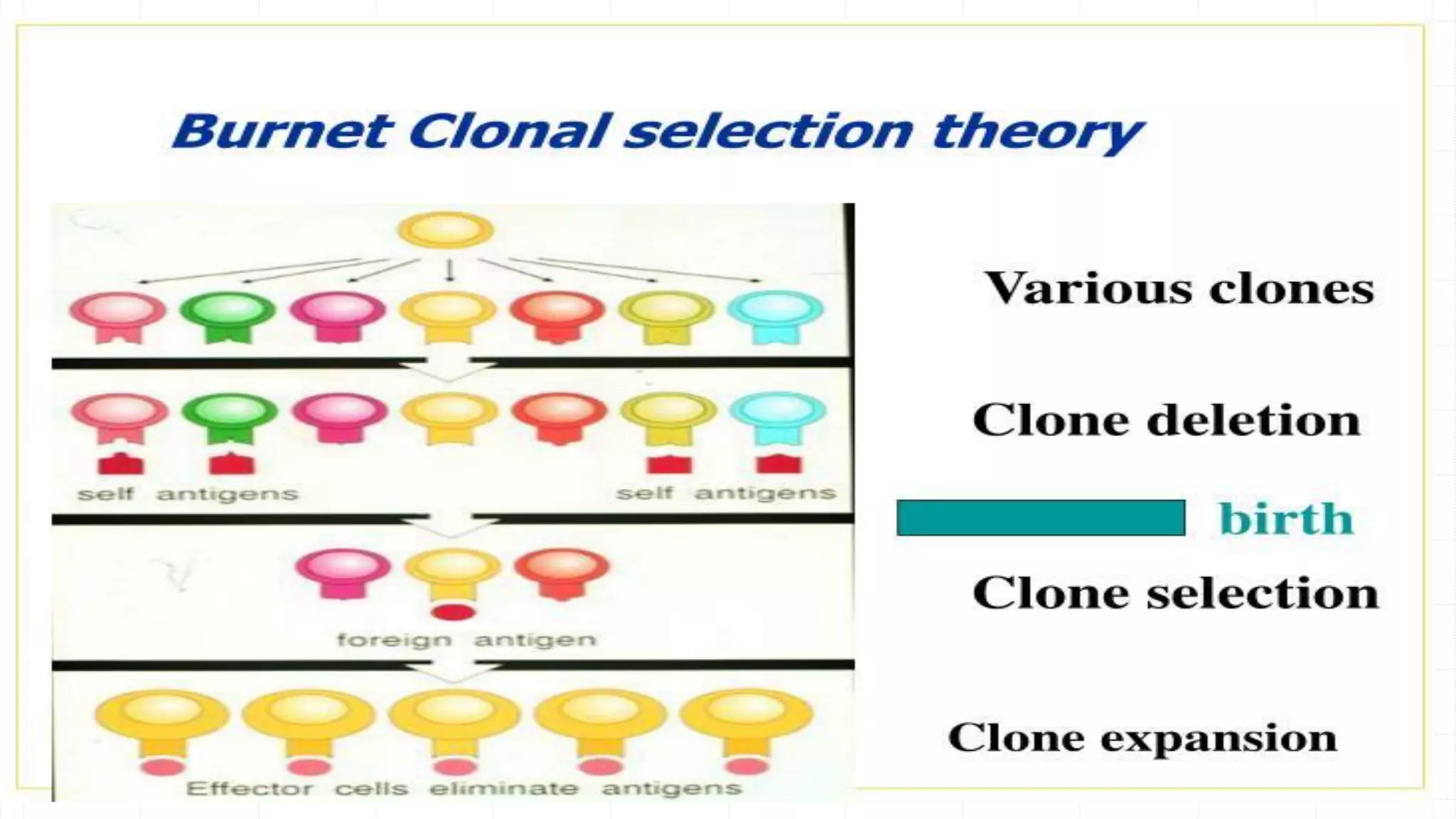
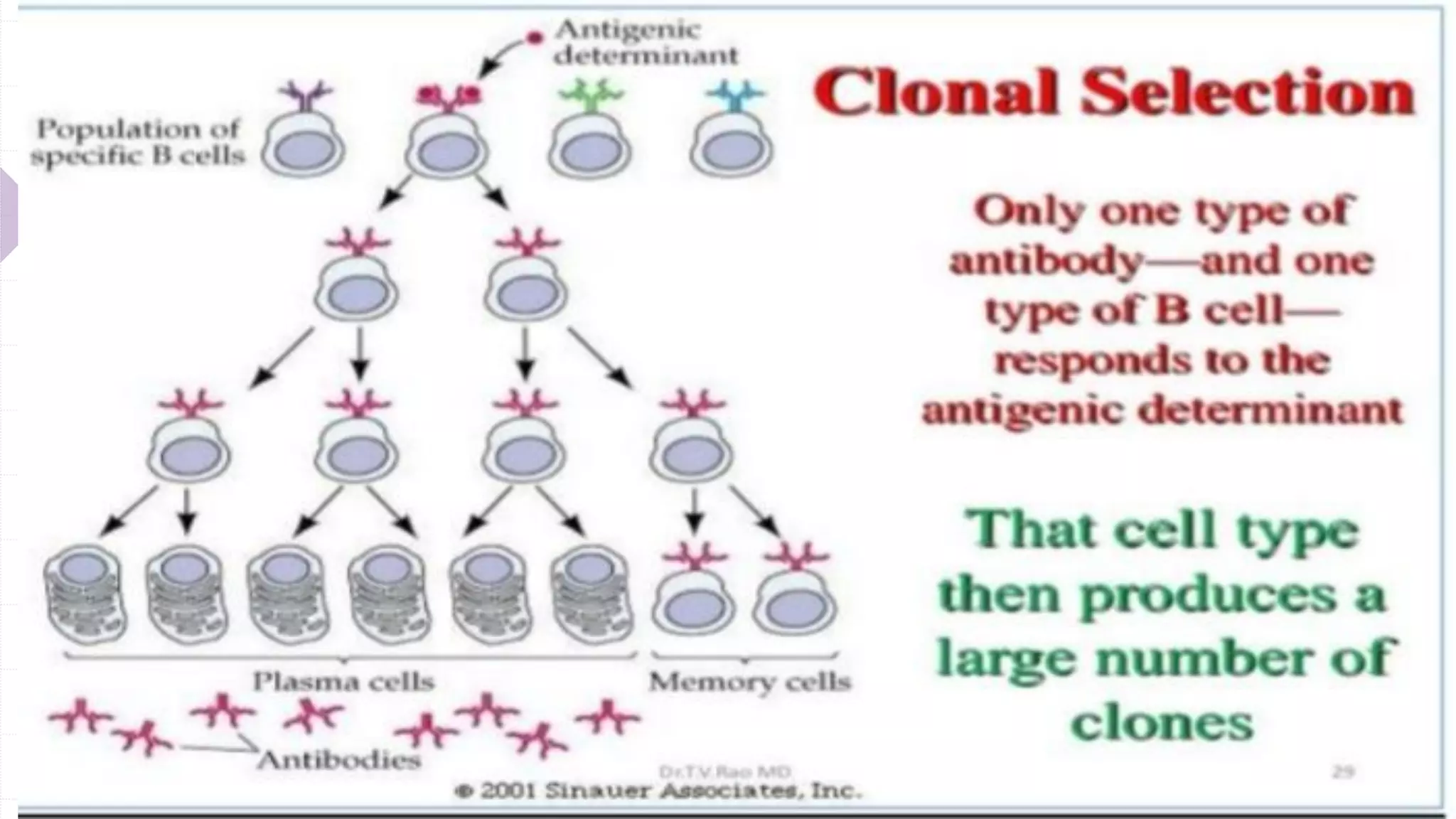
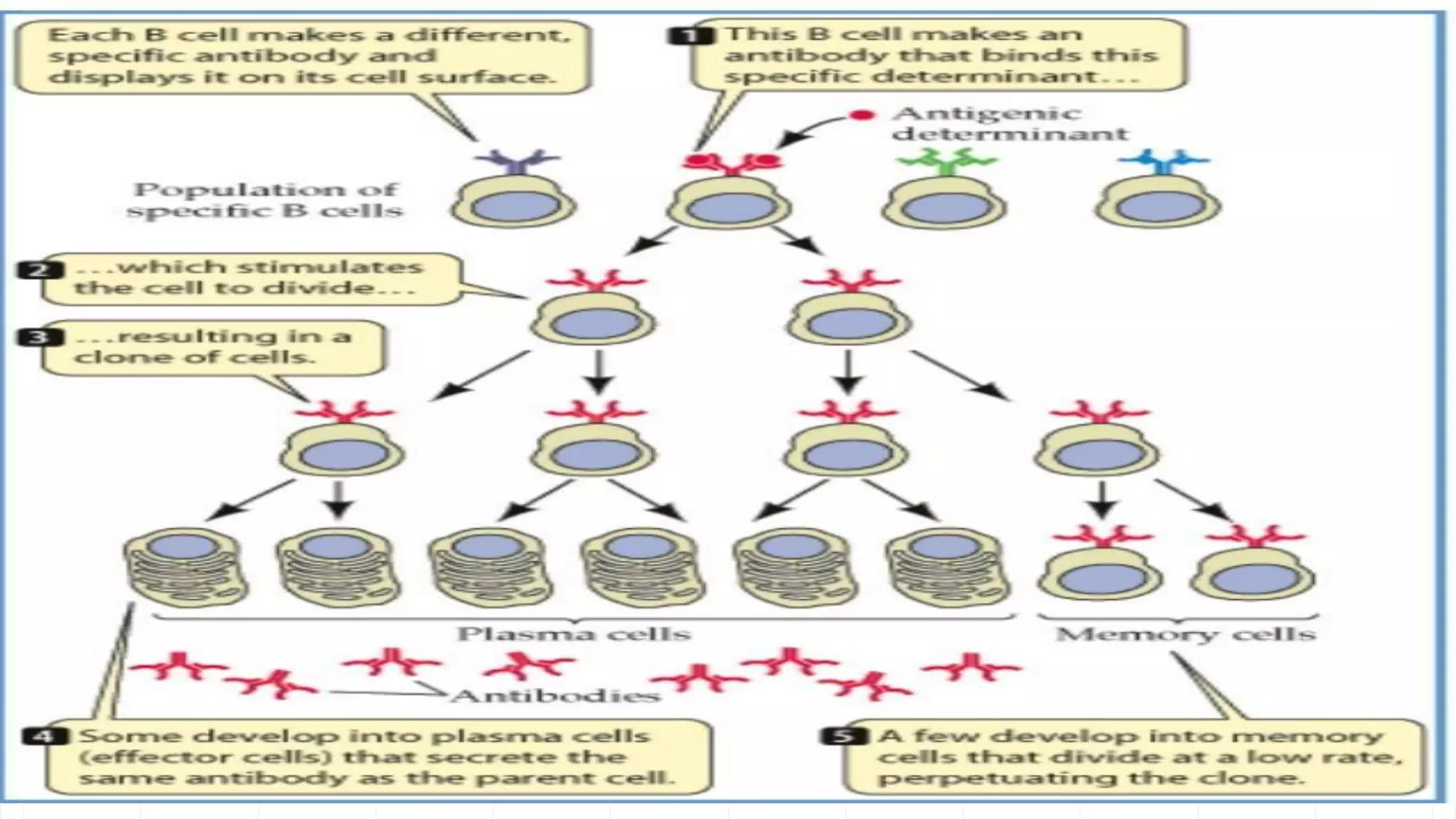
The document summarizes Burnet's clonal selection theory of antibody production. It explains that according to this theory, lymphocyte stem cells randomly differentiate to produce mature B and T cells, each with a unique antigen receptor. When a B cell encounters the antigen it recognizes, it activates the B cell clone and causes it to proliferate and differentiate into plasma cells that secrete antibodies with the same specificity as the parental B cell receptor. The theory explains how the immune system produces antibodies and memory cells that allow for a rapid secondary immune response upon reexposure to the same antigen.