Downloaded 155 times

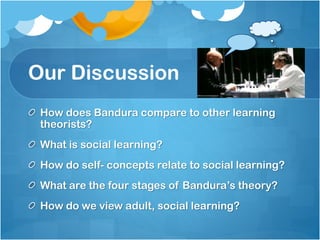
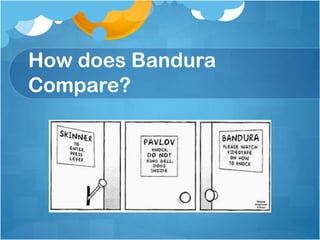
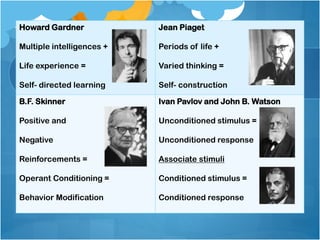
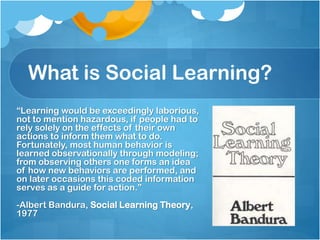

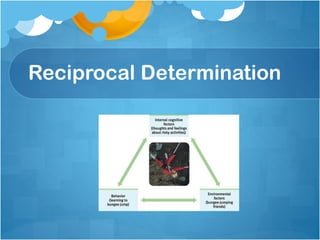
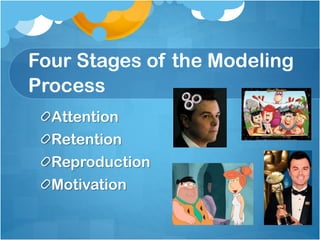
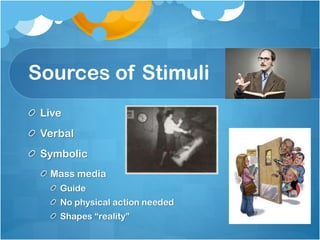
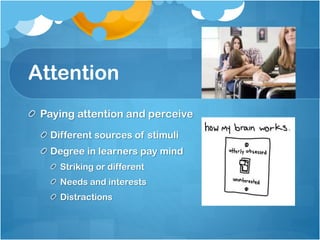
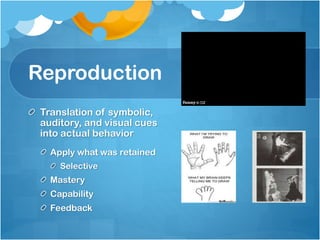
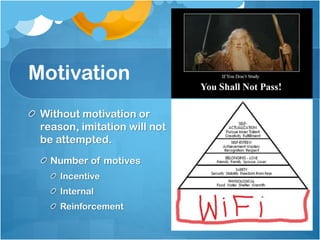
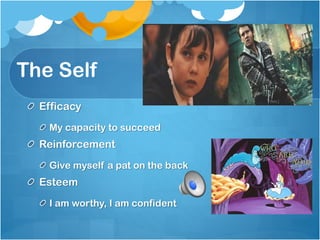


This document discusses Albert Bandura's social learning theory and its key concepts. It explains that Bandura built upon theories by Skinner, Pavlov, and Watson by emphasizing observational learning and modeling behavior. Bandura's social learning theory includes four main stages of learning from models: attention, retention, reproduction, and motivation. The document also discusses Bandura's famous Bobo doll experiment and the concept of reciprocal determinism. It asks the reader to consider how Bandura's concepts apply to adult learning and how beliefs about self-efficacy can influence behavior.


