PRESENTED TO:
Dr. Fakhra
PRESENTED By:
Rooha Shahid
Kainat Nayyar
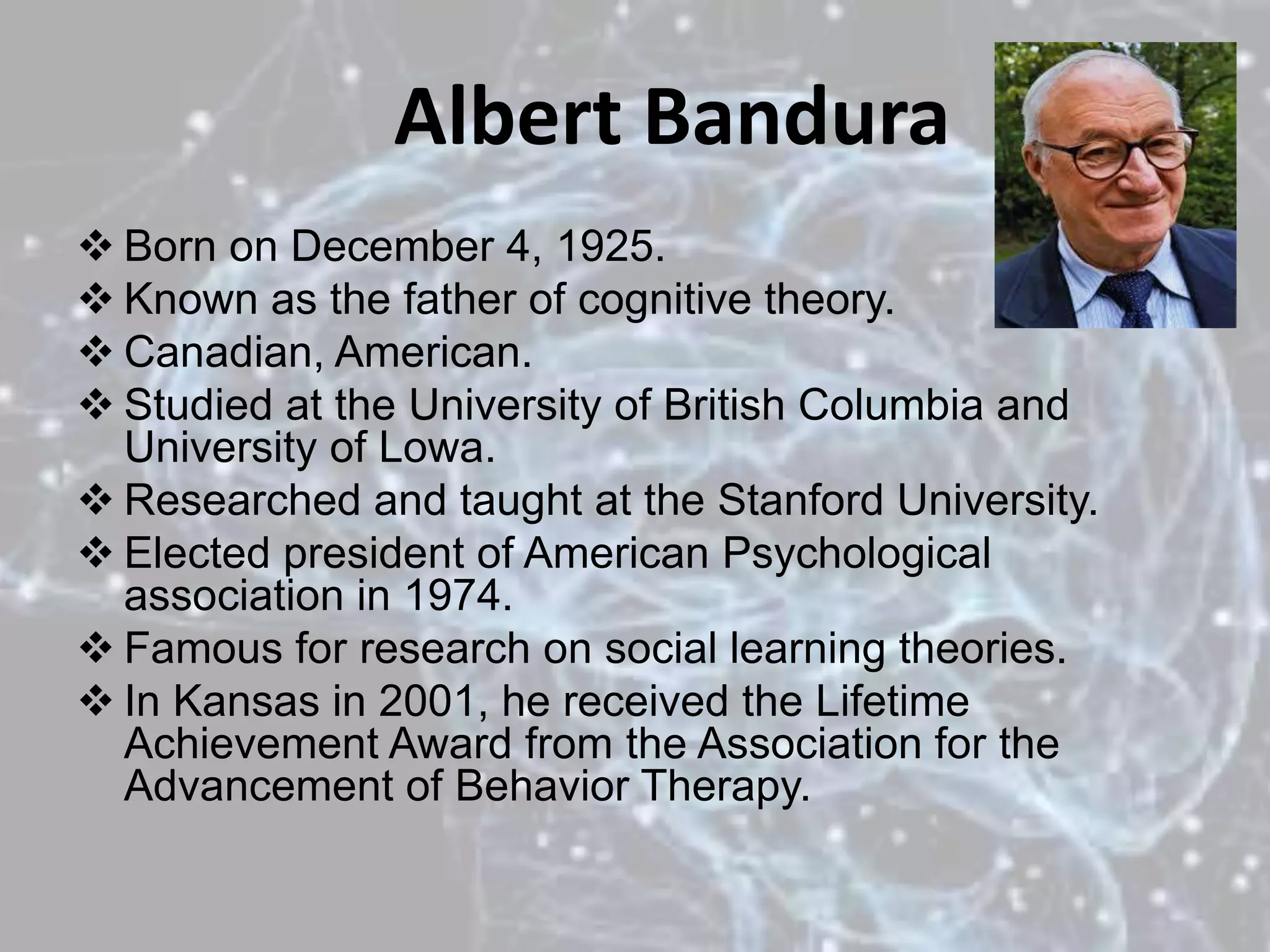
Albert Bandura
 Born on December 4, 1925.
 Known as the father of cognitive theory.
 Canadian, American.
 Studied at the University of British Columbia and
University of Lowa.
 Researched and taught at the Stanford University.
 Elected president of American Psychological
association in 1974.
 Famous for research on social learning theories.
 In Kansas in 2001, he received the Lifetime
Achievement Award from the Association for the
Advancement of Behavior Therapy.
Introduction of theory
1. Social learning theory emphasizes on the
importance of observing and modelling
the behaviors, attitudes and emotional
reactions of others.
2. Social learning theory focuses on the
learning that occurs within a social
context.
Basic Social Learning concepts
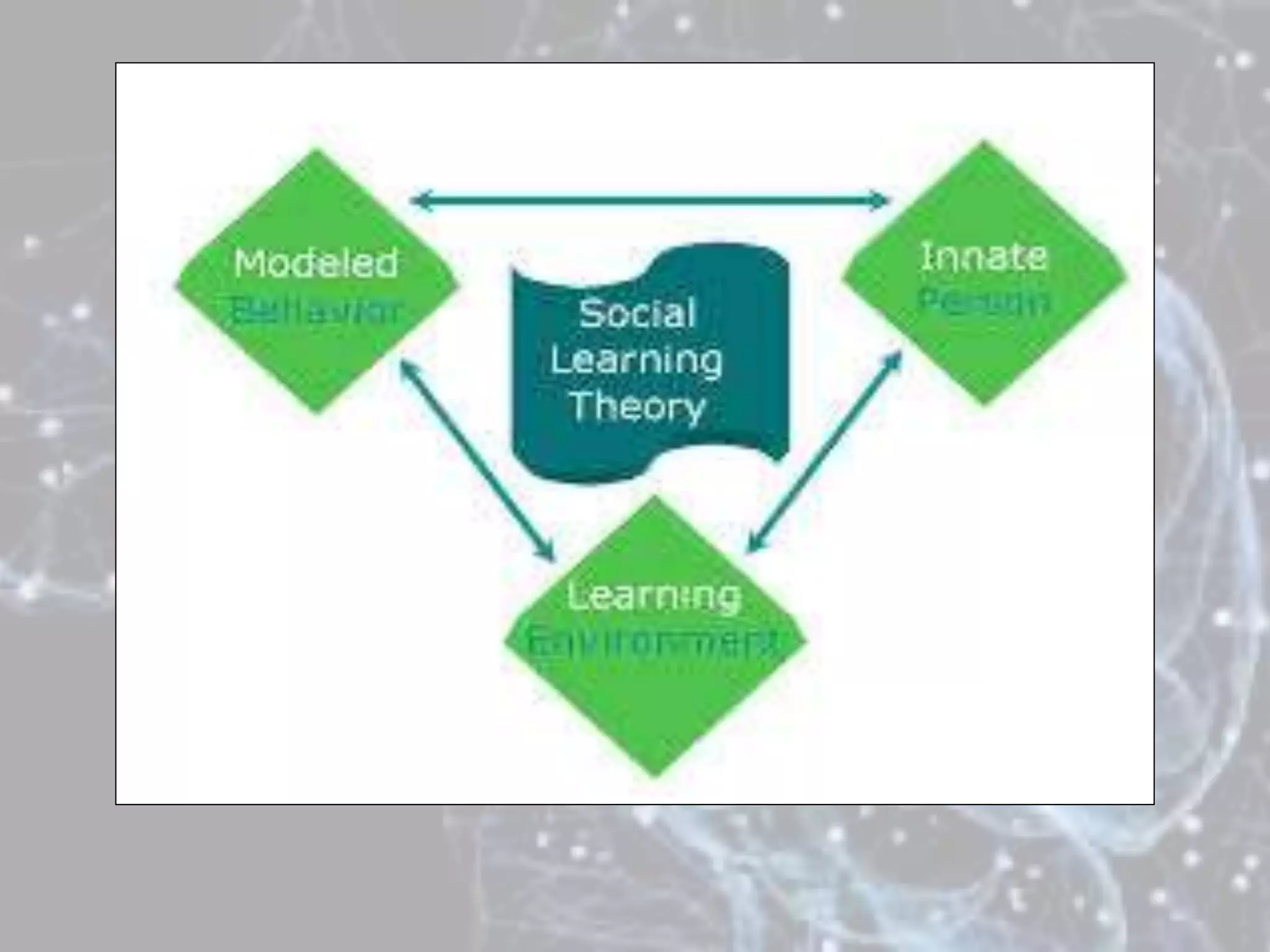
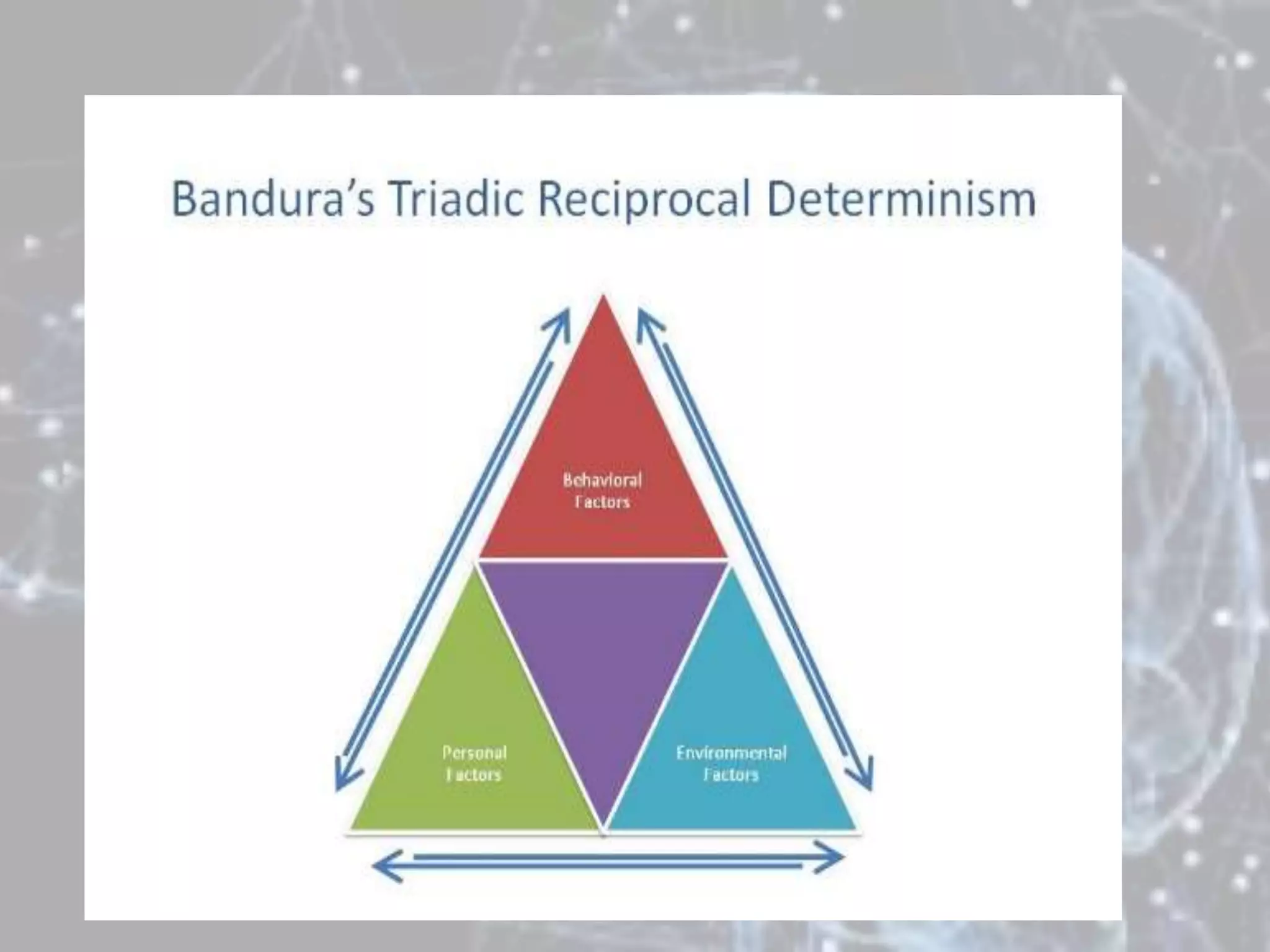
Social learning theory explains human behavior in
terms of continuous reciprocal interaction
between cognitive, behavioral, and
environmental influences.This theory depend on
following steps:
1. Observational learning (people can learn
through observation)
2. Intrinsic reinforcement (mental states are
important for learning)
3. The modelling process (learning does not
lead to a change in behavior)
1.Observational learning
According to Amal Jith:
A live model: Involves an actual individual
demonstrating or acting out a behavior.
A verbal instructional model: Involves
descriptions and explanations of a
behavior.
A symbolic model: Which involves real or
fictional characters displaying behaviors in
books, films, television programs, or online
media.
2.Intrinsic Reinforcement
According to Saul McLeod (2016)
Second, the people around the child will respond
to the behavior it imitates with either
reinforcement or punishment. If a child imitates
a model’s behavior and the consequences are
rewarding, the child is likely to continue
performing the behavior. If a parent sees a little
girl consoling her teddy bear and says “what a
kind girl you are,” this is rewarding for the child
and makes it more likely that she will repeat the
behavior. Her behavior has been reinforced
(i.e., strengthened).
3.The Modelling process
According to Amal Jith
Not all observed behaviors are effectively learned.
Factors involving both the model and the learner
can play a role in whether social learning is
successful. The following steps are involved in the
observational learning and modeling process:
• Attention
• Retention
• Motor reproduction
• Motivation
• Attention
According to Bandura
Attention including modeled events (distinctiveness, affective
valence, complexity,
prevalence, functional value) and observer characteristics
(sensory capacities, arousal level, perceptual set, past
reinforcement).
• Retention
According to Saul McLeod (2016)
How well the behavior is remembered. The behavior may be
noticed but is it not always remembered which obviously
prevents imitation. It is important therefore that a memory of
the behavior is formed to be performed later by the observer.
• MOTOR REPRODUCTION
According to David
Reproducing the image. Including physical
capabilities, and self-observation of reproduction.
• MOTIVATION
According to David:
Having a good reason to imitate. Includes motives
such as past (i.e. traditional behaviorism),
promised (imagined incentives) and vicarious
(seeing and recalling the reinforced model).
Principles of social learning theory
According to Bandura:
• Individuals are more likely to adopt a
modeled behavior if it results in outcomes
they value.
• The highest level of observational learning
is achieved by first organizing and
rehearsing the modeled behavior
symbolically and then enacting it overtly.
Coding modeled behavior into words, labels
or images results in better retention than
simply observing.
• Individuals are more likely to adopt a
modeled behavior if the model is similar to
the observer and has admired status and
the behavior has functional value.
Research Experiment
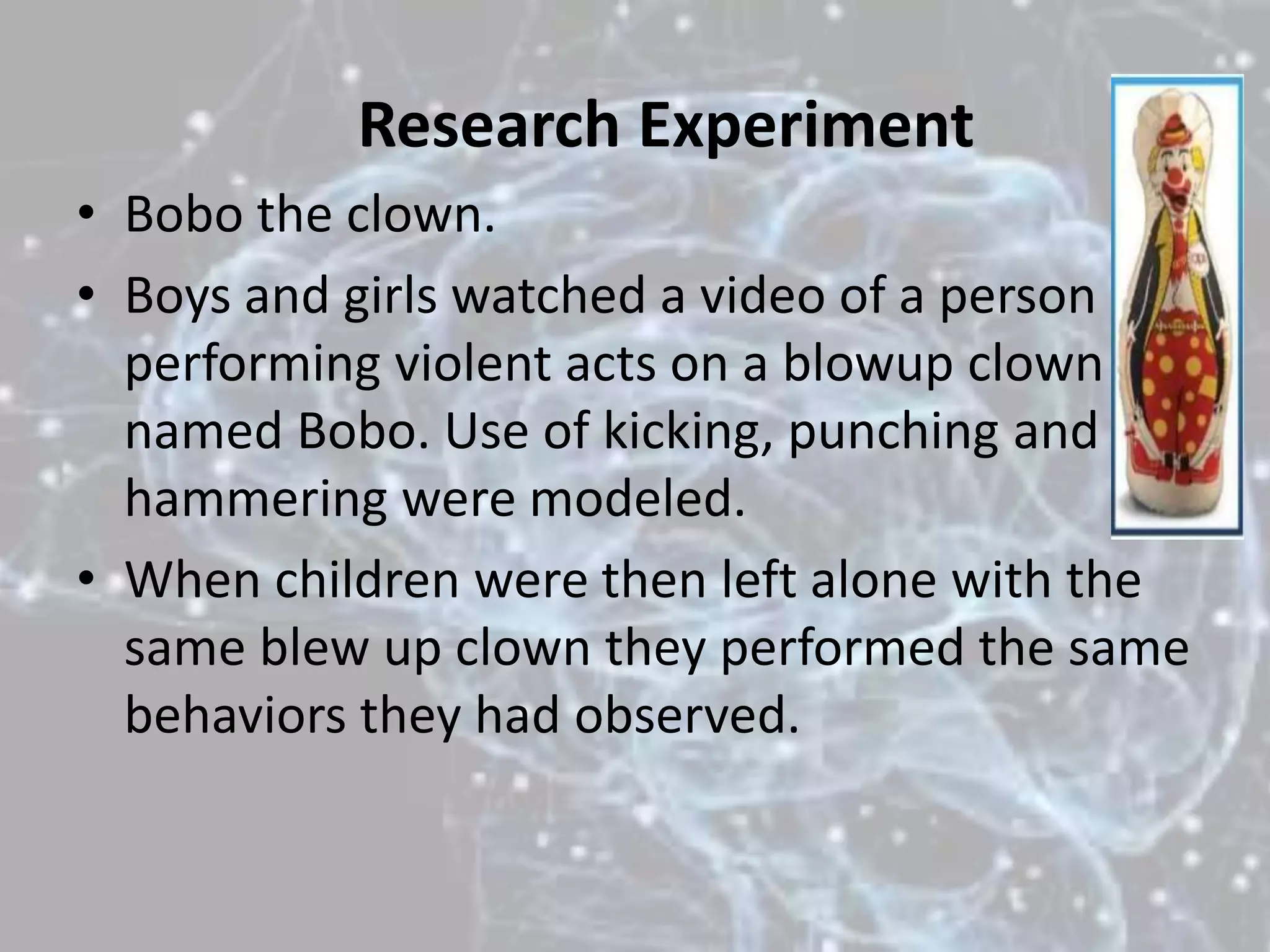
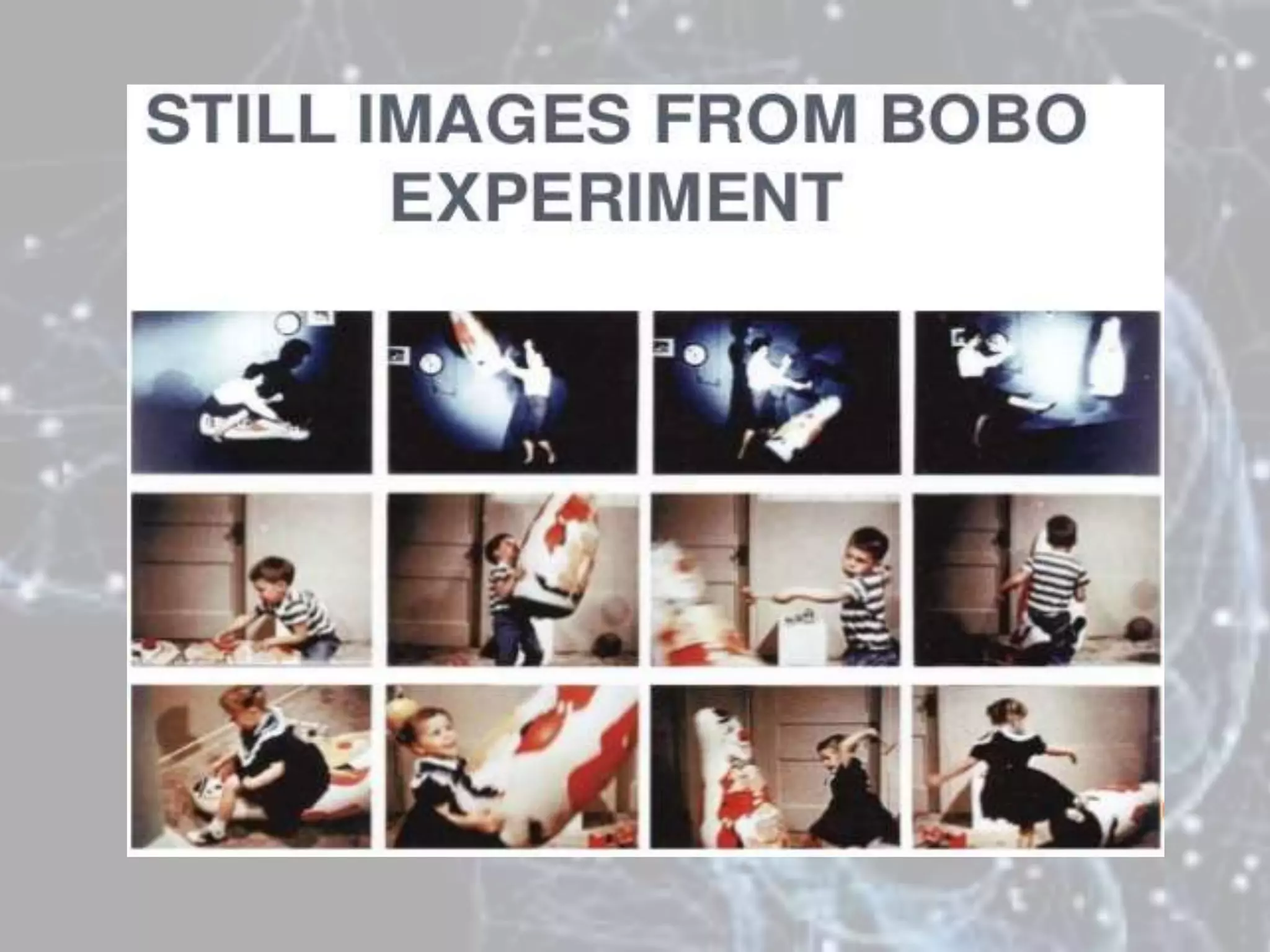
• Bobo the clown.
• Boys and girls watched a video of a person
performing violent acts on a blowup clown
named Bobo. Use of kicking, punching and
hammering were modeled.
• When children were then left alone with the
same blew up clown they performed the same
behaviors they had observed.
Summary
Core Concept of Social learning theory
• People can learn through observation.
• Internal mental state is essential in the
learning process.
• Learning does not necessarily lead to
change in behavior.
HOW DOES LEARNING TAKES PLACE?
STEPS
• Attending to and
perceiving the
behavior
• Remembering the
behavior
EXPLANATION
• In this step, the learner
is made to observe the
behavior of model. Here
the particular aspect of
behavior may become
the subject of close
attention.
• In this step, what the
learner observes is filed
away in his memory in
the form of mental
images.
• Converting the
memory into action
• Reinforcement of
imitated behavior
• In this step, a behavior
observed and
remembered by learner
is analysed in terms of
its acceptability with
reference to demands
of his self. It is then
transformed into action.
• In this step, the
behavior of model
imitated by learner is
reinforced for proper
adoption and further
continuance.
THANK YOU

BANDURA SOCIAL LEARNING THEORY

  • 2.
    PRESENTED TO: Dr. Fakhra PRESENTEDBy: Rooha Shahid Kainat Nayyar
  • 4.
    Albert Bandura  Bornon December 4, 1925.  Known as the father of cognitive theory.  Canadian, American.  Studied at the University of British Columbia and University of Lowa.  Researched and taught at the Stanford University.  Elected president of American Psychological association in 1974.  Famous for research on social learning theories.  In Kansas in 2001, he received the Lifetime Achievement Award from the Association for the Advancement of Behavior Therapy.
  • 5.
    Introduction of theory 1.Social learning theory emphasizes on the importance of observing and modelling the behaviors, attitudes and emotional reactions of others. 2. Social learning theory focuses on the learning that occurs within a social context.
  • 7.
    Basic Social Learningconcepts Social learning theory explains human behavior in terms of continuous reciprocal interaction between cognitive, behavioral, and environmental influences.This theory depend on following steps: 1. Observational learning (people can learn through observation) 2. Intrinsic reinforcement (mental states are important for learning) 3. The modelling process (learning does not lead to a change in behavior)
  • 8.
    1.Observational learning According toAmal Jith: A live model: Involves an actual individual demonstrating or acting out a behavior. A verbal instructional model: Involves descriptions and explanations of a behavior. A symbolic model: Which involves real or fictional characters displaying behaviors in books, films, television programs, or online media.
  • 9.
  • 10.
    According to SaulMcLeod (2016) Second, the people around the child will respond to the behavior it imitates with either reinforcement or punishment. If a child imitates a model’s behavior and the consequences are rewarding, the child is likely to continue performing the behavior. If a parent sees a little girl consoling her teddy bear and says “what a kind girl you are,” this is rewarding for the child and makes it more likely that she will repeat the behavior. Her behavior has been reinforced (i.e., strengthened).
  • 11.
    3.The Modelling process Accordingto Amal Jith Not all observed behaviors are effectively learned. Factors involving both the model and the learner can play a role in whether social learning is successful. The following steps are involved in the observational learning and modeling process: • Attention • Retention • Motor reproduction • Motivation
  • 12.
    • Attention According toBandura Attention including modeled events (distinctiveness, affective valence, complexity, prevalence, functional value) and observer characteristics (sensory capacities, arousal level, perceptual set, past reinforcement). • Retention According to Saul McLeod (2016) How well the behavior is remembered. The behavior may be noticed but is it not always remembered which obviously prevents imitation. It is important therefore that a memory of the behavior is formed to be performed later by the observer.
  • 13.
    • MOTOR REPRODUCTION Accordingto David Reproducing the image. Including physical capabilities, and self-observation of reproduction. • MOTIVATION According to David: Having a good reason to imitate. Includes motives such as past (i.e. traditional behaviorism), promised (imagined incentives) and vicarious (seeing and recalling the reinforced model).
  • 14.
    Principles of sociallearning theory According to Bandura: • Individuals are more likely to adopt a modeled behavior if it results in outcomes they value. • The highest level of observational learning is achieved by first organizing and rehearsing the modeled behavior symbolically and then enacting it overtly. Coding modeled behavior into words, labels or images results in better retention than simply observing. • Individuals are more likely to adopt a modeled behavior if the model is similar to the observer and has admired status and the behavior has functional value.
  • 16.
    Research Experiment • Bobothe clown. • Boys and girls watched a video of a person performing violent acts on a blowup clown named Bobo. Use of kicking, punching and hammering were modeled. • When children were then left alone with the same blew up clown they performed the same behaviors they had observed.
  • 18.
    Summary Core Concept ofSocial learning theory • People can learn through observation. • Internal mental state is essential in the learning process. • Learning does not necessarily lead to change in behavior.
  • 19.
    HOW DOES LEARNINGTAKES PLACE? STEPS • Attending to and perceiving the behavior • Remembering the behavior EXPLANATION • In this step, the learner is made to observe the behavior of model. Here the particular aspect of behavior may become the subject of close attention. • In this step, what the learner observes is filed away in his memory in the form of mental images.
  • 20.
    • Converting the memoryinto action • Reinforcement of imitated behavior • In this step, a behavior observed and remembered by learner is analysed in terms of its acceptability with reference to demands of his self. It is then transformed into action. • In this step, the behavior of model imitated by learner is reinforced for proper adoption and further continuance.
  • 21.