Downloaded 97 times
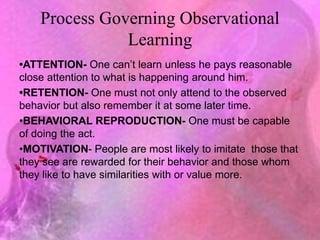
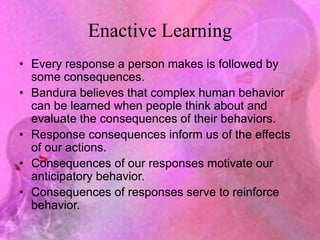

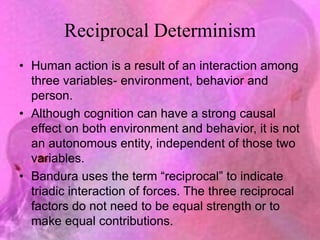
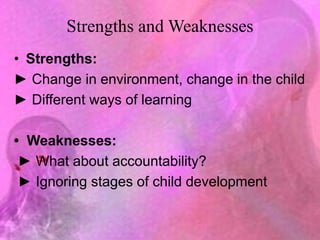

Albert Bandura developed social learning theory which posits that people can learn through observation of others. The theory includes three core concepts: observational learning, modeling behavior, and reciprocal determinism. Bandura demonstrated observational learning through his famous Bobo doll experiment which showed children imitating aggressive behaviors they observed in adults. However, the experiment had some limitations and criticisms including questioning its real-world applicability and ethics. Social learning theory emphasizes that learning is a cognitive process that occurs in a social context with reciprocal interaction between cognitive, behavioral, and environmental influences.


