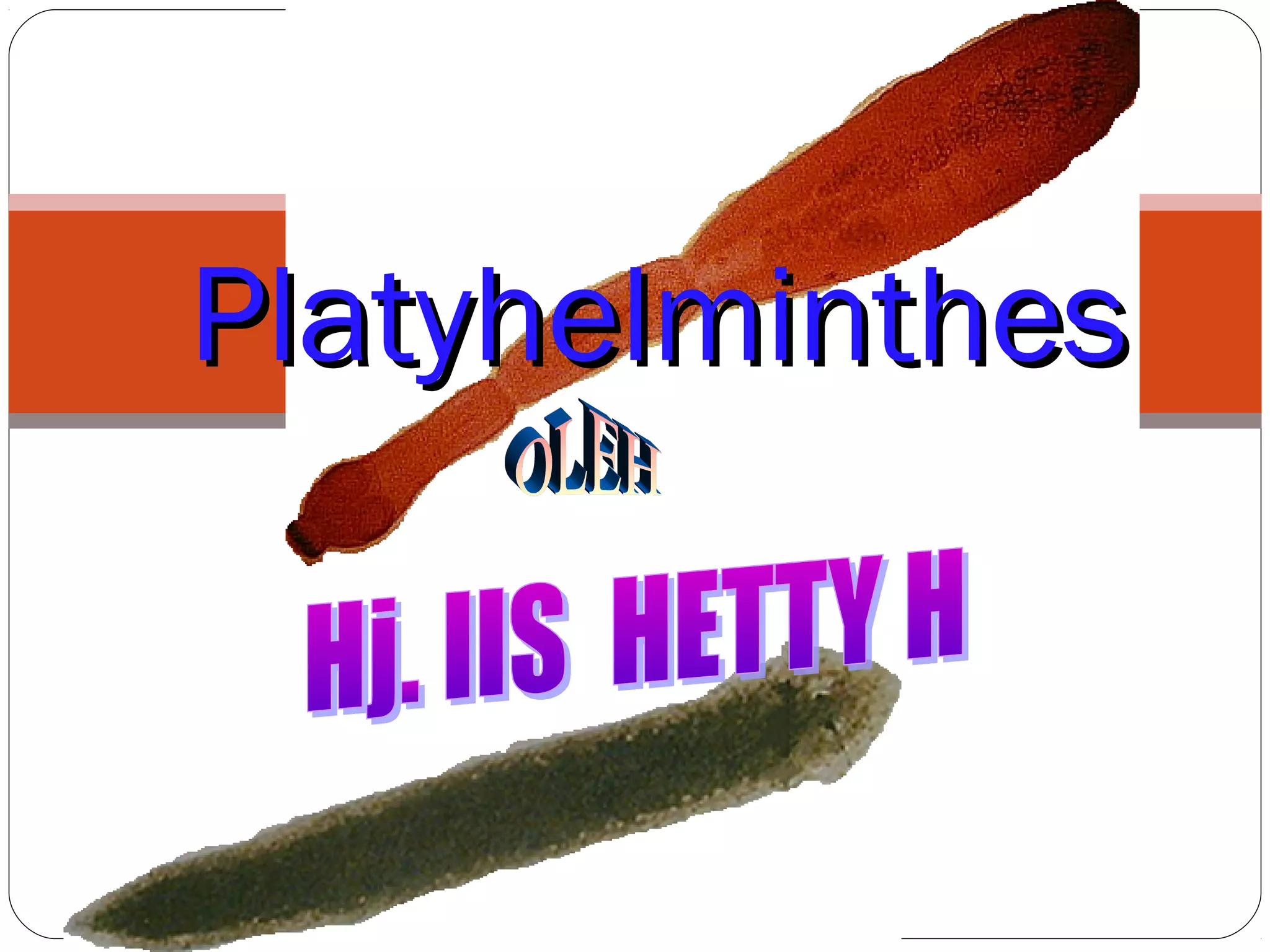
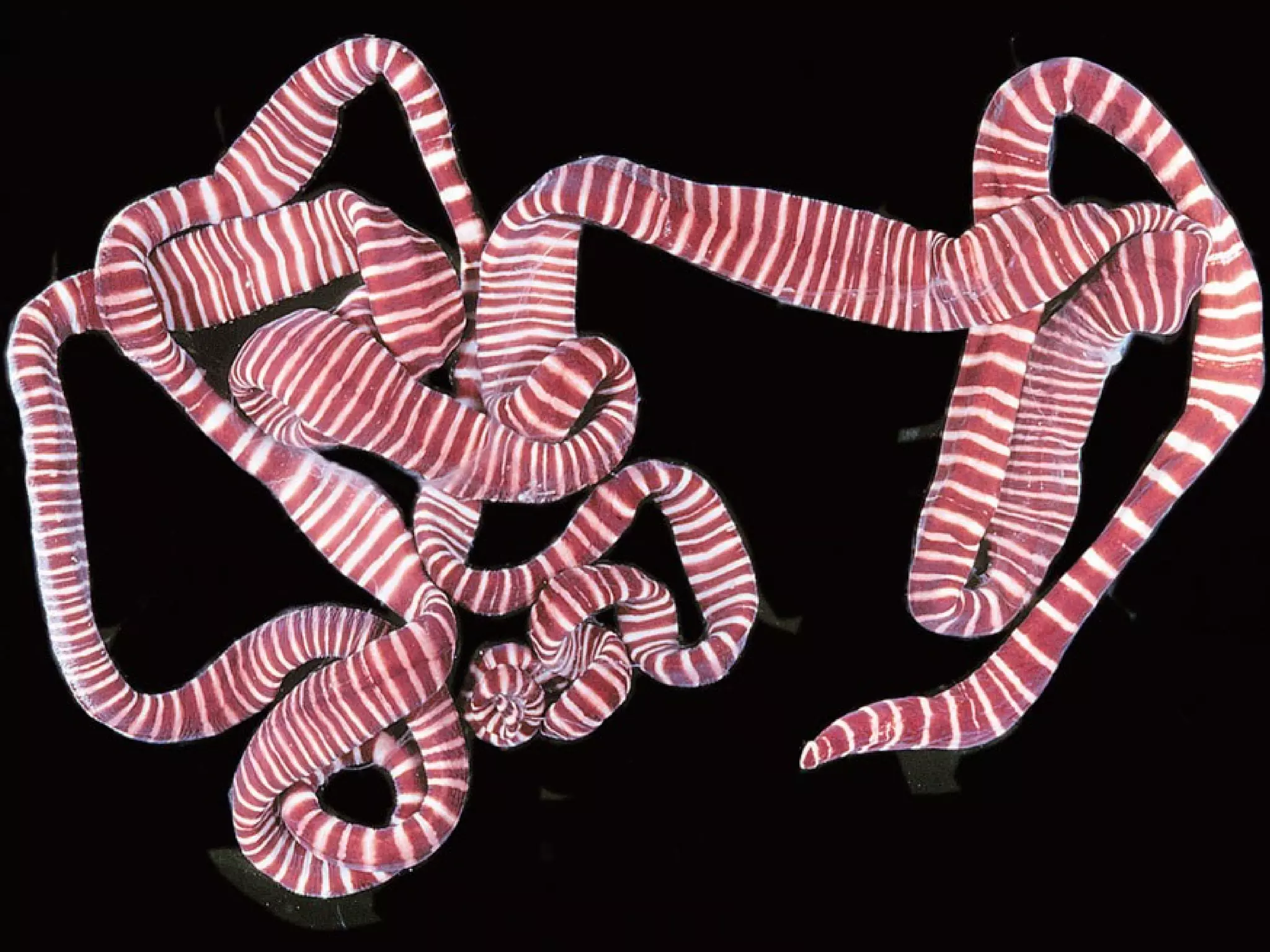
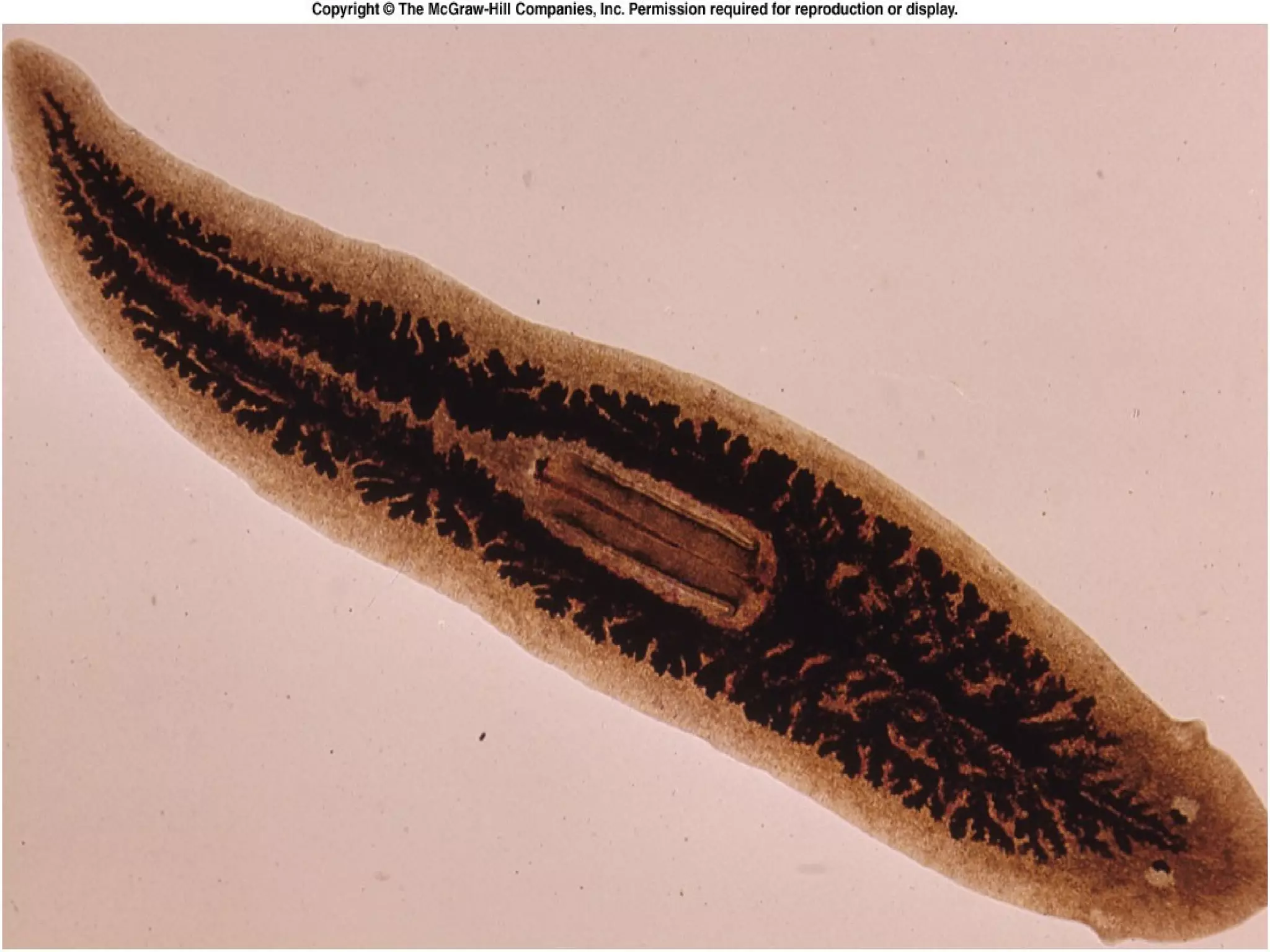
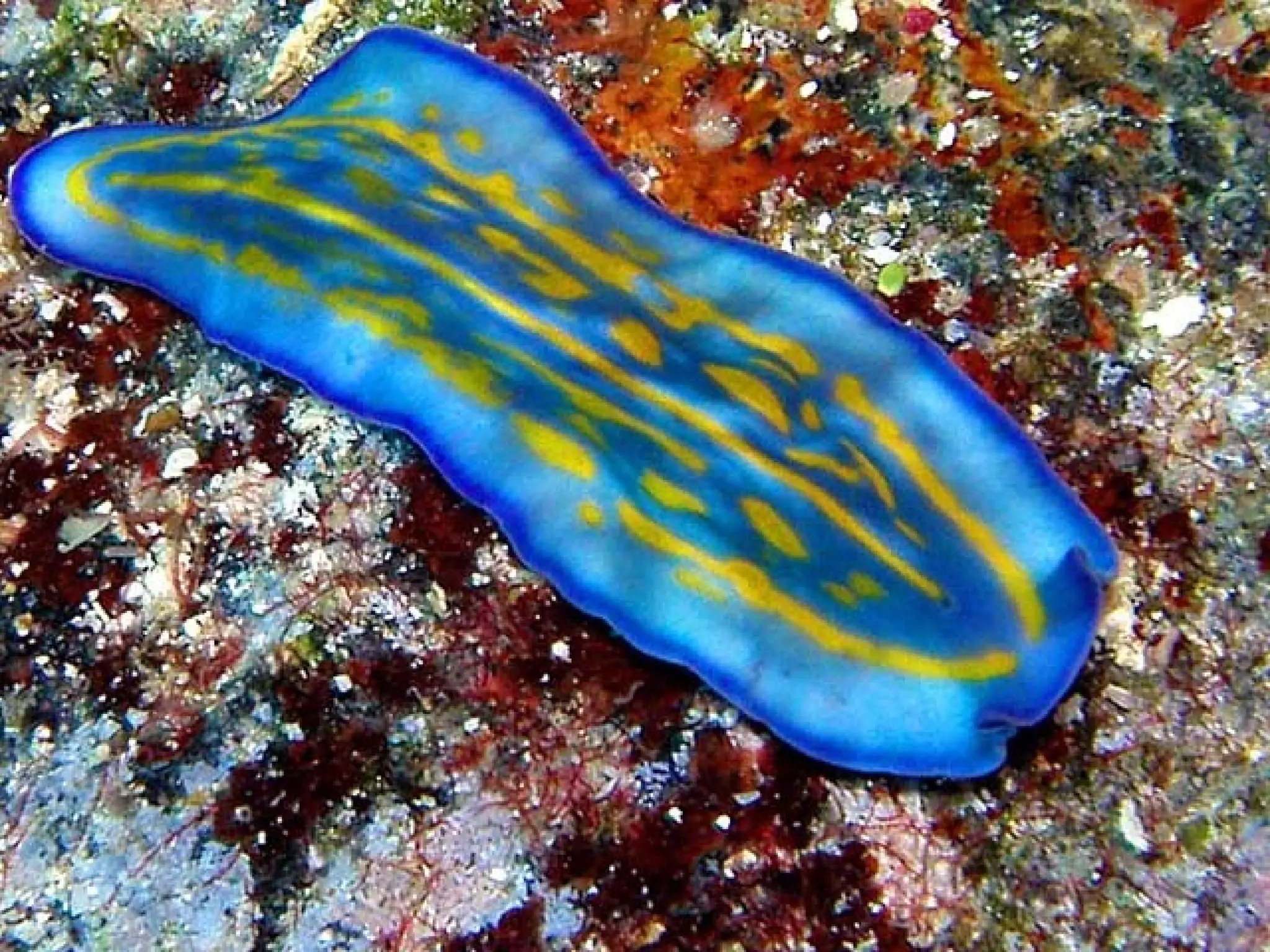
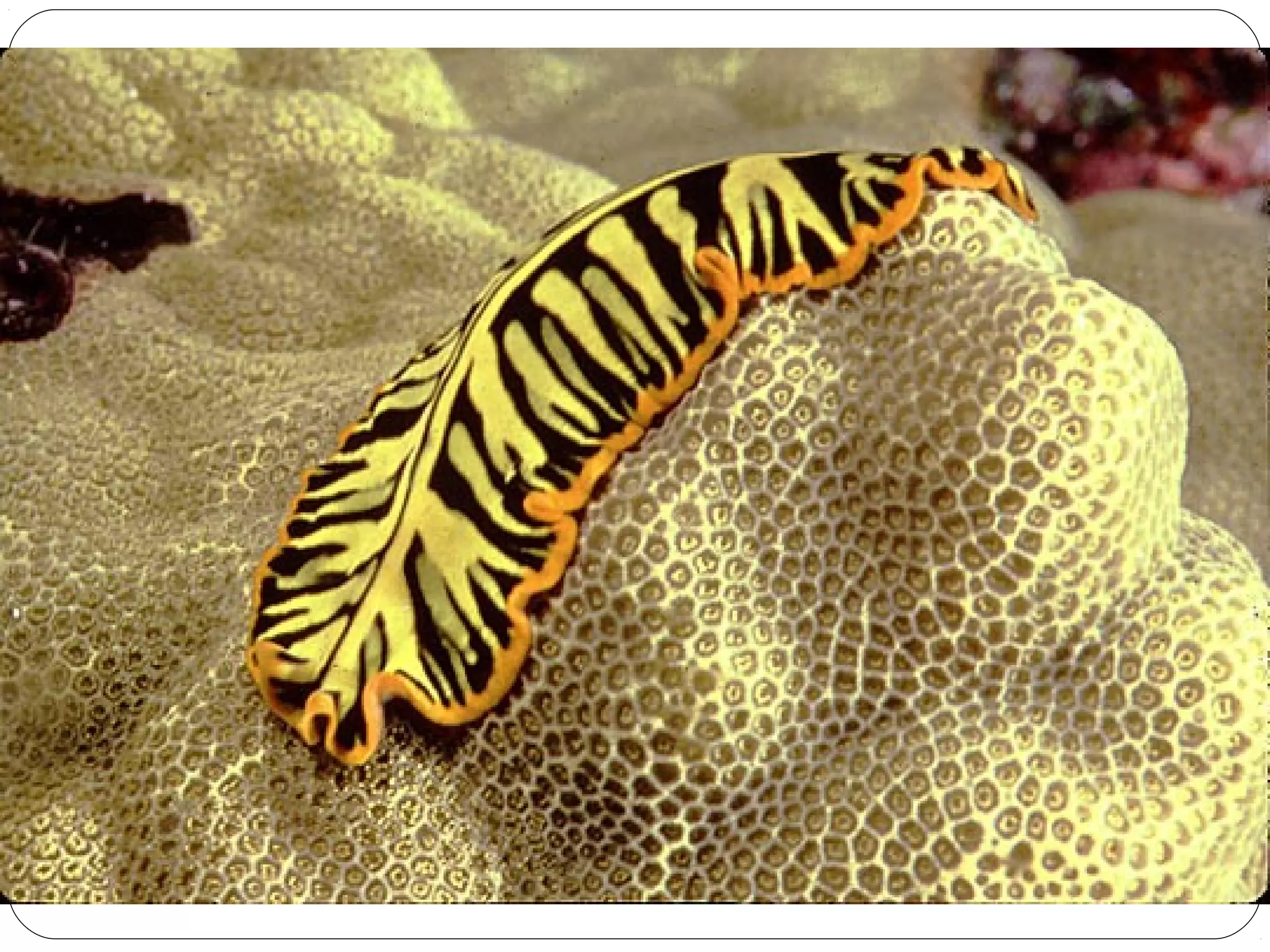
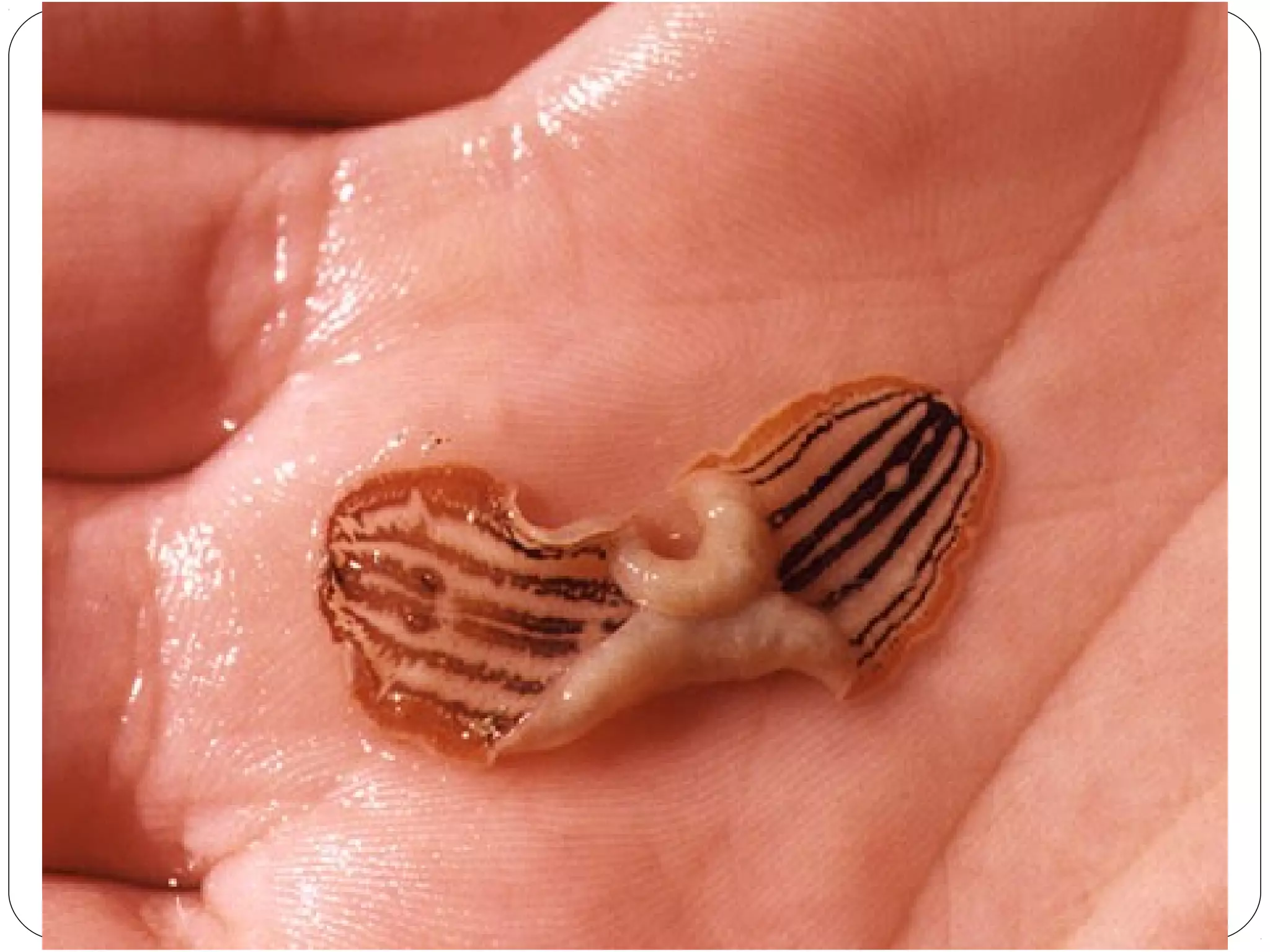
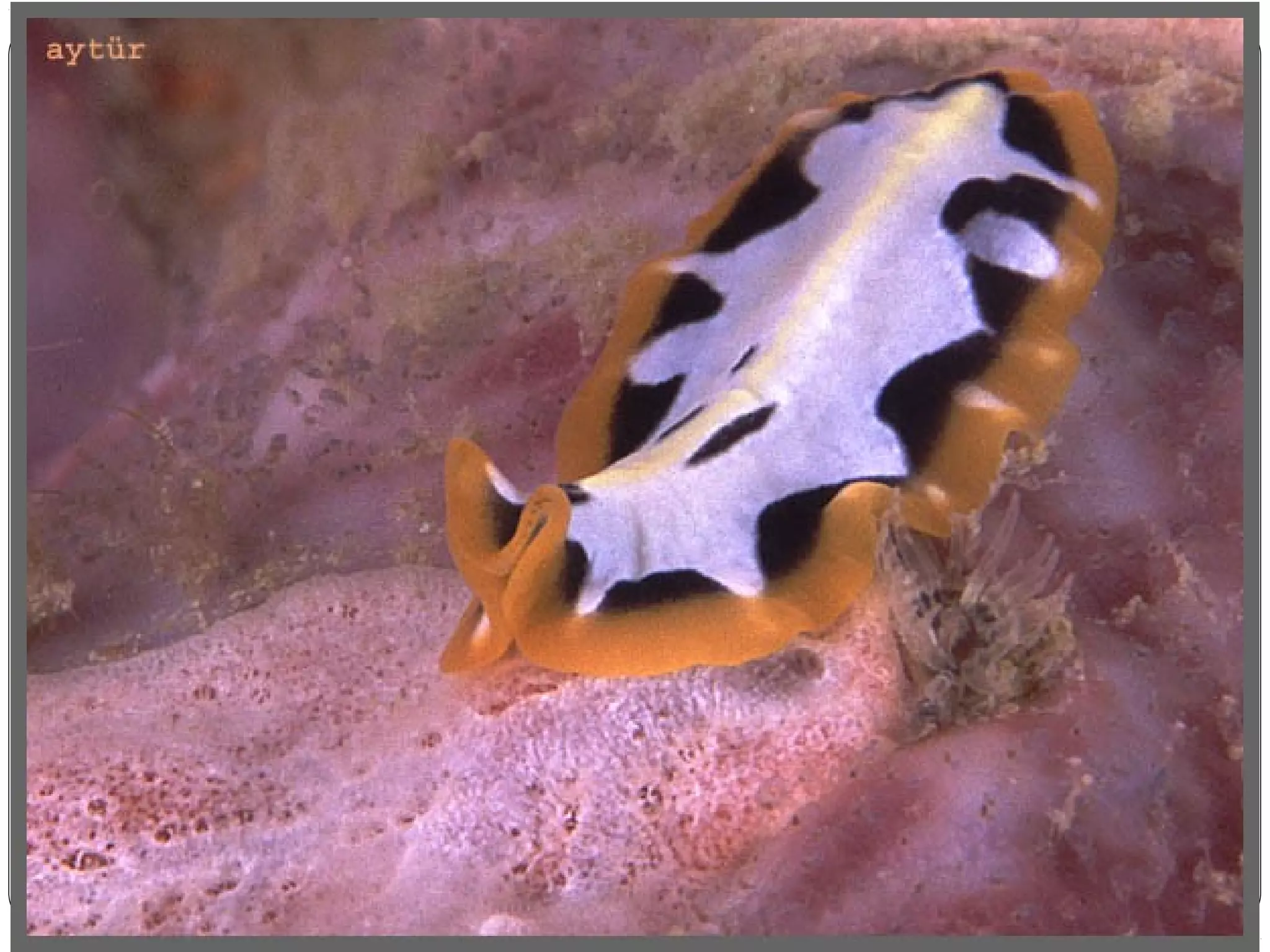
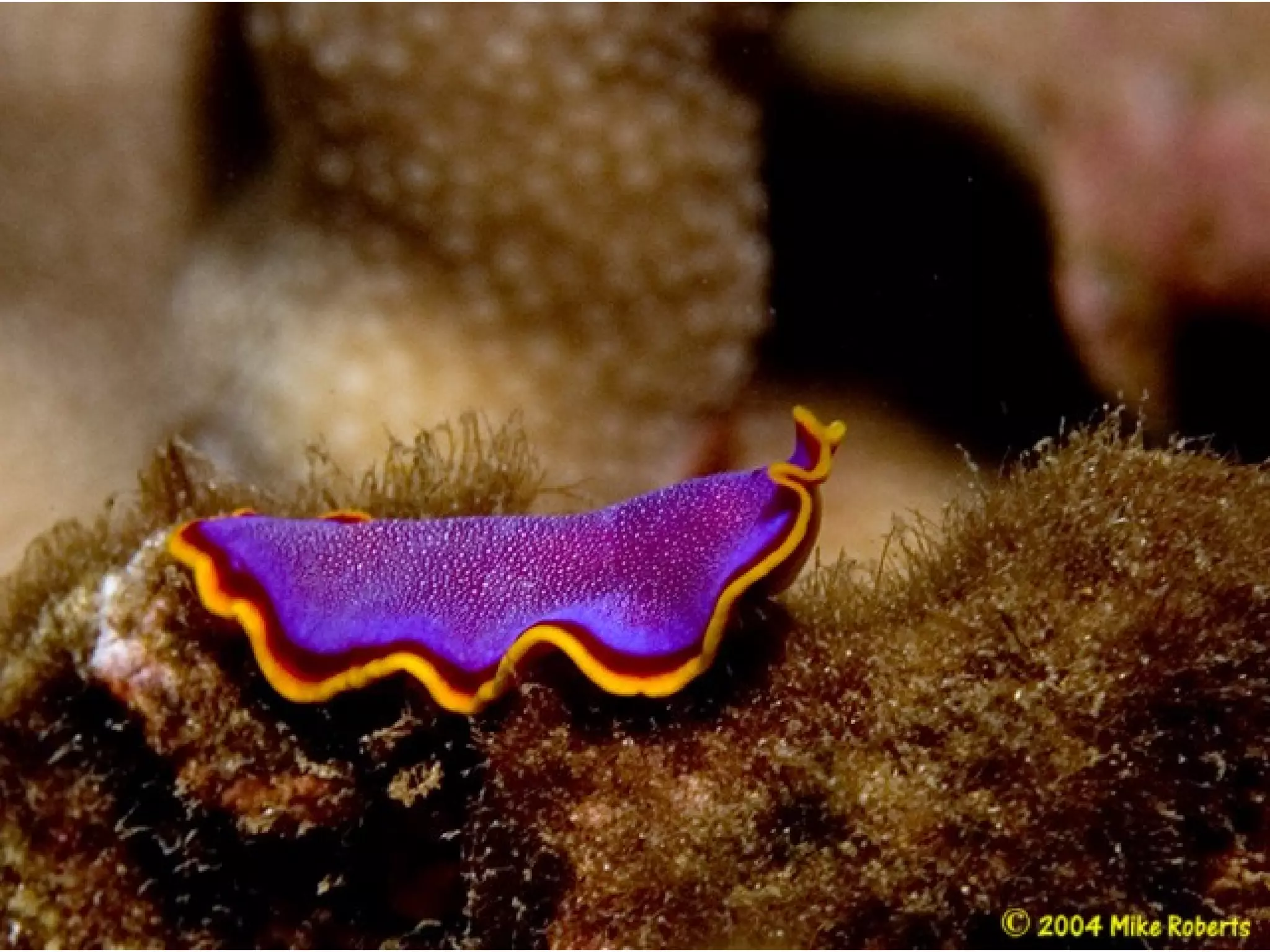
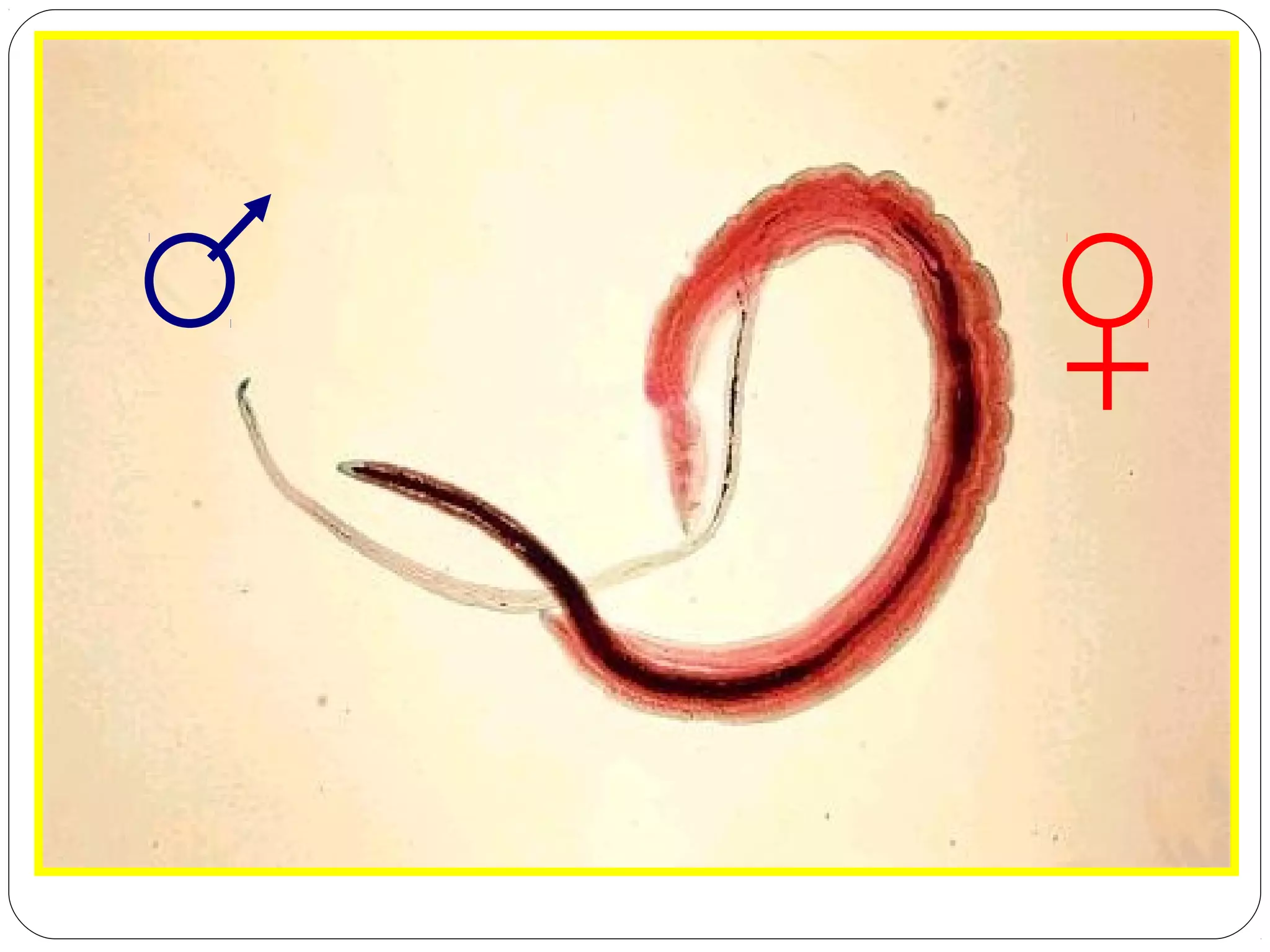
Platyhelminthes
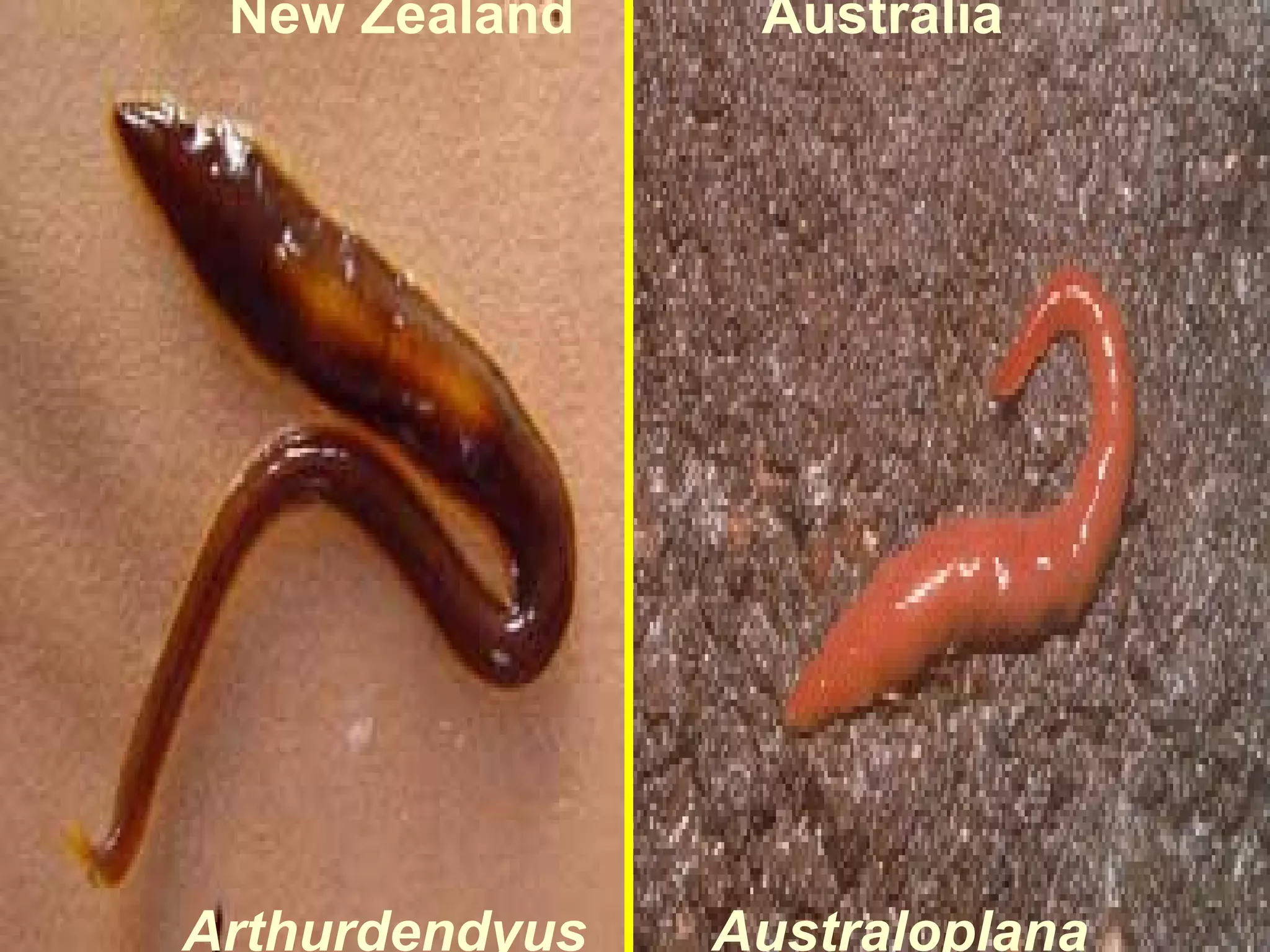
New Zealand

Arthurdendyus
Australia

Australoplana
CIRI UMUM
•
•
•
•
•
•
•
•

Lebih maju di bandingkan Porifera dan Coelenterata.
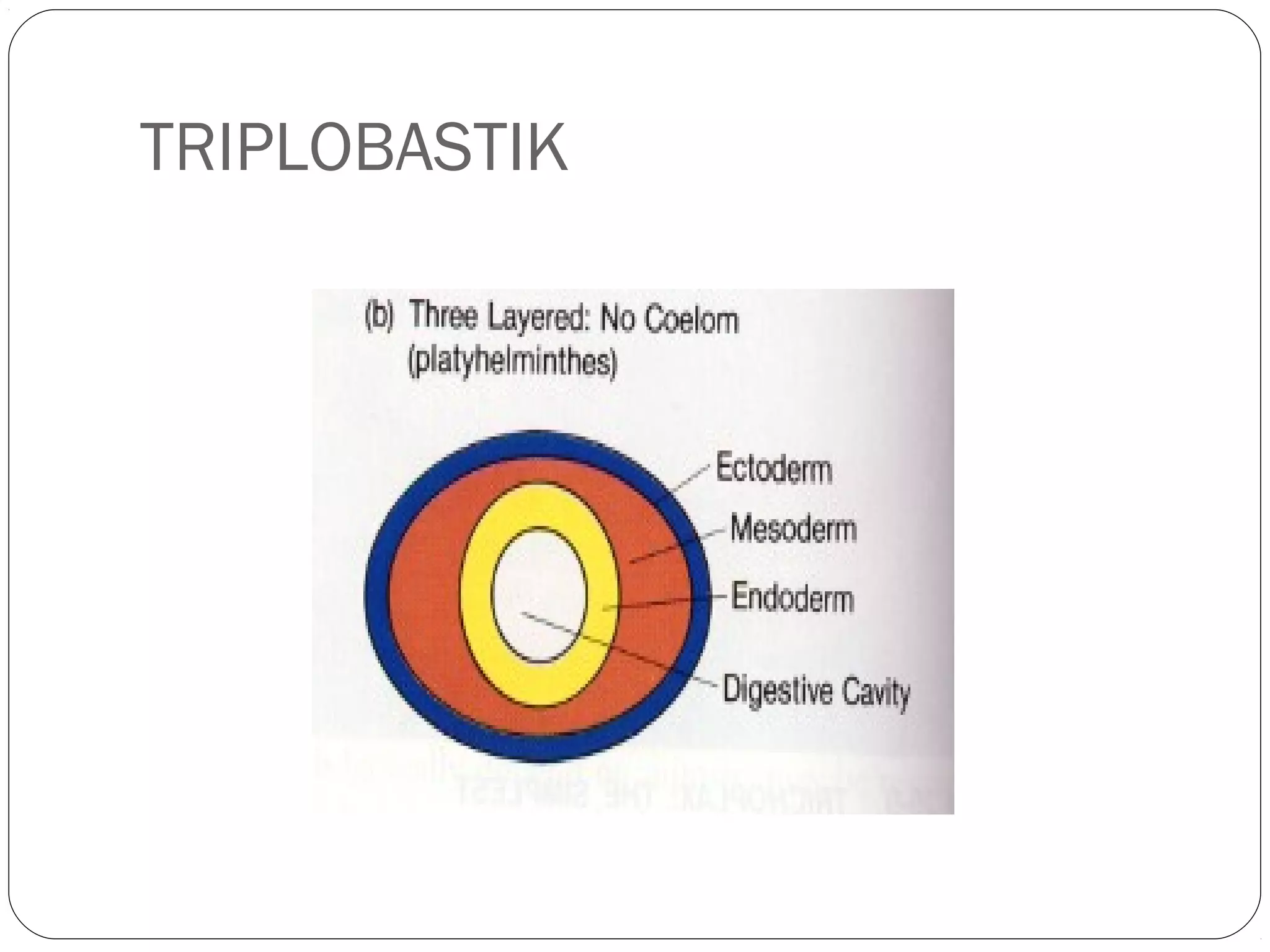
Lapisan tubuh Triploblastik.
Ukuran tubuh mikroskopis hingga 20 m.
Tubuh simetri bilateral, pipih dan paling sederhana diantara hewan
simetri bilateral.
Tidak memiliki rongga tubuh (acoelomata).
Pencernaan terdiri dari : mulut, faring, usus (tanpa memiliki anus).
Tidak memiliki sistem sirkulasi, respirasi, dan ekskresi,hermaprodit.
Habitat : air tawar, laut, tempat lembab, dalam tubuh hewan lain
(parasit).
(parasit)
Some Unique Characteristics
Proglotids and scolex in Cestoda
Rabdites in Turbellaria
Combination of characteristics- flame cells and being

acoelomates for example.
Larva of each class are unique
Potition in animal kingdom
Eumetazoa - animals with tissue
Bilateria - have bilateral symmetry and are triploblastic.
Protostomia - a group of animals whose mouth develops

from the blastopore, and the mesoderm forms from an area
near the blastopore.
 Acoelomata - They have a true mesoderm which fills the
original blastocoel between the outer epidermis and digestive
tract.
TRIPLOBASTIK
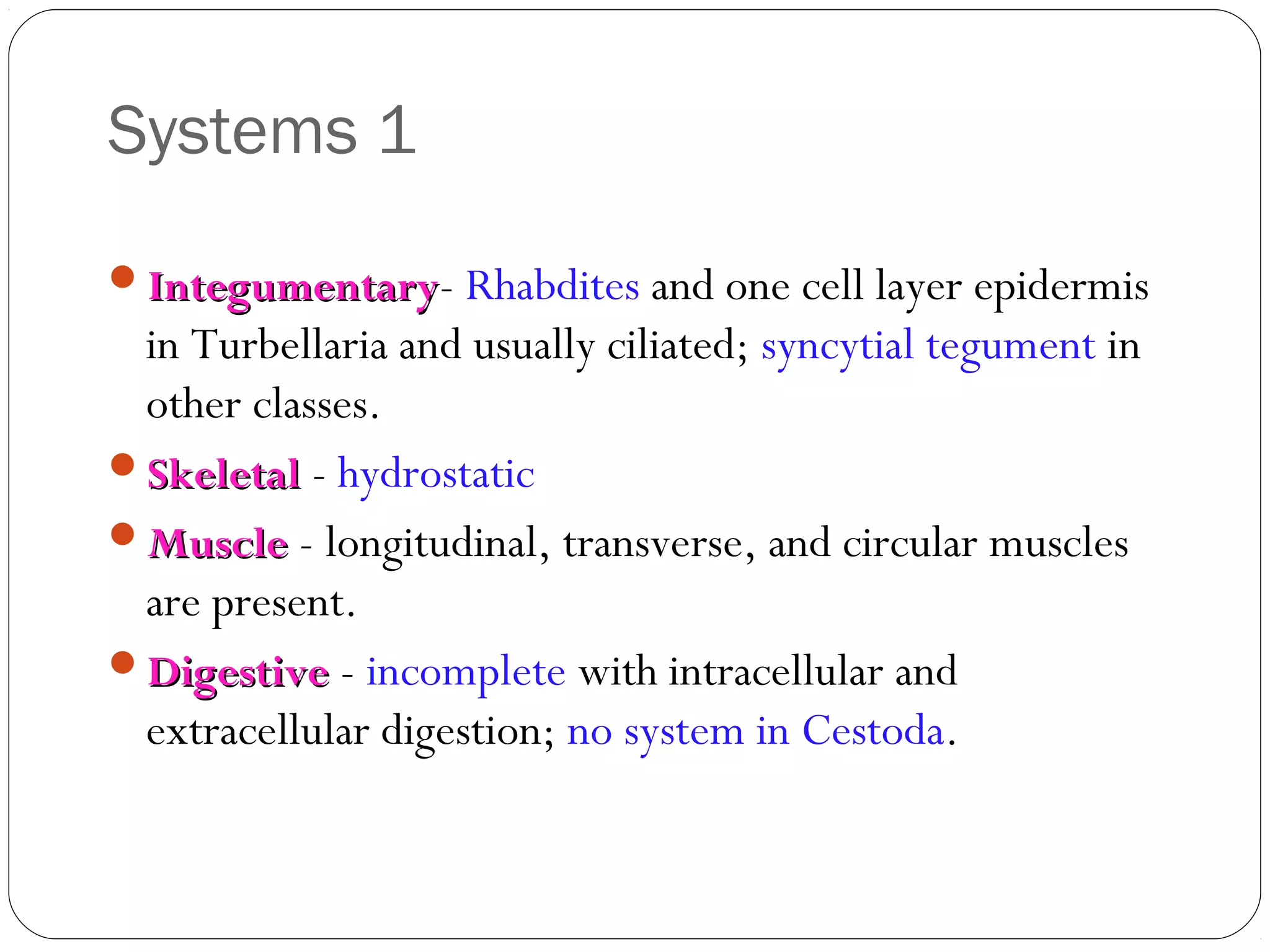
Systems 1
Integumentary- Rhabdites and one cell layer epidermis

in Turbellaria and usually ciliated; syncytial tegument in
other classes.
Skeletal - hydrostatic
Muscle - longitudinal, transverse, and circular muscles
are present.
Digestive - incomplete with intracellular and
extracellular digestion; no system in Cestoda.
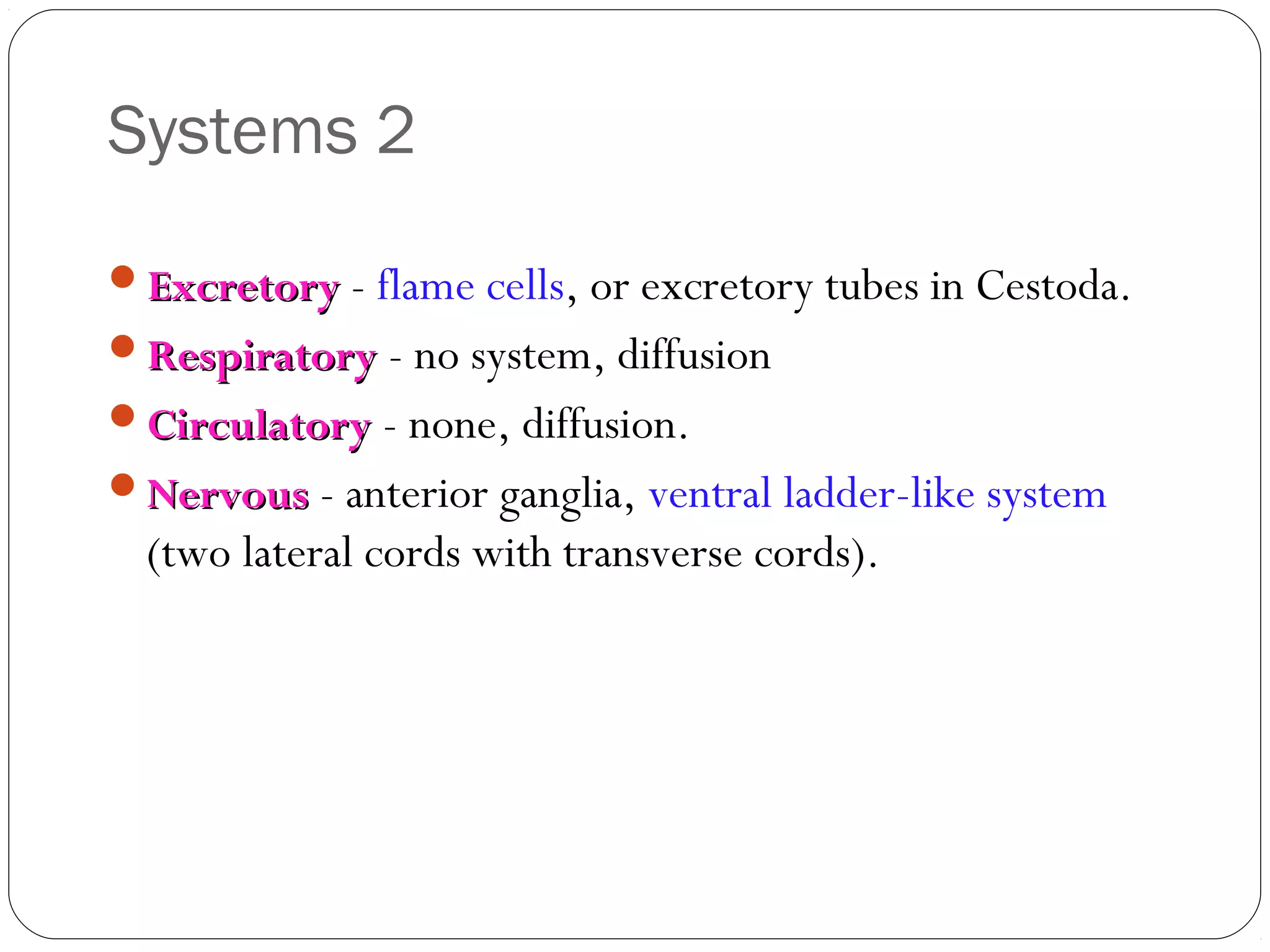
Systems 2
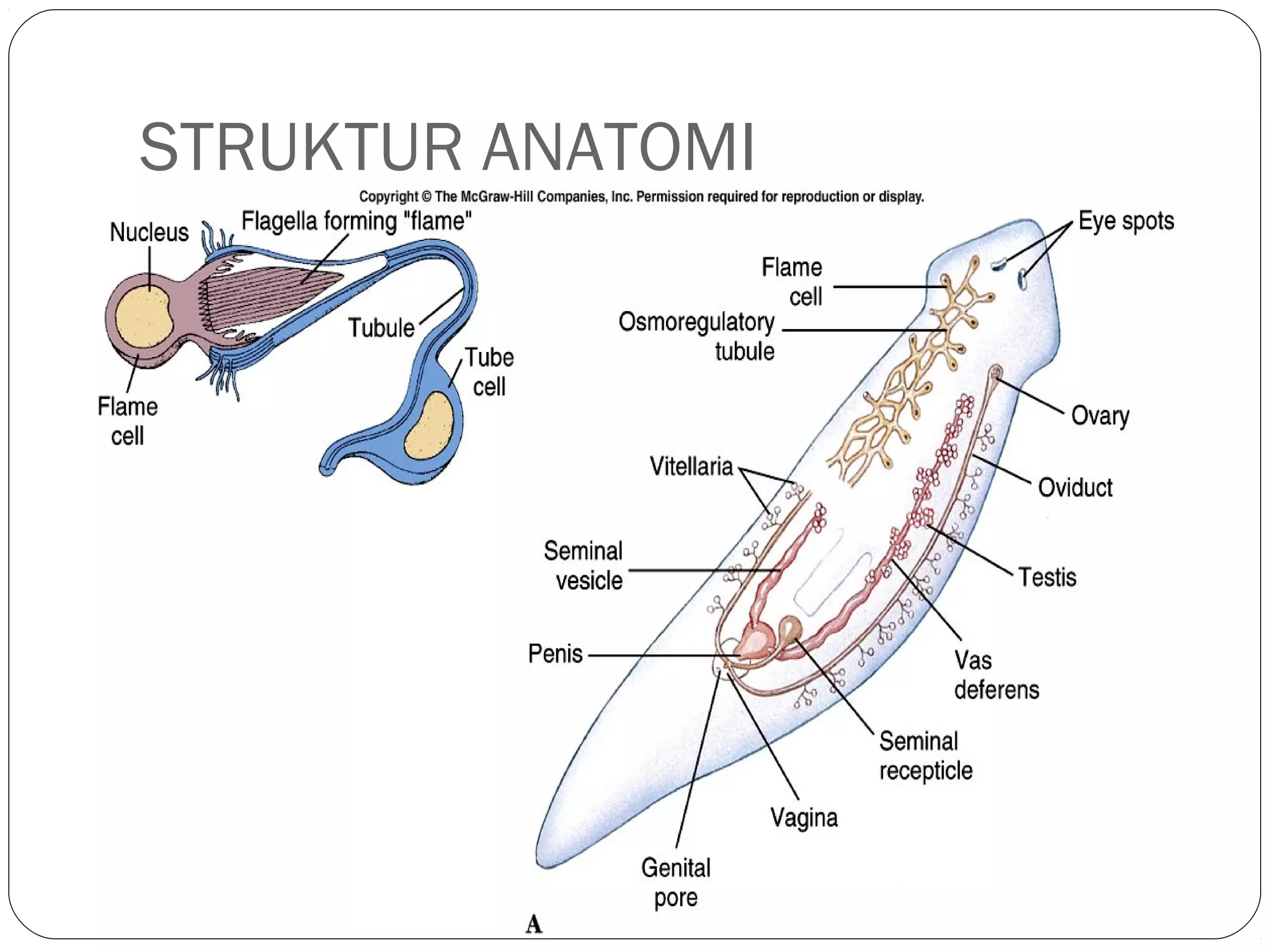
Excretory - flame cells, or excretory tubes in Cestoda.
Respiratory - no system, diffusion
Circulatory - none, diffusion.
Nervous - anterior ganglia, ventral ladder-like system

(two lateral cords with transverse cords).
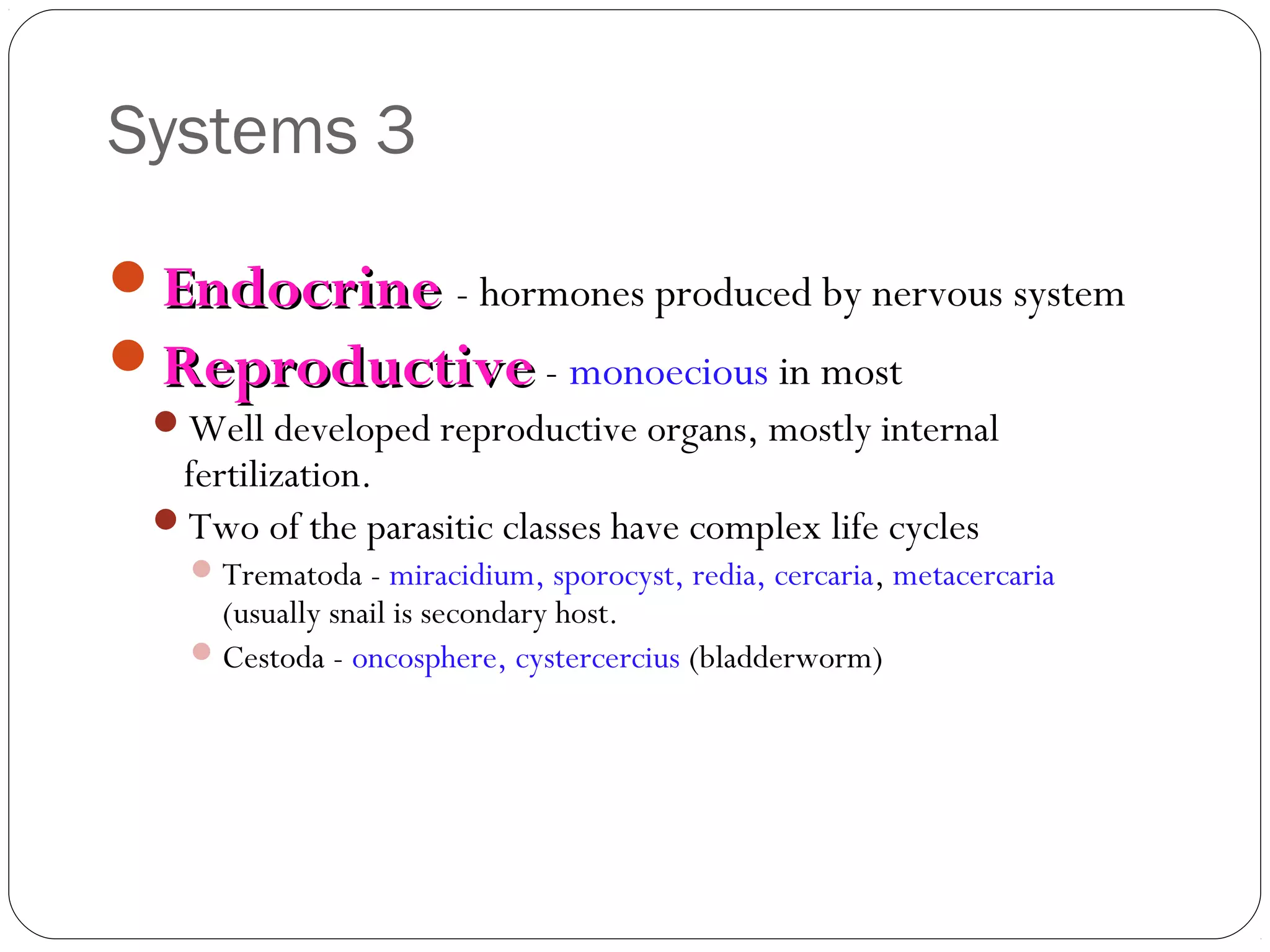
Systems 3
Endocrine - hormones produced by nervous system
Reproductive - monoecious in most
Well developed reproductive organs, mostly internal

fertilization.
Two of the parasitic classes have complex life cycles

 Trematoda - miracidium, sporocyst, redia, cercaria, metacercaria

(usually snail is secondary host.
 Cestoda - oncosphere, cystercercius (bladderworm)
KLASIFIKASI
Turbellaria (cacing berambut getar), silia pada
permukaan tubuh digunakan untuk bergerak.
Dugesia

• Trematoda (cacing isap), alat isap digunakan untuk
menempel dan menghisap makanan pada inangnya.
•Clonorchis, Fasciola, Schistosoma

•Cestoda (cacing pita), bentuk seperti pita tubuh
terdiri dari bagian skoleks, leher, dan proglotit.

Taenia, Dipylidium Echinococcus
• Class Monogenea :No representatives
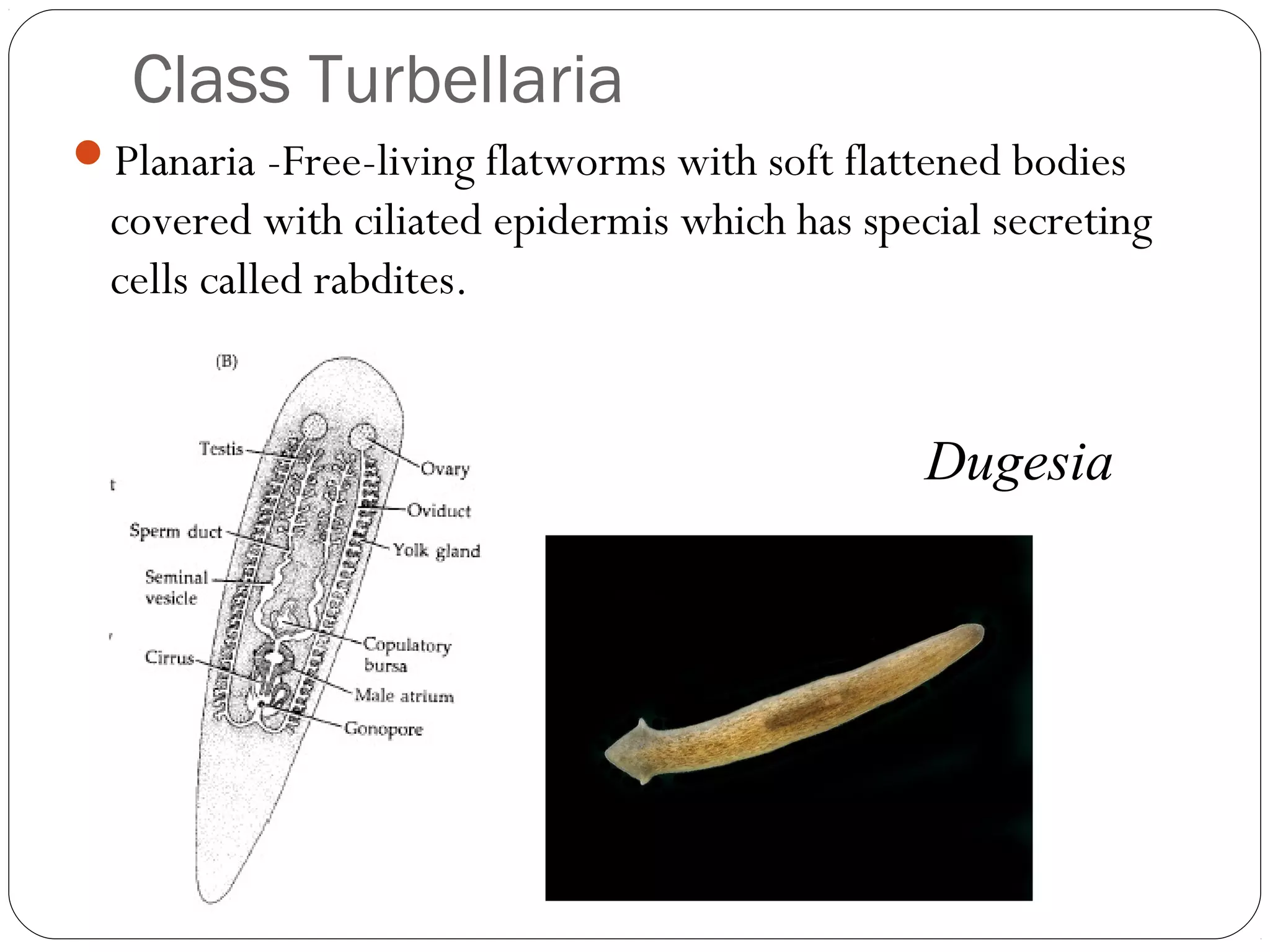
Class Turbellaria
Planaria -Free-living flatworms with soft flattened bodies

covered with ciliated epidermis which has special secreting
cells called rabdites.

Dugesia
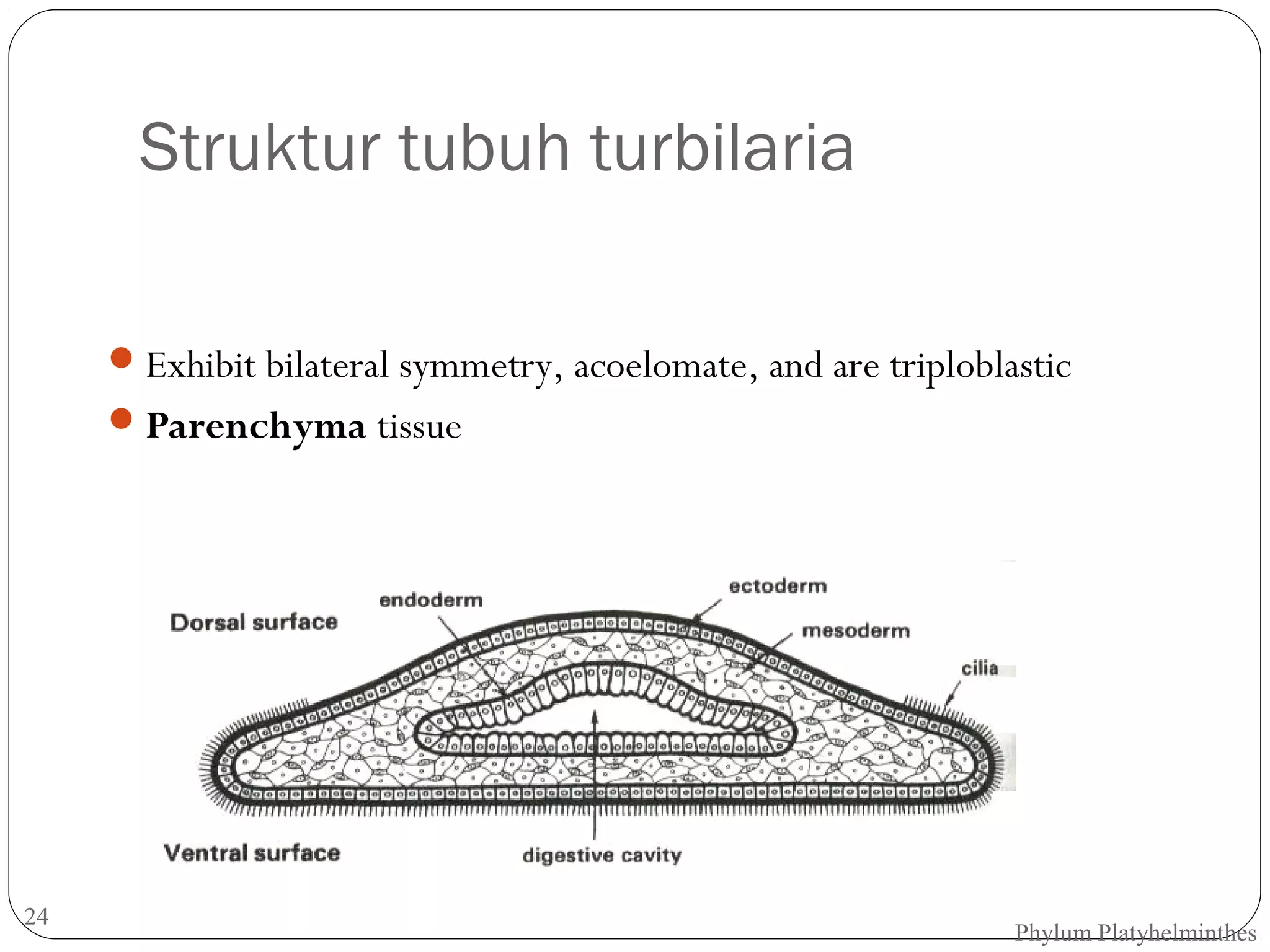
Struktur tubuh turbilaria
 Exhibit bilateral symmetry, acoelomate, and are triploblastic
 Parenchyma tissue

24

Phylum Platyhelminthes
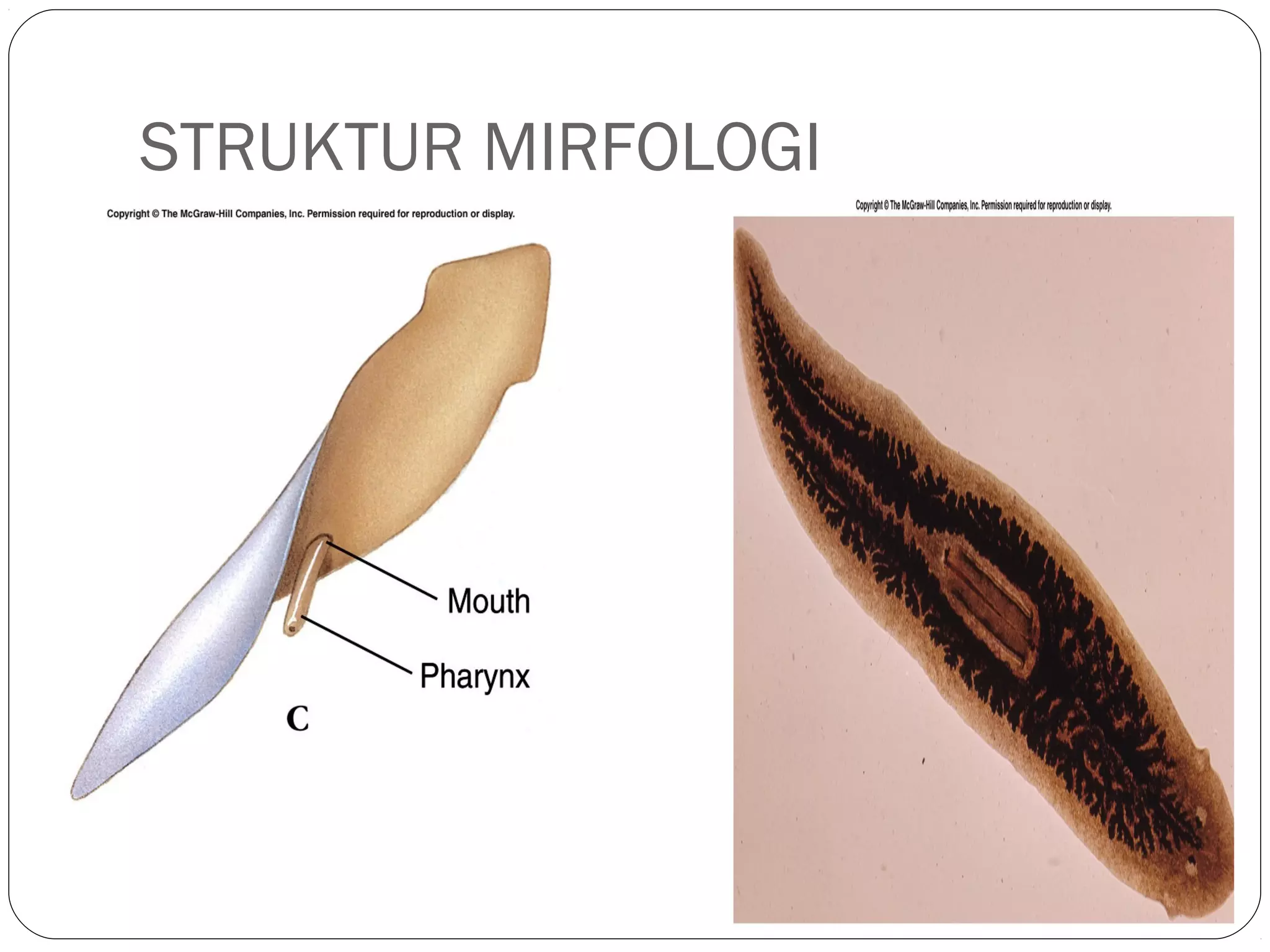
STRUKTUR MIRFOLOGI
STRUKTUR ANATOMI
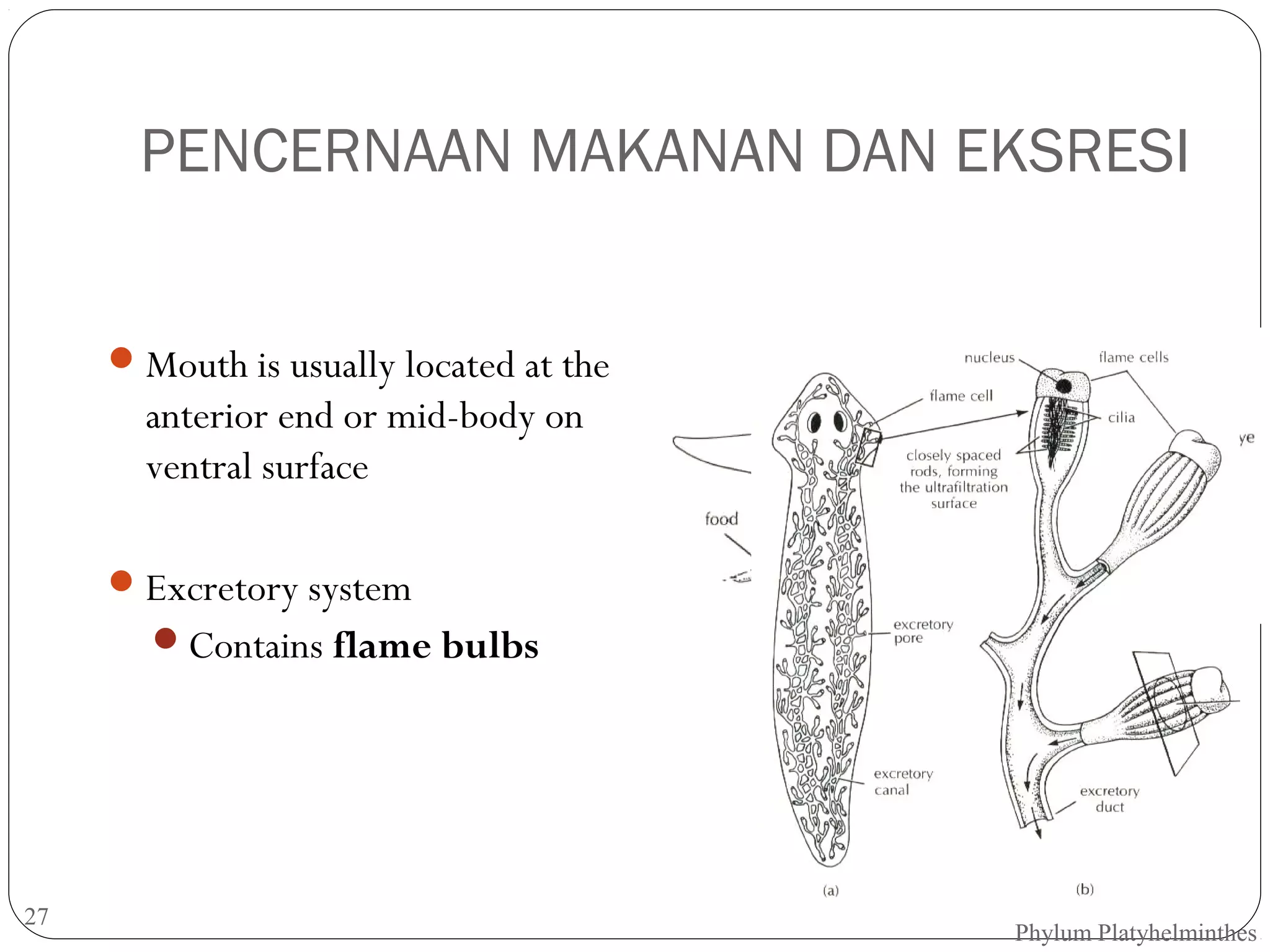
PENCERNAAN MAKANAN DAN EKSRESI
 Mouth is usually located at the

anterior end or mid-body on
ventral surface
 Excretory system
Contains flame bulbs

27

Phylum Platyhelminthes
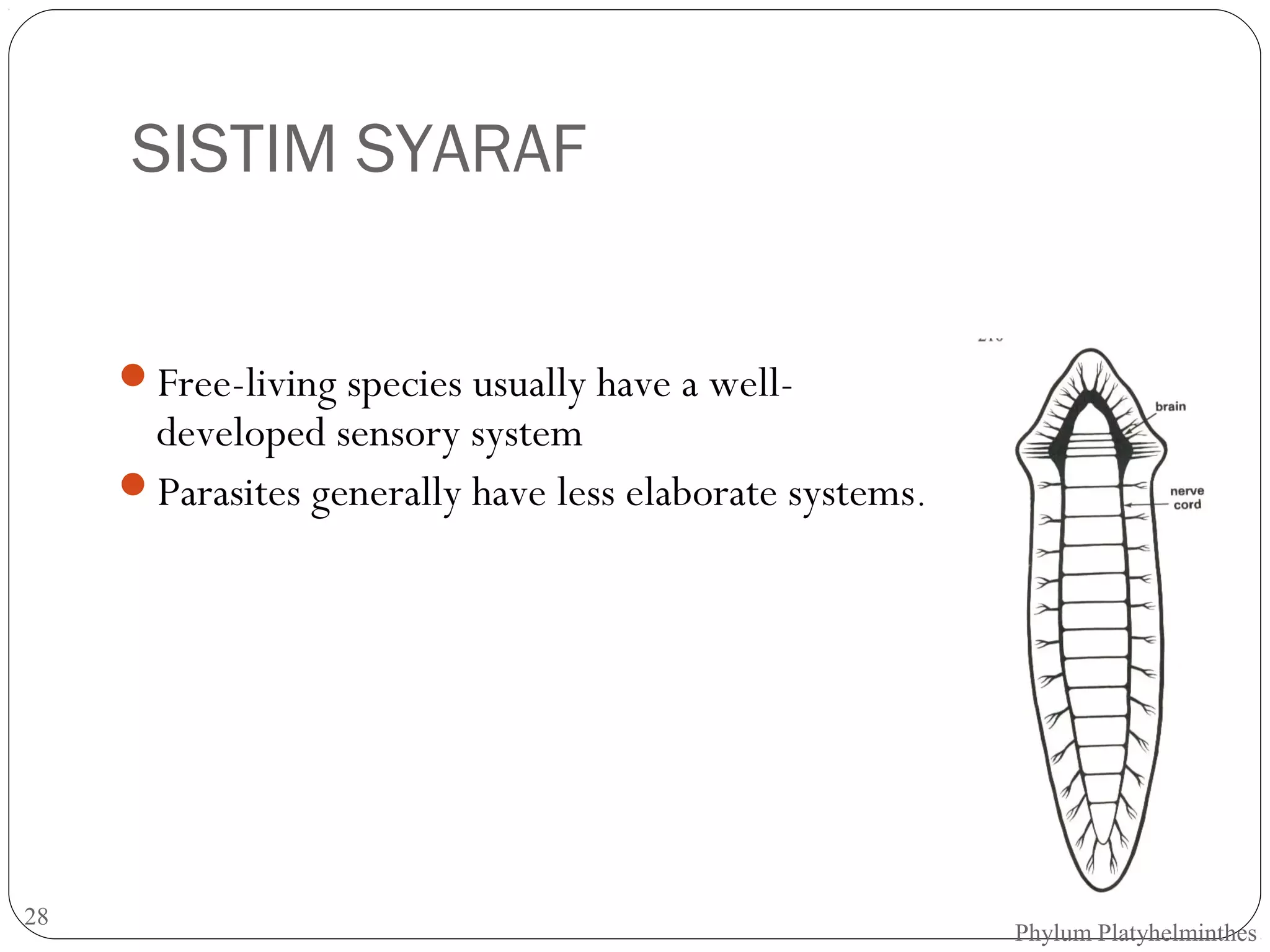
SISTIM SYARAF
Free-living species usually have a well-

developed sensory system
Parasites generally have less elaborate systems .

28

Phylum Platyhelminthes
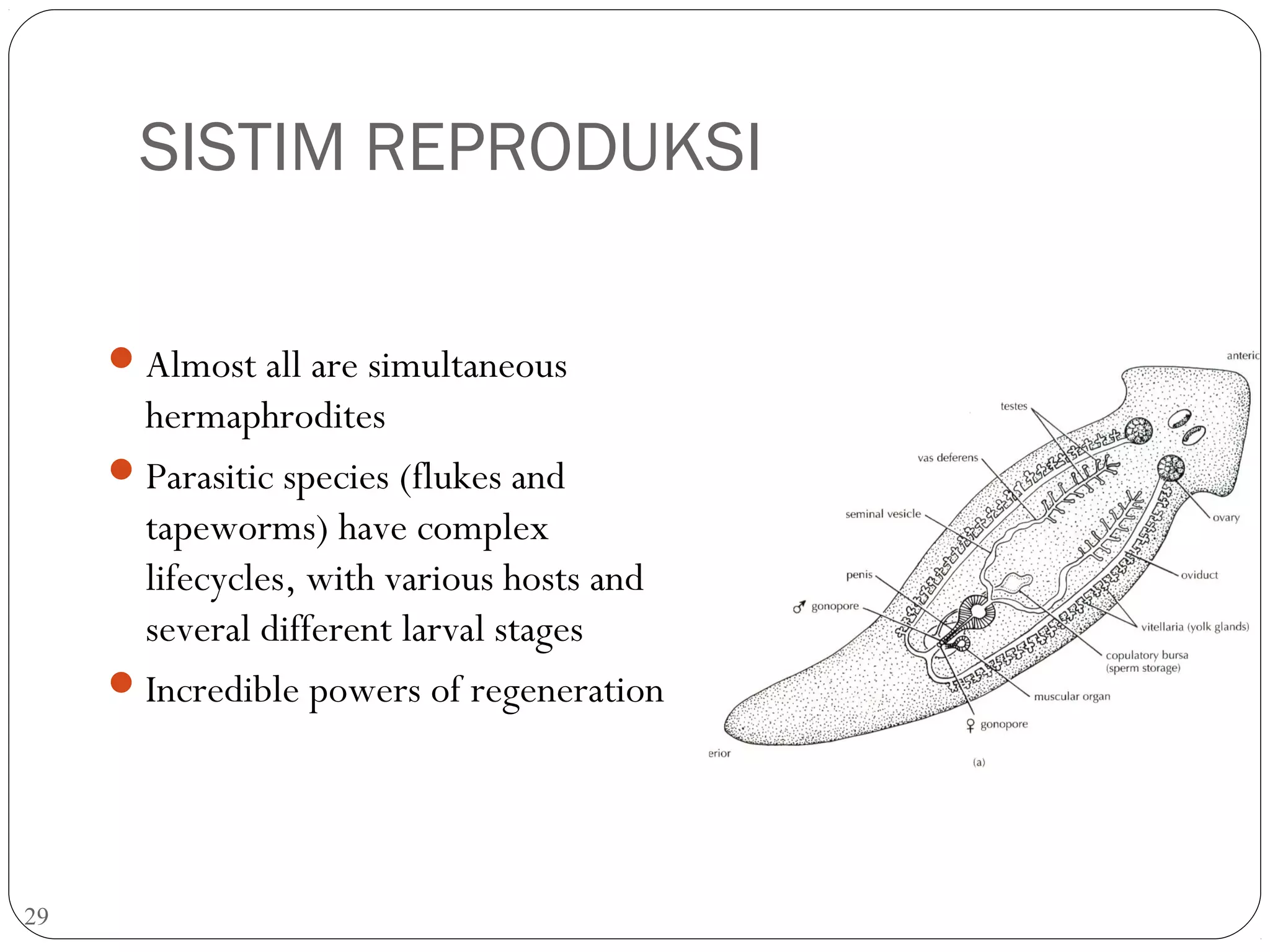
SISTIM REPRODUKSI
 Almost all are simultaneous

hermaphrodites
 Parasitic species (flukes and
tapeworms) have complex
lifecycles, with various hosts and
several different larval stages
 Incredible powers of regeneration

29
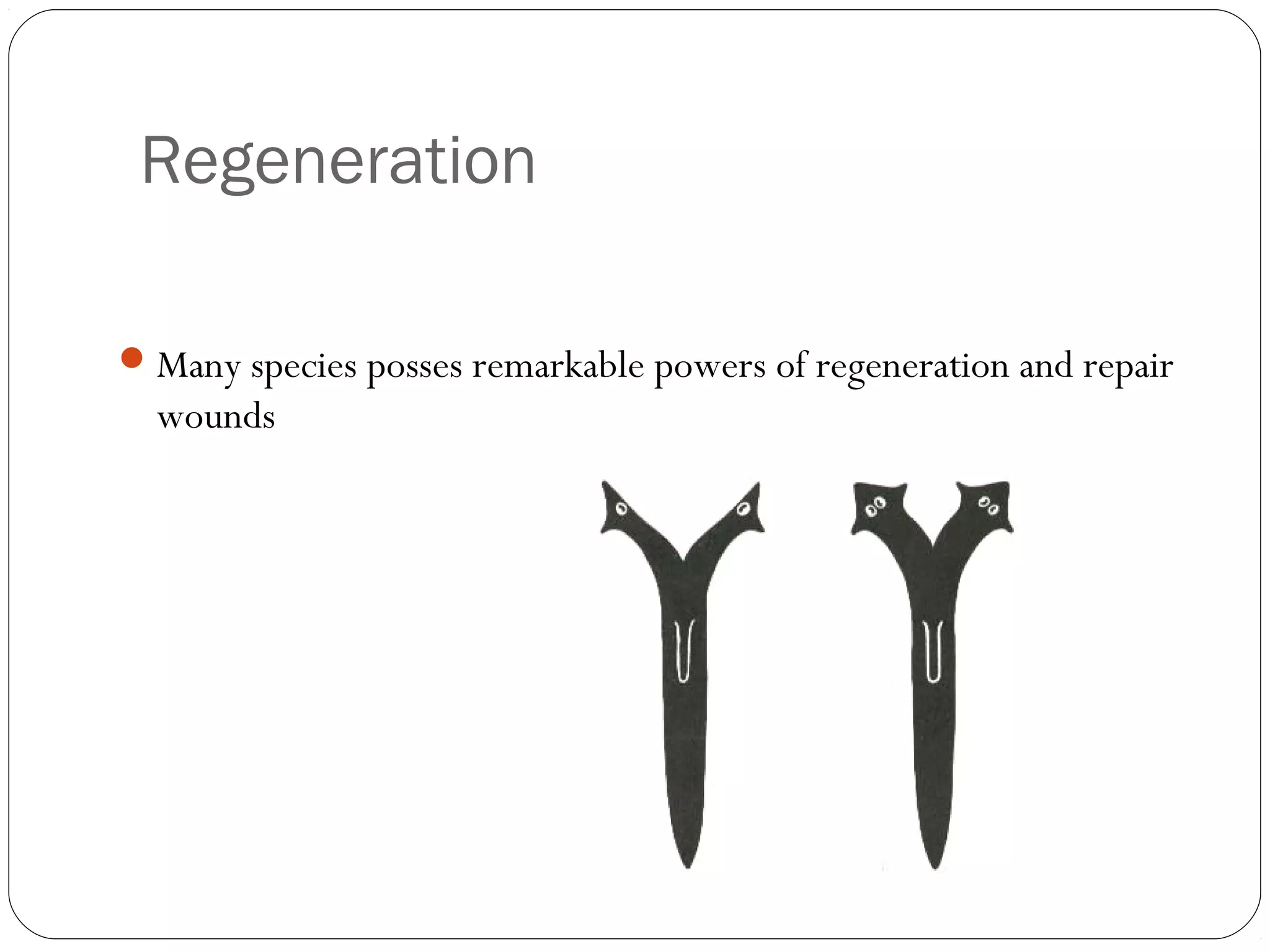
Regeneration
 Many species posses remarkable powers of regeneration and repair

wounds
Class Trematoda
Flukes -oral and ventral suckers, no hooks, parasites, body

with a syncytial tegument without cilia. Larva stages
unique.

Clonorchis
Fasciola
Schistosoma
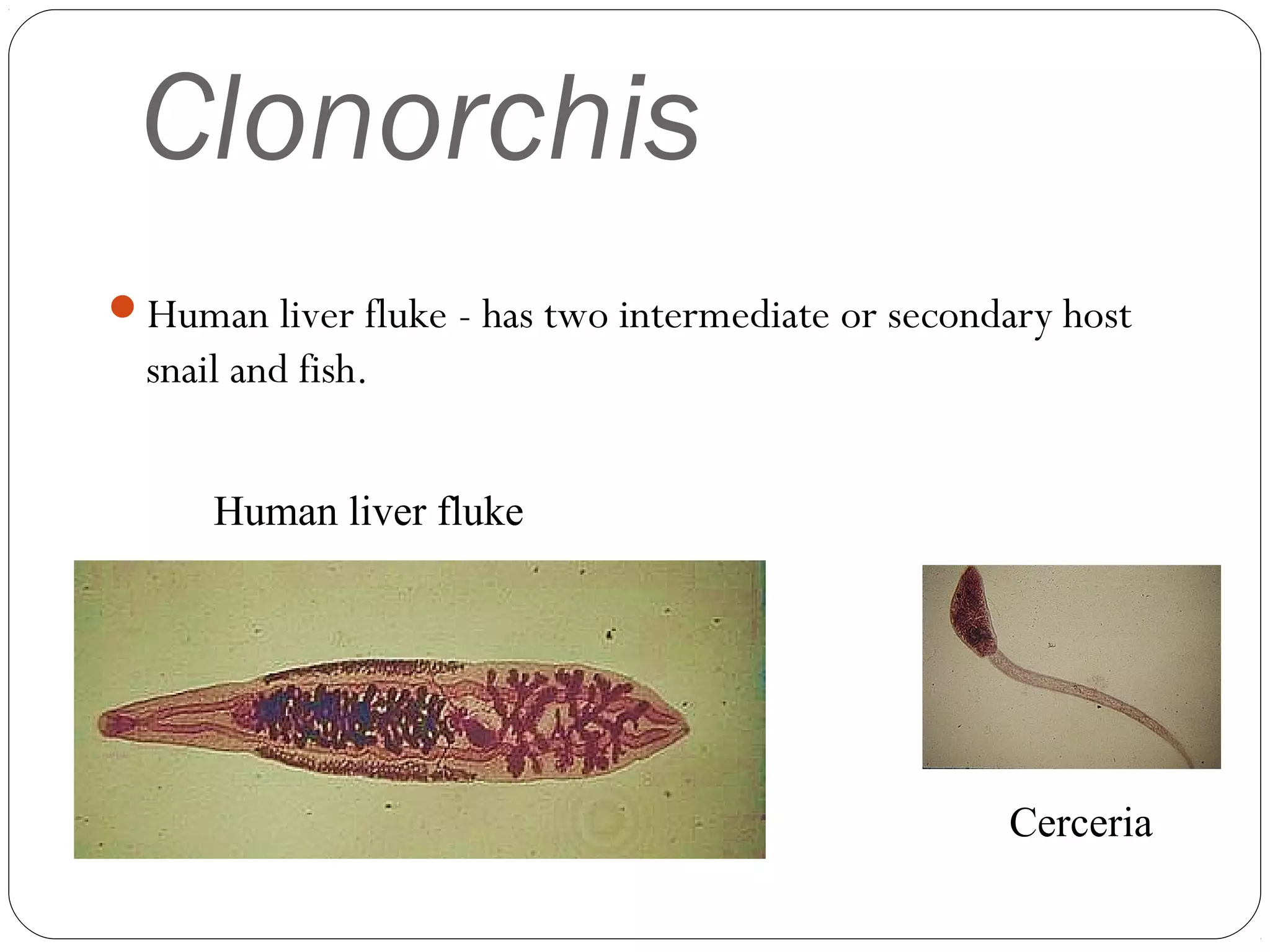
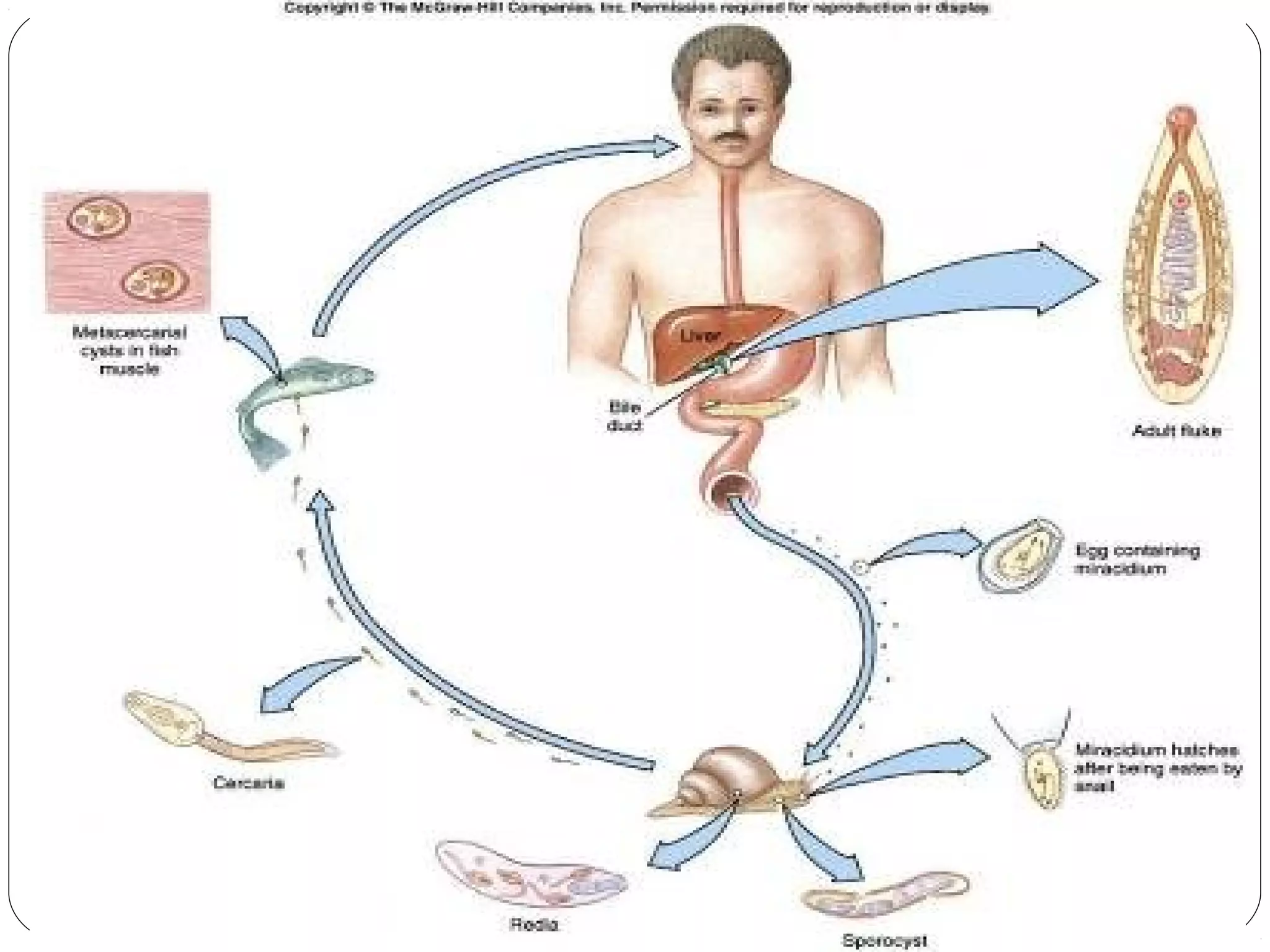
Clonorchis
Human liver fluke - has two intermediate or secondary host

snail and fish.
Human liver fluke

Cerceria
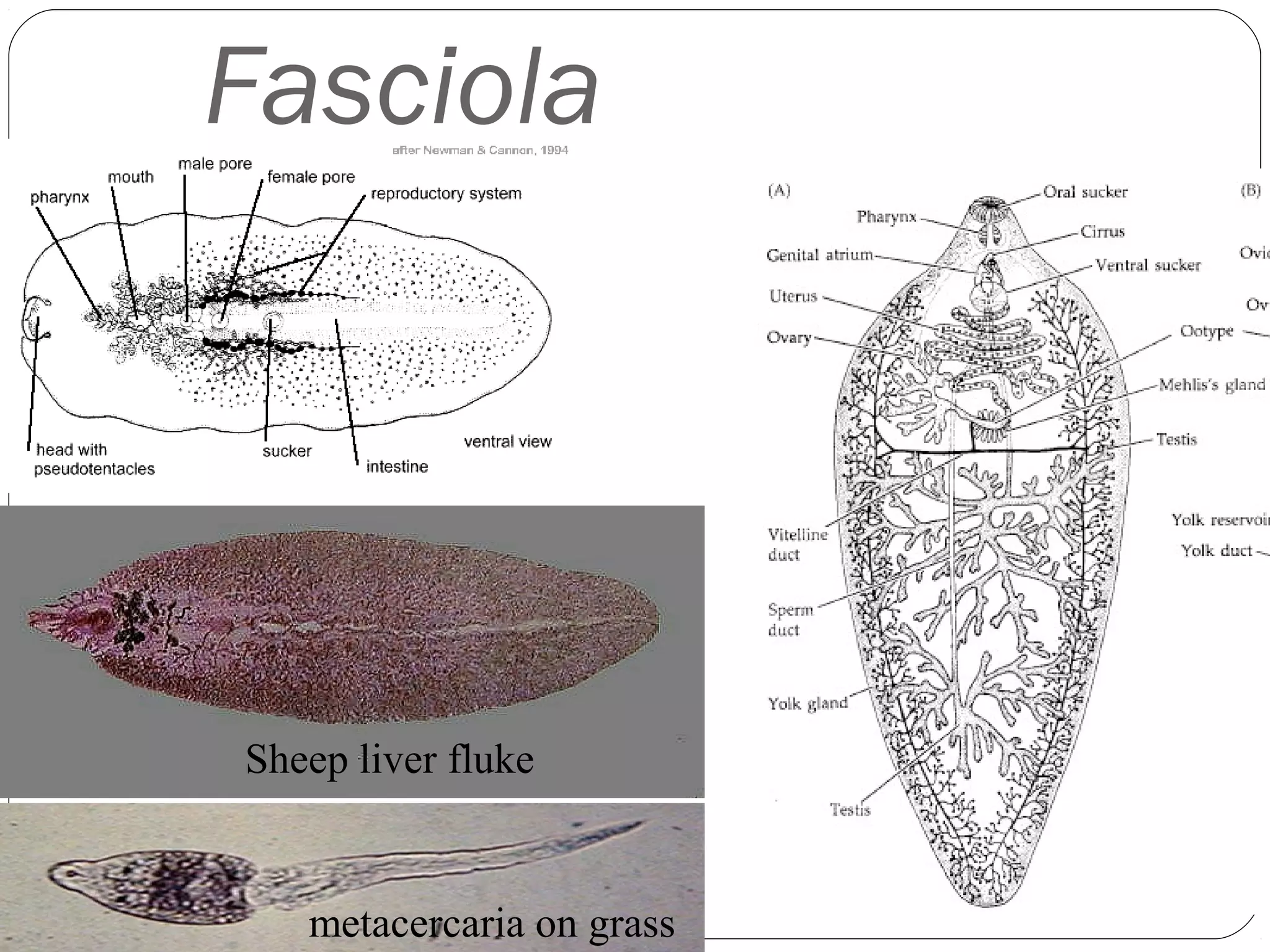
Fasciola

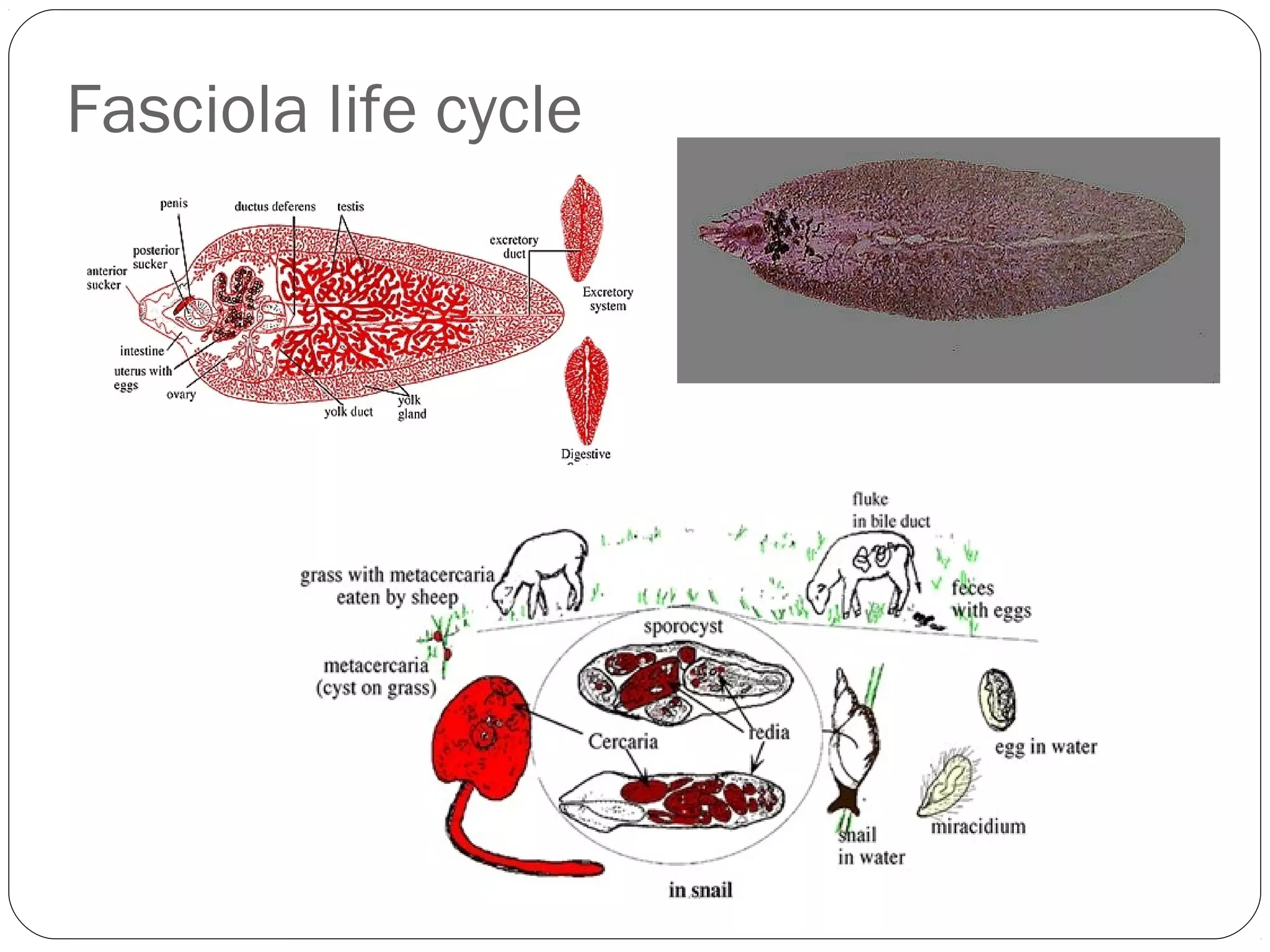
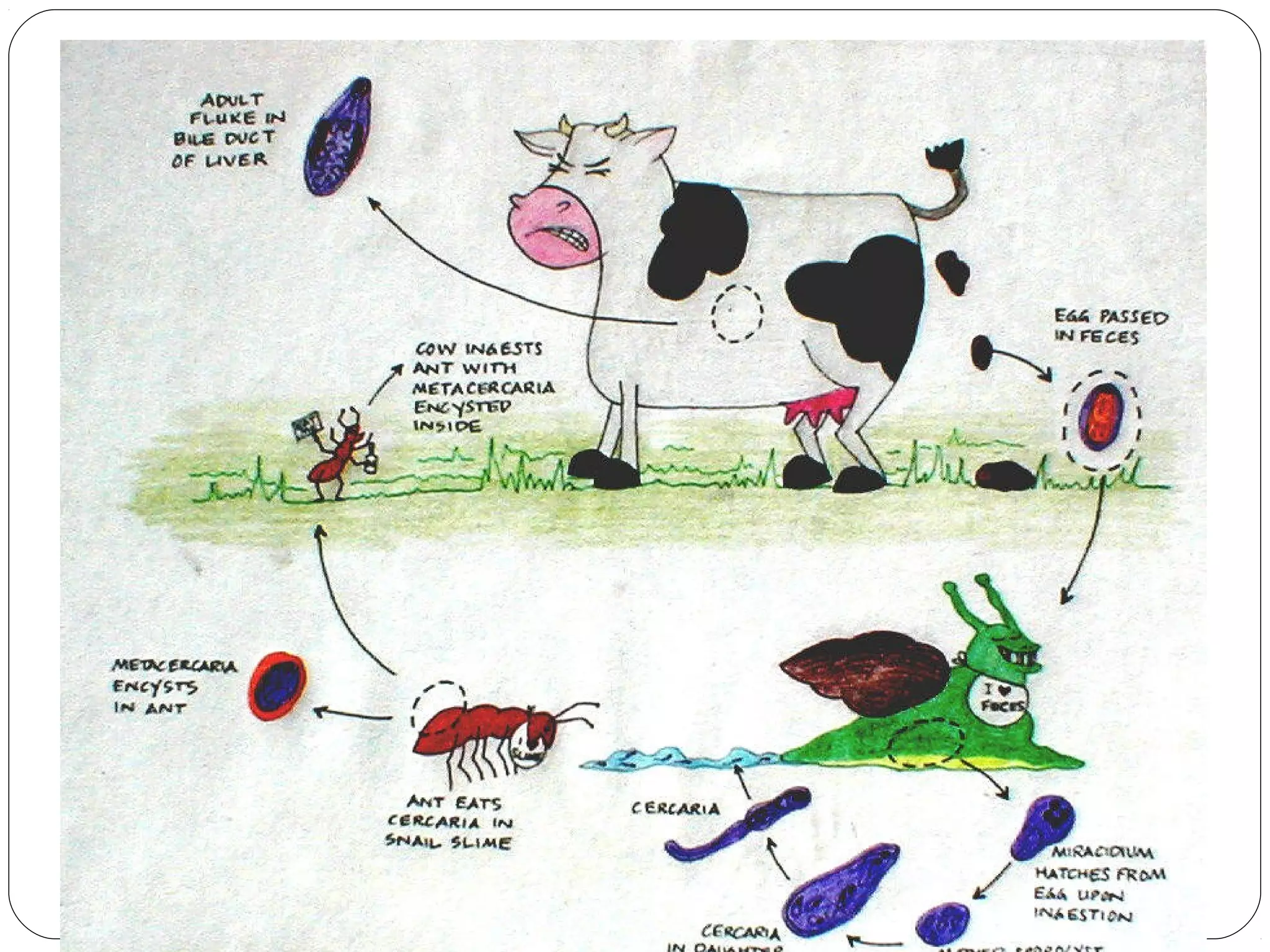
Life cycle

Sheep liver fluke

metacercaria on grass
Fasciola life cycle
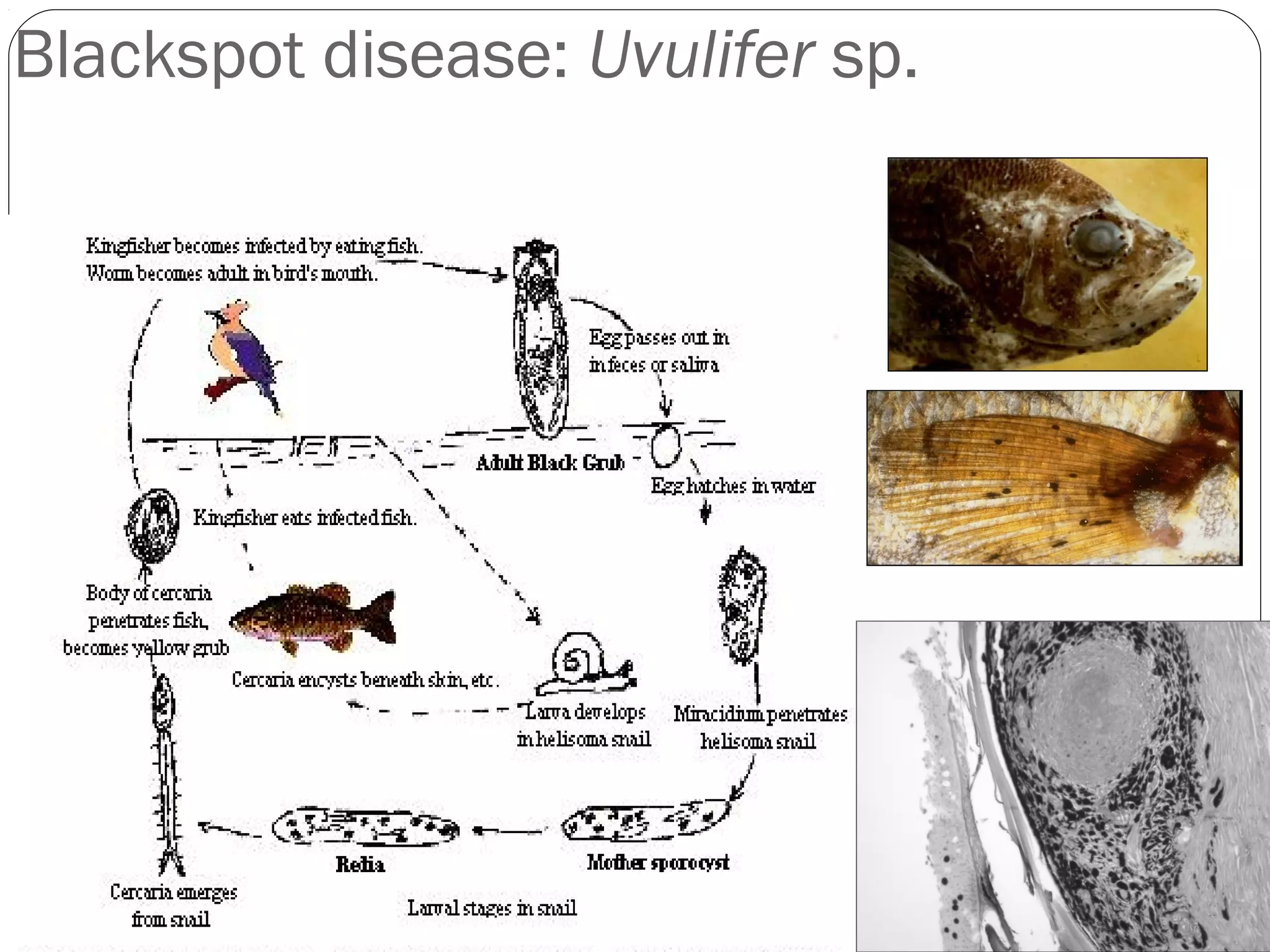
Blackspot disease: Uvulifer sp.
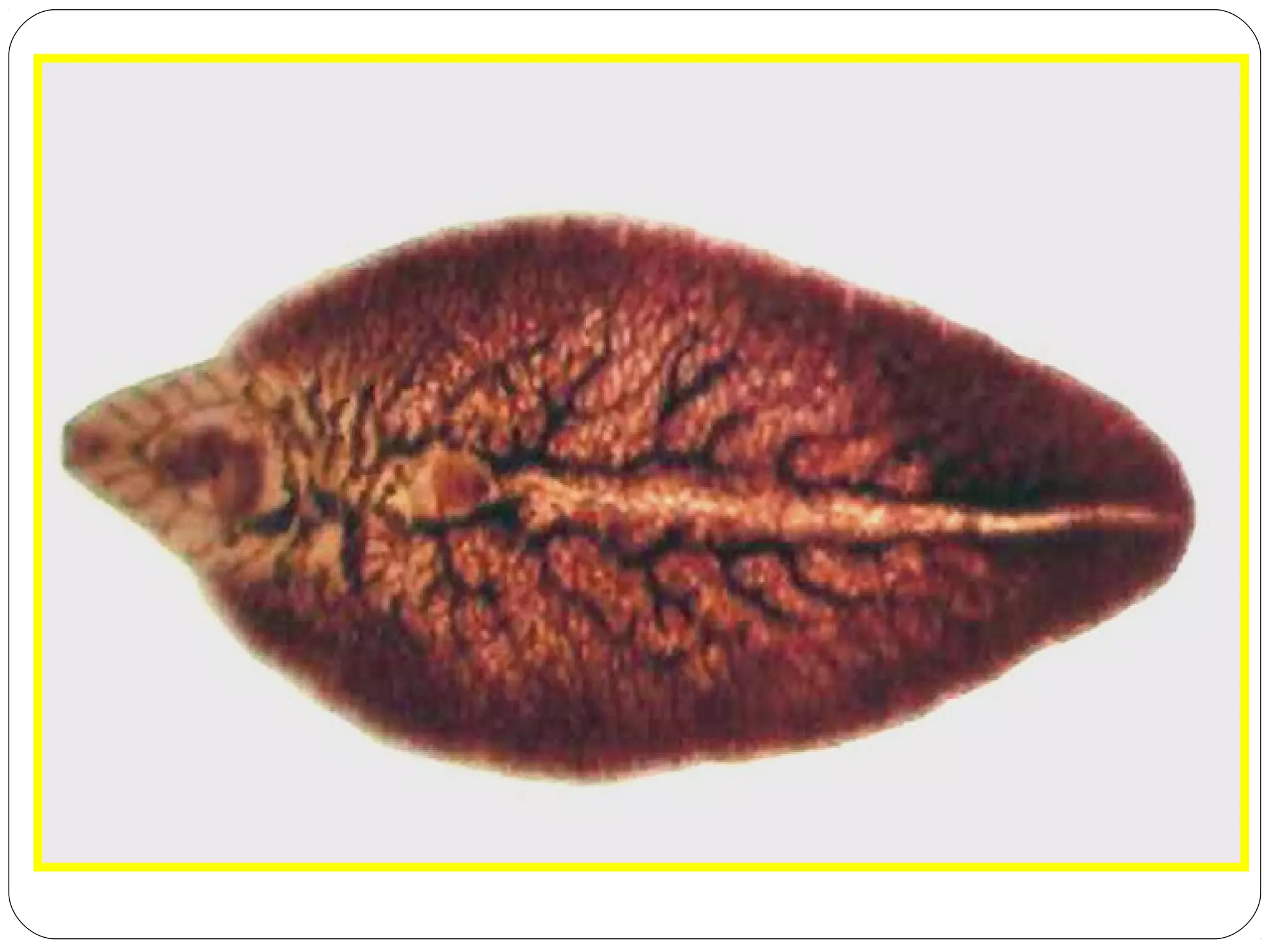
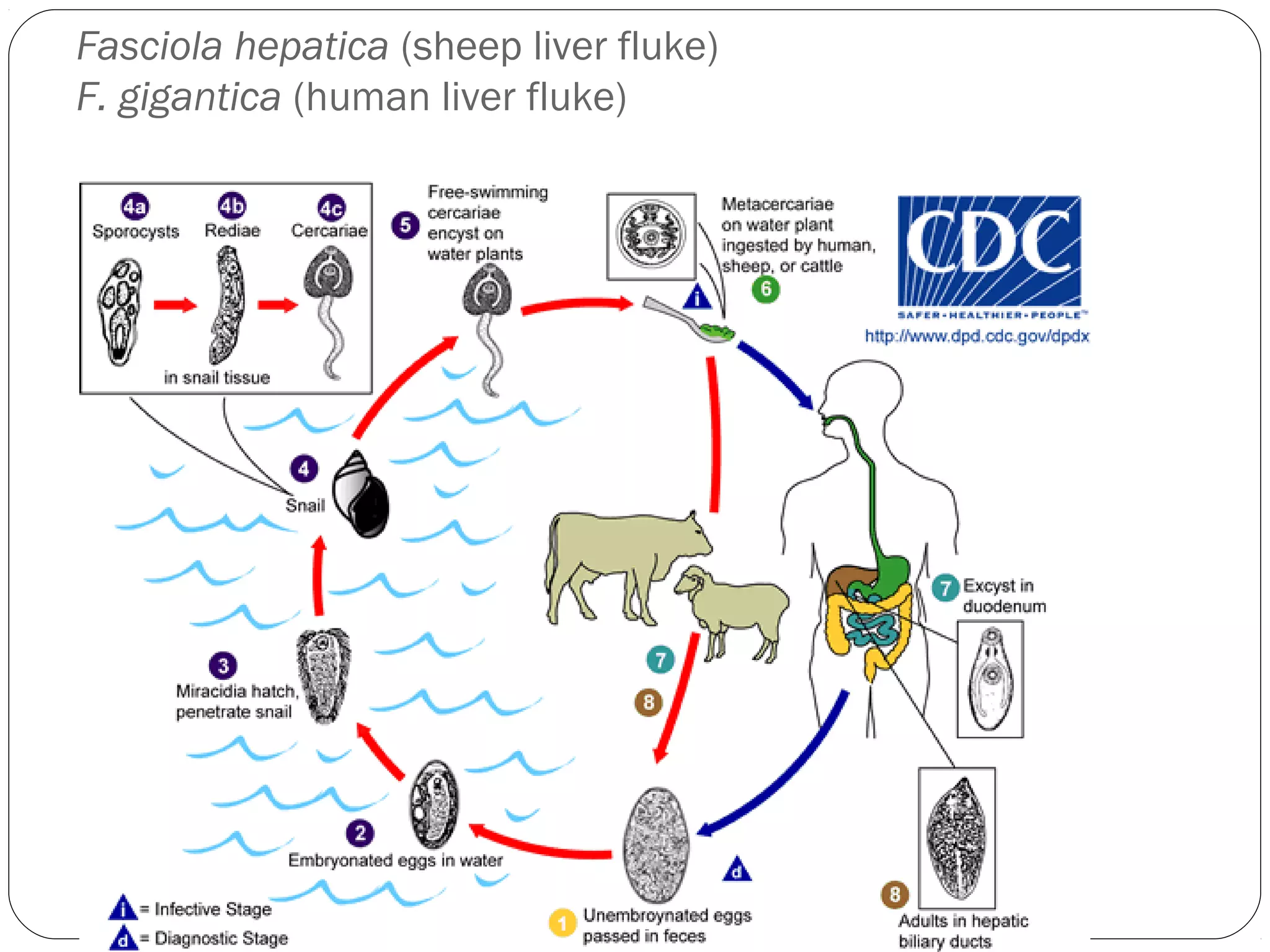
Fasciola hepatica (sheep liver fluke)
F. gigantica (human liver fluke)
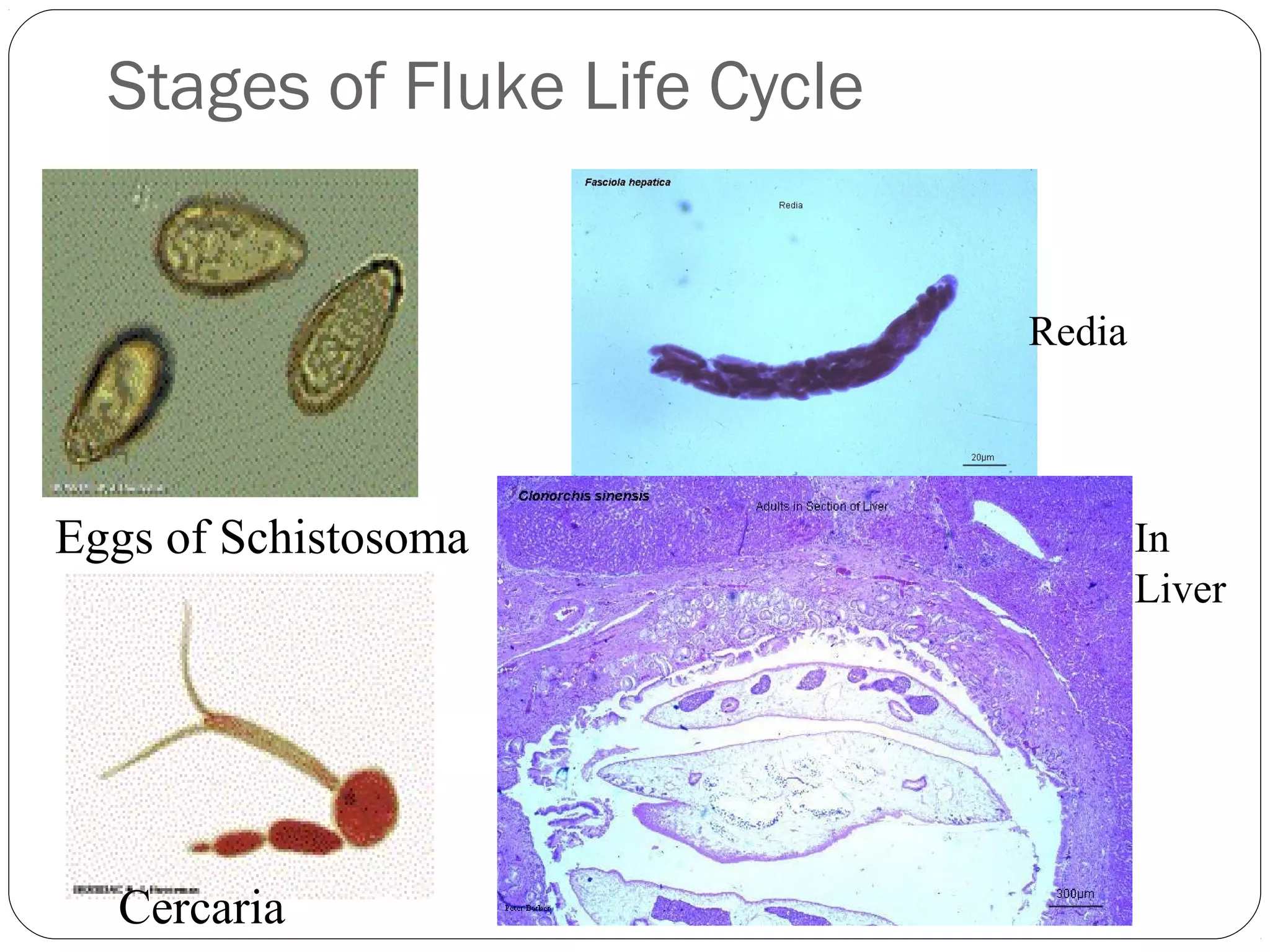
Stages of Fluke Life Cycle

Redia

Eggs of Schistosoma

Cercaria

In
Liver
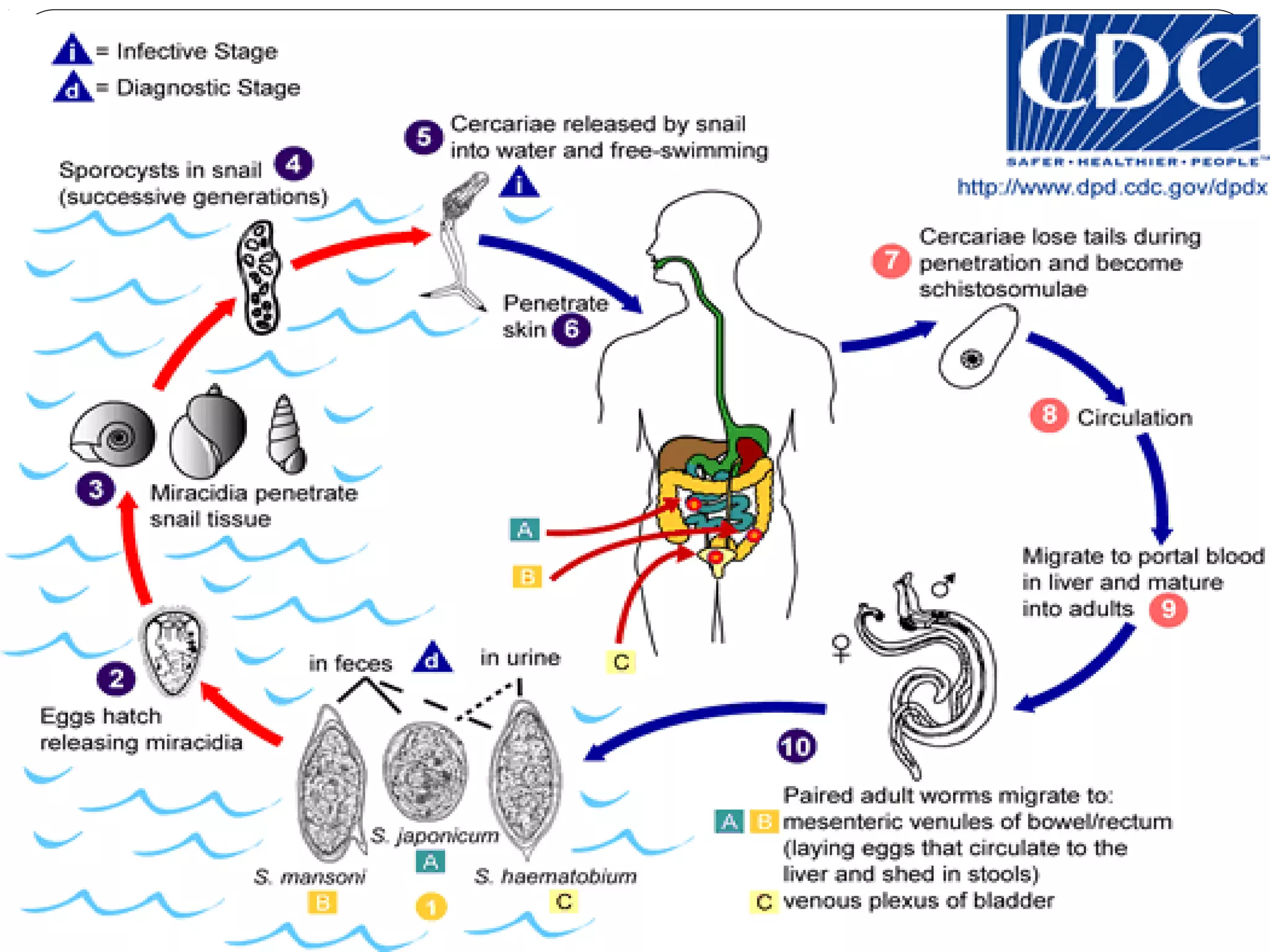
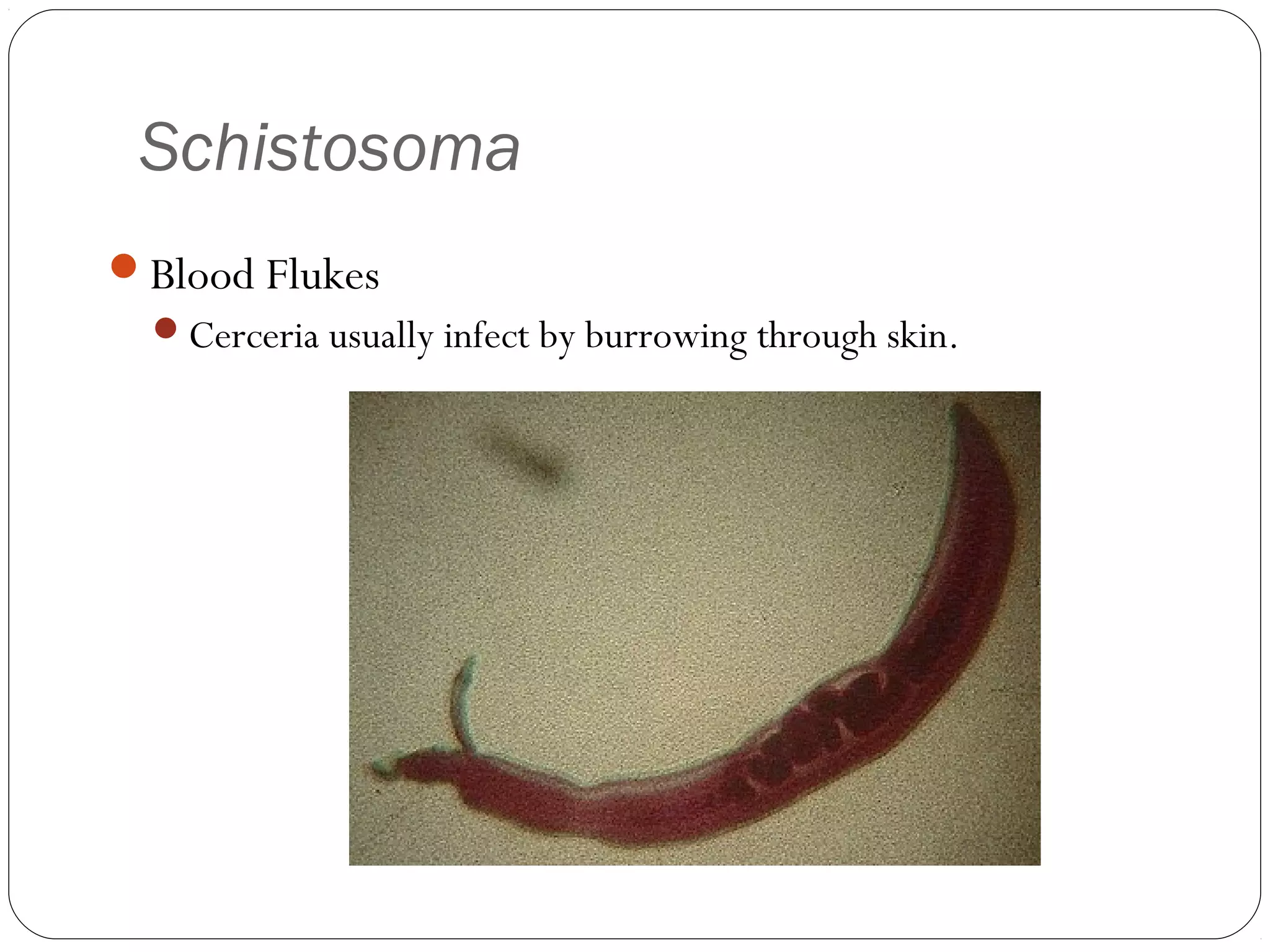
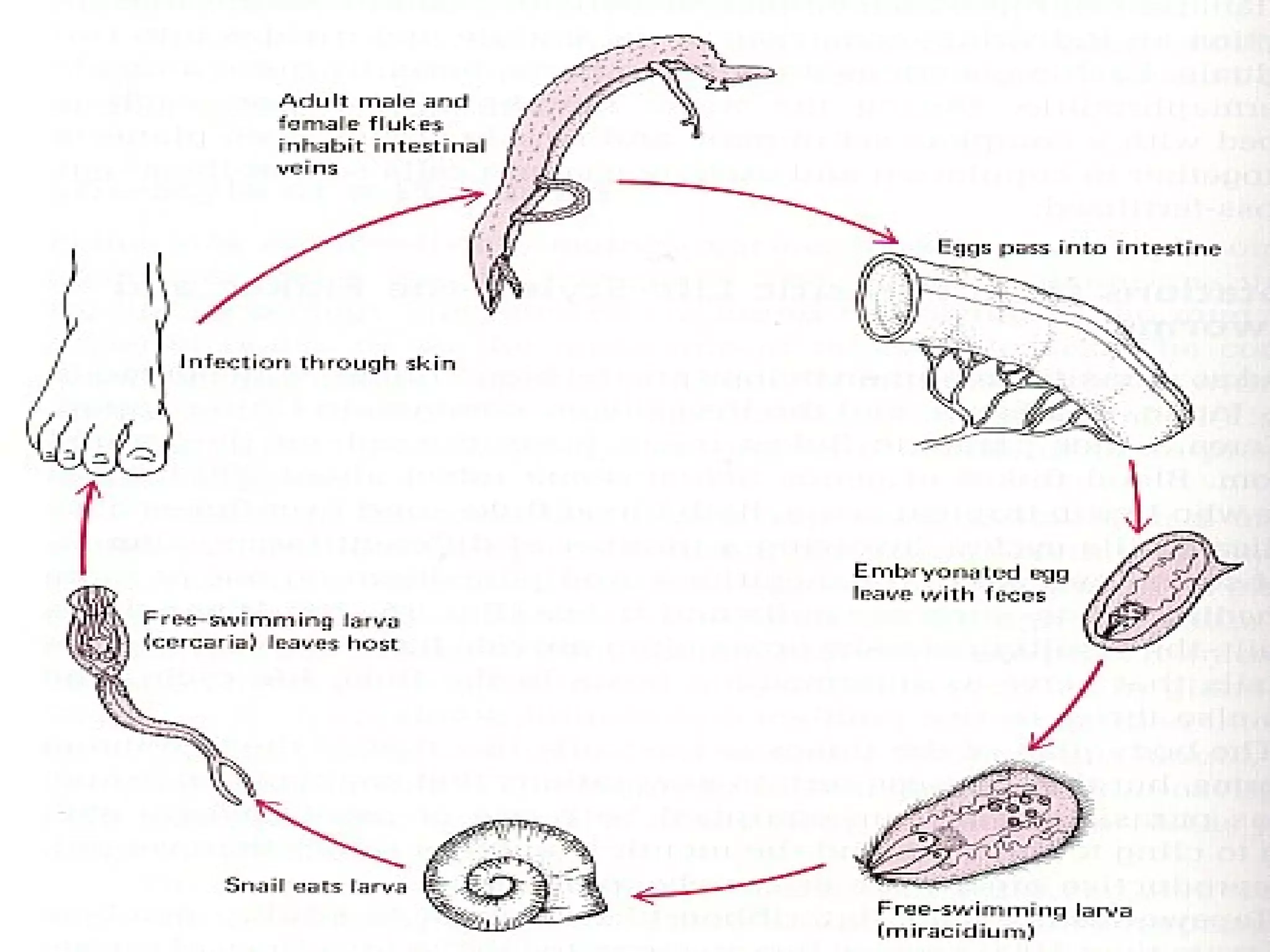
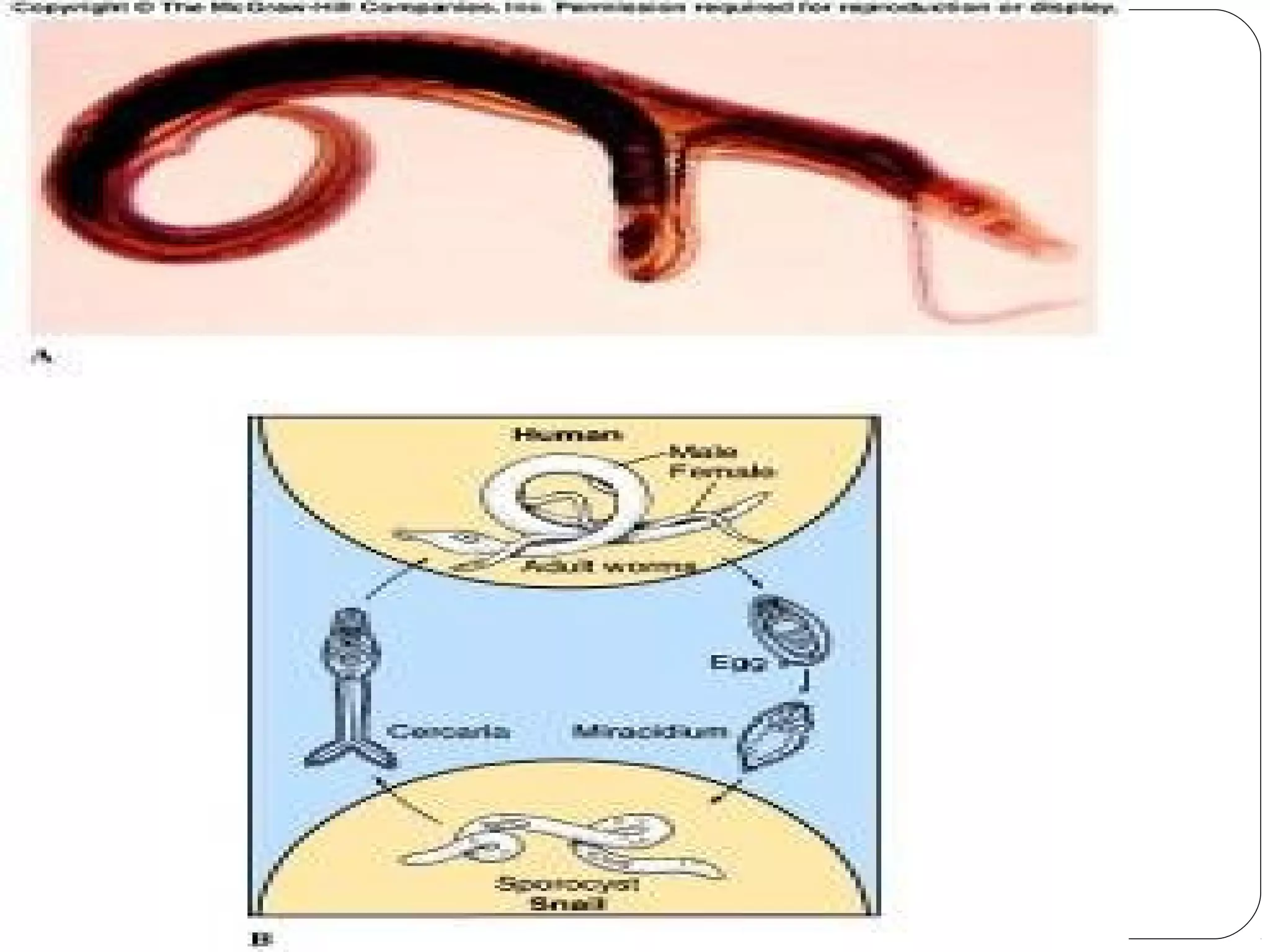
Schistosoma
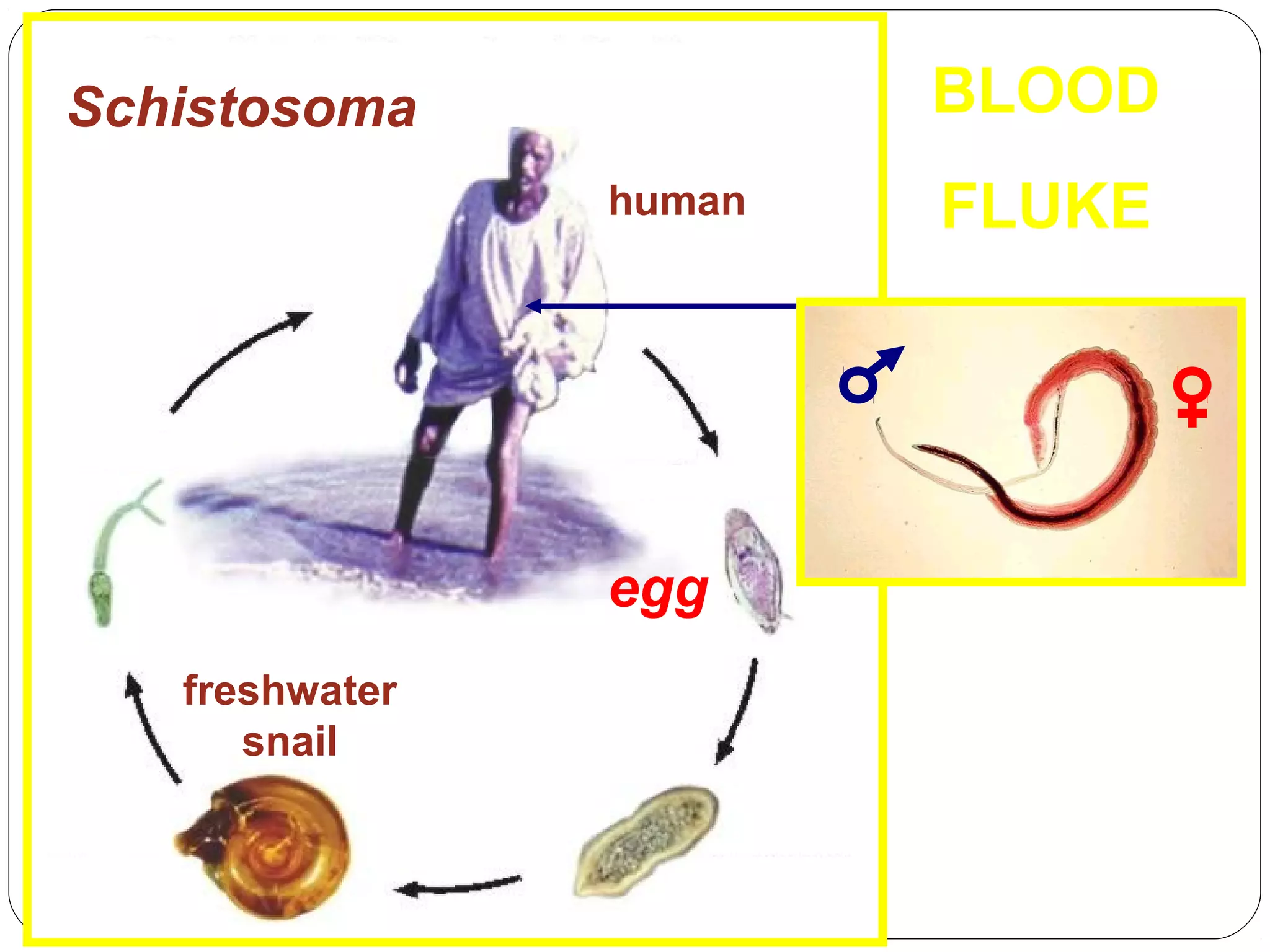
Blood Flukes
Cerceria usually infect by burrowing through skin.
BLOOD

Schistosoma
human

egg
freshwater
snail

FLUKE
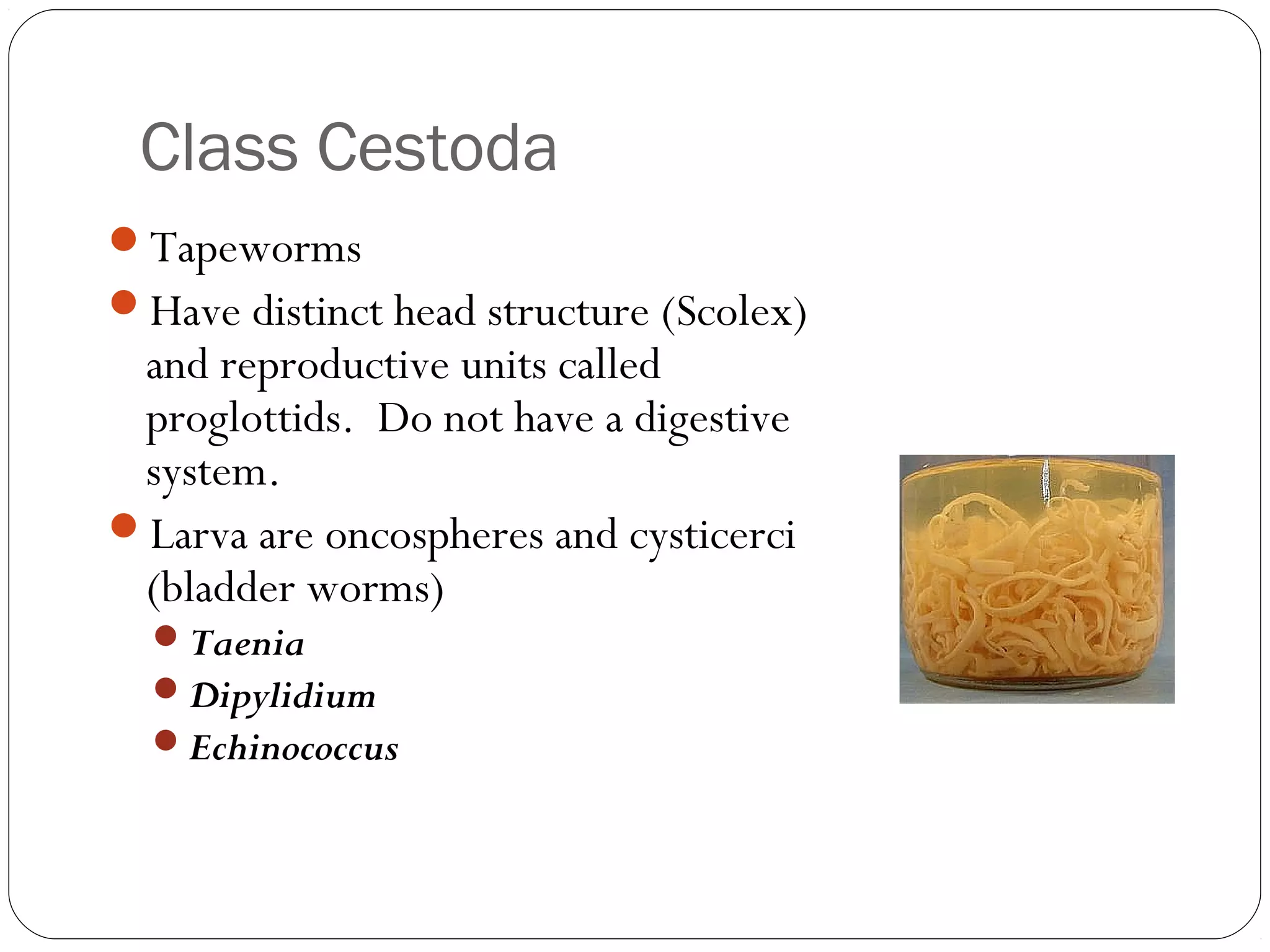
Class Cestoda
Tapeworms
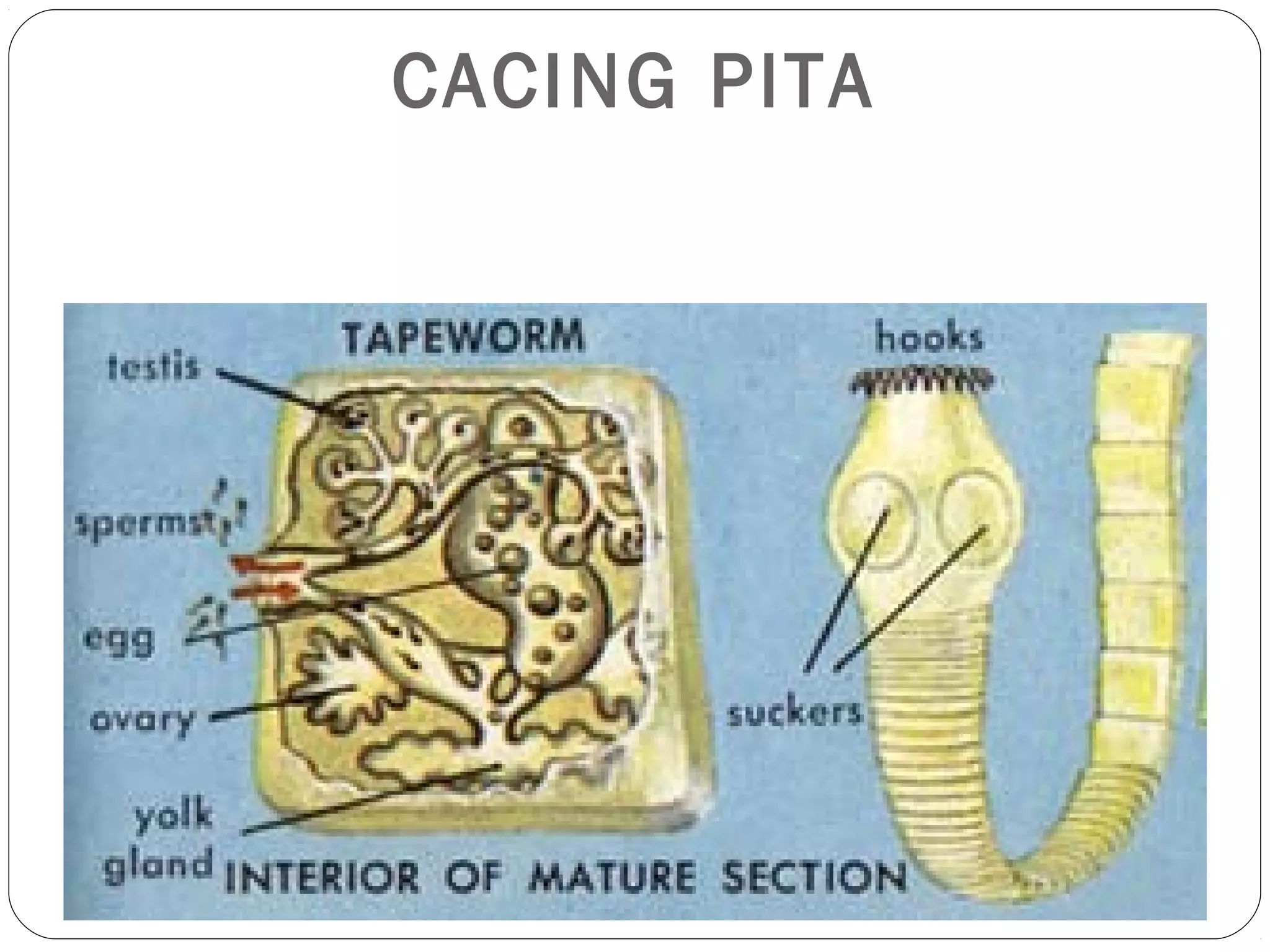
Have distinct head structure (Scolex)

and reproductive units called
proglottids. Do not have a digestive
system.
Larva are oncospheres and cysticerci
(bladder worms)
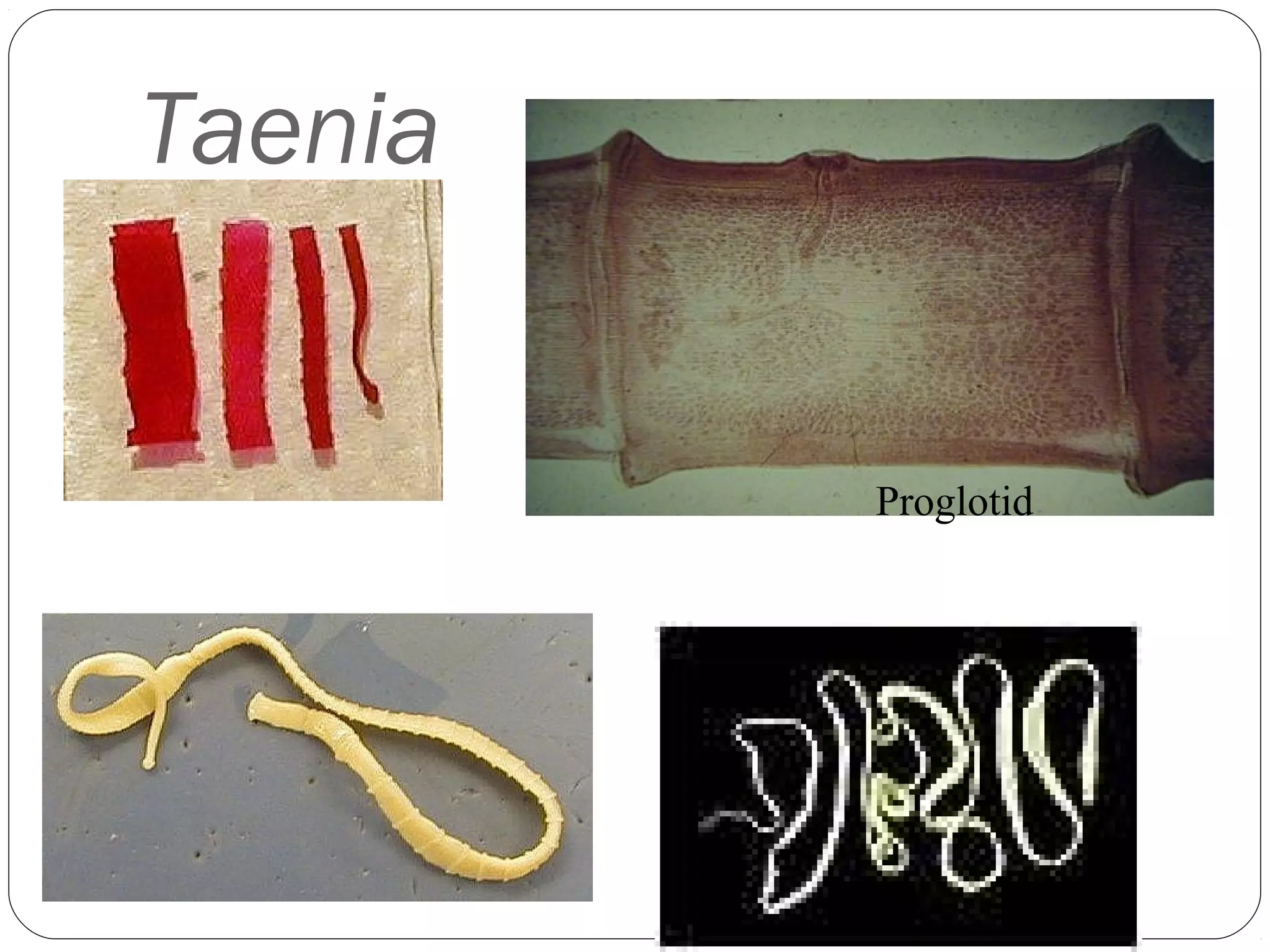
Taenia
Dipylidium
Echinococcus
Taenia

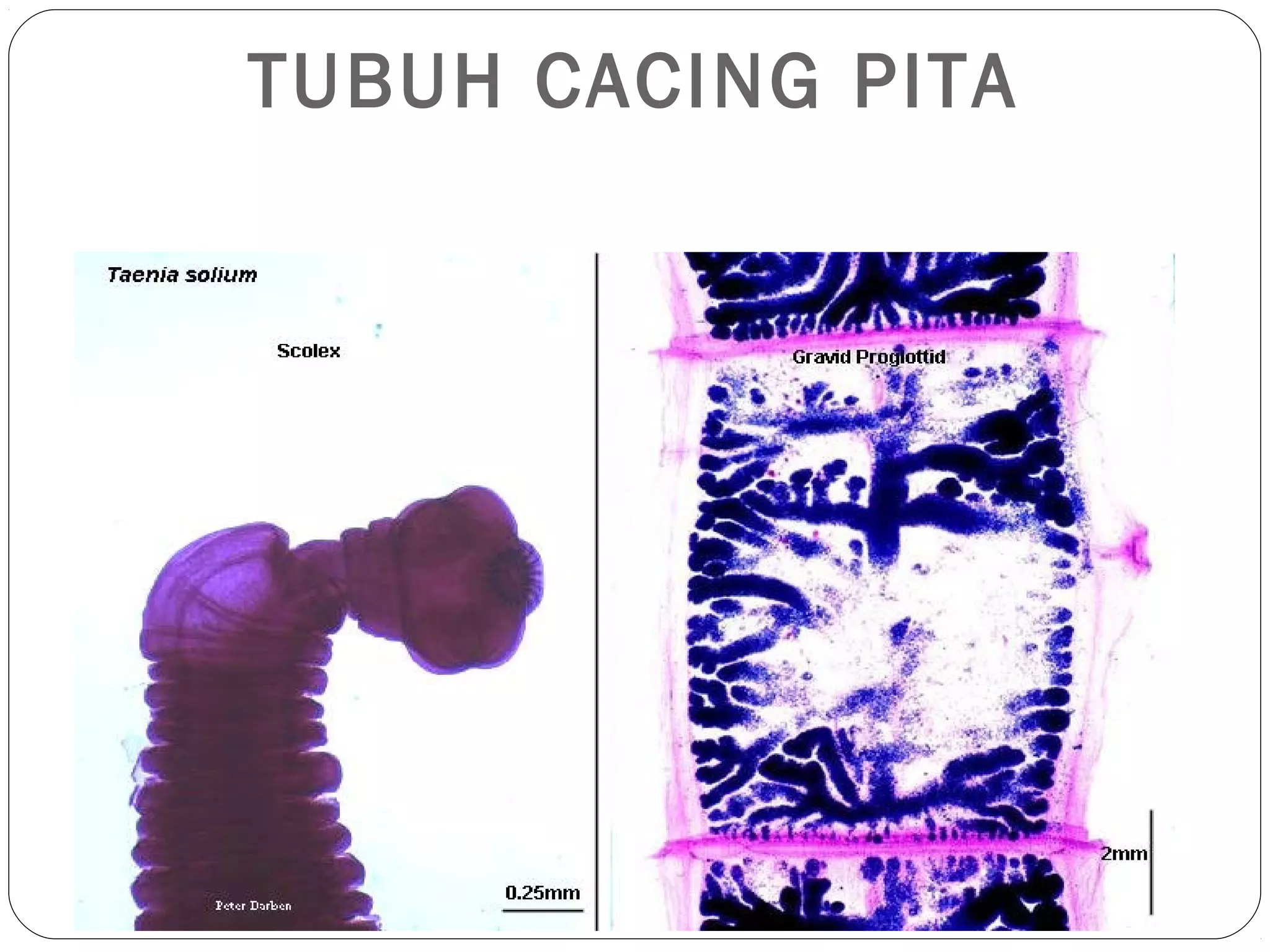
Proglotid
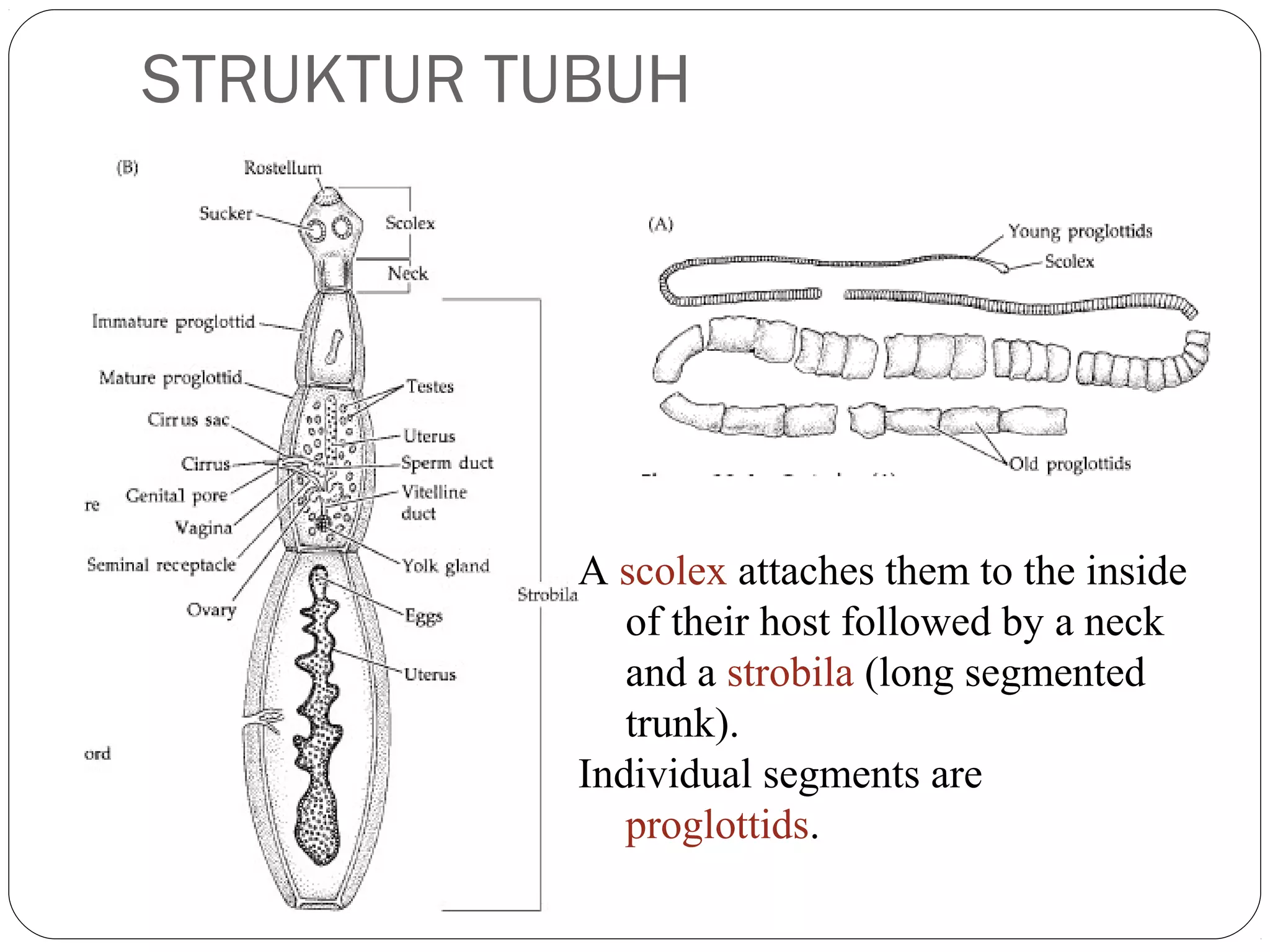
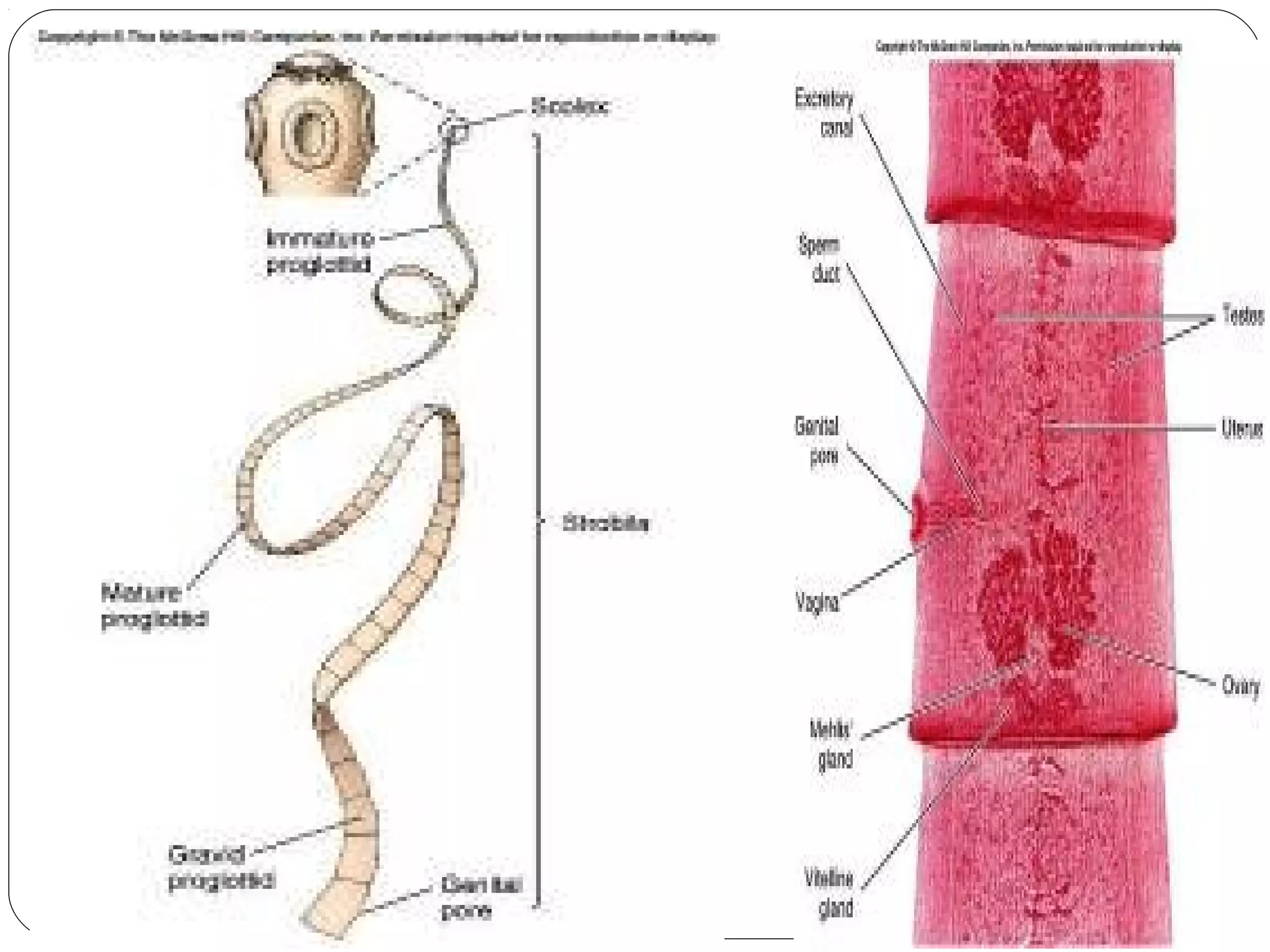
STRUKTUR TUBUH

A scolex attaches them to the inside
of their host followed by a neck
and a strobila (long segmented
trunk).
Individual segments are
proglottids.
TUBUH CACING PITA
CACING PITA
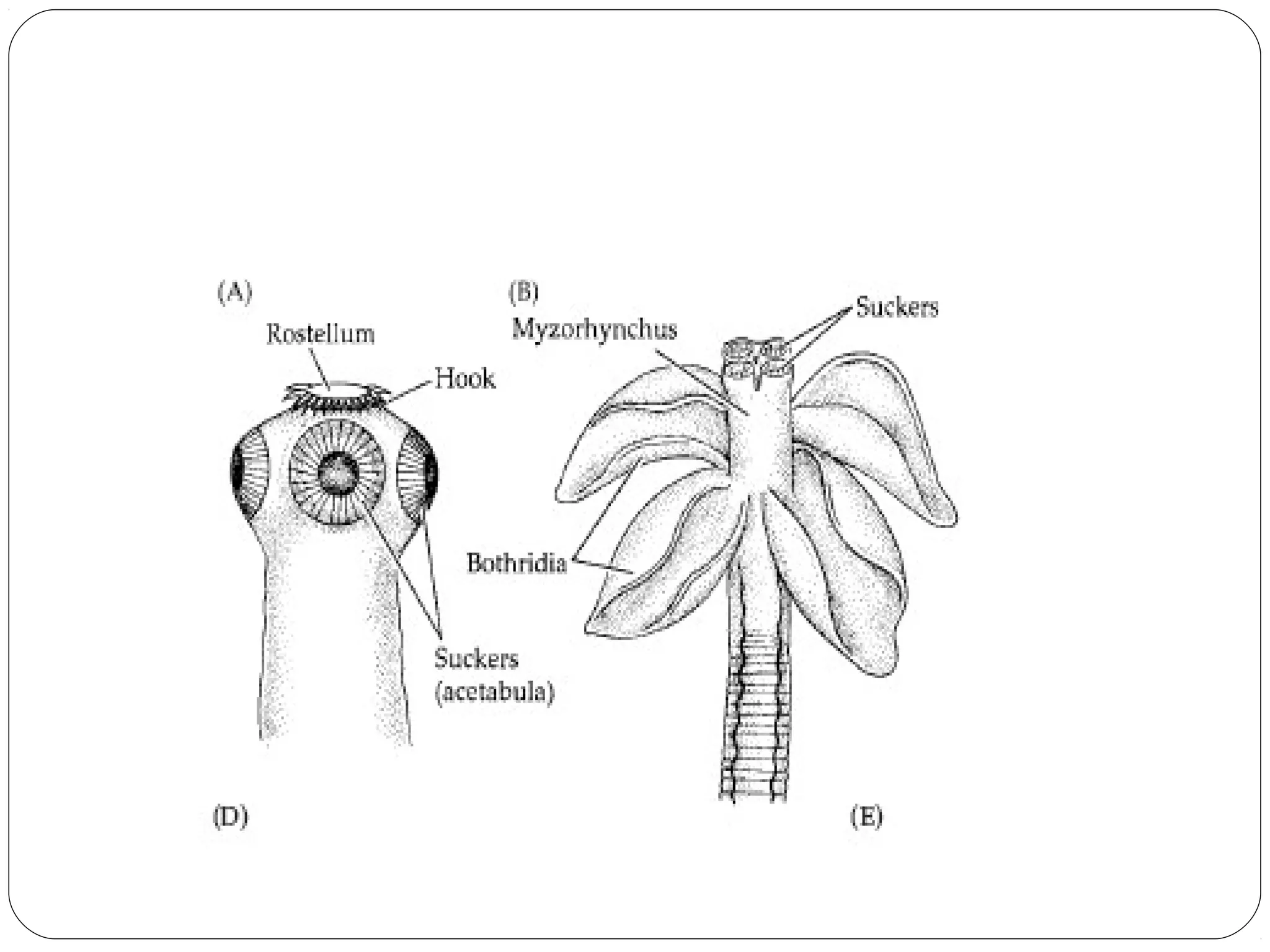
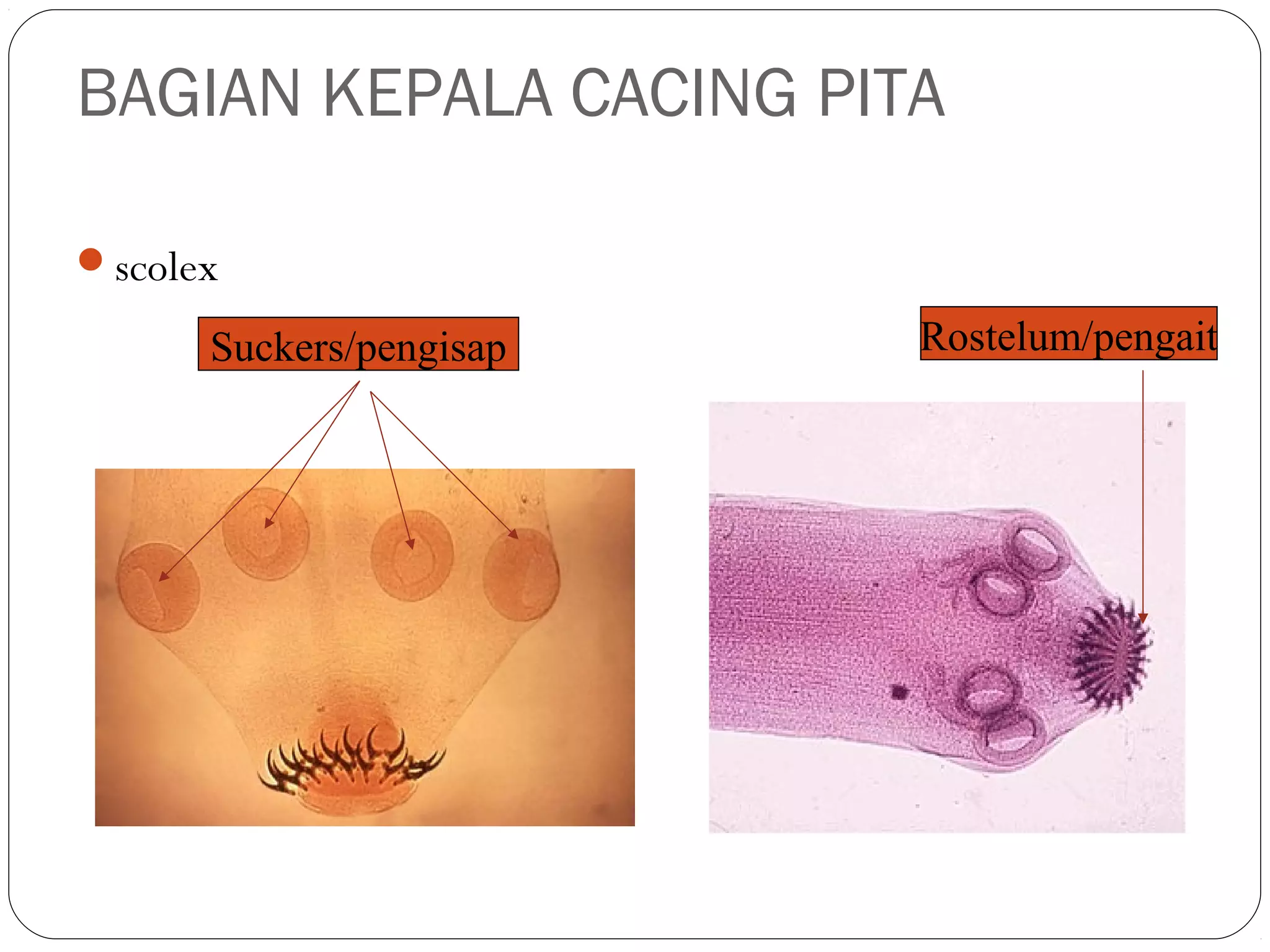
BAGIAN KEPALA CACING PITA
scolex

Suckers/pengisap

Rostelum/pengait
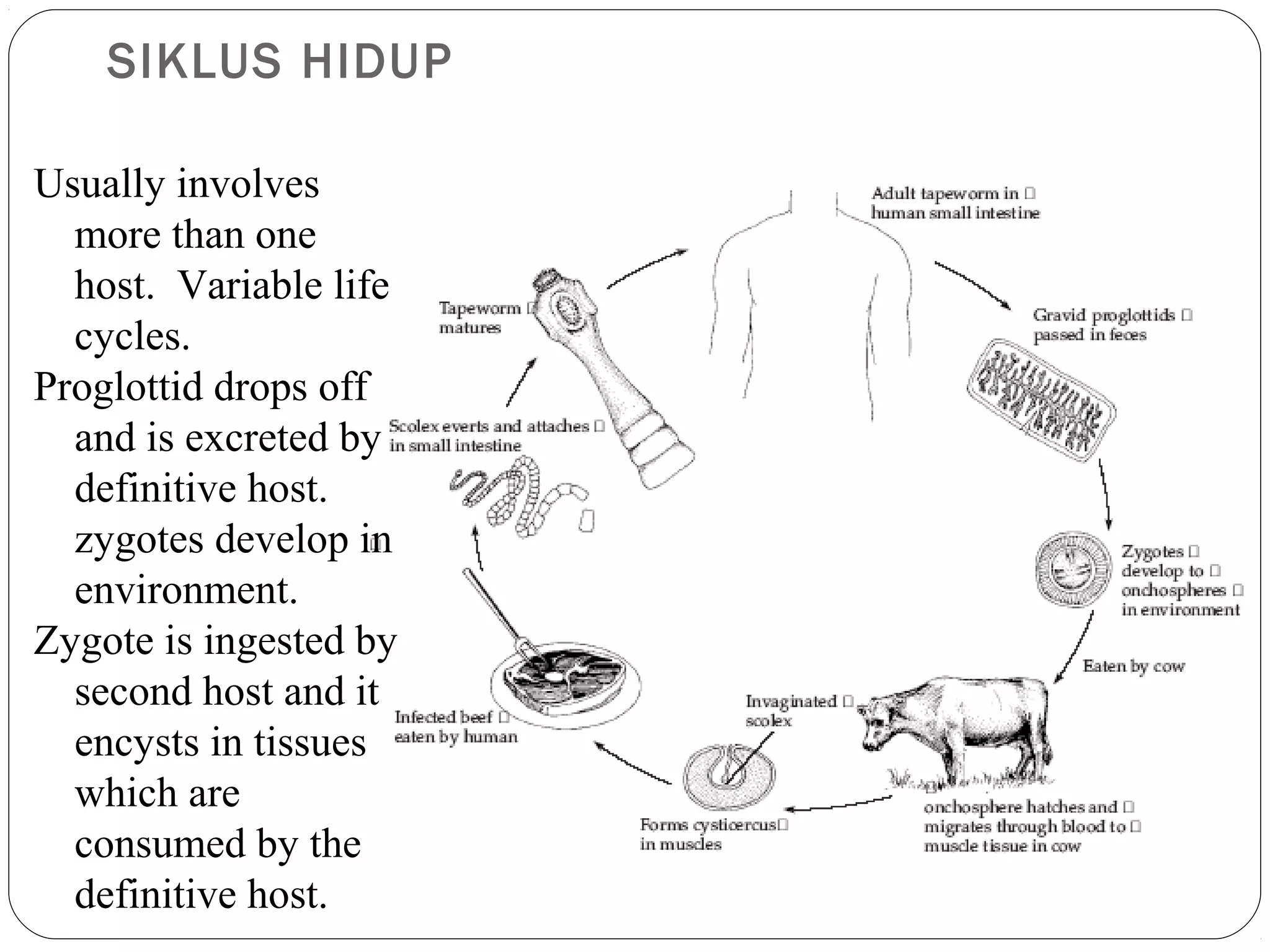
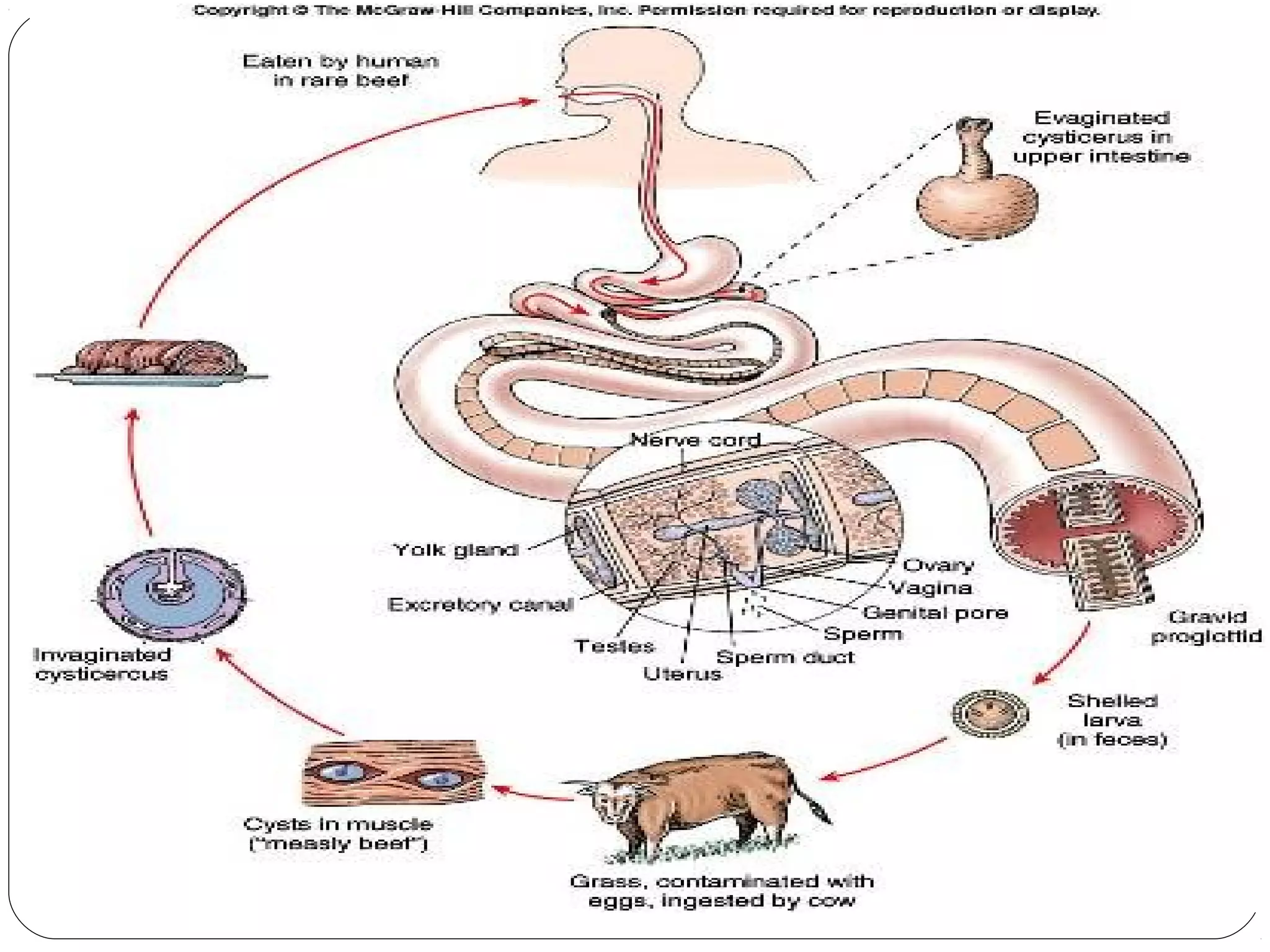
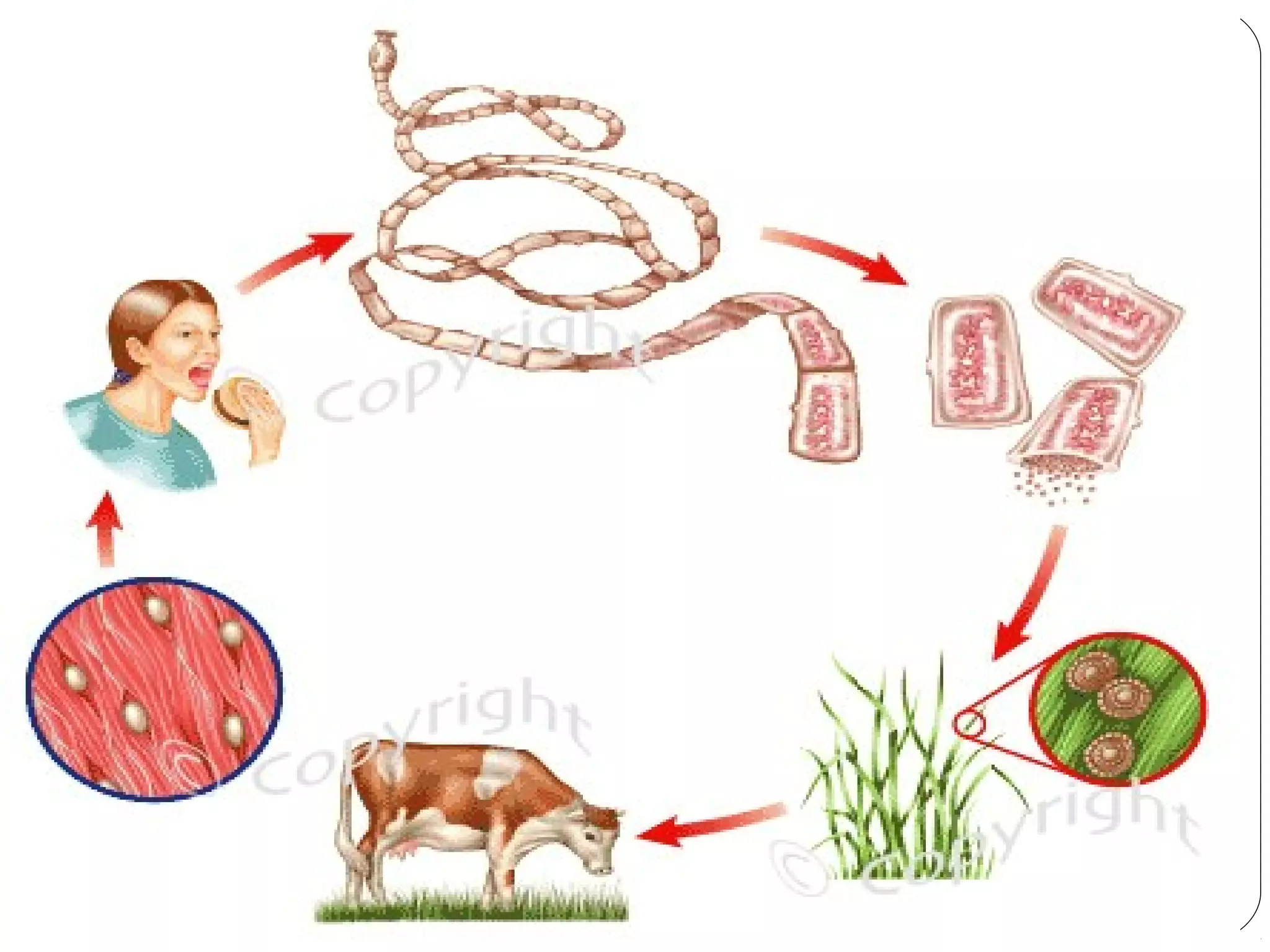
SIKLUS HIDUP
Usually involves
more than one
host. Variable life
cycles.
Proglottid drops off
and is excreted by
definitive host.
zygotes develop in
environment.
Zygote is ingested by
second host and it
encysts in tissues
which are
consumed by the
definitive host.
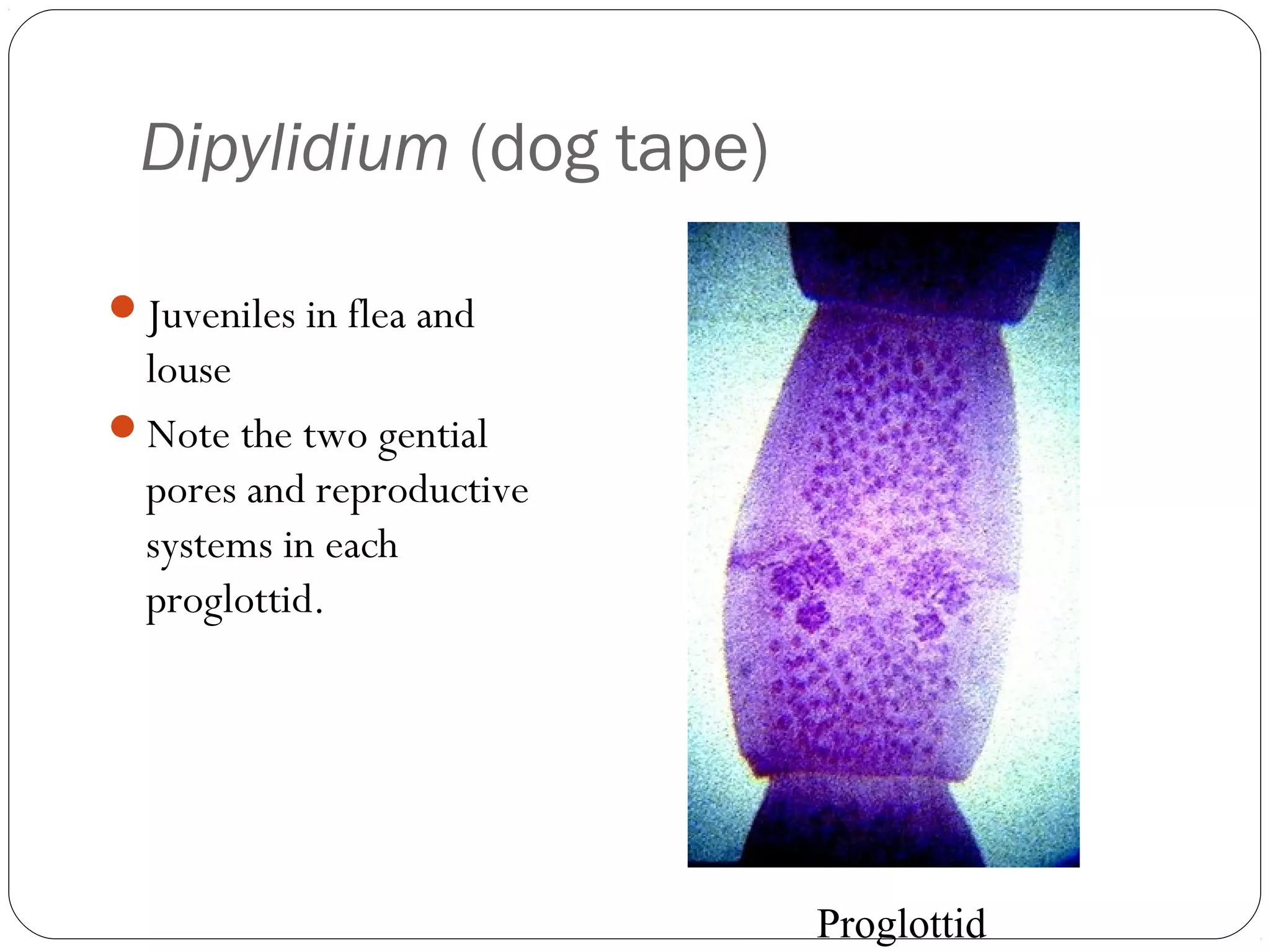
Dipylidium (dog tape)
Juveniles in flea and

louse
Note the two gential
pores and reproductive
systems in each
proglottid.

Proglottid
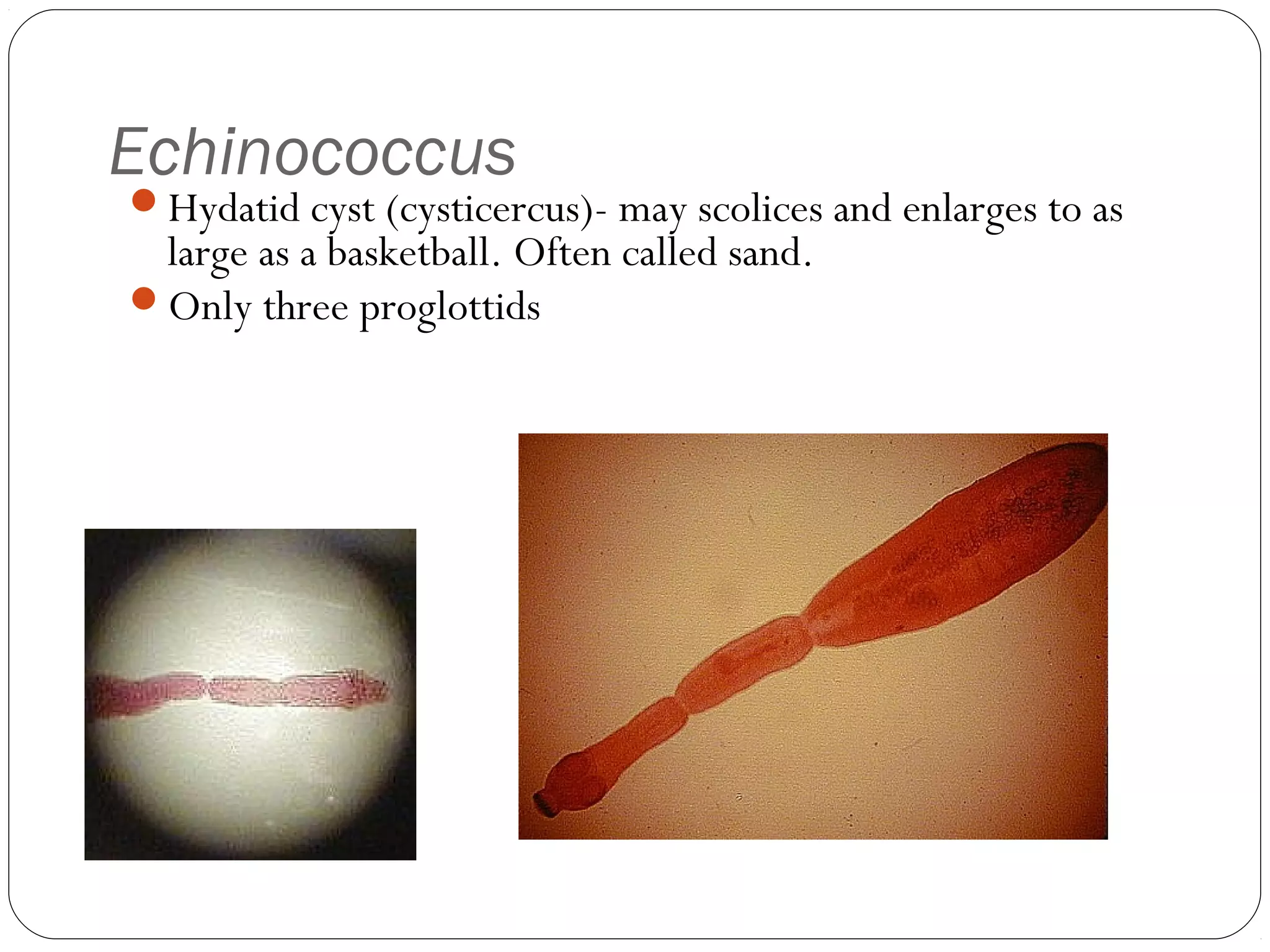
Echinococcus

Hydatid cyst (cysticercus)- may scolices and enlarges to as

large as a basketball. Often called sand.
Only three proglottids

Presentasi platyhelminthes

  • 1.
  • 10.
  • 15.
    CIRI UMUM • • • • • • • • Lebih majudi bandingkan Porifera dan Coelenterata. Lapisan tubuh Triploblastik. Ukuran tubuh mikroskopis hingga 20 m. Tubuh simetri bilateral, pipih dan paling sederhana diantara hewan simetri bilateral. Tidak memiliki rongga tubuh (acoelomata). Pencernaan terdiri dari : mulut, faring, usus (tanpa memiliki anus). Tidak memiliki sistem sirkulasi, respirasi, dan ekskresi,hermaprodit. Habitat : air tawar, laut, tempat lembab, dalam tubuh hewan lain (parasit). (parasit)
  • 16.
    Some Unique Characteristics Proglotidsand scolex in Cestoda Rabdites in Turbellaria Combination of characteristics- flame cells and being acoelomates for example. Larva of each class are unique
  • 17.
    Potition in animalkingdom Eumetazoa - animals with tissue Bilateria - have bilateral symmetry and are triploblastic. Protostomia - a group of animals whose mouth develops from the blastopore, and the mesoderm forms from an area near the blastopore.  Acoelomata - They have a true mesoderm which fills the original blastocoel between the outer epidermis and digestive tract.
  • 18.
  • 19.
    Systems 1 Integumentary- Rhabditesand one cell layer epidermis in Turbellaria and usually ciliated; syncytial tegument in other classes. Skeletal - hydrostatic Muscle - longitudinal, transverse, and circular muscles are present. Digestive - incomplete with intracellular and extracellular digestion; no system in Cestoda.
  • 20.
    Systems 2 Excretory -flame cells, or excretory tubes in Cestoda. Respiratory - no system, diffusion Circulatory - none, diffusion. Nervous - anterior ganglia, ventral ladder-like system (two lateral cords with transverse cords).
  • 21.
    Systems 3 Endocrine -hormones produced by nervous system Reproductive - monoecious in most Well developed reproductive organs, mostly internal fertilization. Two of the parasitic classes have complex life cycles  Trematoda - miracidium, sporocyst, redia, cercaria, metacercaria (usually snail is secondary host.  Cestoda - oncosphere, cystercercius (bladderworm)
  • 22.
    KLASIFIKASI Turbellaria (cacing berambutgetar), silia pada permukaan tubuh digunakan untuk bergerak. Dugesia • Trematoda (cacing isap), alat isap digunakan untuk menempel dan menghisap makanan pada inangnya. •Clonorchis, Fasciola, Schistosoma •Cestoda (cacing pita), bentuk seperti pita tubuh terdiri dari bagian skoleks, leher, dan proglotit. Taenia, Dipylidium Echinococcus • Class Monogenea :No representatives
  • 23.
    Class Turbellaria Planaria -Free-livingflatworms with soft flattened bodies covered with ciliated epidermis which has special secreting cells called rabdites. Dugesia
  • 24.
    Struktur tubuh turbilaria Exhibit bilateral symmetry, acoelomate, and are triploblastic  Parenchyma tissue 24 Phylum Platyhelminthes
  • 25.
  • 26.
  • 27.
    PENCERNAAN MAKANAN DANEKSRESI  Mouth is usually located at the anterior end or mid-body on ventral surface  Excretory system Contains flame bulbs 27 Phylum Platyhelminthes
  • 28.
    SISTIM SYARAF Free-living speciesusually have a well- developed sensory system Parasites generally have less elaborate systems . 28 Phylum Platyhelminthes
  • 29.
    SISTIM REPRODUKSI  Almostall are simultaneous hermaphrodites  Parasitic species (flukes and tapeworms) have complex lifecycles, with various hosts and several different larval stages  Incredible powers of regeneration 29
  • 30.
    Regeneration  Many speciesposses remarkable powers of regeneration and repair wounds
  • 32.
    Class Trematoda Flukes -oraland ventral suckers, no hooks, parasites, body with a syncytial tegument without cilia. Larva stages unique. Clonorchis Fasciola Schistosoma
  • 33.
    Clonorchis Human liver fluke- has two intermediate or secondary host snail and fish. Human liver fluke Cerceria
  • 34.
    Fasciola Life cycle Sheep liverfluke metacercaria on grass
  • 35.
  • 38.
  • 39.
    Fasciola hepatica (sheepliver fluke) F. gigantica (human liver fluke)
  • 41.
    Stages of FlukeLife Cycle Redia Eggs of Schistosoma Cercaria In Liver
  • 42.
    Schistosoma Blood Flukes Cerceria usuallyinfect by burrowing through skin.
  • 44.
  • 45.
    Class Cestoda Tapeworms Have distincthead structure (Scolex) and reproductive units called proglottids. Do not have a digestive system. Larva are oncospheres and cysticerci (bladder worms) Taenia Dipylidium Echinococcus
  • 46.
  • 47.
    STRUKTUR TUBUH A scolexattaches them to the inside of their host followed by a neck and a strobila (long segmented trunk). Individual segments are proglottids.
  • 50.
  • 51.
  • 53.
    BAGIAN KEPALA CACINGPITA scolex Suckers/pengisap Rostelum/pengait
  • 54.
    SIKLUS HIDUP Usually involves morethan one host. Variable life cycles. Proglottid drops off and is excreted by definitive host. zygotes develop in environment. Zygote is ingested by second host and it encysts in tissues which are consumed by the definitive host.
  • 57.
    Dipylidium (dog tape) Juvenilesin flea and louse Note the two gential pores and reproductive systems in each proglottid. Proglottid
  • 58.
    Echinococcus Hydatid cyst (cysticercus)-may scolices and enlarges to as large as a basketball. Often called sand. Only three proglottids