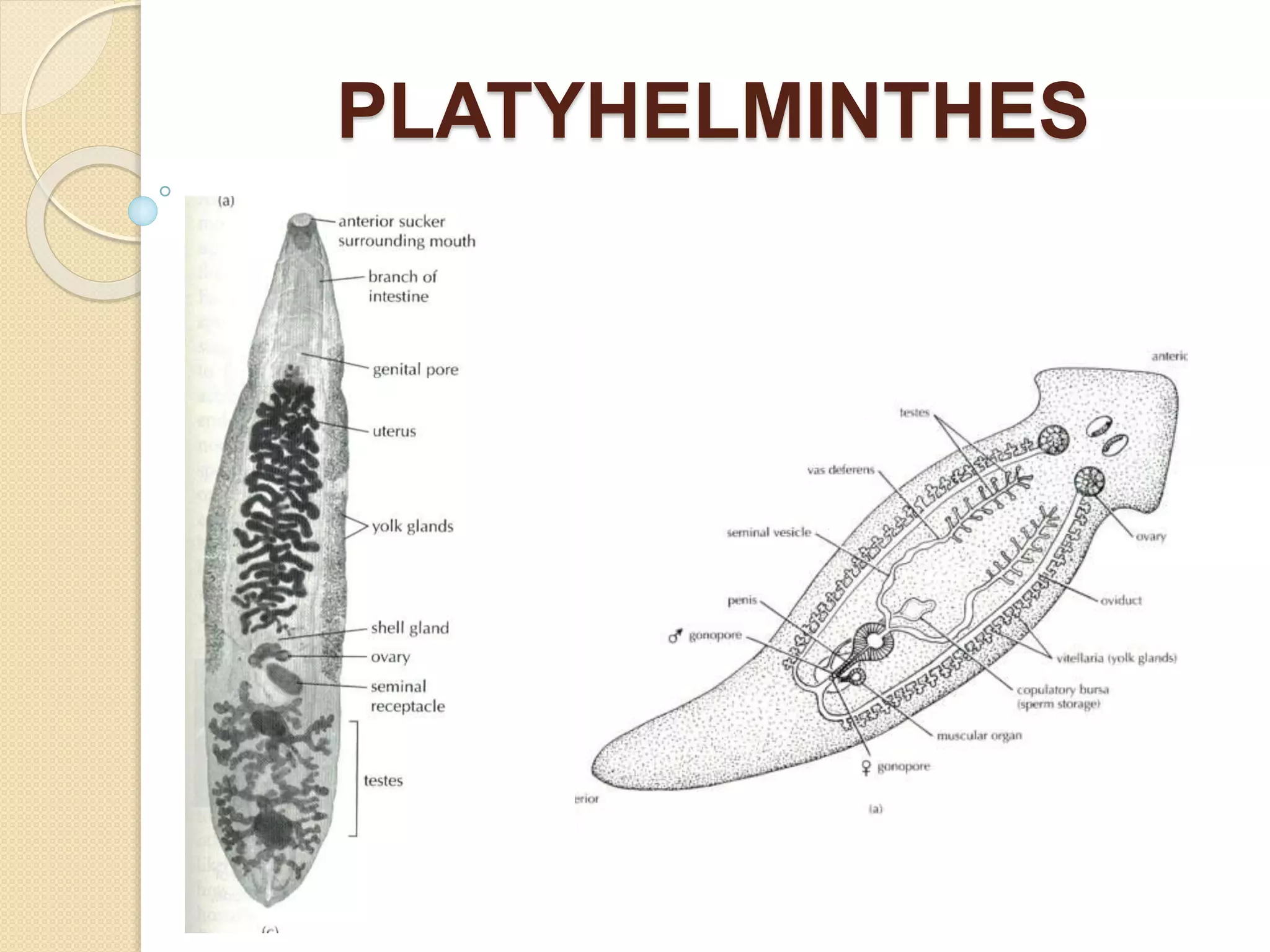
PLATYHELMINTHES
PLATYS HELMINTHES
FLAT WORMS
General Characteristics
 Free-living or parasitic
 The simplest animals that are bilaterally
symmetrical,
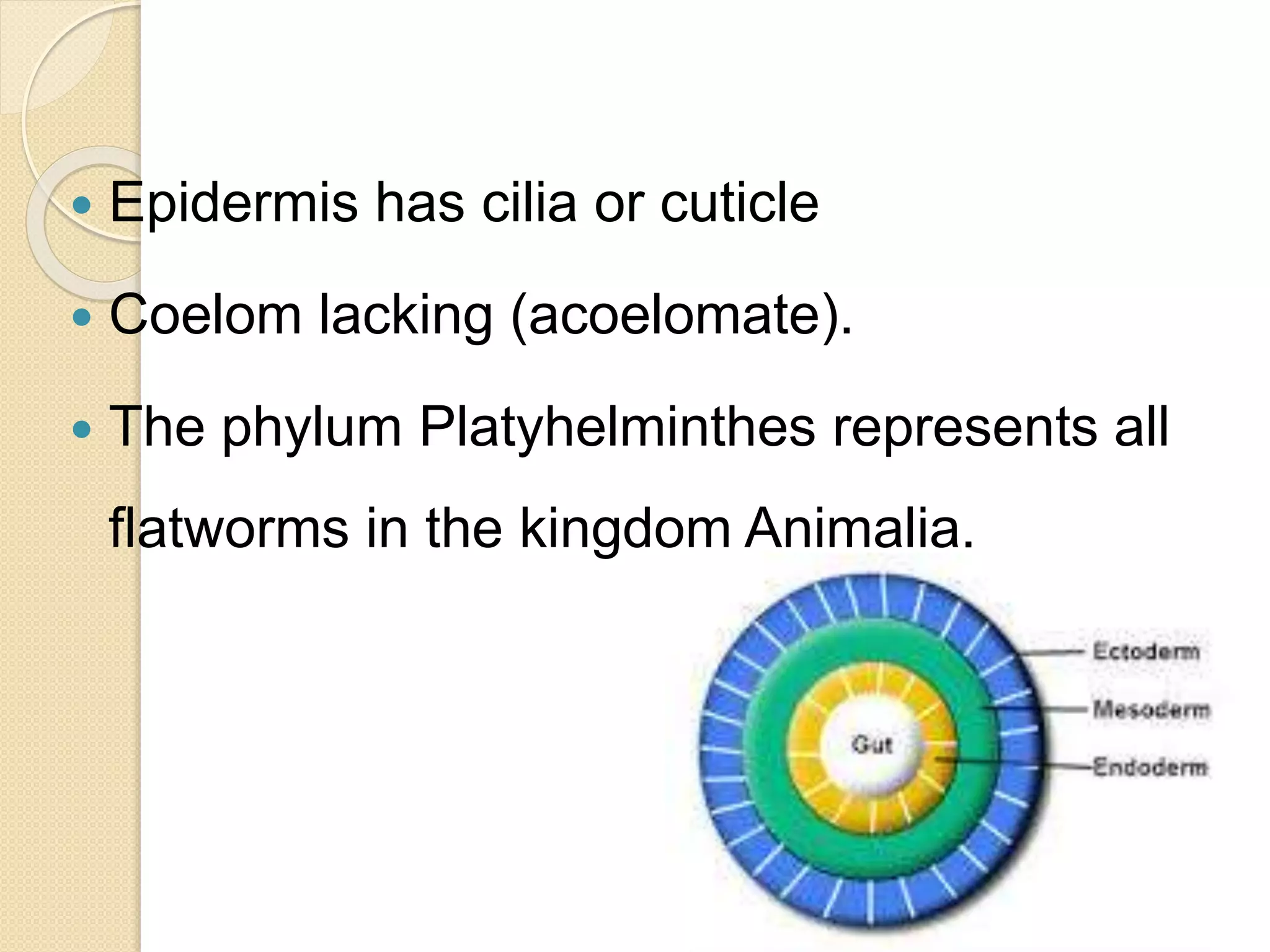
 First animals with 3 germ layers -
triploblastic
◦ Ectodermis
◦ Mesodermis
◦ Endodermis
 Epidermis has cilia or cuticle
 Coelom lacking (acoelomate).
 The phylum Platyhelminthes represents all
flatworms in the kingdom Animalia.
CLASSE
S
 Class Turbellaria - Free Living Worms
 Class Trematoda - Flukes
 Class Monogenea - Flukes
 Class Cestoidea - Tapeworms
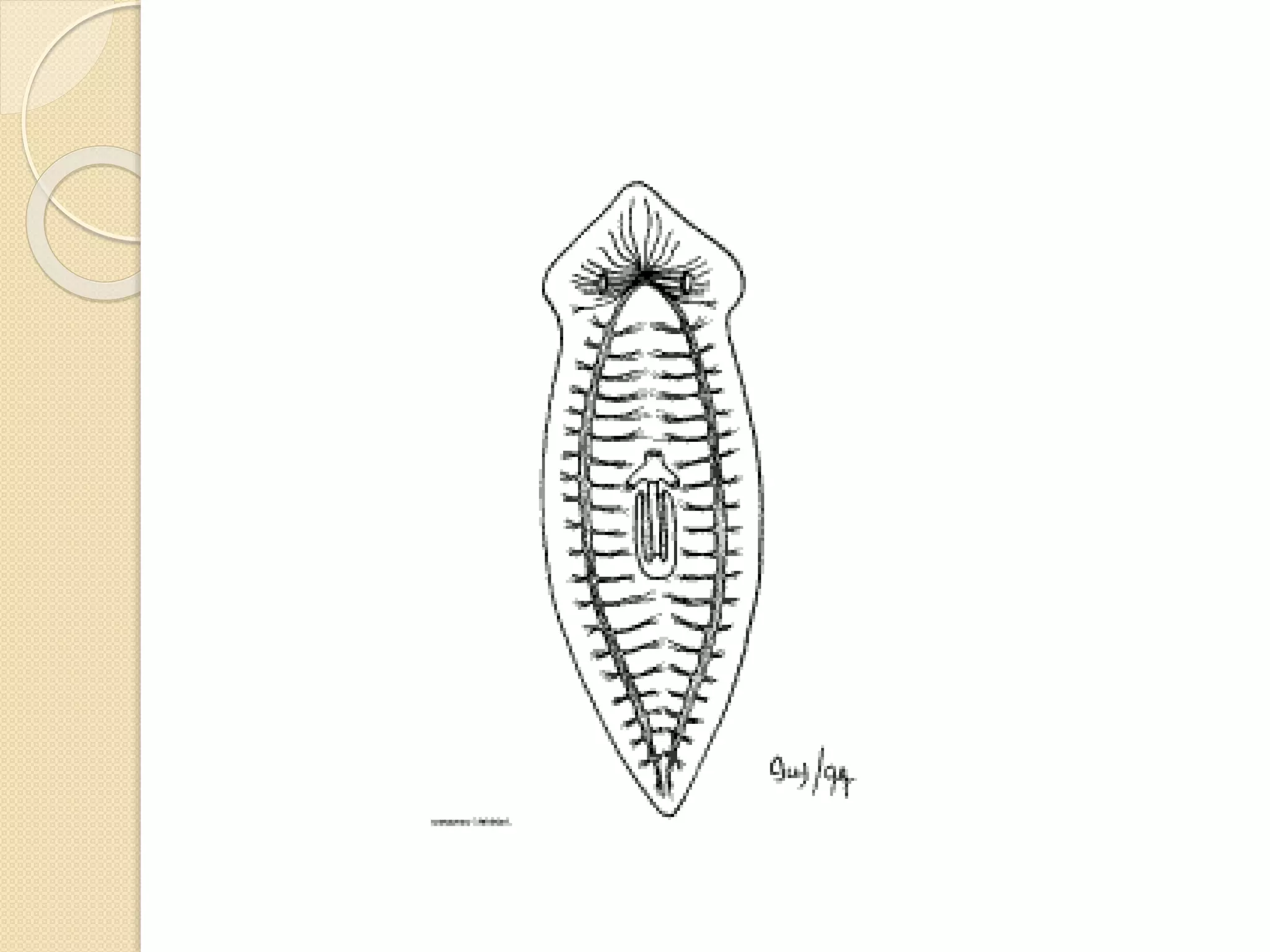
Turbellaria
 (e.g., Planaria)
 They are mostly free-living, and range
from 1 mm (0.039 in) to 600 mm (24 in) in
length.
 Most are predators or scavengers, and
terrestrial species are mostly nocturnal
and live in shaded, humid locations, such
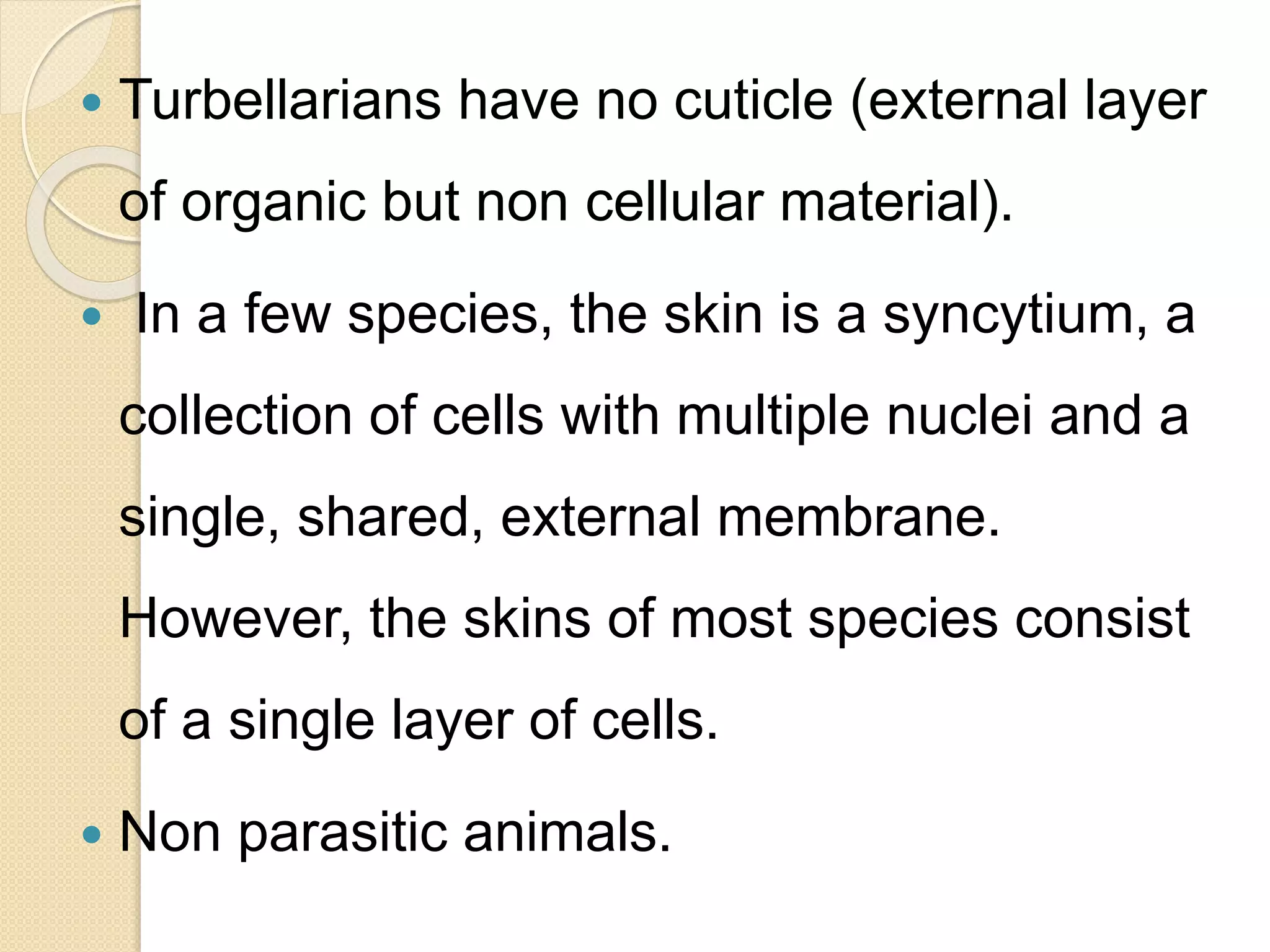
 Turbellarians have no cuticle (external layer
of organic but non cellular material).
 In a few species, the skin is a syncytium, a
collection of cells with multiple nuclei and a
single, shared, external membrane.
However, the skins of most species consist
of a single layer of cells.
 Non parasitic animals.
 Some species also have a protrusible
pharynx that captures food and transfers it
into the mouth
 Can be carnivores or scavenge on dead
animals and detritus.
 On the anterior end (head) are eyes.
 The anterior end possesses lateral
projections called auricles.
Phylum Platyhelminthes 8
• Loosely connected mesenchyme cells
surrounds the gut.
• Locomotion
Swim or crawl by cilliary population.
• Feeding & Digestion
Mouth is an opening located on the
mid ventral line.
• Food goes through this mouth and pharynx
like tube into gastro vascular cavity.
 When the animal is feeding pharanyx is
projected out of the mouth.
 There is no anus, so undigested food
particles are ejected through mouth.
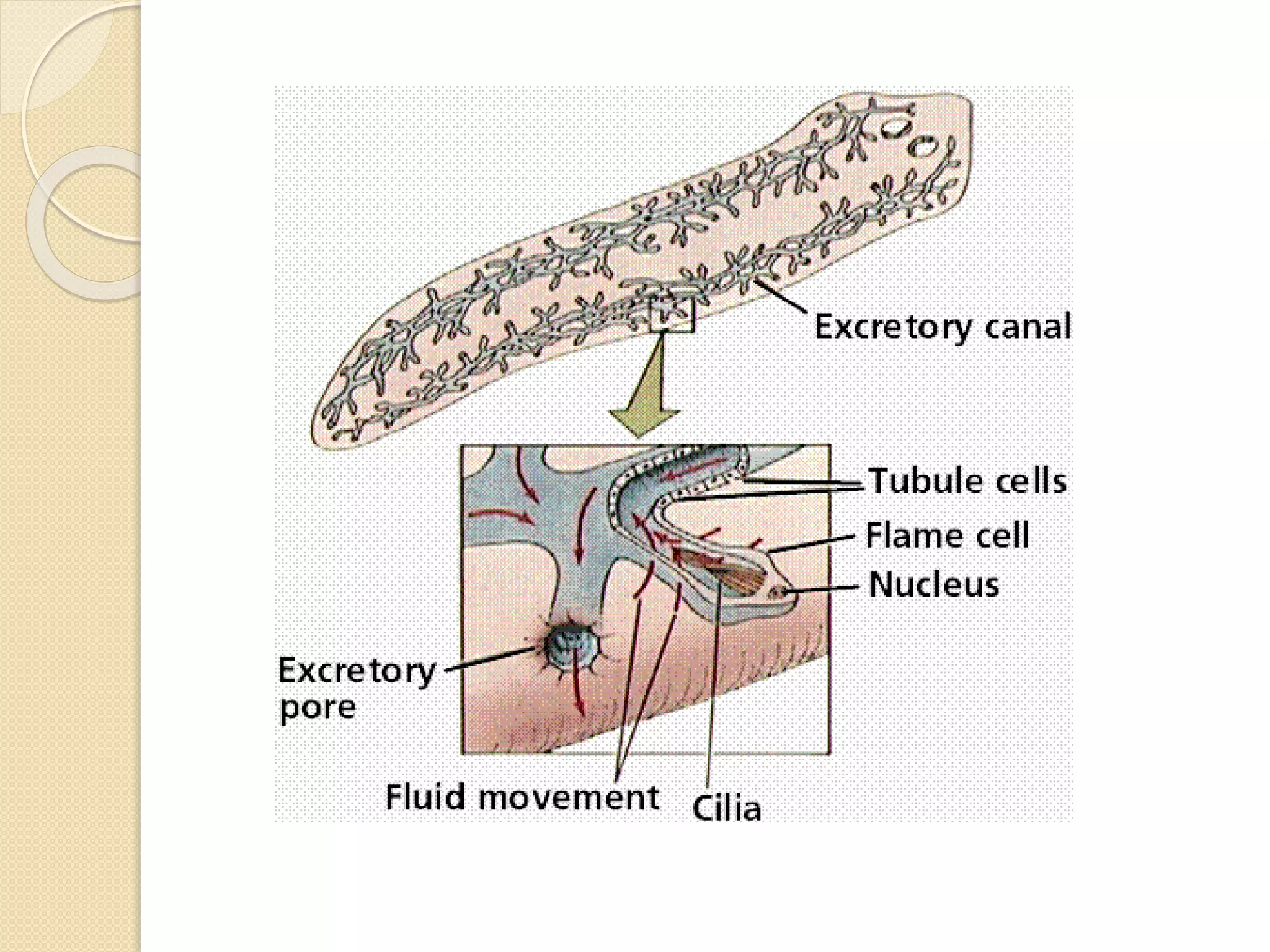
 Excretion
 Consists of an interconnecting series of
excretory canals.
 Cillia containing flame cells are found at the
end of the side branches of these canals.
 These flame cells are most important for
water balance.
 Reproduction
 Asexually – Transverse fission
 Sexually – Copulation
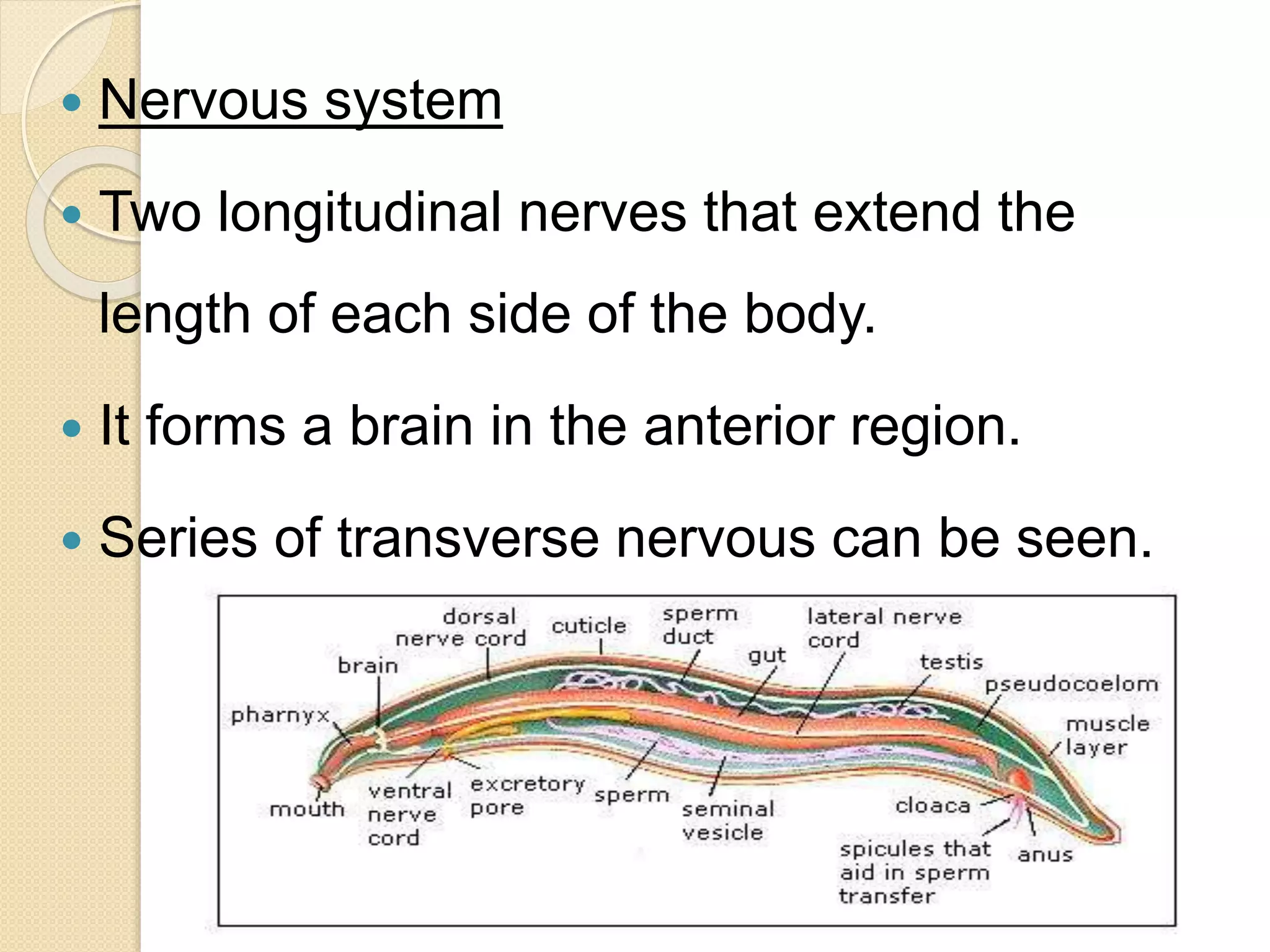
 Nervous system
 Two longitudinal nerves that extend the
length of each side of the body.
 It forms a brain in the anterior region.
 Series of transverse nervous can be seen.
Parasites ???
Class Trematoda
 Live as endoparaeyte/ endoparacyte.
 Size is less than 1mm to more than 8cm.
 Oval or elongate shaped
 Digestive system, nervous system redused
compared to Turbellaria.
 (e.g., Fascioloaris, Clonorchis)
 Reproduction
Class Monogenea
 Free-living flatworms are predators.
 Live in water or in shaded ,humid
terrestrial environment such as leaf
litter.
 Ciliated larvae.
 Most
distinguishing
feature is the
presence of a large
attachment organ
called an
opistohaptor
 Have a single host.
Class Cestoda
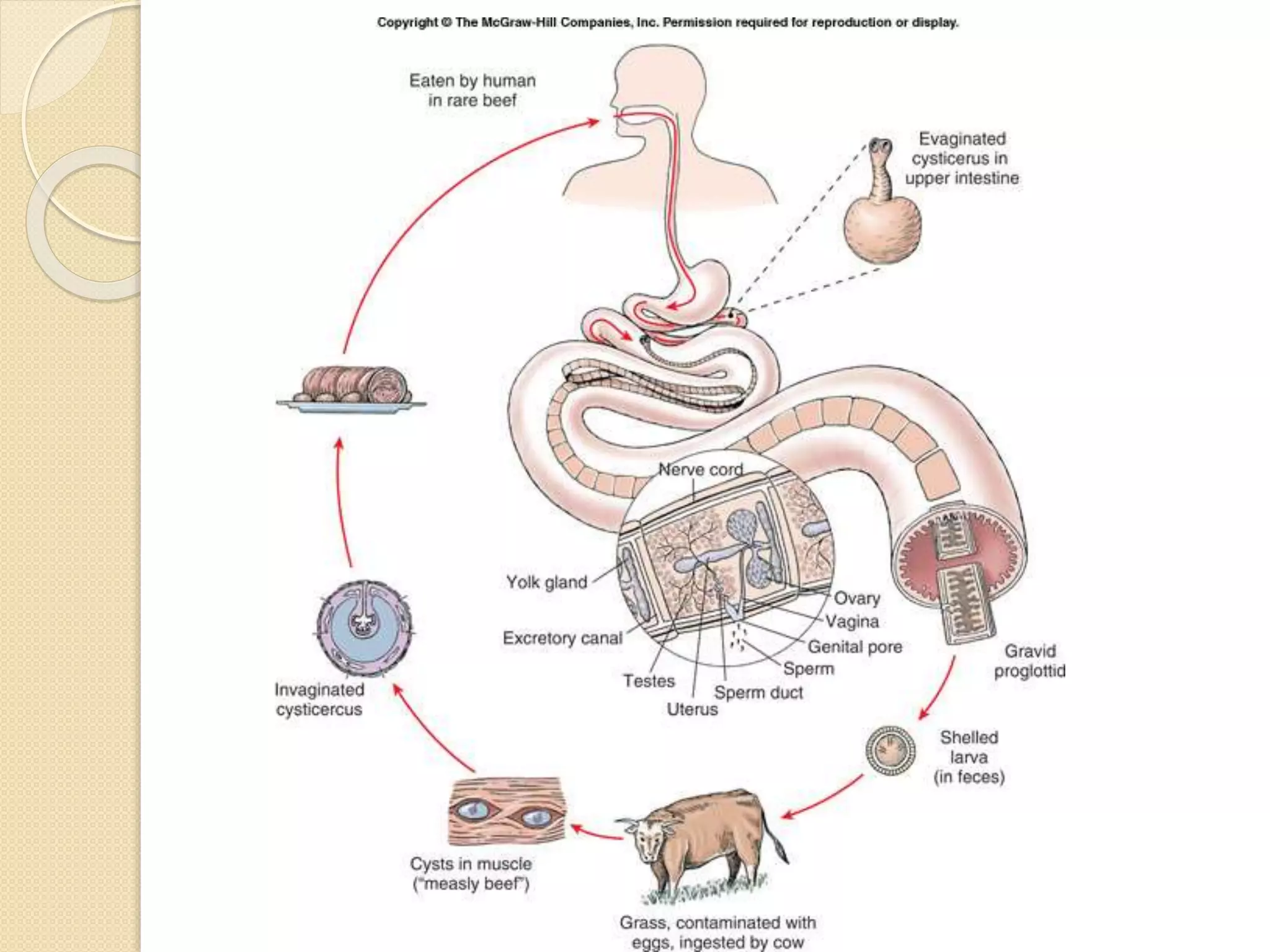
 Endoparasites (E.g. Tapeworms)
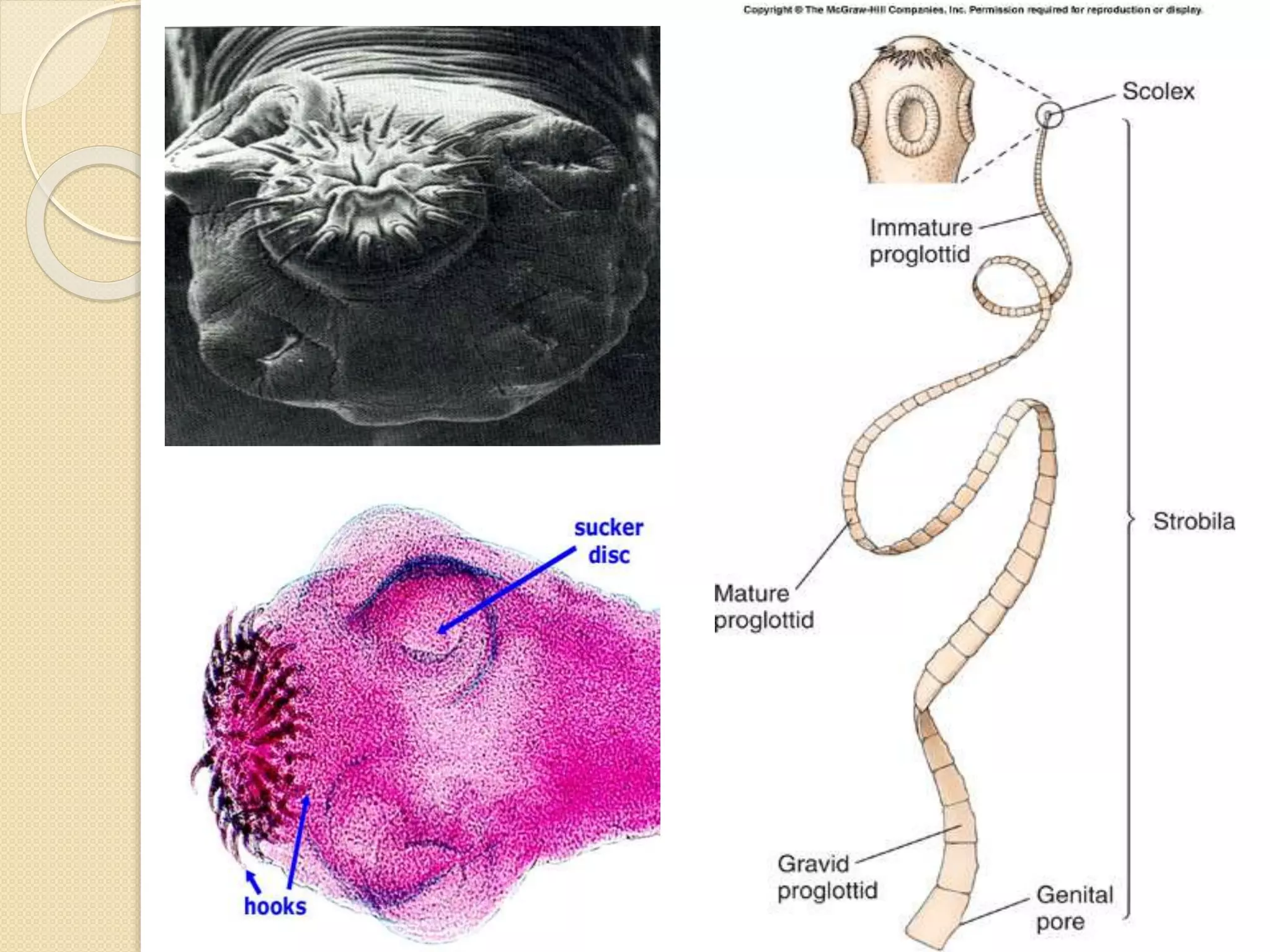
 The anterior end has scolex. It used to
attach to the hosts body.
 Near scolex there is rostrellum that contains
hooks, scolex also include suckers.
 Hooks can withdraw or extend.
 From strobila makes up body. Strobila is a
collection of proglottids.
 Most are adapted to live inside the gut of the
host.
 4ft to 10ft ( Sometimes 40 feets)
 Body is covered by protective cuticle.
 Digestive system absent
 Reproduction
 They are hermaphroditic.
Body plan
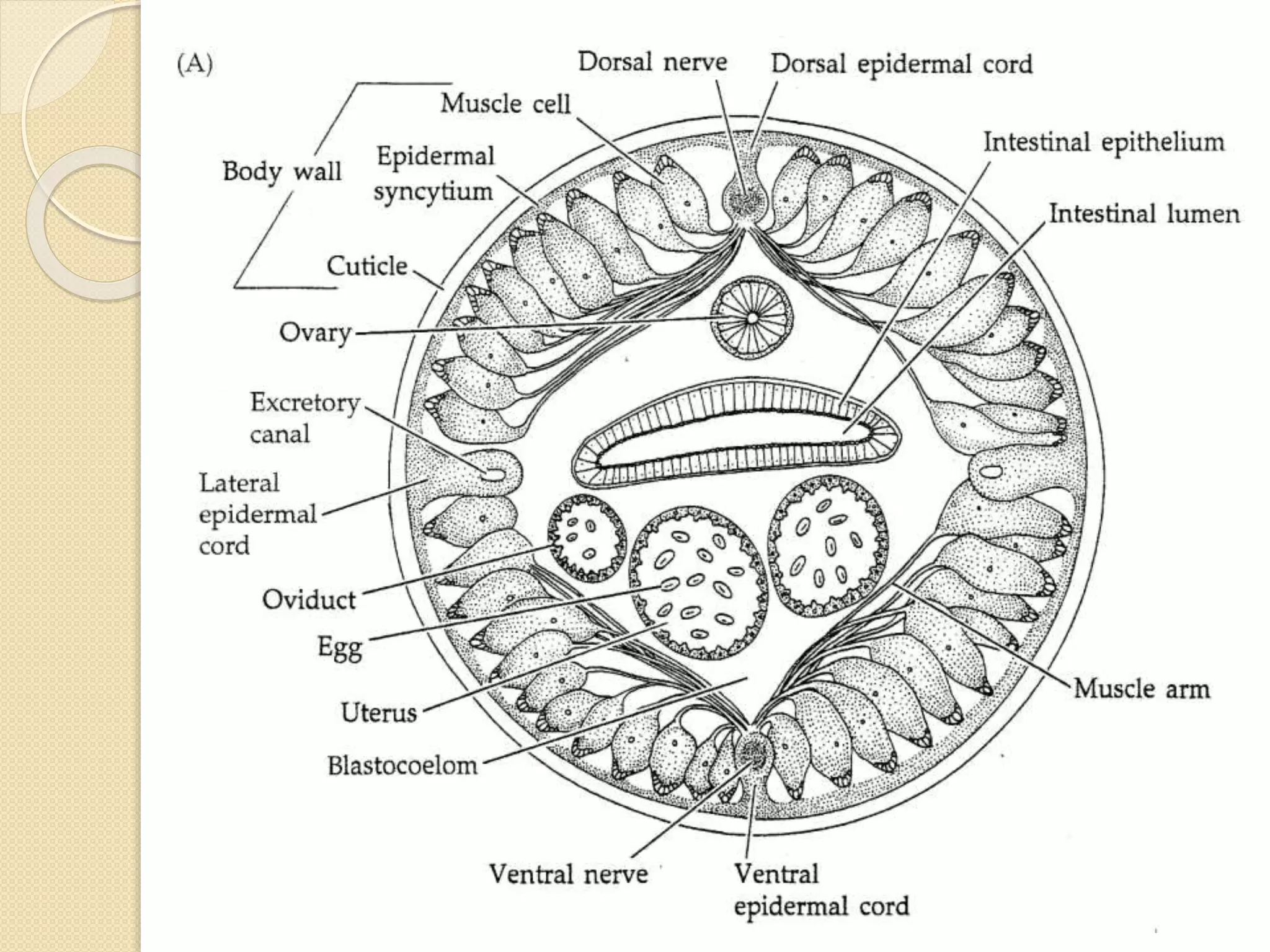
 Outer Body Covering
• The body of some Platyhelminthes (e.g.,
turbellarians ) is covered by a ciliated epidermis
• Epidermal cells contain rod-shaped structures
called rhabdites that when released into the
surrounding water, expand and form a protective
mucous coat around the animal.
• The outer body covering of other platyhelminthes
(e.g., parasitic forms) is a non-ciliated tegument
• The tegument is referred to as a syncytial
epithelium
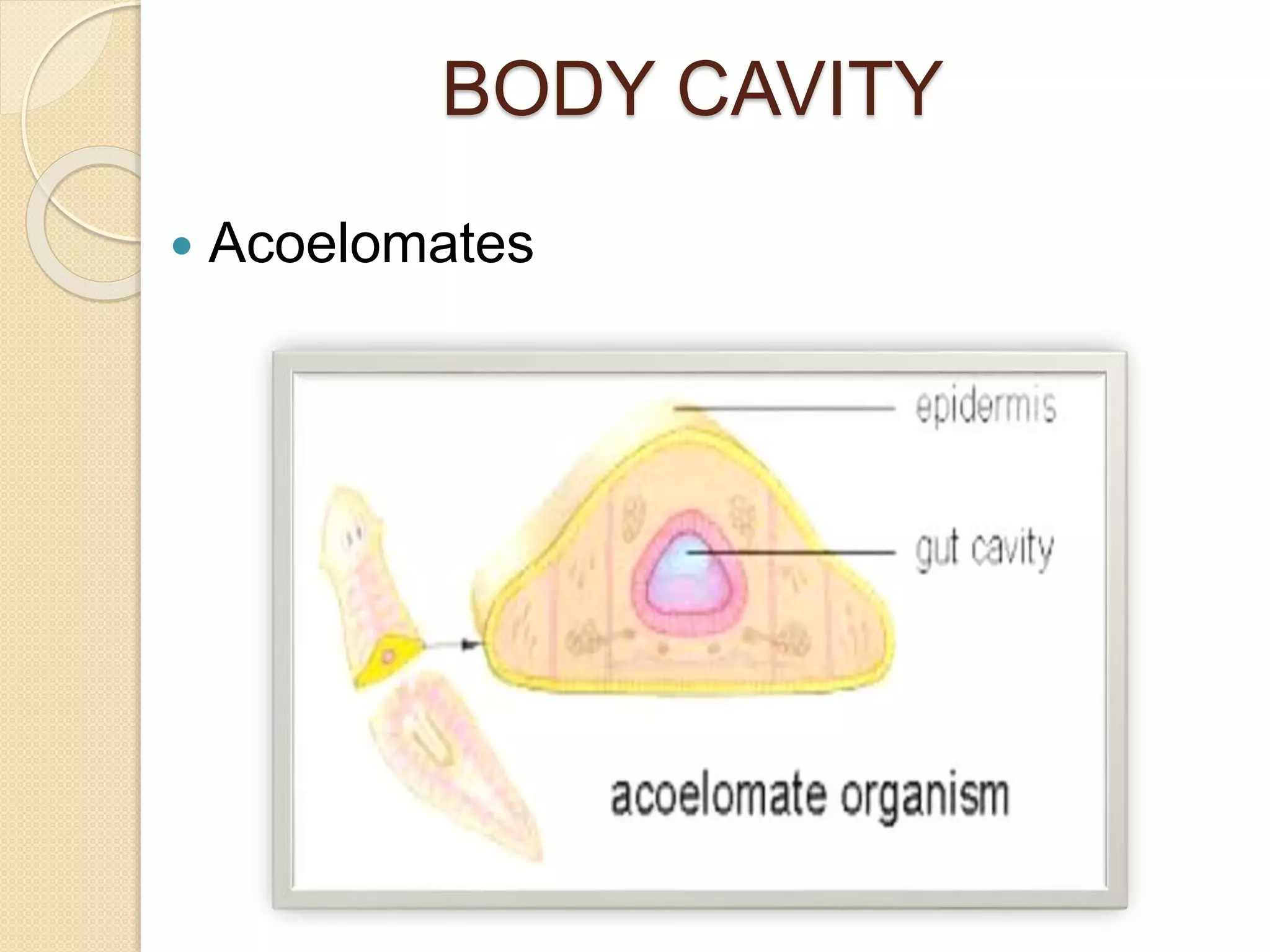
BODY CAVITY
 Acoelomates
SYMMETRY
 Bilaterally symmetrical
 Dorsoventrally flattened
Digestive System
• Some of the Platyhelminthes possess a
digestive system, with a mouth, pharynx,
and a branching intestine from which the
nutrients are absorbed
• The intestine, with only one opening, is a
blind system.
NERVOUS SYSTEM
 Anterior cerebral ganglia, longitudinal
nerve cords, nerve cords, and some
lateral nerve
 Sensory organs
( e.g. Eye spots, statocytes )
Reproduction
 Platyhelminthes reproduction occurring
types
Asexual reproduction
Sexual reproduction
Excretory System
 Flame cells, the beating of their flagella
extract water that contains wastes and some
reusable material, and drive it into networks of
tube cells which are lined with flagella and
microvilli.
 The tube cells flagella drive the water towards
exits called nephridiopores
 Combinations of flame cells and tube cells
are called protonephredia.
Distinguished feature of phylum
Platyhelminthes
 Flame cells.
Diseases cause by
Platyhelminthes for fish
 Intense monogenean infections induce
respiratory and osmoregulation dysfunctions.
 Metacarcarial infection
It may affect the growth and survival
or disfigure fish so they lose their market value
as a food or ornamental profucts.
 Cestodiasis
Low number of pleurocercoides may
be located in vital organs such as the brain,
heart, spleen, kidney or gonad and have a
devastating affects on the fish.
Presence or absence of cilia
 Free living adult have cilia
 Larval stage of parasitic animals have
cilia
Platyhelminthes

Platyhelminthes

  • 1.
  • 2.
  • 3.
    General Characteristics  Free-livingor parasitic  The simplest animals that are bilaterally symmetrical,  First animals with 3 germ layers - triploblastic ◦ Ectodermis ◦ Mesodermis ◦ Endodermis
  • 4.
     Epidermis hascilia or cuticle  Coelom lacking (acoelomate).  The phylum Platyhelminthes represents all flatworms in the kingdom Animalia.
  • 5.
    CLASSE S  Class Turbellaria- Free Living Worms  Class Trematoda - Flukes  Class Monogenea - Flukes  Class Cestoidea - Tapeworms
  • 6.
    Turbellaria  (e.g., Planaria) They are mostly free-living, and range from 1 mm (0.039 in) to 600 mm (24 in) in length.  Most are predators or scavengers, and terrestrial species are mostly nocturnal and live in shaded, humid locations, such
  • 7.
     Turbellarians haveno cuticle (external layer of organic but non cellular material).  In a few species, the skin is a syncytium, a collection of cells with multiple nuclei and a single, shared, external membrane. However, the skins of most species consist of a single layer of cells.  Non parasitic animals.
  • 8.
     Some speciesalso have a protrusible pharynx that captures food and transfers it into the mouth  Can be carnivores or scavenge on dead animals and detritus.  On the anterior end (head) are eyes.  The anterior end possesses lateral projections called auricles. Phylum Platyhelminthes 8
  • 9.
    • Loosely connectedmesenchyme cells surrounds the gut. • Locomotion Swim or crawl by cilliary population. • Feeding & Digestion Mouth is an opening located on the mid ventral line. • Food goes through this mouth and pharynx like tube into gastro vascular cavity.
  • 11.
     When theanimal is feeding pharanyx is projected out of the mouth.  There is no anus, so undigested food particles are ejected through mouth.  Excretion  Consists of an interconnecting series of excretory canals.
  • 13.
     Cillia containingflame cells are found at the end of the side branches of these canals.  These flame cells are most important for water balance.  Reproduction  Asexually – Transverse fission  Sexually – Copulation
  • 14.
     Nervous system Two longitudinal nerves that extend the length of each side of the body.  It forms a brain in the anterior region.  Series of transverse nervous can be seen.
  • 15.
  • 16.
    Class Trematoda  Liveas endoparaeyte/ endoparacyte.  Size is less than 1mm to more than 8cm.  Oval or elongate shaped  Digestive system, nervous system redused compared to Turbellaria.  (e.g., Fascioloaris, Clonorchis)
  • 17.
  • 19.
    Class Monogenea  Free-livingflatworms are predators.  Live in water or in shaded ,humid terrestrial environment such as leaf litter.  Ciliated larvae.
  • 20.
     Most distinguishing feature isthe presence of a large attachment organ called an opistohaptor  Have a single host.
  • 21.
    Class Cestoda  Endoparasites(E.g. Tapeworms)  The anterior end has scolex. It used to attach to the hosts body.  Near scolex there is rostrellum that contains hooks, scolex also include suckers.  Hooks can withdraw or extend.
  • 23.
     From strobilamakes up body. Strobila is a collection of proglottids.  Most are adapted to live inside the gut of the host.  4ft to 10ft ( Sometimes 40 feets)  Body is covered by protective cuticle.  Digestive system absent  Reproduction
  • 25.
     They arehermaphroditic.
  • 26.
    Body plan  OuterBody Covering • The body of some Platyhelminthes (e.g., turbellarians ) is covered by a ciliated epidermis • Epidermal cells contain rod-shaped structures called rhabdites that when released into the surrounding water, expand and form a protective mucous coat around the animal.
  • 27.
    • The outerbody covering of other platyhelminthes (e.g., parasitic forms) is a non-ciliated tegument • The tegument is referred to as a syncytial epithelium
  • 28.
  • 29.
  • 30.
    Digestive System • Someof the Platyhelminthes possess a digestive system, with a mouth, pharynx, and a branching intestine from which the nutrients are absorbed • The intestine, with only one opening, is a blind system.
  • 32.
    NERVOUS SYSTEM  Anteriorcerebral ganglia, longitudinal nerve cords, nerve cords, and some lateral nerve  Sensory organs ( e.g. Eye spots, statocytes )
  • 34.
    Reproduction  Platyhelminthes reproductionoccurring types Asexual reproduction Sexual reproduction
  • 35.
    Excretory System  Flamecells, the beating of their flagella extract water that contains wastes and some reusable material, and drive it into networks of tube cells which are lined with flagella and microvilli.  The tube cells flagella drive the water towards exits called nephridiopores
  • 36.
     Combinations offlame cells and tube cells are called protonephredia.
  • 37.
    Distinguished feature ofphylum Platyhelminthes  Flame cells.
  • 38.
    Diseases cause by Platyhelminthesfor fish  Intense monogenean infections induce respiratory and osmoregulation dysfunctions.  Metacarcarial infection It may affect the growth and survival or disfigure fish so they lose their market value as a food or ornamental profucts.
  • 39.
     Cestodiasis Low numberof pleurocercoides may be located in vital organs such as the brain, heart, spleen, kidney or gonad and have a devastating affects on the fish.
  • 40.
    Presence or absenceof cilia  Free living adult have cilia  Larval stage of parasitic animals have cilia