Prescription
• A prescription is a written order by a registered
physician directing the pharmacist to prepare or
dispense pharmacological agents for the
diagnosis, prevention or treatment of a disease.
• Broadly Prescription has 4 components:
1. Superscription
2. Inscription
3. Subscription
4. Signature
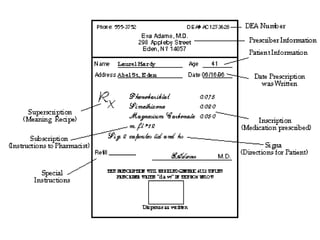
• The superscription which consists of heading
where the symbol Rx(an abbreviation for recipe,
the Latin for take thou) is found. The Rx symbol
comes before the inscription.
• The inscription is also called the body of the
prescription, and provides the name &
quantities of the chief ingredients of the
prescription. Also in the inscription you will find
dose & dosage form such as tablet, capsule,
suspension, syrup, etc.
• The subscription which gives specific direction
for pharmacist on how to compound the
medication. These direction to pharmacist are
usually expressed in contracted Latin or may
consists of short sentence such as “make a
solution”, “mix & place into 10 capsules” or
“dispense 10 tablets”.
• The signature (transcription) gives instruction to
patient on how much, when & how long the
drug is taken.
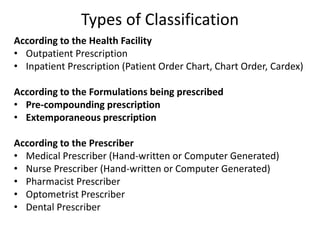
Types of Classification
According to the Health Facility
• Outpatient Prescription
• Inpatient Prescription (Patient Order Chart, Chart Order, Cardex)
According to the Formulations being prescribed
• Pre-compounding prescription
• Extemporaneous prescription
According to the Prescriber
• Medical Prescriber (Hand-written or Computer Generated)
• Nurse Prescriber (Hand-written or Computer Generated)
• Pharmacist Prescriber
• Optometrist Prescriber
• Dental Prescriber
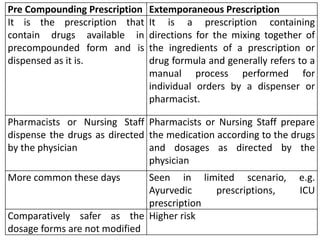
Pre Compounding Prescription Extemporaneous Prescription
It is the prescription that
contain drugs available in
precompounded form and is
dispensed as it is.
It is a prescription containing
directions for the mixing together of
the ingredients of a prescription or
drug formula and generally refers to a
manual process performed for
individual orders by a dispenser or
pharmacist.
Pharmacists or Nursing Staff
dispense the drugs as directed
by the physician
Pharmacists or Nursing Staff prepare
the medication according to the drugs
and dosages as directed by the
physician
More common these days Seen in limited scenario, e.g.
Ayurvedic prescriptions, ICU
prescription
Comparatively safer as the
dosage forms are not modified
Higher risk
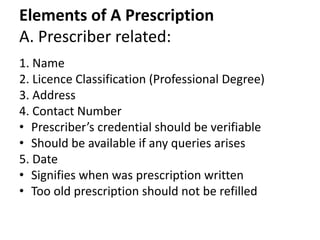
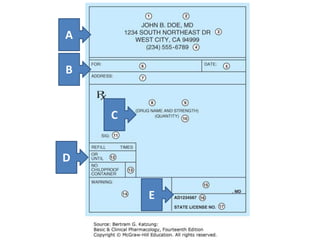
Elements of A Prescription
A. Prescriber related:
1. Name
2. Licence Classification (Professional Degree)
3. Address
4. Contact Number
• Prescriber’s credential should be verifiable
• Should be available if any queries arises
5. Date
• Signifies when was prescription written
• Too old prescription should not be refilled
B. Patient related:
6. Name
7. Address
• Proper identification
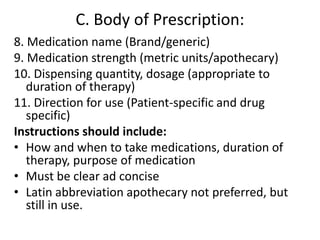
C. Body of Prescription:
8. Medication name (Brand/generic)
9. Medication strength (metric units/apothecary)
10. Dispensing quantity, dosage (appropriate to
duration of therapy)
11. Direction for use (Patient-specific and drug
specific)
Instructions should include:
• How and when to take medications, duration of
therapy, purpose of medication
• Must be clear ad concise
• Latin abbreviation apothecary not preferred, but
still in use.
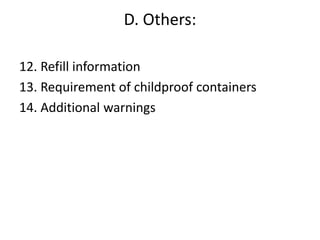
D. Others:
12. Refill information
13. Requirement of childproof containers
14. Additional warnings
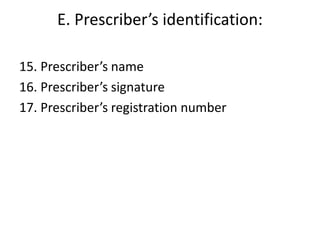
E. Prescriber’s identification:
15. Prescriber’s name
16. Prescriber’s signature
17. Prescriber’s registration number
A
B
C
D
E
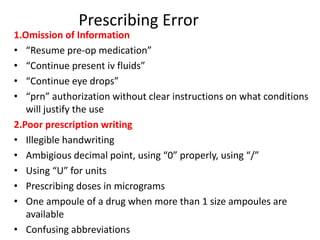
Prescribing Error
1.Omission of Information
• “Resume pre-op medication”
• “Continue present iv fluids”
• “Continue eye drops”
• “prn” authorization without clear instructions on what conditions
will justify the use
2.Poor prescription writing
• Illegible handwriting
• Ambigious decimal point, using “0” properly, using “/”
• Using “U” for units
• Prescribing doses in micrograms
• One ampoule of a drug when more than 1 size ampoules are
available
• Confusing abbreviations
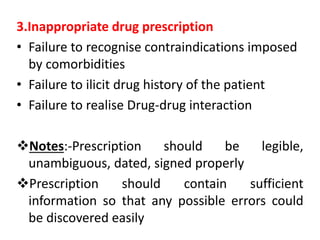
3.Inappropriate drug prescription
• Failure to recognise contraindications imposed
by comorbidities
• Failure to ilicit drug history of the patient
• Failure to realise Drug-drug interaction
Notes:-Prescription should be legible,
unambiguous, dated, signed properly
Prescription should contain sufficient
information so that any possible errors could
be discovered easily

Prescription

  • 1.
    Prescription • A prescriptionis a written order by a registered physician directing the pharmacist to prepare or dispense pharmacological agents for the diagnosis, prevention or treatment of a disease. • Broadly Prescription has 4 components: 1. Superscription 2. Inscription 3. Subscription 4. Signature
  • 2.
    • The superscriptionwhich consists of heading where the symbol Rx(an abbreviation for recipe, the Latin for take thou) is found. The Rx symbol comes before the inscription. • The inscription is also called the body of the prescription, and provides the name & quantities of the chief ingredients of the prescription. Also in the inscription you will find dose & dosage form such as tablet, capsule, suspension, syrup, etc.
  • 3.
    • The subscriptionwhich gives specific direction for pharmacist on how to compound the medication. These direction to pharmacist are usually expressed in contracted Latin or may consists of short sentence such as “make a solution”, “mix & place into 10 capsules” or “dispense 10 tablets”. • The signature (transcription) gives instruction to patient on how much, when & how long the drug is taken.
  • 5.
    Types of Classification Accordingto the Health Facility • Outpatient Prescription • Inpatient Prescription (Patient Order Chart, Chart Order, Cardex) According to the Formulations being prescribed • Pre-compounding prescription • Extemporaneous prescription According to the Prescriber • Medical Prescriber (Hand-written or Computer Generated) • Nurse Prescriber (Hand-written or Computer Generated) • Pharmacist Prescriber • Optometrist Prescriber • Dental Prescriber
  • 6.
    Pre Compounding PrescriptionExtemporaneous Prescription It is the prescription that contain drugs available in precompounded form and is dispensed as it is. It is a prescription containing directions for the mixing together of the ingredients of a prescription or drug formula and generally refers to a manual process performed for individual orders by a dispenser or pharmacist. Pharmacists or Nursing Staff dispense the drugs as directed by the physician Pharmacists or Nursing Staff prepare the medication according to the drugs and dosages as directed by the physician More common these days Seen in limited scenario, e.g. Ayurvedic prescriptions, ICU prescription Comparatively safer as the dosage forms are not modified Higher risk
  • 7.
    Elements of APrescription A. Prescriber related: 1. Name 2. Licence Classification (Professional Degree) 3. Address 4. Contact Number • Prescriber’s credential should be verifiable • Should be available if any queries arises 5. Date • Signifies when was prescription written • Too old prescription should not be refilled
  • 8.
    B. Patient related: 6.Name 7. Address • Proper identification
  • 9.
    C. Body ofPrescription: 8. Medication name (Brand/generic) 9. Medication strength (metric units/apothecary) 10. Dispensing quantity, dosage (appropriate to duration of therapy) 11. Direction for use (Patient-specific and drug specific) Instructions should include: • How and when to take medications, duration of therapy, purpose of medication • Must be clear ad concise • Latin abbreviation apothecary not preferred, but still in use.
  • 10.
    D. Others: 12. Refillinformation 13. Requirement of childproof containers 14. Additional warnings
  • 11.
    E. Prescriber’s identification: 15.Prescriber’s name 16. Prescriber’s signature 17. Prescriber’s registration number
  • 12.
  • 13.
    Prescribing Error 1.Omission ofInformation • “Resume pre-op medication” • “Continue present iv fluids” • “Continue eye drops” • “prn” authorization without clear instructions on what conditions will justify the use 2.Poor prescription writing • Illegible handwriting • Ambigious decimal point, using “0” properly, using “/” • Using “U” for units • Prescribing doses in micrograms • One ampoule of a drug when more than 1 size ampoules are available • Confusing abbreviations
  • 14.
    3.Inappropriate drug prescription •Failure to recognise contraindications imposed by comorbidities • Failure to ilicit drug history of the patient • Failure to realise Drug-drug interaction Notes:-Prescription should be legible, unambiguous, dated, signed properly Prescription should contain sufficient information so that any possible errors could be discovered easily