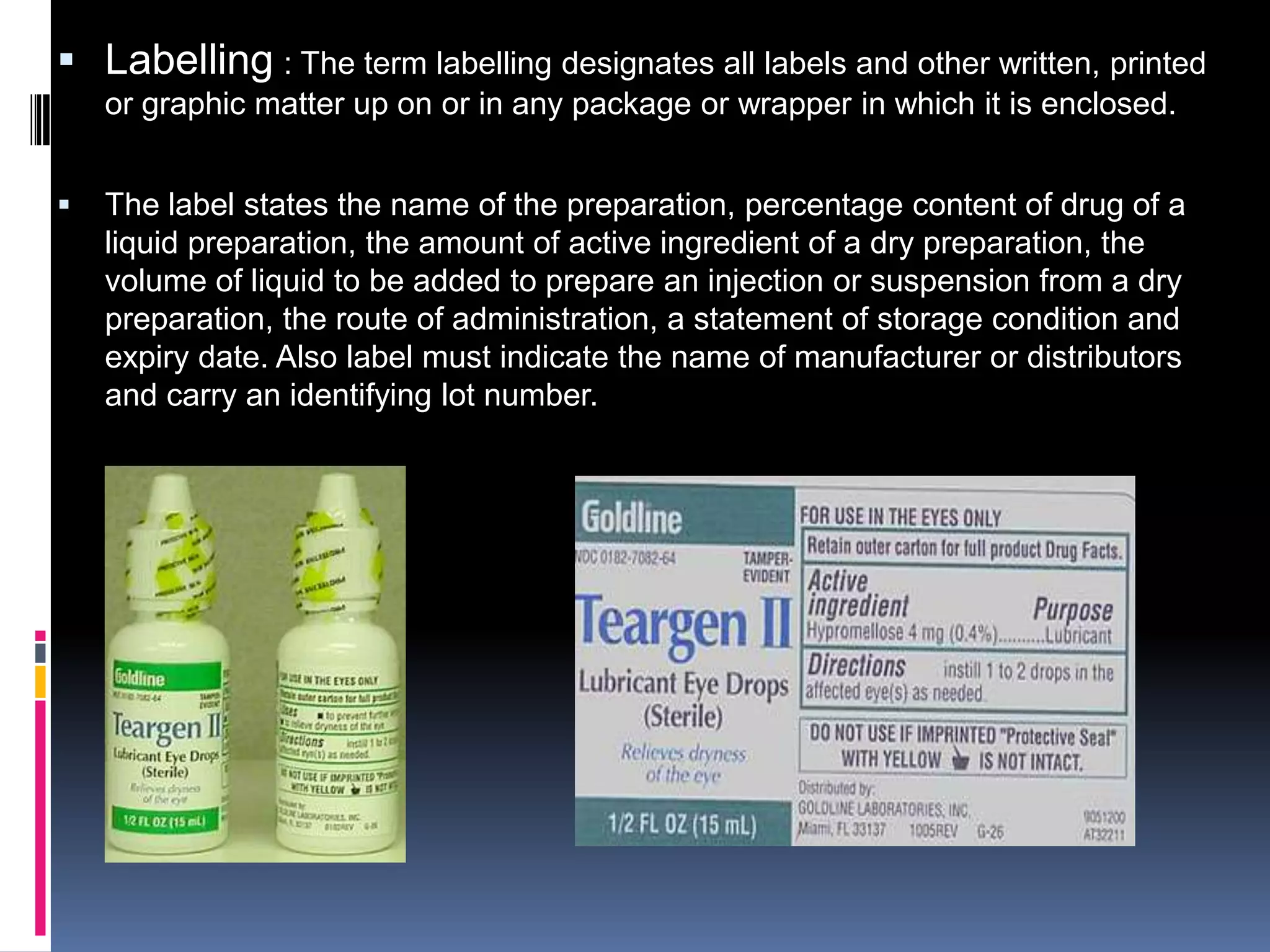
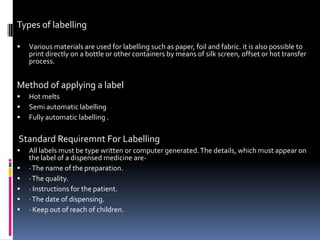
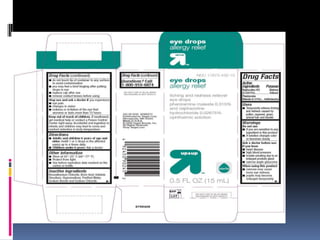
 Labelling : The term labelling designates all labels and other written, printed
    or graphic matter up on or in any package or wrapper in which it is enclosed.


   The label states the name of the preparation, percentage content of drug of a
    liquid preparation, the amount of active ingredient of a dry preparation, the
    volume of liquid to be added to prepare an injection or suspension from a dry
    preparation, the route of administration, a statement of storage condition and
    expiry date. Also label must indicate the name of manufacturer or distributors
    and carry an identifying lot number.
Types of labelling

   Various materials are used for labelling such as paper, foil and fabric. it is also possible to
    print directly on a bottle or other containers by means of silk screen, offset or hot transfer
    process.


Method of applying a label
   Hot melts
   Semi automatic labelling
   Fully automatic labelling .

Standard Requiremnt For Labelling
   All labels must be type written or computer generated. The details, which must appear on
    the label of a dispensed medicine are-
   · The name of the preparation.
   · The quality.
   · Instructions for the patient.
   · The date of dispensing.
   · Keep out of reach of children.
Additional Labellng Requirement:
   storage
   temperature
   humidity
   light
   Instructions to the patient how to use ,
   Batch number
   Expiary date
   INSTRUCTIONS
   Tip of the dropper should not be touched with fingers
   If there is any leakage it should not be used
   After instilling the drops into the eye,if any irritation is produced the patient
    must be refer back to the physician


Labelling Of Ophthalmic Preparation:
   The label should state the name and concentration of any antimicrobial
    preservative or other substance added to the preparation. For multidose
    containers the label should state the period after opening the containers after
    which the contents should not be used.
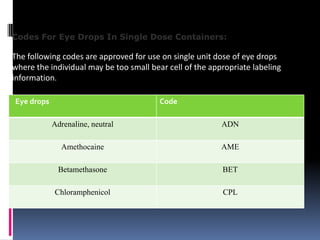
Codes For Eye Drops In Single Dose Containers:

The following codes are approved for use on single unit dose of eye drops
where the individual may be too small bear cell of the appropriate labeling
information.

Eye drops                                Code

            Adrenaline, neutral                           ADN

              Amethocaine                                 AME

             Betamethasone                                BET

            Chloramphenicol                               CPL
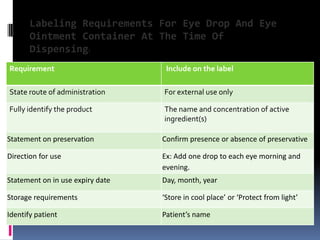
Labeling Requirements For Eye Drop And Eye
       Ointment Container At The Time Of
       Dispensing:
Requirement                        Include on the label

State route of administration     For external use only

Fully identify the product        The name and concentration of active
                                  ingredient(s)

Statement on preservation         Confirm presence or absence of preservative

Direction for use                 Ex: Add one drop to each eye morning and
                                  evening.
Statement on in use expiry date   Day, month, year

Storage requirements              ‘Store in cool place’ or ‘Protect from light’

Identify patient                  Patient’s name
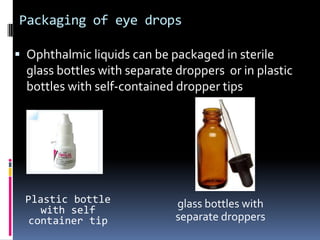
Packaging of eye drops

 Ophthalmic liquids can be packaged in sterile
  glass bottles with separate droppers or in plastic
  bottles with self-contained dropper tips


  Plastic bottle              glass bottles with
     with self
  container tip               separate droppers
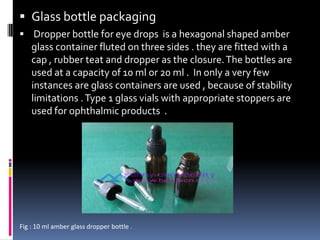
 Glass bottle packaging
 Dropper bottle for eye drops is a hexagonal shaped amber
    glass container fluted on three sides . they are fitted with a
    cap , rubber teat and dropper as the closure. The bottles are
    used at a capacity of 10 ml or 20 ml . In only a very few
    instances are glass containers are used , because of stability
    limitations . Type 1 glass vials with appropriate stoppers are
    used for ophthalmic products .


Fig : 10 ml amber glass dropper bottle .
 Plastic packaging
 Currently all most all commercially available ophthalmic
  products are packaged in plastic containers . Advantages of
  plastic containers are ease of use , little breakage , less
  spillage . this led to universal acceptance of plastic containers.
  Plastic packaging components consists of bottle fitment and
  closure . It has multi-component single-drop dispenser. Eye
  drops must be sterile zed after filling into the containers and
  sealing , by autoclaving at a temperature of 90-100 C for 30
  mins , or alternatively they may be pre sterilized and filled
  aseptically into previously sterilised containers . The
  containers are usually fitted with droppers attached to the
  closuers .
 There are two types of dose preparations in plastic packaging
 Single dose preparations
 Multiple dose preparations


Single dose preparations
 The ideal type of packaging for eye drops is a disposable one shot
  container which eliminates the need for any preservative and
  reduces the risk of infecting the eye during applications almost to
  zero
 Single dose packs are available in which the solutions can be
  sterilised by autoclaving in air ballasted autoclaves these solutions
  can therefore be formulated without a preservative . Single-use b-
  f-s vials, when filled under sterile conditions, have the additional
  advantage of enabling the product to be formulated without
  preservatives; most products in multi-use containers need
  preservatives to counteract the ingress of microorganisms after
  each use.
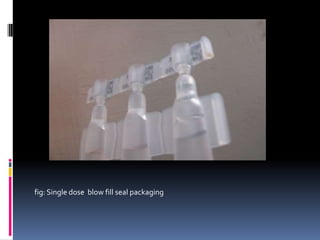
fig: Single dose blow fill seal packaging
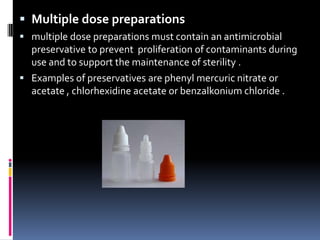
 Multiple dose preparations
 multiple dose preparations must contain an antimicrobial
  preservative to prevent proliferation of contaminants during
  use and to support the maintenance of sterility .
 Examples of preservatives are phenyl mercuric nitrate or
  acetate , chlorhexidine acetate or benzalkonium chloride .

Labelling and packaging ppt

  • 1.
     Labelling :The term labelling designates all labels and other written, printed or graphic matter up on or in any package or wrapper in which it is enclosed.  The label states the name of the preparation, percentage content of drug of a liquid preparation, the amount of active ingredient of a dry preparation, the volume of liquid to be added to prepare an injection or suspension from a dry preparation, the route of administration, a statement of storage condition and expiry date. Also label must indicate the name of manufacturer or distributors and carry an identifying lot number.
  • 2.
    Types of labelling  Various materials are used for labelling such as paper, foil and fabric. it is also possible to print directly on a bottle or other containers by means of silk screen, offset or hot transfer process. Method of applying a label  Hot melts  Semi automatic labelling  Fully automatic labelling . Standard Requiremnt For Labelling  All labels must be type written or computer generated. The details, which must appear on the label of a dispensed medicine are-  · The name of the preparation.  · The quality.  · Instructions for the patient.  · The date of dispensing.  · Keep out of reach of children.
  • 3.
    Additional Labellng Requirement:  storage  temperature  humidity  light  Instructions to the patient how to use ,  Batch number  Expiary date  INSTRUCTIONS  Tip of the dropper should not be touched with fingers  If there is any leakage it should not be used  After instilling the drops into the eye,if any irritation is produced the patient must be refer back to the physician Labelling Of Ophthalmic Preparation:  The label should state the name and concentration of any antimicrobial preservative or other substance added to the preparation. For multidose containers the label should state the period after opening the containers after which the contents should not be used.
  • 4.
    Codes For EyeDrops In Single Dose Containers: The following codes are approved for use on single unit dose of eye drops where the individual may be too small bear cell of the appropriate labeling information. Eye drops Code Adrenaline, neutral ADN Amethocaine AME Betamethasone BET Chloramphenicol CPL
  • 5.
    Labeling Requirements ForEye Drop And Eye Ointment Container At The Time Of Dispensing: Requirement Include on the label State route of administration For external use only Fully identify the product The name and concentration of active ingredient(s) Statement on preservation Confirm presence or absence of preservative Direction for use Ex: Add one drop to each eye morning and evening. Statement on in use expiry date Day, month, year Storage requirements ‘Store in cool place’ or ‘Protect from light’ Identify patient Patient’s name
  • 7.
    Packaging of eyedrops  Ophthalmic liquids can be packaged in sterile glass bottles with separate droppers or in plastic bottles with self-contained dropper tips Plastic bottle glass bottles with with self container tip separate droppers
  • 8.
     Glass bottlepackaging  Dropper bottle for eye drops is a hexagonal shaped amber glass container fluted on three sides . they are fitted with a cap , rubber teat and dropper as the closure. The bottles are used at a capacity of 10 ml or 20 ml . In only a very few instances are glass containers are used , because of stability limitations . Type 1 glass vials with appropriate stoppers are used for ophthalmic products . Fig : 10 ml amber glass dropper bottle .
  • 9.
     Plastic packaging Currently all most all commercially available ophthalmic products are packaged in plastic containers . Advantages of plastic containers are ease of use , little breakage , less spillage . this led to universal acceptance of plastic containers. Plastic packaging components consists of bottle fitment and closure . It has multi-component single-drop dispenser. Eye drops must be sterile zed after filling into the containers and sealing , by autoclaving at a temperature of 90-100 C for 30 mins , or alternatively they may be pre sterilized and filled aseptically into previously sterilised containers . The containers are usually fitted with droppers attached to the closuers .
  • 10.
     There aretwo types of dose preparations in plastic packaging  Single dose preparations  Multiple dose preparations Single dose preparations  The ideal type of packaging for eye drops is a disposable one shot container which eliminates the need for any preservative and reduces the risk of infecting the eye during applications almost to zero  Single dose packs are available in which the solutions can be sterilised by autoclaving in air ballasted autoclaves these solutions can therefore be formulated without a preservative . Single-use b- f-s vials, when filled under sterile conditions, have the additional advantage of enabling the product to be formulated without preservatives; most products in multi-use containers need preservatives to counteract the ingress of microorganisms after each use.
  • 11.
    fig: Single doseblow fill seal packaging
  • 12.
     Multiple dosepreparations  multiple dose preparations must contain an antimicrobial preservative to prevent proliferation of contaminants during use and to support the maintenance of sterility .  Examples of preservatives are phenyl mercuric nitrate or acetate , chlorhexidine acetate or benzalkonium chloride .