CONTENT
 Introduction
 Meaning of practical work in science
 Need of practical work in science
 Importance of practical work in science
 Organization of practical work in science
 Conclusion
 References
INTRODUCTION
 The term ‘practical work’ is used in
preference to ‘laboratory work’ .
 This simply is a ‘Learning by doing’ thing.
 According to Huxley,
“ The great end of life is
not knowledge but action ”.
[which follows the
psychomotor psychological principle of
learning by doing]
MEANING of practical work
in science
By 'practical work' we mean
tasks in which students observe or manipulate
real objects or materials or they witness a
teacher demonstration.
Practical work can motivate pupils, by
stimulating interest and enjoyment, teach
laboratory skills, and enhance the learning of
scientific knowledge.
What is practical work in
SCIENCE?
In order to understand why we use
practical activities especially in science or other
subjects, we must first consider what practical
work in science is.
It is Procedures
Techniques
and Fieldwork
These are 'hands-on' activities
support the development of practical skills,
and help to shape students' understanding of
NEED of practical work in
science
Kids/Students learn by
doing
• The idea was to prepare students for all aspects of
work.
• Provide practical knowledge for teachers and
professors.
• Assessing the quality of education , which is
incredibly important in ensuring that students
acquire practical skills.
• Practical work test students' practical skills and
techniques usually in laboratory, clinical or field
settings. They can be administered individually, in
pairs or small groups.
• Hands-on science encourages the children to DO
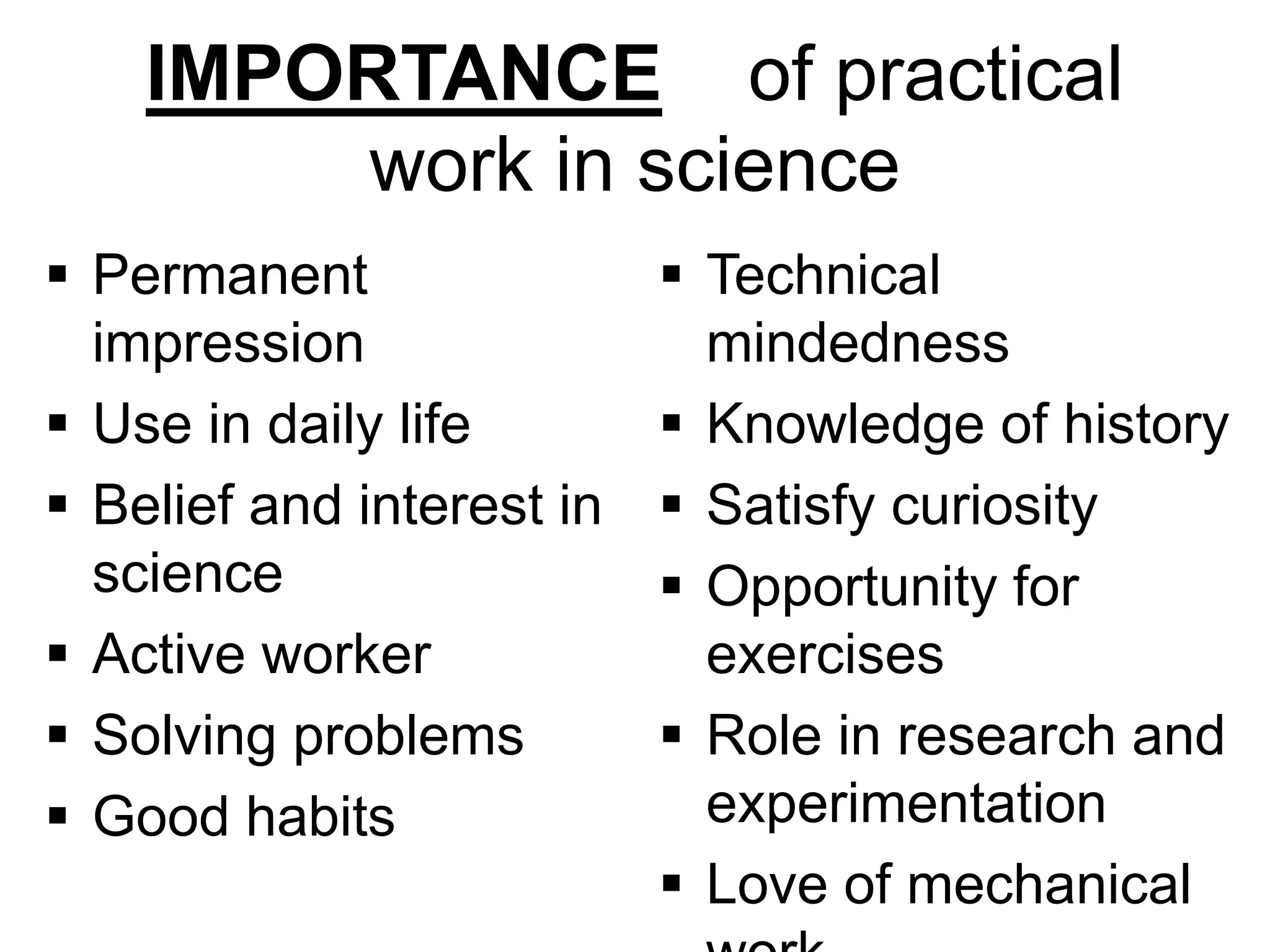
IMPORTANCE of practical
work in science
 Permanent
impression
 Use in daily life
 Belief and interest in
science
 Active worker
 Solving problems
 Good habits
 Technical
mindedness
 Knowledge of history
 Satisfy curiosity
 Opportunity for
exercises
 Role in research and
experimentation
 Love of mechanical
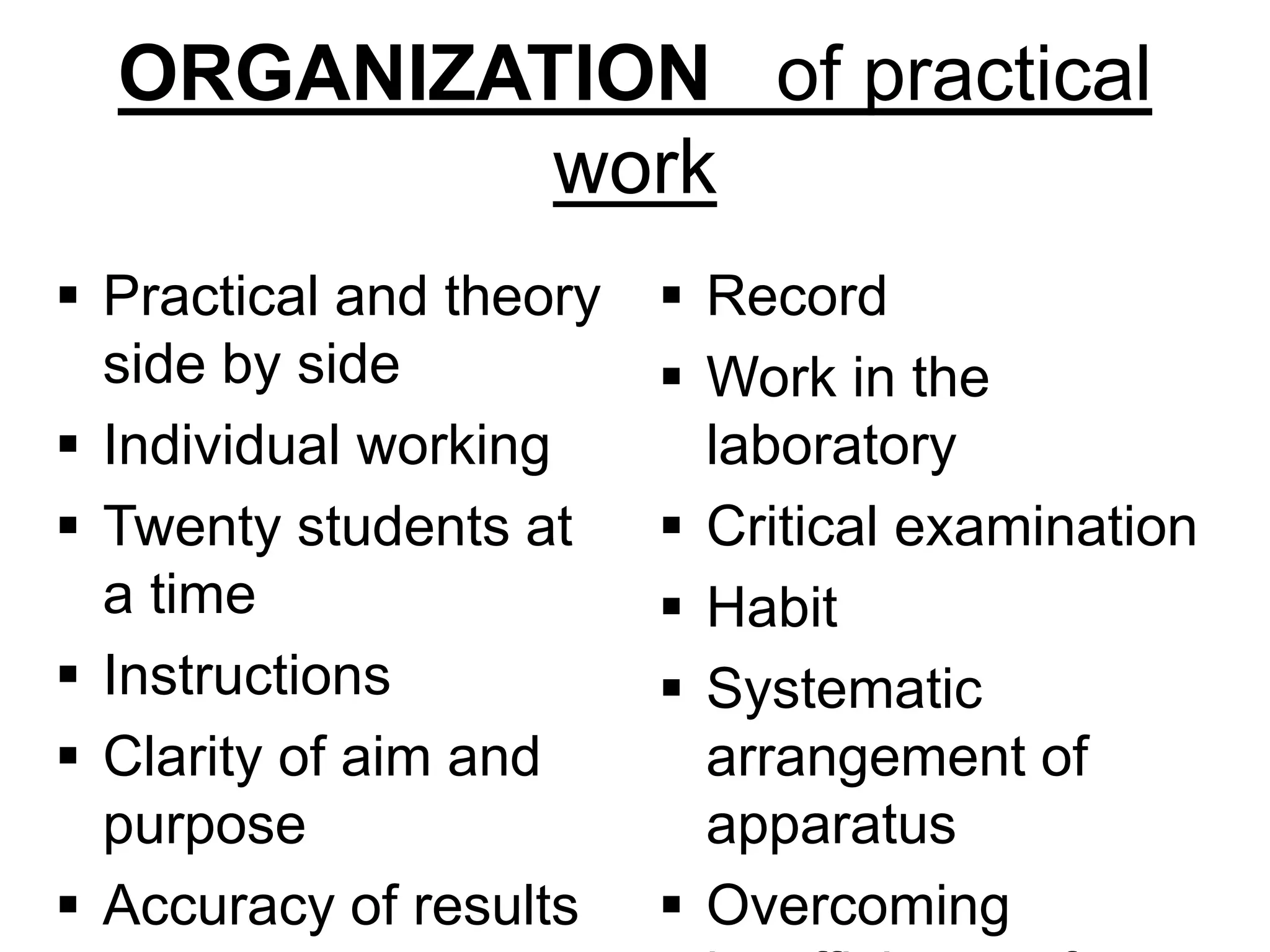
ORGANIZATION of practical
work
 Practical and theory
side by side
 Individual working
 Twenty students at
a time
 Instructions
 Clarity of aim and
purpose
 Accuracy of results
 Record
 Work in the
laboratory
 Critical examination
 Habit
 Systematic
arrangement of
apparatus
 Overcoming
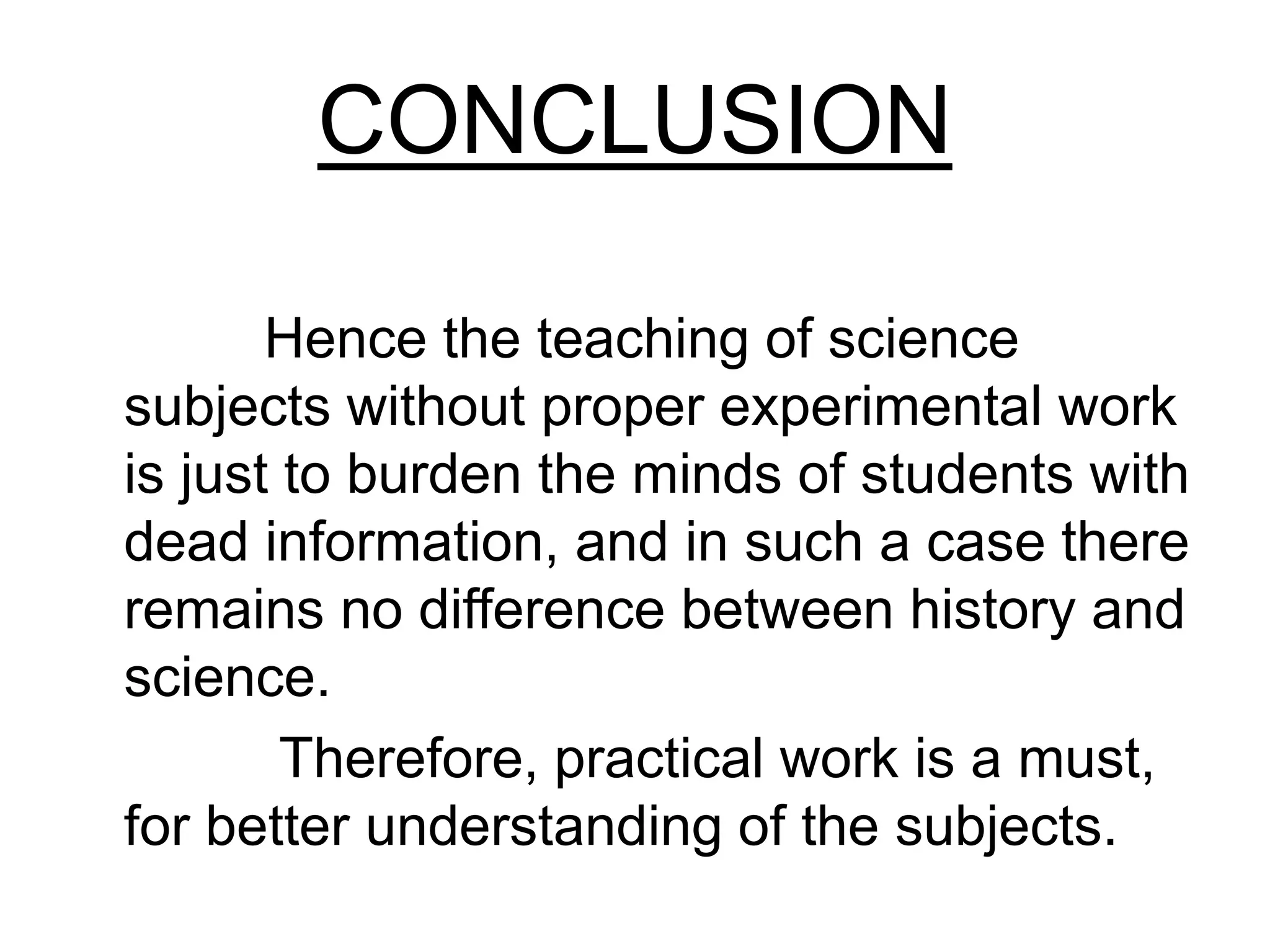
CONCLUSION
Hence the teaching of science
subjects without proper experimental work
is just to burden the minds of students with
dead information, and in such a case there
remains no difference between history and
science.
Therefore, practical work is a must,
for better understanding of the subjects.

Practical work in science

  • 1.
    CONTENT  Introduction  Meaningof practical work in science  Need of practical work in science  Importance of practical work in science  Organization of practical work in science  Conclusion  References
  • 2.
    INTRODUCTION  The term‘practical work’ is used in preference to ‘laboratory work’ .  This simply is a ‘Learning by doing’ thing.  According to Huxley, “ The great end of life is not knowledge but action ”. [which follows the psychomotor psychological principle of learning by doing]
  • 3.
    MEANING of practicalwork in science By 'practical work' we mean tasks in which students observe or manipulate real objects or materials or they witness a teacher demonstration. Practical work can motivate pupils, by stimulating interest and enjoyment, teach laboratory skills, and enhance the learning of scientific knowledge.
  • 4.
    What is practicalwork in SCIENCE? In order to understand why we use practical activities especially in science or other subjects, we must first consider what practical work in science is. It is Procedures Techniques and Fieldwork These are 'hands-on' activities support the development of practical skills, and help to shape students' understanding of
  • 5.
    NEED of practicalwork in science Kids/Students learn by doing • The idea was to prepare students for all aspects of work. • Provide practical knowledge for teachers and professors. • Assessing the quality of education , which is incredibly important in ensuring that students acquire practical skills. • Practical work test students' practical skills and techniques usually in laboratory, clinical or field settings. They can be administered individually, in pairs or small groups. • Hands-on science encourages the children to DO
  • 6.
    IMPORTANCE of practical workin science  Permanent impression  Use in daily life  Belief and interest in science  Active worker  Solving problems  Good habits  Technical mindedness  Knowledge of history  Satisfy curiosity  Opportunity for exercises  Role in research and experimentation  Love of mechanical
  • 7.
    ORGANIZATION of practical work Practical and theory side by side  Individual working  Twenty students at a time  Instructions  Clarity of aim and purpose  Accuracy of results  Record  Work in the laboratory  Critical examination  Habit  Systematic arrangement of apparatus  Overcoming
  • 8.
    CONCLUSION Hence the teachingof science subjects without proper experimental work is just to burden the minds of students with dead information, and in such a case there remains no difference between history and science. Therefore, practical work is a must, for better understanding of the subjects.