Practical Arc Flash Protection 
for Electrical Safety 
Professionals 
www.idc-online.com/slideshare TecThenchonloogloyg Ty rtaraininiinngg tthhaatt wWoorkrkss
Overview 
• Hazards of general nature in industrial installations 
• Electrical hazards 
– Direct and Indirect electric shock 
– The deadly combination of heights and electric shock 
– Hazards due to arcing/flashover 
– Hazards from use of electrical equipment in explosive environment 
– Hazards due to high temperature in electrical equipment 
– Need for periodic inspection and maintenance for safe operation of 
Technology Training that Works www.idc-online.com/slideshare 
Arc Flash Protection 
electrical equipment
Electrical Hazards 
• Electric shock and associated effects 
• Injuries by electric shock combined 
with fall 
• Arc flash causing external burns 
• Explosion caused by electrical 
sparks 
• Other thermal effects 
• Hazards from electrical battery 
installations 
Technology Training that Works www.idc-online.com/slideshare 
Arc Flash Protection
Electric Shock-Reasons 
• An electric shock can happen 
– Due to exposure to live parts 
(Direct contact) 
– Due to exposure to parts that 
accidentally become live 
(Indirect contact) 
• Due to potential difference in the 
ground under certain conditions 
Technology Training that Works www.idc-online.com/slideshare 
Arc Flash Protection
Electric Shock: Effects 
• Causes current flow through body 
• Causes muscular contraction 
• Can cause stoppage of heart/breathing 
• A shock is often accompanied by a fall 
– A non-fatal shock can result in a fatal fall 
– While working on electrical systems at heights, adopt 
preventive measures to avoid a fall 
Technology Training that Works www.idc-online.com/slideshare 
Arc Flash Protection
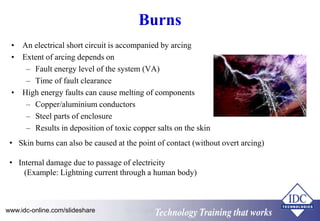
Burns 
• An electrical short circuit is accompanied by arcing 
• Extent of arcing depends on 
– Fault energy level of the system (VA) 
– Time of fault clearance 
• High energy faults can cause melting of components 
– Copper/aluminium conductors 
– Steel parts of enclosure 
– Results in deposition of toxic copper salts on the skin 
• Skin burns can also be caused at the point of contact (without overt arcing) 
• Internal damage due to passage of electricity 
(Example: Lightning current through a human body) 
Technology Training that Works www.idc-online.com/slideshare 
Arc Flash Protection
Temperature Hazards 
• External surfaces of electrical 
equipment often attain elevated 
temperature 
– Example: Bus ducts can often attain 
surface temperatures of over 60 Deg C 
• Exposed conducting parts can attain 
even higher temperatures 
– Example: Bus bars often run at 
temperatures in excess of 100 Deg C 
Technology Training that Works www.idc-online.com/slideshare 
Arc Flash Protection
Temperature Hazards 
• Electrical joints/mating surfaces can have temperatures 
exceeding the conductor temperature 
• This is because of increased localised resistance 
• High surface temperature can cause ignition if 
flammable vapors are present in the environment 
Technology Training that Works www.idc-online.com/slideshare 
Arc Flash Protection
Fire Hazard 
• An external fire can often result from an electrical 
fault 
– Example: A wiring short circuit and presence of 
combustible substances in the vicinity 
• Certain electrical equipment contain inflammable 
substances and improper handling can result in fire 
– Example: Large transformers with mineral oil for 
cooling 
Technology Training that Works www.idc-online.com/slideshare 
Arc Flash Protection
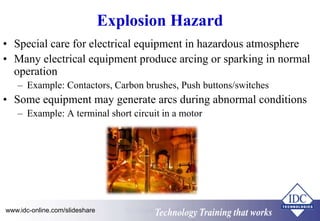
Explosion Hazard 
• Special care for electrical equipment in hazardous atmosphere 
• Many electrical equipment produce arcing or sparking in normal 
operation 
– Example: Contactors, Carbon brushes, Push buttons/switches 
• Some equipment may generate arcs during abnormal conditions 
– Example: A terminal short circuit in a motor 
Technology Training that Works www.idc-online.com/slideshare 
Arc Flash Protection
Battery Hazards 
Technology Training that Works www.idc-online.com/slideshare 
Arc Flash Protection 
• Electric shock 
• Lead dust toxicity 
• Acid fumes 
• Explosion
Structure of an Electrical System 
• Incoming circuit 
• Step-down transformer 
• Primary distribution 
• In-plant generation (Primary) 
• Step down transformer 
• Secondary distribution 
• In-plant generation (Localised/secondary) 
• Local distribution centers (MCC/DBs) 
• Uninterrupted power supplies to specific critical loads 
• Loads on primary and secondary distribution system 
Technology Training that Works www.idc-online.com/slideshare 
Arc Flash Protection
Main Components-1 
• Generation equipment-(Captive generation in 
industry) 
• Step-up/step-down Transformers 
• Transmission lines (long distances) 
• Cables (Medium distances) 
• Bus ducts (Short distances) 
Technology Training that Works www.idc-online.com/slideshare 
Arc Flash Protection
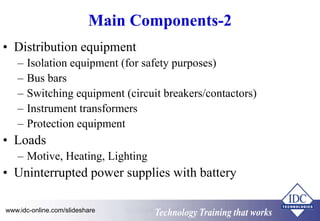
Main Components-2 
• Distribution equipment 
– Isolation equipment (for safety purposes) 
– Bus bars 
– Switching equipment (circuit breakers/contactors) 
– Instrument transformers 
– Protection equipment 
Technology Training that Works www.idc-online.com/slideshare 
Arc Flash Protection 
• Loads 
– Motive, Heating, Lighting 
• Uninterrupted power supplies with battery
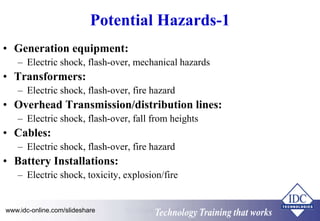
Potential Hazards-1 
• Generation equipment: 
– Electric shock, flash-over, mechanical hazards 
Technology Training that Works www.idc-online.com/slideshare 
Arc Flash Protection 
• Transformers: 
– Electric shock, flash-over, fire hazard 
• Overhead Transmission/distribution lines: 
– Electric shock, flash-over, fall from heights 
• Cables: 
– Electric shock, flash-over, fire hazard 
• Battery Installations: 
– Electric shock, toxicity, explosion/fire
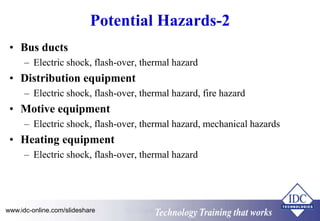
Potential Hazards-2 
Technology Training that Works www.idc-online.com/slideshare 
Arc Flash Protection 
• Bus ducts 
– Electric shock, flash-over, thermal hazard 
• Distribution equipment 
– Electric shock, flash-over, thermal hazard, fire hazard 
• Motive equipment 
– Electric shock, flash-over, thermal hazard, mechanical hazards 
• Heating equipment 
– Electric shock, flash-over, thermal hazard
Potential Hazards-3 
• Lighting equipment 
– Electric shock, flash-over, thermal hazard, fall from 
heights 
• Uninterrupted power supplies with battery 
– Electric shock, flash-over, hazards from corrosive 
liquids and explosive gases, toxicity (lead, cadmium) 
Technology Training that Works www.idc-online.com/slideshare 
Arc Flash Protection
Reasons for Electrical Accidents 
• Failure to isolate or inadequate or insecure 
isolation (60%) 
• Poor maintenance and faulty equipment (30%) 
• Insufficient information about the system being 
worked on 
• Carelessness and lack of safe procedures 
Technology Training that Works www.idc-online.com/slideshare 
Arc Flash Protection
Summary of Safety Measures-Technical 
• Safe design/installation of plant and equipment 
• Safe operating and maintenance practices 
• Appropriate knowledge on the part of workers 
Technology Training that Works www.idc-online.com/slideshare 
Arc Flash Protection 
– Training 
– Certification 
• Warning signs at points of hazard 
• Use of equipment/sensors to warn incipient 
problem
Summary of Safety Measures-Procedural 
• Documented procedures and instructions 
• Proper periodic inspection and prompt repairs 
• Use of personal safety equipment 
• Avoiding live/hot work except where mandated by 
the relevant procedures 
Technology Training that Works www.idc-online.com/slideshare 
Arc Flash Protection
Summary of Safety Measures- 
Organisational 
• Creating an organisational safety structure to 
handle safety issues, lapses and accidents 
• Updating documentation to reflect latest regulatory 
changes 
• Employee training 
• Competence testing and certification 
• Create safety awareness by frequent safety 
campaigns and rewarding accident-free operation 
Technology Training that Works www.idc-online.com/slideshare 
Arc Flash Protection
DO YOU WANT TO KNOW MORE? 
If you are interested in further training or information, please 
visit: 
http://idc-online.com/slideshare 
Technology Training that Works www.idc-online.com/slideshare 
Arc Flash Protection

Practical Arc Flash Protection for Electrical Safety Professionals

  • 1.
    Practical Arc FlashProtection for Electrical Safety Professionals www.idc-online.com/slideshare TecThenchonloogloyg Ty rtaraininiinngg tthhaatt wWoorkrkss
  • 2.
    Overview • Hazardsof general nature in industrial installations • Electrical hazards – Direct and Indirect electric shock – The deadly combination of heights and electric shock – Hazards due to arcing/flashover – Hazards from use of electrical equipment in explosive environment – Hazards due to high temperature in electrical equipment – Need for periodic inspection and maintenance for safe operation of Technology Training that Works www.idc-online.com/slideshare Arc Flash Protection electrical equipment
  • 3.
    Electrical Hazards •Electric shock and associated effects • Injuries by electric shock combined with fall • Arc flash causing external burns • Explosion caused by electrical sparks • Other thermal effects • Hazards from electrical battery installations Technology Training that Works www.idc-online.com/slideshare Arc Flash Protection
  • 4.
    Electric Shock-Reasons •An electric shock can happen – Due to exposure to live parts (Direct contact) – Due to exposure to parts that accidentally become live (Indirect contact) • Due to potential difference in the ground under certain conditions Technology Training that Works www.idc-online.com/slideshare Arc Flash Protection
  • 5.
    Electric Shock: Effects • Causes current flow through body • Causes muscular contraction • Can cause stoppage of heart/breathing • A shock is often accompanied by a fall – A non-fatal shock can result in a fatal fall – While working on electrical systems at heights, adopt preventive measures to avoid a fall Technology Training that Works www.idc-online.com/slideshare Arc Flash Protection
  • 6.
    Burns • Anelectrical short circuit is accompanied by arcing • Extent of arcing depends on – Fault energy level of the system (VA) – Time of fault clearance • High energy faults can cause melting of components – Copper/aluminium conductors – Steel parts of enclosure – Results in deposition of toxic copper salts on the skin • Skin burns can also be caused at the point of contact (without overt arcing) • Internal damage due to passage of electricity (Example: Lightning current through a human body) Technology Training that Works www.idc-online.com/slideshare Arc Flash Protection
  • 7.
    Temperature Hazards •External surfaces of electrical equipment often attain elevated temperature – Example: Bus ducts can often attain surface temperatures of over 60 Deg C • Exposed conducting parts can attain even higher temperatures – Example: Bus bars often run at temperatures in excess of 100 Deg C Technology Training that Works www.idc-online.com/slideshare Arc Flash Protection
  • 8.
    Temperature Hazards •Electrical joints/mating surfaces can have temperatures exceeding the conductor temperature • This is because of increased localised resistance • High surface temperature can cause ignition if flammable vapors are present in the environment Technology Training that Works www.idc-online.com/slideshare Arc Flash Protection
  • 9.
    Fire Hazard •An external fire can often result from an electrical fault – Example: A wiring short circuit and presence of combustible substances in the vicinity • Certain electrical equipment contain inflammable substances and improper handling can result in fire – Example: Large transformers with mineral oil for cooling Technology Training that Works www.idc-online.com/slideshare Arc Flash Protection
  • 10.
    Explosion Hazard •Special care for electrical equipment in hazardous atmosphere • Many electrical equipment produce arcing or sparking in normal operation – Example: Contactors, Carbon brushes, Push buttons/switches • Some equipment may generate arcs during abnormal conditions – Example: A terminal short circuit in a motor Technology Training that Works www.idc-online.com/slideshare Arc Flash Protection
  • 11.
    Battery Hazards TechnologyTraining that Works www.idc-online.com/slideshare Arc Flash Protection • Electric shock • Lead dust toxicity • Acid fumes • Explosion
  • 12.
    Structure of anElectrical System • Incoming circuit • Step-down transformer • Primary distribution • In-plant generation (Primary) • Step down transformer • Secondary distribution • In-plant generation (Localised/secondary) • Local distribution centers (MCC/DBs) • Uninterrupted power supplies to specific critical loads • Loads on primary and secondary distribution system Technology Training that Works www.idc-online.com/slideshare Arc Flash Protection
  • 13.
    Main Components-1 •Generation equipment-(Captive generation in industry) • Step-up/step-down Transformers • Transmission lines (long distances) • Cables (Medium distances) • Bus ducts (Short distances) Technology Training that Works www.idc-online.com/slideshare Arc Flash Protection
  • 14.
    Main Components-2 •Distribution equipment – Isolation equipment (for safety purposes) – Bus bars – Switching equipment (circuit breakers/contactors) – Instrument transformers – Protection equipment Technology Training that Works www.idc-online.com/slideshare Arc Flash Protection • Loads – Motive, Heating, Lighting • Uninterrupted power supplies with battery
  • 15.
    Potential Hazards-1 •Generation equipment: – Electric shock, flash-over, mechanical hazards Technology Training that Works www.idc-online.com/slideshare Arc Flash Protection • Transformers: – Electric shock, flash-over, fire hazard • Overhead Transmission/distribution lines: – Electric shock, flash-over, fall from heights • Cables: – Electric shock, flash-over, fire hazard • Battery Installations: – Electric shock, toxicity, explosion/fire
  • 16.
    Potential Hazards-2 TechnologyTraining that Works www.idc-online.com/slideshare Arc Flash Protection • Bus ducts – Electric shock, flash-over, thermal hazard • Distribution equipment – Electric shock, flash-over, thermal hazard, fire hazard • Motive equipment – Electric shock, flash-over, thermal hazard, mechanical hazards • Heating equipment – Electric shock, flash-over, thermal hazard
  • 17.
    Potential Hazards-3 •Lighting equipment – Electric shock, flash-over, thermal hazard, fall from heights • Uninterrupted power supplies with battery – Electric shock, flash-over, hazards from corrosive liquids and explosive gases, toxicity (lead, cadmium) Technology Training that Works www.idc-online.com/slideshare Arc Flash Protection
  • 18.
    Reasons for ElectricalAccidents • Failure to isolate or inadequate or insecure isolation (60%) • Poor maintenance and faulty equipment (30%) • Insufficient information about the system being worked on • Carelessness and lack of safe procedures Technology Training that Works www.idc-online.com/slideshare Arc Flash Protection
  • 19.
    Summary of SafetyMeasures-Technical • Safe design/installation of plant and equipment • Safe operating and maintenance practices • Appropriate knowledge on the part of workers Technology Training that Works www.idc-online.com/slideshare Arc Flash Protection – Training – Certification • Warning signs at points of hazard • Use of equipment/sensors to warn incipient problem
  • 20.
    Summary of SafetyMeasures-Procedural • Documented procedures and instructions • Proper periodic inspection and prompt repairs • Use of personal safety equipment • Avoiding live/hot work except where mandated by the relevant procedures Technology Training that Works www.idc-online.com/slideshare Arc Flash Protection
  • 21.
    Summary of SafetyMeasures- Organisational • Creating an organisational safety structure to handle safety issues, lapses and accidents • Updating documentation to reflect latest regulatory changes • Employee training • Competence testing and certification • Create safety awareness by frequent safety campaigns and rewarding accident-free operation Technology Training that Works www.idc-online.com/slideshare Arc Flash Protection
  • 22.
    DO YOU WANTTO KNOW MORE? If you are interested in further training or information, please visit: http://idc-online.com/slideshare Technology Training that Works www.idc-online.com/slideshare Arc Flash Protection