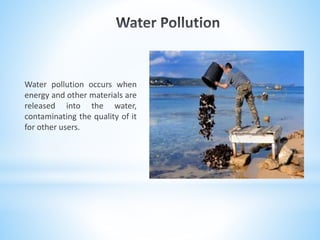
Water pollution occurs when
energy and other materials are
released into the water,
contaminating the quality of it
for other users.
Sewagefrom domestic households,
factories and commercial buildings
Sewage that is treated in water
treatment plants is often disposed
into the sea. Sewage can be more
problematic when people flush
chemicals and pharmaceutical
substances down the toilet.
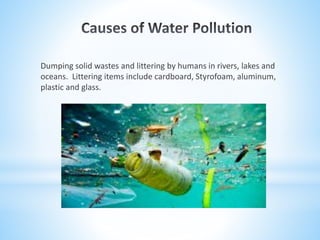
Dumping solid wastes and littering by humans in rivers, lakes and
oceans. Littering items include cardboard, Styrofoam, aluminum,
plastic and glass.
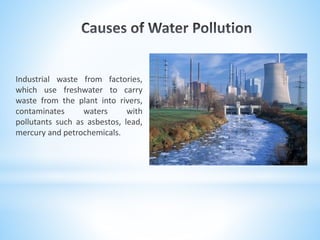
Industrial waste from factories,
which use freshwater to carry
waste from the plant into rivers,
contaminates waters with
pollutants such as asbestos, lead,
mercury and petrochemicals.
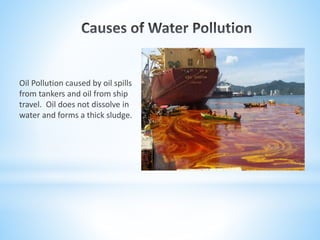
Oil Pollution caused by oil spills
from tankers and oil from ship
travel. Oil does not dissolve in
water and forms a thick sludge.
• Groundwater contamination from pesticides causes reproductive damage
within wildlife in ecosystems.
• Sewage, fertilizer, and agricultural run-off contain organic materials that
when discharged into waters, increase the growth of algae, which causes the
depletion of oxygen. The low oxygen levels are not able to support most
indigenous organisms in the area and therefore upset the natural ecological
balance in rivers and lakes.
• Human-produced litter of items such as plastic bags and 6-pack rings can get
aquatic animals caught and killed from suffocation.
• Water pollution causes flooding due to the accumulation of solid waste and
soil erosion in streams and rivers.
• Oil spills in the water causes animal to die when they ingest it or encounter
it. Oil does not dissolve in water so it causes suffocation in fish and birds.
Presented By
Narendra Singh Plaha

Water pollution causes and effects

  • 2.
    Water pollution occurswhen energy and other materials are released into the water, contaminating the quality of it for other users.
  • 3.
    Sewagefrom domestic households, factoriesand commercial buildings Sewage that is treated in water treatment plants is often disposed into the sea. Sewage can be more problematic when people flush chemicals and pharmaceutical substances down the toilet.
  • 4.
    Dumping solid wastesand littering by humans in rivers, lakes and oceans. Littering items include cardboard, Styrofoam, aluminum, plastic and glass.
  • 5.
    Industrial waste fromfactories, which use freshwater to carry waste from the plant into rivers, contaminates waters with pollutants such as asbestos, lead, mercury and petrochemicals.
  • 6.
    Oil Pollution causedby oil spills from tankers and oil from ship travel. Oil does not dissolve in water and forms a thick sludge.
  • 7.
    • Groundwater contaminationfrom pesticides causes reproductive damage within wildlife in ecosystems. • Sewage, fertilizer, and agricultural run-off contain organic materials that when discharged into waters, increase the growth of algae, which causes the depletion of oxygen. The low oxygen levels are not able to support most indigenous organisms in the area and therefore upset the natural ecological balance in rivers and lakes. • Human-produced litter of items such as plastic bags and 6-pack rings can get aquatic animals caught and killed from suffocation. • Water pollution causes flooding due to the accumulation of solid waste and soil erosion in streams and rivers. • Oil spills in the water causes animal to die when they ingest it or encounter it. Oil does not dissolve in water so it causes suffocation in fish and birds.
  • 8.