Biodiversity and its
importance
Contents
Introduction
What is biodiversity?
What are the types of biodiversity?
Why is biodiversity important?
What are the threats of biodiversity?
Where is biodiversity found?
How can we help?
Our

visit to biodiversity plant at Gorewada.
Introduction

 The science of biodiversity originates largely from

ecology (the study of the relationship between
organisms and their environment) and evolution (the
study of the origin of diversity).

 From these two fields come its two main goals: to

understand the way the natural systems work and
are structured, and to understand how it got that
way.

 Biodiversity also provides us with a community of

life, with which we share planet Earth, and the
opportunity to practice thoughtful stewardship
What is biodiversity?
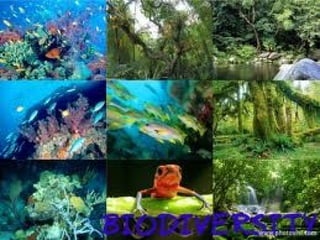
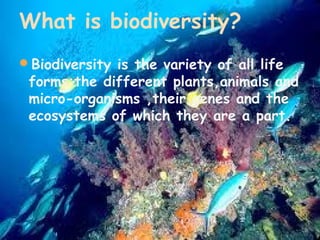
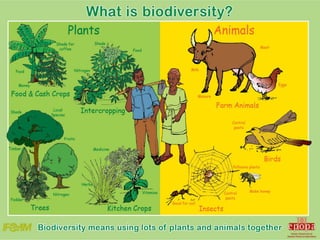
Biodiversity is the variety of all life

forms:the different plants,animals and
micro-organisms ,their genes and the
ecosystems of which they are a part.
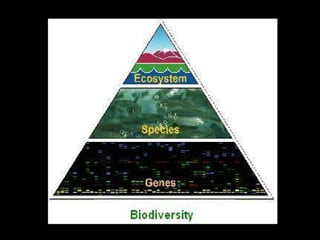
Types of biodiversity
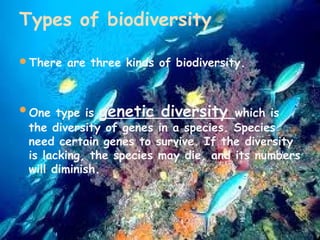
There are three kinds of biodiversity.

One type is

genetic diversity

which is
the diversity of genes in a species. Species
need certain genes to survive. If the diversity
is lacking, the species may die, and its numbers
will diminish.
Types of biodiversity
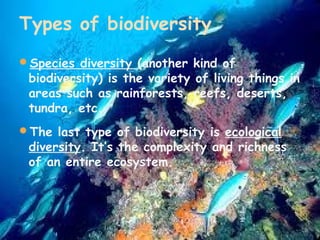
Species diversity (another kind of

biodiversity) is the variety of living things in
areas such as rainforests, reefs, deserts,
tundra, etc.

The last type of biodiversity is ecological

diversity. It’s the complexity and richness
of an entire ecosystem.
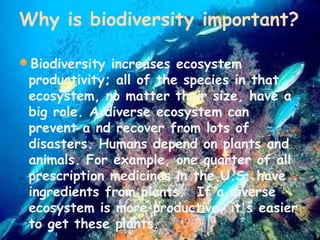
Why is biodiversity important?
Biodiversity increases ecosystem

productivity; all of the species in that
ecosystem, no matter their size, have a
big role. A diverse ecosystem can
prevent a nd recover from lots of
disasters. Humans depend on plants and
animals. For example, one quarter of all
prescription medicines in the U.S. have
ingredients from plants.  If a diverse
ecosystem is more productive, it's easier
to get these plants.
Why is biodiversity important?

Humans also directly benefit from a diverse

ecosystem: plants, clean water and air, provide
oxygen, and control erosion.
Ways of biodiversity that
helps human
Plants absorb greenhouse gases and help

stop global warming.

It is easier for biodiverse ecosystems to

recover from natural disasters.

Healthy biodiversity of species can provide

a variety of food (like meat and produce). 

Many of our medicinal drugs come from

plants.
Ways of biodiversity that
helps human
All of our wood products come from nature.
We can learn more about our earth by

observing a diverse ecosystem.

Many recreational areas benefit from a

healthy ecosystem, which promotes tourism.

Biodiversity is beautiful and should be

enjoyed.

These values are free to us, but as we lose
biodiversity the cost of replacing these would
be very high!
What are the threats of
biodiversity?

There are a lot of threats to biodiversity.Here
are some of the major threats:
1) Using up natural resources before they can

be renewed (over-fishing in oceans, or
over-harvesting trees on land)

2) Habitat destruction like clearing forests or

draining wetlands for towns or agricultural
purposes
Threats
3) Releasing invasive species into foreign
ecosystems (like the cane toad in Australia or
the zebra mussel in the Great Lakes)
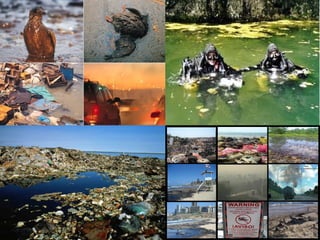
4)Any kind of pollution (water, air, soil, etc).
5)Failure of food chains.
Those are some of the big threats to biodiversity,
and some of those are threats to other things, too.
For example, using up natural resources can hurt the
world's economy.
Where is biodiversity found?
 Biodiversity is found wherever there is life which is

all around the  world. However, some parts of the
world are more biologically diverse than others.

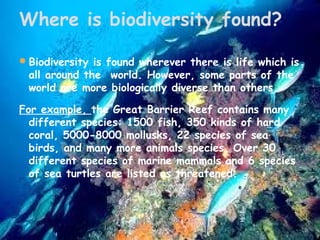
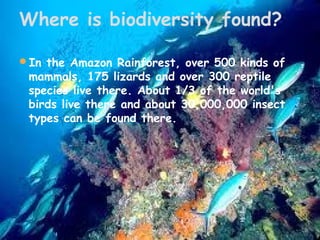
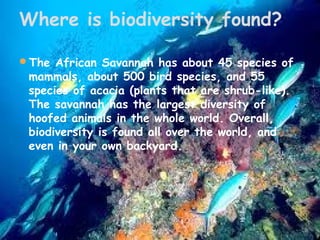
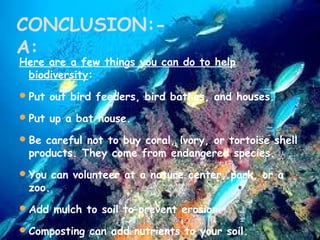
For example, the Great Barrier Reef contains many
different species: 1500 fish, 350 kinds of hard
coral, 5000-8000 mollusks, 22 species of sea
birds, and many more animals species. Over 30
different species of marine mammals and 6 species
of sea turtles are listed as threatened.
Where is biodiversity found?
In the Amazon Rainforest, over 500 kinds of

mammals, 175 lizards and over 300 reptile
species live there. About 1/3 of the world's
birds live there and about 30,000,000 insect
types can be found there.
Where is biodiversity found?
The African Savannah has about 45 species of

mammals, about 500 bird species, and 55
species of acacia (plants that are shrub-like).
The savannah has the largest diversity of
hoofed animals in the whole world. Overall,
biodiversity is found all over the world, and
even in your own backyard.   
CONCLUSION:A:

Here are a few things you can do to help
biodiversity:
 Put out bird feeders, bird bathes, and houses.
 Put up a bat house.
 Be careful not to buy coral, ivory, or tortoise shell

products. They come from endangered species.

 You can volunteer at a nature center, park, or a

zoo.

 Add mulch to soil to prevent erosion.
 Composting can add nutrients to your soil.
Buy organic produce.
Don’t use pesticides; they can kill plants and

animals.

Stop junk mail to save paper and protect our

forests.

When renovating your house, buy FSC approved

wood, because it is harvested in ways that
don’t harm the forests.

Use cloth napkins.
Recycle old newspaper and buy recycled paper

products.

Use e-mail since it saves paper.
B:Our trip to a Biodiversity
Plant at Nagpur
At Gorewada we found the beautiful diversity

of plant species.

We also discovered about variety of birds

migrating in that region.

We also learnt about various spices that they

grow there.
Click icon to add picture
References
Wikipedia
www.globalissues.org › Issues › Articles
conservationtools.org › Comprehensive Guides

Biodiversity basics

  • 1.
  • 2.
    Contents Introduction What is biodiversity? Whatare the types of biodiversity? Why is biodiversity important? What are the threats of biodiversity? Where is biodiversity found? How can we help? Our visit to biodiversity plant at Gorewada.
  • 4.
    Introduction  The scienceof biodiversity originates largely from ecology (the study of the relationship between organisms and their environment) and evolution (the study of the origin of diversity).  From these two fields come its two main goals: to understand the way the natural systems work and are structured, and to understand how it got that way.  Biodiversity also provides us with a community of life, with which we share planet Earth, and the opportunity to practice thoughtful stewardship
  • 5.
    What is biodiversity? Biodiversityis the variety of all life forms:the different plants,animals and micro-organisms ,their genes and the ecosystems of which they are a part.
  • 7.
    Types of biodiversity Thereare three kinds of biodiversity. One type is genetic diversity which is the diversity of genes in a species. Species need certain genes to survive. If the diversity is lacking, the species may die, and its numbers will diminish.
  • 8.
    Types of biodiversity Speciesdiversity (another kind of biodiversity) is the variety of living things in areas such as rainforests, reefs, deserts, tundra, etc. The last type of biodiversity is ecological diversity. It’s the complexity and richness of an entire ecosystem.
  • 10.
    Why is biodiversityimportant? Biodiversity increases ecosystem productivity; all of the species in that ecosystem, no matter their size, have a big role. A diverse ecosystem can prevent a nd recover from lots of disasters. Humans depend on plants and animals. For example, one quarter of all prescription medicines in the U.S. have ingredients from plants.  If a diverse ecosystem is more productive, it's easier to get these plants.
  • 11.
    Why is biodiversityimportant? Humans also directly benefit from a diverse ecosystem: plants, clean water and air, provide oxygen, and control erosion.
  • 12.
    Ways of biodiversitythat helps human Plants absorb greenhouse gases and help stop global warming. It is easier for biodiverse ecosystems to recover from natural disasters. Healthy biodiversity of species can provide a variety of food (like meat and produce).  Many of our medicinal drugs come from plants.
  • 13.
    Ways of biodiversitythat helps human All of our wood products come from nature. We can learn more about our earth by observing a diverse ecosystem. Many recreational areas benefit from a healthy ecosystem, which promotes tourism. Biodiversity is beautiful and should be enjoyed. These values are free to us, but as we lose biodiversity the cost of replacing these would be very high!
  • 14.
    What are thethreats of biodiversity? There are a lot of threats to biodiversity.Here are some of the major threats: 1) Using up natural resources before they can be renewed (over-fishing in oceans, or over-harvesting trees on land) 2) Habitat destruction like clearing forests or draining wetlands for towns or agricultural purposes
  • 15.
    Threats 3) Releasing invasivespecies into foreign ecosystems (like the cane toad in Australia or the zebra mussel in the Great Lakes) 4)Any kind of pollution (water, air, soil, etc). 5)Failure of food chains. Those are some of the big threats to biodiversity, and some of those are threats to other things, too. For example, using up natural resources can hurt the world's economy.
  • 17.
    Where is biodiversityfound?  Biodiversity is found wherever there is life which is all around the  world. However, some parts of the world are more biologically diverse than others. For example, the Great Barrier Reef contains many different species: 1500 fish, 350 kinds of hard coral, 5000-8000 mollusks, 22 species of sea birds, and many more animals species. Over 30 different species of marine mammals and 6 species of sea turtles are listed as threatened.
  • 18.
    Where is biodiversityfound? In the Amazon Rainforest, over 500 kinds of mammals, 175 lizards and over 300 reptile species live there. About 1/3 of the world's birds live there and about 30,000,000 insect types can be found there.
  • 19.
    Where is biodiversityfound? The African Savannah has about 45 species of mammals, about 500 bird species, and 55 species of acacia (plants that are shrub-like). The savannah has the largest diversity of hoofed animals in the whole world. Overall, biodiversity is found all over the world, and even in your own backyard.   
  • 20.
    CONCLUSION:A: Here are afew things you can do to help biodiversity:  Put out bird feeders, bird bathes, and houses.  Put up a bat house.  Be careful not to buy coral, ivory, or tortoise shell products. They come from endangered species.  You can volunteer at a nature center, park, or a zoo.  Add mulch to soil to prevent erosion.  Composting can add nutrients to your soil.
  • 21.
    Buy organic produce. Don’tuse pesticides; they can kill plants and animals. Stop junk mail to save paper and protect our forests. When renovating your house, buy FSC approved wood, because it is harvested in ways that don’t harm the forests. Use cloth napkins. Recycle old newspaper and buy recycled paper products. Use e-mail since it saves paper.
  • 22.
    B:Our trip toa Biodiversity Plant at Nagpur At Gorewada we found the beautiful diversity of plant species. We also discovered about variety of birds migrating in that region. We also learnt about various spices that they grow there.
  • 23.
    Click icon toadd picture
  • 24.