RAJASTHAN INSTITUTE OF ENGINEERING AND
TECHNOLOGY
JAIPUR
DEPARTMENT OF MECHANICAL ENGINEERING
A
SEMINAR ON
“HYDROGEN FUEL CELL”
SUBMITTED TO: SUBMITTED BY:
Mr. RAGHAV DHAKER PRASHANT KUMAR
(ASTT. PROFESSOR,ME) BRANCH:-ME
Roll No:-
CONTENTS
• History
• Hydrogen Energy
• Fuel Cell
• Importance Of Fuel Cell Technology
• Working Of Fuel Cell
• Types Of Fuel Cell
• Importance Of Hydrogen
• Hydrogen Production
• Applications
• Benefits
HISTORY
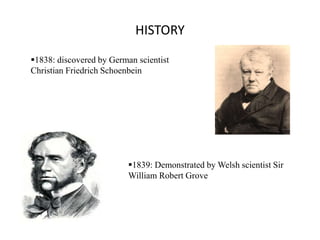
1838: discovered by German scientist
Christian Friedrich Schoenbein
1839: Demonstrated by Welsh scientist Sir
William Robert Grove
Hydrogen Energy
Hydrogen is the simplest and the most
plentiful element in the universe.
It's always combined with other
elements.
Hydrogen is high in energy, yet an engine
that burns pure hydrogen produces almost
no pollution.
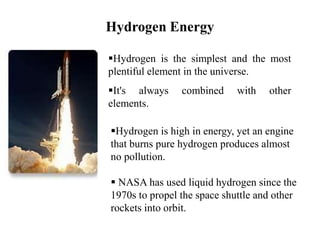
 NASA has used liquid hydrogen since the
1970s to propel the space shuttle and other
rockets into orbit.
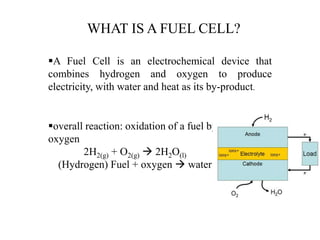
WHAT IS A FUEL CELL?
A Fuel Cell is an electrochemical device that
combines hydrogen and oxygen to produce
electricity, with water and heat as its by-product.
overall reaction: oxidation of a fuel by
oxygen
2H2(g) + O2(g)  2H2O(l)
(Hydrogen) Fuel + oxygen  water
WHY IS FUEL CELL TECHNOLOGY
IMPORTANT?
Since conversion of the fuel to energy takes place via
an electrochemical process, not combustion.
It is a clean, quiet and highly efficient process- two
to three times more efficient than fuel burning.
How does a Fuel Cell work?
It operates similarly to a battery, but it does not
run down nor does it require recharging
 As long as fuel is supplied, a Fuel Cell will produce
both energy and heat
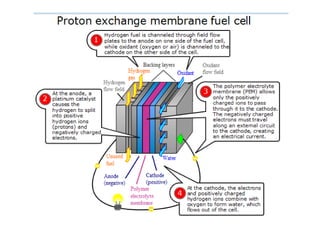
A Fuel Cell consists of two catalyst coated electrodes
surrounding an electrolyte
One electrode is an anode and the other is a cathode
The process begins when Hydrogen molecules enter
the anode
The catalyst coating separates hydrogen’s negatively
charged electrons from the positively charged protons
 The electrolyte allows the protons to pass through to
the cathode, but not the electrons
 Instead the electrons are directed through an
external circuit which creates electrical current
While the electrons pass through the external circuit,
oxygen molecules pass through the cathode
 There the oxygen and the protons combine with the
electrons after they have passed through the external
circuit
When the oxygen and the protons combine with the
electrons it produces water and heat
TYPES OF FUEL CELLS
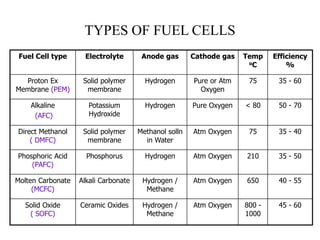
Fuel Cell type Electrolyte Anode gas Cathode gas Temp
oC
Efficiency
%
Proton Ex
Membrane (PEM)
Solid polymer
membrane
Hydrogen Pure or Atm
Oxygen
75 35 - 60
Alkaline
(AFC)
Potassium
Hydroxide
Hydrogen Pure Oxygen < 80 50 - 70
Direct Methanol
( DMFC)
Solid polymer
membrane
Methanol solln
in Water
Atm Oxygen 75 35 - 40
Phosphoric Acid
(PAFC)
Phosphorus Hydrogen Atm Oxygen 210 35 - 50
Molten Carbonate
(MCFC)
Alkali Carbonate Hydrogen /
Methane
Atm Oxygen 650 40 - 55
Solid Oxide
( SOFC)
Ceramic Oxides Hydrogen /
Methane
Atm Oxygen 800 -
1000
45 - 60
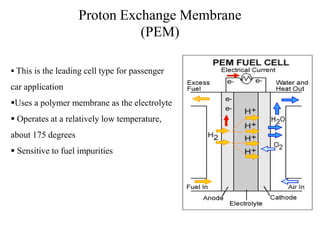
Proton Exchange Membrane
(PEM)
 This is the leading cell type for passenger
car application
Uses a polymer membrane as the electrolyte
 Operates at a relatively low temperature,
about 175 degrees
 Sensitive to fuel impurities
Phosphoric Acid
 This is the most commercially
developed fuel cell
 It generates electricity at more than
40% efficiency
 Uses liquid phosphoric acid as the
electrolyte and operates at about 450
degrees F
 One main advantage is that it can use
impure hydrogen as fuel
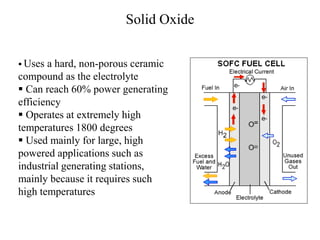
Solid Oxide
 Uses a hard, non-porous ceramic
compound as the electrolyte
 Can reach 60% power generating
efficiency
 Operates at extremely high
temperatures 1800 degrees
 Used mainly for large, high
powered applications such as
industrial generating stations,
mainly because it requires such
high temperatures
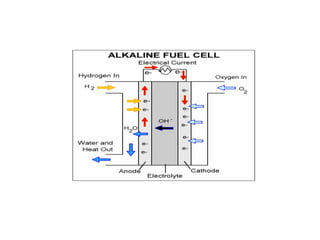
Alkaline
 Used mainly by military and space programs
 Can reach 70% power generating efficiency, but considered to
costly for transportation applications
 Used on the Apollo spacecraft to provide electricity and
drinking water
 Uses a solution of potassium hydroxide in water as the
electrolyte and operates at 75 -160 degrees
 Can use a variety of non-precious metals as catalyst at the
anode and cathode
Regenerative Fuel Cells
 Currently researched by NASA
 This type of fuel cell involves a closed loop form of
power generation
 Uses solar energy to separate water into hydrogen and
oxygen
 Hydrogen and oxygen are fed into the fuel cell
generating electricity, heat and water
 The water by product is then recirculated back to the
solar-powered electrolyser beginning the process again
IMPORTANCE OF HYDROGEN
Fuel Cells require highly purified
hydrogen as a fuel
Researchers are developing a wide range
of technologies to produce hydrogen
economically from a variety of resources in
environmentally friendly ways
Hydrogen Production
The biggest challenge regarding hydrogen production is
the cost
There are three general categories of Hydrogen
production
 Thermal Processes
 Electrolyte Processes
Photolytic Processes
Fuel Cell Technology Be Used
 Transportation
 Stationary Power Stations
 Telecommunications
 Micro Power
Benefits Of Fuel Cell Technology
Physical Security
 Reliability
 Efficiency
 Environmental Benefits
 Battery Replacement/Alternative
 Military Applications
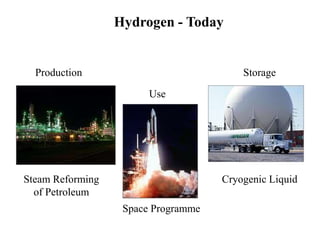
Hydrogen - Today
Production Storage
Use
Steam Reforming
of Petroleum
Cryogenic Liquid
Space Programme
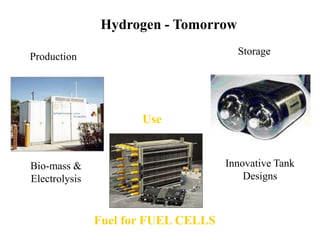
Hydrogen - Tomorrow
Production
Storage
Use
Bio-mass &
Electrolysis
Innovative Tank
Designs
Fuel for FUEL CELLS
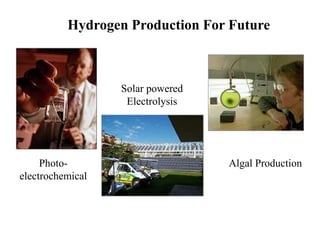
Hydrogen Production For Future
Photo-
electrochemical
Algal Production
Solar powered
Electrolysis
Ppt on hydrogen fuel cell

Ppt on hydrogen fuel cell

  • 1.
    RAJASTHAN INSTITUTE OFENGINEERING AND TECHNOLOGY JAIPUR DEPARTMENT OF MECHANICAL ENGINEERING A SEMINAR ON “HYDROGEN FUEL CELL” SUBMITTED TO: SUBMITTED BY: Mr. RAGHAV DHAKER PRASHANT KUMAR (ASTT. PROFESSOR,ME) BRANCH:-ME Roll No:-
  • 2.
    CONTENTS • History • HydrogenEnergy • Fuel Cell • Importance Of Fuel Cell Technology • Working Of Fuel Cell • Types Of Fuel Cell • Importance Of Hydrogen • Hydrogen Production • Applications • Benefits
  • 3.
    HISTORY 1838: discovered byGerman scientist Christian Friedrich Schoenbein 1839: Demonstrated by Welsh scientist Sir William Robert Grove
  • 4.
    Hydrogen Energy Hydrogen isthe simplest and the most plentiful element in the universe. It's always combined with other elements. Hydrogen is high in energy, yet an engine that burns pure hydrogen produces almost no pollution.  NASA has used liquid hydrogen since the 1970s to propel the space shuttle and other rockets into orbit.
  • 5.
    WHAT IS AFUEL CELL? A Fuel Cell is an electrochemical device that combines hydrogen and oxygen to produce electricity, with water and heat as its by-product. overall reaction: oxidation of a fuel by oxygen 2H2(g) + O2(g)  2H2O(l) (Hydrogen) Fuel + oxygen  water
  • 6.
    WHY IS FUELCELL TECHNOLOGY IMPORTANT? Since conversion of the fuel to energy takes place via an electrochemical process, not combustion. It is a clean, quiet and highly efficient process- two to three times more efficient than fuel burning.
  • 7.
    How does aFuel Cell work? It operates similarly to a battery, but it does not run down nor does it require recharging  As long as fuel is supplied, a Fuel Cell will produce both energy and heat
  • 8.
    A Fuel Cellconsists of two catalyst coated electrodes surrounding an electrolyte One electrode is an anode and the other is a cathode The process begins when Hydrogen molecules enter the anode The catalyst coating separates hydrogen’s negatively charged electrons from the positively charged protons
  • 9.
     The electrolyteallows the protons to pass through to the cathode, but not the electrons  Instead the electrons are directed through an external circuit which creates electrical current While the electrons pass through the external circuit, oxygen molecules pass through the cathode  There the oxygen and the protons combine with the electrons after they have passed through the external circuit
  • 10.
    When the oxygenand the protons combine with the electrons it produces water and heat
  • 11.
    TYPES OF FUELCELLS Fuel Cell type Electrolyte Anode gas Cathode gas Temp oC Efficiency % Proton Ex Membrane (PEM) Solid polymer membrane Hydrogen Pure or Atm Oxygen 75 35 - 60 Alkaline (AFC) Potassium Hydroxide Hydrogen Pure Oxygen < 80 50 - 70 Direct Methanol ( DMFC) Solid polymer membrane Methanol solln in Water Atm Oxygen 75 35 - 40 Phosphoric Acid (PAFC) Phosphorus Hydrogen Atm Oxygen 210 35 - 50 Molten Carbonate (MCFC) Alkali Carbonate Hydrogen / Methane Atm Oxygen 650 40 - 55 Solid Oxide ( SOFC) Ceramic Oxides Hydrogen / Methane Atm Oxygen 800 - 1000 45 - 60
  • 12.
    Proton Exchange Membrane (PEM) This is the leading cell type for passenger car application Uses a polymer membrane as the electrolyte  Operates at a relatively low temperature, about 175 degrees  Sensitive to fuel impurities
  • 14.
    Phosphoric Acid  Thisis the most commercially developed fuel cell  It generates electricity at more than 40% efficiency  Uses liquid phosphoric acid as the electrolyte and operates at about 450 degrees F  One main advantage is that it can use impure hydrogen as fuel
  • 15.
    Solid Oxide  Usesa hard, non-porous ceramic compound as the electrolyte  Can reach 60% power generating efficiency  Operates at extremely high temperatures 1800 degrees  Used mainly for large, high powered applications such as industrial generating stations, mainly because it requires such high temperatures
  • 16.
    Alkaline  Used mainlyby military and space programs  Can reach 70% power generating efficiency, but considered to costly for transportation applications  Used on the Apollo spacecraft to provide electricity and drinking water  Uses a solution of potassium hydroxide in water as the electrolyte and operates at 75 -160 degrees  Can use a variety of non-precious metals as catalyst at the anode and cathode
  • 18.
    Regenerative Fuel Cells Currently researched by NASA  This type of fuel cell involves a closed loop form of power generation  Uses solar energy to separate water into hydrogen and oxygen  Hydrogen and oxygen are fed into the fuel cell generating electricity, heat and water  The water by product is then recirculated back to the solar-powered electrolyser beginning the process again
  • 19.
    IMPORTANCE OF HYDROGEN FuelCells require highly purified hydrogen as a fuel Researchers are developing a wide range of technologies to produce hydrogen economically from a variety of resources in environmentally friendly ways
  • 20.
    Hydrogen Production The biggestchallenge regarding hydrogen production is the cost There are three general categories of Hydrogen production  Thermal Processes  Electrolyte Processes Photolytic Processes
  • 21.
    Fuel Cell TechnologyBe Used  Transportation  Stationary Power Stations  Telecommunications  Micro Power
  • 22.
    Benefits Of FuelCell Technology Physical Security  Reliability  Efficiency  Environmental Benefits  Battery Replacement/Alternative  Military Applications
  • 23.
    Hydrogen - Today ProductionStorage Use Steam Reforming of Petroleum Cryogenic Liquid Space Programme
  • 24.
    Hydrogen - Tomorrow Production Storage Use Bio-mass& Electrolysis Innovative Tank Designs Fuel for FUEL CELLS
  • 25.
    Hydrogen Production ForFuture Photo- electrochemical Algal Production Solar powered Electrolysis