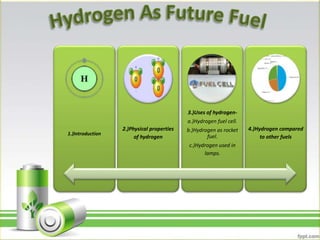
1.)Introduction
2.)Physical properties
of hydrogen
3.)Uses of hydrogen-
a.)Hydrogen fuel cell.
b.)Hydrogen as rocket
fuel.
c.)Hydrogen used in
lamps.
4.)Hydrogen compared
to other fuels
INTRODUCTION
Hydrogen is the most
abundant element in
luminous universe
It is rarely found in
earth as H2
Hydrogen as
renewable energy
with very good
prospect of producing
the energy
Hydrogen is a
colourless and
odourless gas.
It is highly
combustible and a
source of energy.
Hydrogen is very
stable in normal
condition.
In normal state
hydrogen is lightest
of all gas.
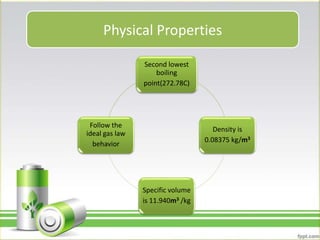
Physical Properties
Second lowest
boiling
point(272.78C)
Density is
0.08375 kg/m3
Specific volume
is 11.940m3 /kg
Follow the
ideal gas law
behavior
USES OF HYDROGEN
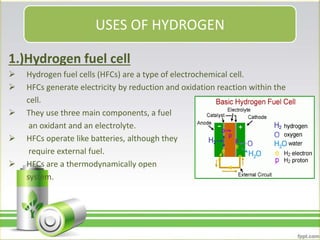
1.)Hydrogen fuel cell
 Hydrogen fuel cells (HFCs) are a type of electrochemical cell.
 HFCs generate electricity by reduction and oxidation reaction within the
cell.
 They use three main components, a fuel
an oxidant and an electrolyte.
 HFCs operate like batteries, although they
require external fuel.
 HFCs are a thermodynamically open
system.
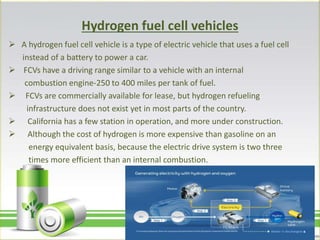
Hydrogen fuel cell vehicles
 A hydrogen fuel cell vehicle is a type of electric vehicle that uses a fuel cell
instead of a battery to power a car.
 FCVs have a driving range similar to a vehicle with an internal
combustion engine-250 to 400 miles per tank of fuel.
 FCVs are commercially available for lease, but hydrogen refueling
infrastructure does not exist yet in most parts of the country.
 California has a few station in operation, and more under construction.
 Although the cost of hydrogen is more expensive than gasoline on an
energy equivalent basis, because the electric drive system is two three
times more efficient than an internal combustion.
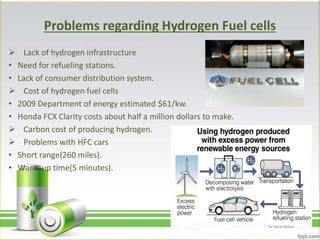
Problems regarding Hydrogen Fuel cells
 Lack of hydrogen infrastructure
• Need for refueling stations.
• Lack of consumer distribution system.
 Cost of hydrogen fuel cells
• 2009 Department of energy estimated $61/kw.
• Honda FCX Clarity costs about half a million dollars to make.
 Carbon cost of producing hydrogen.
 Problems with HFC cars
• Short range(260 miles).
• Warm up time(5 minutes).
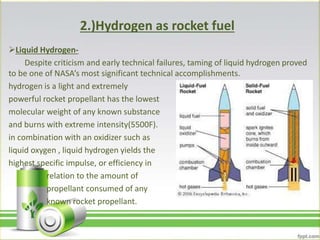
2.)Hydrogen as rocket fuel
Liquid Hydrogen-
Despite criticism and early technical failures, taming of liquid hydrogen proved
to be one of NASA’s most significant technical accomplishments.
hydrogen is a light and extremely
powerful rocket propellant has the lowest
molecular weight of any known substance
and burns with extreme intensity(5500F).
in combination with an oxidizer such as
liquid oxygen , liquid hydrogen yields the
highest specific impulse, or efficiency in
relation to the amount of
propellant consumed of any
known rocket propellant.
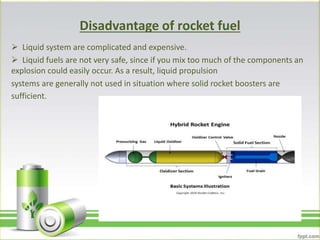
Disadvantage of rocket fuel
 Liquid system are complicated and expensive.
 Liquid fuels are not very safe, since if you mix too much of the components an
explosion could easily occur. As a result, liquid propulsion
systems are generally not used in situation where solid rocket boosters are
sufficient.
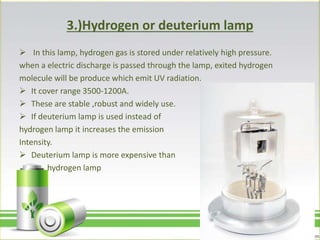
3.)Hydrogen or deuterium lamp
 In this lamp, hydrogen gas is stored under relatively high pressure.
when a electric discharge is passed through the lamp, exited hydrogen
molecule will be produce which emit UV radiation.
 It cover range 3500-1200A.
 These are stable ,robust and widely use.
 If deuterium lamp is used instead of
hydrogen lamp it increases the emission
Intensity.
 Deuterium lamp is more expensive than
hydrogen lamp
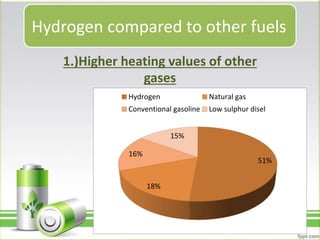
Hydrogen compared to other fuels
1.)Higher heating values of other
gases
51%
18%
16%
15%
Hydrogen Natural gas
Conventional gasoline Low sulphur disel
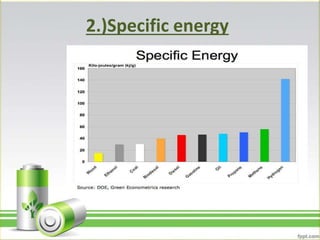
2.)Specific energy

Hydrogen as future fuel

  • 2.
    1.)Introduction 2.)Physical properties of hydrogen 3.)Usesof hydrogen- a.)Hydrogen fuel cell. b.)Hydrogen as rocket fuel. c.)Hydrogen used in lamps. 4.)Hydrogen compared to other fuels
  • 3.
    INTRODUCTION Hydrogen is themost abundant element in luminous universe It is rarely found in earth as H2 Hydrogen as renewable energy with very good prospect of producing the energy
  • 4.
    Hydrogen is a colourlessand odourless gas. It is highly combustible and a source of energy. Hydrogen is very stable in normal condition. In normal state hydrogen is lightest of all gas.
  • 5.
    Physical Properties Second lowest boiling point(272.78C) Densityis 0.08375 kg/m3 Specific volume is 11.940m3 /kg Follow the ideal gas law behavior
  • 6.
    USES OF HYDROGEN 1.)Hydrogenfuel cell  Hydrogen fuel cells (HFCs) are a type of electrochemical cell.  HFCs generate electricity by reduction and oxidation reaction within the cell.  They use three main components, a fuel an oxidant and an electrolyte.  HFCs operate like batteries, although they require external fuel.  HFCs are a thermodynamically open system.
  • 7.
    Hydrogen fuel cellvehicles  A hydrogen fuel cell vehicle is a type of electric vehicle that uses a fuel cell instead of a battery to power a car.  FCVs have a driving range similar to a vehicle with an internal combustion engine-250 to 400 miles per tank of fuel.  FCVs are commercially available for lease, but hydrogen refueling infrastructure does not exist yet in most parts of the country.  California has a few station in operation, and more under construction.  Although the cost of hydrogen is more expensive than gasoline on an energy equivalent basis, because the electric drive system is two three times more efficient than an internal combustion.
  • 8.
    Problems regarding HydrogenFuel cells  Lack of hydrogen infrastructure • Need for refueling stations. • Lack of consumer distribution system.  Cost of hydrogen fuel cells • 2009 Department of energy estimated $61/kw. • Honda FCX Clarity costs about half a million dollars to make.  Carbon cost of producing hydrogen.  Problems with HFC cars • Short range(260 miles). • Warm up time(5 minutes).
  • 9.
    2.)Hydrogen as rocketfuel Liquid Hydrogen- Despite criticism and early technical failures, taming of liquid hydrogen proved to be one of NASA’s most significant technical accomplishments. hydrogen is a light and extremely powerful rocket propellant has the lowest molecular weight of any known substance and burns with extreme intensity(5500F). in combination with an oxidizer such as liquid oxygen , liquid hydrogen yields the highest specific impulse, or efficiency in relation to the amount of propellant consumed of any known rocket propellant.
  • 10.
    Disadvantage of rocketfuel  Liquid system are complicated and expensive.  Liquid fuels are not very safe, since if you mix too much of the components an explosion could easily occur. As a result, liquid propulsion systems are generally not used in situation where solid rocket boosters are sufficient.
  • 11.
    3.)Hydrogen or deuteriumlamp  In this lamp, hydrogen gas is stored under relatively high pressure. when a electric discharge is passed through the lamp, exited hydrogen molecule will be produce which emit UV radiation.  It cover range 3500-1200A.  These are stable ,robust and widely use.  If deuterium lamp is used instead of hydrogen lamp it increases the emission Intensity.  Deuterium lamp is more expensive than hydrogen lamp
  • 12.
    Hydrogen compared toother fuels 1.)Higher heating values of other gases 51% 18% 16% 15% Hydrogen Natural gas Conventional gasoline Low sulphur disel
  • 13.