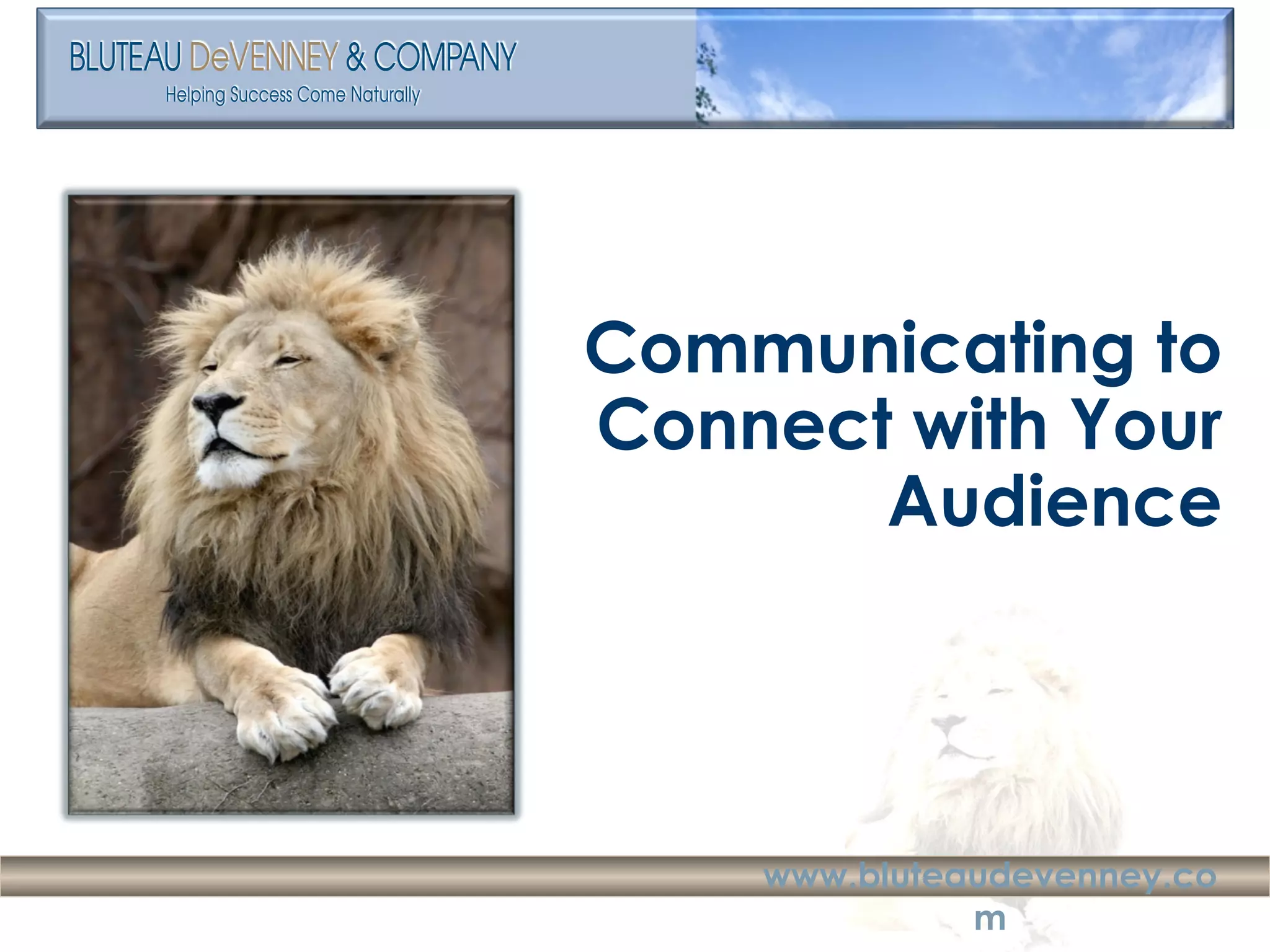
Communicating to Connect with Your Audience
The world is increasingly complex, competitive and fast paced. It is crucial to communicate to connect to move ideas forward and gain commitment for action.
The ability to communicate effectively is a competitive advantage.
Research shows that less than 33% of communication is effective.
The Outcome: Two-thirds of ideas and initiatives fail!
The Bottom-Line: “ Leaders of the past knew how to tell – leaders of the future will know how to ask.” Peter Drucker
Where are your relationships today? Think about the key challenges and obstacles that limit your potential to achieve effective communication and action.
The Greatest Challenges:
The Greatest Challenges: Not taking time with the audience Telling not asking Not taking initiative and following up Not delivering a consistent message Not having a plan and staying focused Not working from the same page Not understanding the business
The Central Issue: Communicating to connect is more about feelings and less about facts. We need to ask the audience to understand the audience.
The Greatest Opportunities:
What’s Needed?
Two shifts are recommended to build a communication connection: Take a consultative approach Understand personality
Communication and action happens effectively when people are treated as clients.
SPIN Selling Approach
The basic actions of consultative selling in communication: Situational based questions Problem based questions Implication based questions Need-Payoff based questions
The role of the communicator: Provide direction Provide confidence Provide capability Provide action
The Six Rules of Persuasion
Using Influence Reciprocity Commitment and Consistency Social Proof Liking Authority Scarcity
Personality affects how we communicate and connect. You and your audience may be different.
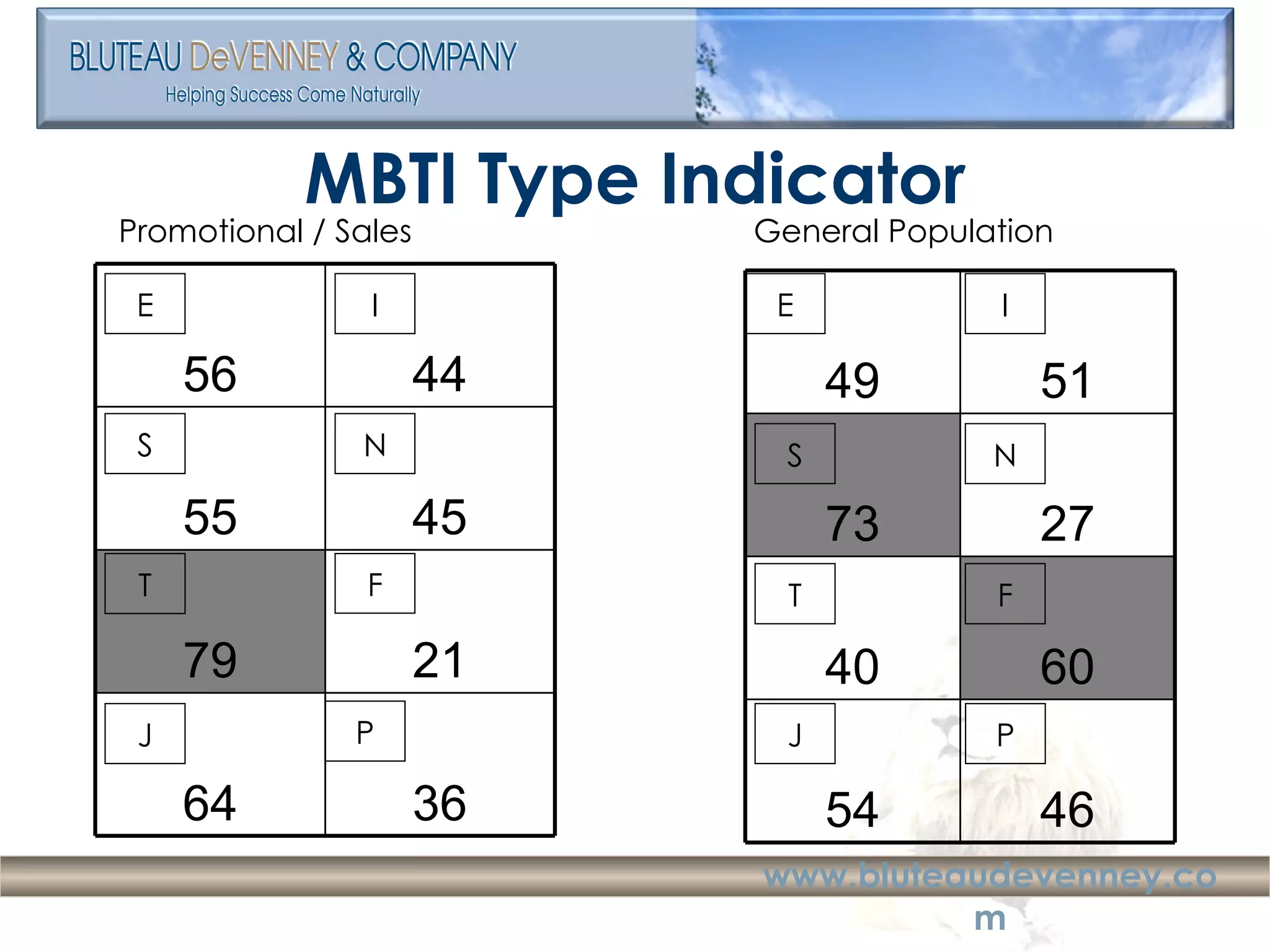
MBTI Type Indicator E I N S T F J P E I S N T F J P Promotional / Sales General Population 56 44 55 45 79 21 64 36 49 51 73 27 40 60 54 46
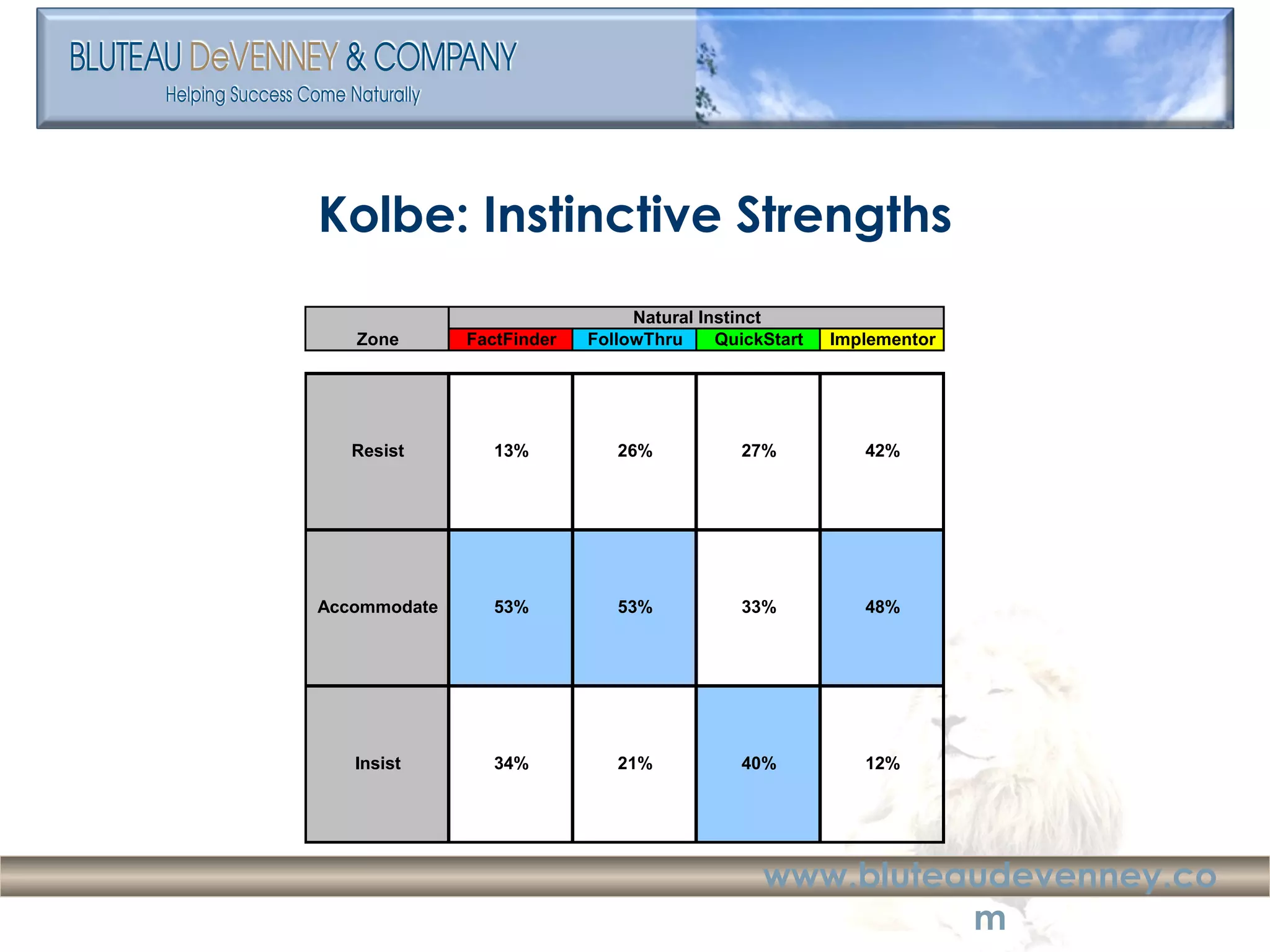
Kolbe: Instinctive Strengths
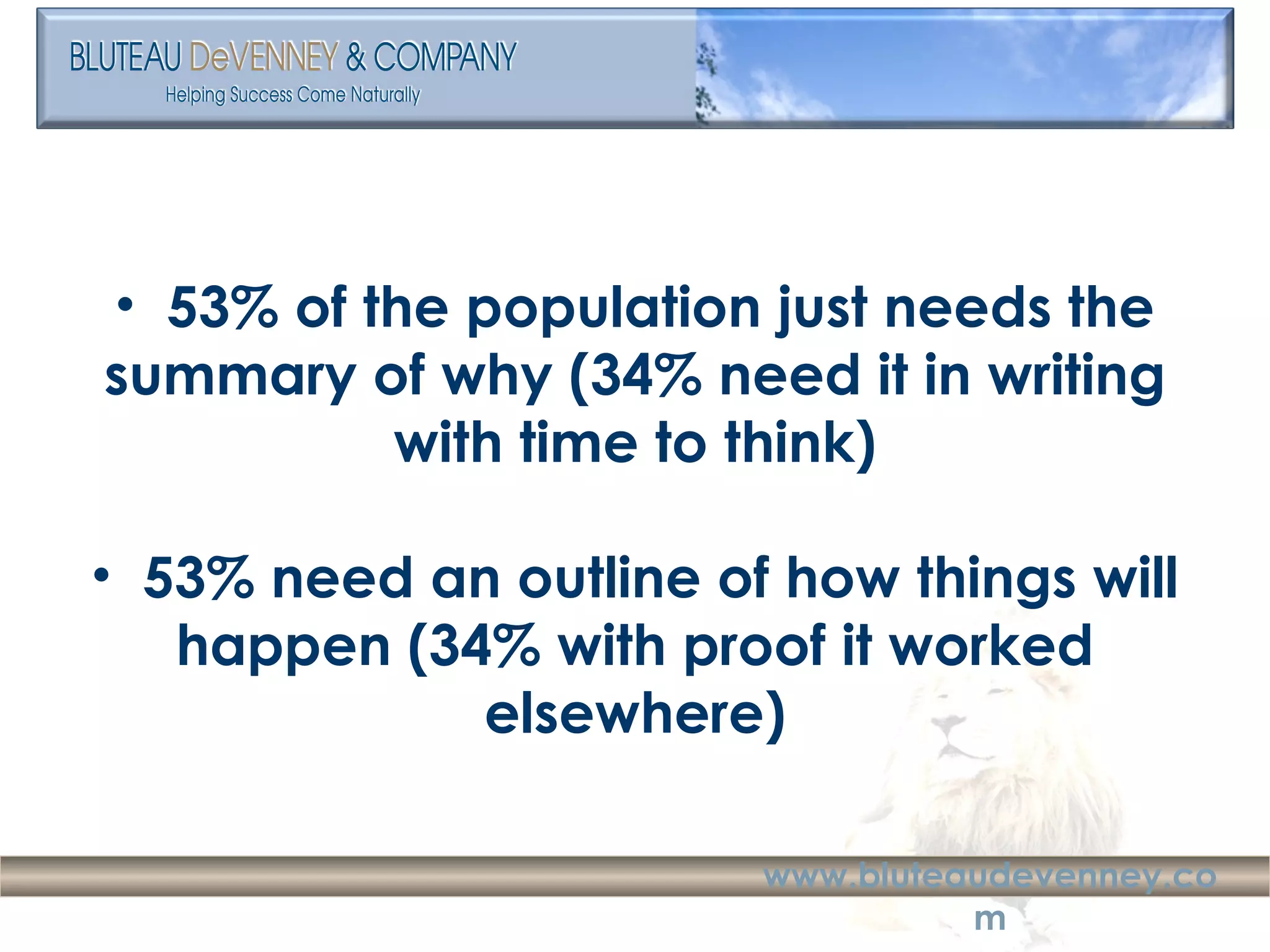
53% of the population just needs the summary of why (34% need it in writing with time to think) 53% need an outline of how things will happen (34% with proof it worked elsewhere)
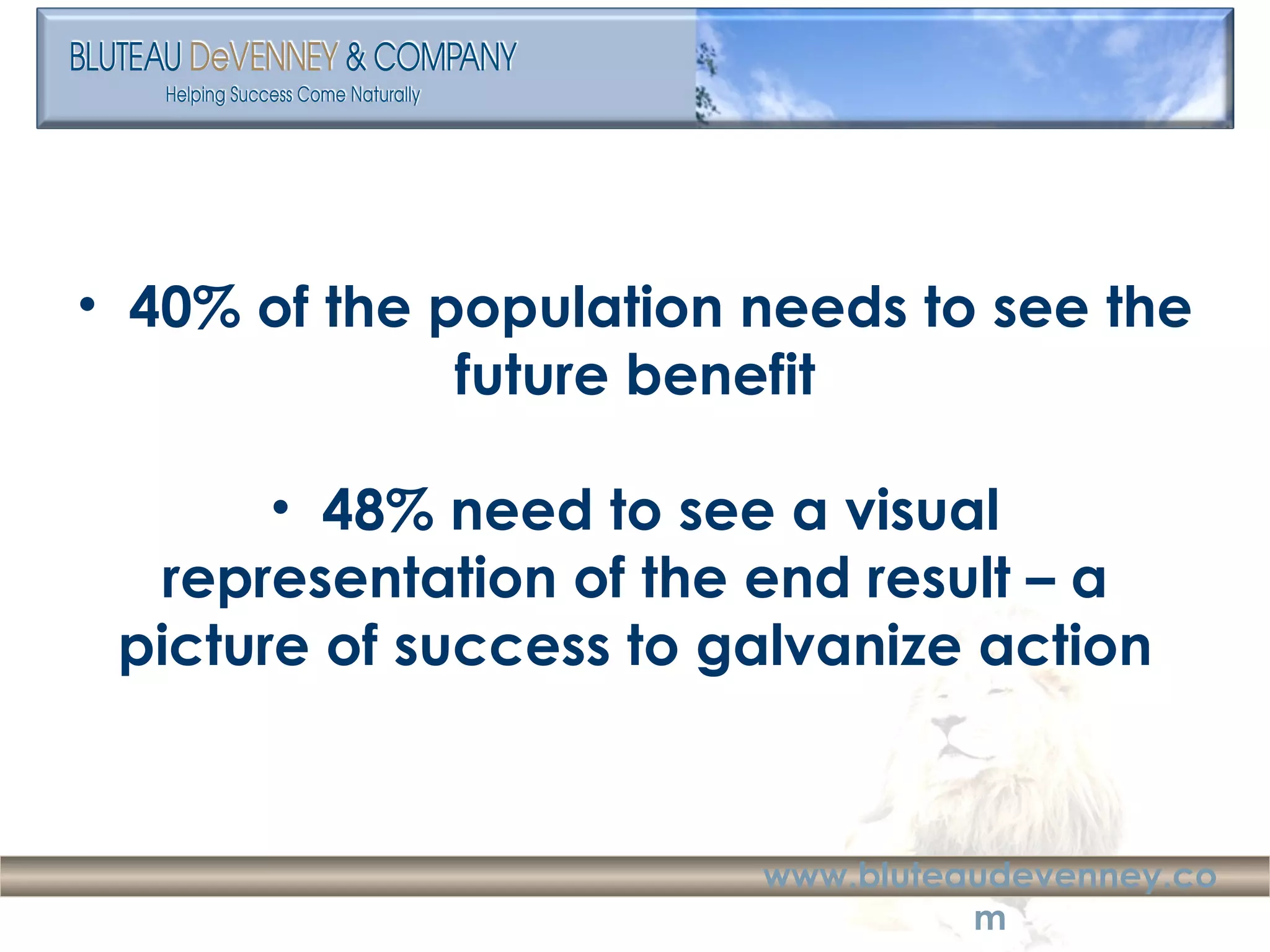
40% of the population needs to see the future benefit 48% need to see a visual representation of the end result – a picture of success to galvanize action
The power to communicate and connect is critical to success. It is not up to the audience to understand – it is our role.

Ppt 4 Communicating To Connect With Your Audience

  • 1.
    Communicating to Connectwith Your Audience
  • 2.
    The world isincreasingly complex, competitive and fast paced. It is crucial to communicate to connect to move ideas forward and gain commitment for action.
  • 3.
    The ability tocommunicate effectively is a competitive advantage.
  • 4.
    Research shows thatless than 33% of communication is effective.
  • 5.
    The Outcome: Two-thirdsof ideas and initiatives fail!
  • 6.
    The Bottom-Line: “Leaders of the past knew how to tell – leaders of the future will know how to ask.” Peter Drucker
  • 7.
    Where are yourrelationships today? Think about the key challenges and obstacles that limit your potential to achieve effective communication and action.
  • 8.
  • 9.
    The Greatest Challenges:Not taking time with the audience Telling not asking Not taking initiative and following up Not delivering a consistent message Not having a plan and staying focused Not working from the same page Not understanding the business
  • 10.
    The Central Issue:Communicating to connect is more about feelings and less about facts. We need to ask the audience to understand the audience.
  • 11.
  • 12.
  • 13.
    Two shifts arerecommended to build a communication connection: Take a consultative approach Understand personality
  • 14.
    Communication and actionhappens effectively when people are treated as clients.
  • 15.
  • 16.
    The basic actionsof consultative selling in communication: Situational based questions Problem based questions Implication based questions Need-Payoff based questions
  • 17.
    The role ofthe communicator: Provide direction Provide confidence Provide capability Provide action
  • 18.
    The Six Rulesof Persuasion
  • 19.
    Using Influence ReciprocityCommitment and Consistency Social Proof Liking Authority Scarcity
  • 20.
    Personality affects howwe communicate and connect. You and your audience may be different.
  • 21.
    MBTI Type IndicatorE I N S T F J P E I S N T F J P Promotional / Sales General Population 56 44 55 45 79 21 64 36 49 51 73 27 40 60 54 46
  • 22.
  • 23.
    53% of thepopulation just needs the summary of why (34% need it in writing with time to think) 53% need an outline of how things will happen (34% with proof it worked elsewhere)
  • 24.
    40% of thepopulation needs to see the future benefit 48% need to see a visual representation of the end result – a picture of success to galvanize action
  • 25.
    The power tocommunicate and connect is critical to success. It is not up to the audience to understand – it is our role.