ANJALI S O
B.Ed Physical science
FMTC MYLAPURE
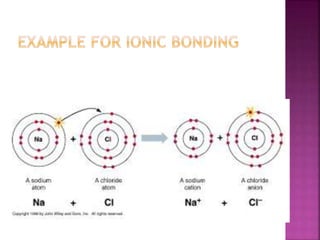
 A chemical bond formed between
two ions with opposite charges. Ionic
bonds form when one atom gives up one or
more electrons to another atom.
These bonds can form between a pair of
atoms or between molecules and are the
type of bond found in salts.
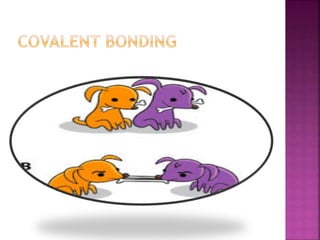
 A covalent bond, also called a
molecular bond, is a chemicalbond that
involves the sharing of electron pairs
between atoms. These electron pairs are
known as shared pairs or bonding pairs, and
the stable balance of attractive and repulsive
forces between atoms, when they share
electrons, is known as covalent bonding.
 The chemical bonding that holds the atoms
of a metal together. Metallic bonds are
formed from the attraction between mobile
electrons and fixed, positively charged
metallic atoms.
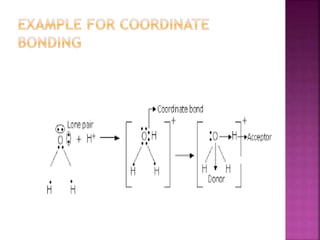
 A covalent chemical bond between two
atoms that is produced when one atom
shares a pair of electrons with another atom
lacking such a pair. Also called
semipolar bonding.
 powerpoint presentation
 powerpoint presentation

powerpoint presentation

  • 1.
    ANJALI S O B.EdPhysical science FMTC MYLAPURE
  • 4.
     A chemicalbond formed between two ions with opposite charges. Ionic bonds form when one atom gives up one or more electrons to another atom. These bonds can form between a pair of atoms or between molecules and are the type of bond found in salts.
  • 7.
     A covalentbond, also called a molecular bond, is a chemicalbond that involves the sharing of electron pairs between atoms. These electron pairs are known as shared pairs or bonding pairs, and the stable balance of attractive and repulsive forces between atoms, when they share electrons, is known as covalent bonding.
  • 10.
     The chemicalbonding that holds the atoms of a metal together. Metallic bonds are formed from the attraction between mobile electrons and fixed, positively charged metallic atoms.
  • 12.
     A covalentchemical bond between two atoms that is produced when one atom shares a pair of electrons with another atom lacking such a pair. Also called semipolar bonding.