

EXCRETORY SYSTEM
GRADE 10 LIFE SCIENCES
BY KAMATI VUYO
201203654
ALEJANDRA, C. ANDREW, P . BRONTE, S. CAMILA, M . KIM, P .
 The excretory system is a passive biological system
that removes excess, unnecessary materials from
an organism and prevent damage to the body
 The matter, such as urine or sweat, that is so
excreted

 The act or process of discharging waste
matter from the blood, tissues, or organs.
What the Excretory System does
The system removes metabolic waste from
the body. One of the main parts of the
Excretory System is the kidney. The waste
products arrive in the kidneys then the
kidneys then start a process that removes
hazardous toxins and products that the body
can not use. The kidneys then mix the waste
products together to form a liquid called
urine. The urine then goes to the bladder and
is kept there until it is released via the Uretha.
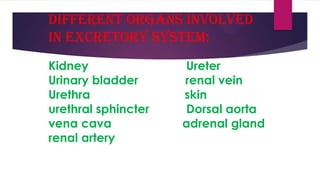
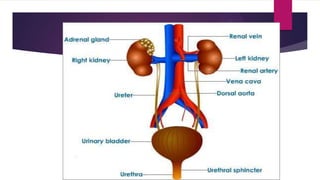
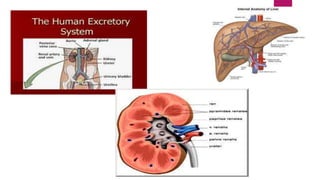
DIFFERENT ORGANS INVOLVED
IN EXCRETORY SYSTEM:
Kidney
Urinary bladder
Urethra
urethral sphincter
vena cava
renal artery

Ureter
renal vein
skin
Dorsal aorta
adrenal gland
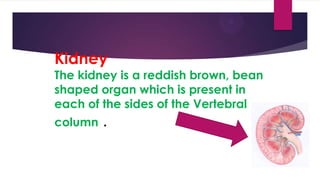
Kidney

The kidney is a reddish brown, bean
shaped organ which is present in
each of the sides of the Vertebral
column

.
Skin
The skin is another part of the
excretory system: it eliminates
sweat, that helps cool the body and
regulate the concentration of salt
Renal artery
normally arise off the side of
the abdominal aorta, immediately
below the superior mesenteric
artery, and supply the kidneys with
blood.
Adrenal gland
Are endocrine glands that sit at
the top of the kidneys the right
adrenal gland is triangular
shaped, while the left adrenal
gland is semi lunar shaped. They
are chiefly responsible for
releasing hormones in response
to stress
Renal vein
The renal veins are veins that drain
the kidney. They connect the kidney
to the inferior vena cava. They carry
the blood purified by the kidney.
Vena cava
vein is the vena cava that carries
de-oxygenated blood from the
lower half of the body into the right
atrium of the heart.
urethral sphincter
refers to one of two muscles used to
control the exit of urine in the urinary
bladder through the urethra.
Ureter

Are muscular ducts that
propel urine from the kidneys
to the urinary bladder. In
humans, the ureters arise from
the renal pelvis on the medial
aspect of each kidney before
descending towards the
bladder.
Urinary bladder
The urinary bladder is the organ that
collects urine excreted by the
kidneys prior to disposal
by urination. It is a hollow muscular
, and sits on the pelvic floor
Dorsal aorta
The dorsal aorta give branches to
the yolk-sac, and are continued
backward through the body-stalk as
the umbilical arteries to the villi of
the chorion.
Urethra
In anatomy is a tube which
connects the urinary bladder to the
outside of the body.
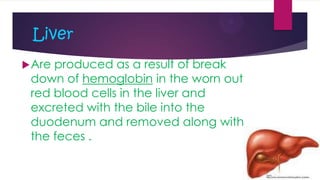
Liver
 Are

produced as a result of break
down of hemoglobin in the worn out
red blood cells in the liver and
excreted with the bile into the
duodenum and removed along with
the feces .
PROBLEMS


A problem that can happen in the Excretory system is Urinary
tract infection- This is usually due to a bacteria which can
cause burning during urination. It is usually treated with
antibiotics.



Kidney stones- These are small hard deposits that develop in
the kidneys. They can cause severe pain in the stomach and
back. Surgery may be required if they are to expand.



Cystitis is an infection in the bladder, due to bacteria.



Blood in the urine- is a sign of a problem usually due to an
urinary tract infection or kidney stones. Sometimes, it can be
due to a more serious problem such as cancer.
HOW TO LOOK AFTER YOUR
EXCRETORY SYSTEMS
 Drink

adequate amounts of water.

 Exercise

regularly.

 Eat

a nutritious diet consisting of
fruits, vegetables, grains, and nuts.

 Stay

away from drugs, alcohol and
tobacco
LARGE INTESTINE
 The

Large Intestine collects waste
from throughout the body.
 It extracts any remaining (usable)
water and then removes waste.
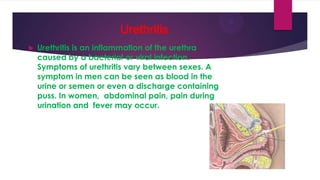
Urethritis


Urethritis is an inflammation of the urethra
caused by a bacterial or viral infection.
Symptoms of urethritis vary between sexes. A
symptom in men can be seen as blood in the
urine or semen or even a discharge containing
puss. In women, abdominal pain, pain during
urination and fever may occur.


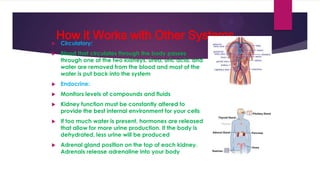
How it Works with Other Systems
Circulatory:



Blood that circulates through the body passes
through one of the two kidneys. Urea, uric acid, and
water are removed from the blood and most of the
water is put back into the system



Endocrine:



Monitors levels of compounds and fluids



Kidney function must be constantly altered to
provide the best internal environment for your cells



If too much water is present, hormones are released
that allow for more urine production. If the body is
dehydrated, less urine will be produced



Adrenal gland position on the top of each kidney.
Adrenals release adrenaline into your body
WHICH IS THE RELATIONSHIP BETWEEN
WATER AND EXCRETION?
 Water

is essential for digesting food. It is
also important for getting rid of various
toxic elements from the body, in the form of
urine, sweat and faecal matter.
 Water helps to cushion our joints and
prevents shocks in them.
 Water present in blood is the carrier of
oxygen and nutrients to all our body cells.
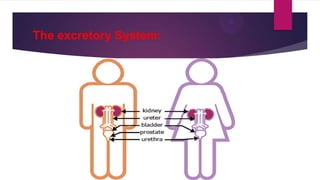
The excretory System:
REFERNCES
This presentation is a mash up of 5 different sources & they are:
Alejandra, C. (2010). H20 = Excretion.
http://www.slideshare.net/alejandraANDcamila/h2-o-excretion?qid=4986fe4c-f916-4119-85ab88fd388b2118&v=qf1&b=&from_search=1

Andrew, P. (2012). Human Excretory system.
http://www.slideshare.net/andrewpdock123/excretory-system-7551606?qid=d0d468ca-5c7a-4896b93f-6358db829615&v=default&b=&from_search=7
Bronte, S. (2011). The Excretory system
http://www.slideshare.net/yr82011/the-excretory-systembronte?qid=c8c6b535-ef05-4631-93340db24bdc032d&v=qf1&b=&from_search=14
Camila, M. (2012). The Excretory system.
http://www.slideshare.net/132cool/excretory-system-8430788?qid=e71d87bb-3571-4099-8b311337dad6c19e&v=qf1&b=&from_search=12
Kim, A. (2013). Excretory system. http://www.slideshare.net/kimangelie/excretory-system25809066?qid=c8c6b535-ef05-4631-9334-0db24bdc032d&v=default&b=&from_search=10

Excretory system grade 10 life sciences

  • 1.
    EXCRETORY SYSTEM GRADE 10LIFE SCIENCES BY KAMATI VUYO 201203654 ALEJANDRA, C. ANDREW, P . BRONTE, S. CAMILA, M . KIM, P .
  • 2.
     The excretorysystem is a passive biological system that removes excess, unnecessary materials from an organism and prevent damage to the body  The matter, such as urine or sweat, that is so excreted  The act or process of discharging waste matter from the blood, tissues, or organs.
  • 3.
    What the ExcretorySystem does The system removes metabolic waste from the body. One of the main parts of the Excretory System is the kidney. The waste products arrive in the kidneys then the kidneys then start a process that removes hazardous toxins and products that the body can not use. The kidneys then mix the waste products together to form a liquid called urine. The urine then goes to the bladder and is kept there until it is released via the Uretha.
  • 4.
    DIFFERENT ORGANS INVOLVED INEXCRETORY SYSTEM: Kidney Urinary bladder Urethra urethral sphincter vena cava renal artery Ureter renal vein skin Dorsal aorta adrenal gland
  • 6.
    Kidney The kidney isa reddish brown, bean shaped organ which is present in each of the sides of the Vertebral column .
  • 7.
    Skin The skin isanother part of the excretory system: it eliminates sweat, that helps cool the body and regulate the concentration of salt
  • 8.
    Renal artery normally ariseoff the side of the abdominal aorta, immediately below the superior mesenteric artery, and supply the kidneys with blood.
  • 9.
    Adrenal gland Are endocrineglands that sit at the top of the kidneys the right adrenal gland is triangular shaped, while the left adrenal gland is semi lunar shaped. They are chiefly responsible for releasing hormones in response to stress
  • 10.
    Renal vein The renalveins are veins that drain the kidney. They connect the kidney to the inferior vena cava. They carry the blood purified by the kidney.
  • 11.
    Vena cava vein isthe vena cava that carries de-oxygenated blood from the lower half of the body into the right atrium of the heart.
  • 12.
    urethral sphincter refers toone of two muscles used to control the exit of urine in the urinary bladder through the urethra.
  • 13.
    Ureter Are muscular ductsthat propel urine from the kidneys to the urinary bladder. In humans, the ureters arise from the renal pelvis on the medial aspect of each kidney before descending towards the bladder.
  • 14.
    Urinary bladder The urinarybladder is the organ that collects urine excreted by the kidneys prior to disposal by urination. It is a hollow muscular , and sits on the pelvic floor
  • 15.
    Dorsal aorta The dorsalaorta give branches to the yolk-sac, and are continued backward through the body-stalk as the umbilical arteries to the villi of the chorion.
  • 16.
    Urethra In anatomy isa tube which connects the urinary bladder to the outside of the body.
  • 17.
    Liver  Are produced asa result of break down of hemoglobin in the worn out red blood cells in the liver and excreted with the bile into the duodenum and removed along with the feces .
  • 18.
    PROBLEMS  A problem thatcan happen in the Excretory system is Urinary tract infection- This is usually due to a bacteria which can cause burning during urination. It is usually treated with antibiotics.  Kidney stones- These are small hard deposits that develop in the kidneys. They can cause severe pain in the stomach and back. Surgery may be required if they are to expand.  Cystitis is an infection in the bladder, due to bacteria.  Blood in the urine- is a sign of a problem usually due to an urinary tract infection or kidney stones. Sometimes, it can be due to a more serious problem such as cancer.
  • 19.
    HOW TO LOOKAFTER YOUR EXCRETORY SYSTEMS  Drink adequate amounts of water.  Exercise regularly.  Eat a nutritious diet consisting of fruits, vegetables, grains, and nuts.  Stay away from drugs, alcohol and tobacco
  • 21.
    LARGE INTESTINE  The LargeIntestine collects waste from throughout the body.  It extracts any remaining (usable) water and then removes waste.
  • 22.
    Urethritis  Urethritis is aninflammation of the urethra caused by a bacterial or viral infection. Symptoms of urethritis vary between sexes. A symptom in men can be seen as blood in the urine or semen or even a discharge containing puss. In women, abdominal pain, pain during urination and fever may occur.
  • 23.
     How it Workswith Other Systems Circulatory:  Blood that circulates through the body passes through one of the two kidneys. Urea, uric acid, and water are removed from the blood and most of the water is put back into the system  Endocrine:  Monitors levels of compounds and fluids  Kidney function must be constantly altered to provide the best internal environment for your cells  If too much water is present, hormones are released that allow for more urine production. If the body is dehydrated, less urine will be produced  Adrenal gland position on the top of each kidney. Adrenals release adrenaline into your body
  • 24.
    WHICH IS THERELATIONSHIP BETWEEN WATER AND EXCRETION?  Water is essential for digesting food. It is also important for getting rid of various toxic elements from the body, in the form of urine, sweat and faecal matter.  Water helps to cushion our joints and prevents shocks in them.  Water present in blood is the carrier of oxygen and nutrients to all our body cells.
  • 25.
  • 26.
    REFERNCES This presentation isa mash up of 5 different sources & they are: Alejandra, C. (2010). H20 = Excretion. http://www.slideshare.net/alejandraANDcamila/h2-o-excretion?qid=4986fe4c-f916-4119-85ab88fd388b2118&v=qf1&b=&from_search=1 Andrew, P. (2012). Human Excretory system. http://www.slideshare.net/andrewpdock123/excretory-system-7551606?qid=d0d468ca-5c7a-4896b93f-6358db829615&v=default&b=&from_search=7 Bronte, S. (2011). The Excretory system http://www.slideshare.net/yr82011/the-excretory-systembronte?qid=c8c6b535-ef05-4631-93340db24bdc032d&v=qf1&b=&from_search=14 Camila, M. (2012). The Excretory system. http://www.slideshare.net/132cool/excretory-system-8430788?qid=e71d87bb-3571-4099-8b311337dad6c19e&v=qf1&b=&from_search=12 Kim, A. (2013). Excretory system. http://www.slideshare.net/kimangelie/excretory-system25809066?qid=c8c6b535-ef05-4631-9334-0db24bdc032d&v=default&b=&from_search=10