Jeffrey PfefferGraduate School of BusinessStanford UniversityPOWER:SOME CORE IDEAS
BUILD THE QUALITIES THAT CREATE POWERWillAmbitionEnergyFocusPersistence and resilienceSkillSelf-knowledge and self-reflectionConfidenceEmpathic understanding of others—ability to “read” peopleAbility to tolerate/manage/handle conflict
PERSON PERCEPTIONSusan Fiske:  warmth and competenceOsgood, Tannenbaum, and Suci:  potency/valence, likeability, and honesty/trustThe “problem” is that warmth and competence, intelligence and niceness, strength and likeability, are often seen as negatively correlatedTeresa M. Amabile, “Brilliant But Cruel:  Perceptions of Negative Evaluators” (J. of Experimental Social Psychology,1983)Amy Cuddy, “Just Because I’m Nice, Don’t Assume I’m Dumb” (Harvard Business Review, February, 2009)
DIFFERENTIATE—STAND OUTThe “mere exposure” effect—we prefer/choose the “familiar,” what we remember—so become memorableFind the “white space”—the niche, activities, locations that may become important but that aren’t yet, so competition is less.  Then work to make your “location” valuableTake reasonable risks—don’t be afraid of rejection or setbacks
BUILD RELATIONSHIPS/NETWORKSDo the small tasks that no one else wants to do but that bring you into contact with lots of important peopleFigure out who you need and then meet—and stay in touch with—themThe importance of weak ties means you should not spend all of your time with your close friends and colleaguesConnect people/groups together who can benefit from knowing each other—brokerage and filling structural holes
WORK ON YOUR REPUTATIONYou only get one chance to make a first impressionWhat is your personal brand—how you want to be known?  What does that imply about what you need to do?Cultivate the media—get known, written and talked aboutWrite articles, blogs, columnsConsider getting professional public relations help early in your career—when it has longer to work, when you need it more, and when pulling away from the competition is more important
ACT AND SPEAK LIKE A LEADERPower posing changes you (blood chemistry and self-perception) and others’ perceptions of youStand straightEye contactExpansive pose—take up spaceDon’t fidget or do other things that signal nervousness or weaknessForceful hand gestures
ACT AND SPEAK LIKE A LEADERDisplay anger rather than sadness or remorseDon’t use passive sentence construction—assume control through your speechUse persuasive languageContrastive pairsLists (of 3 or more)Vivid, emotion producing languageQuestion premises and taken-for-granted assumptionsEffectiveness of humor
REMEMBER, POWER IS GOOD FOR YOUCan be monitizedPermits you to “change lives, change organizations, change the world”When manifested in greater control over your work life, leads to longevitySeek power as if your life depends on it, because it does.

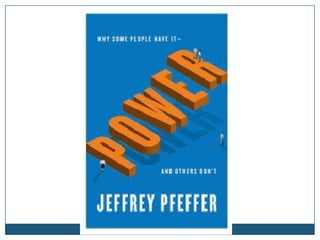
Power and Career Success with Jeffrey Pfeffer

  • 1.
    Jeffrey PfefferGraduate Schoolof BusinessStanford UniversityPOWER:SOME CORE IDEAS
  • 3.
    BUILD THE QUALITIESTHAT CREATE POWERWillAmbitionEnergyFocusPersistence and resilienceSkillSelf-knowledge and self-reflectionConfidenceEmpathic understanding of others—ability to “read” peopleAbility to tolerate/manage/handle conflict
  • 4.
    PERSON PERCEPTIONSusan Fiske: warmth and competenceOsgood, Tannenbaum, and Suci: potency/valence, likeability, and honesty/trustThe “problem” is that warmth and competence, intelligence and niceness, strength and likeability, are often seen as negatively correlatedTeresa M. Amabile, “Brilliant But Cruel: Perceptions of Negative Evaluators” (J. of Experimental Social Psychology,1983)Amy Cuddy, “Just Because I’m Nice, Don’t Assume I’m Dumb” (Harvard Business Review, February, 2009)
  • 5.
    DIFFERENTIATE—STAND OUTThe “mereexposure” effect—we prefer/choose the “familiar,” what we remember—so become memorableFind the “white space”—the niche, activities, locations that may become important but that aren’t yet, so competition is less. Then work to make your “location” valuableTake reasonable risks—don’t be afraid of rejection or setbacks
  • 6.
    BUILD RELATIONSHIPS/NETWORKSDo thesmall tasks that no one else wants to do but that bring you into contact with lots of important peopleFigure out who you need and then meet—and stay in touch with—themThe importance of weak ties means you should not spend all of your time with your close friends and colleaguesConnect people/groups together who can benefit from knowing each other—brokerage and filling structural holes
  • 7.
    WORK ON YOURREPUTATIONYou only get one chance to make a first impressionWhat is your personal brand—how you want to be known? What does that imply about what you need to do?Cultivate the media—get known, written and talked aboutWrite articles, blogs, columnsConsider getting professional public relations help early in your career—when it has longer to work, when you need it more, and when pulling away from the competition is more important
  • 8.
    ACT AND SPEAKLIKE A LEADERPower posing changes you (blood chemistry and self-perception) and others’ perceptions of youStand straightEye contactExpansive pose—take up spaceDon’t fidget or do other things that signal nervousness or weaknessForceful hand gestures
  • 9.
    ACT AND SPEAKLIKE A LEADERDisplay anger rather than sadness or remorseDon’t use passive sentence construction—assume control through your speechUse persuasive languageContrastive pairsLists (of 3 or more)Vivid, emotion producing languageQuestion premises and taken-for-granted assumptionsEffectiveness of humor
  • 10.
    REMEMBER, POWER ISGOOD FOR YOUCan be monitizedPermits you to “change lives, change organizations, change the world”When manifested in greater control over your work life, leads to longevitySeek power as if your life depends on it, because it does.