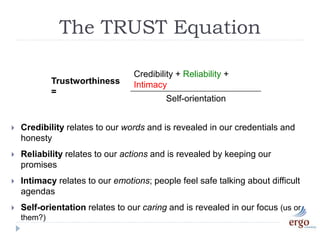
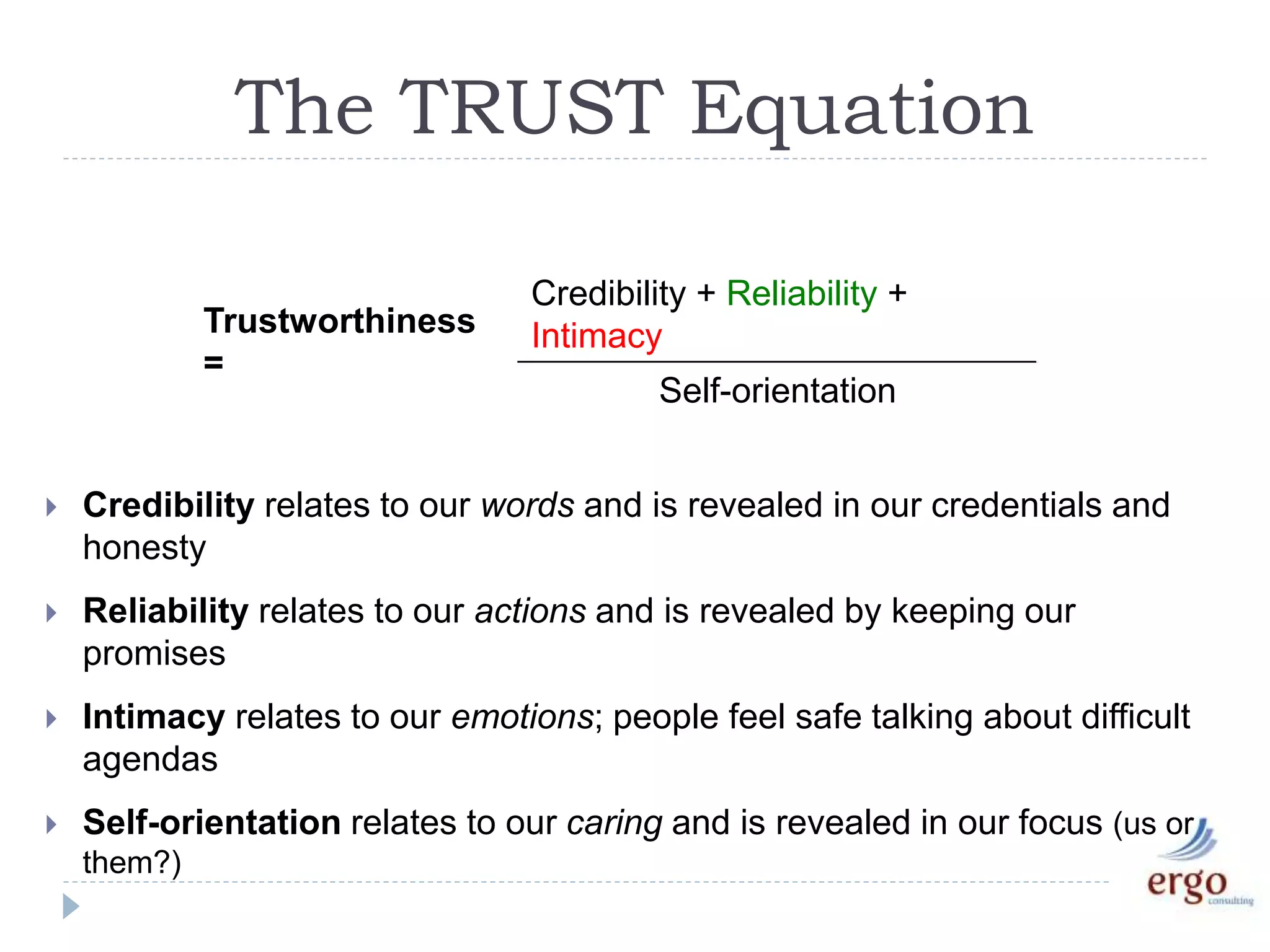
Trustworthiness
=
Credibility + Reliability +
Intimacy
Self-orientation
 Credibility relates to our words and is revealed in our credentials and
honesty
 Reliability relates to our actions and is revealed by keeping our
promises
 Intimacy relates to our emotions; people feel safe talking about difficult
agendas
 Self-orientation relates to our caring and is revealed in our focus (us or
them?)
The TRUST Equation
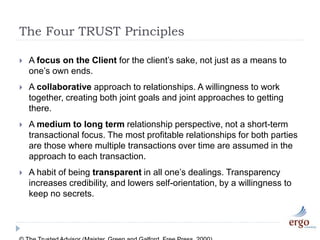
 A focus on the Client for the client’s sake, not just as a means to
one’s own ends.
 A collaborative approach to relationships. A willingness to work
together, creating both joint goals and joint approaches to getting
there.
 A medium to long term relationship perspective, not a short-term
transactional focus. The most profitable relationships for both parties
are those where multiple transactions over time are assumed in the
approach to each transaction.
 A habit of being transparent in all one’s dealings. Transparency
increases credibility, and lowers self-orientation, by a willingness to
keep no secrets.
The Four TRUST Principles
,
2
0
0
0
)
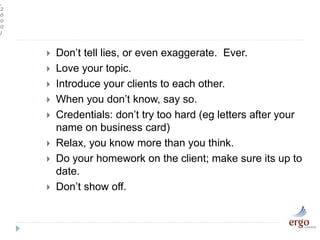
 Don’t tell lies, or even exaggerate. Ever.
 Love your topic.
 Introduce your clients to each other.
 When you don’t know, say so.
 Credentials: don’t try too hard (eg letters after your
name on business card)
 Relax, you know more than you think.
 Do your homework on the client; make sure its up to
date.
 Don’t show off.
,
2
0
0
0
)
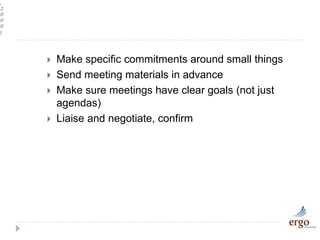
 Make specific commitments around small things
 Send meeting materials in advance
 Make sure meetings have clear goals (not just
agendas)
 Liaise and negotiate, confirm
,
2
0
0
0
)
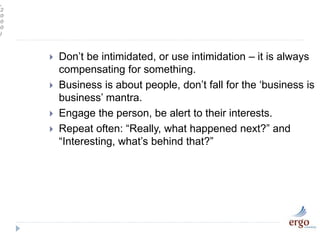
 Don’t be intimidated, or use intimidation – it is always
compensating for something.
 Business is about people, don’t fall for the ‘business is
business’ mantra.
 Engage the person, be alert to their interests.
 Repeat often: “Really, what happened next?” and
“Interesting, what’s behind that?”
,
2
0
0
0
)
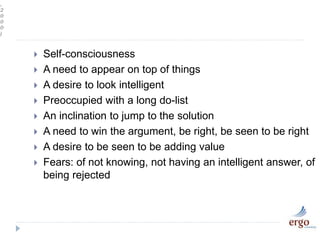
 Self-consciousness
 A need to appear on top of things
 A desire to look intelligent
 Preoccupied with a long do-list
 An inclination to jump to the solution
 A need to win the argument, be right, be seen to be right
 A desire to be seen to be adding value
 Fears: of not knowing, not having an intelligent answer, of
being rejected
,
2
0
0
0
)
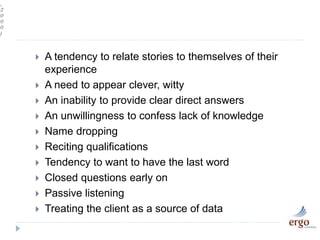
 A tendency to relate stories to themselves of their
experience
 A need to appear clever, witty
 An inability to provide clear direct answers
 An unwillingness to confess lack of knowledge
 Name dropping
 Reciting qualifications
 Tendency to want to have the last word
 Closed questions early on
 Passive listening
 Treating the client as a source of data
s
,
2
0
0
0
)
 Opposite of all previous
 Asking the client what is behind a certain issue
 Focus on defining the problem, not guessing the solution
 Learning to tell the client’s story before we write our own
 Adapt to the client’s culture re terminology, style, formats,
hours etc.
 Resisting the clients invitation to offer a solution too early
on
 Be available
 Anticipate needs and respond
 Communicate
 Communicate

The TRUST Equation

  • 1.
    Trustworthiness = Credibility + Reliability+ Intimacy Self-orientation  Credibility relates to our words and is revealed in our credentials and honesty  Reliability relates to our actions and is revealed by keeping our promises  Intimacy relates to our emotions; people feel safe talking about difficult agendas  Self-orientation relates to our caring and is revealed in our focus (us or them?) The TRUST Equation
  • 2.
     A focuson the Client for the client’s sake, not just as a means to one’s own ends.  A collaborative approach to relationships. A willingness to work together, creating both joint goals and joint approaches to getting there.  A medium to long term relationship perspective, not a short-term transactional focus. The most profitable relationships for both parties are those where multiple transactions over time are assumed in the approach to each transaction.  A habit of being transparent in all one’s dealings. Transparency increases credibility, and lowers self-orientation, by a willingness to keep no secrets. The Four TRUST Principles
  • 3.
    , 2 0 0 0 )  Don’t telllies, or even exaggerate. Ever.  Love your topic.  Introduce your clients to each other.  When you don’t know, say so.  Credentials: don’t try too hard (eg letters after your name on business card)  Relax, you know more than you think.  Do your homework on the client; make sure its up to date.  Don’t show off.
  • 4.
    , 2 0 0 0 )  Make specificcommitments around small things  Send meeting materials in advance  Make sure meetings have clear goals (not just agendas)  Liaise and negotiate, confirm
  • 5.
    , 2 0 0 0 )  Don’t beintimidated, or use intimidation – it is always compensating for something.  Business is about people, don’t fall for the ‘business is business’ mantra.  Engage the person, be alert to their interests.  Repeat often: “Really, what happened next?” and “Interesting, what’s behind that?”
  • 6.
    , 2 0 0 0 )  Self-consciousness  Aneed to appear on top of things  A desire to look intelligent  Preoccupied with a long do-list  An inclination to jump to the solution  A need to win the argument, be right, be seen to be right  A desire to be seen to be adding value  Fears: of not knowing, not having an intelligent answer, of being rejected
  • 7.
    , 2 0 0 0 )  A tendencyto relate stories to themselves of their experience  A need to appear clever, witty  An inability to provide clear direct answers  An unwillingness to confess lack of knowledge  Name dropping  Reciting qualifications  Tendency to want to have the last word  Closed questions early on  Passive listening  Treating the client as a source of data
  • 8.
    s , 2 0 0 0 )  Opposite ofall previous  Asking the client what is behind a certain issue  Focus on defining the problem, not guessing the solution  Learning to tell the client’s story before we write our own  Adapt to the client’s culture re terminology, style, formats, hours etc.  Resisting the clients invitation to offer a solution too early on  Be available  Anticipate needs and respond  Communicate  Communicate