Managing remote teams
Remote work has its advantages—flexibility, low or no
overhead costs, and a greater pipeline of applicants
from which to hire. And it has its disadvantages—less
interaction, managers worried about how to tell if their
employees are staying on task and communication
challenges. How can companies maximize the
advantages and minimize the disadvantages?
Introduction
Steer
More companies are choosing remote work than ever
before. According to the Bureau of Labor Statistics, in
2015, 23 percent of workers reported doing at least
some of their work remotely. And the New York Times
reports that telecommuting increased 79 percent
between 2005 and 2012.
But, why remote work is good for you, your employees
and your business?
Why remote work is
good for you
Steer
Steer
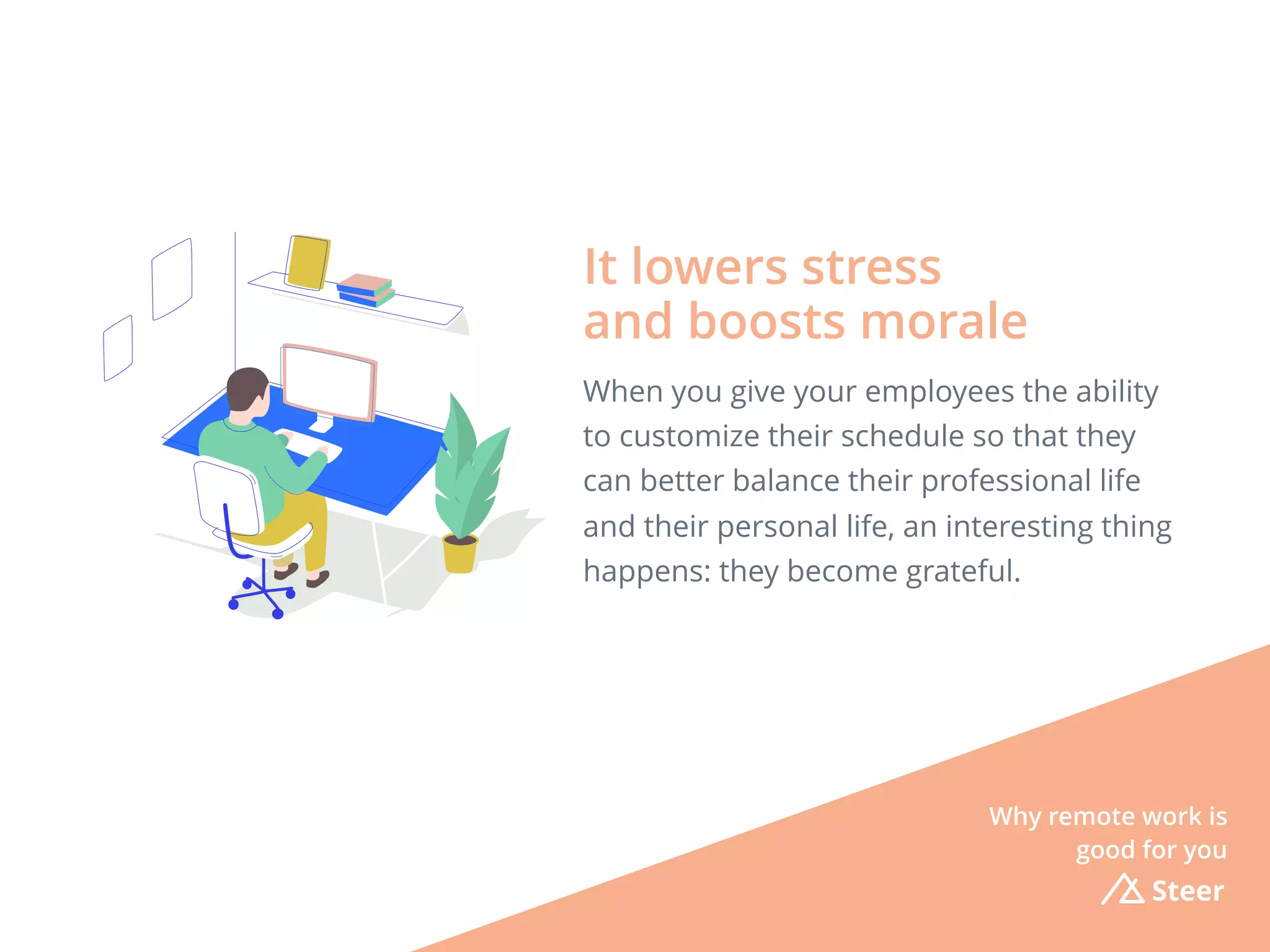
When you give your employees the ability
to customize their schedule so that they
can better balance their professional life
and their personal life, an interesting thing
happens: they become grateful.
It lowers stress
and boosts morale
Why remote work is
good for you
Steer
Companies and at-home employees alike
say remote work is a boon to productivity.
Distractions like water cooler gossip,
impromptu meetings, and loud colleagues
are a non-issue.
Increases productivity
Why remote work is
good for you
Steer
Without having to start their workday with a
lengthy commute, crushed into a train car,
smashed on a bus, or being jostled on a
busy city sidewalk, telecommuters can start
their workday earlier and dedicate more
time to the job.
No commute
Why remote work is
good for you
Steer
Sure, you’d like to have your entire staff
centrally located in one office, where you can
watch them work, collaborate together, and
have face-to-face time. But all of that comes
at price, in the form of super expensive office
space costs. Having a virtual staff virtually
reduces all of those expenses to zero!
It is much cheaper
Why remote work is
good for you
Steer
Because your employees can work from
anywhere, you can look for the best
talent anywhere. Working remotely
means you are never starved for qualified
candidates so you can make the best
hiring decisions for the business.
Access to awesome talent
Why remote work is
good for you
Remote work is wonderful. But there are some
challenges of remote working that you and the
organization you work for must overcome in order
for you to be successful.
Challenges when
working remotely
Steer
Steer
At the end of the day, a typical office
worker checks out at 6PM, drives home
to his or her family and spends the
evening doing some leisure activity. But if
you work from home, this is not the
reality. You might need to trick yourself to
take breaks and set clear start and end
times. Otherwise, you risk burnout.
Working too much
How to solve it:
• Set appointments on your
calendar for the end of the day.
• Set up reminders to take
breaks.
Challenges when
working remotely
Steer
Remote workers need to be self-
motivated experts at time
management, because we don't have
others constantly overlooking our
work or managing our time for us.
Prioritizing work
How to solve it:
• Limit the number of tasks you
plan to do each day.
• Your energy waxes and wanes
during the day, so manage your
energy, not your time.
Challenges when
working remotely
Steer
People who work in shared offices
experience impromptu "watercooler"
moments of interaction and maybe even
share meals together or after-work
drinks. Remote workers? We often work
asynchronously with our teammates and
perhaps have only our houseplants to
talk to.
Loneliness and Lack of Human Interaction
How to solve it:
• Include social breaks in your
schedule
• Try working at co-working
spaces or coffee shops
Challenges when
working remotely
The reality is that most people managers don’t have
any formal education in management. In a study by
Gallup, one in 10 people has the talent to manage
well. The good news is management is a skill that can
be taught and learned.
The most important lesson about management is that
it’s not about managing people. It’s about building a
culture and process that set a team up for success.
Remote team management
fundamentals
Steer
Remote work can be a very stressful process if you don't
trust your team members. While trusting your employees
is good for your own sanity it also increases their
motivation and hence their productivity.
Steer
Trust your employees
How to give
valuable feedback
In order to manage a team that works remotely, it is
important to clarify your expectations using clear KPIs so
that both you and the team have a way to measure
achievements. Make sure everyone in your team
understands each other goals and is on the same page.
Steer
Expectations management
How to give
valuable feedback
Communication is always the most important part of
teamwork. When you have people working remotely, it is
vital to have clear communication and an effective way of
using communication tools. Define what tools you want to
use and how you want to use them.
Steer
Use communication tools
How to give
valuable feedback
When recommending a change or offering a new
approach, do so in a manner that makes it relevant. You
wouldn’t want someone to toss ideas out of the blue, so
why assume that anyone managing you would? Add
context so that he or she will know where you’re coming
from, and why.
Steer
Provide plenty of context
How to give
valuable feedback
Managing
remote teams
Download our guide

Managing Remote Teams

  • 1.
  • 2.
    Remote work hasits advantages—flexibility, low or no overhead costs, and a greater pipeline of applicants from which to hire. And it has its disadvantages—less interaction, managers worried about how to tell if their employees are staying on task and communication challenges. How can companies maximize the advantages and minimize the disadvantages? Introduction Steer
  • 3.
    More companies arechoosing remote work than ever before. According to the Bureau of Labor Statistics, in 2015, 23 percent of workers reported doing at least some of their work remotely. And the New York Times reports that telecommuting increased 79 percent between 2005 and 2012. But, why remote work is good for you, your employees and your business? Why remote work is good for you Steer
  • 4.
    Steer When you giveyour employees the ability to customize their schedule so that they can better balance their professional life and their personal life, an interesting thing happens: they become grateful. It lowers stress and boosts morale Why remote work is good for you
  • 5.
    Steer Companies and at-homeemployees alike say remote work is a boon to productivity. Distractions like water cooler gossip, impromptu meetings, and loud colleagues are a non-issue. Increases productivity Why remote work is good for you
  • 6.
    Steer Without having tostart their workday with a lengthy commute, crushed into a train car, smashed on a bus, or being jostled on a busy city sidewalk, telecommuters can start their workday earlier and dedicate more time to the job. No commute Why remote work is good for you
  • 7.
    Steer Sure, you’d liketo have your entire staff centrally located in one office, where you can watch them work, collaborate together, and have face-to-face time. But all of that comes at price, in the form of super expensive office space costs. Having a virtual staff virtually reduces all of those expenses to zero! It is much cheaper Why remote work is good for you
  • 8.
    Steer Because your employeescan work from anywhere, you can look for the best talent anywhere. Working remotely means you are never starved for qualified candidates so you can make the best hiring decisions for the business. Access to awesome talent Why remote work is good for you
  • 9.
    Remote work iswonderful. But there are some challenges of remote working that you and the organization you work for must overcome in order for you to be successful. Challenges when working remotely Steer
  • 10.
    Steer At the endof the day, a typical office worker checks out at 6PM, drives home to his or her family and spends the evening doing some leisure activity. But if you work from home, this is not the reality. You might need to trick yourself to take breaks and set clear start and end times. Otherwise, you risk burnout. Working too much How to solve it: • Set appointments on your calendar for the end of the day. • Set up reminders to take breaks. Challenges when working remotely
  • 11.
    Steer Remote workers needto be self- motivated experts at time management, because we don't have others constantly overlooking our work or managing our time for us. Prioritizing work How to solve it: • Limit the number of tasks you plan to do each day. • Your energy waxes and wanes during the day, so manage your energy, not your time. Challenges when working remotely
  • 12.
    Steer People who workin shared offices experience impromptu "watercooler" moments of interaction and maybe even share meals together or after-work drinks. Remote workers? We often work asynchronously with our teammates and perhaps have only our houseplants to talk to. Loneliness and Lack of Human Interaction How to solve it: • Include social breaks in your schedule • Try working at co-working spaces or coffee shops Challenges when working remotely
  • 13.
    The reality isthat most people managers don’t have any formal education in management. In a study by Gallup, one in 10 people has the talent to manage well. The good news is management is a skill that can be taught and learned. The most important lesson about management is that it’s not about managing people. It’s about building a culture and process that set a team up for success. Remote team management fundamentals Steer
  • 14.
    Remote work canbe a very stressful process if you don't trust your team members. While trusting your employees is good for your own sanity it also increases their motivation and hence their productivity. Steer Trust your employees How to give valuable feedback
  • 15.
    In order tomanage a team that works remotely, it is important to clarify your expectations using clear KPIs so that both you and the team have a way to measure achievements. Make sure everyone in your team understands each other goals and is on the same page. Steer Expectations management How to give valuable feedback
  • 16.
    Communication is alwaysthe most important part of teamwork. When you have people working remotely, it is vital to have clear communication and an effective way of using communication tools. Define what tools you want to use and how you want to use them. Steer Use communication tools How to give valuable feedback
  • 17.
    When recommending achange or offering a new approach, do so in a manner that makes it relevant. You wouldn’t want someone to toss ideas out of the blue, so why assume that anyone managing you would? Add context so that he or she will know where you’re coming from, and why. Steer Provide plenty of context How to give valuable feedback
  • 18.