MADATSST
&
MUKUND INGLE
PRESENT
Mr. Mukund B. Ingle
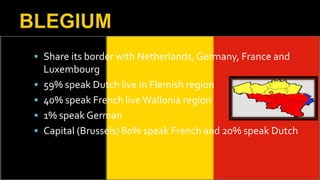
 Share its border with Netherlands, Germany, France and
Luxembourg
 59% speak Dutch live in Flemish region
 40% speak French live Wallonia region
 1% speak German
 Capital (Brussels) 80% speak French and 20% speak Dutch
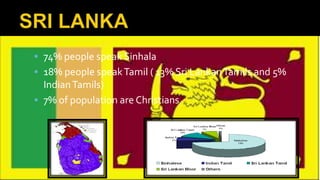
 74% people speak Sinhala
 18% people speakTamil ( 13% Sri LankanTamils and 5%
IndianTamils)
 7% of population are Christians
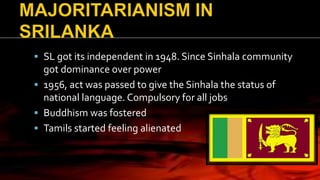
 SL got its independent in 1948. Since Sinhala community
got dominance over power
 1956, act was passed to give the Sinhala the status of
national language. Compulsory for all jobs
 Buddhism was fostered
 Tamils started feeling alienated
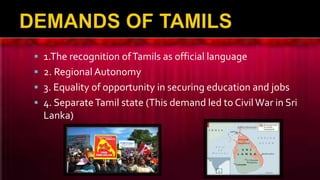
 1.The recognition ofTamils as official language
 2. Regional Autonomy
 3. Equality of opportunity in securing education and jobs
 4. SeparateTamil state (This demand led to Civil War in Sri
Lanka)
 Equal no of ministers in the central govt.
 Dutch and French ministers were made in equal no in central govt. and
Dutch agreed to that
 Powerful State government
 Many powers were given to State government taken from central
 Separate Government for Brussels
 Both communities were given equal no. of representation and here
French agreed.
 Community Government
 Third kind of govt. was formed and it contained representative from
each community
PRUDENTIAL REASONS
 Reduce conflicts
 Stability to govt.
 Better Administration
MORAL REASONS
 Very spirit of Democracy
 People are consulted
 People participation is
increased
 People rule themselves
 Due respect is given to diverse groups
 Everyone’s voice is listened
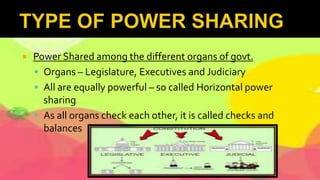
 Power Shared among the different organs of govt.
 Organs – Legislature, Executives and Judiciary
 All are equally powerful – so called Horizontal power
sharing
 As all organs check each other, it is called checks and
balances
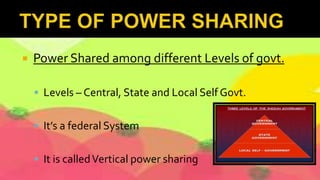
 Power Shared among different Levels of govt.
 Levels – Central, State and Local Self Govt.
 It’s a federal System
 It is calledVertical power sharing
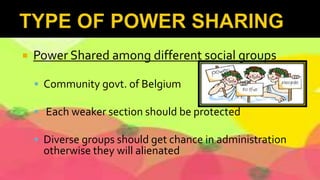
 Power Shared among different social groups
 Community govt. of Belgium
 Each weaker section should be protected
 Diverse groups should get chance in administration
otherwise they will alienated
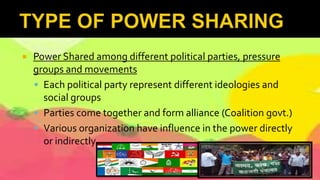
 Power Shared among different political parties, pressure
groups and movements
 Each political party represent different ideologies and
social groups
 Parties come together and form alliance (Coalition govt.)
 Various organization have influence in the power directly
or indirectly
THANK YOU

Power sharing ppt

  • 1.
  • 2.
  • 3.
     Share itsborder with Netherlands, Germany, France and Luxembourg  59% speak Dutch live in Flemish region  40% speak French live Wallonia region  1% speak German  Capital (Brussels) 80% speak French and 20% speak Dutch
  • 4.
     74% peoplespeak Sinhala  18% people speakTamil ( 13% Sri LankanTamils and 5% IndianTamils)  7% of population are Christians
  • 5.
     SL gotits independent in 1948. Since Sinhala community got dominance over power  1956, act was passed to give the Sinhala the status of national language. Compulsory for all jobs  Buddhism was fostered  Tamils started feeling alienated
  • 6.
     1.The recognitionofTamils as official language  2. Regional Autonomy  3. Equality of opportunity in securing education and jobs  4. SeparateTamil state (This demand led to Civil War in Sri Lanka)
  • 7.
     Equal noof ministers in the central govt.  Dutch and French ministers were made in equal no in central govt. and Dutch agreed to that  Powerful State government  Many powers were given to State government taken from central  Separate Government for Brussels  Both communities were given equal no. of representation and here French agreed.  Community Government  Third kind of govt. was formed and it contained representative from each community
  • 8.
    PRUDENTIAL REASONS  Reduceconflicts  Stability to govt.  Better Administration MORAL REASONS  Very spirit of Democracy  People are consulted  People participation is increased
  • 9.
     People rulethemselves  Due respect is given to diverse groups  Everyone’s voice is listened
  • 10.
     Power Sharedamong the different organs of govt.  Organs – Legislature, Executives and Judiciary  All are equally powerful – so called Horizontal power sharing  As all organs check each other, it is called checks and balances
  • 11.
     Power Sharedamong different Levels of govt.  Levels – Central, State and Local Self Govt.  It’s a federal System  It is calledVertical power sharing
  • 12.
     Power Sharedamong different social groups  Community govt. of Belgium  Each weaker section should be protected  Diverse groups should get chance in administration otherwise they will alienated
  • 13.
     Power Sharedamong different political parties, pressure groups and movements  Each political party represent different ideologies and social groups  Parties come together and form alliance (Coalition govt.)  Various organization have influence in the power directly or indirectly
  • 14.