A technique to reduce the possibility of
conflict ,every social group is given share in
administration/Government and included
in decision making.
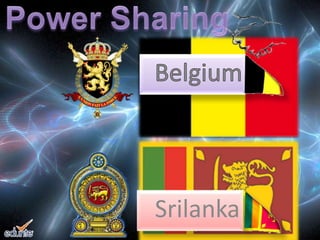
Srilanka
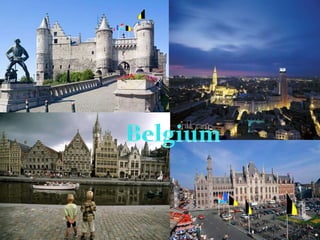
Belgium
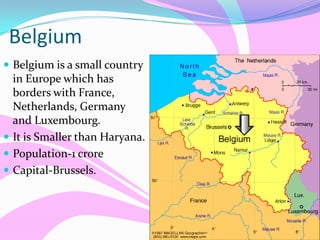
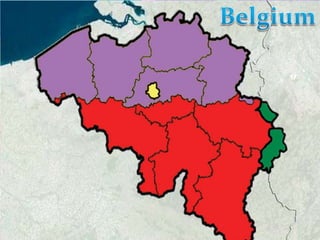
 Belgium is a small country
in Europe which has
borders with France,
Netherlands, Germany
and Luxembourg.
 It is Smaller than Haryana.
 Population-1 crore
 Capital-Brussels.
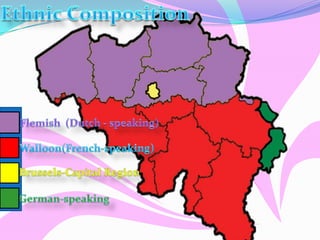
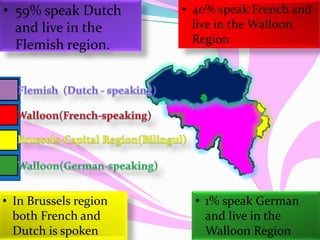
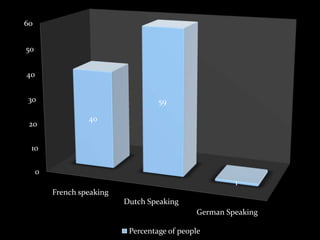
• 59% speak Dutch
and live in the
Flemish region.
• 40% speak French and
live in the Walloon
Region
• 1% speak German
and live in the
Walloon Region
• In Brussels region
both French and
Dutch is spoken
0
10
20
30
40
50
60
French speaking
Dutch Speaking
German Speaking
40
59
1
Percentage of people
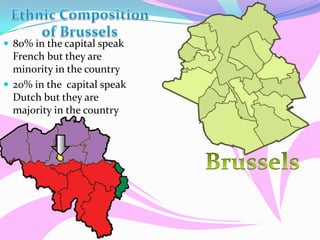
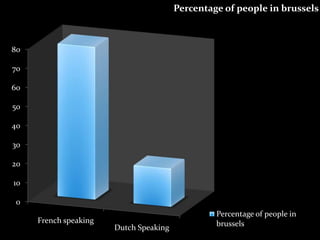
 80% in the capital speak
French but they are
minority in the country
 20% in the capital speak
Dutch but they are
majority in the country
0
10
20
30
40
50
60
70
80
French speaking
Dutch Speaking
Percentage of people in brussels
Percentage of people in
brussels
•The minority French were rich and powerful
•The majority Dutch got the benefit of economic
development and education much later.
•This created tensions between the Dutch-speaking
and French-speaking communities
during the 1950s and 1960s.
•Dutch-speaking people was
majority in the country, but minority
in the capital.
 Between 1970 and 1993 the constitution was amended
four times to accommodate social and cultural
diversities.
 This was done by sharing power as follows.
There shall be equal representation from both
communities in the central council of ministers
The majority Dutch accepted this arrangement
because they were minority in the capital
Some special laws require the support of majority from both
the communities
Many powers of the Central Government have been
transferred to State Governments and the State Governments
are not subordinate to the Central Govt.
There is third form of Govt. called ‘Community Govt.’
Brussels has a separate Govt. with equal representation from
both the communities.
The majority French in Brussels accepted equal
representation in Brussels because the majority Dutch
accepted equal representation in the central government.
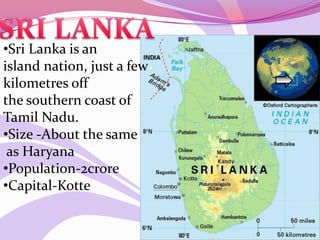
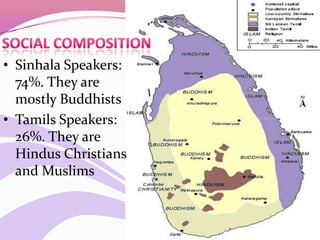
•Sri Lanka is an
island nation, just a few
kilometres off
the southern coast of
Tamil Nadu.
•Size -About the same
as Haryana
•Population-2crore
•Capital-Kotte
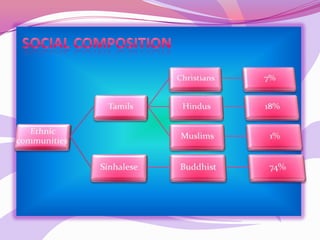
• Sinhala Speakers:
74%. They are
mostly Buddhists
• Tamils Speakers:
26%. They are
Hindus Christians
and Muslims
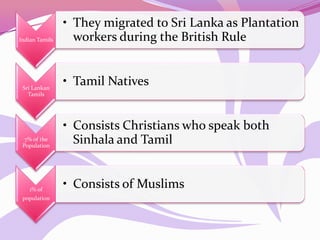
Indian Tamils
• They migrated to Sri Lanka as Plantation
workers during the British Rule
Sri Lankan
Tamils
• Tamil Natives
7% of the
Population
• Consists Christians who speak both
Sinhala and Tamil
1% of
population
• Consists of Muslims
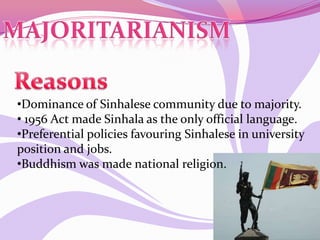
Theory of ruling.[Majority community can
rule the country according to it’s wish
neglecting minority]
•Dominance of Sinhalese community due to majority.
• 1956 Act made Sinhala as the only official language.
•Preferential policies favouring Sinhalese in university
position and jobs.
•Buddhism was made national religion.
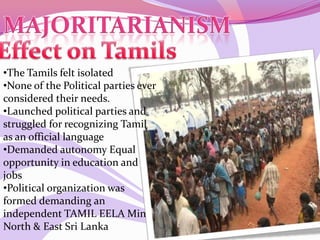
•The Tamils felt isolated
•None of the Political parties ever
considered their needs.
•Launched political parties and
struggled for recognizing Tamil
as an official language
•Demanded autonomy Equal
opportunity in education and
jobs
•Political organization was
formed demanding an
independent TAMIL EELA Min
North & East Sri Lanka
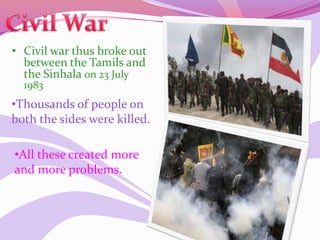
• Civil war thus broke out
between the Tamils and
the Sinhala on 23 July
1983
•Thousands of people on
both the sides were killed.
•All these created more
and more problems.
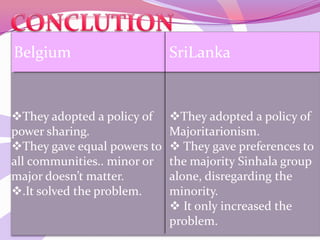
Belgium SriLanka
They adopted a policy of
power sharing.
They gave equal powers to
all communities.. minor or
major doesn’t matter.
.It solved the problem.
They adopted a policy of
Majoritarionism.
 They gave preferences to
the majority Sinhala group
alone, disregarding the
minority.
 It only increased the
problem.
Pushpendra singh

Pushpendra singh

  • 2.
    A technique toreduce the possibility of conflict ,every social group is given share in administration/Government and included in decision making.
  • 3.
  • 5.
    Belgium  Belgium isa small country in Europe which has borders with France, Netherlands, Germany and Luxembourg.  It is Smaller than Haryana.  Population-1 crore  Capital-Brussels.
  • 8.
    • 59% speakDutch and live in the Flemish region. • 40% speak French and live in the Walloon Region • 1% speak German and live in the Walloon Region • In Brussels region both French and Dutch is spoken
  • 9.
    0 10 20 30 40 50 60 French speaking Dutch Speaking GermanSpeaking 40 59 1 Percentage of people
  • 10.
     80% inthe capital speak French but they are minority in the country  20% in the capital speak Dutch but they are majority in the country
  • 11.
    0 10 20 30 40 50 60 70 80 French speaking Dutch Speaking Percentageof people in brussels Percentage of people in brussels
  • 12.
    •The minority Frenchwere rich and powerful •The majority Dutch got the benefit of economic development and education much later. •This created tensions between the Dutch-speaking and French-speaking communities during the 1950s and 1960s. •Dutch-speaking people was majority in the country, but minority in the capital.
  • 13.
     Between 1970and 1993 the constitution was amended four times to accommodate social and cultural diversities.  This was done by sharing power as follows. There shall be equal representation from both communities in the central council of ministers The majority Dutch accepted this arrangement because they were minority in the capital
  • 14.
    Some special lawsrequire the support of majority from both the communities Many powers of the Central Government have been transferred to State Governments and the State Governments are not subordinate to the Central Govt. There is third form of Govt. called ‘Community Govt.’ Brussels has a separate Govt. with equal representation from both the communities. The majority French in Brussels accepted equal representation in Brussels because the majority Dutch accepted equal representation in the central government.
  • 17.
    •Sri Lanka isan island nation, just a few kilometres off the southern coast of Tamil Nadu. •Size -About the same as Haryana •Population-2crore •Capital-Kotte
  • 18.
    • Sinhala Speakers: 74%.They are mostly Buddhists • Tamils Speakers: 26%. They are Hindus Christians and Muslims
  • 20.
    Indian Tamils • Theymigrated to Sri Lanka as Plantation workers during the British Rule Sri Lankan Tamils • Tamil Natives 7% of the Population • Consists Christians who speak both Sinhala and Tamil 1% of population • Consists of Muslims
  • 21.
    Theory of ruling.[Majoritycommunity can rule the country according to it’s wish neglecting minority]
  • 22.
    •Dominance of Sinhalesecommunity due to majority. • 1956 Act made Sinhala as the only official language. •Preferential policies favouring Sinhalese in university position and jobs. •Buddhism was made national religion.
  • 23.
    •The Tamils feltisolated •None of the Political parties ever considered their needs. •Launched political parties and struggled for recognizing Tamil as an official language •Demanded autonomy Equal opportunity in education and jobs •Political organization was formed demanding an independent TAMIL EELA Min North & East Sri Lanka
  • 24.
    • Civil warthus broke out between the Tamils and the Sinhala on 23 July 1983 •Thousands of people on both the sides were killed. •All these created more and more problems.
  • 25.
    Belgium SriLanka They adopteda policy of power sharing. They gave equal powers to all communities.. minor or major doesn’t matter. .It solved the problem. They adopted a policy of Majoritarionism.  They gave preferences to the majority Sinhala group alone, disregarding the minority.  It only increased the problem.