Social studies
Democracy and diversity
10-V
Introduction
• Introduction: Many times people identify
themselves and relate with others on the basis
of their physical appearance, class, religion,
gender, caste, tribe, etc, and many times they
are discriminated racially on the bases of
these factors.
• Today what I present in front of you today
talks of how democracy responds to all these
social differences, divisions and inequalities.
Social Division: Physical Appearances
Physical Appearances And this period, as we all know is
known as Black Slavery: The root and appraisement of
Black Power.
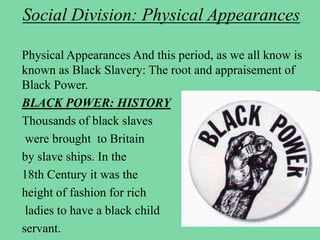
BLACK POWER: HISTORY
Thousands of black slaves
were brought to Britain
by slave ships. In the
18th Century it was the
height of fashion for rich
ladies to have a black child
servant.
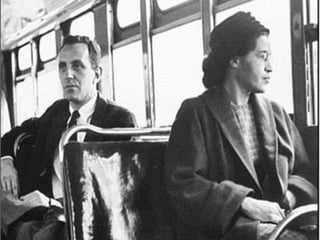
• 1995 December 1, an obscure black woman, Mrs. Rosa
Parks, was riding home on a bus in Montgomery, Alabama.
• As the bus gradually filled up with passengers, a white man
demanded that she give him her seat and that she stand near
the rear of the bus. Mrs. Parks, who did not have the
reputation of being a troublemaker or a revolutionary, said
that she was tired and that her feet were tired.
• The white man protested to the bus driver. When the driver
also demanded that she move, she refused.
• Then, the driver summoned a policeman, and Mrs. Parks
was arrested.
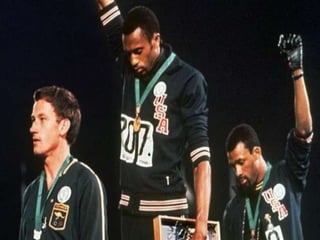
• Black Power: Know Your Rights! In a medal ceremony of the 200
meters race in the 1968 Olympics held at Mexico City.
• Two men had won a gold and bronze medal They received their
medals wearing black socks and no shoes to represent Black
poverty. And both of them stood with clenched fists upraised and
heads bowed, while the American national anthem was played.
• These two men were Tommie Smith and John Carlos.
• They were African Americans.
• Both of these men tried to draw international attention to racial
discrimination in the United States.
• The black-gloved and raised clenched fists were meant to
symbolize Black Power The silver medalist, white Australian
athlete, Peter Norman, wore a human rights badge on his shirt
during the ceremony to show his support to the two Americans.
Differences and Inequalities
• What the athletes did is known as responding to social
division or racism.
• Social differences are mostly based on accident of birth.
• Usually we don’t choose to belong to our community.
• We belong to it simply because we were born into it. We all
experience social differences based on accident of birth in our
everyday lives.
• But all kinds of social differences are not based on accident of
birth. Some of the differences are based on our choices. For
example, some people are atheists. They don’t believe in God
or any religion. Some people choose to follow a religion other
than the one in which they were born.
• Every social difference does not lead to social division. Social
differences divide similar people from one another, but they
also unite very different people.
• People belonging to different social groups share differences
and similarities cutting across the boundaries of their groups.
• It is fairly common for people belonging to the same religion
to feel that they do not belong to the same
community, because their caste or sect is very different. It is
also possible for people from different religions to have the
same caste and feel close to each other.
• Rich and poor persons from the same family often do not
keep close relations with each other for they feel they are
very different. Thus, we all have more than one identity and
can belong to more than one social group.
• We have different identities in different contexts.
Social Divisions
• Origin Social division takes place when some social
difference overlaps with other differences.
• An example of social division in US will be the difference
between the Blacks and Whites becomes because the
Blacks tend to be poor, homeless and discriminated
against. In our country Dalits tend to be poor and
landless.
• They often face discrimination and injustice. Situations of
this kind produce social divisions, when one kind of social
difference becomes more important than the other, this
leads to difference of social in the societies.
• Social divisions of one kind or another exist in most
countries. It does not matter whether the country is
small or big.
• India is a vast country with many communities.
Belgium is a small country with many communities.
• Even those countries such as Germany and Sweden,
that were once highly homogenous, are undergoing
rapid change with influx of people from other parts
of the world. Migrants bring with them their own
culture and tend to form a different social
community.
Politics of social divisions
• How do these social divisions affect politics?
Democracy involves competition among
various political parties. Their competition tends
to divide any society. If they start competing in
terms of some existing social divisions, it can
make social divisions into political divisions and
lead to conflict, violence or even disintegration
of a country.
• For Example, the case of Northern Ireland that Its
population is divided into two major sects of
Christianity: 53 % are Protestants, while 44 % are
Roman Catholics.
• The Catholics were presented by Nationalist parties
who demanded that Northern Ireland be unified
with the Republic of Ireland, a predominantly
Catholic country.
• The Protestants were represented by Unionists who
wanted to remain with the UK, which is
predominantly protestant. Hundreds of civilians,
militants and security forces were killed in the fight
between Unionists and Nationalists and between
the security forces of the UK and the Nationalists.
• Politics and social divisions must not be allowed to mix.
• They think that it would be best if there are no social divisions in any
country.
• If social divisions do exist in a country, they must never be expressed in
politics.
• At the same time every expression of social divisions in politics does not
lead to such disasters.
• Social divisions of one kind or another exist in most countries of the world.
Wherever they exist, these divisions are reflected in politics.
• In a democracy it is only natural that political parties would talk about
these divisions, make different promises to different communities, look
after due representation of various communities and make policies to
redress the grievances of the disadvantaged communities.
• Social divisions affect voting in most countries. People from one
community tend to prefer some party more than others. In many countries
there are parties that focus only on one community. Yet all this does not
lead to disintegration of the country.
First Determiner:
• First Determiner Three factors are crucial in deciding the outcome
of politics of social divisions. First of all the outcome depends on
how people perceive their identities. If people see their identities in
singular and exclusive terms, it becomes very difficult to
accommodate. As long as people in northern Ireland saw
themselves as only Catholic or Protestant, their differences were
difficult to reconcile. It is much easier if the people see that their
identities are multiple and are complementary with the national
identity.
Second Determiner :
• Second Determiner Second, it depends on how political leaders
raise the demands of any community. It is easier to accommodate
demands that are within the constitutional framework and are
not at the cost of another community.
Third Determiner:
• Third Determiner Third, it depends on the how the government
reacts to demands of different groups.
A multi-cultural society
• In a democracy, political expression of social divisions is very
normal and can be healthy.
• This allows various disadvantaged and marginal social groups to
express their grievances and get the government to attend to
these.
• Expression of various kinds of social divisions in politics often results
in their cancelling one another out and thus reducing their
intensity.
• This leads to strengthening of a democracy. But a positive
attitude towards diversity and a willingness to accommodate it do
not come about easily.
• People who feel marginalized, deprived and discriminated have
to fight against the injustices. The struggle against such inequalities
sometimes takes the path of violence and defiance of state power.
• However history shows that democracy is the best way to fight for
recognition and also to accommodate diversity.
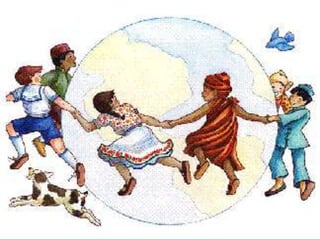
A United Future-
A chain of A United Future has already
bean started and even we can be a part
of it. Reach out your hand to those who
need a hand.
Thank you

Democracy and diversity

  • 1.
  • 2.
    Introduction • Introduction: Manytimes people identify themselves and relate with others on the basis of their physical appearance, class, religion, gender, caste, tribe, etc, and many times they are discriminated racially on the bases of these factors. • Today what I present in front of you today talks of how democracy responds to all these social differences, divisions and inequalities.
  • 3.
    Social Division: PhysicalAppearances Physical Appearances And this period, as we all know is known as Black Slavery: The root and appraisement of Black Power. BLACK POWER: HISTORY Thousands of black slaves were brought to Britain by slave ships. In the 18th Century it was the height of fashion for rich ladies to have a black child servant.
  • 4.
    • 1995 December1, an obscure black woman, Mrs. Rosa Parks, was riding home on a bus in Montgomery, Alabama. • As the bus gradually filled up with passengers, a white man demanded that she give him her seat and that she stand near the rear of the bus. Mrs. Parks, who did not have the reputation of being a troublemaker or a revolutionary, said that she was tired and that her feet were tired. • The white man protested to the bus driver. When the driver also demanded that she move, she refused. • Then, the driver summoned a policeman, and Mrs. Parks was arrested.
  • 6.
    • Black Power:Know Your Rights! In a medal ceremony of the 200 meters race in the 1968 Olympics held at Mexico City. • Two men had won a gold and bronze medal They received their medals wearing black socks and no shoes to represent Black poverty. And both of them stood with clenched fists upraised and heads bowed, while the American national anthem was played. • These two men were Tommie Smith and John Carlos. • They were African Americans. • Both of these men tried to draw international attention to racial discrimination in the United States. • The black-gloved and raised clenched fists were meant to symbolize Black Power The silver medalist, white Australian athlete, Peter Norman, wore a human rights badge on his shirt during the ceremony to show his support to the two Americans.
  • 8.
    Differences and Inequalities •What the athletes did is known as responding to social division or racism. • Social differences are mostly based on accident of birth. • Usually we don’t choose to belong to our community. • We belong to it simply because we were born into it. We all experience social differences based on accident of birth in our everyday lives. • But all kinds of social differences are not based on accident of birth. Some of the differences are based on our choices. For example, some people are atheists. They don’t believe in God or any religion. Some people choose to follow a religion other than the one in which they were born.
  • 9.
    • Every socialdifference does not lead to social division. Social differences divide similar people from one another, but they also unite very different people. • People belonging to different social groups share differences and similarities cutting across the boundaries of their groups. • It is fairly common for people belonging to the same religion to feel that they do not belong to the same community, because their caste or sect is very different. It is also possible for people from different religions to have the same caste and feel close to each other. • Rich and poor persons from the same family often do not keep close relations with each other for they feel they are very different. Thus, we all have more than one identity and can belong to more than one social group. • We have different identities in different contexts.
  • 10.
    Social Divisions • OriginSocial division takes place when some social difference overlaps with other differences. • An example of social division in US will be the difference between the Blacks and Whites becomes because the Blacks tend to be poor, homeless and discriminated against. In our country Dalits tend to be poor and landless. • They often face discrimination and injustice. Situations of this kind produce social divisions, when one kind of social difference becomes more important than the other, this leads to difference of social in the societies.
  • 11.
    • Social divisionsof one kind or another exist in most countries. It does not matter whether the country is small or big. • India is a vast country with many communities. Belgium is a small country with many communities. • Even those countries such as Germany and Sweden, that were once highly homogenous, are undergoing rapid change with influx of people from other parts of the world. Migrants bring with them their own culture and tend to form a different social community.
  • 12.
    Politics of socialdivisions • How do these social divisions affect politics? Democracy involves competition among various political parties. Their competition tends to divide any society. If they start competing in terms of some existing social divisions, it can make social divisions into political divisions and lead to conflict, violence or even disintegration of a country.
  • 13.
    • For Example,the case of Northern Ireland that Its population is divided into two major sects of Christianity: 53 % are Protestants, while 44 % are Roman Catholics. • The Catholics were presented by Nationalist parties who demanded that Northern Ireland be unified with the Republic of Ireland, a predominantly Catholic country. • The Protestants were represented by Unionists who wanted to remain with the UK, which is predominantly protestant. Hundreds of civilians, militants and security forces were killed in the fight between Unionists and Nationalists and between the security forces of the UK and the Nationalists.
  • 14.
    • Politics andsocial divisions must not be allowed to mix. • They think that it would be best if there are no social divisions in any country. • If social divisions do exist in a country, they must never be expressed in politics. • At the same time every expression of social divisions in politics does not lead to such disasters. • Social divisions of one kind or another exist in most countries of the world. Wherever they exist, these divisions are reflected in politics. • In a democracy it is only natural that political parties would talk about these divisions, make different promises to different communities, look after due representation of various communities and make policies to redress the grievances of the disadvantaged communities. • Social divisions affect voting in most countries. People from one community tend to prefer some party more than others. In many countries there are parties that focus only on one community. Yet all this does not lead to disintegration of the country.
  • 15.
    First Determiner: • FirstDeterminer Three factors are crucial in deciding the outcome of politics of social divisions. First of all the outcome depends on how people perceive their identities. If people see their identities in singular and exclusive terms, it becomes very difficult to accommodate. As long as people in northern Ireland saw themselves as only Catholic or Protestant, their differences were difficult to reconcile. It is much easier if the people see that their identities are multiple and are complementary with the national identity. Second Determiner : • Second Determiner Second, it depends on how political leaders raise the demands of any community. It is easier to accommodate demands that are within the constitutional framework and are not at the cost of another community. Third Determiner: • Third Determiner Third, it depends on the how the government reacts to demands of different groups.
  • 16.
    A multi-cultural society •In a democracy, political expression of social divisions is very normal and can be healthy. • This allows various disadvantaged and marginal social groups to express their grievances and get the government to attend to these. • Expression of various kinds of social divisions in politics often results in their cancelling one another out and thus reducing their intensity. • This leads to strengthening of a democracy. But a positive attitude towards diversity and a willingness to accommodate it do not come about easily. • People who feel marginalized, deprived and discriminated have to fight against the injustices. The struggle against such inequalities sometimes takes the path of violence and defiance of state power. • However history shows that democracy is the best way to fight for recognition and also to accommodate diversity.
  • 18.
    A United Future- Achain of A United Future has already bean started and even we can be a part of it. Reach out your hand to those who need a hand. Thank you